



![SACANI RESPONDE [TEMAS VARIADOS #01] - Ciência Sem Fim #311](https://i.ytimg.com/vi/JntgF5qy9wA/maxresdefault.jpg)








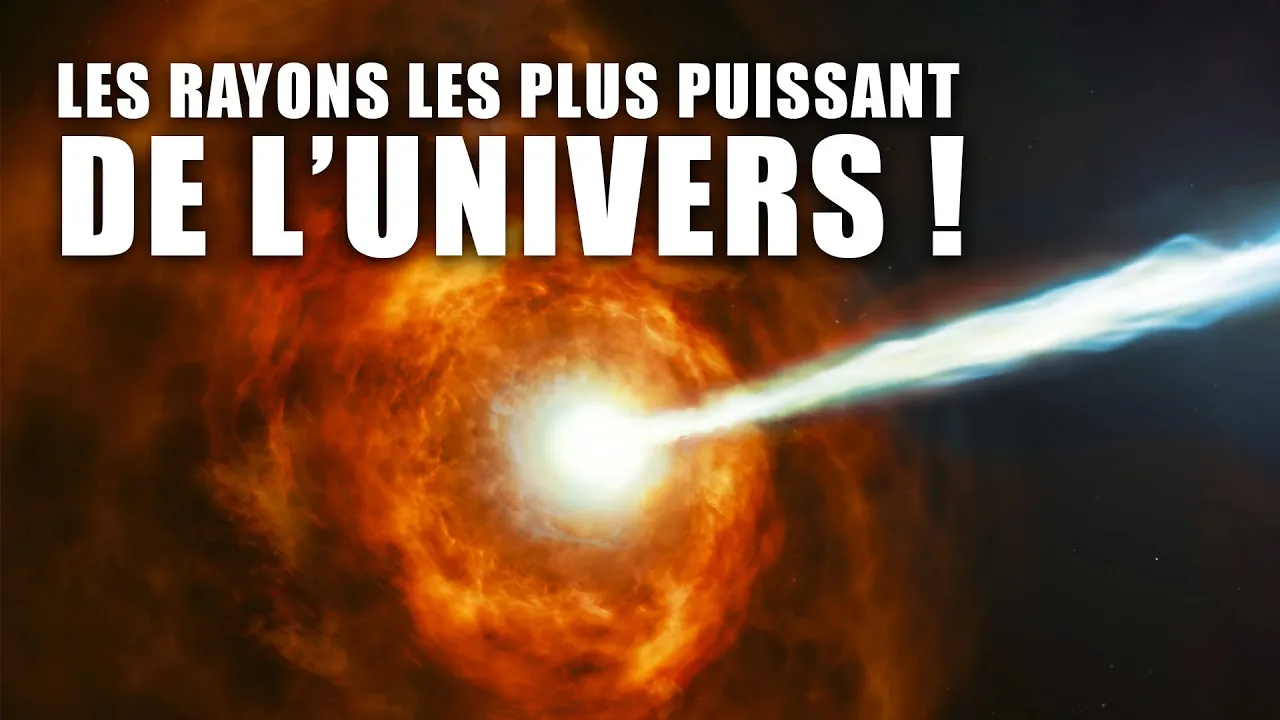



Gamma-ray bursts (GRBs), discovered during the Cold War by US Vela satellites monitoring for nuclear tests, are the most energetic explosions in the universe, originating from two distinct mechanisms: long-duration bursts (lasting more than 2 seconds) from hypernovae—massive stars collapsing into black holes and launching twin beams of matter and energy at near-light speed—and short-duration bursts (lasting milliseconds) from merging neutron stars; these events are so powerful they can be seen billions of light years away and serve as 'birth announcements' of black holes, with the narrow beams meaning we only observe them when they're aimed directly at Earth.
Gamma-Ray Bursts Explained | Crash Course Astronomy #40
Added:The structure of the electromagnetic spectrum, with a specific focus on high-energy radiation such as X-rays and gamma rays.
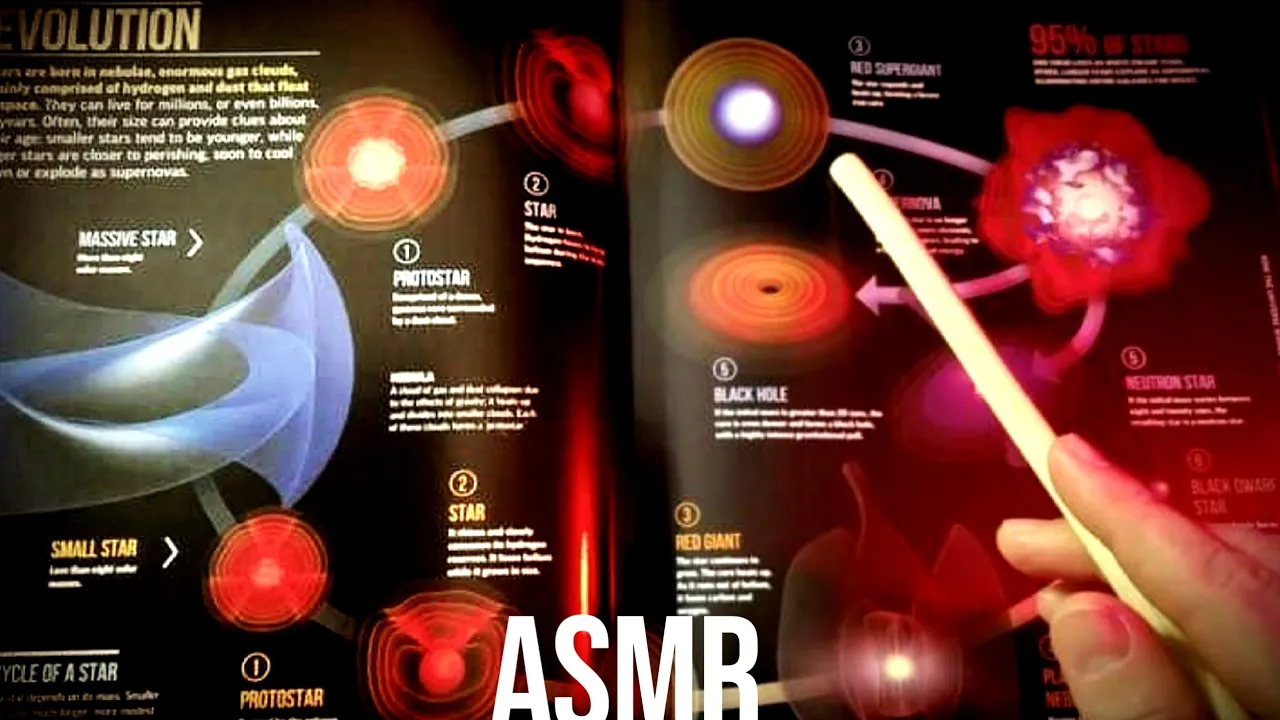
The life cycle of massive stars, particularly the processes leading to core-collapse supernovae.
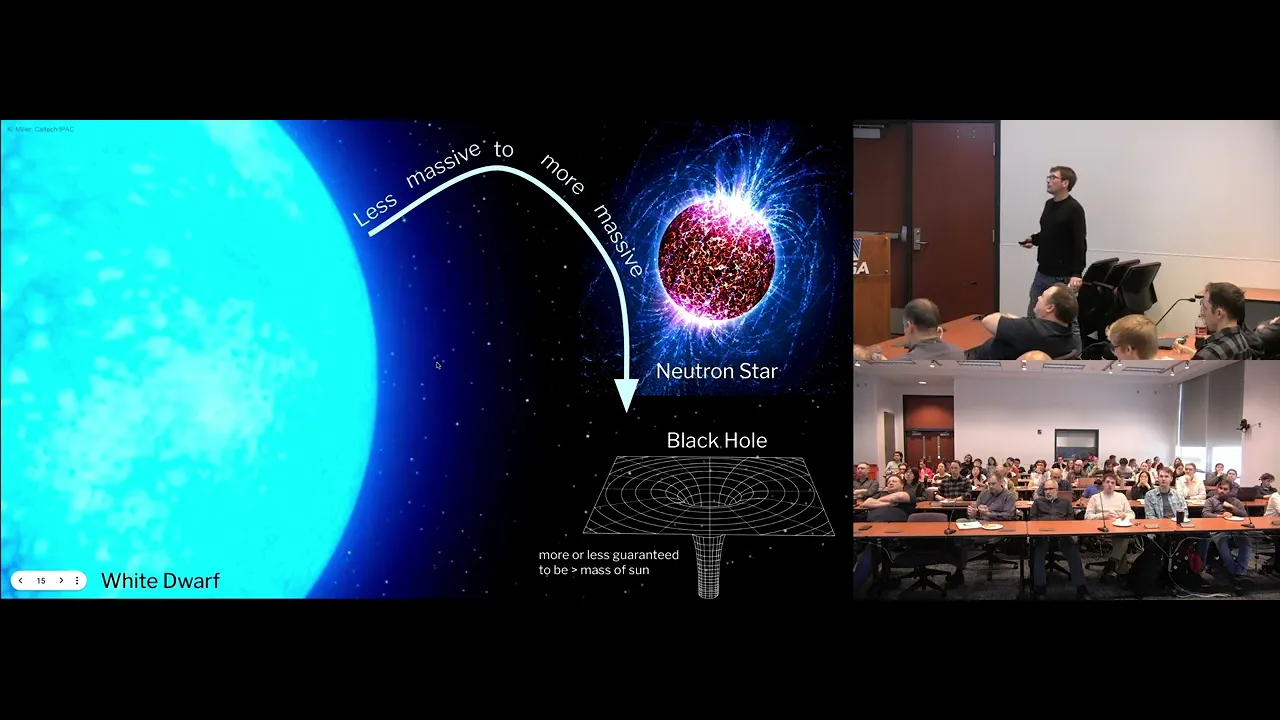
The fundamental properties of compact stellar remnants, specifically neutron stars and black holes.
Basic concepts of gravitational collapse and how magnetic fields can channel energy into relativistic jets.
Multi-messenger astronomy, specifically how gravitational wave detections (via LIGO/Virgo) correlate with gamma-ray bursts from neutron star mergers.
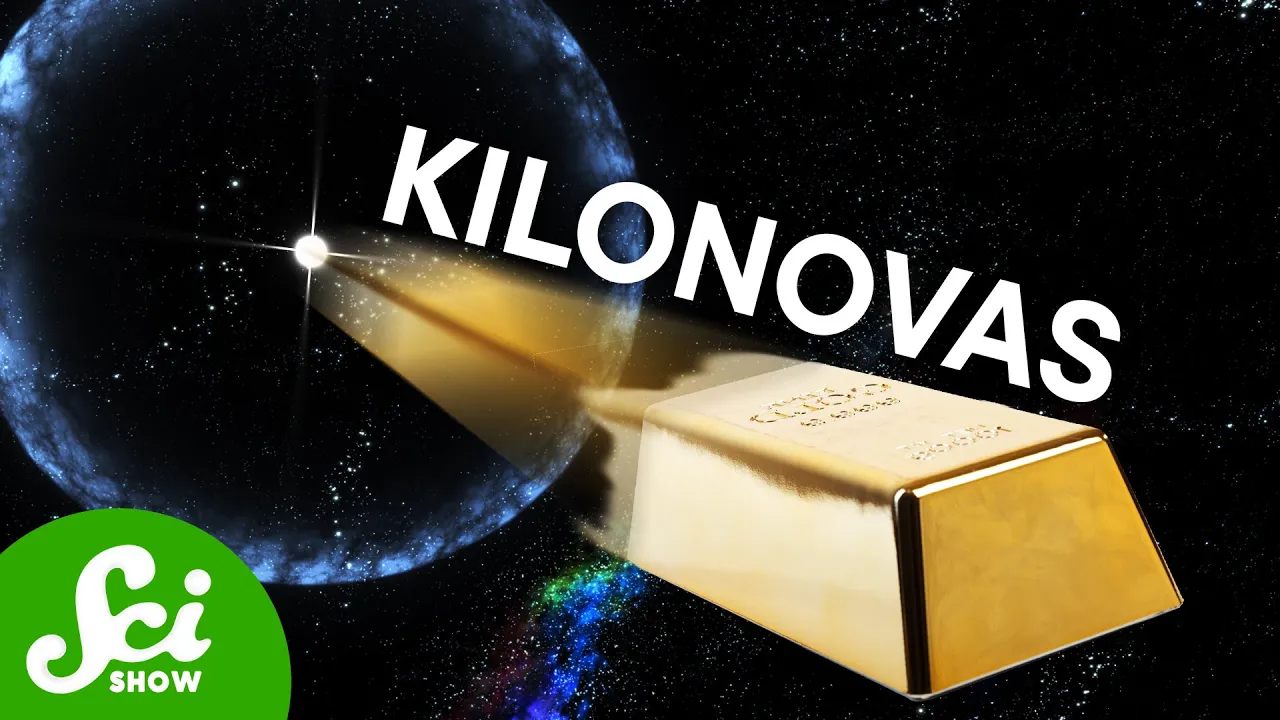
The r-process nucleosynthesis and kilonovae, which explain how the universe's heaviest elements, like gold and platinum, are created in these mergers.
The use of gamma-ray bursts as cosmological probes to study the star formation rate and gas composition of the early universe.
The physics of relativistic shockwaves and synchrotron emission that dictate the behavior of a gamma-ray burst's afterglow.
1.2M views19.9Klikes14:05Original Release: 2015-11-13
Sometimes in science, the story of HOW we learned something is just as cool as what we learned.
In the case of gamma-ray bursts, it’s kinda hard to beat the awesomeness of what they are.
But of all the plotlines in astronomy, their origin story comes the closest.
It begins, quite literally, in the grip of Cold War paranoia, and ends…well, it doesn’t end. What true story ever does? But it does lead to us discovering the single most violent events occurring in the Universe, events which, paradoxically and ironically, are almost entirely hidden from our view.
After World War II, the allies that were the United States of America and the United Soviet Socialist Republic had gone their separate ways. They had fought together against a common enemy, but that war was done, and a newer, colder one forged. The US and USSR became sworn enemies themselves, each determined to bring the downfall of the other.
Both sides had nuclear weapons, so this downfall was not as impossible as it might seem. It was a terrifying likelihood, taken very seriously by everyone involved.
Both sides were testing nukes at every available opportunity, pushing them for ever-greater explosive yield. At the same time, both factions were becoming more adept at space travel, using satellites to spy on each other. And both were looking at the idea of orbiting platforms from which to launch nuclear weapons; you could lob bombs on the enemy within minutes, instead of needing the better part of an hour using ballistic missiles.
Fear of this, as much as anything else, drove the writing of the Outer Space Test Ban Treaty in 1963, forbidding the testing or use of nuclear weapons in space. Among the signatories were the Soviet Union and the United States.
Of course, neither side trusted the other. Fearful the Soviets might try to test anyway — perhaps blowing up nukes on the far side of the Moon, where they couldn’t be detected — the US launched a series of satellites called Vela. Nuclear detonations produce a flash of gamma rays, the highest energy form of light. The Vela satellites were designed to detect that high-energy pulse.
Two scientists, Roy Olsen and Ray Klebesadel, were assigned the task of analyzing the data.
They laboriously combed through the observations, checking them for anything that looked like a nuke. Signal after signal turned out to be false. But finally, in 1969, they found their first hit: a flash of gamma rays seen by several of the satellites on July 2, 1967.
But there was one problem — whatever caused the gamma-ray event didn’t look like a nuclear blast. The amount of gamma radiation and how it fades with time are very distinctive for a nuclear weapon, and the July 2 event looked completely different than that. There was a strong, sharp peak of emission lasting less than a second, followed by a longer, weaker pulse lasting for several more seconds. A quick look at solar flare data revealed no activity that day that could generate gamma rays, either. Weird.
Over time, more and more of these mysterious bursts of gamma-rays were found. As analysis techniques got better, it was found that they were not coming from the surface of the Earth, nor from nearby space; that is, Earth orbit.
Whatever these bursts were, they were originating randomly in the sky, and were happening IN DEEP SPACE. Dun dun dunnn.
In 1973 Olsen and Klebasadel went public, publishing a paper with their results. Astronomers were intrigued. What could cause these gamma-ray bursts? Generating gamma rays is hard, and takes incredibly violent events: Exploding stars, massive solar flares, and the like.
But these bursts weren’t obviously associated with any of these events.
Making it worse, gamma-ray bursts — let’s call them GRBs for short, OK? — fade rapidly, lasting mere seconds or minutes, making it impossible to follow up with optical telescopes.
It took weeks or months after the event to get a position in the sky for them, and even then the uncertainties were huge. At the time, gamma ray telescopes had very fuzzy vision, and couldn’t pinpoint directions well at all. That meant thousands of stars, galaxies, and other objects nearby were candidate progenitors of the detected bursts. It didn’t narrow things down at all.
It’s like telling someone you dropped a quarter and you want help finding it. When they ask you where you dropped it, you reply, “Wyoming.” As more of these objects were found, it was seen that they really were occurring on random points in the sky, and that itself was a problem. If they were coming from, say, comet impacts on neutron stars (which was one possible hypothesis) then we should see more bursts along the plane of the Milky Way than above it. Pretty much the only place you find neutron stars is in the plane of the galaxy, where all the massive star formation takes place. If GRBs were from neutron stars, then that’s where we’d see ‘em. But we see them all over the sky.
That meant GRBs were either VERY nearby - no more than a few hundred light years - or that they were coming from INCREDIBLY far away, so far that even nearby galaxies weren’t affecting the distribution! We didn’t see a surplus toward the nearby Virgo galaxy cluster, for example, so they’d have to be coming from even more distant galaxies, clear across the Universe! Neither explanation made sense, since astronomers couldn’t think of anything that could generate bursts that were close by, and obviously the energies involved in creating a burst of gamma rays from billions of light years away were impossibly huge.
It was the single most enduring mystery in astronomy for decades. The only hope was to have a faster response time, so that any fading “afterglow” from an event might be caught before it became invisible.
In 1997, that hope became reality. The Dutch-Italian satellite Beppo-Sax had launched the year before, designed in part to look for transient flashes of high-energy light and nail down their positions. In ’97, it detected a gamma-ray burst and was able to get a reasonably decent location for it on the sky. Within hours, ground-based telescopes pinpointed the position, and for the first time saw the fading afterglow of a GRB.
Astronomers were stunned: The burst was clearly and obviously sitting right on top of a faint galaxy. Another, different GRB was detected just months later, also in a faint galaxy.
When the distance to that galaxy was found, astronomers were shocked again: it was a truly staggering SIX BILLION LIGHT YEARS AWAY.
The mystery was over, but it was replaced by a bigger one: These things were happening INCREDIBLY far away. But that meant they must be unbelievably powerful. What could cause such a catastrophic explosion?
When you need raw power, a good place to look is a black hole. Those are created when the cores of massive stars collapse and the stars explode, but there was still a problem. Given their distance and brightness, even a supernova couldn’t power a GRB!
Think about THAT for a second: The most violent known events in the Universe at the time were inadequate to explain the ferocity of a gamma-ray burst.
Unless… Astronomers came up with an idea: What if the energy blasting outward from a supernova were focused somehow?
In a supernova, the energy gets flung out in all directions, expanding as a sphere.
If instead, that energy could be collected and sent out as a beam, that COULD explain the bursts.
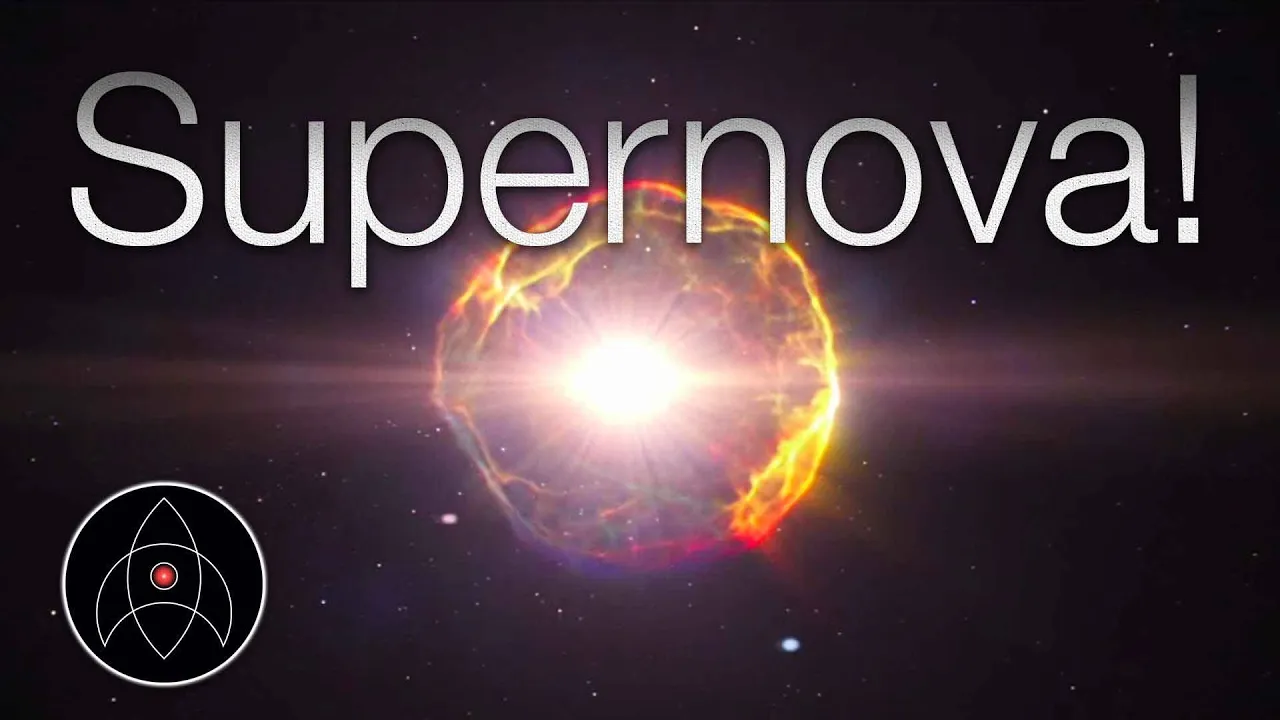
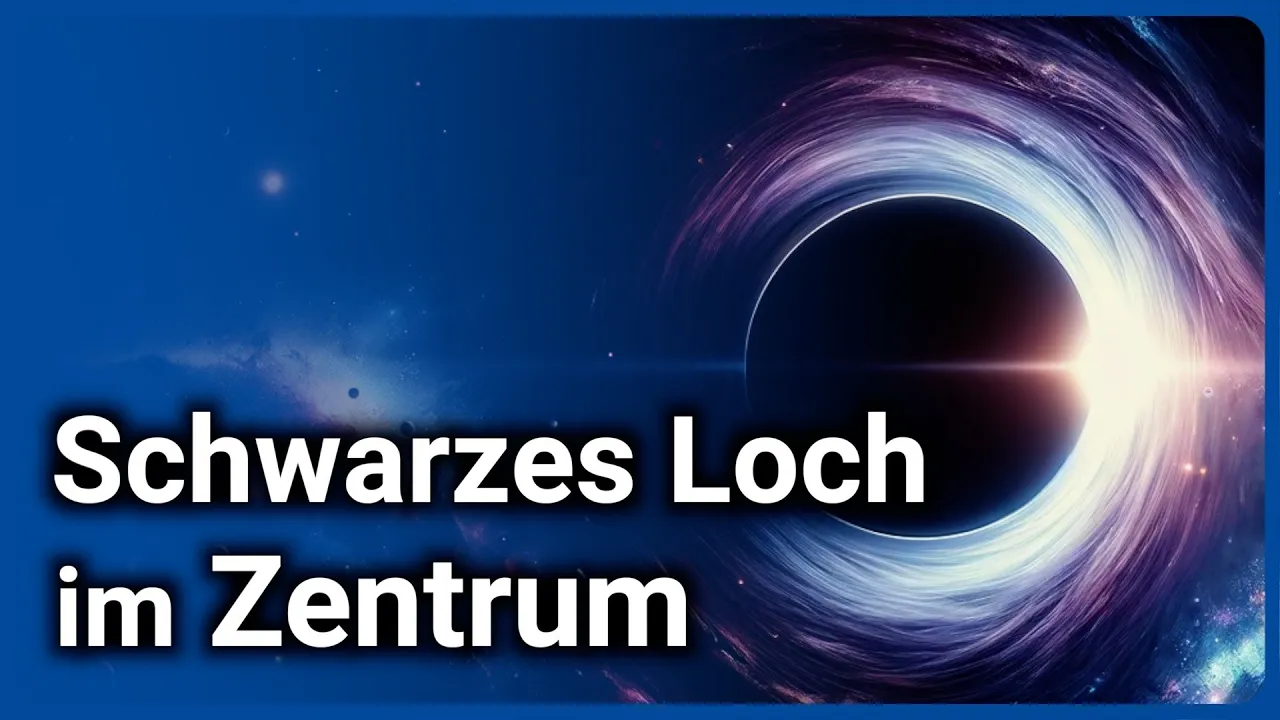
We now understand this to indeed be the case. When the core of a VERY massive star collapses, forming a black hole, the material just outSIDE the core falls down, forming an incredibly hot swirling maelstrom called an accretion disk. The magnetic field of that material (and from the black hole) coil around, wound up by the rapidly spinning disk, pointing up and down out of the disk and away from the black hole. The details still aren’t entirely clear, but this launches twin beams of matter and energy up and away from the black hole.
The amount of energy in the beams is mind-crushing, equal to the total energy of the supernova event itself! They scream away from the black hole at very nearly the speed of light, burning through the star, blasting away across space. These death rays are so phenomenally bright that we can detect them from BILLIONS of light years away.
The supernova explosion is no small thing either; the star is so massive it explodes with more energy than a normal supernova. They’re so powerful that astronomers call them hypernovae.
Coooooool.
And you don’t always need fancy equipment to see them, either. On March 19th, 2008, a GRB erupted into view, and its distance quickly determined to be 7.5 billion light years from Earth. Despite that ridiculous distance, it got so bright that if you had happened to be looking at that part of the sky, you would’ve seen it with your naked eye.
Aaaah! It’s thought that in this case, the beam was aimed almost precisely at us, which is why it got so bright. Good thing it was so far away.
And that explains gamma-ray bursts… well, one kind of burst, at least. It turns out there are two kinds. When you look at the duration of all the bursts detected, they divide pretty well into two groups: Ones that last longer than two seconds, and come from hypernovae, and ones that are much more rapid. Sometimes these short bursts last literally for milliseconds: Way too fast to be from core collapse supernovae. Something else must be behind them.
But what else could be as soul-crushingly energetic as the explosion of a hypernova?
Turns out, it’s two neutron stars crashing together and exploding!
Imagine two massive stars born together as a binary star. Eventually one goes supernova, as does the other, leaving two neutron stars orbiting each other. They’d stay in orbit like this forever if it weren’t for a subtle aspect of gravity predicted by Einstein’s Theory of Relativity: Massive objects revolving around each other very slowly lose orbital energy by radiating away gravitational waves, essentially ripples in the fabric of space itself. I know, it’s weird -- relativity is like that -- but think of it as a slow leak in the orbits, very gradually dropping the neutron stars together.
Over billions of years, the two stars draw ever closer, getting so close they spin madly around each other. Finally, they merge in a flash -- literally. If their combined mass is more than 2.8 times that of the Sun they’ll collapse to form a black hole.
What happens next is as bizarre as it is awesome. For a very brief moment, the system becomes a black hole orbited by ultra-dense debris from the merger, a huge amount of neutronium, neutron-star-stuff. This then mimics what happens in a hypernova; it becomes an accretion disk, heated to ridiculous temperatures, blasting out those beams of matter and energy. Because the material is more compact, the gamma ray flash is much shorter.
In case you’re wondering, yes, this is precisely what my nightmares are made of. Which brings me to this week’s Focus On.
If GRBs are so explosive we can see them from halfway across the Universe, what would happen if one were nearby?
Well, not good things. I already talked about the dangers from a nearby supernova, and the dangers from GRBs are about the same. However, because the energy is beamed, GRBs are dangerous from much farther away: A supernova has to be only a few hundred light years away to hurt us, but a GRB can be over 7000 light years away and do the same amount of damage!
But there’s an upside to those beams: Because they’re so narrow, we can only see a burst if the beam is aimed right at us. That significantly lowers the chances of getting hit by a nearby one.
As it happens, there ARE two stars that could one day explode as gamma-ray bursts that are within that danger zone: Eta Carinae, and WR104. The good news is that both are at the edge of that distance limit, so they probably can’t hurt us. Even better, it doesn’t look like either of them is aimed at us.
As far as we know, we’re safe from hypernova-induced GRBs. We don’t know of any about-to-merge neutron stars, either. It’s possible they’d be dark and difficult to detect, but they’re SO rare that it’s incredibly unlikely that any are nearby. Because of this, I’m not really worried about them.
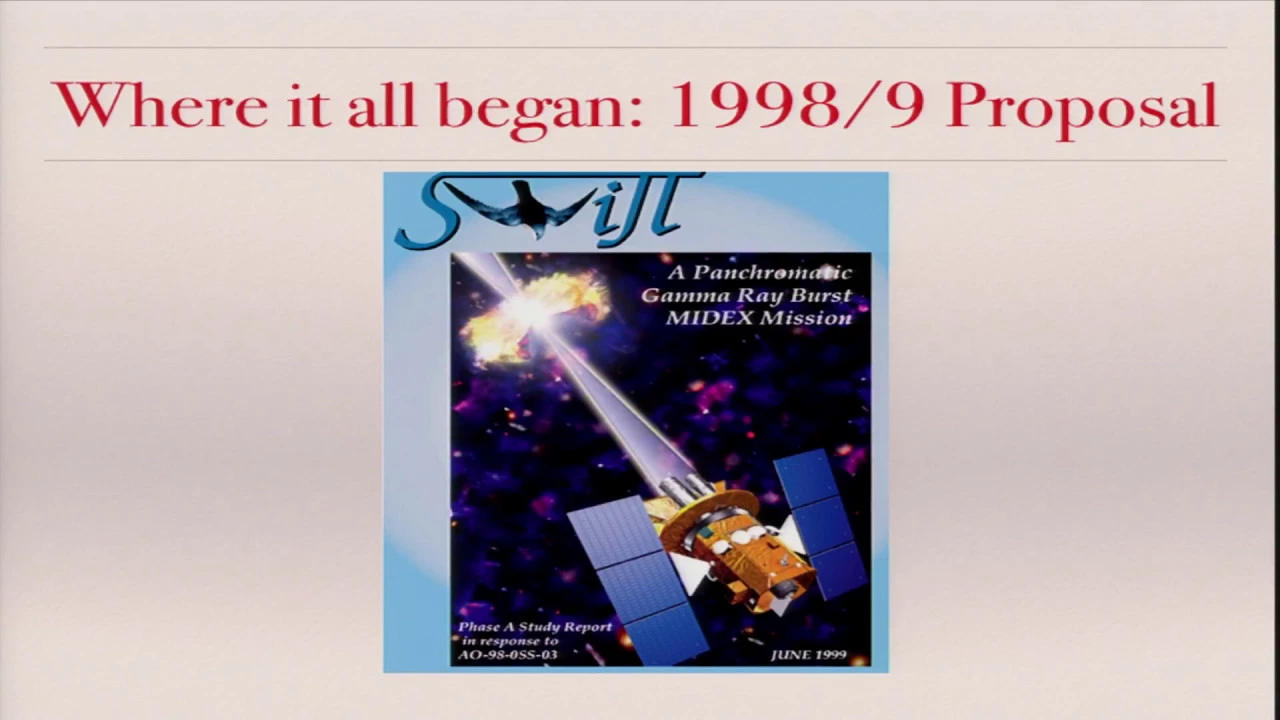
Over the years, more space observatories have been launched to detect bursts. Probably the most important observatory is NASA’s Swift, designed to detect the flash of gamma-rays from a burst, then swing rapidly into action to point its ultraviolet and optical telescopes at the area, precisely locating the burst. It then sends the coordinates down to Earth, so that more telescopes on the ground can join in on the fun. As of 2015, Swift has detected over 900 GRBs. The rapid response time is critically important in getting follow-up data of the bursts, and since the launch of Swift our understanding of these phenomena has grown by leaps and bounds.
Now, with our fleet of satellites scanning the skies, we see a GRB pretty much every day. And remember - we only see them when they’re aimed at us! That means we miss most of them, so the actual rate of GRBs is much higher in the Universe. There may be hundreds happening every day, somewhere in the cosmos.
Gamma-ray bursts are truly one of nature’s most incredible events, the most violent and energetic explosions the Universe is capable of. Everything about them is amazing, from their discovery to what actually powers them and what they create.
In fact, when you think about it, here’s the MOST astonishing thing about them: Every time we see one, we’re witnessing a black hole being born.
Gamma-ray bursts are the birth cries of black holes.
Today you learned that gamma-ray bursts were discovered during the Cold War, when both the US and USSR were worried about the other group detonating nuclear weapons in space.
Bursts come in two rough varieties: Long and short. Long ones are from hypernovae, massive stars exploding, sending out twin beams of matter and energy. Short ones are from merging neutron stars. Both kinds are so energetic they’re visible for billions of light years, and both are also the birth announcements of black holes.
Crash Course Astronomy is produced in association with PBS Digital Studios. Head over to their YouTube channel to catch even more awesome videos. This episode was written by me, Phil Plait. The script was edited by Blake de Pastino, and our consultant is Dr. Michelle Thaller.
It was directed by Nicholas Jenkins, edited by Nicole Sweeney, the sound designer is Michael Aranda, and the graphics team is Thought Café.
Up Next
58:25
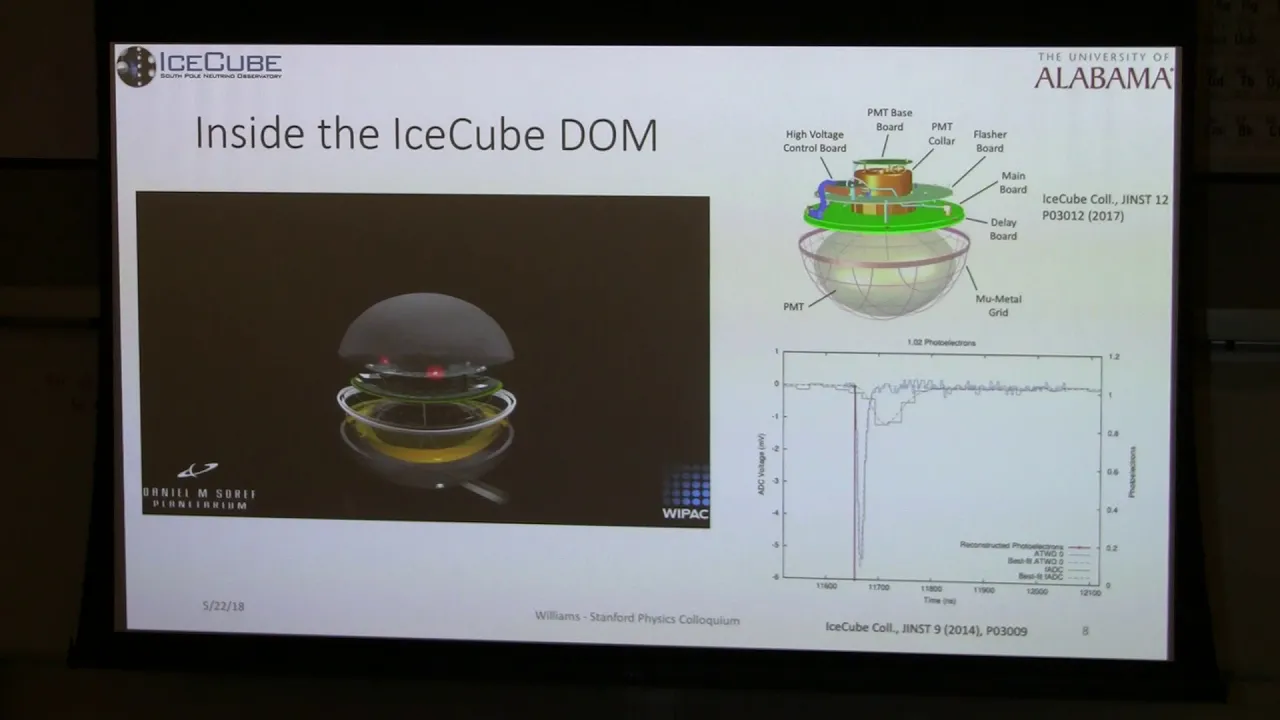
IceCube Neutrino Observatory: Neutrino Astrophysics Explained
@StanfordPhysics
1.5K views•2018-05-23
61:17
First Billion Years of the Universe with the Square Kilometre Array
@iaaudc
121 views•2022-05-26

58:12
The Universe Becomes Visible: Cosmic Dawn and Reionization Explained
@crashcourse
81.5K views•2024-06-05
6:10
Gamma-Ray Bursts: Cosmic Snipers Explained | Astronomy
@kurzgesagt
15M views•2016-07-31
Related Study Plans & Knowledge Roadmaps
Structured learning paths in Astronomy
astronomy
Reionization: Pop III Stars, IGM & 21cm Line
01Foundations of Cosmology & the Early Universe
02Population III Stars & Cosmic Dawn
03Physical Mechanisms of Reionization
+ 2 more learning modules
17h5 modules
Explore Roadmap
astronomy
Planetary Rings: Dynamics, Roche & Resonances
01Foundations of Gravity and Orbital Mechanics
02Tidal Forces and the Roche Limit
03Structure, Composition, and Collisions
+ 2 more learning modules
10h5 modules
Explore Roadmap
astronomy
Asteroseismology: Stellar Waves, Ages & Cores
01Foundations of Stellar Astrophysics & Wave Mechanics
02Stellar Oscillation Modes: P-modes and G-modes
03Mathematical Framework of Asteroseismology
+ 2 more learning modules
35h5 modules
Explore Roadmap
astronomy
Adaptive Optics: Physics, Engineering & Control
01Foundations of Wave Optics and Wavefronts
02Atmospheric Turbulence & Optical Distortion
03Wavefront Sensing Technologies
+ 3 more learning modules
35h6 modules
Explore Roadmap