























Richard Hamilton's 1956 collage 'Just What Is It That Makes Today's Home So Different, So Appealing?' created for the This Is Tomorrow exhibition at London's Whitechapel Art Gallery, is considered among the earliest works of Pop Art; this groundbreaking piece bridges high art and consumer culture by using American magazine imagery to depict post-war consumer culture, featuring a crowded living room filled with consumer goods like televisions, tape recorders, and appliances, with a nude bodybuilder and woman serving as contemporary Adam and Eve surrounded by temptations of mass-produced consumer items, thereby establishing key Pop Art themes of consumerism, fame, and media influence.
Richard Hamilton's 'Just What Is It' | Pop Art Analysis
Added:The socioeconomic landscape of post-World War II reconstruction, specifically the rise of mass consumerism, suburbanization, and advertising culture in the 1950s.
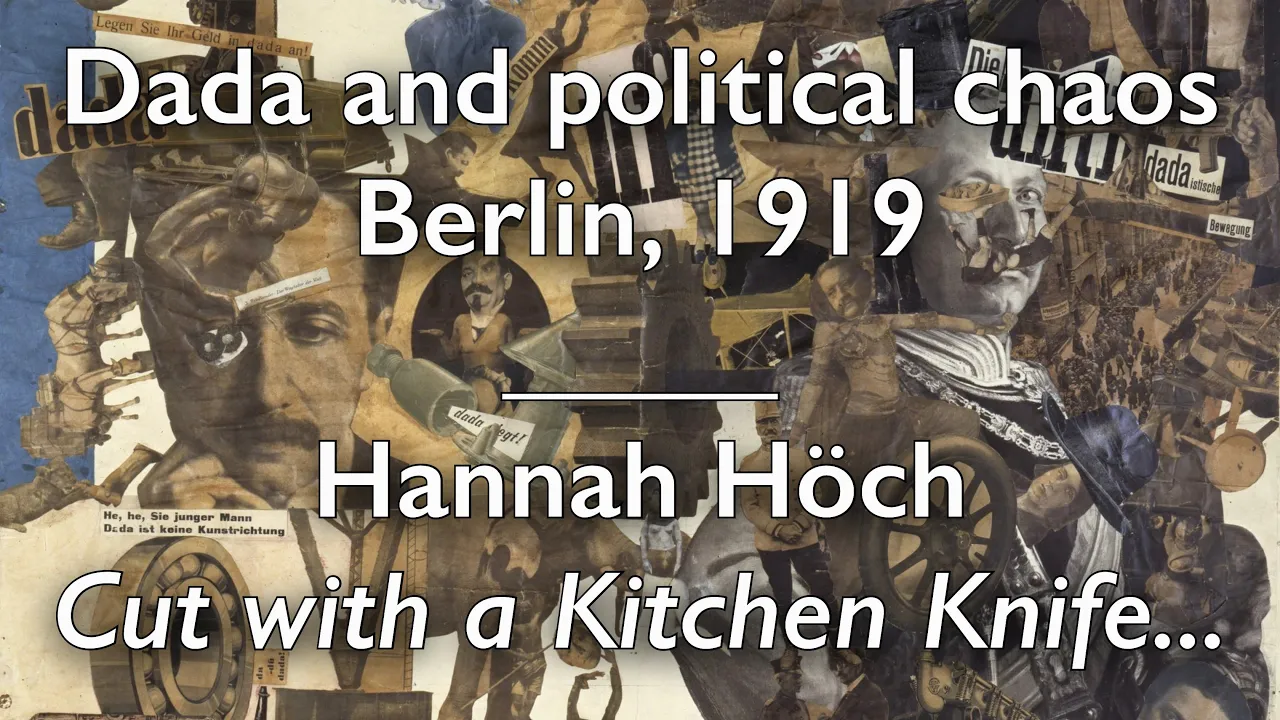
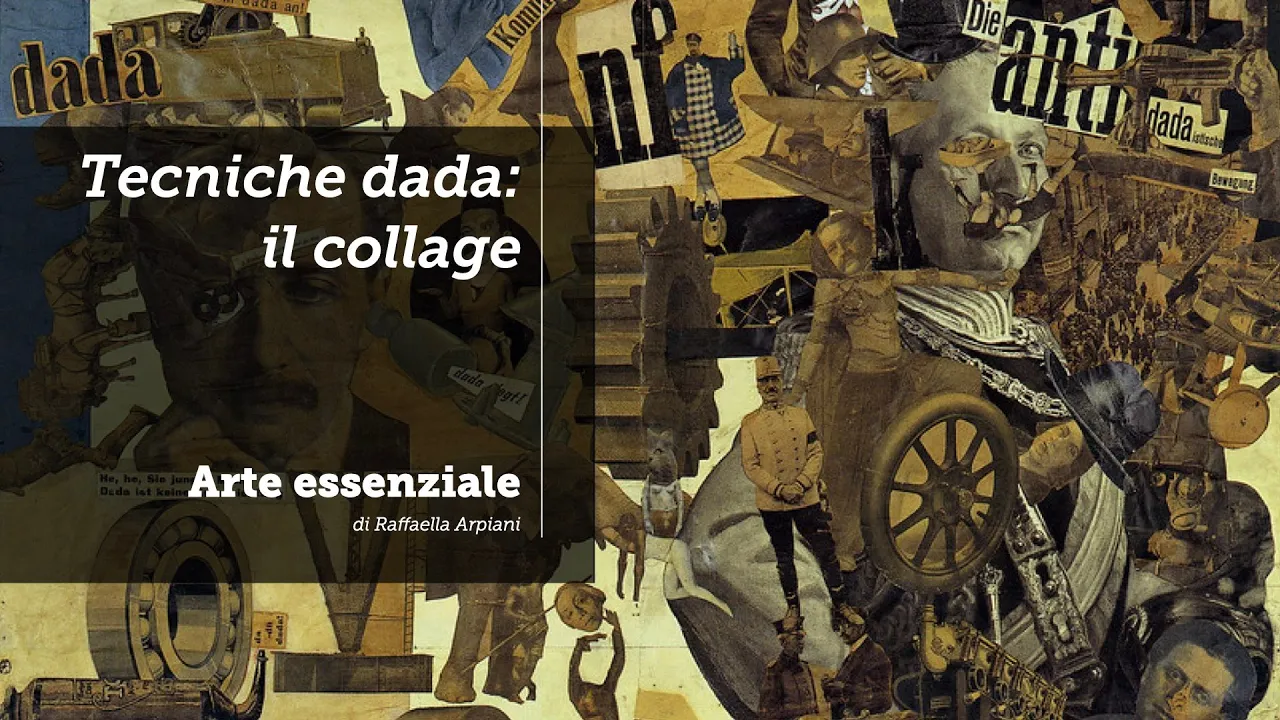
The historical development of collage and photomontage, particularly how Dadaists used these mediums for political and social critique.
The traditional dichotomy between 'high art' (academic painting, sculpture) and 'low culture' (mass media, comic books, product design) prior to the mid-20th century.
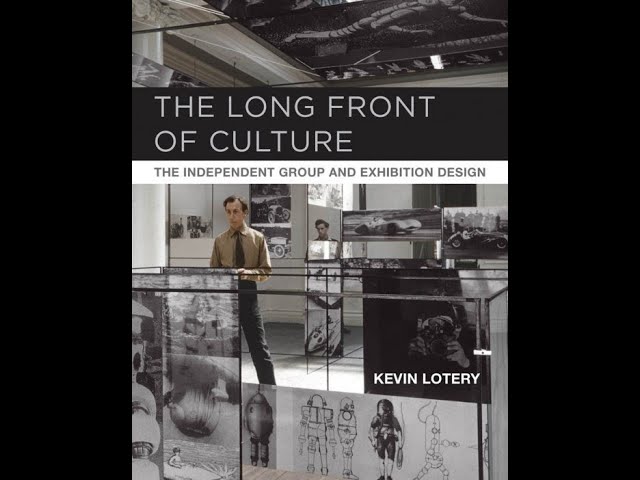
The emergence and artistic philosophy of the Independent Group, a collective of British artists, writers, and architects who challenged modernist fine art conventions.
A comparative study of British Pop Art versus American Pop Art, analyzing how artists like Andy Warhol and Roy Lichtenstein adapted these themes in a US context.
The historical significance and curation of the landmark 1956 'This Is Tomorrow' exhibition at London's Whitechapel Art Gallery.
Postmodern art theories concerning appropriation, kitsch, and the commodification of the art object in late-capitalist society.
The evolution of consumer culture critique in contemporary digital art and modern collage, including internet art and culture-jamming.
12.2K views145likes8:00Original Release: 2018-08-21
Richard Hamilton was an English painter and collage artist. His 1956 collage "Just What Is It That Makes Today's Home So Different So Appealing?" is considered by critics and historians to be among the earliest works of Pop Art. For Hamilton, pop art meant emerging in popular culture such as movies, television, magazines, and music. His alignment with the Rolling Stones and the Beatles from whom he designed the White album cover as a limited edition print demonstrates he succeeded in bridging this gap between high art and consumer culture. Just What Is It That Makes Today's Home So Different So Appealing was created for the catalogue of the exhibition This Is Tomorrow in London, England and was first reproduced in black and white. This Is Tomorrow was an art exhibition in August 1956 at the Whitechapel Art Gallery in London. The exhibition included artists, sculptors, and graphic designers who got together in the 1950s to discuss aspects of visual culture that weren't considered part of a traditional artists work. The Independent Group wanted to challenge the modernist approaches to culture and got the public's attention with this participation in this exhibition. Since most of these imports were from America it made them especially fascinating. The exhibition's most remembered exhibit was a room created by artists such as John McHale and of course Richard Hamilton The collage consists of images taken mainly from American magazines. It focused on American mass culture and depicts the post-war consumer culture of the late 1950s. The living room is crowded with objects of desire: a TV set, tape recorder, and the bodybuilders muscles. It can be said that the crowded imagery of this collage is the depiction of the new culture that will not be sustained. Hamilton laid the groundwork for pop art and introduced the ideas as an active consumer and contributor to mass culture. In Britain during the early post-war era, there was a sudden desire of streamlined consumer goods from the United States. Much of the middle class was still struggling in England and the slower post-war economy so this collage was filled with state-of-the-art luxuries. The collage presents all the ways of communicating available at that time and reflects Hamilton's interest in popular culture and technology. Hamilton designed the collage as a parody of American advertising. The title was actually the first line of a copy in an ad that appeared on the inside cover of an American magazine called the "Ladies Home Journal" in 1955. It also introduced the theme of interior design and created an image of the future. In his collage, Hamilton inserted various objects and the most eye-catching figure is the nude bodybuilder and in his right hand he holds an enormous lollipop. In addition to the television and vacuum, cleaner various items representing the modern consumer economies surround them.
A large tin of ham, the Ford Motor Company crest, and the tape recorder.
What first appears to be the ceiling of the room if you look closer it looks like a photograph of outer space which can represent the Space Race between the Soviet Union and the United States which began on August 2nd, 1955. Hamilton's collage emphasizes on the nude man who was built with an ideal body as well as the new nude woman. They can be recognized as a contemporary Adam and Eve surrounded by the temptations of the post-war consumer goods.
Hamilton's collage is iconographic because it was created during the time in which people were fascinated by television, cars, theaters, and recording devices. As you see, he uses this imagery in his artwork. In the left side corner of the collage Hamilton inserted an arrow that ready "Ordinary cleaners reach only this far" The implied line allows Hamilton's audience to assume that nobody can maintain their mainstream image when they vacuum the stairs, so fortunately they get a maid to do it. Also with the longer hose of the vacuum the hired help can stay farther away from the homeowners. The proportion of the maid in Hamiltons' collage also depicts how she is less important than the homeowners. One aspect of this collage that is inspired by Pop Art is a Young Romance poster on the wall. It overpowers the portrait next to it which is in black and white so the audience can assume it is from a past generation.
The Young Romance poster is bigger, colorful, and more dramatic. The "Young" aspect is intriguing and I assume Hamilton placed these two portraits to compare life before Pop Art. Aside from all the things they do own, it's interesting to explore what they don't have. We can see that the only phone in the room is on the television. This may serve to show that the continual source of the homeowners inspirations and desires. They watch television to learn about what else they need. The collage clearly expresses the culture fascination of the perfect American lifestyle and an up-to-date image of contemporary life. Richard Hamilton's contemporary Adam and Eve's image is dependent on the things they own and the things they own are determined by mass media and mainstream consumerism. The main ideas Pop Art has about consumerism as well as fame and placing value can be seen in Hamilton's collage. The artwork I decided to create is a collage just like Richard Hamilton's. I was influenced by the crowded imagery in his artwork and the use of items popular in the consumer culture of America. I cropped items out of articles and inserted them into a background of a lavish living room. One of the most prominent figures in Hamilton's collage is the nude woman sitting on the couch. I have placed the Kardashian family on the living-room couch in my artwork because they have become iconic figures in popular culture. I also inserted ways of communicating just the way Hamilton did. I replaced the tape recorder and black-and-white television with iPhones and a flat-screen TV with Netflix provided these two items our consumer goods that are in high demand as well as a Fortnite character which has become a worldwide phenomenon that can be used for entertainment and communication. I also inserted the girl sitting by the coffee table whose attention is completely focused on her cellphone. As we all know social media is a great way to participate in social networking, however human interactions are becoming more absent. Just as Hamilton placed a maid away from the homeowners I placed a maid robot which I believe will soon be part of American households. However, it will be considered a luxury and only those who can afford such a luxury will be able to enjoy it. The robots proportion is also smaller to the homeowners which depicts how it is less important. Just What Is It That Makes Today's Home So Different Do Appealing?
is remarkable because at the time in 1956 it would be several years before the phenomenon of pop art was recognized. Somehow Hamilton sensed the direction in which contemporary art was moving and laid the groundwork for Pop Art.
Thank you for watching!
Up Next

6:01
Eduardo Paolozzi and the Independent Group Pop Art Legacy
@Ozkar824
8.4K views•2009-12-04

114:18
Christian Iconography: History, Theology, and Meaning | Fr. Panayiotis Papageorgiou
@Trisagionfilms
58.8K views•2020-02-21
7:48
Ukiyo-e Art: History, Woodblock Printing & Influence
@japanathand
6.3K views•2023-06-08

16:34
Earliest Depictions of Jesus in Art: 10 Ancient Images Explained
@UsefulCharts
5.9M views•2022-06-03
Related Study Plans & Knowledge Roadmaps
Structured learning paths in Art History
art-history
Gothic Cathedrals: Engineering, Light & Society
01The Birth of the Gothic: Romanesque to Suger's Vision
02The Structural Triad: Pointed Arches, Ribbed Vaults, and Flying Buttresses
03Theology of Light: Lux Nova and Sacred Geometry
+ 2 more learning modules
14h5 modules
Explore Roadmap
art-history
Pre-Raphaelites: Realism, Symbolism & Critique
01The Victorian Art Establishment and Academic Formula
02The Founding of the PRB and Radical Realism
03Medieval Revivalism and Literary Symbolism
+ 1 more learning modules
8h4 modules
Explore Roadmap
art-history
Street Art: From Subways to Art Market
01Subcultural Origins in Philadelphia and New York (1970s)
02The Subway Era and Style Wars (Late 1970s - 1980s)
03The East Village Scene and Early Gallery Crossover
+ 2 more learning modules
10h5 modules
Explore Roadmap
art-history
Classic Maya Art: Iconography, Glyphs & Ritual
01Foundations of Classic Maya Visual Culture
02Deciphering Maya Hieroglyphs & Text-Image Integration
03Sacred Geography and Cosmological Architecture
+ 2 more learning modules
14h5 modules
Explore Roadmap