






















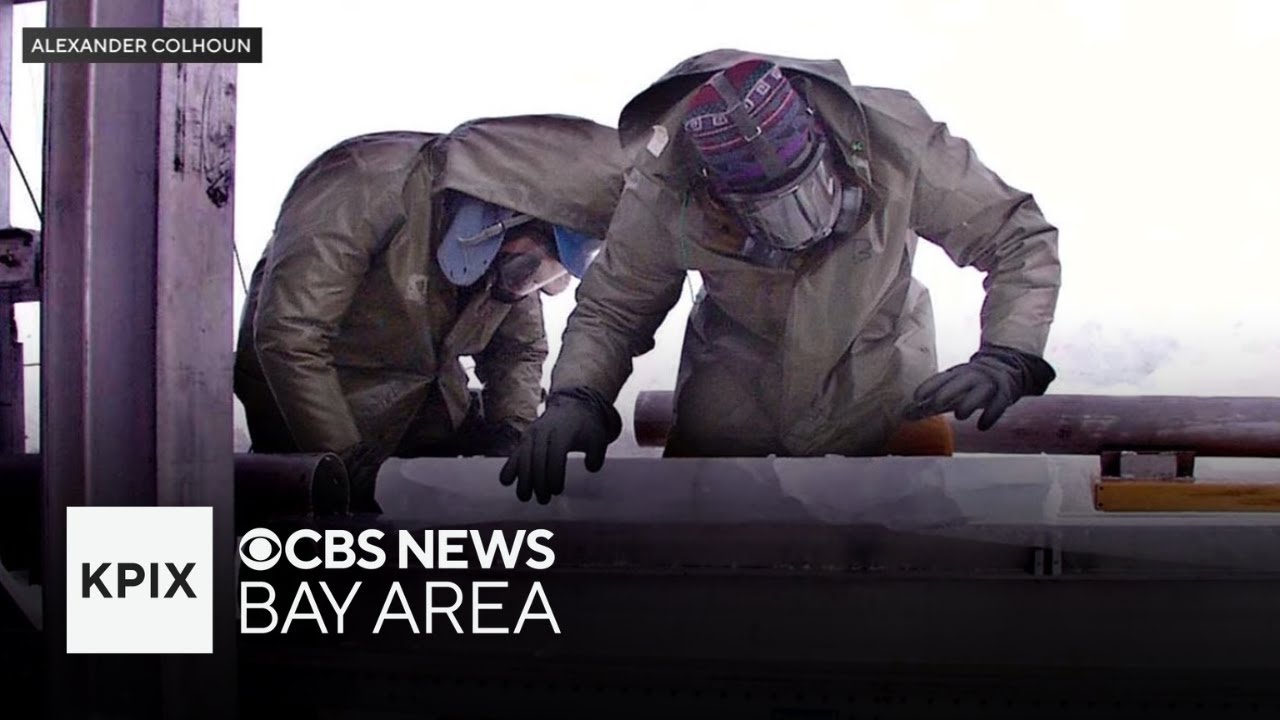

The global carbon cycle describes the continuous exchange of carbon between the atmosphere, living organisms, oceans, and geological reservoirs, involving key processes such as photosynthesis (where plants fix atmospheric CO2 into organic compounds), cellular respiration (where organisms oxidize organic carbon back to CO2), and geological deposition (where carbon becomes locked in limestone and fossil fuels over millions of years); this cycle operates through redox reactions where carbon alternates between oxidized and reduced states, and human combustion of fossil fuels disrupts this balance by releasing stored carbon back into the atmosphere at rates exceeding natural absorption, leading to increased atmospheric CO2 concentrations and global warming.
The Global Carbon Cycle: Chemistry Explained
Added:You and I began this journey a year ago when I introduced you to this spectacular method for understanding the world.
While physics explains the mechanics of the universe, and biology describes how life functions and interacts with itself, chemistry lies between.
In our next course we are excited to announce that we're gonna to be exploring psychology, the study of human mental functions and behavior.
Chemistry has brought us great insights into even such complicated sciences as psychology, like how neurotransmitters allow us to feel anxiety, and hormones give us our desires.
But before we drill down into the level of your brain and blood stream, I want to close out this course with a talk about chemistry on a global scale.
Certainly larger than your mind - though I'm not sure it's more complicated!
It is complicated though. And also terrifying.
Let's talk about a little thing called "Global Warming" and the spiking atmospheric CO2 concentrations that are causing it.
I'm sure you are aware.
But awareness isn't the same thing as understanding, and if I had one final attempt to persuade you that chemistry is important, which I do, I'd tell you about the carbon cycle, which is what I'm about to do.
Of all the chemistry that happens on this planet the carbon cycle is the thing that makes Earth "earthy", unique among planets that we know and understand.
The early Earth's atmosphere was made up of Ammonia, Methane, Nitrogen, and Carbon Dioxide among some other things, but essentially there was no free oxygen.
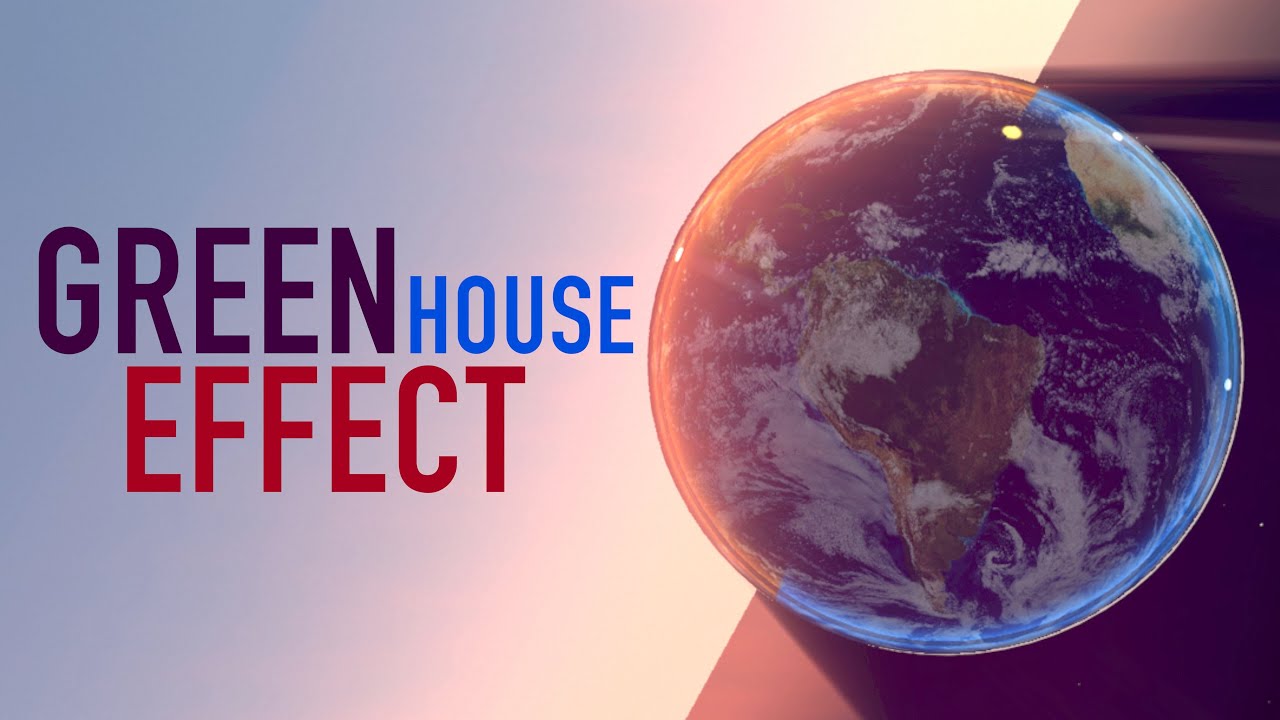
Many of these gasses, including CO2, are what we call "Greenhouse Gases", because they absorb heat energy thus increasing the average temperature on earth.
When plants came along with their fancy photosynthesis, they used up most of the carbon dioxide in the atmosphere.
They used that carbon to make life, turning carbon dioxide into a rare commodity, while producing huge amounts of oxygen to create a whole new atmosphere.
These changes served not only to open up the earth's atmosphere, allowing huge amounts of head to radiate back into space, they also created a huge reservoir of highly energetic organic forms of carbon that are used as fuel by living things.
Including us.
Organic carbon, or in the language of chemists "reduced carbon", is natures equivalent of a battery.
Organisms can draw power by feeding on organic carbon compounds and then oxidizing the reduced carbon back to carbon dioxide.
Lots of organisms are good at this. No organisms are as good at this as we have become.
Carbon's role in the biology and physics of our planet is unparalleled.
It's the main route for the transfer of energy between organisms, and it's the main way that we trap heat in our atmosphere, and that's why when we talk about global warming we talk about carbon: carbon footprints, carbon credits, carbon loading.
So, let's wrap up our study of the chemical universe by going not all the way back to square 1, but square 6... on the periodic table! That's right we have a periodic table designed by Thought Café.
It's a beautiful Crash Course: Chemistry period table, it's quite large, and you want it, and it's available for $15 at dftba.com [Theme Music] Since carbon is the stuff of life, one of the best ways of understanding the carbon cycle is just a whole bunch of things living and dying, and in the process swapping carbon.
Here's the 30 second version: Plants use the carbon in the atmospheric CO2 to make sugars and other carbohydrates to grow and reproduce.
Lots of those plants end up being eaten by other organisms supplying them with the building blocks for other biological molecules and fuel.
After being metabolized the carbon returns to the environment in one of several different ways, ending up in the air, water, or the earth itself.
From that point it's released naturally or is extracted by humans; in either case returning carbon dioxide to the atmosphere and it starts all over again.
So let's talk about those green plants and what is is exactly that they do.
Photosynthesis is an extremely complex process, and it can happen in a couple of different ways, depending on the organism.
But the main point is to take in carbon dioxide from the environment and use a process called carbon fixation to convert it to organic compounds such as sugars.
It's called fixation because it takes carbon in the form of a gas, carbon dioxide, and solidifies it into solid carbon compounds. A general reaction looks like this.
Note that CH2O isn't actually a thing, it's a reduced formula that stands for a simple carbohydrate; a compound that's composed of carbon, and hydrogen, and oxygen at a ratio of 1 to 2 to 1.
In real life there are all kinds of carbohydrates and they're usually a lot larger, but chemists use this streamlined version to illustrate the basic reaction.
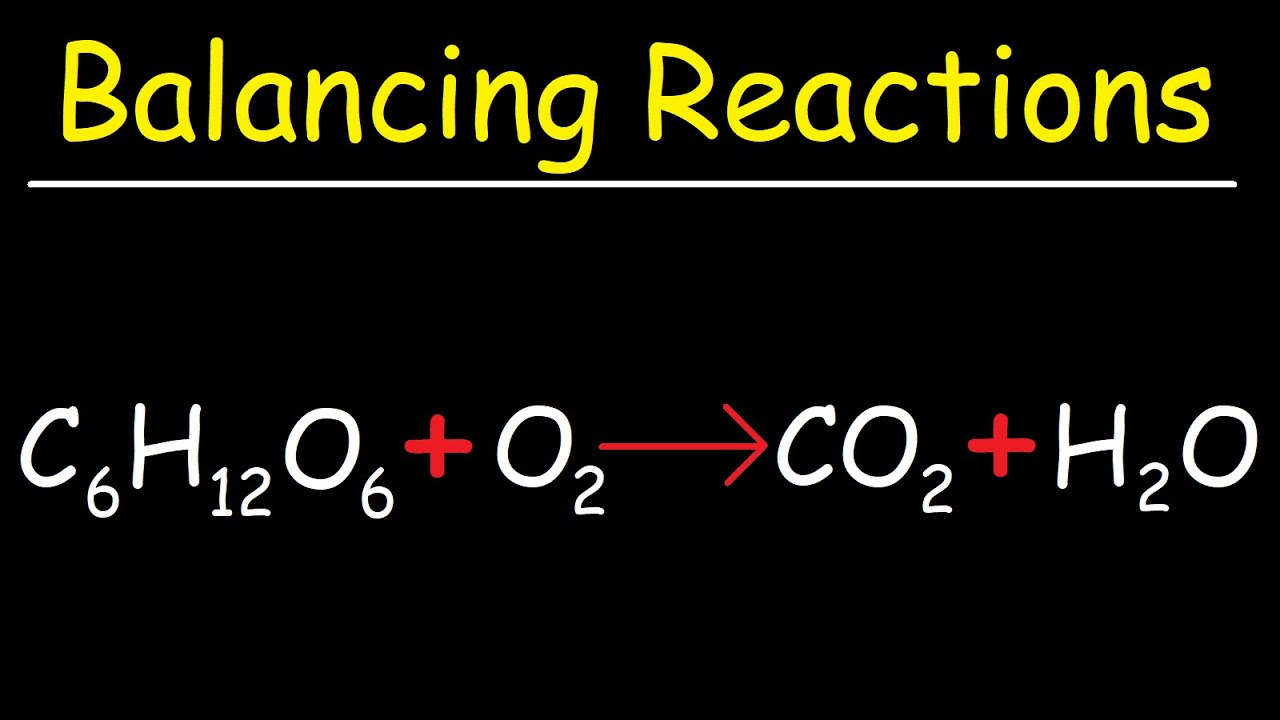
And the reaction is basically the same with any hydrocarbon, but you've probably seen it written most often with glucose.
In this form we say that 6 moles of carbon dioxide plus 6 moles of water plus some light energy yields a mole of glucose plus 6 moles of oxygen.
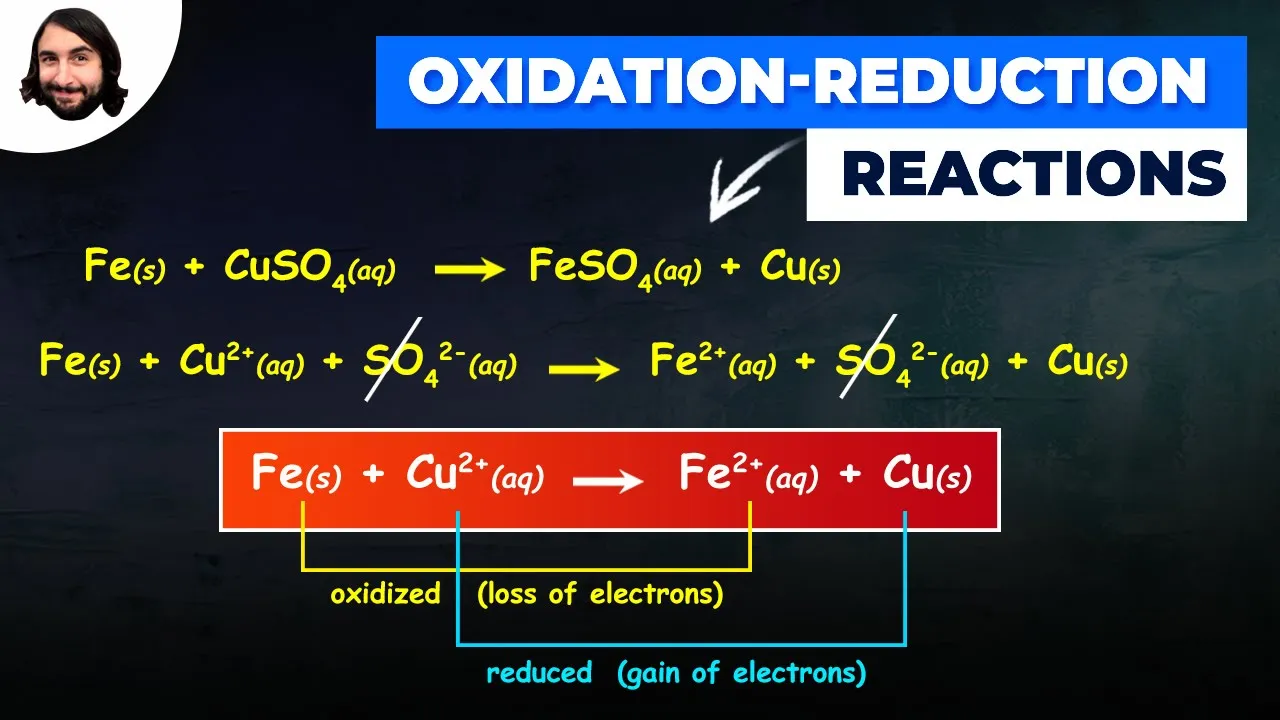
Either way you might have noticed something important: this is a redox reaction!
Carbon is reduced, going from an oxidation number of plus 4 to 0, and oxygen goes from negative 2 to 0, meaning that oxygen is oxidized. It can happen!
And the carbohydrates produced by these carbon fixation reactions are the most sought after currency among earths living things.
Because organisms can use them in 2 different ways: as building material, and as fuel.
Some carbohydrates go through additional reactions to become even more complex, like starches, fats, proteins, nucleic acids, and all the other stuff that makes up living things.
Meanwhile other carbohydrates, the ones that are used to produce energy, go through a process called cellular respiration.
Like carbon fixation, respiration is an extremely complex cluster bomb of reactions, so we typically condense it too down to a fairly simple reaction.
The overall reaction for respiration is essentially the reverse of carbon fixation.
A carbohydrate and some oxygen react to produce carbon dioxide, water, and energy.
Again, this is most commonly written with glucose, so we'll do that here too.
And like carbon fixation it's also a redox reaction.
In this case the oxygen is reduced from an oxidation number of 0 to -2, and the carbon is oxidized from 0 to +4.
That's right, the cells of living things re-oxidize the reduced carbon and re-reduce the oxidized oxygen to produce all the energy that keeps living things alive.
But despite the fact that these two reactions look like the exact opposites of each other, even down to the changes in their oxidation numbers, it's important to remember that they're just summaries.
The overall processes actually include lots of steps that are completely different from each other.
Now after organisms metabolize carbohydrates the carbon can be re-released back into the world in several ways.
For one thing lots of carbon dioxide is released as a direct product of cellular respiration: for you and me that happens mostly when we exhale, and that carbon dioxide can be recycled immediately by photosynthesizers.
For organisms that live in water the carbon that they release largely ends up dissolved in that water, and oceans and other surface water can also dissolve carbon dioxide directly from the air.
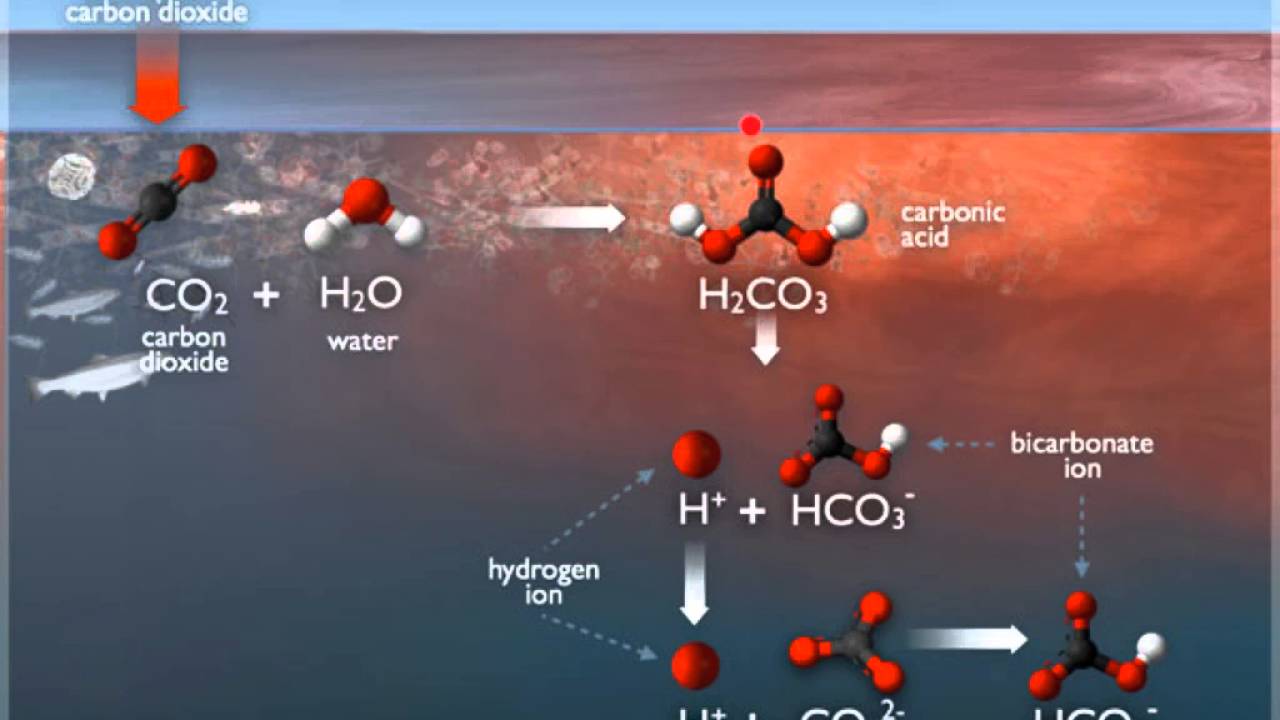
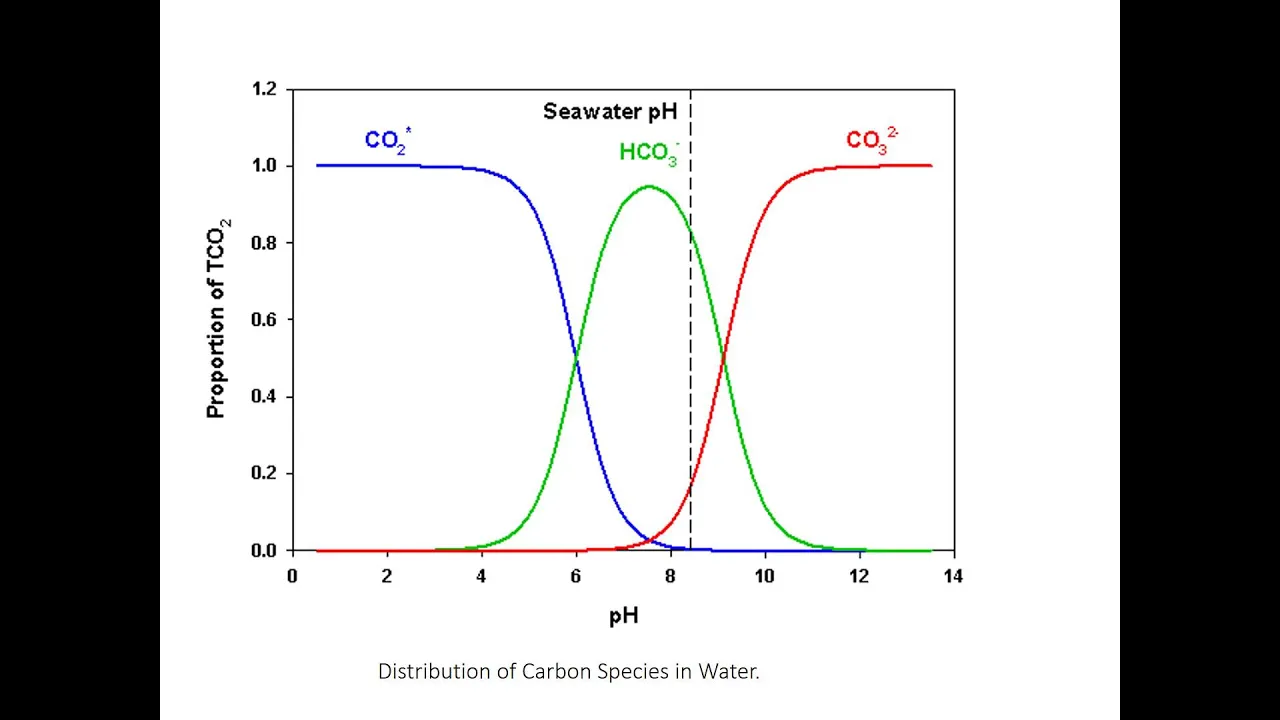
No matter how it gets there, carbon dioxide reacts with water to form carbonic acid; a weak acid that dissociates into hydrogen and bicarbonate ions.
The hydrogen ions can react with various rocks and other substances in fairly typical neutralization reactions.
This results in weathering which, besides melting the faces off of statues, produces stuff that forms clays.
But the carbonate ions have a whole bunch of functions, especially in marine animals, which use them to build their shells and skeletons in the form of calcium carbonate.
The carbon remains trapped there until those animals die and their structures break down, which happens on huge, very slow, geologic time scales.
And if the conditions are just right like in the super high pressures and temperatures in the earth's crust, large deposits of calcium carbonate can eventually form rocks like limestone.
And before you start thinking rock equals boring, you should know that about 80% of all the carbon on the planet is locked up this way, as inorganic carbonates in the earths crust and mantle or lithosphere.
Most of the remaining 20% is spread throughout the lithosphere too, as organic carbon from buried organic matter.
So, those pools of carbonate everyone's so obsessed with, those fossil fuels that we use to power all the things?
They account for only 0.006% of all the carbon on earth.
Those carbon deposits got there from the dead bodies of other organisms, like plants that managed not to be eaten or have their carbon released some other way.
Hence the name fossil fuels - the dead things that you know today as coal, petroleum, and natural gas.
The general chemical reaction for the combustion of those fuels is just a hydrocarbon reacting with molecular oxygen to form carbon dioxide and water vapour.
For example each mole of methane, the simplest hydrocarbon, reacts to form 1 mole of carbon dioxide.
And of course this too is a redox reaction, where carbon is oxidized all the way from -4 to +4, and oxygen is reduced from 0 to -2.
Combustion is an extremely common reaction type.
The only change that occurs from one example to the next is the hydrocarbon, and obviously as larger more complex hydrocarbons are used the CO2 production per mole of fuel increases.
What about gasoline for example?
The combustion of octane, a main ingredient of gasoline, produces 8 moles of carbon dioxide for every 1 mole of fuel used.
A mole of octane is only about 0.15 liters or 0.041 gallons, but those 8 moles of CO2 take up nearly 180 liters of space at standard pressure and temperature.
This carbon dioxide is released back into the atmosphere where it re-enters the carbon cycle.
The problem with all this is that the environment can only really re-absorb about 40% of the 30 million tons, or giga-tons, that humans produce annually, so we have a surplus of about 18 giga-tons of CO2 every single year, and that number goes up every single year.
The excess remains in the atmosphere trapping the sun's heat causing temperatures to rise.
And yes, there are other greenhouse gases too; methane, ozone, even water vapor, to name a few, but none of these are increasing in abundance at nearly the rate that carbon dioxide is.
The good news is that now you understand the problem better than you did 10 minutes ago, and understanding about situations in the first step to making it better.
That goes for all situations really, not just chemistry ones, so continue to pay attention to what's happening in the world around you, keep learning science, and never stop caring.
And thank you for the difference you have made by watching this episode of Crash Course: Chemistry, and this entire Crash Course: Chemistry course, which I hope you watched.
In this episode you learned that the carbon cycle includes carbon fixation, both cellular and macroscopic respiration in living things, and deposition in limestone and fossil fuels, and that many of the chemical reactions involved in the carbon cycle are redox reactions.
And finally, you learned, from the chemistry perspective, exactly why the excessive burning of fossil fuels harms the environment.
And I'd especially like to thank all of our Subbable subscribers, without whom we would literally not be able to do this.
Would you like a personally signed giant Crash Course periodic table?
Or even to see yourself animated in one of our future episodes?
To find out about these and other perks go to Subbable.com.
And thanks too to our skilled writer Edi Gonzalez, script editor Blake de Pastino, and our chemistry consultant Dr. Heiko Langner.
This episode was filmed, edited, and directed by Nicholas Jenkins, the script supervisor was Michael Aranda who was also our sound designer, and our graphics team is Thought Cafe.
Up Next
AQA A-Level Chemistry: Halogenoalkanes Revision Guide
@AlleryChemistry
148.9K views•2017-05-08
Biocatalysis and Catalysis in Islatravir Synthesis | Merck Webinar
@SCIwheresciencemeetsbusiness
675 views•2020-10-08
Nuclear Chemistry: Radioactive Decay & Half-Life Explained
@crashcourse
2.1M views•2013-11-11

Edible Water Bottles: A DIY Guide to Sodium Alginate Spherification
@ryan
10.5M views•2019-06-21
Related Study Plans & Knowledge Roadmaps
Structured learning paths in Chemistry