













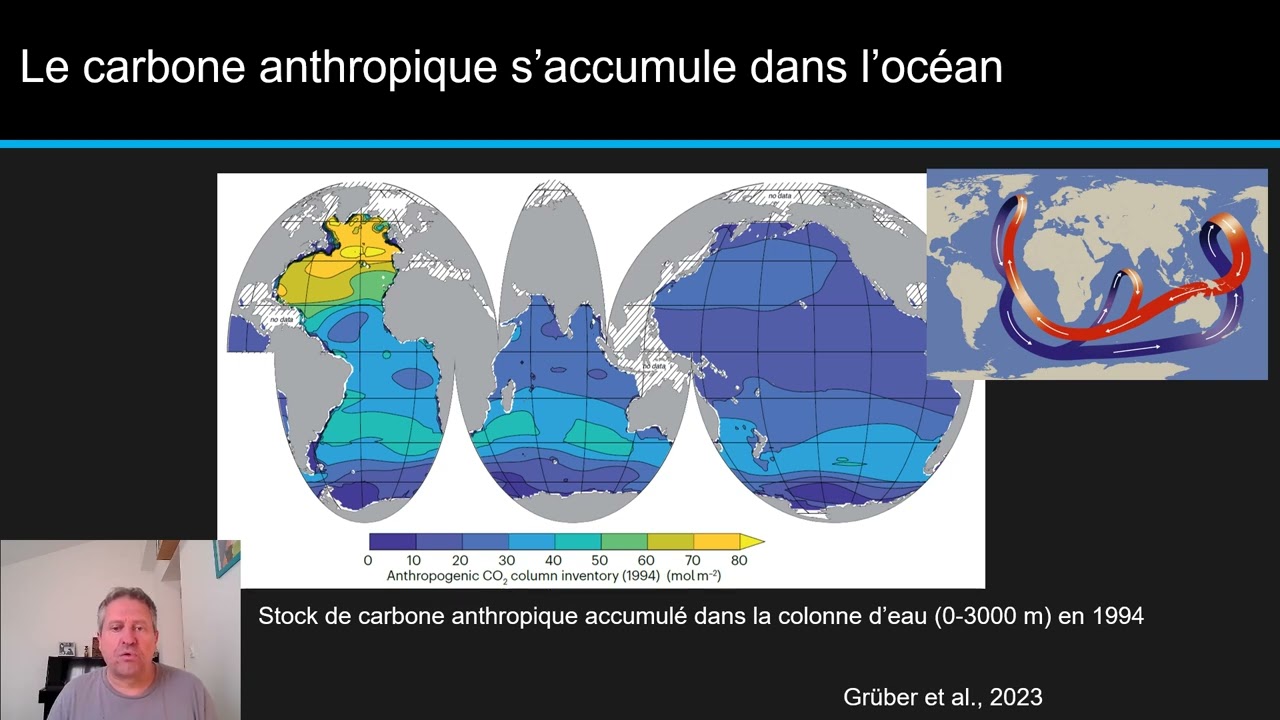

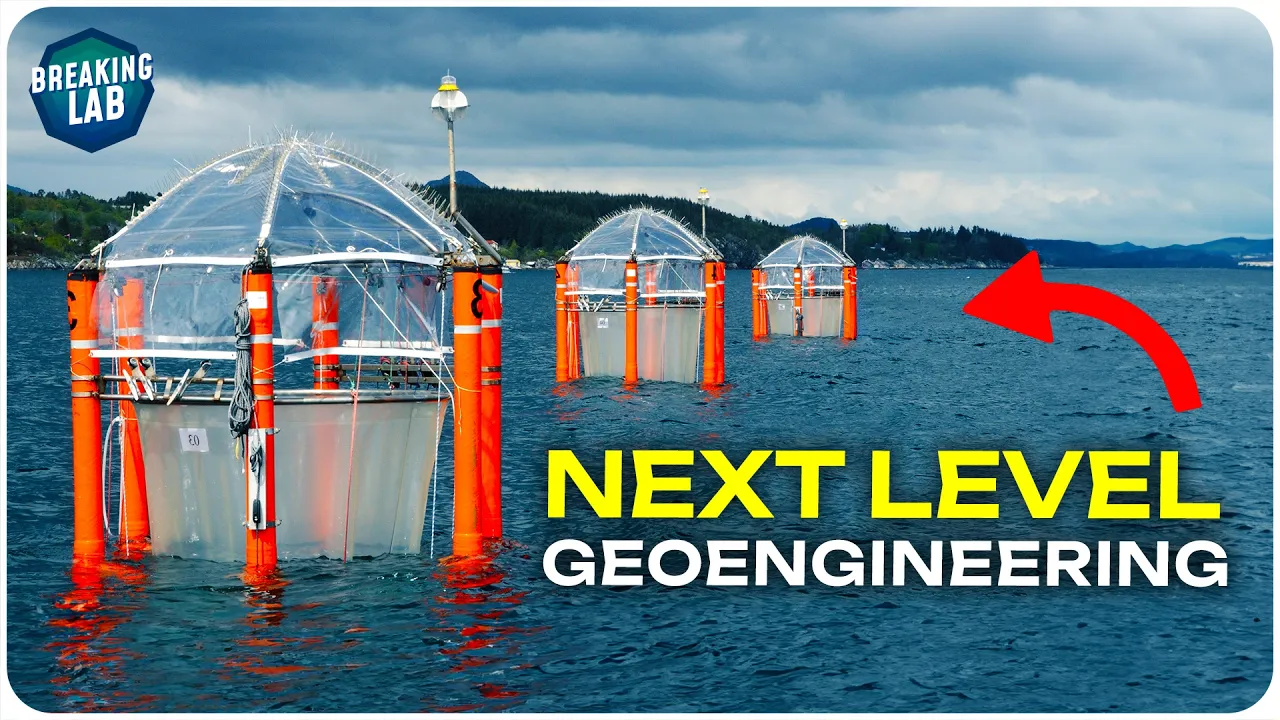
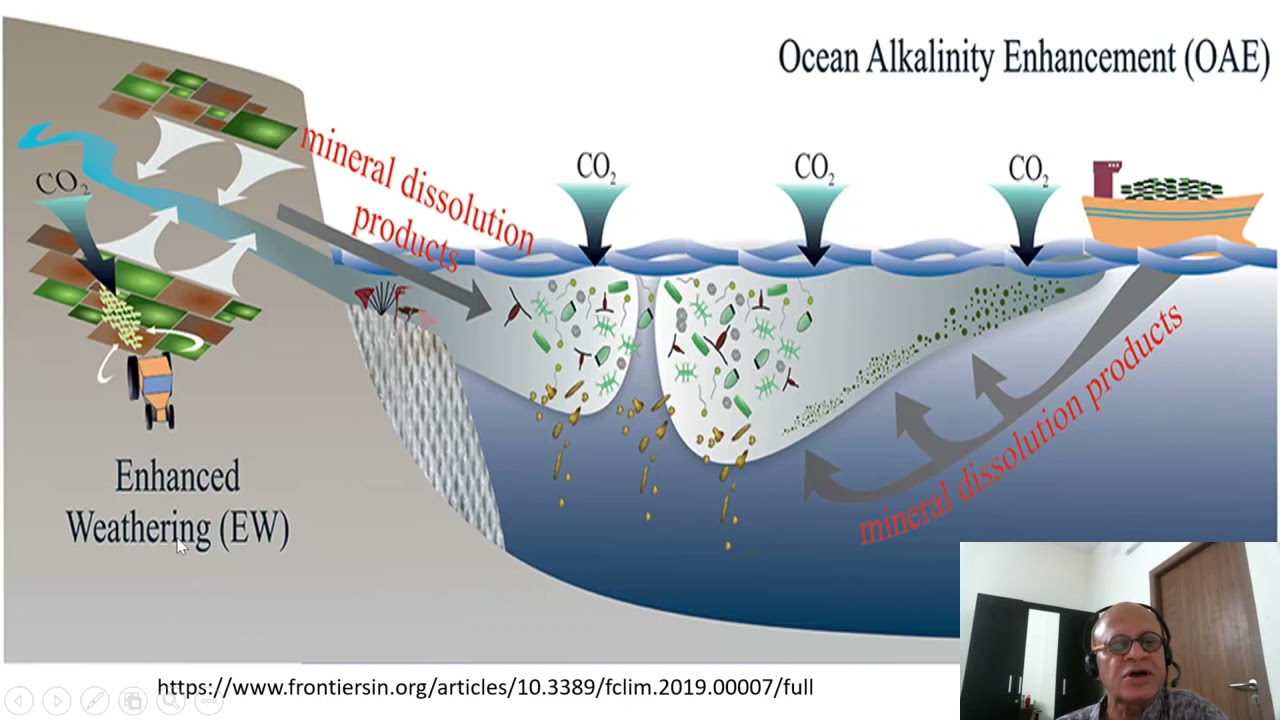
The ocean contains approximately 900 gigatons of carbon in its surface layer, compared to 600 gigatons in the atmosphere, making it the dominant reservoir for carbon storage; when CO2 dissolves in seawater, it forms carbonic acid which dissociates into bicarbonate and hydrogen ions, creating an equilibrium where most ocean carbon exists as bicarbonate; this equilibrium means that ocean acidification (lower pH) reduces the ocean's capacity to store carbon by converting stored bicarbonate back into exchangeable CO2, thereby decreasing the ocean's ability to absorb atmospheric CO2 and potentially worsening climate change.
Ocean Carbonate System & CO2 | Marine Chemistry Explained
Added:Basic chemical equilibrium and Le Chatelier's principle, specifically how chemical systems shift in response to changes in concentration.
The concept of pH, acid-base chemistry, and how hydrogen ion concentration determines acidity and alkalinity.
An introductory understanding of the global carbon cycle, particularly the exchange of CO2 between the atmosphere and surface oceans.
Familiarity with key chemical species involved in ocean chemistry, such as carbon dioxide (CO2), carbonic acid (H2CO3), bicarbonate (HCO3-), and carbonate (CO32-).
The biological impacts of ocean acidification on marine calcifiers, such as corals, shellfish, and coccolithophores.
The concept of 'Blue Carbon' and the role of coastal marine ecosystems like mangroves, salt marshes, and seagrasses in carbon sequestration.
Advanced climate feedback loops, specifically how rising sea surface temperatures alter CO2 solubility according to Henry's Law.
Marine geoengineering solutions and mitigation strategies, such as Ocean Alkalinity Enhancement (OAE) and artificial ocean fertilization.
22.6K views230likes18:58Original Release: 2015-11-20
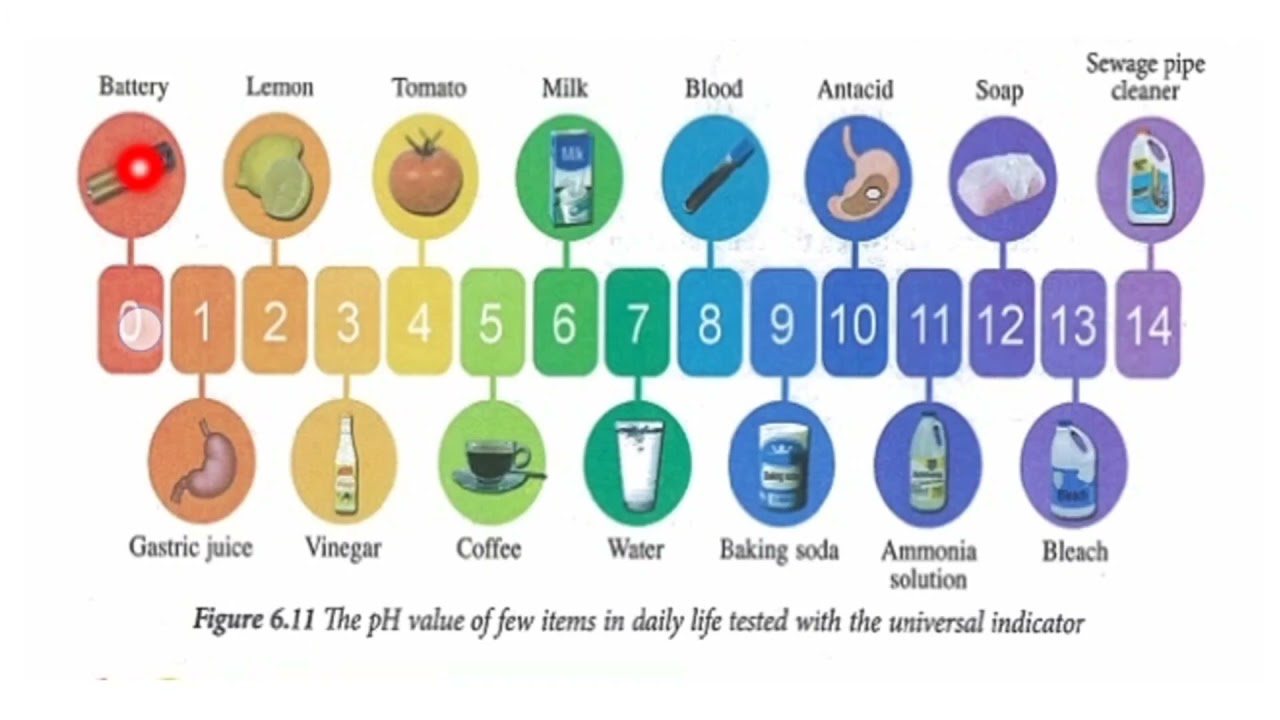
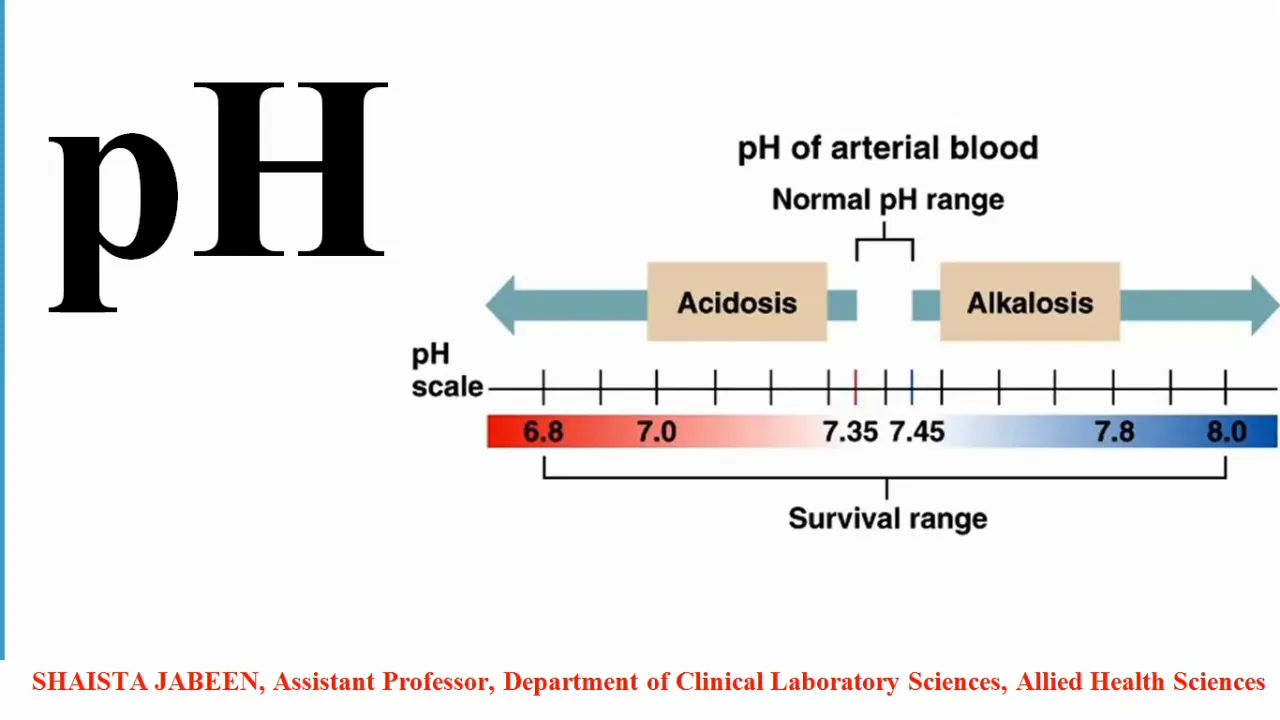
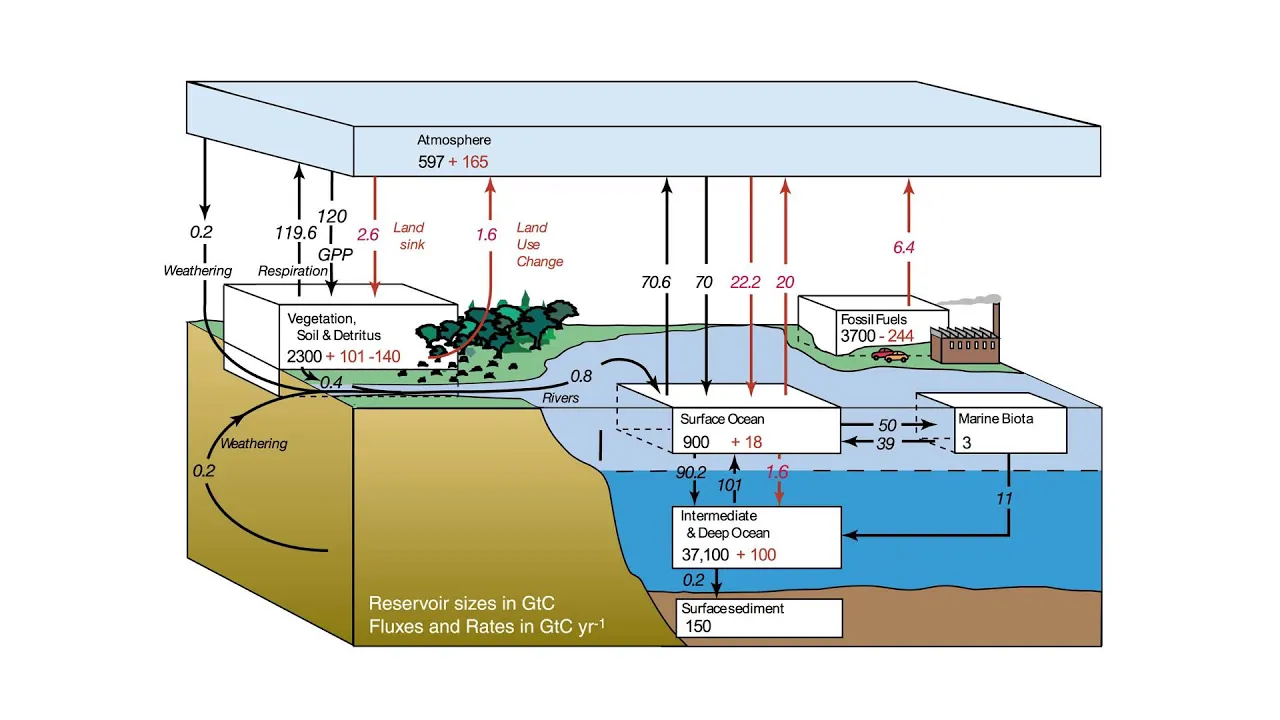
okay so uh we're going to talk about carbon now so carbon in the ocean is really really important uh because the carbon dioxide in the atmosphere is responsible for the greenhouse effect both the natural and the anthropogenic greenhouse effect so if the concentration of carbon in the ocean affects the atmospheric concentration that will then affect climate okay so this is a figure from the ipcc report um a couple of years ago and the numbers in these in the boxes here are basically the the amount of carbon in that reservoir in giga tons of carbon which is a lot of carbon right so the atmosphere has worth 600 giga tons of carbon naturally we've added almost 200 gigatons of carbon by burning fossil fuels um but if you look at the ocean okay so the surface ocean so this just the warm layer on the top of the ocean that has 900 gigatons okay so uh i guess a third larger again than half as large again that's the atmosphere and then the deep ocean so the deep ocean has 37 000 gigatons of carbon okay which is hugely more than is in the atmosphere okay and remember the the concentration that's dissolved in the ocean is linked to the concentration that's dissolved that is in the atmosphere through this henry's law um process so that works both ways okay so if you change the concentration of the atmosphere that should like if you increase the concentration of carbon dioxide in the atmosphere that should make more carbon dissolve in the ocean okay and that's happening and we'll see that later but also if you increase the concentration of carbon dioxide in the ocean through some other process that will increase the carbon dioxide in the atmosphere okay so really uh it's the because the ocean is such a big reservoir it's the ocean that's really determining what is in the atmosphere okay at least on time timescales of longer than a few years okay so if you remember back to the beginning where i dropped the mouse on the floor and whatnot there was this there was this this there was this weird thing where carbon was massively concentrated in the ocean compared to nitrogen and oxygen okay so this is the reason for that so uh so there's going to be quite a lot of chemistry from now on um so if you don't understand it come and ask me at the end or go through the stuff online there's some youtube videos and you can go through the recording in a lecture so co2 gas in the atmosphere this is a basic this is that reaction of dissolution so some of this gas in the atmosphere will dissolve into the ocean okay this is the same for basically all gases all gases will dissolve in a liquid now it's not that so for oxygen that's all that happens but for carbon dioxide the carbon dioxide that's dissolved actually reacts with water okay and there's basically an abundance of water in the ocean and that forms this species here which is called carbonic acid carbonic acid is a very very unstable molecule okay so this molecule rapidly breaks apart and that's what this reaction is here to form this molecule here which is called bicarbonate and a hydrogen ion okay and then this molecule here is also a little bit unstable that breaks apart to form uh this what this uh molecule here which is carbonate ion and also another hydrogen ion okay so these reactions are equilibrium reactions so they're not like what i'm saying with photosynthesis this is not really a reaction these are real kind of backwards and forwards reactions so there will be some equilibrium okay we'll have dissolved co2 aqueous will have a very very small amount of carbonic acid and then we'll also have some of this bicarbonate and some of this carbonate okay existing all in equilibrium with each other okay so the total co2 okay is some so this this is kind of quite confusing so total co2 includes chemical species that are not co2 okay it includes co2 aqueous carbonate which is this one and bicarbonate and it turns out that the equilibrium of these reactions means that most of the carbon in the ocean is in this form is in this bicarbonate form okay so that means that if you have some co2 in the atmosphere okay it's in equilibrium with the concentration of this aqueous co2 but there's all this other carbon in the ocean that doesn't interact with the atmosphere so that's where all the other carbon is stored essentially so it's stored in chemical species that don't interact with the atmosphere okay now one of the really important things about these reactions is that they are they've got these hydrogen ions on them okay which makes them ph dependent so if you dissolve co2 in the in the water okay that if you add if you add this that drives this reaction towards having more of this okay having more of this means it drives this reaction towards having more of these two and this reaction then forms more of these two which means that you add hydrogen ions okay so what i'm going to do now is demonstrate what that does so with the magic of science um so this i thought some people may have seen your ports up in here okay so this is water and hopefully this ph meter and then come on sure to tell me that it is approximately what we said it's 6.64683 okay so ph meters are notoriously relish they take quite a long time to equilibrate which is why i've got some indicator solution as well so this is mutable orange so the redder this gets the more acidic it is okay okay so that's kind of yellowy now so this is a soda stream okay so i'm not either endorsing or condemning these already occupation of palestine by using solar stream um but that's what they're made and there are no alternatives so so what i'm going to do here is this is just tap water so it says it in a bracken spring or whatever it is but it's not it's just tap water so now i've added co2 to the to the water and it's now fizzy so now when i add the smokefish work i'm going to add the okay so hopefully you can see that those are not the same color we're convinced this one is a little bit more red yeah just for comparison we should put the ph meter and see what that was this comparison so this is um diet whoa this is um sprite zero for those uh so um 4.5 something something something okay so we've lowered the ph okay so we start out with something that's approximately neutral okay we add co2 okay that's you two uh reacts with the water forms carbonic acid and kind of fluid name there that acidifies the water by disassociating and releasing those hydrogen lines okay so so this is this is what happening so we're basically we're adding hydrogen ions by adding co2 okay so this is making the ocean more acidic okay we'll come on to why this is important in a bit so um so we go to some of the processes that are happening here so if we take this is like this that horrible reaction that biologists would be shocked so this is the summary of what happens with photosynthesis and respiration so if we do photosynthesis we take co2 out of sea water so that should make this rein all these reactions go towards replacing that co2 basically that you take out of the system okay so the equilibrium should then shift and raise the ph higher ph lower concentration of hydrogen ions now there's this other series of things that can happen in the ocean so these two i guess summary summary reactions are the precipitation of calcium carbonate so this is making shells corals that kind of thing now we don't actually know which form of carbon is really used in the reaction okay it's either calcium and a carbonate makes calcium carbonate which sounds obvious but there's some evidence that we might actually be taking calcium and bicarbonate and that's what actually the organisms use to make calcium carbs both of these reactions can happen inorganically but most i think most of the organisms of the ocean that make calcite shells do this guy here so you'll notice here that we're taking carbon that's dissolved in the ocean and we're making carbon that's basically removed from the ocean so that removes total inorganic carbon from the system okay so that should reduce the concentration of co2 which is one of the components of dissolving organic carbon but there are these other things that happen right so if we just look at spottam we're taking out of the ocean some of these okay and we're adding in some of this guy some of the the carbonic acid so if you look at what that will do if we add carbonic acid okay that will drive this top reaction towards having more co2 and it will drive the middle reaction towards having more bicarbonate and hydrogen ions so the equilibrium shift to basically replace the bicarbonate that's been lost okay the effect of that is to then if you make more of this stuff out of this stuff you release more hydrogen ions into the ocean so by precipitating out calcium carbonate okay you're basically adding acidity to the ocean and even if it's this reaction here the top the calcium plus carbonate that's you're taking this out okay so that will drive this reaction okay if you remove some of the products that'll move the equilibrium towards having more products to replace those products that have been lost so that will again raise the hydrogen ion concentration lower the ph so so this graph hopefully should sum up why that's important so this this graph shows the ph dependence so this is more acidic towards the left uh less acidic towards the right so more hydrogen ions towards the left these are the proportions of those different species i say so carbon dioxide dissolved carbon dioxide so that that star just means carbon dioxide plus carbonic acid because carbonic acid is such a small component okay it's not even it's not even a percent of the total dissolved meal carbon the green is the bicarbonate species and the red is the carbonate so a very high ph okay the proportions of the different types of carbon you've got mostly in fact you've got almost all carbonate a tiny amount of bicarbonate and almost no co2 okay so that means that the concentration of the thing but only the blue one only the co2 can exchange with the atmosphere okay so if that means if you've got proportionally more of the red or the green that means that you can store much much more carbon in the ocean without it being in the atmosphere but if you lower the ph okay so if you do any of these processes that lower the ph respiration or precipitating carbonates out of the ocean any of those processes change the relative proportions of all the different types of carbon okay so you end up having more of the bicarbonate and when you get kind of like beyond ph 8 you start to get much much more co2 okay so if we acidify the oceans more of the carbon in the oceans can exchange with the atmosphere okay so ocean acidification basically reduces the ocean's capacity to keep carbon out of the atmosphere so the more we acidify the oceans the uh the worse our co2 problem gets okay now this kind of works both ways so we might be able to geo-engineer the planet if we could raise the ph of the ocean that means that we could store more carbon in the ocean and solve our co2 problem okay one of the one of the one of the proposed mechanisms for for dealing with a carbon dioxide problem is to do this there are lots of problems so how do you raise the ph of the ocean okay you have to dump lots of kind of alkaline solutions lots of bases in the ocean so you have to mine out lots of limestone burn it produce calcium oxide and put that in the ocean and hope that that doesn't destroy all of the ecosystems um which you know might be possible but it requires lots of work lots of research is kind of you know one of the things that you might do with your life um being inspired by this course okay so uh there is a kind of a little bit of a saving grace in the ocean okay so if we add co2 to the atmosphere that acidifies the ocean it reduces the capacity of the ocean to store co2 okay so we changed quite quickly the ph of that solution from uh seven ish to four and a half ish yeah um so what i'm gonna do now a great personal expense i have bought actual mineral water from the kbs so exactly the same experiment but instead of the tap water i'm using what is it broken spring or something this would be quicker if i was allowed to smoke so i can turn the program so i've done the same thing now and it's 5.8 it's slowly changing because the ph probe takes quite a while so it doesn't like being changed into so the ph probe thing might not work so you might have to ignore actual measurements so with the um with the tap water we got this color change so this time you can see that it's not as orange and in fact it should be almost exactly the same color okay we put the oh that's yeah i messed up um so i have to hold this now because if i put it in it'll explicitly so the ph has gone um down a little bit but not a lot okay so what's happened here is we've buffered the change the addition of um of co2 okay so because the mineral water has what we would call alkalinity okay we'll go on to discuss what that is in a bit but basically uh there's a series of buffering reactions where if the seawater water's too basic it kind of forces it basically produces more acid through changing the speed the speciation of the carbon species uh and if it's too acidic it changes the speciation to mop up excess hydrogen ions
Up Next

21:34
Ocean Acidification: The Other Carbon Problem Explained
@NRDCflix
640.1K views•2009-09-17

15:54
Life in Biosphere 2: Sustainable Ecosystems & Human Survival
@TED
334.9K views•2009-06-16
14:30
Microplastics Everywhere: How Plastic Impacts Our Lives
@TEDx
100.9K views•2018-05-08
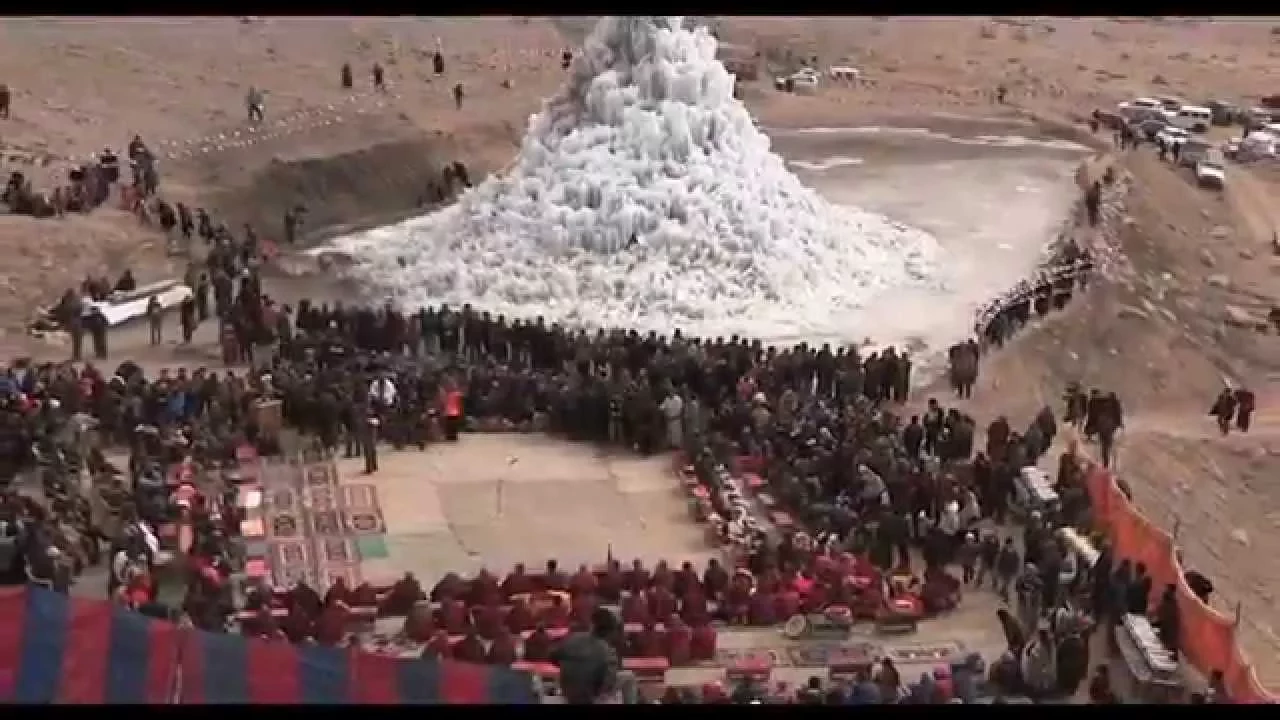
10:28
Ice Stupa Artificial Glaciers: Solving Ladakh's Water Crisis
@SonamWangchuk66
3.2M views•2015-05-03
Related Study Plans & Knowledge Roadmaps
Structured learning paths in Environmental Science
environmental-science
Ocean Noise: Cetacean Impacts & Mitigation
01Fundamentals of Underwater Acoustics
02Marine Mammal Bioacoustics
03Anthropogenic Noise: Shipping & Seismic Surveying
+ 2 more learning modules
16h5 modules
Explore Roadmap
environmental-science
Road Ecology: Corridors, Overpasses & Fencing
01Foundations of Habitat Fragmentation and Carnivore Ecology
02The Road Barrier: Ecological Impacts of Transport Infrastructure
03Principles of Ecological Corridors and Connectivity Mapping
+ 3 more learning modules
14h6 modules
Explore Roadmap
environmental-science
Ocean Acidification: Kelp Buffering & Shellfish
01Fundamentals of Ocean Chemistry & pH
02Chemical Pathways of Coastal Acidification
03Bivalve Physiology & Calcification Under Stress
+ 2 more learning modules
18h5 modules
Explore Roadmap
environmental-science
Ice Stupas: Glacial Retreat & Water Security
01Foundations of Glaciology & Mountain Hydrology
02Climate Change and Glacial Retreat Dynamics
03The Science of Ice Stupas & Artificial Glaciers
+ 2 more learning modules
14h5 modules
Explore Roadmap