Reverse osmosis is a water purification process that uses semi-permeable membranes to filter out impurities; the system consists of three-layer membrane sheets (polyester support base, polyethylene layer, and 0.2-micron polyamide barrier layer) assembled into spiral-wound elements within pressure vessels, where high-pressure feedwater forces water molecules through the membrane while retaining larger particles like salts, bacteria, and viruses, enabling efficient water recycling with approximately 80% recovery rate across multiple treatment stages.
Reverse Osmosis Process Explained: How It Purifies Water
Added:Deep Dive
Understanding of regular osmosis, including how solvent molecules naturally move across a semipermeable membrane from low to high solute concentration.
43) TYT Kimya - Koligatif Özellikler - Görkem ŞAHİN - 2025
189K
Osmosis is the movement of solvent molecules through a semipermeable membrane from lower to higher solute concentration. The membrane allows solvent but blocks solute particles. During osmosis, the more concentrated side gains solvent (concentration decreases) while the less concentrated side loses solvent (concentration increases). Reverse osmosis applies external pressure to force solvent from higher to lower concentration, used for desalination. The membrane blocks salt and impurities while allowing water to pass.
Click to watch →

Osmosis Animation and Experiments
284.4K
Osmosis is the diffusion of water across a semi-permeable membrane from an area of lower solute concentration to higher solute concentration; water follows solute, meaning it moves toward regions with more dissolved particles. Solutions with higher solute concentrations have lower water concentrations, so water naturally flows toward hypertonic solutions. Three key terms describe relative concentrations: hypertonic (higher solute concentration where water enters), hypotonic (lower solute concentration where water exits), and isotonic (equal concentrations with no net water movement). This principle explains why cells burst in hypotonic environments and shrink in hypertonic environments, as demonstrated by blood cells exploding in distilled water and eggs shriveling in corn syrup.
Click to watch →

Solutions 05 | Depression of Freezing Point & Osmotic Pressure | Class 12 NCERT
148.3K
A semipermeable membrane (SPM) allows only solvent molecules to pass through while blocking solute particles. Osmosis is the spontaneous flow of solvent molecules through a semipermeable membrane from a region of lower solute concentration (higher solvent concentration) to a region of higher solute concentration (lower solvent concentration). The direction of osmosis is determined by the concentration gradient of the solvent. Solvent molecules move from pure solvent or dilute solution toward concentrated solution. This process continues until equilibrium is reached or until an external pressure is applied.
Click to watch →

Class 12th Chemistry 650 Important Questions | Class 12 Chemistry Complete Book Imp Ques | Up Board
31.7K
Osmosis is the movement of solvent molecules through a semipermeable membrane from a region of lower solute concentration to a region of higher solute concentration. The semipermeable membrane allows solvent molecules to pass but blocks solute particles. This process continues until equilibrium is reached or external pressure is applied.
Click to watch →
CUET 2024 Chemistry Top 300 Most Expected Questions | Set 1 | By Ayushi Ma'am
183.3K
Osmosis is the movement of solvent molecules through a semipermeable membrane from lower solute concentration to higher solute concentration. The instructor explains that solvent moves from low concentration to high concentration of solute. This is a colligative property depending on the number of solute particles. The instructor emphasizes that all colligative properties (boiling point elevation, freezing point depression, osmotic pressure) depend on the number of solute particles, not their identity.
Click to watch →
Deep Dive
The concept of semipermeable membranes and selective permeability at the microscopic level.

Solutions 07 | Depression in Freezing Point and Osmotic Pressure | Class 12th/CUET
240.8K
This segment explains semipermeable membranes and osmosis. A semipermeable membrane allows only solvent molecules to pass through while blocking solute particles. In osmosis, solvent naturally flows from the pure solvent side (lower solute concentration) to the solution side (higher solute concentration) through the semipermeable membrane. The instructor emphasizes that this selective permeability is the key characteristic of semipermeable membranes. The instructor explains that osmotic pressure is the pressure needed to stop osmosis, and when external pressure equal to osmotic pressure is applied to the solution side, solvent flow stops.
Click to watch →

Isolation of Integral Membrane Proteins & Passive Transport | L10 | Cell Biology by DJ Sir
3.3K
A semipermeable membrane is one that allows some substances to pass through while restricting others. The plasma membrane is semipermeable, allowing small nonpolar molecules to pass through by simple diffusion while restricting larger, polar, or charged molecules. This selective permeability is essential for maintaining cellular homeostasis and controlling the movement of substances in and out of the cell.
Click to watch →

Railway Group D Science | 23 Aug 2022 (1st Shift) Complete Paper Solution #neerajsir
88.7K
A selectively permeable membrane (also called semi-permeable membrane) allows certain substances to pass through while blocking others. It typically allows water molecules (solvent) to pass through but prevents larger solute molecules from passing. This selective permeability is essential for cellular processes like osmosis, where water moves across the membrane while solutes are retained.
Click to watch →

المحاضرة 15 - الفصل الاول الخلية - السادس العلمي
867
Selective permeability membranes allow the passage of materials selectively based on molecular size, similar to the plasma membrane. These membranes permit the passage of small molecules while restricting larger ones. The plasma membrane is classified as a selective permeability membrane because it allows the passage of materials selectively based on molecular size. Small molecules that dissolve in water can pass through, while larger molecules cannot pass even if they are water-soluble, due to the limited size of membrane pores.
Click to watch →

الفصل الاول | الخلية | المحاضرة الـ 13 | 2026
80.9K
Osmosis is defined as the exchange of materials between a cell and its external environment through the plasma membrane. It is a specific type of diffusion that involves the movement of water molecules across a semipermeable membrane from an area of lower solute concentration to an area of higher solute concentration. For osmosis to occur, materials must be able to dissolve in water and pass through the plasma membrane. Membranes are classified into four types based on permeability: fully permeable membranes (allow all materials regardless of size), semipermeable membranes (allow solvent but not solutes at same rate), selectively permeable membranes (allow passage based on molecule size), and impermeable membranes (block all material passage). Examples include cell walls (fully permeable), nylon membranes (semipermeable), and the plasma membrane (selectively permeable).
Click to watch →
Deep Dive
Basic chemical terminology regarding solutions, including solutes, solvents, concentration gradients, and diffusion.

Plus Two Chemistry | Solutions | One Shot Revision | Xylem Plus Two
259.5K
A solution is a homogeneous mixture of minimum two components with uniform composition. The component in smaller amount is the solute, while the component in larger amount is the solvent. Concentration represents the amount of solute in a given amount of solvent or solution. Concentration can be expressed as mass percentage, volume percentage, mass by volume percentage, or parts per million (ppm) for very small amounts. Mole fraction is the fraction of moles of a component, with the sum of all mole fractions equaling 1. Molarity (M) is moles of solute per liter of solution, while molality (m) is moles of solute per kilogram of solvent. Solubility is the maximum amount of solute that can dissolve at a particular temperature. The 'like dissolves like' principle states that polar solutes dissolve in polar solvents and non-polar solutes dissolve in non-polar solvents.
Click to watch →

Some Basic Concepts of Chemistry L7 | Concentration Terms | #jee2024 #jee2025 #monicabedi
60.9K
A solution is a homogeneous mixture formed when a solute dissolves in a solvent. The solvent is the substance in which the solute dissolves (e.g., water), while the solute is the substance being dissolved (e.g., sugar or salt). Concentrated solutions contain a large amount of solute relative to the solvent, while dilute solutions contain a small amount. The concentration is relative - adding more solute makes a solution more concentrated, while adding more solvent makes it more dilute.
Click to watch →

شرح دور المحاليل والتركيزات في حركة المياه | العلوم المتكاملة -أولى ثانوي 2025 | مستر حيدر محمد
95.7K
A solution is a homogeneous mixture consisting of a solvent (the substance that dissolves others, typically water) and a solute (the substance being dissolved, present in smaller quantity). Concentration refers to the amount of solute dissolved per unit volume of solvent. Higher concentration means more solute particles in the same amount of solvent. These fundamental concepts explain why natural water bodies contain various dissolved materials and how solution properties change with composition.
Click to watch →

المراجعة النهائية لأولى ثانوي | مراجعة العلوم المتكامله الترم الأول 2025 مع دكتور عبدالله حبشي
181.4K
A solution is a homogeneous mixture of two or more substances. The solvent is the substance that dissolves the other substances (usually water in aqueous solutions). The solute is the substance that is dissolved (such as salt, sugar, or proteins). The concentration of a solution refers to the amount of solute dissolved in a given amount of solvent. Solutions have properties that depend on the number of solute particles present, regardless of the type of solute.
Click to watch →

بث مباشر 🔴 الصف السابع 7️⃣ || علوم 🦠 مراجعة الوحدة الرابعة (المحاليل)
31K
A solution is a homogeneous mixture of solute and solvent. The solute is the substance being dissolved (smaller amount), while the solvent does the dissolving (larger amount). Concentration measures the amount of solute per unit volume of solution, calculated as C = m/V (mass/volume). Units are grams per milliliter. Unit conversions are essential: kg to g (multiply by 1000), L to mL (multiply by 1000). Pure water doesn't conduct electricity, but impure water with dissolved salts does.
Click to watch →
Deep Dive
The physical concept of pressure, specifically hydrostatic pressure and osmotic pressure, and how they influence fluid dynamics.

المحاضرة (8) | الفصل الأول 2026.
277.3K
The rise in water level inside the funnel creates hydrostatic pressure (weight of water column acting downward). Osmotic pressure is the upward pressure generated by water movement through the membrane. Water movement continues until hydrostatic pressure equals osmotic pressure, or until water concentrations equalize on both sides of the membrane.
Click to watch →
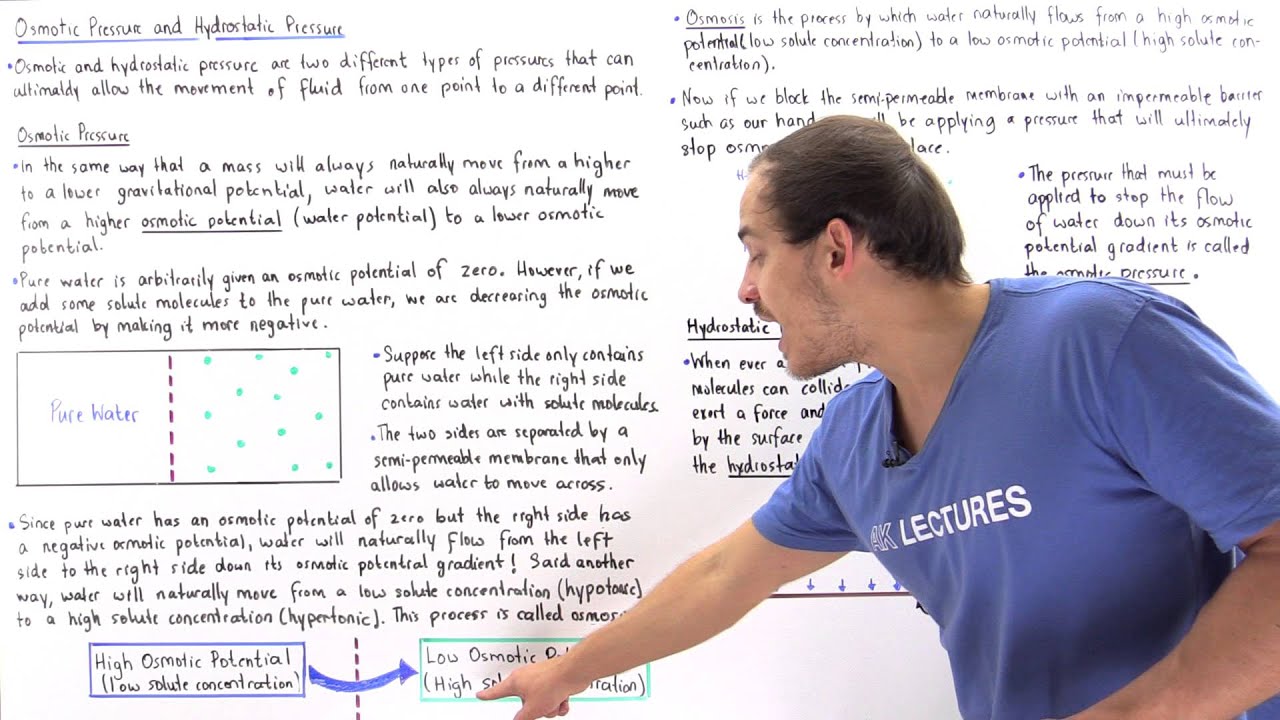
Osmosis, Osmotic Pressure and Hydrostatic Pressure
169.1K
Osmotic pressure is the pressure that must be applied to prevent water from moving down its osmotic potential gradient through a semi-permeable membrane, while hydrostatic pressure is the fluid pressure resulting from liquid molecules colliding with the walls of a conduit; water naturally moves from high osmotic potential (pure water, zero value) to low osmotic potential (solutions with solutes, more negative values) through osmosis.
Click to watch →

O que é Pressão Hidrostática e Pressão Coloidosmótica
119.1K
Hydrostatic pressure is the pressure that blood exerts on the vessel walls, which increases when the vessel lumen decreases (like when a garden hose is partially blocked), and can lead to conditions such as aneurysm rupture; colloid osmotic pressure is the pressure exerted by blood cells on the blood, which increases when blood becomes more concentrated (like when solvent evaporates from a solution), and is affected by conditions such as burns (loss of plasma) or polycythemia (increased red blood cells).
Click to watch →
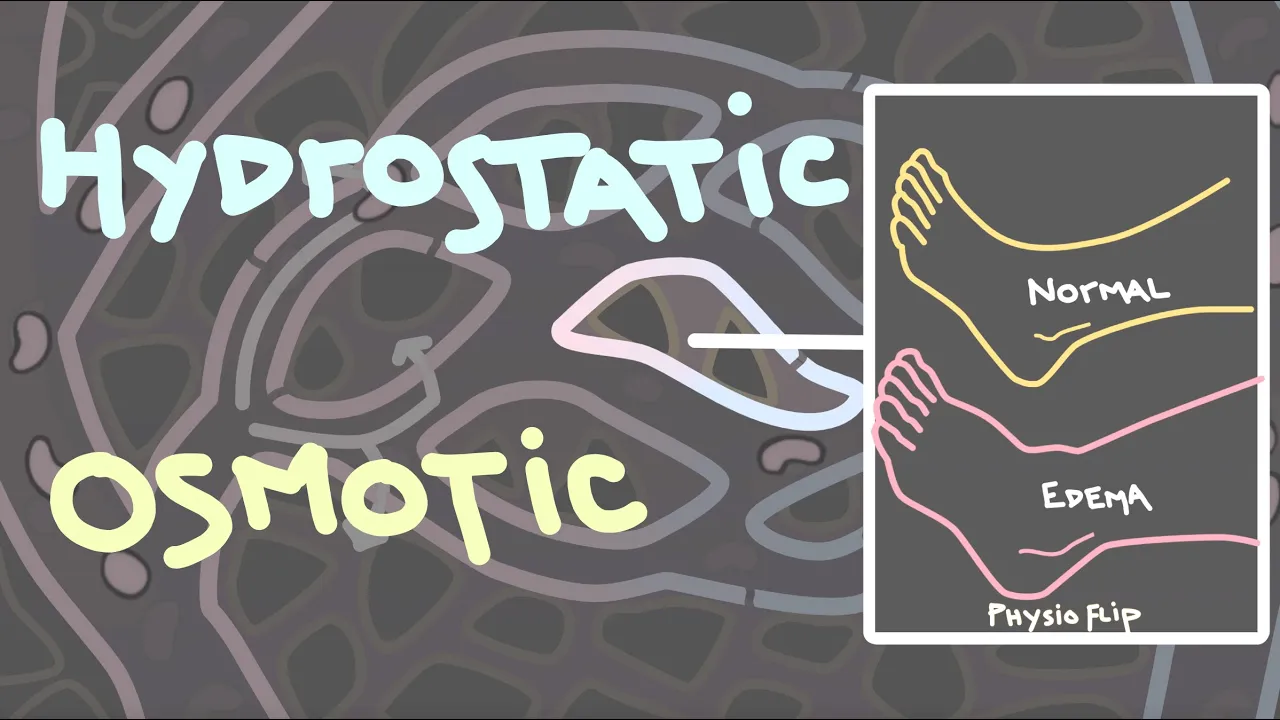
Hydrostatic and osmotic pressure | Introduction to #edema
358.6K
Fluid exchange between blood and tissues occurs through two opposing pressures: hydrostatic pressure (the outward pressure that pushes fluid out of capillaries at the arteriole end due to blood pressure) and osmotic/colloid oncotic pressure (the inward pull caused by proteins like albumin in the blood that draws fluid back in); this dynamic balance ensures normal fluid distribution, while disruptions in either pressure can lead to edema (tissue swelling).
Click to watch →

part-3 ch-2 Solutions class 12 science new syllabus maharashtra board 2021 HSC van't Hoff factor i
351K
Osmotic pressure is the external pressure required to prevent solvent flow through a semipermeable membrane. It is directly proportional to solute concentration. Hydrostatic pressure (P = ρgh) is the pressure exerted by a liquid column due to gravity. In osmosis demonstrations, rising liquid creates hydrostatic pressure that opposes osmotic flow. When hydrostatic pressure equals osmotic pressure, equilibrium is reached and net solvent flow stops.
Click to watch →
Prerequisite Knowledge
- Concept 01Understanding of regular osmosis, including how solvent molecules naturally move across a semipermeable membrane from low to high solute concentration.
- Concept 02The concept of semipermeable membranes and selective permeability at the microscopic level.
- Concept 03Basic chemical terminology regarding solutions, including solutes, solvents, concentration gradients, and diffusion.
- Concept 04The physical concept of pressure, specifically hydrostatic pressure and osmotic pressure, and how they influence fluid dynamics.
Subsequent Learning
- Step 01Large-scale seawater desalination technologies and the environmental impacts of brine disposal.
- Step 02The engineering challenges of RO, such as membrane fouling, scaling, and the methods used for system pre-treatment.
- Step 03Advanced membrane materials and emerging filtration technologies, such as forward osmosis, nanofiltration, and biomimetic aquaporin membranes.
- Step 04Industrial wastewater reclamation and Zero Liquid Discharge (ZLD) systems that utilize reverse osmosis for water circularity.
Filtration Design
System Efficiency
Filtration Design
0:01Playing Section
- 1
Explains reverse osmosis membrane structure and layers.
- 2
Details spiral winding of sheets around a core tube.
- 3
Describes how feed water pressure separates pure water.
The Health and Environmental Costs of Reverse Osmosis
While reverse osmosis (RO) is highly effective at removing contaminants, critics point to significant environmental and health drawbacks. From an environmental perspective, RO is highly inefficient, typically wasting three to four gallons of water for every gallon purified, and requiring substantial energy to maintain high pressure. From a health standpoint, RO is 'too' effective, stripping water of beneficial, naturally occurring minerals like calcium and magnesium. Consuming demineralized water over the long term can lead to dietary deficiencies and may cause the water to leach minerals from the human body and cooking utensils. Consequently, critics advocate for alternative filtration methods, such as ultrafiltration or remineralization stages, to mitigate these issues.
Deep Dive
Large-scale seawater desalination technologies and the environmental impacts of brine disposal.

Dubai's $3 Billion Water Plant Is Quietly Poisoning the Sea That Feeds It
200
Large-scale desalination plants in shallow, nearly enclosed seas like the Persian Gulf create concentrated brine waste that is twice as salty as seawater, often warmer and carrying chemical residues, which causes localized environmental damage including altered fish populations within 55 meters of discharge points, disrupted invertebrate communities up to 125 meters away, and seagrass meadow die-offs that persist for years, despite basin-wide salinity measurements appearing relatively modest.
Click to watch →

The World's Biggest Desalination Plants Should Not Exist
413.5K
Both thermal and membrane desalination processes produce brine as a waste product. For every two cubic meters of freshwater produced, one cubic meter of brine results. After processing, brine becomes very hot and salty—40-80% saltier than seawater—and contains heavy metals, acids, chlorine, and anti-scalant chemicals. Brine disposal is challenging and represents one of the most significant cost factors in desalination, adding 5-30% to freshwater costs. Options include underground burial (which contaminates groundwater), shoreline or deep-water dumping (harming local ecosystems even with dilution), or salt extraction (not yet economically viable). These environmental concerns will intensify as GCC water demands expand and more mega-fabs are constructed.
Click to watch →

El MAR SECRETO de Estados Unidos: El megaproyecto que prometía vida y desató peligros
1.2K
Converting ocean water to usable supply requires reverse osmosis at approximately 1,000 PSI, producing fresh water and concentrated brine. While facilities like Carlsbad demonstrate reliable large-scale operation, the Mar Interior would require 14 times that capacity. Sea water contains sediments, organic matter, and algal blooms requiring extensive pre-treatment. For every gallon of potable water, one gallon of brine is generated, creating central environmental constraints. Brine discharge creates dense, sinking plumes that elevate salinity and stress benthic organisms. The proposal suggests lithium recovery from brine, but marine concentrations are orders of magnitude lower than natural salt flats, requiring unproven separation technologies at continuous flow scales.
Click to watch →

Pourquoi des pays dessalent l'eau de mer… et pourquoi c'est très inquiétant
419.9K
Two main desalination methods exist: thermal distillation (25% of production) boils seawater to capture steam, and reverse osmosis (70%) forces water through membranes under pressure. However, desalination creates significant ecological problems. For every liter of fresh water produced, 1.5 liters of hyper-concentrated brine waste is generated—global production reaches 141.5 million cubic meters daily. This brine alters local salinity and threatens marine ecosystems like Posidonia seagrass. Additionally, less than 1% uses renewable energy; 76 million tons of CO2 were emitted in 2014, projected to reach 4.1 billion tons by 2050.
Click to watch →
Sea Water Desalination: An Overview and Environmental Impacts
2.9K
Seawater desalination, while providing essential fresh water in arid regions, generates significant environmental concerns including concentrated brine discharge that disrupts marine ecosystems, industrial chemical effluents from pretreatment processes, and substantial carbon dioxide emissions due to its energy-intensive nature; for example, the United Arab Emirates produces approximately 4.6 billion kilograms of CO2 annually from desalination, representing about 14-15% of global desalination capacity and suggesting a global carbon burden of around 32 billion kilograms per year.
Click to watch →
Deep Dive
The engineering challenges of RO, such as membrane fouling, scaling, and the methods used for system pre-treatment.
Power Generation Water Treatment
30.3K
RO unit performance depends on controlling three major problems: scaling (precipitation when dissolved solids concentrate beyond saturation), fouling (plugging from suspended solids, colloids, microorganisms, or sticky polymer reactions), and chemical attack (oxidation creating membrane holes). Fouling is the largest industry problem, often caused by interactions between cationic coagulants and anionic scale inhibitors forming sticky polymers. Fouling control requires balancing flux rate (permeate per membrane area per day) and cross flow rate—higher flux pushes more materials against membranes while higher cross flow washes them away. Chemical attack prevention involves removing oxidants through activated carbon, sulfite injection, or UV light. Understanding these challenges is essential for maintaining RO system efficiency and membrane lifespan.
Click to watch →

How to design the pretreatment of a reverse osmosis
5K
Proper pretreatment is essential for protecting reverse osmosis membranes from fouling and scaling; the three main pretreatment methods include filtration (sand or multimedia filters for removing total suspended solids), iron/manganese removal (using oxidation and catalytic media like Birm or Phlox), and softening (ion exchange using resin to remove calcium and magnesium); each method requires specific dimensioning based on water quality parameters such as contaminant concentrations, pH, alkalinity, and flow rates to ensure optimal RO system performance and longevity.
Click to watch →
Fouling and Scaling in RO membrane | Types of Fouling in RO membrane | RO Plant in Hindi |
55K
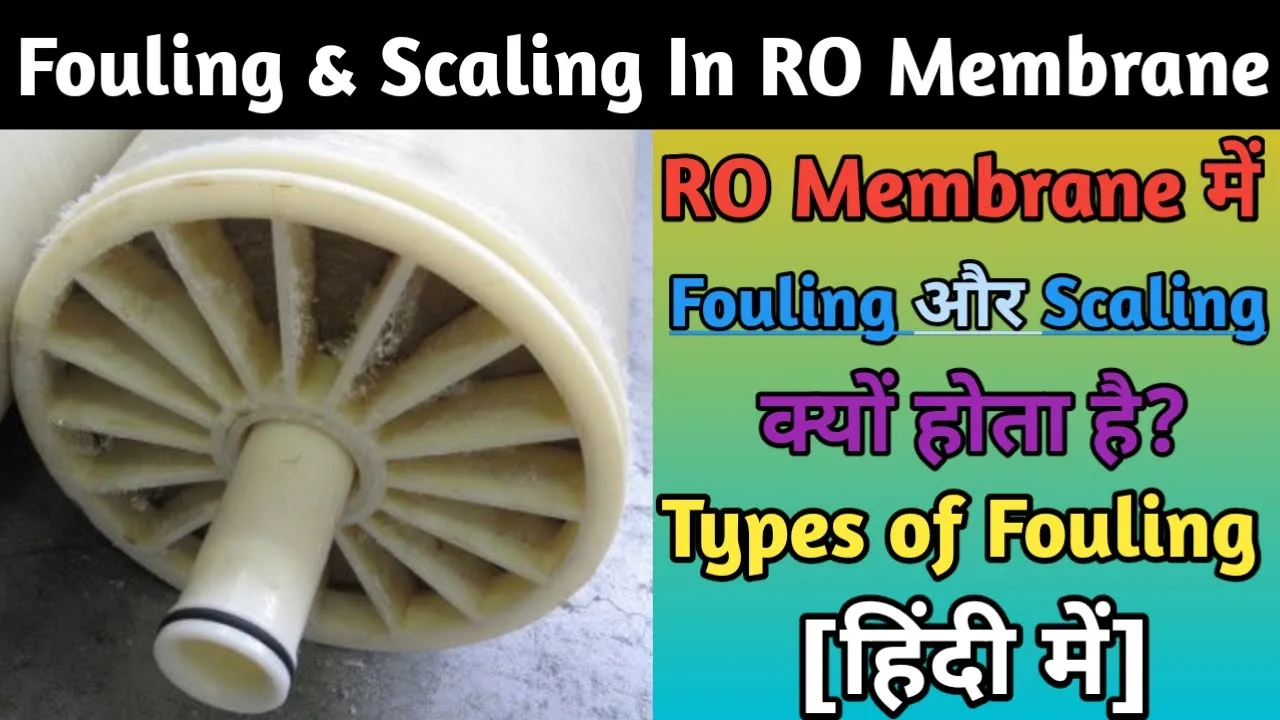
Fouling in RO membranes refers to the deposition of unwanted materials on the membrane surface, which reduces water flow and membrane efficiency. There are four main types of fouling: biological fouling (caused by bacteria and microorganisms), particulate fouling (caused by suspended particles), organic fouling (caused by organic compounds like alcohols and sugars), and inorganic fouling or scaling (caused by mineral deposits like calcium and magnesium carbonates). Scaling specifically occurs when inorganic compounds precipitate out of solution and deposit on the membrane surface, forming hard layers that significantly reduce membrane performance. Prevention strategies include maintaining proper pH levels (6.5-7.5), water softening to remove minerals, effective pre-treatment, and using appropriate membrane materials.
Click to watch →

What is fouling and scaling on reverse osmosis membrane filtration and water treatment?
4.4K
Fouling and scaling are major challenges in reverse osmosis membrane filtration, where fouling refers to the accumulation, deposition, or adsorption of foulants (organic matter, microorganisms, or colloidal particles) onto membrane surfaces or within pores, while scaling involves inorganic crystallization coatings formed when dissolved salt solubility limits are exceeded; both phenomena reduce permeate flow, increase pressure drop, and decrease membrane efficiency, and can be minimized through proper membrane selection based on water analysis, appropriate operating conditions, pre-treatment systems, and regular CIP (clean-in-place) cleaning protocols.
Click to watch →

ep.35 RO Membran System _3 오염 억제, 최적화
947
RO systems require proper pre-treatment to extend module life and improve performance, focusing on preventing fouling, controlling scaling, and inhibiting membrane degradation. Standard feed water quality parameters include SDI (3-5, optimal at 3), MFI (around 4), TOC (around 3 mg/L), and COD (around 10 mg/L). Water classification depends on TDS and TOC levels: low TDS/TOC water (desalination, ultra-pure water) has minimal organic content and salinity, while high TDS/TOC water (seawater, leachate) has higher concentrations. Seawater typically has pH 8.1, TDS ~35,000 mg/L. Scaling occurs when concentrate stream concentration exceeds saturation limits. CSM Design Guide provides scaling limits: LSI ≤1.5, Calcium Carbonate ~230 mg/L, Calcium Sulfate ~6,600 mg/L. Scale inhibitors include SHMP, organophosphates, and polyacrylates. Acid injection controls calcium carbonate scaling by dissolving CaCO3 through calcium ion reactions with acid. LSI should be negative for effective scale control.
Click to watch →
Deep Dive
Advanced membrane materials and emerging filtration technologies, such as forward osmosis, nanofiltration, and biomimetic aquaporin membranes.

Biomimicry
341.2K
Fish kidneys and red blood cells contain aquaporin pores that are perfectly shaped and charged to allow water molecules to pass through easily while blocking other substances. Danish company Aquaporin has mimicked this natural membrane structure to create desalination membranes. Unlike energy-intensive reverse osmosis (which pushes water against membranes), Aquaporin membranes use forward osmosis, pulling water through with a fraction of the energy required. These membranes are approximately 100 times more permeable than conventional desalination membranes used in large-scale plants, representing a major advancement in sustainable water treatment technology.
Click to watch →

We Solve for X: Rob McGinnis on global water scarcity
26.5K
Forward osmosis relies on thin-film composite membranes (100 nm polyamide active layer) achieving 99.5% salt rejection through solution diffusion. Unlike reverse osmosis membranes designed for hydraulic pressure, these membranes enable natural osmotic flow without external pressure. Concentration polarization reduces effective driving force, but advanced designs achieve 20 GFD versus 1 GFD in conventional systems. The technology excels at treating extreme industrial waters like fracking wastewater (2-3x seawater salinity with sand, bacteria, oil) producing water cleaner than municipal tap. Non-pressurized designs use inexpensive plastics, eliminating costly pressure vessels while maintaining self-cleaning properties as foulants simply slough away.
Click to watch →
Introducing the Aquaporin A2O Water Filter: Mimicking natures filtration process
17.2K
This video introduces aquaporin water filtration technology, a revolutionary breakthrough that harnesses Nobel prize-winning biomimicry. The system uses aquaporin proteins—found in all living cells including humans, animals, and plants—to filter water. These proteins naturally transport only water while blocking bacteria, viruses, and contaminants. After over a decade of research, the technology incorporates these proteins into a stable membrane that allows only clean water to pass through. One gram of aquaporin can filter up to 700 liters per second, making it far more efficient than man-made filters. The system removes heavy metals, PFAS, nitrates, and sulfates while preserving taste. The A2O Pure model features three filters (pre-filter, activated carbon, and aquaporin membrane), leak detection, automatic flushing, and space-saving design. The technology was tested to its absolute limits, including space testing, demonstrating its reliability and durability.
Click to watch →
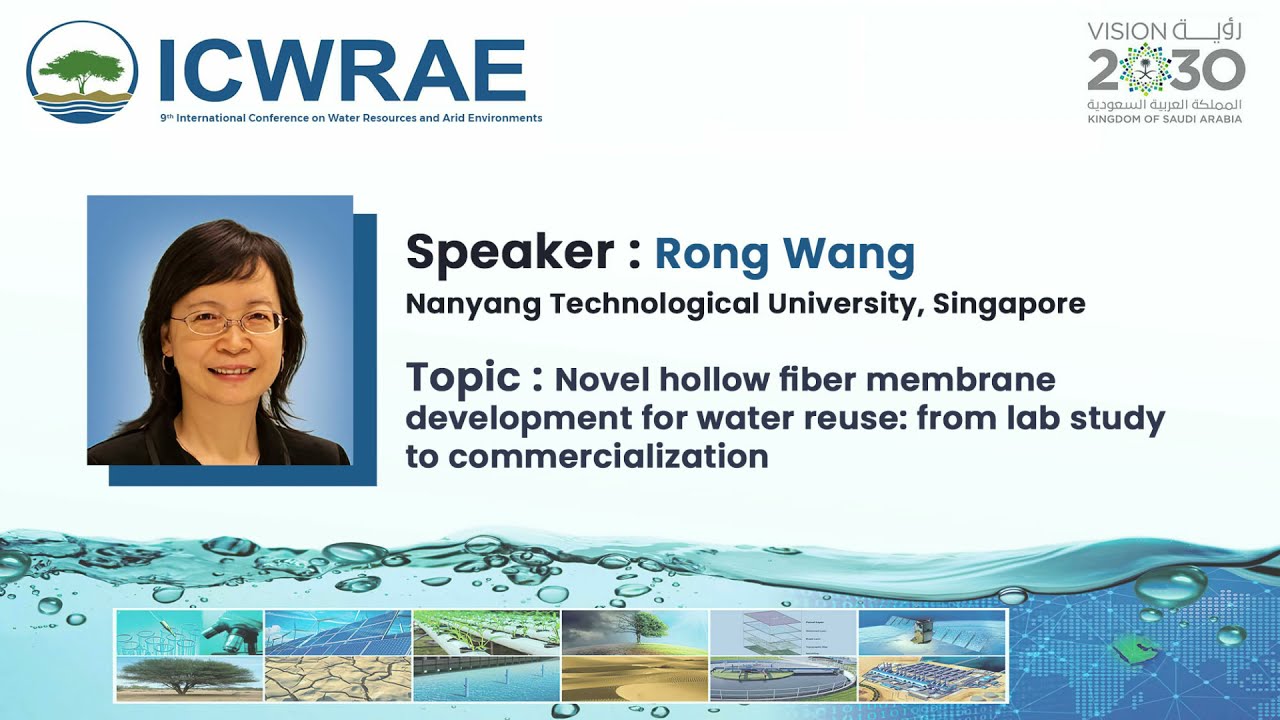
Rong Wang | Nanyang Technological University, Singapore
123
This presentation by Rong Wang from Singapore Membrane Technology Center (SMTc) at Nanyang Technological University demonstrates how membrane technology is being advanced for water reuse applications, including forward osmosis membranes for beverage concentration, biomimetic membranes incorporating aquaporin proteins to enhance water permeability while reducing operating pressure, and low-pressure nanofiltration membranes achieving 90% water recovery in wastewater treatment. The research emphasizes the critical importance of scaling up laboratory discoveries to higher technology readiness levels and commercializing advanced membrane solutions to address global water scarcity challenges.
Click to watch →

Advancements in Forward Osmosis & Water Reuse (Grant Thornley) Environmental Technology NewsHour #13
1.3K
The commercial viability of forward osmosis required breakthroughs in membrane science and chemistry that were impossible just 30 years ago. Key advancements include: (1) Thinning the membrane support layer from RO-like thicknesses to approximately 1/5th, dramatically reducing hydraulic resistance and enabling practical flux rates of 28-32 LMH; (2) Incorporating aquaporin proteins—biological water channels from plants—that create pinhole-sized pores allowing only water passage while rejecting all contaminants, achieving unprecedented selectivity; (3) Developing closed-loop draw solution chemistry using trimethylamine bicarbonate, which is large enough to be retained by the membrane yet provides sufficient osmotic driving force. These innovations transformed FO from laboratory curiosity to industrial reality, enabling systems that can achieve water recovery rates of 95% while consuming only 27-43 kWh/m³ of energy (potentially halved when utilizing waste heat). The combination of these technological advances created a viable alternative to thermal evaporators for treating challenging industrial wastewaters.
Click to watch →
Deep Dive
Industrial wastewater reclamation and Zero Liquid Discharge (ZLD) systems that utilize reverse osmosis for water circularity.

Circularidad del agua en la industria - Tecnoparco Valbasento - Vertido Cero (ZLD)
321
Zero Liquid Discharge (ZLD) systems enable industrial water circularity by recovering up to 98% of water from wastewater through integrated technologies including reverse osmosis, two-stage evaporation, and decanter centrifugation, converting the remaining concentrated pollutants into reusable salt crystals while returning clean water to industrial processes.
Click to watch →

Zero Liquid Discharge – future-proof solutions to clean industrial wastewater
115.2K
Zero Liquid Discharge (ZLD) is an industrial wastewater treatment technology that combines evaporation, crystallization, and decanter centrifuge processes to recover and reuse water from production sites while converting salty wastewater into reusable clean water and valuable salt byproducts, thereby reducing water consumption, minimizing environmental pollution, and creating profitable resources from what was previously considered waste.
Click to watch →

МОДУЛЬ 1. Вода як основа відновлення України: ризики, пріоритети та економіка рішень
707
Zero Liquid Discharge (ZLD) represents a leading environmental technology guaranteeing water body restoration. Industrial ZLD implementation involves membrane bioreactors for pre-treatment, reverse osmosis for concentration, and crystallization for final separation. Modern systems achieve evaporation with only 10-30 kWh per cubic meter, compared to 680 kWh for direct evaporation. ZLD enables recovery of valuable elements (lithium, magnesium, potassium) from wastewater, transforming waste management into resource recovery. The automotive painting industry demonstrates ZLD effectiveness, achieving 95% water reuse with only 5% loss through evaporation and sludge formation. The Interpipe steel plant in Dnipro operates without discharging any wastewater to the Dnieper River. A Dnipro thermal power plant achieved payback within 11 months by collecting and treating industrial and stormwater for reuse. The UN's ESG framework (Environment, Social, Governance) provides comprehensive water management approach integrating environmental protection with social responsibility. ISO 14001 certification and EU Green Deal requirements drive systematic environmental management. The Rhine River restoration demonstrates that strict regulatory enforcement can achieve complete ecosystem recovery within 10 years. Israel's approach involves treating municipal wastewater through membrane bioreactors, then recharging treated water into aquifers. Reverse osmosis systems producing 45 cubic meters per hour of fully desalinated water can serve 400-450 people, operating 20 hours daily to provide clean water for 9,000 people.
Click to watch →

ZERO LIQUID DISCHARGE TECHNOLOGIES (ZLD)
235
Zero Liquid Discharge (ZLD) is a sustainable water treatment technology that eliminates liquid water waste discharge from industrial processes by recovering virtually all water through pre-treatment, membrane separation (reverse osmosis, nanofiltration, ultrafiltration), and thermal evaporation/crystallization processes, enabling water reuse, resource recovery of salts and minerals, and environmental protection.
Click to watch →

Alfa Laval Zero Liquid Discharge System and ZLD test unit
52.8K
Zero Liquid Discharge (ZLD) systems minimize or eliminate liquid discharge in industrial processes by combining evaporation and crystallization technologies; these systems recover water for reuse, reduce waste disposal costs and environmental impact, and recover valuable solids from wastewater streams, with Alfa Laval's plate evaporation technology featuring highly efficient corrugated plate heat exchangers that generate turbulence to enhance heat transfer and reduce fouling, followed by decanter centrifuges that separate solids from the concentrated brine to produce dry, reusable salt products.
Click to watch →
Filtration Design
System Efficiency
Filtration Design
0:01- 1
Explains reverse osmosis membrane structure and layers.
- 2
Details spiral winding of sheets around a core tube.
- 3
Describes how feed water pressure separates pure water.
The Health and Environmental Costs of Reverse Osmosis
While reverse osmosis (RO) is highly effective at removing contaminants, critics point to significant environmental and health drawbacks. From an environmental perspective, RO is highly inefficient, typically wasting three to four gallons of water for every gallon purified, and requiring substantial energy to maintain high pressure. From a health standpoint, RO is 'too' effective, stripping water of beneficial, naturally occurring minerals like calcium and magnesium. Consuming demineralized water over the long term can lead to dietary deficiencies and may cause the water to leach minerals from the human body and cooking utensils. Consequently, critics advocate for alternative filtration methods, such as ultrafiltration or remineralization stages, to mitigate these issues.
Understanding of regular osmosis, including how solvent molecules naturally move across a semipermeable membrane from low to high solute concentration.
The concept of semipermeable membranes and selective permeability at the microscopic level.
Basic chemical terminology regarding solutions, including solutes, solvents, concentration gradients, and diffusion.
The physical concept of pressure, specifically hydrostatic pressure and osmotic pressure, and how they influence fluid dynamics.
Large-scale seawater desalination technologies and the environmental impacts of brine disposal.
The engineering challenges of RO, such as membrane fouling, scaling, and the methods used for system pre-treatment.
Advanced membrane materials and emerging filtration technologies, such as forward osmosis, nanofiltration, and biomimetic aquaporin membranes.
Industrial wastewater reclamation and Zero Liquid Discharge (ZLD) systems that utilize reverse osmosis for water circularity.
2.9M views16.2Klikes4:02@SydneyWaterTVOriginal Release: 2013-10-29
[Music] listen marries water recycling plant uses reverse osmosis to further treat wastewater after the ultra filtration process reverse osmosis membranes are constructed from a membrane flat sheet it is comprised of three layers a polyester fabric support base a micro porous poly cell phone layer and a point two micron thick polyamide barrier layer the poly cellphone lair strengthens the very thin barrier layer it is the barrier layer that removes nutrients chemicals bacteria and viruses from the water the membrane flat sheet is combined with a sheet of feed channel spacer this provides turbulence and creates space between the membrane sheets for the feed water a sheet of permeate spacer is added to the membrane sheets and feed channel spacer this enables the final recycled water product or permeate to flow evenly across the entire membrane surface even under high pressure the back of the membrane is completely sealed to the edges of the permeate spacer the membrane sheets are glued along each of the three exposed sides and rolled around the core tube feedwater is forced through the feed channel spacer and into the barrier layer of the membrane water passes through the membrane surface into the permeate channel it flows in a spiral direction and collects in the core tube this water is the final recycled water product or permeate there are seven spiral wound elements loaded in one pressure vessel once the end adapter is connected to the last element and the pressure vessel is sealed feed water can be introduced feed water is pumped at high pressure into the vessel as it travels small molecules like water pass through the membrane while larger particles such as salt bacteria and viruses do not the final recycled water product is collected from the end of the elements the concentrate or reject from that vessel flows to another stage producing more recycled water at st. Mary's there are six reverse-osmosis treatment trains each with three stages this design produces the highest amount of recycled water with reduced concentrate waste stage one has 52 pressure vessels Stage two has 24 pressure vessels and stage three has 12 pressure vessels 58 million litres of feed water enters the reverse osmosis system on a daily basis as the feed water passes through each stage more recycled water is extracted 65% of recycled water is extracted at stage 1 the remaining 35% is passed through stage 2 where a further 10% is extracted the final 25% is passed through stage 3 where the last 5% of recycled water is extracted 80% of all feed water is recovered as recycled water an average of 50 million litres of recycled water is produced every day it's in marries the remaining concentrate contains so much salt and impurities that to recycle it would not make economic sense this concentrate stream of 8 million litres a day is sent to North Head wastewater treatment plant where it is treated and released into the ocean you [Music] you
Up Next

59:35
Water Intake Structures & Pumping Installations | Engineering Lecture
@iit
59.8K views•2007-12-27

30:32
Ultrasonic Transducers: Resonant Frequency Measurement and Horn Design
@imajeenyus42
229.9K views•2017-02-22
54:16
Polymer Environmental Degradation: Mechanisms & Stabilization
@iit
1.8K views•2012-07-10

33:39
How a Student's Question Saved a NYC Skyscraper from Collapse
@veritasium
22.8M views•2025-04-26
Related Study Plans & Knowledge Roadmaps
Structured learning paths in Engineering
engineering
Building Acoustic Levitators: Physics & Arduino
01The Physics of Sound and Standing Waves
02Piezoelectric Transducers and H-Bridge Drivers
03Arduino Programming: Generating 40 kHz Signals
+ 2 more learning modules
14h5 modules
Explore Roadmap
engineering
Building Peltier Cloud Chambers: Particle Tracks
01Cosmic Rays & Cloud Chamber Physics
02Thermoelectric Cooling (TEC) Fundamentals
03Custom Liquid-Cooling Loop Design
+ 2 more learning modules
18h5 modules
Explore Roadmap
engineering
Yagi-Uda Antennas: Modeling, Build & VNA Test
01Introduction to RF and Antenna Fundamentals
02Yagi-Uda Antenna Design Principles
03Antenna Modeling and Simulation in 4NEC2
+ 2 more learning modules
18h5 modules
Explore Roadmap
engineering
ECG Monitor Design: Op-Amps, Filters & Noise
01Electronics & Breadboard Basics
02Op-Amps and Instrumentation Amplifiers
03Bioelectricity and ECG Fundamentals
+ 2 more learning modules
18h5 modules
Explore Roadmap