


























The non-identity problem is an ethical dilemma where an individual appears to be wronged by an action that is the very condition of their existence, challenging traditional theories of harm; this problem has significant implications for reproductive choices, genetic engineering, and environmental ethics, as it questions whether we can morally wrong future generations who would not otherwise exist.
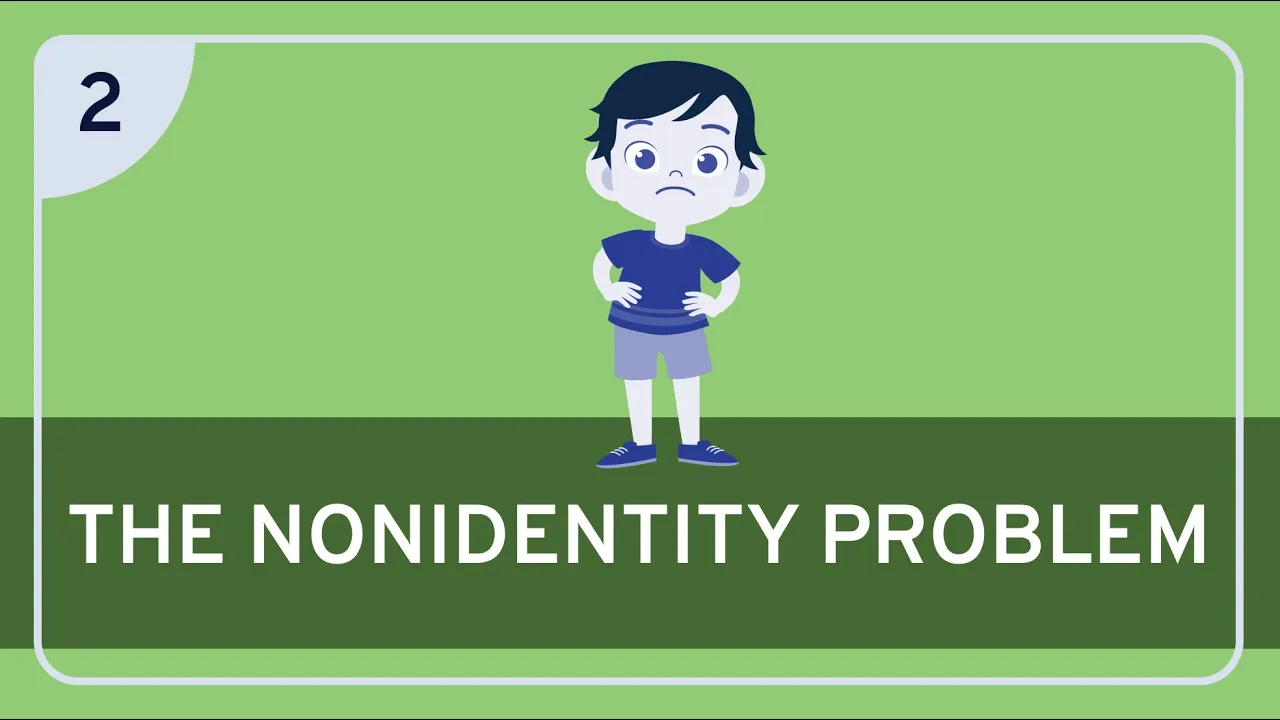
The Nonidentity Problem Explained: Ethics & Future Generations
Added:The counterfactual account of harm, which posits that an action harms someone only if it makes them worse off than they otherwise would have been.
The distinction in normative ethics between person-affecting moral theories (which focus on specific individuals) and impersonal moral theories (which focus on total well-being).
The metaphysical concept of origin-dependence, which suggests that an individual's identity is essentially tied to the specific timing and biological circumstances of their conception.
An introductory understanding of intergenerational justice and the philosophical debate over whether current generations have moral obligations to non-existent, future people.
Derek Parfit's formulation of the 'Repugnant Conclusion' and other paradoxes of population ethics from his seminal work 'Reasons and Persons'.
The practical application of the nonidentity problem to climate change policy, specifically how it challenges the ethical justification for long-term environmental conservation.
Debates in reproductive bioethics, such as the moral implications of pre-implantation genetic diagnosis (PGD) and the concept of 'procreative beneficence'.
Philosophical solutions proposed to resolve the nonidentity problem, including rights-based approaches, threshold-of-flourishing accounts, and impersonal harm principles.
112.3K views1.1Klikes7:06Original Release: 2015-09-29
[Music] hi my name is Molly Gardner and I am a research assistant professor in the philosophy department at the University of North Carolina at Chapel Hill in this video I will introduce you to the non-identity problem to understand the problem let's begin with a thought experiment suppose that there are two women Alice and Barbara who want their children to have poor health this is of course of course a strange thing to want but suppose that they believe that if they have sick children they will get more attention from their friends and family now suppose that to get what she wants Alice takes a particular drug during her pregnancy the drug causes her child whom she names Alex to experience poor health for his entire life nevertheless his life on the whole is worth living meanwhile Barbara uses invitro fertilization and screens the embryos for a gene that causes his poor health when she finds an embryo with that Gene she implants it the selected embryo becomes a child named Billy Billy experiences the same degree of hardship and suffering that Alex experiences however like Alex Billy has a life worth living many people think that Alice and Barbara have both wronged their children the way in which Alice wronged Alex is pretty straightforward by taking the drug during her pregnancy she harmed her child since Barbara performed an action that had similarly bad consequences for Billy it might be tempting to think that Barbara also harmed her child nevertheless there is an important difference between Alice's action and Barbara's action the difference is that although Alex would still have existed had his mother not taken the drug Billy is nonidentical to anyone who would have existed had his mother not selected for poor health after all if Barbara had not selected for poor health then either she would have not had a child at all or else she would have brought some other child into existence instead of Billy many philosophers appeal to a plausible theory of harming in order to argue that this difference in what would have happened makes a moral difference according to their theory of harming an action harms you only if it makes you worse off in at least some respect than you would have been had the action not been performed Alice's actions satisfies this condition Alex is worse off in many respects than he would have been had Alice not taken the drug he has to go to the hospital more often he misses more school and social events and he feels more pain and discomfort than he otherwise would have however Barbara's action does not satisfy this condition even though Billy's life is also full of trips to the hospital missed school days pain and discomfort it is still worth living the alternative for Billy is non-existence and a life worth living does not seem to be worse in any respect then no life at all if so then when she selected for poor health Barbara did not harm Billy but if Barbara's action did not harm Billy then we seem to be at a loss to justify the intuition that in much the same way that Alice wronged Alex Barbara wronged Billy Billy's situation is thus a non-identity case it is a case in which an individual appears to be wronged by an action that is the condition of his own worthwhile existence the problem of either justifying the appearance that the individual was wronged or explaining it away is the non-identity problem we can make the problem clearer by formulating it as a set of inconsistent Claims One Barbara wronged Billy two the way she wronged him was by harming him three the only way she could have harmed him is by making him worse off than he otherwise would have been four Barbara did not make Billy worse off than he otherwise would have been when I say these claims are inconsistent I mean that they can't all be true together if you pick any three of the claims their conjunction will logically entail that the fourth claim is false to solve the non-identity problem we have to reject at least one of the claims we also need to identify the flaw in the reasoning or the intuition that originally seemed to support whatever claim we choose to reject notice that whatever solution we opt for will have wide ranging imp ation for a number of other issues one issue is Reproductive Rights although few parents want to select for poor health some parents might want to use new reproductive Technologies to select for conditions that other people associate with poor health unhappiness or other bad consequences opponents of reproductive autonomy in these kinds of cases will need to Grapple with the non-identity problem another issue is genetic engineering although scientists haven't yet produced any genetically engineered hum humans they have produced plenty of genetically engineered animals the non-identity problem raises the question of whether we are wronging such Animals by bringing them into existence a third issue is the environment to see why the non-identity problem is particularly important here consider another thought experiment suppose that we as a community must decide between two policies one policy involves polluting the environment and the other involves protecting it if we opt for polluting the environment then the air and water quality will be much worse in 200 years than it would have been had we chosen the other policy however the polluting policy will also have other consequences the economy will be different and different people will take different jobs different couples will fall in love and have children if different couples have children then different people will be born in 200 years we might think that no one will exist in the polluted Community who would have existed had we not polluted polluted suppose the people who do exist 200 years from now in the polluted Community suffer from health problems related to the air and water quality maybe they develop asthma heart disease or cancer even so the non-identity problem makes it difficult to justify the intuition that when we choose to pollute the environment We Wrong them after all they are no worse off than they would have been had we decided to protect the environment for if we had decided to protect the environment those people would not have existed at all and for those future people a life with asthma heart disease or cancer if it is still worth living is not worse than having no life at all thus if we think we ought to worry about climate change nuclear waste or environmental degradation for the sake of future Generations then we will need to find some kind of solution to the non-identity problem in the next video I will discuss some of the solutions that have been proposed thank you for listening
Up Next

67:49
Intergenerational Justice and Climate Change Policy | Gresham College
@GreshamCollege
3.4K views•2021-04-19

164:01
John of Damascus on Holy Images: A Theological Defense
@BannedBooks
139 views•2026-04-25
9:32
Epicurus' Four-Part Remedy for Unhappiness | Philosophy Explained
@WirelessPhilosophy
272.4K views•2014-08-19
4:57
The Myth of Sisyphus: A Greek Legend of Eternal Punishment
@TEDEd
8.6M views•2018-11-13
Related Study Plans & Knowledge Roadmaps
Structured learning paths in Philosophy
philosophy
Frankfurt School: Critical Theory & Culture
01Foundations of the Frankfurt School and Critical Theory
02Horkheimer & Adorno: The Critique of Instrumental Reason
03The Culture Industry and Mass Deception
+ 2 more learning modules
12h5 modules
Explore Roadmap
philosophy
Philosophy of Language: From Frege to Austin
01The Linguistic Turn: An Introduction to Language in Philosophy
02Gottlob Frege: Sense and Reference
03Early Wittgenstein: The Picture Theory of Meaning
+ 3 more learning modules
15h6 modules
Explore Roadmap
philosophy
Feminist Epistemology: Standpoint & Injustice
01Introduction to Epistemology and Feminist Critiques
02Sandra Harding and Standpoint Theory
03Donna Haraway and Situated Knowledges
+ 2 more learning modules
12h5 modules
Explore Roadmap
philosophy
Environmental Philosophy: Ethics & Deep Ecology
01Foundations of Environmental Ethics & Anthropocentrism
02Biocentric Individualism and Animal Liberation
03Ecocentric Holism and Deep Ecology
+ 1 more learning modules
10h4 modules
Explore Roadmap