














![[ОВиТМ] Основы вероятности и теория меры (продвинутый поток) 7.](https://i.ytimg.com/vi/PBnyDHOpYLA/maxresdefault.jpg)




![[ОВиТМ] Основы вероятности и теория меры (продвинутый поток) 11.](https://i.ytimg.com/vi/e-H9fERXu00/maxresdefault.jpg)


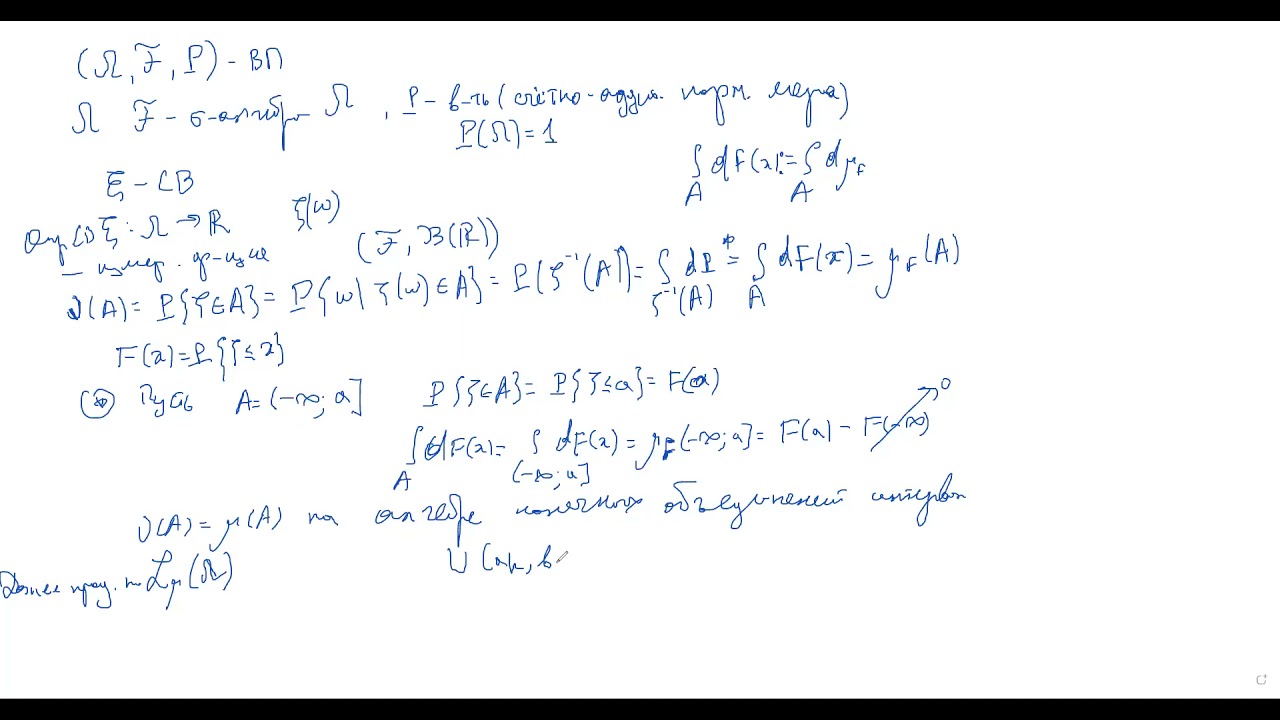

The Lebesgue integral is constructed by starting with indicator functions (which equal 1 on a set and 0 elsewhere), then defining integrals for simple functions as linear combinations of indicators, followed by approximating more general non-negative functions using limits of simple functions, and finally extending to all real-valued functions by decomposing them into positive and negative parts; this approach allows integration of a much broader class of functions than the Riemann integral, including those with discontinuities or unbounded behavior, and enables powerful convergence theorems like the Dominated Convergence Theorem.
Lebesgue Integral Explained | Measure Theory & Integration Overview
Added:A solid understanding of Riemann Integration, including its definition using upper/lower sums and its limitations with discontinuous functions.
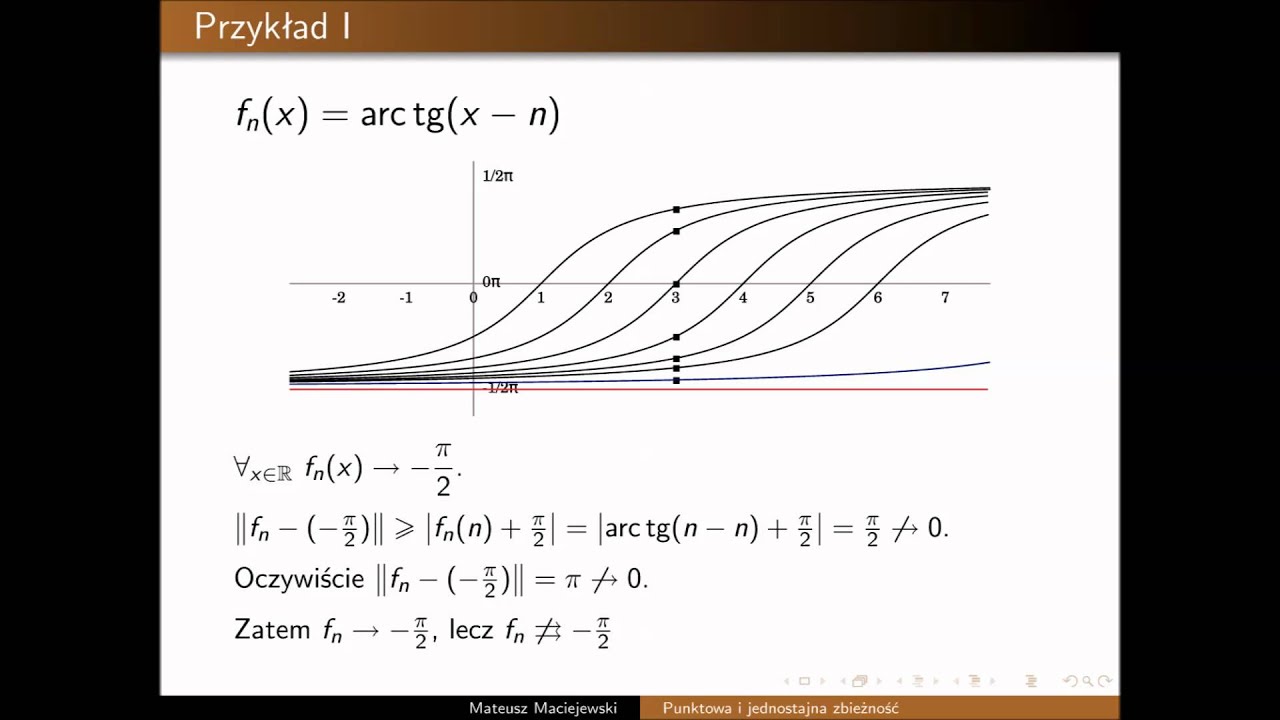
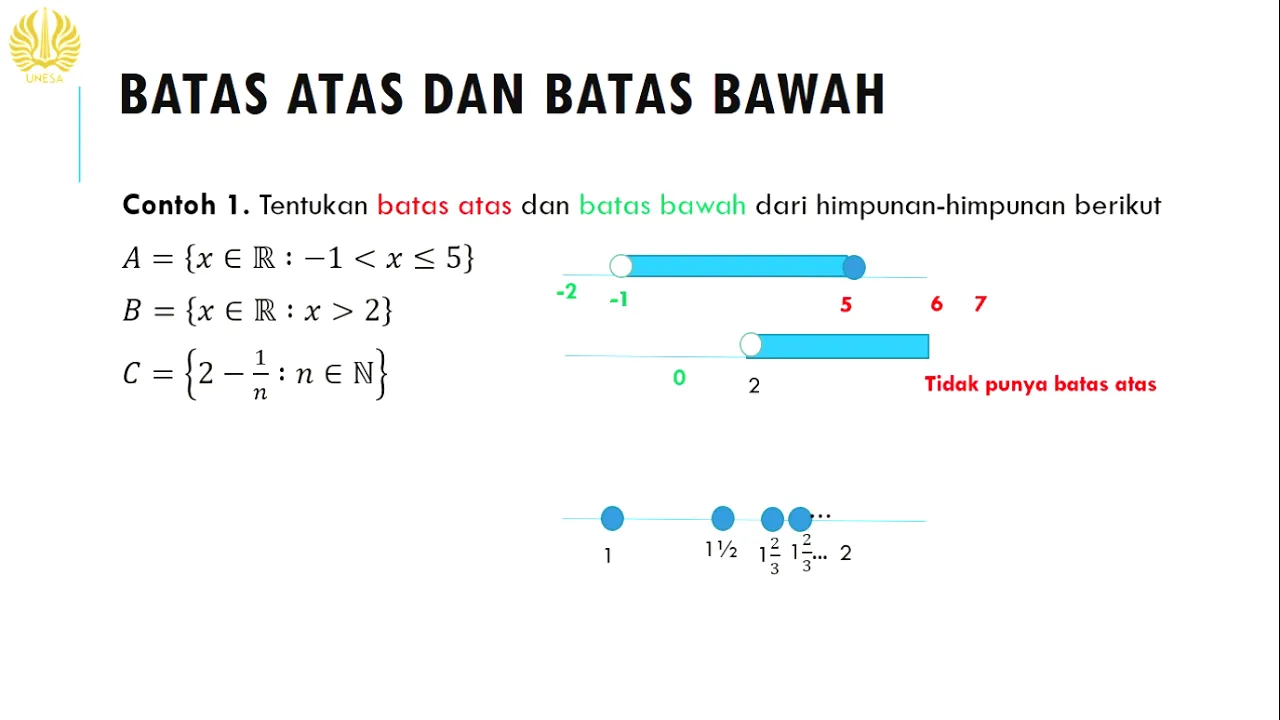
Fundamental Real Analysis concepts, specifically supremum, infimum, limits of sequences of functions, and pointwise vs. uniform convergence.
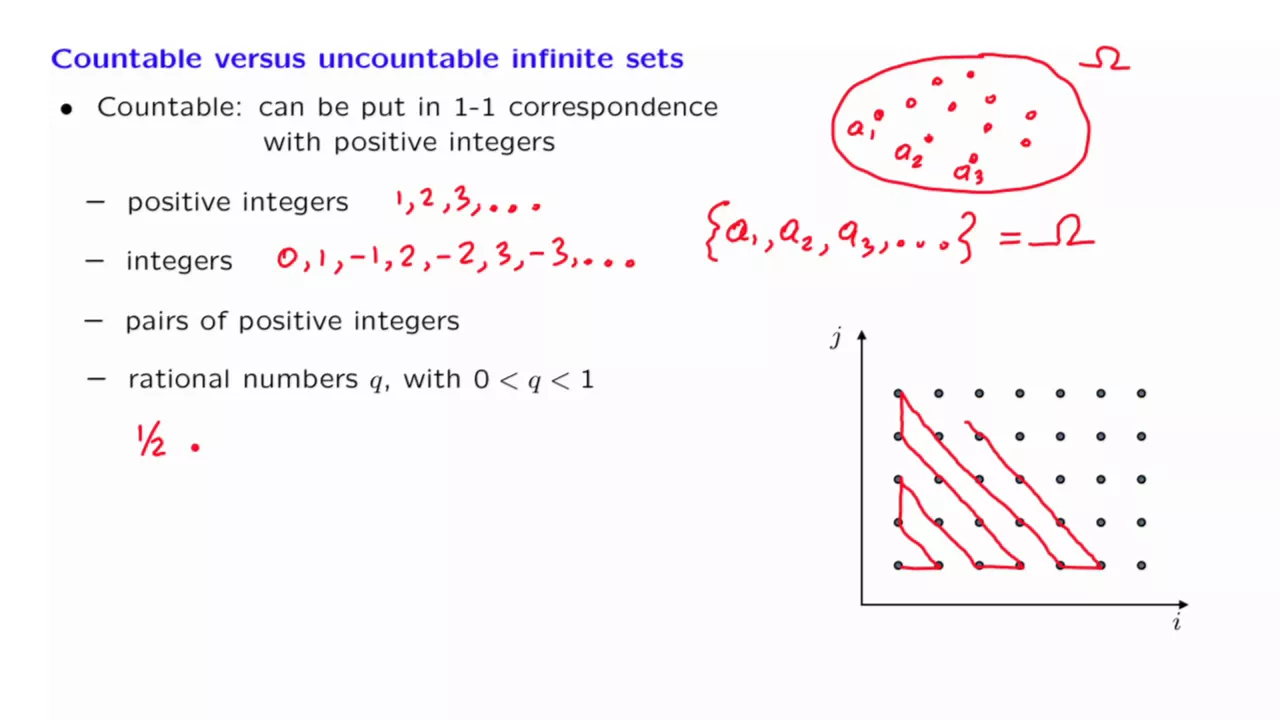
Basic Set Theory and topology of the real line, including open, closed, compact, and countable vs. uncountable sets.
An intuitive grasp of 'measure' as a generalization of length, area, and volume to more abstract sets.
Rigorous proofs and detailed applications of key integration theorems, specifically the Monotone Convergence Theorem, Dominated Convergence Theorem, and Fatou's Lemma.
The study of L^p Spaces, which are fundamental Banach spaces in functional analysis defined using Lebesgue integration.
Product measures and Fubini's Theorem, which extend Lebesgue integration to multi-dimensional spaces.
Measure-theoretic Probability Theory, framing probability distributions as measures and expectations as Lebesgue integrals.
109.8K views2.8Klikes26:23Original Release: 2018-02-09
all right thank you for watching and by popular demand today I will present you an overview of the lebesgue integral which is really the advanced way of integrating functions so in calculus you learn the baby way with the riemann integral but in the previous video i showed that the riemann integral does have its limitations but the lebesgue integral corrects those limitations and by the way today I'll just give an overview with no proofs whatsoever but if you really want the details this is great channel but same attica where he really provides all the details and make pickies things but today is just you know an excursion or an invitation to the little trail of the lebesgue integral and the way it works is we're gonna start with very basic functions and then build ourselves up until we get the most general function we can think of which are called integrable functions so first of all for the first four steps or something assume that n is greater equal to 0 assume is great very equal to 0 you'll see it's very it's not too complicated to deal with more general functions and as I said the way we start we start with very basic functions namely indicator functions of Sun sets so suppose F looks like this and only has values 1 and 0 f of X is the indicator function of of X which by definition is the function that is 1 when X isn't in that set so on if X is in a and 0 if X is not in it Shakespeare said to be or not to be well either X isn't it or it's not an a if it is f you know says 1 if it's not f that's 0 so it sort of tells you if it's in that set or not so just for a little picture suppose our set a looks like that then the graph of f is as follows it's 1 if that X is and it's 0 if X is not in it all right and the question is well what should be the area under this function well if you think about this the area in this case is really base times height but the pipe is one of course but the length is whatever the length of a is so in this case if you think about it the area under F is just the length of a or what's called the measure of a so then if you integrate F over our f of X DX it's defined to be the measure of a naturally some people just say integral 1a equals to measure okay and what is the measure well again I could spend three more videos on that but it's really what it is you know it measures how big a is so for example the measure of the interval 2 comma 5 would be 5 minus 2 which is 3 or the measure how many rational numbers there are that's very interesting because even though they're infinitely many rational numbers we can count them so they're not that many compared to all the real numbers so strictly speaking the measure of the rational numbers is zero because rational numbers don't have a length they're just made up of little points where as you know the interval 2 comma 5 does have a length and in fact because the rational numbers they have measure 0 by the following integral of 1q the function which is 1 on the rational numbers and zero on the irrational ones it has integral 0 in fact I have shown that in a previous video so just to show that definitions are consistent but the thing is though this is a very very useful formula because some sense you have some weird measures like there's a Cantor set which things does measure is zero but there's some non-trivial sets of non-trivial measure and then this formula helps us integrate the indicator functions of those ok so step one was an indicator function how can we build up more general functions well let's see for step two step two what is the next step well we started with simple indicator functions what is you just take combinations of those what if you add the indicator functions you multiply them it turns out it's not too hard to do so suppose suppose f of X it's just a linear combination of those indicator functions so if you want sum from 1 to n of CI indicator function of AI and by the way we can so any such function if you have such a decomposition we can make sure that the a eyes can be disjoint so we can split those up so without loss of generality assume that a eyes are destroyed are disjoint first of all those functions we call them simple functions because well they are pretty simple if you only have a finite number of values and then the nice thing is the integral you can just define it by linearity then the integral over R of f of X DX it's literally just the sum of cis of those integrals which is the sum from 1 to n of CI the measure of AI sort of the next step and I just want to show you how natural this is lets you know calculate an explicit integral this form by the way you can show that this definition is independent of the decomposition etc etc suppose f of X has two values in this case it's seven on the interval minus 1 0 Union 2 3 and it's four on the interval 0 1 Union 4 7 sorry I meant to say three values and it's 0 on the interval otherwise so just as a graph if that is for example minus 1 0 1 2 3 4 5 6 7 otherwise doesn't matter okay then on minus 1 comma 0 the value is 7 on 2 3 the value is 7 and then on the interval 0 comma 1 the value is 4 on the interval 4 comma 7 the value is 4 and other than that the value is 0 women so color all the other sets the value is 0 and then so here it's 0 and then here it's also 0 then we can evaluate the integral which simply is 7 times the measure of this set plus seven times a measure of this set plus four and the measure of this set and four times a measure of this everything else is maybe just to say this rigorously so no it is f is just seven times the indicator function of this Union minus-10 Union to three plus four times the indicator function of 0 1 Union four seven so by our previous definition and again because all those things are disjoined integral of F would just be seven times the measure of minus one zero Union to three plus four times the measure of zero 1 Union four seven and well that's equal to 7 times 0 minus minus zero minus minus 1 that's 1 3 minus 2 that's 1 plus 4 times 1 9 is 0 that's 1 plus 7 minus 4 that's 3 and if you calculate that you get 14 plus 16 which is 30 so the integral of this function it's 30 at this point I just want to remark something because if you know the definition of the riemann integral notice how much it focuses on the domain like on the x-values because the way they find an integral you chop the domain is little rectangles and then calculate areas of right here it's a little bit the opposite here what you say is let's just look at the range and here the range has three values and let's see at which we're in the x value is this numbers this range is attained so here we say the function is seven on this set the function is four on this set and it's zero otherwise and you sort of calculating this integral based on the range values not on the domain values so maybe this is maybe the clever idea of lebesgue integral and in fact this sort of leads us to the next definition step 3 and I give remember function is always still greater than or equal to zero suppose two things the function is bounded so it doesn't blow off to infinity and also it's zero after a while so I'll consider the set of bounded functions that is zero is zero outside a set of finite in other words it's eventually zero there's some point let's after nine thousand years where it becomes zero and same with negative values so maybe something like that we have let's see I said II you know outside which your function is zero and inside the function can be anything except it can't blow off to infinity so maybe look something here comes the important fact those for those kind of functions you can actually approximate them with our functions from step two in other words you can you know find some sequence of simple functions that get pretty close to this function f so the picture is somehow like this you look at the range and you just cut them off at finite number of values and then you know those functions you can calculate the integral and then for integral of F you just take the letter let me write that down so fact we can find find a sequence of simple functions functions as such that f n of X goes to f of X not necessarily for our expert for almost all X what this means is the X for which this does not hold as measure zero so it's really for almost all of them and then how do you define the blue bag integral it's literally as a limit of the integrals of F n so limit n goes to infinity of the integral of this thing I like to remind you from step two we can't calculate and then to get the integral in step three you just take the limit and you can show that the definition here it doesn't matter which sequence FN we use there might be many ways of approximating F but it turns out that they will always give the same answer also if you think about this for the Riemann integral it's the same thing you can think of the FN as being you know like sort of your rectangles when you split the domain up into n pieces then in the riemann integral you also take a limit as n goes to infinity and here it's the same thing except as i said instead of doing it for the domain you're just doing it for the range and by the way it's very important that eventually the function is zero because in general this doesn't always hold so if X goes up to infinity you may not have a global approximation like that how do you do it for more general functions general functions are greater equal to zero so suppose you have a function that's not eventually zero and that might blow up and it's kind of cool mainly find a function for which this works for step three let's say that is eventually zero and then you can calculate the integral of G to G as in step three then your answer is the biggest possible answer you can get by choosing Yugi in other words mathematically this says integral f is a Suprema or think the maximum sort of maximum answer you get if you choose a function G such that G is as in step 3 and G is less than equal to F other words find the best possible answer you can get by doing you know a step 3 it's possible of course that this supremum of this maximum is the infinity and in fact if the integral of F is infinity then we say that it's not integrable so note if the integral of f in this process is finite then F is the bang into the wall and if the integral is infinity then it's not and here's the amazing thing the only way here that the function is not integrable it's just if it's integrals infinity which means that there's no other way a function cannot be integrable whereas for Riemann integrals you could have a function you know with a finite bounded it's finite but for which the Riemann integral doesn't exist so the lebesgue integral always works of course unless you have a function that's called not measurable where you know you can't even measure the set where it's 1 but that's a different story but but so we did not go back integral Bo it's just a technicality if you assume if infinite integrals are ok then all your functions are integrable which is nice ok and last but not least what if your function is negative no problem at all general f so suppose you have a function that's both positive and negative something like that then notice dysfunction it's really the difference of two things there is the positive part that's F plus and there's a negative F - - and so notice in this way we can write any function positive or negative as plus minus F minus nd F F equals to F plus minus F - where f + + s - the greater equal to zero so I believe as class is the maximum it's a maximum of F and zero and as - it's the opposite it's a maximum of - and then the integral F issues Plus this integral minus this integral into integral F plus minus integral F minus so by decomposing a function like that you can just define a little begging to grow in general okay and now you might say why is this so great a couple of things first of all more functions in this way are integrable in fact as I said the only way cannot be is if the Indigo is infinity or if it's not measurable one does not speak of non measurable functions and also there are some amazing convergence theorems with this because if you've taken analysis you might say oh it's so hard to pass into the integral right pasta limit under the integral but in measure theory with this lebesgue integral we have this amazing theorem it's called the dominated convergence theorem for example if it says the following if you have a sequence of functions that converge to us so maybe that's suppose this is a function f and you can somewhat approximate it with f ends and this is one twice so for every next FN of X goes to that for X for X and we want to say we want to say that the conclusion is as follows then integral F of M goes to integral of F okay which usually it's impossible right but it turns out there's a very easy assumption to check may be supposed that the offense all of them are less than a function G where the integral of G is finite so suppose they're all dominated by the function G and a sine of X is less than or equal to G of X where the integral of G is finite so under this very easy assumption to check we can actually pass in the limit under the integral so it's kind of cool in other words limit n goes to infinity of integral of f equals to the integral of the limit and goes to infinity over again you may not appreciate this at this point but I promise you wants you to do more math this is a very useful theorem and I forgot to say well it has to be greater or equal to zero in this case but but yes so that was my overview of Lubeck integrals and in fact in another video I'll give a specific example how to calculate the lebesgue integral of a function and you see it's much easier to do that Riemann integrals so I hope you enjoyed this excursion and if you want more details as I said I highly suggest you to look at firmata cos videos but if you like this and you like math in general please make sure to subscribe to my channel thank you very much
Up Next
30:01
Monotone Convergence Theorem & Fatou's Lemma | Measure Theory
@measuretheory1598
14.4K views•2017-09-03

4:43
Elliptic Curve Cryptography Explained: ECC, ECDSA, ECDH
@PracticalNetworking
28.5K views•2024-10-21
19:08
Dominated Convergence Theorem Explained | Real Analysis
@drpeyam
19.9K views•2020-09-25

6:00
The Mathematical Impossibility of Accurate World Maps
@Vox
23.3M views•2016-12-02
Related Study Plans & Knowledge Roadmaps
Structured learning paths in Mathematics
mathematics
Tensor Calculus: Vectors to Riemann Curvature
01Mathematical Foundations: Linear Algebra & Calculus
02Covectors, Dual Spaces, and Tensor Basics
03The Metric Tensor and Index Gymnastics
+ 2 more learning modules
40h5 modules
Explore Roadmap
mathematics
Gödel's Incompleteness: Logic, Proofs & Limits
01Introduction to Formal Systems & Hilbert's Dream
02Set Theory, Cardinality, and Cantor's Diagonal Argument
03Arithmetization and Gödel Numbering
+ 2 more learning modules
14h5 modules
Explore Roadmap
mathematics
Galois Theory: Fields, Groups & Solvability
01Foundations of Abstract Algebra: Groups & Fields
02Polynomials & Field Extensions
03Splitting Fields & Symmetries
+ 2 more learning modules
24h5 modules
Explore Roadmap
mathematics
Non-Euclidean Geometry: Models & Geodesics
01Euclid's Fifth Postulate and the Birth of New Geometries
02Hyperbolic Space and the Poincaré Disk Model
03Geodesics: Defining Straight Lines in Curved Spaces
+ 2 more learning modules
15h5 modules
Explore Roadmap