

![[s4 | 2026] Математический анализ, Трифанова Е. С., лекция 5](https://i.ytimg.com/vi/DmfGkg5_f8g/maxresdefault.jpg)

![[s4 | 2026] Математический анализ, Трифанова Е. С., лекция 3](https://i.ytimg.com/vi_webp/ST8fXQGpS0U/maxresdefault.webp)


![[s3 | 2025] Математический анализ, Семенова О.Л., лекция 30](https://i.ytimg.com/vi/hc35NooDRoo/maxresdefault.jpg)


![Multidimensional Integration 12 | Differentiation Under The Integral Sign [dark version]](https://i.ytimg.com/vi/smh1z8bW5rM/maxresdefault.jpg)

![[ThTu 6] The Lebesgue Dominated Convergence Theorem: Feynman Integral Trick and Probability Examples](https://i.ytimg.com/vi/pTW5oS-gNrw/maxresdefault.jpg)





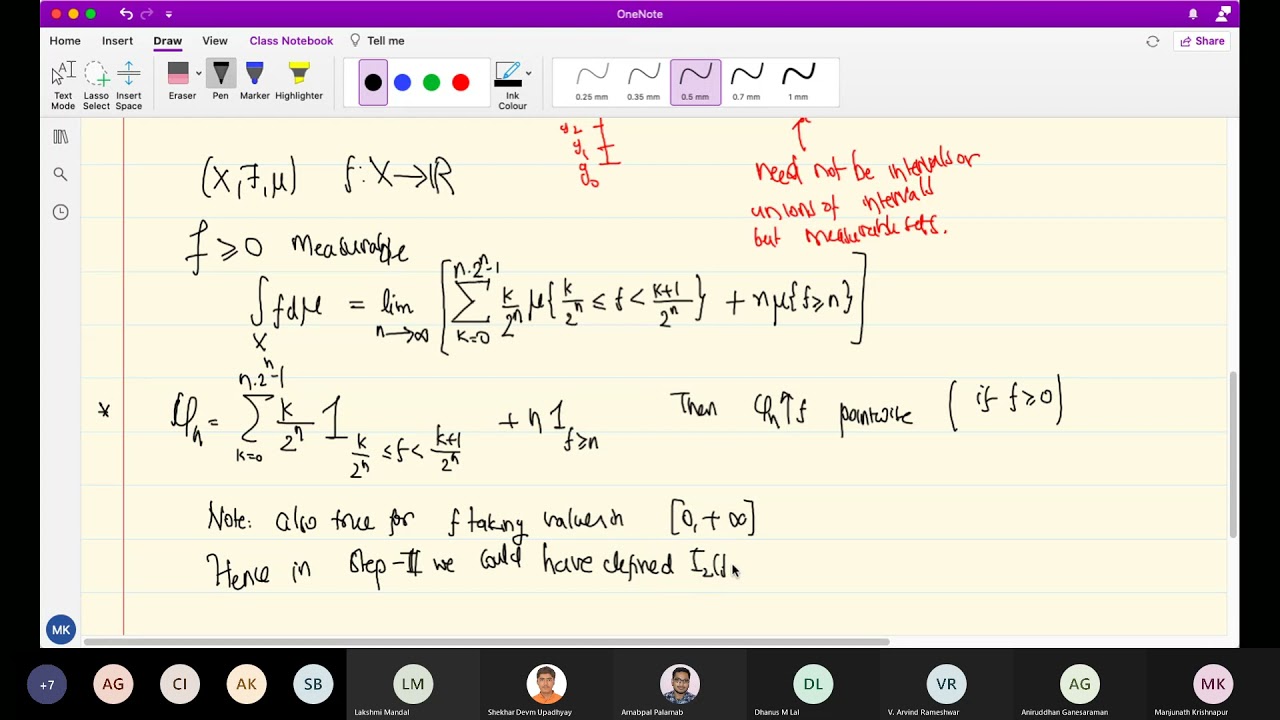
The Dominated Convergence Theorem states that if a sequence of functions $ f_n $ converges pointwise to a function $ f $, and there exists an integrable function $ g $ such that $ |f_n(x)| \leq g(x) $ for all $ n $ and almost all $ x $, then the limit can be passed inside the integral: $ \lim_{n \to \infty} \int f_n(x) dx = \int f(x) dx $. This theorem provides mild conditions under which we can interchange limits and integrals, which is essential for many applications in analysis and PDEs.
Dominated Convergence Theorem Explained | Real Analysis
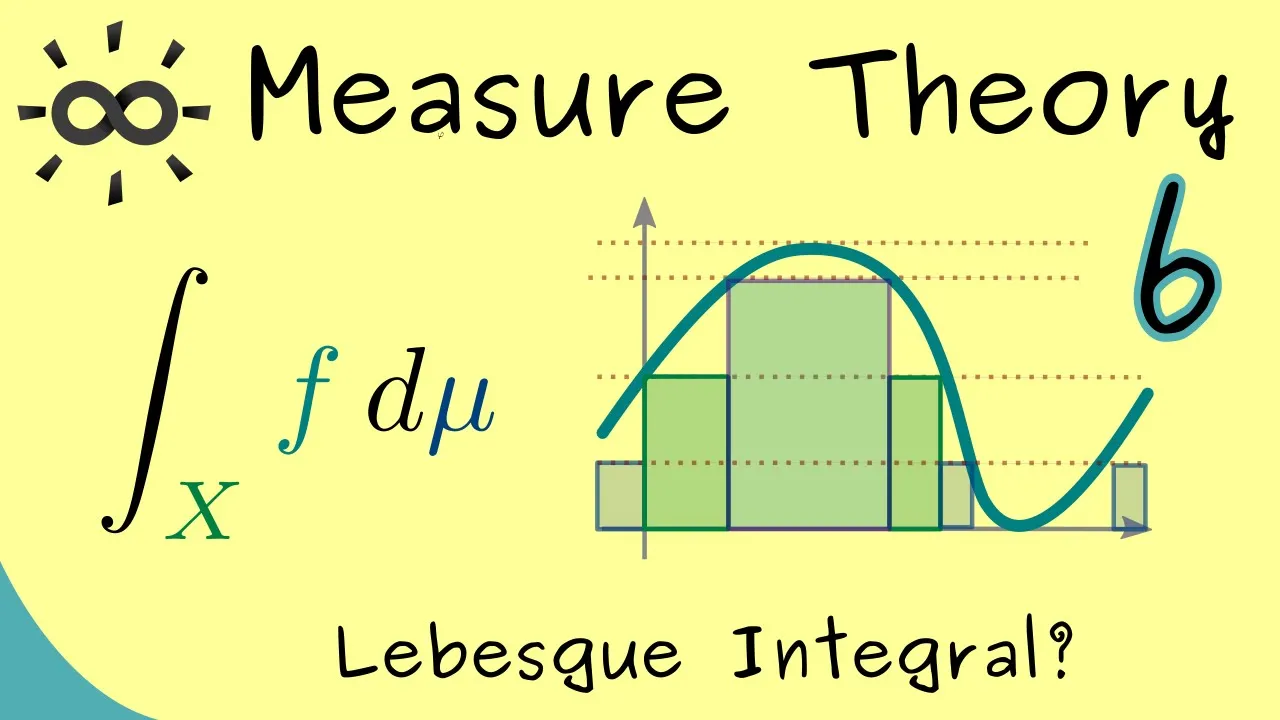
Added:Definition and basic properties of the Lebesgue integral, including how it differs from the Riemann integral.
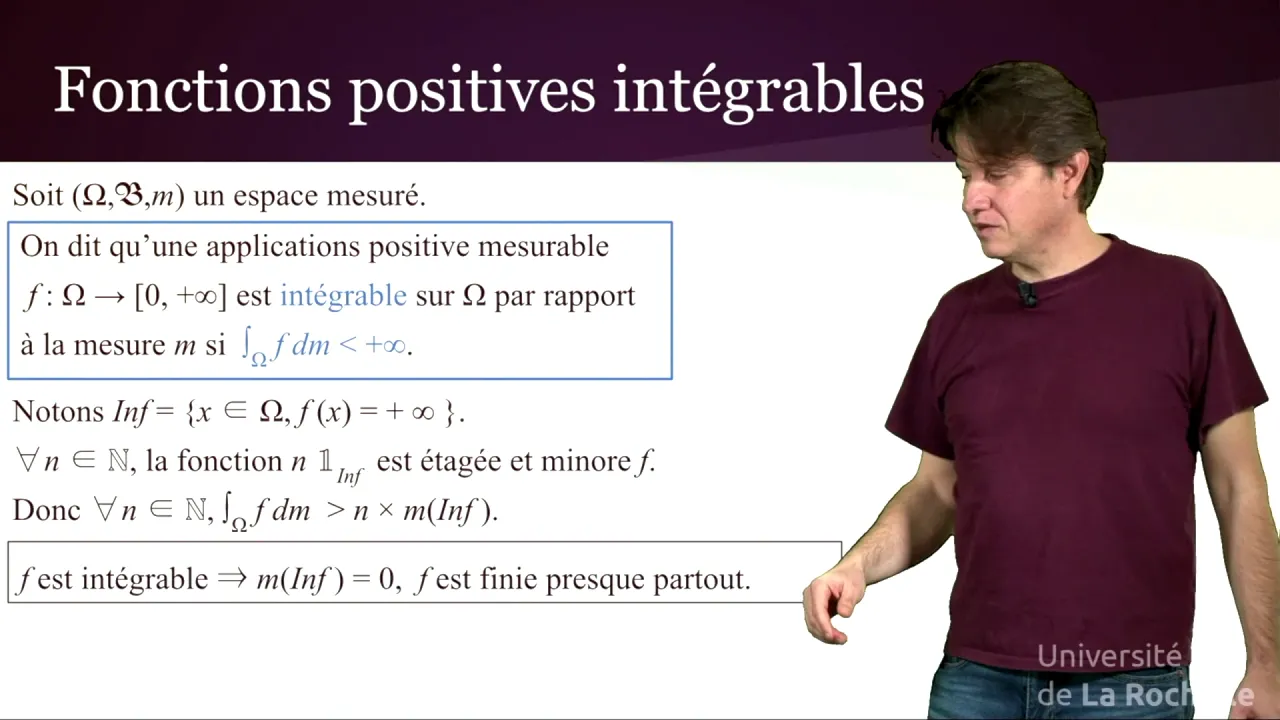
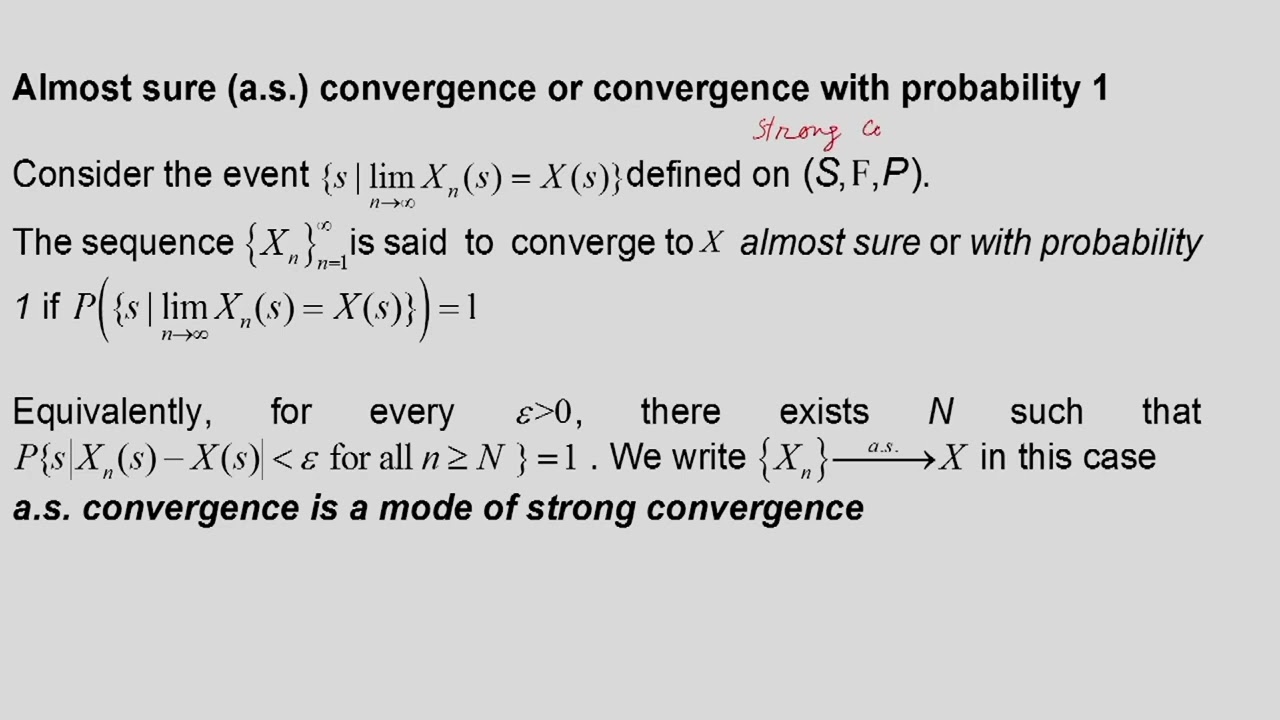
The concepts of pointwise convergence, uniform convergence, and convergence 'almost everywhere' (a.e.) for sequences of functions.
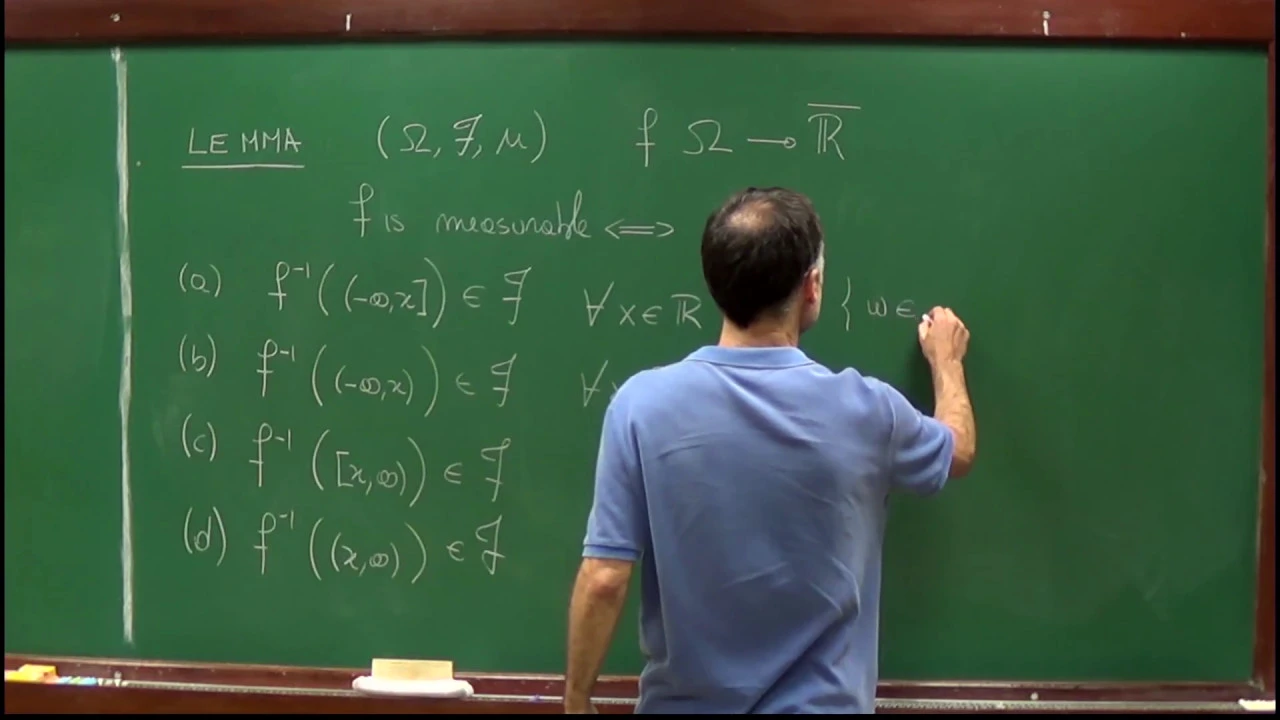
Measurable functions and measure spaces, as the theorem applies to functions defined on a measure space.
The Monotone Convergence Theorem (MCT) and Fatou's Lemma, which serve as foundational building blocks for proving the Dominated Convergence Theorem.
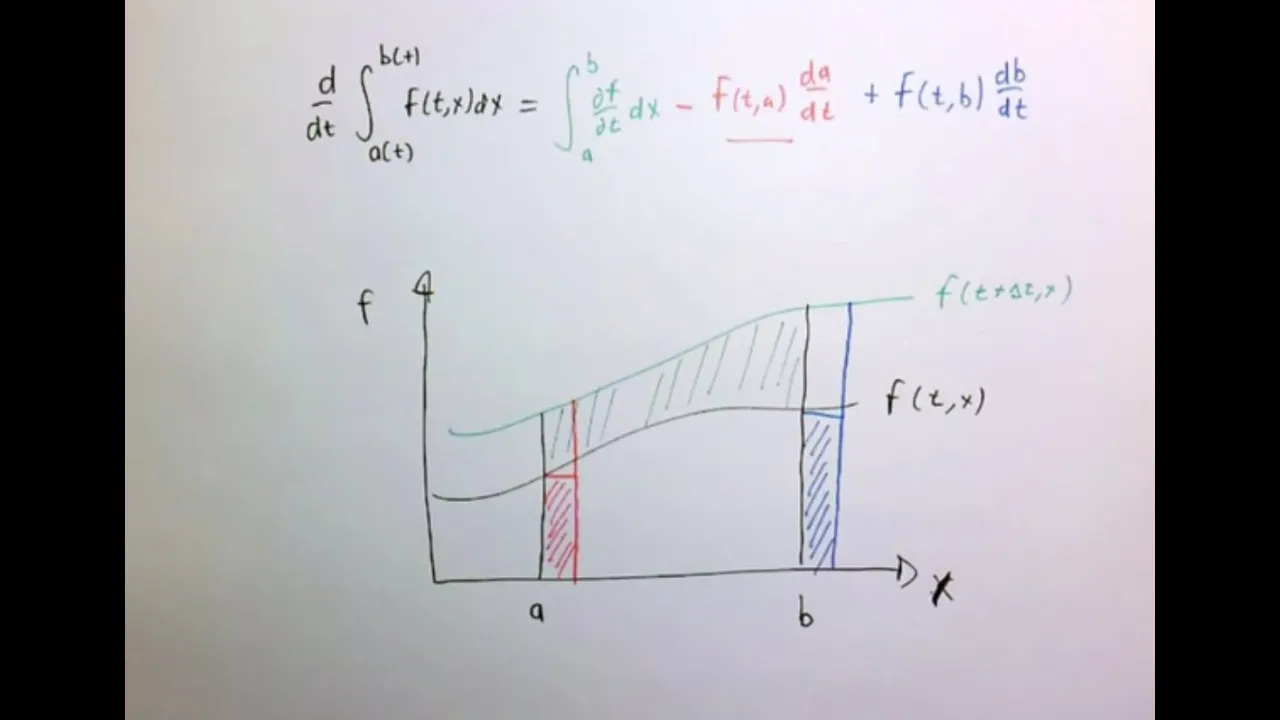
Justifying differentiation under the integral sign (Leibniz integral rule) using the Dominated Convergence Theorem.
The structure and completeness of L^p spaces, where the Dominated Convergence Theorem is key to proving convergence and completeness (Riesz-Fischer Theorem).
Applications in Probability Theory, specifically in proving the convergence of expectations of sequences of random variables.
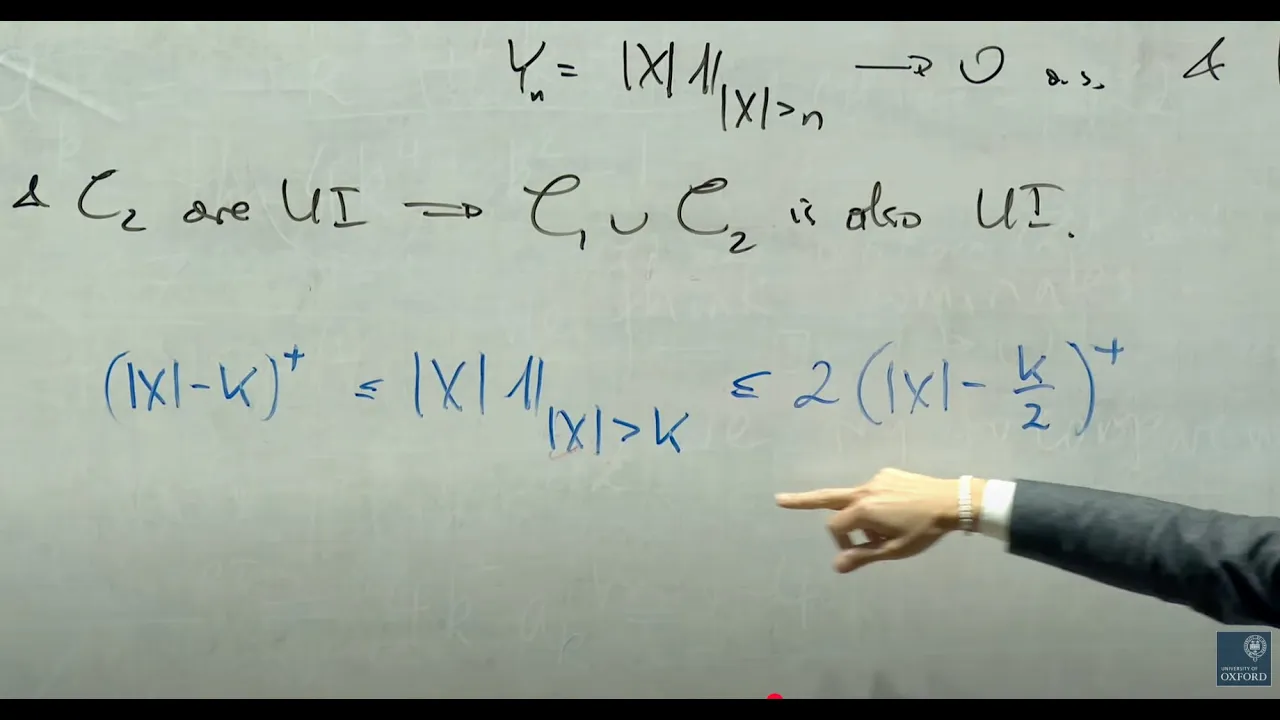
Advanced convergence theorems such as the Vitali Convergence Theorem, which generalizes the Dominated Convergence Theorem under the condition of uniform integrability.
19.9K views839likes19:08Original Release: 2020-09-25
You, yes you, stop what you're doing and let me tell you about the single most important math fact you'll ever use in your life. Forget about algebra, forget about geometry because the dominated convergence theorem is where it's at.
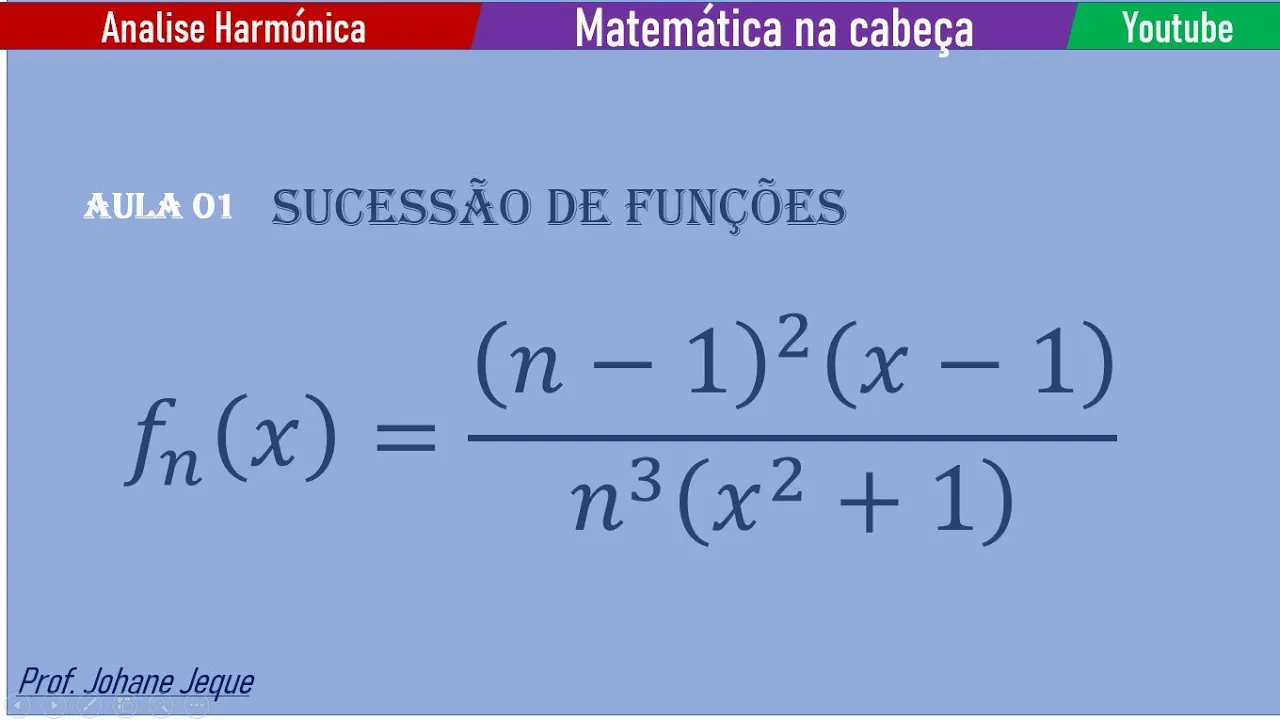
Let me give you a little bit of motivation. So suppose you have a sequence of functions fn that goes to f as n goes to infinity pointwise.
Pointwise means it goes to f at every point. Meaning that for all x we have that fn ofx converges to f ofx as n goes to infinity.
And this makes sense because this is just convergence of numbers. This is a number. You ask it to converge to this number. So in terms of a picture, here's what it looks like. You have bunch of functions fn. So think of this as f_sub_1 and maybe this is f_sub_2.
And those functions at every point they converge to a function f.
So again it means that for every x no matter which we choose fn of x goes to f ofx which at least it's true in for this x and here's the question suppose fn converges to f pointwise does it or does it not follow that the integral of fn ofx dx converges to f ofx dx.
So is it true or not that the limit as n goes to infinity of this integral equals to the integral of the limiting function?
In other words, is it true or not that the limit as n goes to infinity of the integral of fn ofx dx equals to the integral of the limit as n goes to infinity of fn of x dx?
In other words, is it true that you can pass into the limit under an integral?
Can you put a limit inside this integral? And unfortunately, the answer is no.
In general, it is not true that you can put a limit inside an integral. And in fact, let me give you a counter example.
It's very interesting.
Take fn of x again this is all on r to be n times the indicator function of the interval 0 comma 1 / n. So in other words it's the function that is n on 0 comma 1 /n but zero otherwise.
And in fact, let me draw a couple of pictures of what's going on. So let's do f1 what it is. This is the interval 0 comma 1. And this function is one on that open interval but zero everywhere else.
And to emphasize it is zero at zero and one as well. So this is f_sub_1. What about f_sub_2?
In this case the interval is 0 comma 1/2 and this function this time it is two on the interval 0 comma 1/2 but zero everywhere else. So again to emphasize it is zero at zero zero at 1/2 but here it is two. So that's f_sub_2 and in general for fn you just do it on a very small interval 0 comma 1 / n and it is n here and then zero everywhere else.
So you see it is a function that is getting bigger and bigger but over a smaller and smaller interval.
And in fact you may ask what happens in the limit? Well, the in the limit this function is becoming so tiny that it actually converges pointwise to the zero function.
So claim fn converges pointwise to f which is identically the zero function.
And this is not very hard to show because you just do it by cases. If x is less than or equal to zero. So kind of here.
Well, notice f(n) of x is always zero equals z for all x.
So fn of x which here becomes the zero sequence converges to the zero sequence which is precisely f ofx because f is a zero function. And suppose x is positive.
So suppose x is here. Well, just choose n to be so large that 1 / n is less than x.
Choose n so large that 1 / n is less than x. But then x is outside that interval.
And by definition fn of x equals zero.
And in particular if you take the limit then the limit as n goes to infinity of fn ofx is still zero which is f ofx.
So in both both cases we're done. If x is negative fn is always zero and if x is positive just wait enough time so that 1 / n is less than x and then you're done by definition. So we have rigorously proven now that those functions fn of x converge to a zero function. But then the question is what about the integrals? What about the areas under the functions?
Well here the area is one because you know the base is one, the height is one. Here the area is 12 * 2 which is 1.
which is one. Well, here the area of fn it's n * 1 / n which is one. So in each case the integral of fn is actually one.
But if you take the integral again over r of fn of x dx which again we've calculated to be 1 / n * n which is 1. This integral does not converge.
Let me put it in red. It does not converge to the integral of the limit function.
So it does not converge to the integral from minus infinity to infinity of f ofx which by definition would be the integral of the zero function because fn goes to zero which would be zero.
Therefore, the end of this cautionary tale is in general the integral of fn does not converge to the integral of f even though fn converges to f pointwise which of course raises the question when is it true that the integral of fn converges to f and luckily there's a theorem with very mild conditions that actually tells you when that happens. s and that's what's called again drum roll the dominated convergence theorem so theorem DCT not like Dominican central time no no it's a dominant convergence theorem it simply says the following if fn converges to f pointwise which again in our assumption we already had and moreover all those functions are dominated by another function g. So fn of x and absolute value is less or equal to g of x for all x but not just a random function. This dominating function needs to have finite integral with g of x dx finite. So under this very mild condition that fn is less than or equal to g for all x with g finite integral then in fact we can pass into the limit.
So then the integral of fn goes to the integral of f.
So again let me illustrate with a picture. Suppose you have a bunch of wild functions. So fn again super wild super wild and they converge to some f.
[snorts] If all those functions are dominated by a function g could be wild but whose integral is finite. So think like whose area is finite then in fact the area under fn converges to the area under f.
So under this very mild assumption which is valid 90% of the time you can actually pass into the limit. The only thing you need to watch out for is that this g doesn't depend on n.
So this doesn't depend on n on n and you need to make sure that this integral is finite. So again for the third time if all the fns are dominated by a function whose integral is finite then you can easily pass into the limit which again tells you most of the time you can pass into the limit because most of the time this uh thing is satisfied.
In particular in my future videos I will never check for the DCT assumptions.
Whenever I pass under integral just think okay pm is using the DCT because again 90% of the time this is true and in fact let me give you an example just to illustrate that okay suppose we have the following and again this is something that happens for instance when you solve's equation so suppose g of x has a finite integral might be or dominating functions I don't know and f is differentiable again this is in r and the derivative is uniformly bounded so it's bounded by a constant c which is finite and that's for all x so again the c doesn't depend on x the question is does this following difference quotient converge so does the integ tegral of g of x * f of x + h - fx over h dx.
Well, it should converse to g * f prime.
But the question is, is that true?
Does this go to g of x frime of x dx?
In other words, is the limit what we want it to be? And of course, you're like, "Wait a moment. Why do you do h goes to zero before we had n goes to infinity?" No problem. First of all, the dominated convergence theorem also works for real numbers, not just ns. And the fact that h goes to zero, you can just let n be one over h. And at least h goes to zero plus n goes to infinity. The point is the dominated convergence theorem is a very chillax theorem you know has very mild assumptions which you can modify. So in other words does the limit of this function go to whatever we what the stuff we want. Well for this let's just use a dominated convergence theorem. So usually I use FN but because [clears throat] here we have H we use FH and all that's left to show so it's enough to show that this FH for pointwise so enough to show that FH of X is dominated by a function G squiggled of X where the integral of G squiggled is final.
Right.
So once you show that then the answer is yes. That's the beautiful thing.
And well let's do that. So what is uh FH again? FH that's g of x times f of x plus h minus f ofx over h.
Now here's the thing. That's why I like this Microsoft whiteboard. We have info about fprime.
We know fprime is bounded. So the question is how do you turn this into a derivative? Well, just use the mean value theorem.
What do you mean? Yeah, the mean value theorem. And it just tells you that remember the MVT.
It's the MVP of calculus theorems that tells you that f of x + h minus f ofx over h equals to frime of c uh for some c.
Little c between x and x plus h.
By the way, just a little rant in the in analysis. Never ever use the mean value theorem because we have no control over this c. Suppose for instance f is measurable almost everywhere. Well this c could be this almost you know. So in general not good to use the mean value theorem. Instead what I would recommend write this as an integral and use the fundamental theorem of calculus. But because this is just an illustrative example I would just write it like that.
And so fh in the end becomes g of x times fprime of c. I don't know why it did that but all right mian and the nice thing is this allows us uh to estimate this because what do we have f of h of x equals g ofx times frime of c justi this c might depend on x we have to be watch out for that. But luckily, we don't have to worry about this because remember fp prime is bounded by a constant that doesn't depend on the input. So by assumption we know this is less than or equal to capital c. And again in case you don't remember look at this.
So this thing is less than or equal to capital c * g of x.
But also what do we know about G?
Well, G has finite integral which is actually what we want. And therefore, again, we need to show that this integral is finite. But that's not very hard now because fh of x dx is less than or equal to this constant times the integral of g ofx dx. And we now know all of this is finite. So what do we have this function f ofx pointwise it converges to what we want g of x frime of x and it's dominated by I guess this number or by this function here okay which has finite integral and therefore by the dominated convergence theorem the answer is yes I guess us uh namely the integral of fh as h goes to zero goes to what we want.
So in this case uh fprime * g or in other words the limit as h goes to zero of this thing f of x + h minus f ofx over h * g ofx actually goes to uh what we want. So frime of x g of x dx.
And you may wonder why is that? Why do we care about this? Well, because essentially whenever we put a derivative inside an integral, we're actually doing this whole process.
So, so again, whenever you see someone in PDEs put the derivative inside an integral or put a limit inside of integral, they think about the dominated convergence theorem. And I used to do that when I started learning PTEES where I just you know wrote this as a different quotient and like you know try to verify the assumptions but after a while you'll see well most of the times they're satisfied so it's good. All right I hope you like this. If you want to see more math please make sure to subscribe to my channel. Thank you very much.
Up Next

9:48
Introduction to Logarithms: Inverse of Exponentiation
@khanacademy
2.3M views•2007-05-17

4:43
Elliptic Curve Cryptography Explained: ECC, ECDSA, ECDH
@PracticalNetworking
28.5K views•2024-10-21

26:23
Lebesgue Integral Explained | Measure Theory & Integration Overview
@drpeyam
109.8K views•2018-02-09

6:00
The Mathematical Impossibility of Accurate World Maps
@Vox
23.3M views•2016-12-02
Related Study Plans & Knowledge Roadmaps
Structured learning paths in Mathematics
mathematics
Tensor Calculus: Vectors to Riemann Curvature
01Mathematical Foundations: Linear Algebra & Calculus
02Covectors, Dual Spaces, and Tensor Basics
03The Metric Tensor and Index Gymnastics
+ 2 more learning modules
40h5 modules
Explore Roadmap
mathematics
Gödel's Incompleteness: Logic, Proofs & Limits
01Introduction to Formal Systems & Hilbert's Dream
02Set Theory, Cardinality, and Cantor's Diagonal Argument
03Arithmetization and Gödel Numbering
+ 2 more learning modules
14h5 modules
Explore Roadmap
mathematics
Galois Theory: Fields, Groups & Solvability
01Foundations of Abstract Algebra: Groups & Fields
02Polynomials & Field Extensions
03Splitting Fields & Symmetries
+ 2 more learning modules
24h5 modules
Explore Roadmap
mathematics
Non-Euclidean Geometry: Models & Geodesics
01Euclid's Fifth Postulate and the Birth of New Geometries
02Hyperbolic Space and the Poincaré Disk Model
03Geodesics: Defining Straight Lines in Curved Spaces
+ 2 more learning modules
15h5 modules
Explore Roadmap