










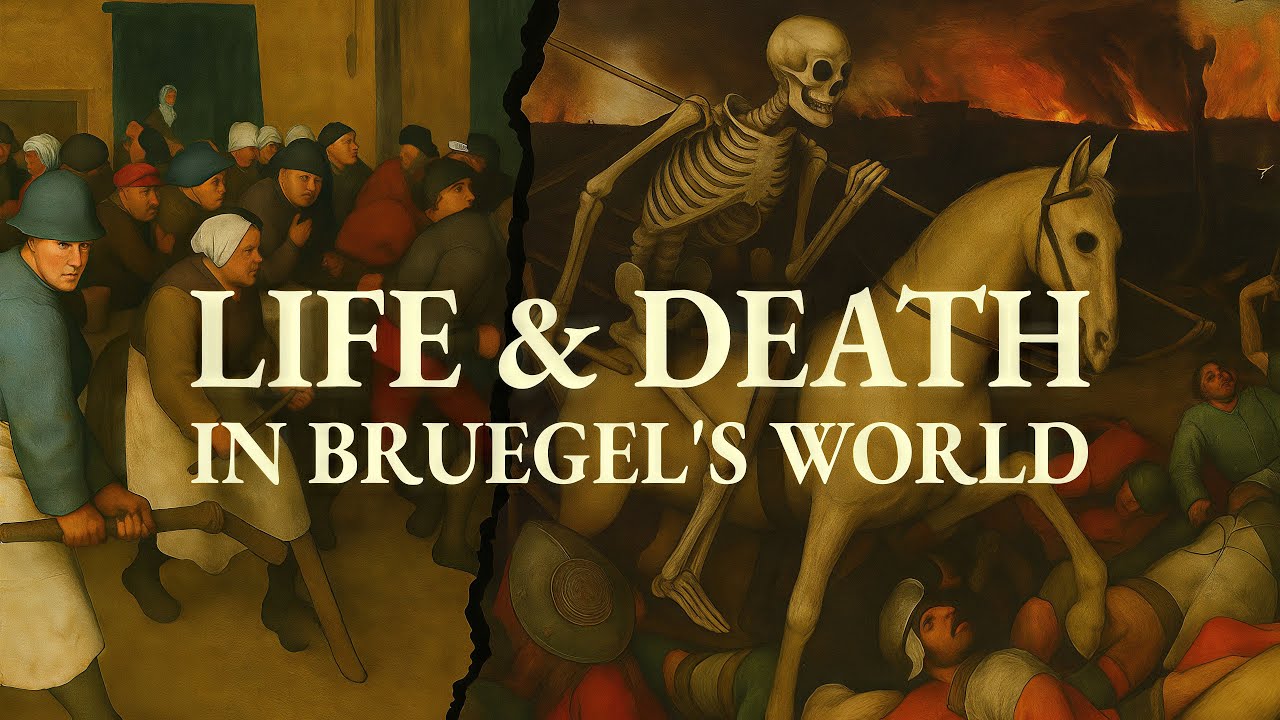




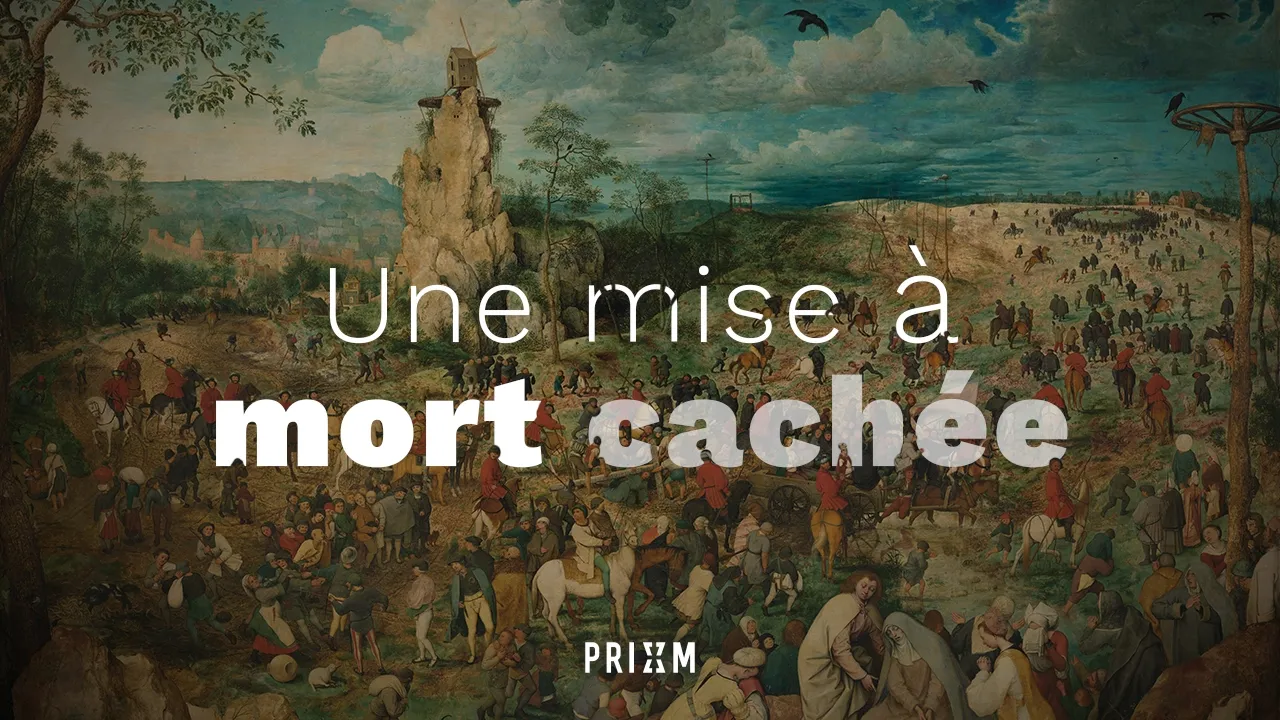

Pieter Bruegel the Elder (1525-1569) was a Flemish Renaissance painter renowned for depicting everyday life and peasant scenes, revolutionizing art by focusing on ordinary people rather than religious or mythological subjects; despite being called 'the painter of peasants' and influenced by Hieronymus Bosch's grotesque style, his sophisticated work combined humor, satire, and social commentary, making him one of the most influential Northern European artists who could compete with Italian masters for elite patronage.
Pieter Bruegel the Elder: Understanding the Peasant Painter's Art
Added:Understanding the core differences between the Italian Renaissance (focused on idealism, proportion, and classical antiquity) and the Northern Renaissance (focused on realism, detail, and domestic life).
Familiarity with the concept of 'Genre Painting' and how it historically contrasted with high-status religious, historical, or mythological portraiture.
The socio-political context of the 16th-century Low Countries (modern-day Belgium and the Netherlands), including the rise of the merchant class and early tensions leading to the Dutch Revolt.
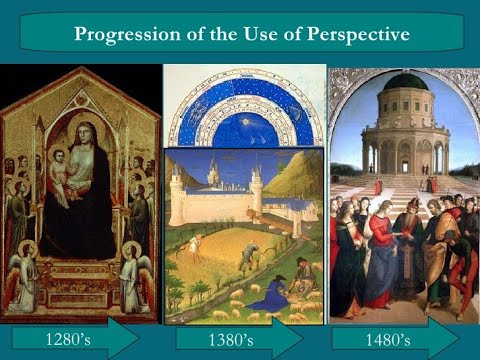
Basic knowledge of Renaissance artistic techniques, such as linear perspective, atmospheric perspective, and the use of oil paints to achieve realistic textures.
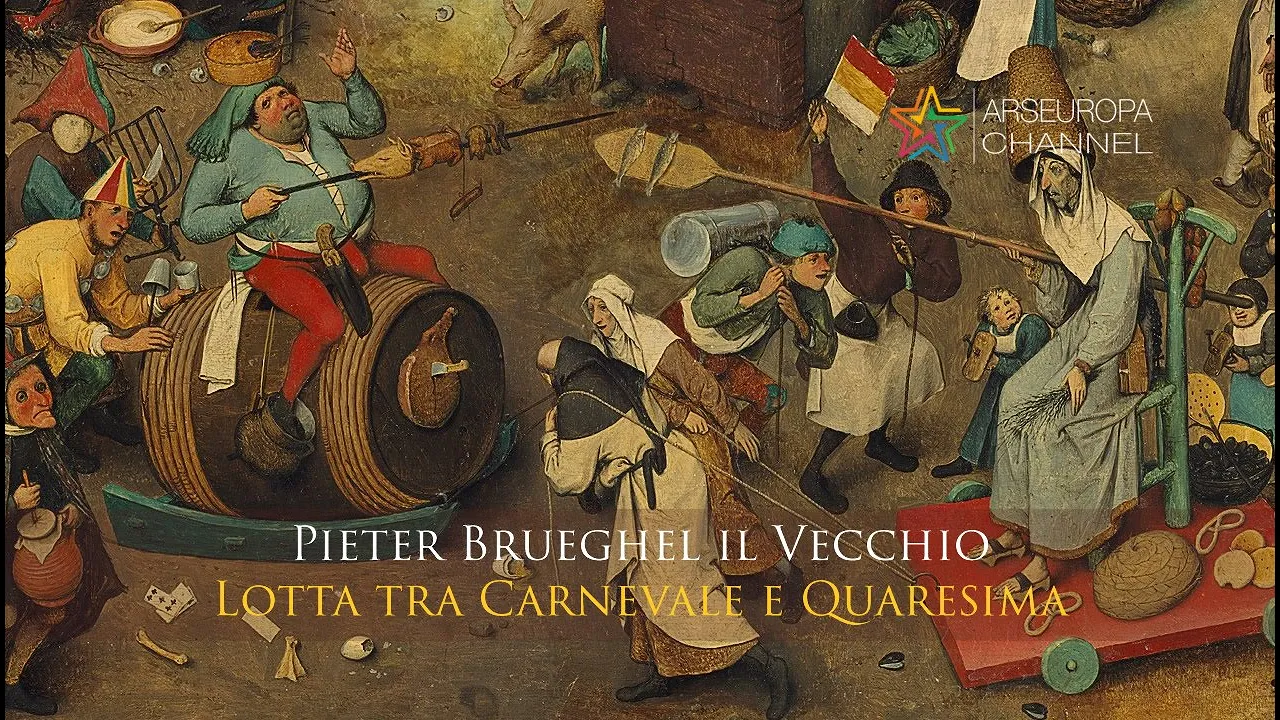
Exploring the iconographical and symbolic meanings hidden within Bruegel's complex crowd scenes, such as 'Netherlandish Proverbs' and 'The Fight Between Carnival and Lent'.
Analyzing the direct influence of Bruegel's peasant scenes on 17th-century Dutch Golden Age master painters like Jan Steen, Rembrandt, and Johannes Vermeer.
Investigating how Bruegel's depiction of the working class laid the early groundwork for the 19th-century Realism and Naturalism movements led by artists like Gustave Courbet and Jean-François Millet.
Examining the political and religious subtext in Bruegel's later works, specifically how they may have subtly critiqued the Spanish Habsburg rule and the Inquisition in Flanders.
34K views2.1Klikes8:32Original Release: 2025-03-19
Let's take a look at this image. It is a detail from a video animation created based on the painting children's games by Peter Bugal the Elder. This animation was made for one of the exhibitions held in Brussels in 2019 commemorating the 450th anniversary of the painters's death. The original painting had no movement obviously, but it already carried an intention to capture life. It seemed to be inviting modern technology to provide the technique that was missing in the 16th century. Two young children play balancing on a wooden barrel carefree in the street with no drama, no story, no aspirations. To our eyes, there is no other purpose than to capture a fleeting moment in the life of ordinary people.
[Music] This approach to reality to men and women had not been very common in painting before Bugal. Carl Vanmander in the first known biography of the painter published in6004 stated, "Nature made a singularly fortunate choice the day it selected from among the peasants of a remote braant village, the humorous Peter Bugal to become the painter of villages.
This emphatic statement solidified the idea of Bugal as a simple painter dedicated to humorously capturing everyday life and primarily portraying the urban and rural lower classes.
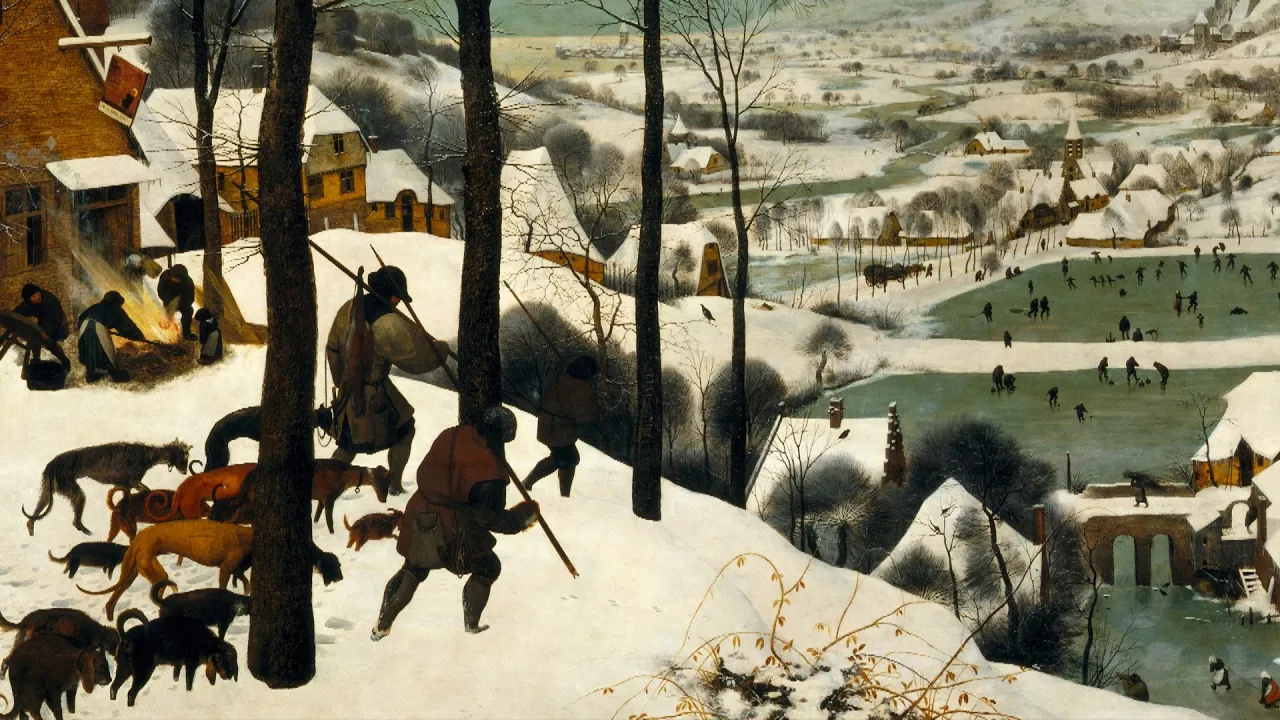
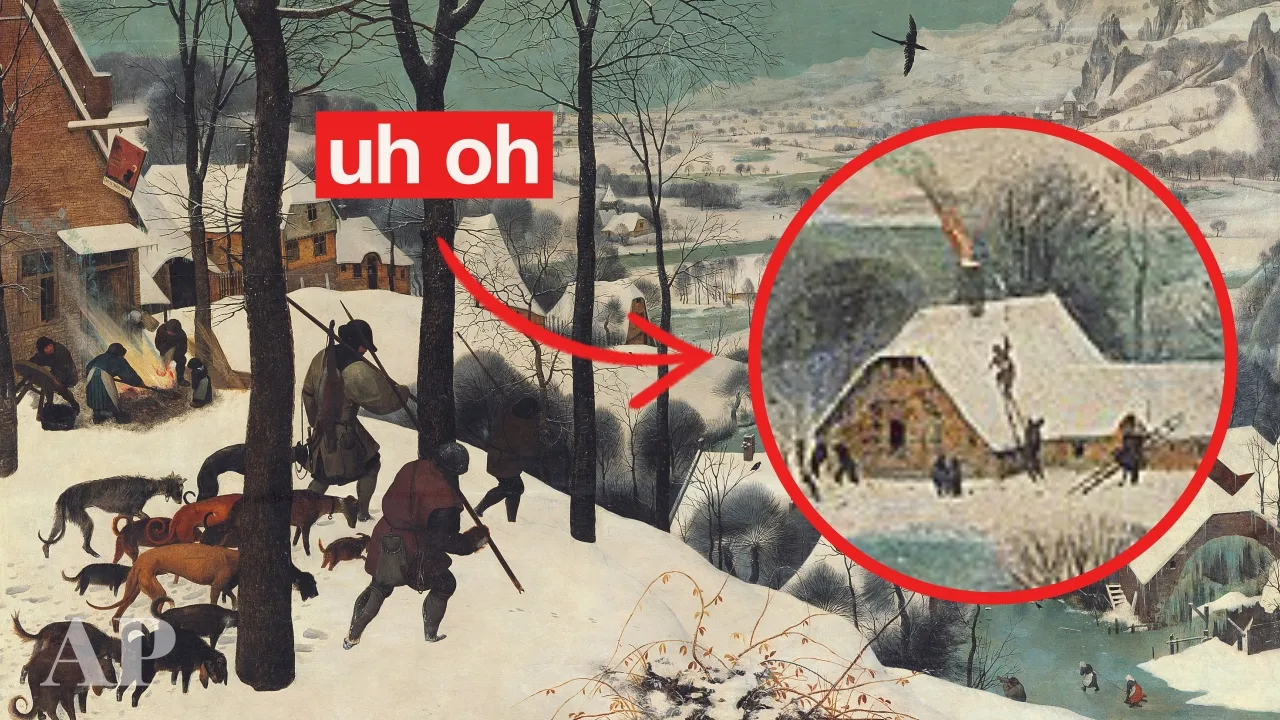
Details such as the young boys on the barrel or the hunters in the snow were not unheard of in earlier painting, but centering an entire work on scenes like these was an undeniable novelty. But what does this idea of the peasant painter that has circulated since Van Mandanda's time really mean? Was his art truly popular and fundamentally simple?
A closer look at his paintings, drawings, and prints reveals that the naivity suggested by his identification with villagers does not fully define him. Art history in recent decades has recognized Bugal as a key figure in the renewal of Renaissance painting. His work introduced new formats and themes for the ornamentation of Flemish elite [Music] households. Vanmander noted that Bugal began his career following in the footsteps of Bosch, copying his diarlies and comic themes. Evidence of this can be seen in the secondary figures of the triumph of death and the fall of the rebel angels. This taste for the grotesque is also present in one of his most peculiar works, Dulree, also known as Mad Meg. Bugal chose the moment when Mad Meg marches to plunder hell with her army of women. This is no small detail.
The scene is filled with references to Bosch, yet Bugal constructs a unique image. Me advances with the sword in hand, carrying a basket filled with her first spoils, jewels, chests, and a frying pan. The frying pan is key to interpreting the painting. It points to role reversal, to the women wearing the pants who frequently appear in Bugal's world, to a satire that could be misogynistic, but also reflects a world in transformation. In times of war and despair, the traditional order was shifting and its direction was uncertain. This role inversion is not just a narrative motif, but a tool to make the viewer reflect [Music] When Bugal painted dull greet around 1562 to 63, he had already spent several years creating drawings for engravings.
These works, heavily influenced by Bosch, were in high demand. However, Bugal skillfully used his early fame to develop a unique artistic style. His work began to respond to a new demand for paintings intended for the domestic spaces of powerful Flemish patrons, courtiers, nobles, and merchants who were adopting a more modern way of interacting with images. These clients appreciated his visual inventiveness, which blended the comic with the reflective and allowed for new interpretations of humanity's place in the world. This interest in the human experience is evident throughout his work from his winter landscapes typical of the little ice age to his depictions of everyday life, village festivals and rural labor. According to contemporary sources, these themes adorned the homes of the Flemish bourgeoisi and the elites connected to the Habsburg government. A notable example is the census at Bethlehem painted for Yan Fleming, a bourgeoa enobbled by Philip II of Spain.
Although the subject is religious, the arrival of Mary and Joseph in Bethlehem to be registered, we now understand that it also served as a statement of social status. The painting depicted Fleming's estates and emphasized his connection to the Habsburgs. Nevertheless, the viewer's interest was drawn to the multitude of common figures engaged in their daily activities. The reading of these landscapes and scenes allowed for multiple layers of interpretation, combining realistic observation with humorous delight. Bugal also explored the world of satire as demonstrated by his painting of proverbs. These works were connected to the humanist and Arasmian interest in perimeiology as a source of popular wisdom. Moreover, they were accessible to any viewer. The humanist ctographer Abraham Ortalius, a friend of the painter, claimed that all of Bugal's works contained implicit meanings beyond the obvious. It has been suggested that his peasant scenes might have been an ironic commentary on the lavish urban banquetss of the wealthy turning them into conversation pieces at bourgeoa dinners. For instance, it is known that the six panels of the season series which depicted rural labor throughout the year hung in the dining room of the country estate of merchant Nikolai Jongik. This suggests that the depiction of peasants was not merely a record of rural life, but a sophisticated adaptation of classical literary concepts, possibly with a satirical [Music] tone. When Bugal passed away on September 5th, 1569 at the age of 43, he was the most renowned painter in Fllanders and one of the few artists from Northern Europe who could compete with the Italians for the favor of the elite. His tomb in the church of NRAAM de la Chappelle in Brussels, erected by his son, Yan Bugal in 1598, is worthy of a noble. Even today, it proudly highlights his dedication to painting.
The demand for his works multiplied after his death. His prints circulated throughout Europe and his paintings being scarce led to a lucrative market for copies. This phenomenon demonstrates that scholarly interpretations of his paintings were not essential to appreciate his art. Beyond any moral or social message, Bugal's success lies in his ability to capture the essence of human nature. His curiosity about common folk, his irony toward deviations from the norm, and his empathy for ordinary people remain to this day delightfully subversive. If you enjoyed this video, I'd really appreciate it if you could leave a like and a comment with your thoughts on this artist. And if you'd like to have one of their paintings in your home, you can purchase your favorite from the website. The link is in the description where you can check out the catalog and place your order.
Shipping is completely free worldwide. A huge thanks to everyone who has placed an order. You make it possible for me to create videos like this. See you in the next video.
[Music]
Up Next
5:12
Dürer's Melencolia I: Symbols & Meaning Explained
@smarthistory-art-history
77.2K views•2018-11-01

114:18
Christian Iconography: History, Theology, and Meaning | Fr. Panayiotis Papageorgiou
@Trisagionfilms
58.8K views•2020-02-21

8:02
Ophelia by Millais: Symbolism and Pre-Raphaelite Art Explained
@inspiraggio
287.5K views•2025-09-07

16:34
Earliest Depictions of Jesus in Art: 10 Ancient Images Explained
@UsefulCharts
5.9M views•2022-06-03
Related Study Plans & Knowledge Roadmaps
Structured learning paths in Art History
art-history
Gothic Cathedrals: Engineering, Light & Society
01The Birth of the Gothic: Romanesque to Suger's Vision
02The Structural Triad: Pointed Arches, Ribbed Vaults, and Flying Buttresses
03Theology of Light: Lux Nova and Sacred Geometry
+ 2 more learning modules
14h5 modules
Explore Roadmap
art-history
Pre-Raphaelites: Realism, Symbolism & Critique
01The Victorian Art Establishment and Academic Formula
02The Founding of the PRB and Radical Realism
03Medieval Revivalism and Literary Symbolism
+ 1 more learning modules
8h4 modules
Explore Roadmap
art-history
Street Art: From Subways to Art Market
01Subcultural Origins in Philadelphia and New York (1970s)
02The Subway Era and Style Wars (Late 1970s - 1980s)
03The East Village Scene and Early Gallery Crossover
+ 2 more learning modules
10h5 modules
Explore Roadmap
art-history
Classic Maya Art: Iconography, Glyphs & Ritual
01Foundations of Classic Maya Visual Culture
02Deciphering Maya Hieroglyphs & Text-Image Integration
03Sacred Geography and Cosmological Architecture
+ 2 more learning modules
14h5 modules
Explore Roadmap