

![Как Туалеты Лондона людей УБИВАЛИ - [История Медицины]](https://i.ytimg.com/vi_webp/a7WY8fNZAv4/maxresdefault.webp)

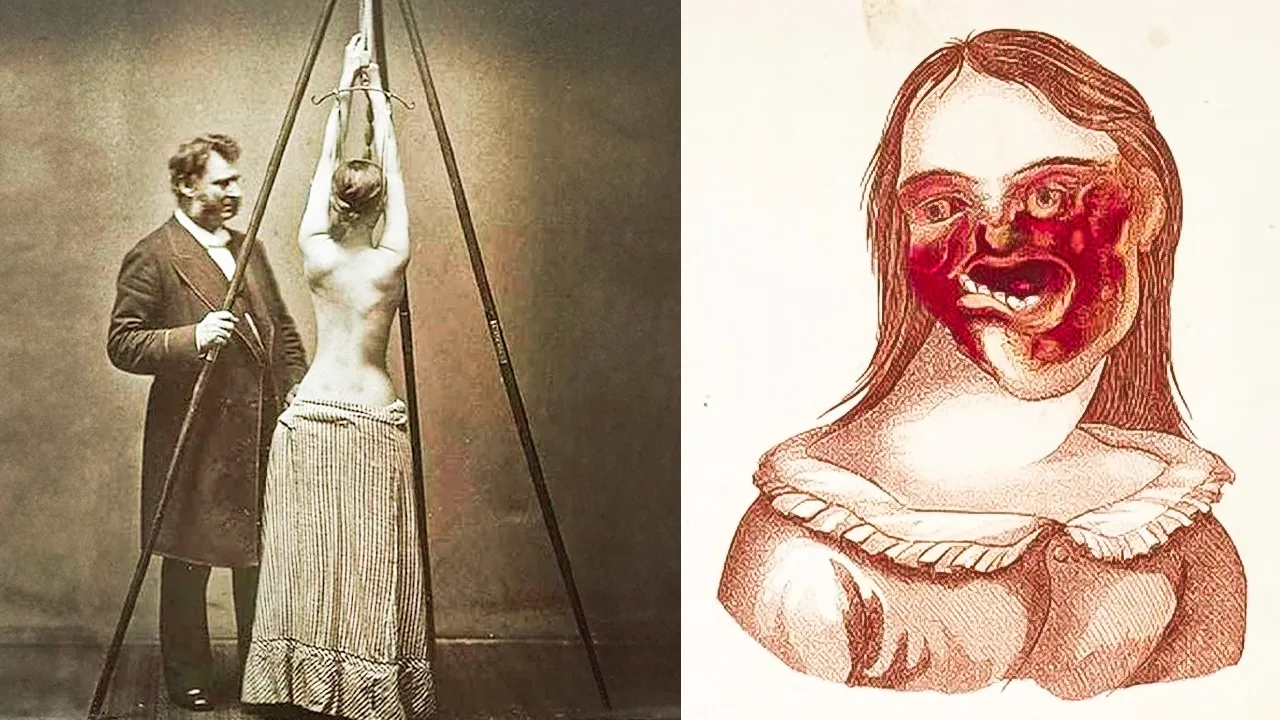











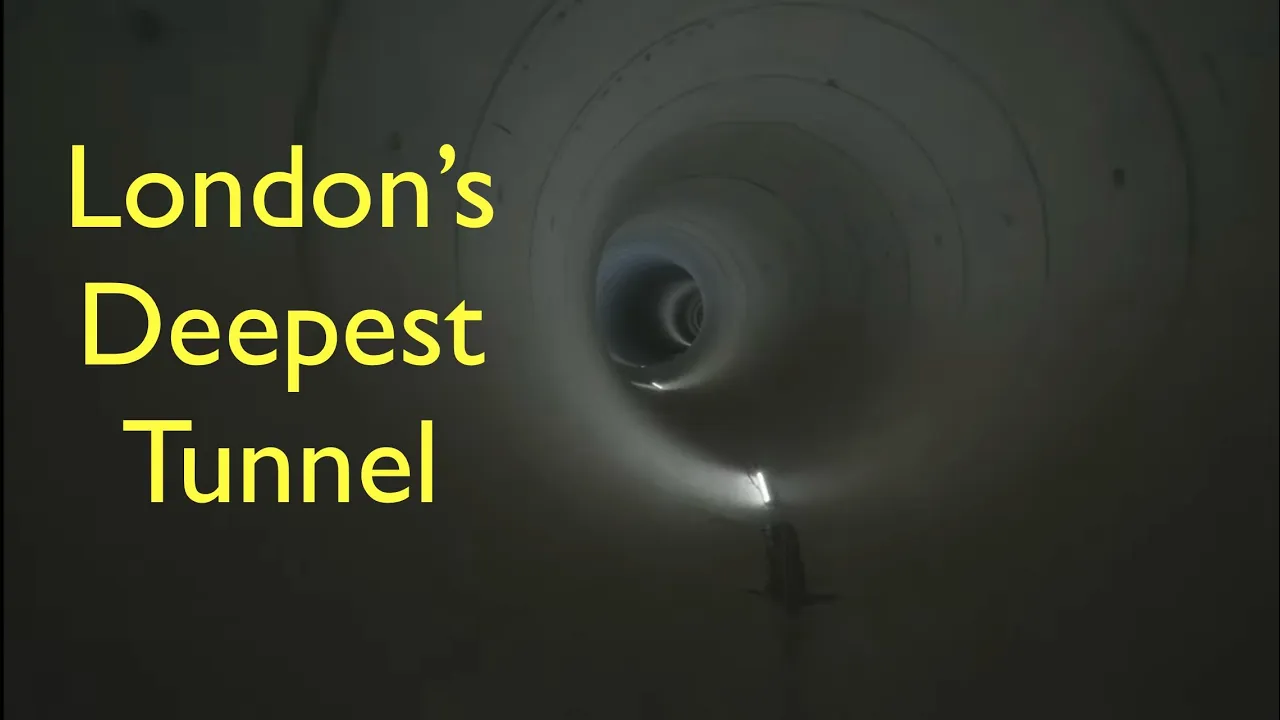

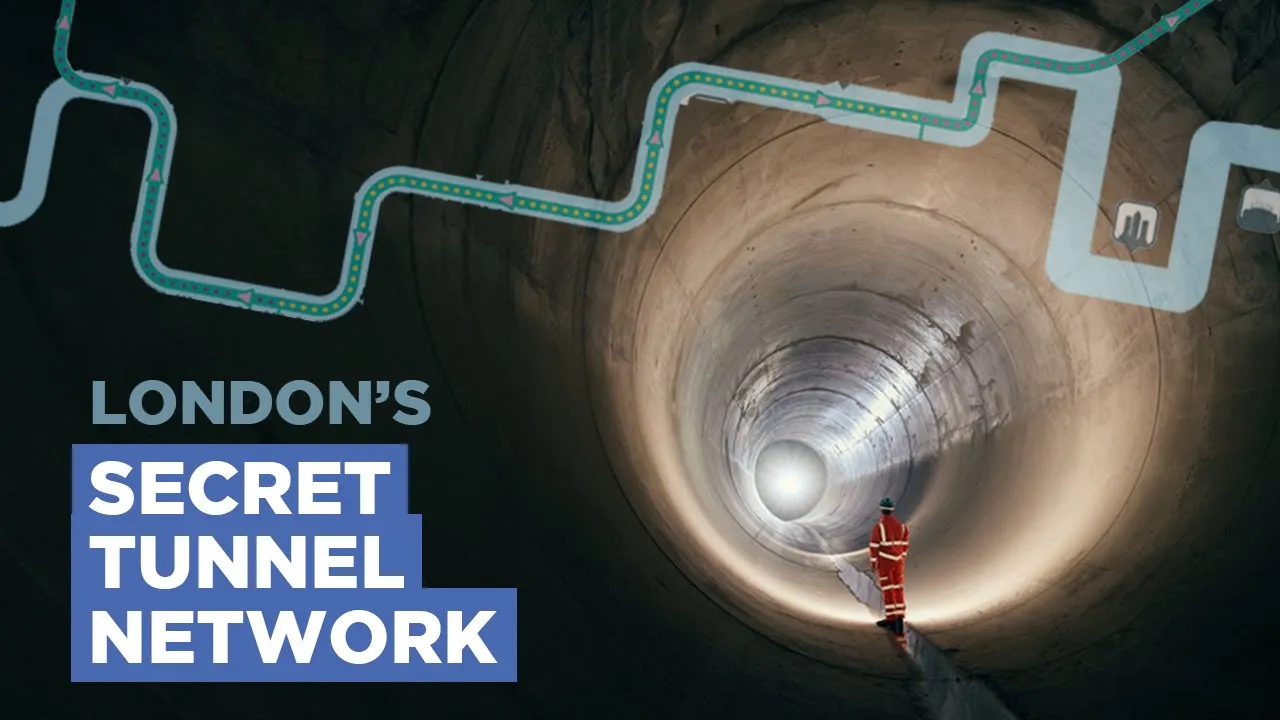


Joseph Bazalgette, a railway engineer, designed and implemented London's revolutionary sewer system after the 1858 Great Stink crisis, building over 1,000 miles of gravity-fed pipes with pumping stations to eliminate cholera and transform the city's sanitation, a system that still serves London today.
Sir Joseph Bazalgette: The Engineer Who Reshaped London's Sanitation
Added:The historical context of the Industrial Revolution and the rapid urbanization of 19th-century London, which led to severe overcrowding.
The 'Miasma Theory' of disease transmission (the belief that diseases like cholera were spread by noxious air) and how it dominated medical thinking before the acceptance of germ theory.
The basic geography of London, specifically the role of the River Thames as both a water source and a dumping ground for waste.
The concept of gravity-fed flow in hydraulic engineering, which is fundamental to how historical sewer systems operated.
The evolution of modern wastewater treatment processes, moving from simple waste diversion to advanced biological and chemical purification.
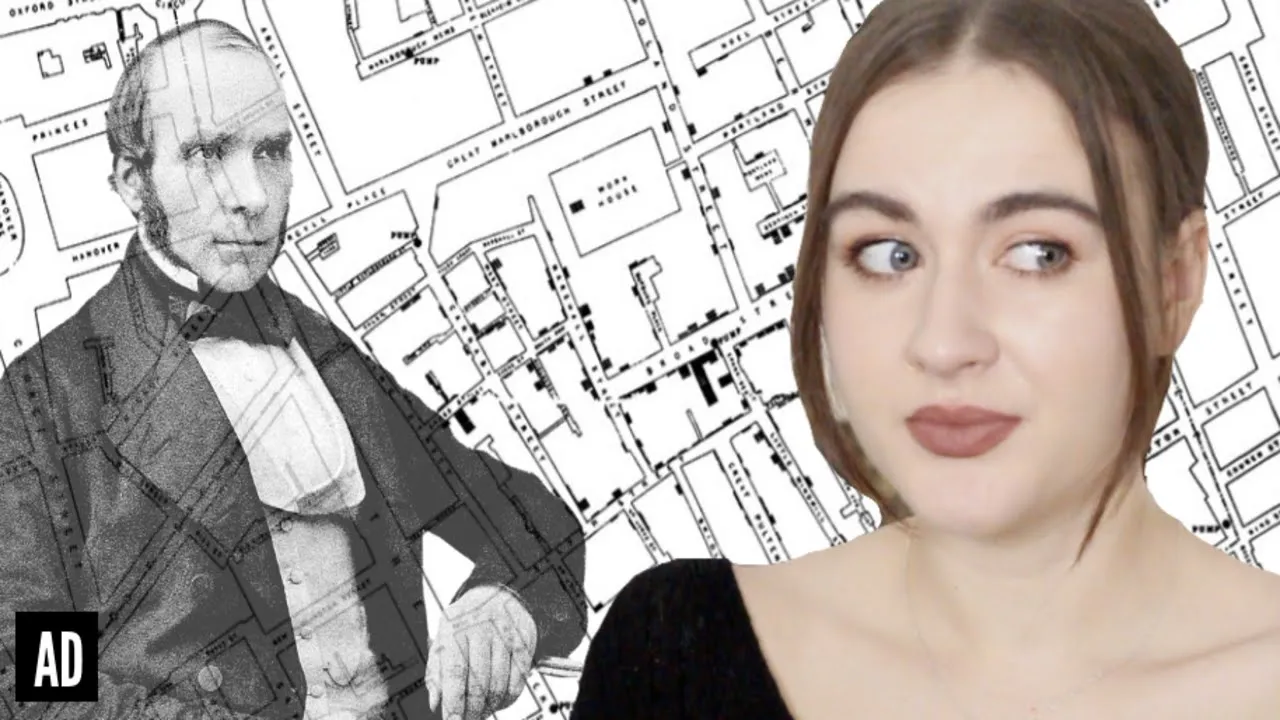
The birth of modern epidemiology, specifically studying John Snow's mapping of the Broad Street cholera outbreak and its connection to contaminated water.
Contemporary civil engineering projects addressing urban runoff and sewage, such as London's Thames Tideway Scheme or deep-tunnel systems in other megacities.
The environmental and ecological impact of municipal waste disposal on river and marine ecosystems.
4.1M views143.2Klikes3:00Original Release: 2025-10-08
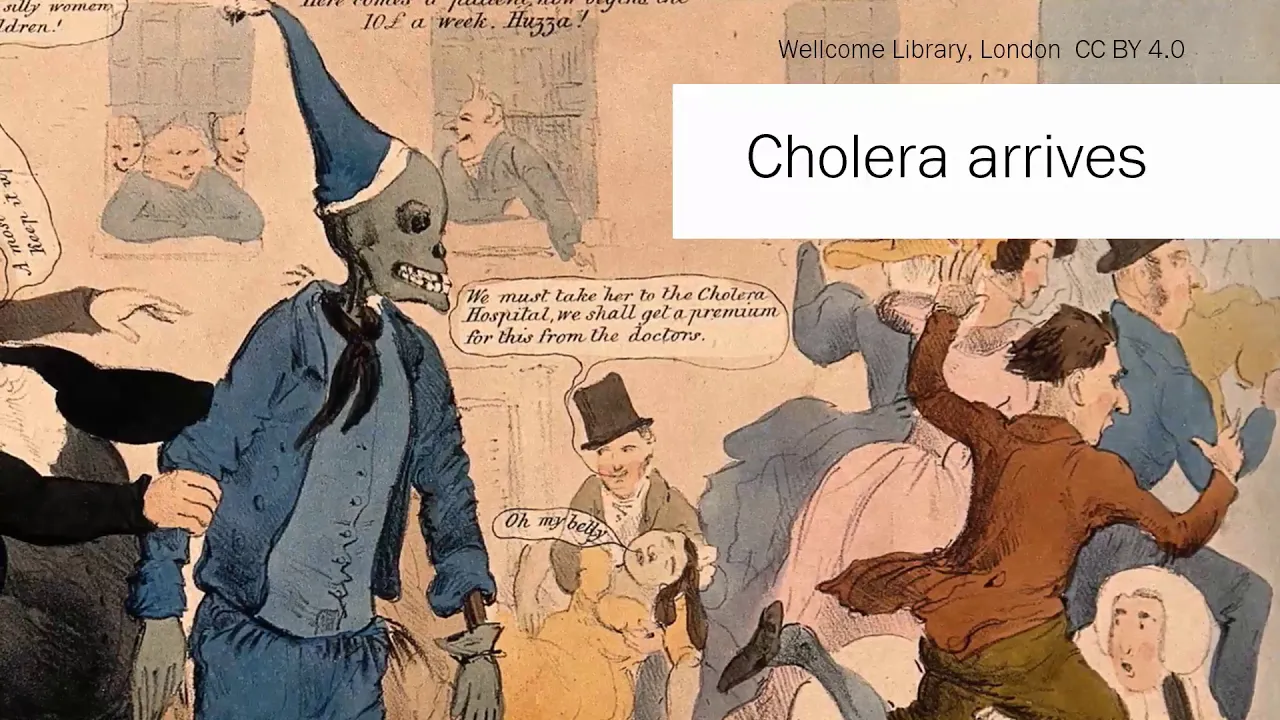
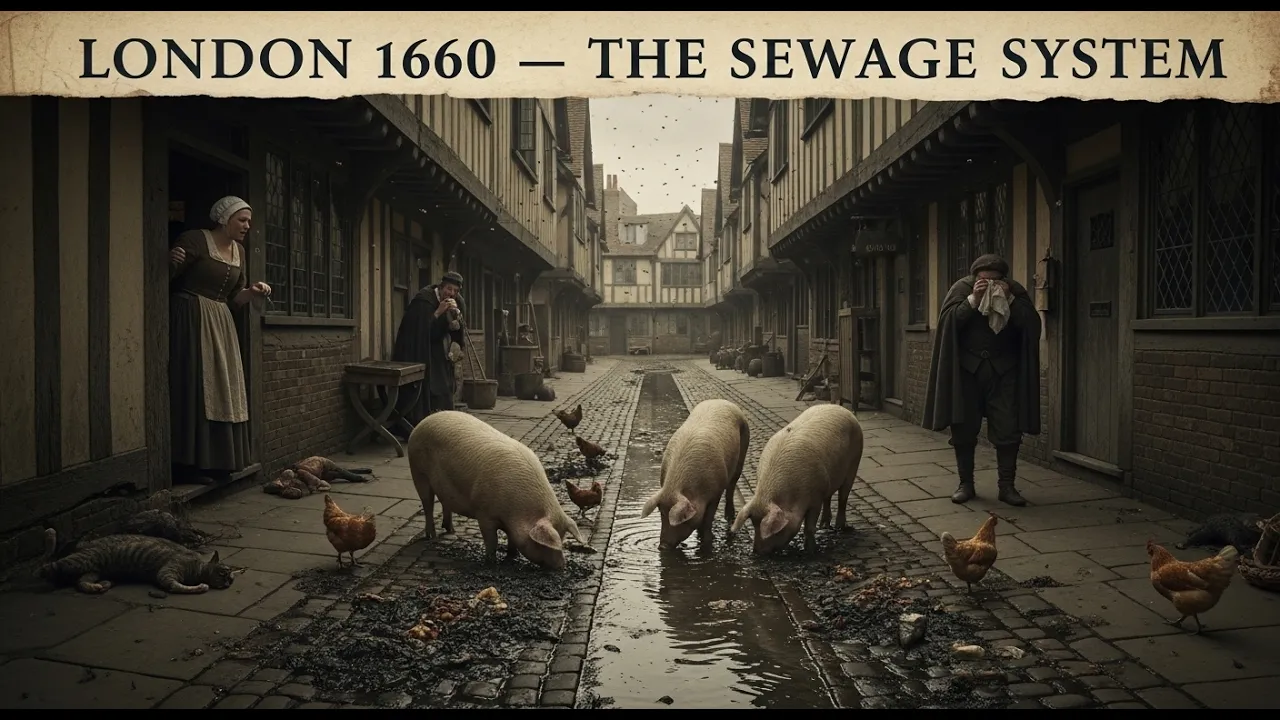
In the early 1800s, London had a problem. Quite a revolting problem.
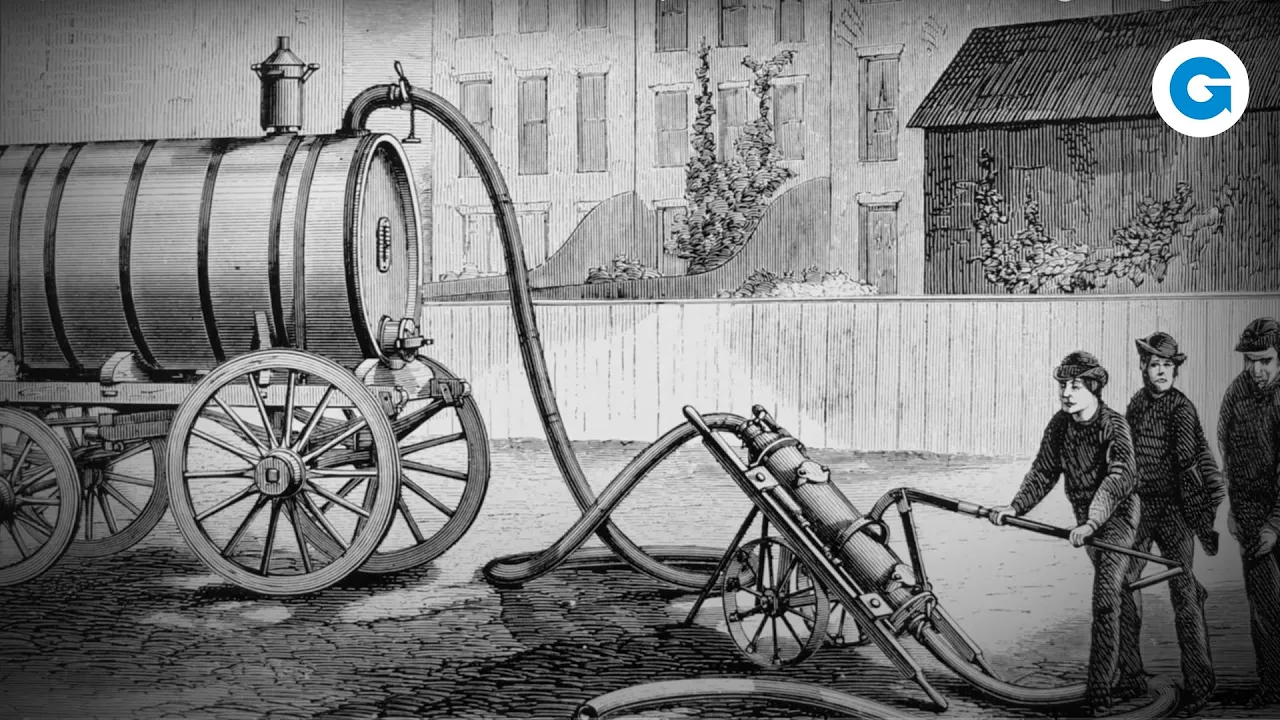
Who? It was everywhere. On the streets, leaking into your cellar, next door cess pit seeping through your walls.
Neighbors were falling out frequently over whose poo was going where. And this was the age of color. If the poo contaminated your water supply, it could kill you. But in the early 1800s, people didn't know that. Thousands died.
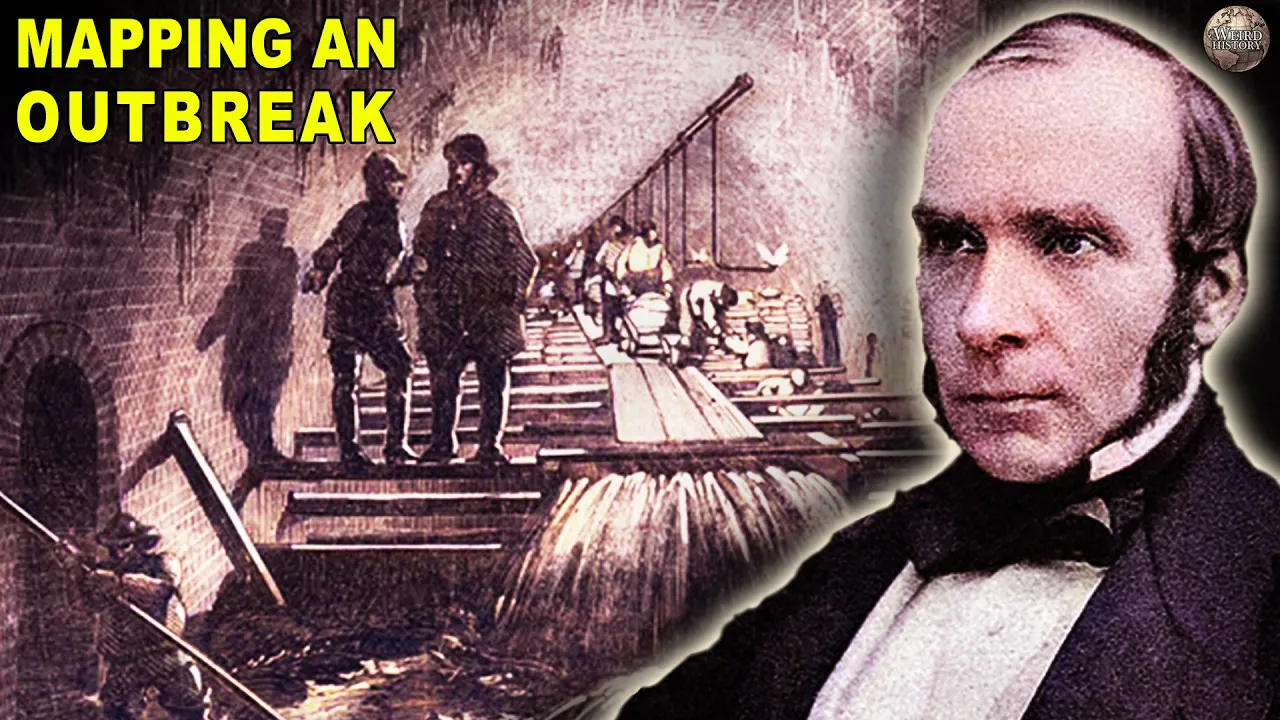
Eventually, this man stepped in. Joseph Basiljette. Nobody has done more for London and the health and well-being of its citizens than Joseph Basiljette. But before he was allowed to help anybody, London's problems had to get much worse.
In fact, they reached a crisis, a poo crisis. It came in 1858 in what is known as the Great Stink. You see, because London streets were so disgusting, a few years earlier, the government passed a law saying that all sewage had to be washed into the temps. The tempames became a thick bed of sludge consisting of thousands of tons of human feces. Now there was a little good news in all of this because the new houses of parliament had just been built where? On the bank of the river tempames.
Parliament was completely overwhelmed by the stink and people thought that smells caused illness. So all the MPs thought they were being poisoned. And after years of doing almost nothing about it and despite several cola outbreaks, now they panicked that their lives were in danger. and they acted with remarkable speed. In just 18 days, the temp's purification bill was conceived, debated, and passed into law. And the stage was now set for railway engineer Joseph Basenjet. A small man with a big mustache. It was his job to clean up London. But how'd you do that? Nobody had ever faced a challenge like this before. The expectation of an entire city rested on his tiny shoulders. And it was an enormous undertaking. His solution involved building over a thousand miles of sewers, connecting them all up to carry all of the sewage away. And he wanted it all to be powered by gravity. So the pipes had to be laid at a certain gradient to ensure the sewage would wash away and not back up.
But gravity couldn't do the work by itself. And every so often there had to be pumping stations that would pump sewage up 40 ft and then use gravity again. It was an almost impossible task.
And every stage of the project brought up a new technical challenge. Where there wasn't space to dig, he created new land. That's why London has the Victoria embankment. the Albert embactment and the Chelsea embankment.
52 acres of reclaimed land housing sewers, gas pipes, and an underground line, the district line. After 16 years, London had a sewer system fit for a modern city. It virtually eliminated colera from London. And proof of that came in 1866 when the capital's last cola outbreak was confined to the areas not yet connected to the new system. The temp stop smelling and pooh was no longer a feature on London's streets.
And London still relies on a system much of which was built 150 years ago. All thanks to the remarkable Sir Joseph Basiljette. So say a little thank you the next time you flush a Lou.
>> Cheers.
Hm.
Up Next

5:01
How Waste-to-Energy Plants Work: Thermal Conversion & Power Generation
@3Rsoluciones
736 views•2012-01-03

30:32
Ultrasonic Transducers: Resonant Frequency Measurement and Horn Design
@imajeenyus42
229.9K views•2017-02-22
54:16
Polymer Environmental Degradation: Mechanisms & Stabilization
@iit
1.8K views•2012-07-10
33:39
How a Student's Question Saved a NYC Skyscraper from Collapse
@veritasium
22.8M views•2025-04-26
Related Study Plans & Knowledge Roadmaps
Structured learning paths in Engineering
engineering
Building Acoustic Levitators: Physics & Arduino
01The Physics of Sound and Standing Waves
02Piezoelectric Transducers and H-Bridge Drivers
03Arduino Programming: Generating 40 kHz Signals
+ 2 more learning modules
14h5 modules
Explore Roadmap
engineering
Building Peltier Cloud Chambers: Particle Tracks
01Cosmic Rays & Cloud Chamber Physics
02Thermoelectric Cooling (TEC) Fundamentals
03Custom Liquid-Cooling Loop Design
+ 2 more learning modules
18h5 modules
Explore Roadmap
engineering
Yagi-Uda Antennas: Modeling, Build & VNA Test
01Introduction to RF and Antenna Fundamentals
02Yagi-Uda Antenna Design Principles
03Antenna Modeling and Simulation in 4NEC2
+ 2 more learning modules
18h5 modules
Explore Roadmap
engineering
ECG Monitor Design: Op-Amps, Filters & Noise
01Electronics & Breadboard Basics
02Op-Amps and Instrumentation Amplifiers
03Bioelectricity and ECG Fundamentals
+ 2 more learning modules
18h5 modules
Explore Roadmap