






![[LIB] Explore - Libras III](https://i.ytimg.com/vi/F_ZvLjyADw4/maxresdefault.jpg)







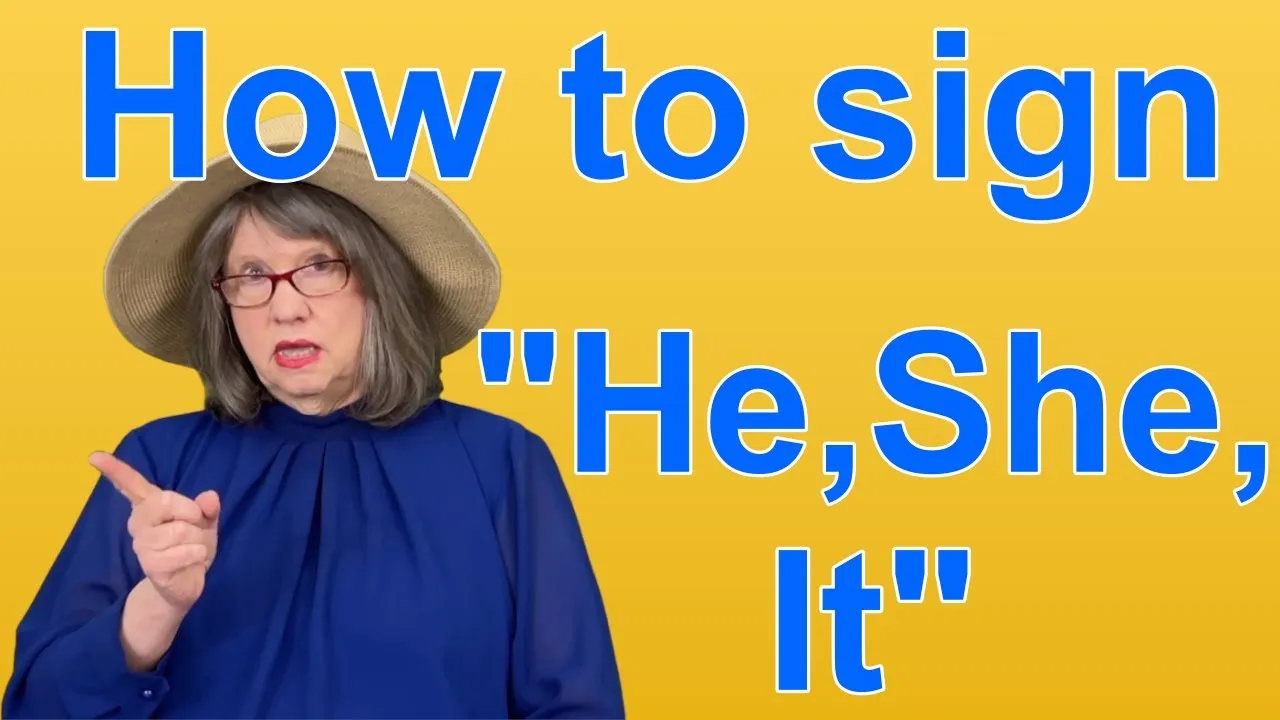
Referents in ASL grammar are signs that point back to previously mentioned topics or subtopics, functioning similarly to pronouns in English, and they are essential for clear communication because ASL is a visual-spatial language where setting up different topics in space helps listeners follow along; without proper use of referents, sentences become confusing and unclear, especially in conversations with multiple topics or people.
ASL Grammar Guide: Understanding Referents for Clear Signing
Added:Familiarity with the concept of the 3D signing space and how space is used syntactically in American Sign Language.
Understanding the basics of ASL indexing (pointing) to establish present or visible nouns.
Knowledge of basic ASL sentence structure (such as Topic-Comment) and the role of non-manual signals (facial expressions).
Basic vocabulary in ASL, including common nouns and verbs, to provide context for establishing referents.
Mastering directional (agreement) verbs that change their starting and ending points based on established spatial referents.
Applying role-shifting techniques (body agreement and eye gaze) to adopt the perspectives of different referents during a dialogue.
Integrating ASL classifiers (depicting verbs) to show the precise location, movement, and interaction between established referents.
Constructing complex narratives in ASL that require the tracking and management of multiple abstract referents in the signing space.
22.8K views708likes10:09Original Release: 2017-03-21
Oh my gosh. Wow.
So you want to learn ASL grammar in particular. What in the world? Our reference, why do you need them and how to use them? Well, in this video I share some quick tips on all three of these things coming up.
[inaudible] Hey y'all, Rochelle here helping you to build, strengthen and explode your ASL skills on this channel.
I teach a new signs, help you to practice and share tips and tricks just like this video.
So if you're new here, please consider subscribing down in the description box.
Below is your personal invitation to the ASL club, which is the best place to be.
And when you join you get access to the ASL practice. Challenge of goodness. Just for you is write down in the description box. Take a kid, kid, kid. First of all, what in the world?
Our reference.
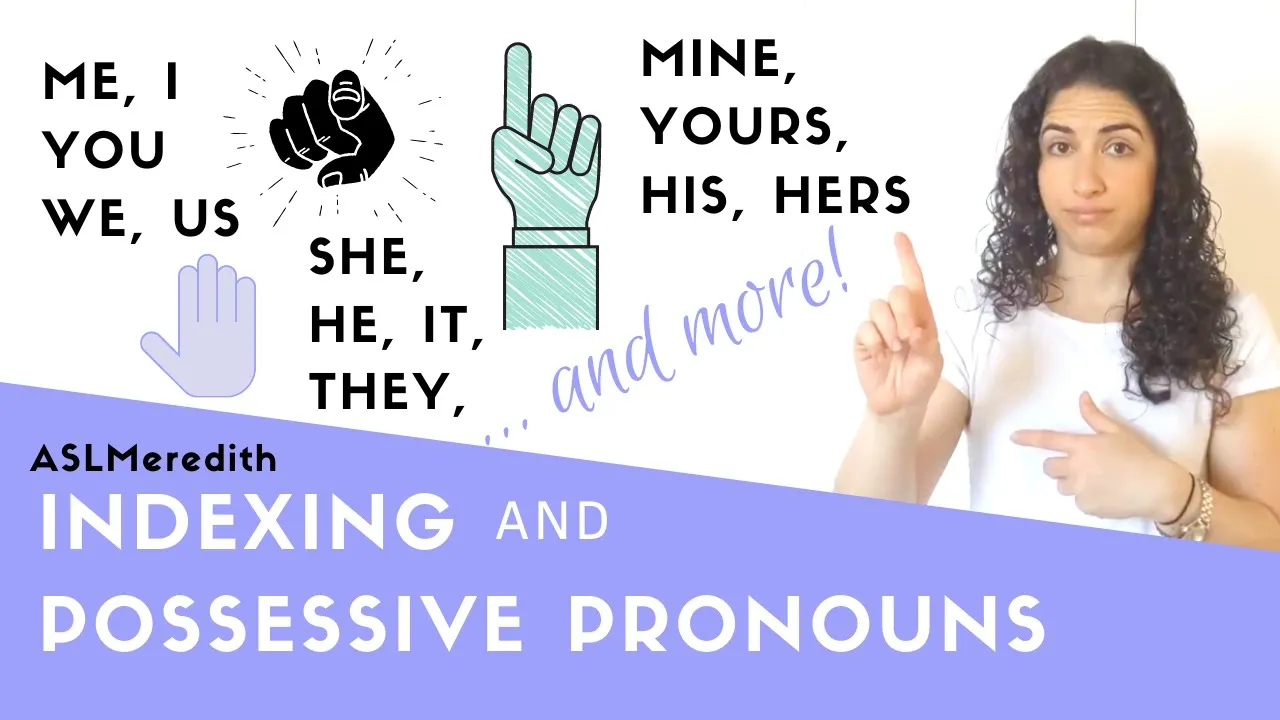
Quick reference on the signs you use to refer back to the main topic or the subtopic. Think of them as pronouns in English grammar.
So here you can see I've got a couple of sentences here.
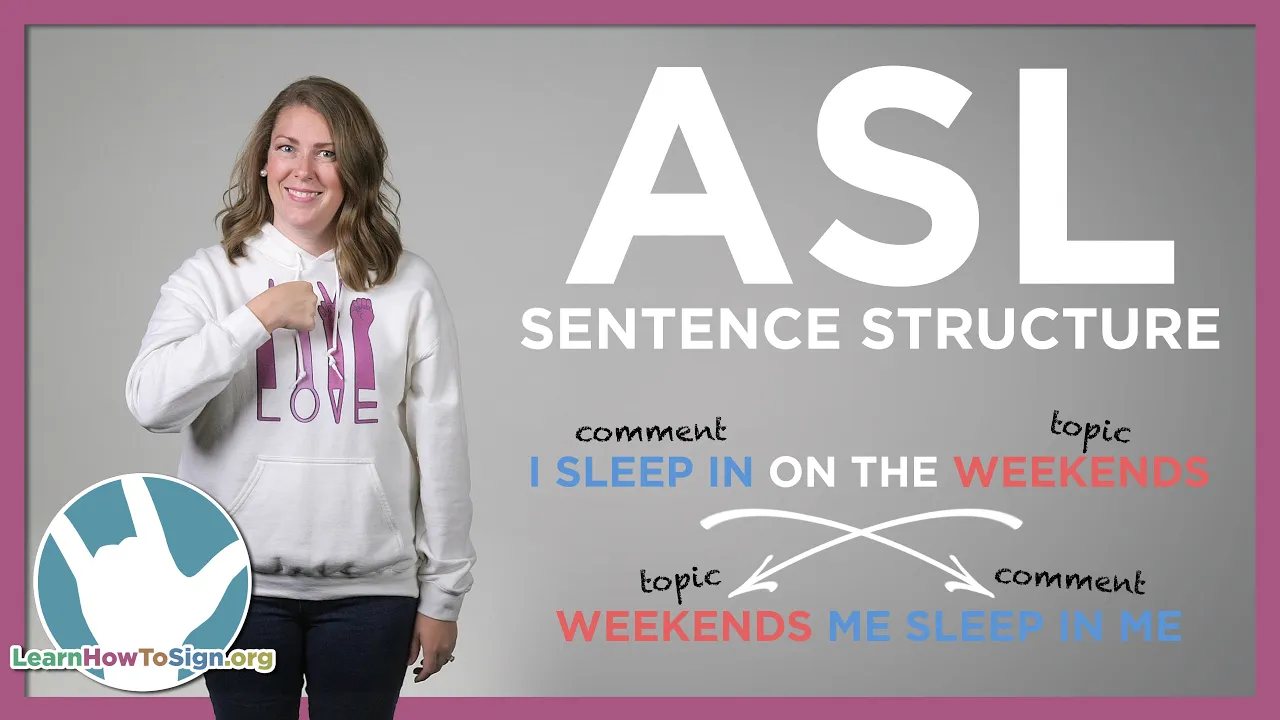
Now up in pink there's time, topic, comment and topic comment.
But down here below in the black.
If you can see the word reference is sprinkled around now while time topic comment is the basic sentence structure, it's really helpful to know where the reference should go.
Now these four outlines are some places where you can place the reference.
Now you may see these when you're first learning ASL, you see some examples sentences on paper and you're like, what in the world are they doing?
Why are there so many eyes in one short sentence?
For example, store. I go, I do like, I just don't even get it. There's two eyes.
It's totally overkill, right, and in this short of a sentence, it kind of is how whatever.
However you're signing in the real world, are you just going to blast out a random sentence like this and then just take off in the real world, you're going to have a conversation before you're going to sign story. I go awry.
You are going to have some kind of conversation before that that leads up to it.
And you might even have conversation after you sign this one sentence, which means you're going to have a lot of other things you're talking about that's happening. Different topics for different sentences, different ideas, different thoughts, different topics. Did you catch that? Different topics, which means you're gonna have more than one reference.
So if you plop this same sentence in the middle of a conversation, those two eyes are no longer overkill. Okay?
Let me explain just a little bit more.
Asl is unique in that it's 100% visual.
It's spatial, okay? It's out here.
You set up things here and talking about Johnny here, grandma here, the library here, the doctor here, the store. We're hear me, hear you, hear you. You're setting it up in space.
You're setting up different places in English and spoken languages.
The languages linear.
It's just words coming out of your mouth or word on a paper in a line.
You're not setting it up in space. It's just boop, boop, boop, boop. In the line, in the Linus linear. If I were to sign in a linear fashion, just linear, blah, linear, just word up, sign up for Santa's, sign up to sign, not moving, not referencing anything. Your message is going to be really muddle, really confused me. You're going to misunderstand.
Tons of stuff is going to be really hard to know what in the world you're signing. Are we talking about Johnny Grandma, the book, the desk Sunday? What are we talking about? Ebola, what? What's happening?
And I'm not exaggerating. Okay, I'm not exaggerating and okay, so if you're using your reference and you're like, okay, we're shell, I'll use reference. But if you're not using your reference correctly, your message is still going to be muddled.
Now let's take a look at this sentence.
I've got a couple of sentences to illustrate my point. So here's the sentence.
Johnny bought grandma desk on Sunday and here I have broken it down into time, topic, comment and the reference.
And you can see you've got Sunday and I've got the main topic is desk and the comment is Johnny, grandma and buy. So we've got one topic, we've got two people and now we have three reference.
He is Johnny, she is grandma. It is desk.
Now let's go put it all together.
This is what it would look like in sign language Sunday because that's time Sunday. Johnny, he, so we're pointing right back to Johnny.
We're letting us know Johnny on Sunday.
Johnny is the one that's doing whatever follows. So senate Sunday, Johnny, he, because I could follow this up with anything else, but we're pointing to heat so that my audience knows I'm talking about Johnny in the next, the next sign or signs, Sunday Johnny heat desk by she grandma.
He give shape.
Now that might sound really confusing, but when you sign it, it's not I promise.
Sunday Johnny he desk by she grandma, he gives it to her. So in this instance I'm setting up to people.
I'm sending Johnny up to my left Sunday, Johnny he desk by she grandma.
I'm pointing to where she is and I'm saying this is grandma.
You could also do grandma. She, so I'm setting up her spot and then I'm going to take the desk from Johnny and give it to grandma. So now it's perfectly clear what's going on.
Johnny bought a desk. Here's grandma, he gave it to grandma Kay.
Without that spacial arrangement, the sentence isn't going to be as clear, but if I set it up, Johnny here, grandma here, he's giving her the desk.
It's super clear what's happening. You know like oh I totally get it.
Okay. Even if you miss some signs there, you know John and gave something to grandma. Okay, here is another sentence.
Okay. If you have a compound sentence like this one, I'm going to the library tomorrow to buy to, excuse me, I'm going to the library tomorrow to get a new book.
You'll have more than one topic here. Library and book are both topics.
It's important to make sure that both the library and the book are referred to separately. If we went on with this example, if we added more to this example and said, I love it, it's my favorite.
Okay, so what's your favorite? The book or The library or both? Just seeing this.
You might think, well, obviously it's the book.
Well actually I meant the library is my favorite that I love, but since I signed it, after I talked about borrowing a new book, you thought I meant the book. In fact, I hate the book. Okay, so let's see how you would sign this. Let's put it all together.
How you would actually sign this to make it clear. Tomorrow Library, I go book new, borrow library it my favorite. I Kiss, visit now I'm referring to the library.
I'm going tomorrow library.
I go book new fall.
Then I say library and point to it again because I didn't set it up in the first part of the sentence. Now if I did, if I went tomorrow, library it, I go book new borrow.
I could just point right back to that spot and not sign library again.
It my favorite like case fest it.
Now I'm going to point to myself again.
I kiss it so it's extra clear that it's me that loves and adores the library.
Now. Okay, say we hate the book low the book.
Maybe it's just really boring. Really Boring. It's the good earth.
Well, I'm still scarred from when I had to read that as a kid.
So if I don't say what's boring, if I don't refer back to the book, you might be confused because you're like, I thought you loved the library. Now you're saying it's boring.
You mean you like to be bored or are you talking about something else?
So this we would go tomorrow library, I go book new borrow library it my favorite, I kissed Vista, book it and I'm going to point to a different spot it boring.
And then obviously in the real world I would probably continue going on and explaining and talking about the book and saying, Oh no, I really need to go.
That's why I need to go to the library and get a new book because this one was boring or whatever it is. Okay. So I love the library and hate the book.
So without reference, this entire conversation would be convoluted, unclear and confusing and you'd be like, peace out. I'm out of here. This is dumb.
I'm finding somebody else to talk to, get comfortable with reference and use them. I encourage you, if you want some more examples to check out my other grammar videos, my basic sentence structure video, my ASL sentence, and I think there's some more grammar videos up here on the corner that you can so you can see reference and action so I can get a clearer picture of how to use them, as well as download the free workbooks.
Those both of those videos have so you can practice reference on your own question at the day, what further videos would you like to see from me about ASL?
What do you want to learn? Tell me, tell me. Tell me. Tell me, tell me.
Thank you so much for watching. If this video was helpful for you at all, please consider liking subscribing and leave me a comment down below.
Thank you again so much for watching Asl Rochelle helping you to become a signing into, I'll see you later. [inaudible] okay, I need to stop.
Up Next

5:03
ASL Grammar Simplified: Sentence Structure Guide for Beginners
@Paris.GlassMenagerie
7.7K views•2024-08-19
36:52
Constraint Interaction in Optimality Theory: Epenthesis & Deletion
@Vidyamitra
180 views•2018-08-20

14:53
ASL Grammar Fundamentals: Facial Expressions & Practice Exercises
@aslrochelle
74.1K views•2015-08-31

21:32
Accent Expert Explains U.S. Regional Dialects | Part 1
@WIRED
9.3M views•2021-01-21
Related Study Plans & Knowledge Roadmaps
Structured learning paths in Linguistics
linguistics
Optimality Theory: Tableaux & Constraints
01Phonological Basics: Sounds, Syllables & Rules
02Foundations of Optimality Theory: GEN, CON, and EVAL
03The Constraint Inventory: Markedness vs. Faithfulness
+ 2 more learning modules
15h5 modules
Explore Roadmap
linguistics
Morphosyntactic Alignment: S, A & P Systems
01Foundations of Syntax: Transitivity and Arguments
02The Linguistic Variables: Mapping S, A, and P
03Nominative-Accusative Alignment
+ 3 more learning modules
12h6 modules
Explore Roadmap
linguistics
Analyzing Sign Language: Phonology & Syntax
01Foundations of Sign Language Linguistics
02Phonology: The Five Parameters of a Sign
03Morphology: Word Formation and Classifiers
+ 2 more learning modules
14h5 modules
Explore Roadmap
linguistics
Pragmatics: Speech Acts, Grice & Politeness
01Introduction to Pragmatics: Meaning in Context
02Grice’s Cooperative Principle & Implicature
03Speech Act Theory
+ 2 more learning modules
14h5 modules
Explore Roadmap