



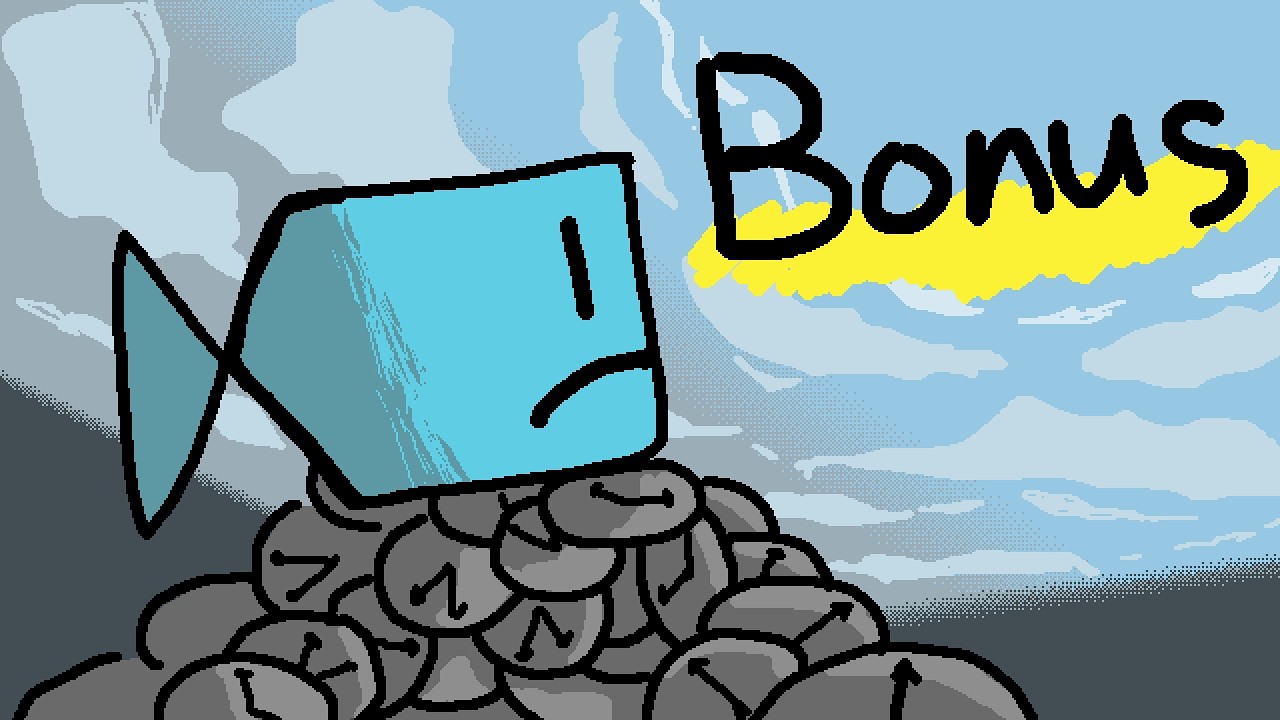


Combinatorial game theory extends beyond surreal numbers to include games with infinite and infinitesimal values, such as the game 'Over' (an infinite number of red stalks on a blue branch) which is greater than any finite multiple of Up but less than all positive infinite surreal numbers, and 'Tiny' games which are smaller than any other positive game value, demonstrating that the class of all games forms a larger structure than the surreal numbers.
Combinatorial Game Theory: Hackenbush, Part 2 (Advanced Concepts)
Added:Basic rules of Hackenbush (Part 1), including Blue-Red Hackenbush, stalks, and graph representation.
Fundamental concepts of Combinatorial Game Theory (CGT), such as partisan games, normal play convention, and Left/Right options.
The concept of game values and simple number values (integers and dyadic rationals like 1/2 or -1/4) representing game states.
Basic mathematical set theory and recursive definitions, which are essential for understanding game construction.
Surreal Number Theory and its algebraic structure, including transfinite numbers and field properties.
The analysis of other partisan games (like Domineering or Toads-and-Frogs) using infinitesimals, up-arrows (↑), and down-arrows (↓).
Temperature Theory and Thermography in CGT to evaluate 'hot' games where players have a strong incentive to move.
The Sprague-Grundy Theorem and impartial game theory, comparing partisan games to games like Nim.
Computational complexity of games, examining the algorithmic difficulty (e.g., NP-hardness) of solving generalized Hackenbush configurations.
427 views4likes52:18Original Release: 2023-10-23
no rec the notation that you left up on like reviewing that would probably be a good place to start sure all right so that would be the general game notation so and feel free to ask questions during this and just don't raise your hand because half the time you're looking towards the Board Writing so just ask away obviously okay so for a general game just as a slight review if G is a game that doesn't that might be viable um then we write as a set all of the left options which I will denote XEL [Music] and xar so this is all options available to our left player these are all the options available to our right player and we just shove them in a set on both sides of this this bar um under some conventions we only we need all these left elements to be less than all the right elements but we're ignoring that convention for now because that makes that doesn't get us all the interesting stuff that we can get from these games that restricts us to only be the class of surreal numbers which are nice like it's a very nice class but it's a little too restrictive like we don't get Stars showing up and we don't get games such as negative one negative one showing up which are interesting so we're going to ignore that restriction um so let's see I wish I would have wrote down the addition and multiplication rules for these games because they behave sort of like surreal I don't feel like doing that because it's very very messy like so messy I'd probably get lost when actually confute something as unfortunate as that is yeah once we have this notation we can start messing around with things so I guess for instance let's take a game where we Define it recursively I mean we already kind of did that last time we had a game that I labeled F which was denoted by the options um of left can go to zero or right can go back to F and we we were working with that to see what its properties were so for the hacken bush position is the recording working fine yeah we had there we go that's a lot darker so for reference the game f showed up as the game where we attached an infinite number of red stocks to a single blue branch and we previous L showed that this was less than any positive infinite so f is less than say epsilon to the Omega that's a bad Omega looks like a it's not even Omega that's just a simp where Epsilon is one over Omega so I'll put that down now we're going to show that the game f minus n copies of down is positive so that would be the game given by well I'll rewrite this somewhere else sh F minus and copies of noun is positive that would be the game given by right refresh us on what down is yes I will do that immediately once I find a fourth color should um do we we said orange didn't really work did we okay yeah purple works but it's almost indistinguishable from Blue weuse color and let's do that works that works thank you P so that's sort of a dotted line um the game down was defined by we had these two purple branches either player could chop and then to one of them we attach a solitary green branch that only green can chop what I'm and now we just just have n copies of this game I'm just going to put a little n under it and we play the game f plus n copies of down so that should be a plus sign not a minus because we can't technically subtract games from each other we can only add them it's kind of well you're technically subtracting up but you're adding down because they're ative inverses of each other so let's think about this we start from the game f minus end copies of down or plus end copies of down I'm going to keep tripping myself up on that I'm sorry so from that position move that let's see f+ n down well Red's best move and by best I mean essentially the move they want to play to preserve the game so green is never going to play in the down component of this game because they want to preserve as many Downs as they can if they reduce the number of downs they move the game towards being more positive and by moving it to being effectively more positive they're making their loss faster so if green were to play they're going to only ever play in the F component so they're just going to go back to the position f plus n copies of down they're basically going to do nothing they're going to pass essentially blue on the other hand their Essential Best Move is to cut the branch that's holding this Red Branch up because they want to deprive sorry green they want to deprive green green of as many moves as possible so they really have two options they can cut this Branch moving to the game f plus I'll write it out they move to the game f plus n minus one copies of down plus star or they could move to the game this is sort of I'll write it for completeness um f plus they cut that Branch they're going to move to the game which doesn't really have a value it doesn't really okay it has a value it's not a good name it's the game where you have a single purple branch and then on top of that you have a red Branch um it doesn't really have a good symbol I'm just going to denote it as that thing for for lack of a better idea I mean I can write it out in the set notation if you want you're not breaking The Stereotype that mathema are I mean uh G on top [Music] of I can write it out like this if you want honestly yes that's why I did it well so this is Blue's other move um to move to this position well it's not exactly it's a good move but it kind of Lees red a little too much wiggle room or green again okay so the colors and green the ones that are on the board but there's also these purple ones that yes the so the players labeled blue and green can only the players labeled blue and green can only cut their respective Branch colors but the purple branches can be cut by either player so from these positions we can sort of keep analyzing it we take this to be a base game we see what happens if red and blue make their red and green make their respective moves red would stay in this position essentially green I can tell in your notes you're used to doing this with red yes exactly you you can very easily tell yes um blue would essentially remove this star from the position it's I mean they could also remove an up but it's it's slightly I mean either way it's a good move I think the quote unquote best one is to reduce the multiples of up then you're left with f plus n minus 2 down uh plus Star Plus star which is Star Plus star is zero but it's I don't want to say it's obvious but it's slightly clear that as we continue this procedure um the number of downs is only ever going to decrease like we'll eventually get to the position f plus K down plus some random junk with K less than n and this will kind of keep going I don't keep wanting to use the argument of it has to stop at some point but it does kind of have to stop at some point red can only delay green can only delay the number of moves they have for so long eventually blue is just going to chop down all of the Downs because there's only a finite number of them so we eventually reach a position where we're left with just F through any of these paths we take I would explicitly show that but I'm going to run out of room if I chter and write arbitrary game trees on the board unfortunately so I I hope it's clear if it's not let me know no seriously please let me know so this entire tree shows that f plus n copies of down is larger than zero which directly implies that f is larger than n copy negative n copies of down but negative down was equal to up so I will explicitly write that so we have that f is larger than n copies of up and simultaneously less than all positive infinite decimal values now that is to be honest when I first saw that I was very much on the camp that that literally cannot be true because I'm claiming well I'm claiming something that seems incredulous at the moment I assume I am but I have just proved it so unless my proof is flawed it should hold I should mention um f is also known as the game we call over not for any real reason um the people who invented the stuff were again slightly bad at naming things as most mathematicians are unfortunately so this is the game over and we've just shown it is has this property yes for any finite n once you get into Infinite ones um I don't think it holds anymore I am 99% certain it does not so I should specify n is contained in the natural numbers but yes this property holds for any finite n you want a Google a Google to the power of a Google treat 3^ of 34 plus 37 you know stuff like that okay so that's just kind of a fun property of over and we're going to get into slightly more interesting Waters I say Waters but I should say positions so with over there is a corresponding negative game called under has the same properties it sandwiched between all of the negative Infinity decimals and all the negative copies of up so in the reverse orientation so the copies of down yes uh so the EXA yes exactly the exact same argument will work basically if you flip all the colors the literal exact same argument holes but just with the reverse inequalities so under is larger than all of the down but smaller than all of the negative infinite decimals I think I flipped that properly so from here we're going to go to well we have games with infinite number of we have we've have games with an infinite number of pedals so far but there's been one I don't want to say issue with it but if you notice they're all connected to a single Branch connected to the ground so it's very clear that someone can win that game obviously like the only player that can win the game is the one with all the branches connected to the ground there are ways around that for instance if we make the [Music] game oh right need to dot that sorry there's a similar game to over which is an it's a purple stock with an infinite number of blue pedals attached to it now it's not exactly clear who wins this game because whoever goes first is just going to cut the purple stock it's almost like these infinite blue pedals are doing nothing right and you would be correct they are sort of doing nothing in sense that in the game notation this is also recursively defined if we call this game d then it has notation given by 0 comma D Bar Z which is slightly obvious given how we Define the game notation you notate down all of left's options bar all of right's options uh this game also has a name this is where the names start getting a little bit more Whimsical um this is called Aon I'm not joking about that or wait sorry I think it's called a pawn star let me double check my yes it is a pawn star which I am 99% certain about this but the notation is a bit weird um this is the game upon plus the game Star which means I need to make a slight correction of my previous talk whenever I wrote the notation star two it should really be star subscript 2 because um the book I'm basing us out of reserves the notation two star to mean two plus star I have no idea why they do this and I will not be following it but they do this they also do the same thing for mixed fractions they'll write one one to mean 1 plus2 which I mean it does mean that but it's also weird I guess this book was written before normal fractions worked their way into um math books stop making excuses for just judge oh very much so I don't like it I I really don't like it and it's annoying like when I I cuz I played this versus I played upon Star Plus star and realized well it it I forget what I realized it was a little bit the notation gets a bit strange at times and very much not helpful but yeah with a pawn and a pawn star well actually I haven't written out what a pawn is so if you want I can do that unfort Al I don't know if there's a hacken bush position for it but the game upon PA itself is also recursively defined to be the game where left can move to a pawn and right can move to Star and that that's how they win basically like I said I don't think there's a hack and Bush position for that it just happens to sort of exist yes at least to my knowledge there is no hack and Bush position with this game notation so like you generalized the idea of game to games and is does that leave you with uh a connected line or do you need to do some sort of completion process sural line to that um well if we allow things like this we're larger than the surreal already because remember star is not contained in The Surreal numbers okay so this so This these things plus some extra conditions allows you to produce the connected connect exactly this is essentially the um I don't want to call it the disconnected surreal line because it's not even really The Surreal it's larger than them but I guess you could call it that it I mean I don't think it makes any sense but well I mean I I don't necessarily if this thing is larger than the surreal isn't it I suppose I don't necessarily know larger field um it's just the class of all games it's not really a field I mean it I mean I think it's a field I mean you could argue really have a consistent total not that I'm aware of no I mean you can might you can probably get a partial order on them but I don't think total we clearly have the partial order yes I haven't explicitly written it down because neither do these guys unfortunately at least not in as many words there are ways to get it out of the things they're doing but I haven't actually explicitly constructed the partial order myself so again so if a is um curs right yes so then how do you get that did you get that upon plus staral d because we use thetion of addition to show that this relation does exist um you can't write down write as far as I'm aware you cannot there actually I might okay if I go back to the section of infinite game just give me one second and I might be able to write it down but it might look very Sil then again half the things I'm writing down look very silly so um give me one second please where is the diagram of all those positions line and is if you came up with a sequence of it would be more interesting if every single one of them correspond to an actual position of sequence is I mean you connect I mean you can do integration over the sural sort of doesn't require connected no it doesn't but panth going back to your question um game Edition is similarly defined to I want to say it's similar to how we Define Edition for The Surreal which have to look up again there my notes somewhere but I do believe you would basically take this add to it the set defined by star well no because a set defined by star contains all zeros I don't know how you would actually get this thing I'm not even too sure this is actually correct now that I think about it this is the trouble with their notation I don't know if they mean the game upon plus star or just upon Star as its own thing H just Zer help you in this so maybe it I that's what I'm assuming because that's what I'm basically going to have to assume for now until I can be shown otherwise unfortunately doesn't affect the rest no I mean star will show up again because it kind of always lurks in the corners right so we have some weird things like Aon upon star um upon paon star is unfortunately the last weirdly infinite game we have a hack and Bush position for I mean it's not the last recursively defined game we have a hacken bush position for it's just the last funnily named one we have a hack and bu position for but I went to this tangent on recursively defined games because the next thing I'm going to write down is also a recursively defined game and if I write over here can the camera still see me following oh that's comforting that's comforting so I'm going to write down a game which is um so all of these blue stocks are going to be connected to the ground which I am going to write and there's just an INF an infinite number of them going off to the right forever so just as a like just as a quick question what do you think the uh value of this game is there are no wrong answers like negative is it negative infity or posi well we declared blue to be a positive so these would be a bunch of positive ones being added together infinitely essentially you're close your second statement was close actually it is not omega as it is it's not value is not that of how we defined Omega because let let us play this against the game minus Omega which is an infinite number of green stocks going up so let's see blue makes a move cuts down one of these blue stocks there's still an infinite number left so green makes a move in this infinite number of stocks they have to pick a finite number to start exactly they pick a very large finite number and they declare that's how many moves they want to make so matter how big it is it's still smaller than infity yes exactly because the way we Define omega was an infinite number of stocks going up they have to select the position where once they cut it they're left with a very large but finite number of moves left to play so let's say they just decide to cut it to where they have I don't know a googlex number of cuts left then for the next googlex number of turns they're just cutting down from the top of the tree until they run it a moves and blue is never going to run out of moves so we have that this position whatever it is is larger than Omega because it's Omega minus xus Omega is bigger than zero similarly um if I on top of this infinite stack if I add another green branch that brings us to Omega that brings us to Omega + one by the exact same logic the previous argument holds and for Omega plus 2 Omega plus 3 um Omega times two is um two copies of Omega stacked on top of each other if you cut down anything in the first infinite section the entire top of the second infinite section Falls with it so this thing's also larger than Omega time 2 which I'm going to write as Omega 2 and Omega squar and Omega to the Omega because every single one of these Omega patterns is an infinite stalk going up and it's larger than Epsilon not the limit ordinal of the omegas and Epsilon 1 Epsilon 2 Epsilon n basically what I'm claiming is this position X is larger than any possible positive surreal number besides ofers um unfortunately no you basically have to explicitly okay there wellar we because and we are also now outside of The Surreal once we introduce this element we're outside of The Surreal numbers and back into the class of games because the notation for this game violates the first axium of The Surreal in terms of their notational definition because X is the game defined by uh X bar nothing which keeping in mind that if x is positive as it is um we violate the first rule The Surreal numbers where all the left options must be less than the right options there are no right options and this thing is positive so it's not less than the empty set so this is not a surreal number by definition it cannot be so we've stepped outside the Cals which is why I can claim this thing is larger than any of them I technically haven't shown it to be larger than any of them because there is no largest surreal number as expected you could find a sequence sural yes you and you can do that with the Omega to the Omega sequence well after you get to Epsilon not you kind of have to after you get to the first limit ordinal the piano axum you kind of do some weird stuff to get past that but once you do that you're essentially home free until you get to the Buckman Howard oral so this thing likewise has a negative game which is just an infinite number of green stocks which is similarly to this thing less than any negative is it less than yes it's less than any less than any surreal yes and we call X and it's negative well X is also called on for um ordinal number thing or because it's larger than the set of all ordinals essentially and its negative is well take a guess I'll give you one exactly it its negative is off which has the exact opposite notation off is the game nothing bar off now the real question what happens if we add them together probably but let's find out infinite number of of stocks infinite number of stocks okay well we did show that Omega minus Omega last time was a zero game in essence because you just Ed the mirror strategy against your opponent but in this case there really is no mirror strategy because well anytime we chop a single Branch there's always an infinite number left for both players it does not exactly which is why it is technically not a combinatorial game because there's one condition I have not stated about combinatorial games and that we like for them to end we we we like for combinatorial games to actually have an ending to them this is a drawn game and we write it so on Plus off is also known as dud for uh where dud stands for deathless Universal draw um notationally speaking it's the game dud bar dud because it turns out this is isomorphic to a game where you have nothing but Infinite Green branches or purple because when you chop something nothing changes which is why it is not the same thing as the game where I shove on and off into both sides of this which is not representable in hack and Bush and only want to try to think about what that would look like but yeah this is the game dud and it's recursively defined as for most of this weird stuff it's not comori because it is a drawn game but it is weirdly interesting and it does show up a bit slightly yes yes correct correct yes so it will by itself never end but once the second player gets their turn and they have no moves they lose yes once you have no legal moves left you lose the game all right so we have on we have dud okay I guess we're going to go to the Speedy round I I say that because this is is going to be the um I don't want to say collection of weird stuff that didn't fit anywhere else but it's kind of the collection of weird stuff that didn't fit anywhere else uh in essence I am now going to um write two things on the board and then I think that will sort of I want to say end of the talk but there we go I kind of need that to reference it okay so the last thing I want to talk about are things called tiny games which while we're in the land of recursive games you might as well discuss those so the game Tiny subg is defined by z bar z bar negative G it's it's this thing and these things are very very very very small well except for tiny up they're all positive I should State oh Bryce for the five seconds you were gone I int I'm starting to introduce the tiny games which are also recursively defined um they're all very as their name implies they're all very small they're all positive due to how they're defined um okay it's not exactly clear they're positive but they are due to the fact that um yeah since left can win by immediately going to the zero game they're all positive okay so this thing G can essentially be any other positive value we want we could shove one into there we could shove star into there um in fact I can't actually prove this but it happens that up is the unique solution to well not that equation that's just wrong um I'm not never mind please ignore the past five seconds yes so um tiny games do show up just not in hacken Bush like in the game of domineering they'll show up as natural values of games but the thing I want to introduce is what happens if we just shove on into this set like we can do that it's a perfectly valid tiny game the game Tiny on well given that these games are so tiny it turns out this game is larger than zero because on is positive um this is smaller than well let's see on is larger than any possible positive surreal number so tiny on is sort of the inverse it's smaller than any other tiny game where um um if we have two games G and G Prime if G is less than G Prime then tiny G Prime is they yeah flip this so that holds what I'm basically claiming is Tiny on is less than NE possible tiny game so like say tiny Omega or tiny Omega plus one whatever you want really and is therefore the smallest possible value of a game we can ever possibly have because on plus one is equal to on so on is essentially a fixed point of addition and multiplication but so all of these tiny games they are all less than up because they're all very very small and let's see I wrote down what I call the Grand Cavalcade of um the Nim line I went sort of whims to go on the nameing so we essentially have all these tiny games are less than up and they're all infinite decimal keeping in mind that up itself is all infinite decimal then up is less than over Which is less well over comes after all the ups right I wrote this down and I'm still losing my notes so this is less than all any finite combination of up arrows which after after you do all those is less than the game over Which is less than any positive possible any possible positive surreal number which are all less than the natural numbers which are all less than Omega Which is less than Omega plus one which is less than Omega squared Which is less than Omega to the Omega which once you get an past an infinite sequence of that is less than the limit ordinal Epsilon KN which I've never discussed but it's large then you keep going Epsilon sub Epsilon KN Epsilon sub Epsilon sub Epsilon KN you keep constructing more limit ordinals that get weird and it's outside the scope of this talk unfortunately then you get to the game on and the exact same thing works in the reverse direction if you flip all these inequalities and signs you go from the game called tiny to the game called miny let me notate that this thing is typically called tiny I can't bold it but it's typically bolded I can't really bold things on a whiteboard unfortunately all right I just wanted to introduce that because it's a very weird concept to think of this thing is the smallest possible positive value once we introduce the um game on like there's nothing smaller than this except zero like literally um and then there is a single thing I would like to write out that is just a funny little object once I find markers mostly because I found it funny in the book and it is just kind of a gag okay so at the end of one of the chapters know why I'm erasing this left-handed they have a drawing of a hacken bush position or if I remember my colorization properly yes one two three yes nine um I need nine separate okay there's the ground we have nine separate branches coming up all connected to let's see one see one two two two okay that's purple these next two are blue where did I put the blue marker likewise these two are blue the rest are purple I do not know how these gentlemen found this position I am surprised somewhat uh let's see those two coming off the edge those two coming there here connecting here H this is going to be annoying my artistic skills are not exactly good so I do apologize yes you gave away the joke thank you we do this last time no we we did I never actually explicitly wrote it down I was say it for the end but yes I'm trying to draw what looks like a seven show the picture and I was just sitting here like here last time why are there so many different colors there's only three of them and it's still there's so many separate branching points I hope this is coming across properly I should have just turned the projector on it might have been quicker and I think we now need you know thank you for the idea um what was that addal advice yeah thank you for the idea I will keep that in reserve for if this ever occurs in the future but for part three I don't think there will be a part three I don't have enough material to Pull A Part three off we can do a better add of this for an hour we could I'll have to practice but this position it looks like a bottle um I hope it looks like a bottle yeah just believe me it looks like a bottle it looks look the only thing that's fighting against its bottle identification is the fact that it's kind of it's got a little bit of a gradual slope to it that most bottles don't have yeah wouldn't be a very good fit in the hand you it's it's a CRA no but um it turns out this this position anyone want to take a guess with what the value is I wish Sprite [Laughter] was okay why do I find that so funny should be what should be should it be exactly this B mod has a value of seven up no I am not joking it actually is a value of seven up talk like the in the extras they just say it as a value of seven up and yes they made the joke intentionally right there my SPID senses just slightly slightly yeah the exact quote is is seven up together perhaps with some additives of no atomic weight this is effectively where I wanted to end the talk as that I've sort of run out of normal things to talk about thank you questions comments concerns sure is there anyu put on the um I mean I think they form an a Bellion group I'd have to reread a paper or two I found on it but I I believe they form an a Bellion group yes the operation of addition on games is not easily defined but it it sort of works like the sural numbers we have to extend it a bit I think I think a question yeah spit it out so we know about these surreal numbers and that's yes but when ites to all games we saw that we only ended up yes we know the lar totally subset of that guy is also connect um the largest totally ordered subset of games should be The Surreal because I can't think of anything else that would be totally ordered and connected that is also not isomorphic to The Surreal itself well that is also the largest class of its kind I should specify so the um the notion of giving value to the gate um yes it seems like it's sort of like some some vicious cycle of being an artifact of naming but then the naming itself comes from finding actual correlation between numerical values yes yeah so is it true that you can't really give it give one thing most most of theit can't just be an artifact there's a lot of these num connections that actually can't just connections because we're also sometimes AR yes like the game upon and over and stuff like that those names are essentially pulled out of a hat like you don't need the names themselves you could just use these positions to represent gains and you'd be fine exactly so so my question is so um was part of this talk because I I want to have well part of this talk talk was to because it's it's a really fun thing to actually think about that have they have all these properties that also Satisfied by numbers yes and we have these pression of this talk one one of point was to Showcase all all the different things that come out of it all these connections that part of yes okay in that case did you have in your process of you know creating this stuff did you have anything that you threw away because maybe because you thought there would be enough time or maybe you thought it's not doesn't have a good progression with the rest of it but there's something that you yes there's a whole actual theory behind games with recursive positions um denoted in terms of things called Stoppers and Enders and things like that like there's actual actual mathematics behind this that I didn't feel like disgusting because it would have um not everything under it but it would have been a bit much like even I am struggling to wrap my head around some of it yes exactly it's very it's very technical it magic yes I mean it's there it's good theory and everything but it's it's not something you want to show off in the first bits because it's Technical and a bit very abstract slightly awkward to deal with and just in general doesn't show off um not as Whimsical as this can be but as interesting as this can be if you're just um staring at these game positions with no actual position to look at yeah exactly any more questions okay looks like a good speak
Up Next

87:53
Partizan Combinatorial Game Theory: Introduction to Game Values
@3cycle
285 views•2025-11-30
8:17
JEE Maths | Circles: Pole & Polar Explained with Equations
@TargetPublications
14.4K views•2019-02-23
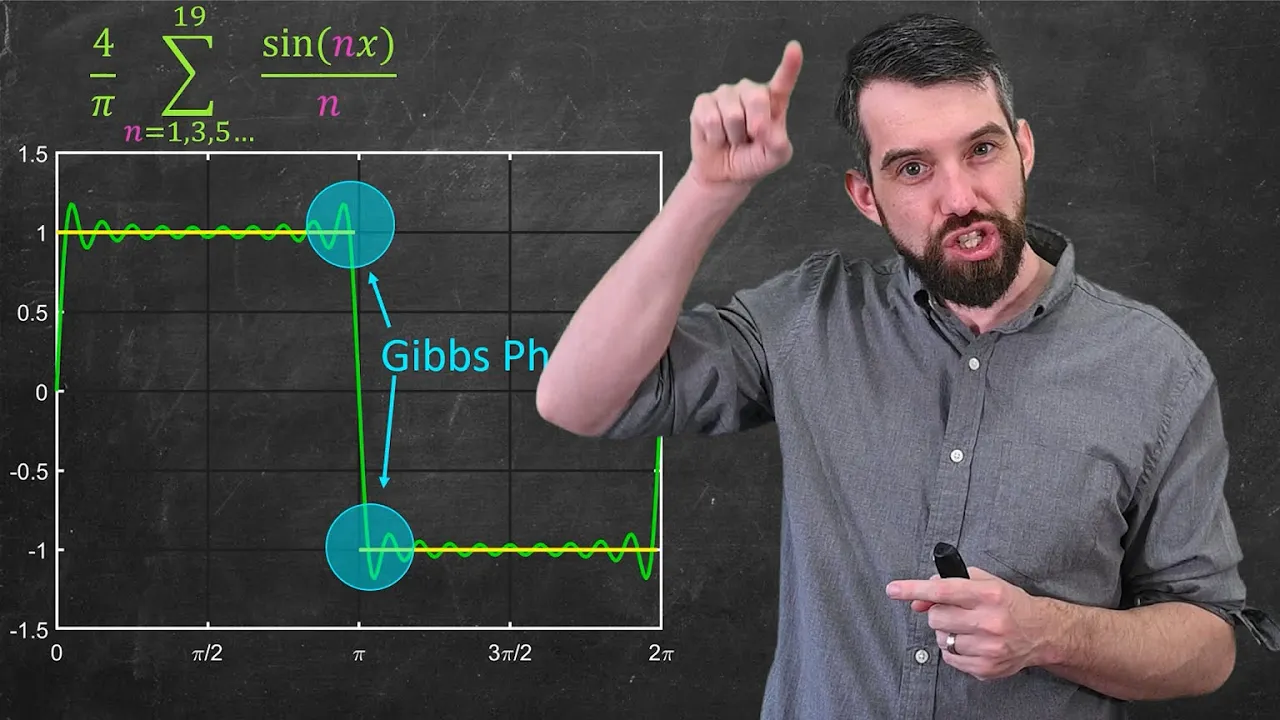
10:44
Fourier Series Introduction: The Big Idea Explained
@DrTrefor
387K views•2021-05-03

6:00
The Mathematical Impossibility of Accurate World Maps
@Vox
23.3M views•2016-12-02
Related Study Plans & Knowledge Roadmaps
Structured learning paths in Mathematics
mathematics
Projective Geometry: Coordinates & Conics
01From Euclidean to Projective Space
02Homogeneous Coordinates
03Duality and Projective Transformations
+ 2 more learning modules
14h5 modules
Explore Roadmap
mathematics
Tensor Calculus: Vectors to Riemann Curvature
01Mathematical Foundations: Linear Algebra & Calculus
02Covectors, Dual Spaces, and Tensor Basics
03The Metric Tensor and Index Gymnastics
+ 2 more learning modules
40h5 modules
Explore Roadmap
mathematics
Gödel's Incompleteness: Logic, Proofs & Limits
01Introduction to Formal Systems & Hilbert's Dream
02Set Theory, Cardinality, and Cantor's Diagonal Argument
03Arithmetization and Gödel Numbering
+ 2 more learning modules
14h5 modules
Explore Roadmap
mathematics
Galois Theory: Fields, Groups & Solvability
01Foundations of Abstract Algebra: Groups & Fields
02Polynomials & Field Extensions
03Splitting Fields & Symmetries
+ 2 more learning modules
24h5 modules
Explore Roadmap