



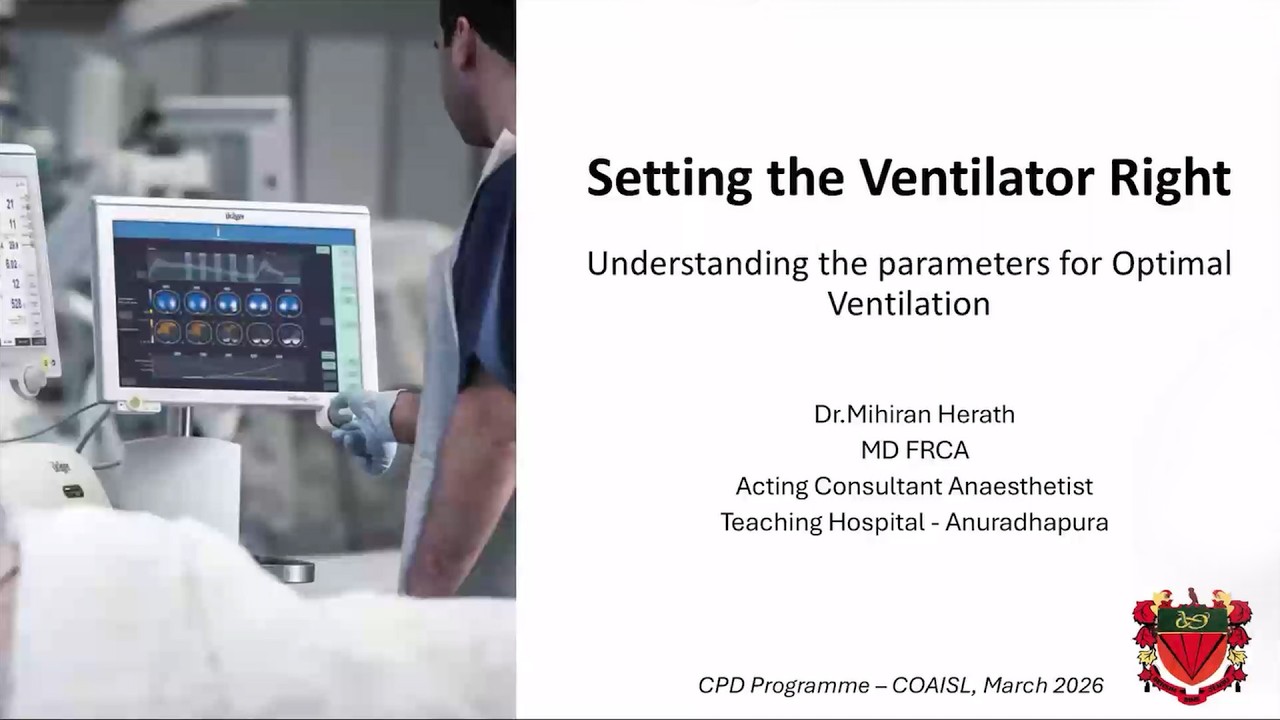









This educational session teaches healthcare professionals how to systematically interpret ventilator waveforms by analyzing four key components: the tag (identifying whether volume or pressure is controlled), the bread sequence (determining breath triggering and cycling), the targeting scheme (understanding how the ventilator controls valves and flow), and the load assessment (evaluating resistive and elastic components using the equation of motion Pvent = Pmus + Flow×Resistance + Volume×Elastance). The presenters demonstrate how to distinguish between machine-triggered and patient-triggered breaths, identify patient-ventilator asynchronies such as early trigger, work shifting, and late cycle, and assess whether the patient is experiencing excessive work of breathing. They emphasize that ventilators are excellent at controlling flow but mediocre at controlling pressure, and that understanding these principles helps clinicians optimize ventilator settings and improve patient outcomes.
SEVA VentRounds: Reviewing Ventilator Settings for Effective Mechanical Ventilation
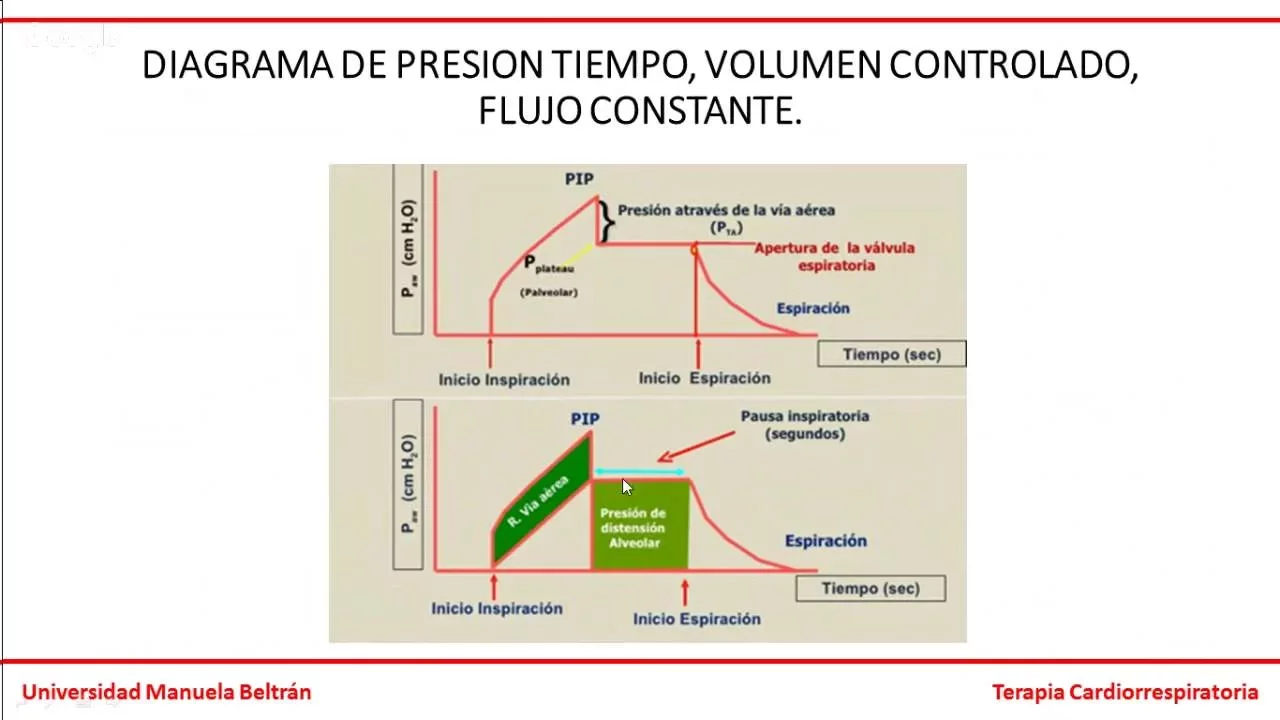
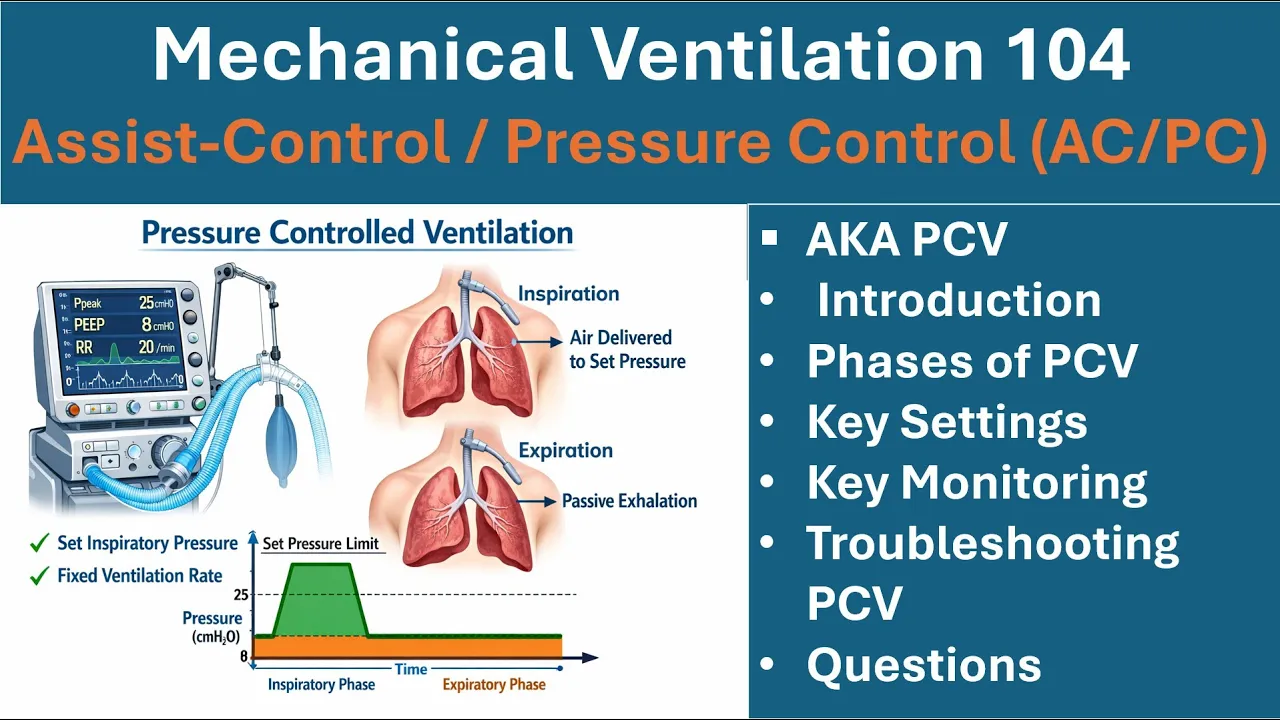
Added:good afternoon everybody it's 202 and uh we're going to do seba Ben Browns today's March 23rd 2021 and uh I welcome everybody some disclosures we have to do today um the first one is uh we will discuss particulars of ventilator modes there's no endorsement of any particular mode manufactur or company whatever we say it's our opinion it does not represent the Cleveland clinics at all um you'll hear uh me I'm Ardo meles uh I have received fees for books chapters and lectures and I go on with Rob and the clinic a patent on Mid frequency ventilation which has not generated anything just exists and then Rob is consultant for these companies and also receives fees and royalties um so those are our disclosures terms of ground rules this is a recorded session so um just keep your microphone muted uh the moderator uh uh that is me may call upon members of the audience to comment we want to have a very interactive session and we welcome that if you want to comment or send us any particular uh statement just send it via the chat function I'm I'm monitoring it constantly uh and we're going to use today different to other sessions uh web Expo so in the past we were using the poll anywhere but obviously that meant you had guys had to use two different systems so now we're use a single system uh for this which is the web exp pole we'll see how it works if it doesn't work so be it um I do know that fellows are on the line and uh we we really welcome them this is a safe space I always say for anybody to to reach out if you're interested in um participating or or jumping in into any of these cases what I would ask is that you send me a a chat message here and say Eduardo I'm in uh hit me uh many of you have already seen and I'm actually very proud of uh the pre- teaser that uh the answers that you all got very impressive uh knowledge on on ventilator reading uh so very welcome so to start uh the first question that I would ask everybody is uh where are you joining us from uh so type it in the chat this is uh actually cool for all of us to see where we're coming from uh where we're connecting from from Georgia Lexington Kentucky children that some more hey Connecticut Illinois when I know you asked me to anot on the screen I will not give you uh access because if not you can uh it just creates some challenges on our screen from Johnstown Saudi Arabia fabulous Ohio all right so we have a a pretty uh broad group so from Cleveland excellent well welcome all here we go so we're going to start with the first uh way from this one actually came uh this way from all the way from from here this is ours and I'll start with with a very um relatively simple uh waveform on on this patient um but it has a lot of information um so I want to give it a try uh is anybody interested on on jumping on this one and and going through our method of of reading it all right so what I'm going to do uh is I'm going to send out the poll uh here comes the poll for all of you it's asking me Cisco your sh video all right so you're getting the poll right now Dr Morales I'm happy to jump in after the poll as well if you like me this is Ali thank you Al I appreciate it so all of you are answering I'll share the answers in a second just keep answering what you see on this uh wave for and I know that for many this is new and saying what what what is the tag and what is the load and we'll we'll go on onto this and it will help us arrive okay I'm going to close the poll no well I'll leave you I see that you have not finished actually these things tells you who has finished and and not I'll give you a couple of more minutes take a look at it got a lot of information there all righty so I'm going to share the results and I'll share the responses with everybody this is good this method is so everybody goes in order with it here goes the results so you should be able to see them now majority of the group read this as volume control uh CMB s um many uh the the what is the load the majority thought that it was resistive some of the group thought that this was elastic the trigger was normal the inspiration was normal uh the cycle was normal for and there was no uh expiration on this so very very good Ali do you want to to jump on it and and guide us through how you read this uh what were you thinking my friend sure so you can of look at the tag and to see what the control variable is I like to look at the flow waveform um the flow waveform looks pretty consistent uh so that would so I would think this is going to be volume control uhuh it looks to be that it this machine triggered and machine cycled so I would call this CMV and not seeing any patient uh any patient interaction over here and we are setting all the parameters I would call this a set point so for me this would be volume control cmvs very good in terms of the load I looked I like to look at the expiratory uh part of the flow waveform which tells us for the time constant is which is the product of compliance times resistance uh this looks like in this situation it's about one and a half seconds which looks pretty normal uh since there's no patient interaction or P mus uh I think this is I would call that the load would be elastic in this situation uh both in inspiration and expiration uh the the expiratory uh curve looks like it's reaching the Baseline and it's not prolonged so I don't think there's any restive load in my opinion but we can discuss more uh there's no patient uh interactions I would say there's no PV discordance and it would be normal trigger normal inspiration normal cycle normal expiration very good so so let's talk let's so no no no patient so let let's go in order I know that for many this is a a new new item so and I I put this was intentionally here uh Al because it has a lot of information about the physiology of the patient so let let's start by the first time first item and it's the tag and you recognize I mean I put it here that this is EXA what we're controlling is flow so you see the flow is a square it's being controlled by the ventilator so that's why it's volume controlled uh you very well recognize the bread sequence which in this case it's CMB or controlled or continuous mandatory uh ventilation and that means that the the breads are uh either triggered or cycled by the ventilator in this case both of them are uh machine uh uh trigger and cycle so this definitely is a mandatory breath and every single one of them is appropriately a mandatory breath and finally set point uh set set point is uh the targeting scheme and there's seven uh targeting schemes and it's essentially how the computer controls the the the valves and the flow and the ventilator in cells and this is the most simple one in which you just set the flow and the eye time and it gives you this so set point in volume control so excellent excellent job uh there Ali the the next item is the load and I wanted to put this one uh in in with all intention to to try to look dissected and I put some thoughts that I think that would be useful for for all the fellows out there and actually in general uh Al do you remember the question of motion y so it should be PM Plus P vent is equal to flow time Volume Plus resistance times compliance am I getting it right uh sorry flow flow times resistance plus uh volume times uh compliance or elas elastic yeah great job so so I'm gonna show you a thing that is gonna I mean it blows my mind every every time I think about it because when I first heard about the equation of motion I I I I would say that I I didn't come to the light until later so um uh what what this means is essentially uh these are the loads right the resistive load and the elastic load and and so either the ventilator or the patient or the patient and the ventilator have to overcome these loads the ventil the flow times resistance or the volume times elastance these two are actually if you do the multiplication here it ends up being in millimeters of on centimeters of water so it's pressure uh units so this is uh that's why this a pressure equals a pressure this two plus this two equals a pressure so the thing that opened my my eyes and that's why we have to do these loads is if you think about this uh about the ventilator screen so up here you have the P vent yes then over here you have the flow right and over here you have the volume so you know that the flow times the resistance gives you the last the resistive load and the volume times the elastance gives you the elastic load so this one plus this one equals what you see up here so the equation of motion has always been in front of your face whenever you're looking at the ventilator screen and the cool part of this is because you know that this uh if you multiply the flow times the resistance it gives you a pressure essentially this shape is over here sorry this shape is right here so this would be the resistive load or resistive pressure and then you can see because the flow is constant that there's a triangle here and that's that triangle up here uh so so it gives you the shapes and now you know how to read the elastic and and resistive loads when you're looking at this so the first step up that you see on this equals to the resistive load and then the slope represents the elastic load so now that I have told you that does this uh now imagine a Le that I give or everybody uh that I increase the resistance on this patient I give higher resistance on on the patient this is not going to change because the machine is delivering the flow it's controlling it but what will happen is that because it's a multiplication this is a scaling Factor now this will look much higher I'm trying to make the exact same shape sorry uh and so you can if there's changes in resistance this initial Step Up will go much higher does that make sense so that's how you read the load so now that I have told you that uh you can see this waveform and you can see how this uh so the elastic load if you are the Elance is worse for each change in volume the pressure is going to rise even higher so you can imagine here that if I am doing that the the slope if the if the Elance goes up or the compliance goes down the slope is going to be much higher so that's what you you see so in this patient the the changing flow uh the change in in pressure per unit of volume is not that that steep but actually what you see is a very high step up at the beginning of the breath and actually if you imagine if we did a expiratory pause on on this patient the pressure would go down all the way to this level and go down if I do that there would that change your your thought process Ali on the on the load from elastic to resistive so you're saying that if you're going to do an expiratory hold then if the pressure is above the peep is that what you're saying sorry no what I what I'm saying is when you do a expiratory uh inspiratory hold right what you eliminate is flow right right so the the pressure would come from up here all the way down to this level which is this line over here yep and so now you see this step up from down up here all the way down here uh so the patient is requiring all up this amount of pressure which is resistive pressure so it's the same amount of scale up that got over here so this starts making me more suspicious that this is actually a resistive load okay and so then you go and look out uh as you said to the expiratory and and you you were perfect there you talked about the other way to read this is when what you're controlling is the pressure is the time constant so you can see that this goes and it doesn't reach zero so it may be that the resistance is high but if uh the resistive load is high or that the breads are too close together because the rate is going too fast um but this has to be ruled out uh because you have some hints for increased resistance and some hints here for increased resistance so in in this case what you would start thinking is could this patient have a high resistance or at least Auto peip which could sabotage our existence I'm going to check the the the chat to see if there's any questions um out there uh if the BC up top wasn't visible it would be hard to distinguish IMB from CMB here since the patient is not triggering truth statement some more uh it it would have to be a a very fast uh IMB on the on these patient so meaning that they they set up the the basal rate uh so sometimes it's very hard to see it through just the waveforms Ed yes yeah it's ad I have a question yes go ahead you talked about the equation of motion which is essentially a balance of pressures from the innate properties of the lung and the ventilatory system why aren't you adding peep into the equation yes and you can absolutely add the the peep so so the peep goes on this side of the equation uh so so you sorry so you add the the peep on that side I don't add it uh consistently because that's the Baseline and it usually just generates confusion in the rest of the the world but you're right the the peep is part of the equation can I add something yes go ahead I do the same way you do because if you define pressure on the left hand side as relative to Baseline then that works if you want to add more information then you have to add Auto peep on the right and if you want to calculate power it's actually turns out to be better to just put gauge pressure or pressure above atmosphere on the left and then total peep on the right so there's many different forms of the equation of motion and they're used for different things um but for the purposes of what we're doing here this is the simplest form perfect so um the next question I had is Marian asked me B basically you look at the flow way from first yes absolutely if it's a it's a if it's a nice figure uh Mariam it is definitely a um a a volume control that remember ventilators are very good at controlling flow they are mediocre at best at controlling pressure uh I don't know uh if that makes sense so we'll see some examples immediately after this any other questions about this waveform yeah did you want to talk about stress index or is that too much now uh yes definitely so um actually that's a a good point you you all have heard about stress index as one of the markers uh that you look in this portion of the of the the the bread so from here to here you look at the slope and uh essentially as we have described it's is given by this relationship between volume and elastance so uh some invest bright investigators essentially said if it's a straight line the compliance is linear and it's not changing throughout the breath however if the compliance is going like this right with this this new figure let me change color so that it's more uh colorful uh so if it it goes up like that that means that the compliance at the beginning was uh was worse was lower and as the breath is being delivered the compliance starts improving and then it flattens and and which means that the patient is recruiting long as you're giving the breath the other uh wave the other deviation that you can have and this is obviously on patients that are passive that are not moving at all is that it looks like that that it has this scoping and under those circumstances at the beginning of the breath the pressure is not uh changing much and then or it's kind of flat and then at the end of the breath it for every little volume that you deliver it goes up higher pressure and so under those circumstances this would be a patient that is uh over distending during the breath during the breath uh so the the what they did is they created an equation uh and where you want that equation to be equal to one uh and if it's above that or below that it talks about recruiting or over distension uh you can see that uh there's the poor man method that I have seen that people pull out a credit card and put it on top or or a piece of paper I would say that that's most likely not the best way to do it uh besides that it can change from breath to breath if there's pimos or there's other aanes so probably the using the the software is the best way to do that uh go ahead uh rob you want to add to that just one little thing everything you said was really good what we're looking at is the slope of the pressure time curve and we're inferring elastic or compliance from it and the reason why we can do that is because you have a constant flow so that means the horizontal axis could be scaled to mean volume so um since FL since flow is constant and multiply by the by the time and you get um volume so it's actually the same shape as the pressure volume curve but that means is that at any point on that curve the slope is Elance so if this if the slope is a high number it's a high elastance or a low compliance and vice versa so that's just another way of explaining what you just showed graphically with your red yellow and blue yeah AB absolutely uh thank you uh Roberto and and and samur asked if if this would be if the airway has a collapsing portion that it's opening up yeah I mean you can have areas that that uh open up at some point and then you essentially recruit uh it looks like recruitment it's simply that you opened up a an airway that could be collapsed but for x or y reason so uh great great discussion um all righty one question so when when we look at the time constant method to determine the load um so this situation technically the time constant is within the normal 1.4 1.5 second parameter but I guess I mean I should have looked more closely looks like yeah I mean it's I mean it's very like I mean to my eye when I was looking at I thought it was going back to B Baseline but when I look at it closely yeah I mean it's probably just below the Baseline um so do you think the time constant is artificially normal just because the rate is too high is that what's happening here that's a great qu I actually have been thinking a lot about and and Lee you're bringing out a point which is uh what number is normal for time constant um we've had a really good uh manuscript that actually Rob and uh J Michelle Arnell and Ariel Garo published on values for actually simulation to using simulation for mechanical ventilation and what they did is they pulled out data uh out of uh dozens of of variables that were measured in in patients using uh specific ventilator and and from that we know that there are certain values or standard values that would be for a normal patient that is paralyzed on the ventilator patient would obstructive disease and with ards of different uh degrees so when you think about that when I see this I try to um obviously just from looking at the waveform you have to try to uh figure out what is normal and what is abnormal and where where the problem is and so if this was a normal patient uh the time constant in these circumstances may be completely normal because the time constant on these patients the usual resistance on a patient that is inated is around 10 and the compliance around 50 which puts you at a the time constant of 0.5 uh which would give you around 2.5 seconds to fully exhale your your lungs and so under those circumstan you would say no this is normal for this patient because he's breathing uh at a fast respiratory rate uh on the other side if I told you this was a patient with ards and as you can see with a high peep high F2 uh and you see this you expect this patient actually to have a a shorter time constant so this is the opposite of what you were expecting so I I'm what I'm doing here is giving you a little bit of background that will help you understand where you are uh depending on the patient so that those values that you're quoting uh may be completely normal for a patient with ards and and uh what you're looking is where where the where you are with it uh on this circumstance just by looking at the waveform I would be concerned on this patient with high resistance because of these two values but it could be completely normal got it thanks very much no thank you El great great statement um uh yeah so so husa asks us uh how do we confirm the actual stress index if there is variation from breath to breath as you mentioned uh that's great so if there's pimas it's very hard to to read the the stress index so if there's pimos meaning effort from the patient so you can you you have to have a a breath that there is no pimos uh in some some of them and what this index does is it keeps giving you the values through time so you have to see where you are and and what's the the value that you do obviously if you're doing the stress index to adjust peep or to adjust your ventilator settings the presence of pmos will sabotage that and so some people may choose used to temporarily either sedate or paralyze the patient yeah and and the servos will display stress index but none of the other ventilators will that's right wow I mean who would think that a volume control uh cmbs would give us so much to talk about huh that was pretty cool all righty the next one comes all the way from Beirut and um this was uh sent to me for us to discuss here and I thought that this was a really cool example of painful interaction so I'm going to open the poll for all of you to to jump in and and and feel it now that you know a little bit more of how to fill this mode so we start with the tag so what's the are we controlling pressure or volume then what's the bread sequence CMB csb or IMB and then the targeting scheme which I know that for many uh this is a new language uh but it helps us understand what the ventilator does uh here so there's set point dual adaptive Servo which is an R uh optimal intelligent and bio variable then after that we talk about the load which we just spent a fair amount of time talking about could be resistive or elastic and then uh finally we talk about the interaction with the trigger if it's normal if it happened early or late in reference to the patient if it was false or fake in the insiration is work shifting we'll talk about that more and then cycle and then expiration which is missing on the pole but we'll give it a pass for today so I see uh 23 of you are answering a couple have finished I'll give you a couple of minutes more in the meantime if any of the fellows uh or respiratory therapist for all it matters wants to give it a shot uh just let me know either in the chat or speak up I'm happy either way otherwise I'll do it all right so mute thank you for jumping in not yet just give me a second Let's uh we are people are moving through it I know that it's a little bit challenging this is not an easy waveform so uh I I love that they sent it to B uh from Beirut um I send a shout out to luisito shimoi I see him um on the on the list of attendants exf fellow from the critical care program here re all righty I'm going to close the poll it's going to start closing in a little bit okay 20 seconds to finish all right Sam are you ready to roll about that but I can give it to try I know you can what color do you want choose a color how about how about we go with yellow this time yellow it is okay here comes the poll and uh I'll tell I'll share the results with everybody so that they can see how we answered and uh essentially the majority of the of the population there were between PCC MBS uh or PCC MBA uh which is adaptive so pressure control continuous mandatory ventilation adaptive a couple of people thought this was IMB uh the load uh the majority thought this was pmos uh and the second group thought this was elastic a couple of people thought this was resistive in the trigger the majority of people felt this was uh failed a failed trigger and the majority thought that there was work shifting which was mild and uh some people thought that there was either normal early or late so pretty equ pretty balanced all righty oh go for it uh samit gu us so I I I see that uh control variable seems to be pressure as I look at the way flow waveform and it's not nowhere close to perfect so I would say pressure control there's a combination of at least at least a bread trigger there bread triggers that are by the machine and and they they cycling the the breath is being cycled by the machine and then there are some triggers that are being by triggered by the by the patient patient I also get CMV uh now now now what kind of um scheme I think it it appears and I can be absolutely wrong here adaptive uh but I can be absolutely wrong here I I think it's it's responding to Patient effort and it's just proportionally changing uh but I I have no clue uh to what what it is now coming to the load I I I can say it's pretty P mus especially in the both in the inspiration and and expiration I think it's mainly pimas though the time constant seems very very very shorter in the inspiration compared to the expiration but it's very hard to say with that kind of patient ventilator interaction available um in in the bread sequence a trigger I felt was normal I didn't felt that there was any laate or missed or delayed trigger inspiration um there there appears to be some work shifting in in Inspiration uh that I would go that way and uh cycling I think is uh I think it's normal I I don't see any early cycling or whatnot and then coming to expiration I think uh there is this negative flow so I think the patient is trying to work during expiration so I would say there is some expect work shifting at least that's my take on very very good uh thank you samit for jumping in um lots lots of uh thoughts here uh when you see this uh you I agree completely with you you don't see pressure the the pressure is being controlled here it's a it's flat throughout the the breath and this doesn't look at all like any geometric figure that you draw during kindergarten so uh this is definitely a pressure control um the second one is CMV uh so you're looking for uh what triggers and what Cycles the breath right so you you recognize that some breaths are triggered by the patient and some breaths are triggered by the machine uh this is a patient uh uh a breath trigger by the the patient and actually is cycled you can see the pressure continues and even though the patient exhaled over here the machine said you're going to continue to have pressure there until the end and then po you you're able to Exhale so this is machine uh cycled which immediately makes this uh every single one of these breaths a continuous mandatory breath and finally there's uh the the Adaptive Target which on this uh look it's very hard for me to to see if the pressure is being adapt going up or down and it would be easy for me to say that is s however I left this up here as a clue uh for the the the group and many people I mean we don't use this ventilator at this we have some uh here but we are not using it in constant practice so I understand samit why this would not look to you but uh I put here what we call the Rosetta card and I put uh which has all the the modes classified and for so we This Is The Life work of of Rob and you can see here the Hamilton G5 which is the one that we're showing and then APV stands for adaptive pressure ventilation CNB is as you stated PC cnba so in the Hamilton adaptive pressure ventilation is the name for what you now know as prbc or as autoflow or as BC plus it has many names in the literature does that help you me yes um so so that's that's that's the targeting scheme and what that would mean is that if the patient was not getting his tital volume which you can see that they he's at set at 60040 of tital volume if he doesn't get that tital volume which you see he's getting then the machine would be increasing the pressure and if the patient is getting more or sorry less than that uh it would start going up on the pressure he's getting uh more than or sorry less then he would go up so the opposite the pressure of the ventilator adjust the pressures to deliver the target title volume so there's another clue here even if you didn't have the resetus card you could clearly see that this is a form of pressure control ventilation and if you look at the operator set controls on the right it says volume Target so this is volume targeted pressure control which is just a generic word for or a specific word for um adaptive targeting exactly thank you Roberto yes you can see it here B Target all righty the the second thing that you talked about was uh what is the load and this one is a tricky one because obviously there there's uh the patient triggers and during inspiration you can see this this deformation of the pressure during the breath during when the patient is doing effort so normally this waveform should look like uh nice beautiful square like that that's how it should look and as I told you ventilators are mediocre at controlling pressure uh and so what you see here is that area that represents the pimos that you can see the patient doing effort down here so without a doubt there's evidence of pimos but once that the pimos is over you can see the the patient finish his breath it goes not rapidly super fast back to Baseline and actually the patient tries to Exhale all of these are exhalations anything before below the Baseline is that the patient is actually exhaling during inspiration because the breath is so long that the patient is exhaling here so when I see this and and and you can see the time to return to Baseline this is 1 second it takes it less than a second so um this gives you indication uh that there is pimos without a doubt as you pointed out but and and you mentioned this that there was evidence of uh an increased elastic component but that means the time constant is very short boom it Contra contracts uh very very rapidly um and and rishik uh sorry rishik I I'll go back to us to the the tag the PCC MBA rishik comments on this uh breath over here which is uh if you can see here that this is from the prior is the is just starting uh the bread so from this bread it goes here and it continues over here that the pressure is below than the other one and that would be a hint that this is a prvc breath so good good good point and catch up uh Ric uh so so this is a patient that has very high elastic load that exhales relatively fast and and returns to baseland in a rapid uh uh return so that would make me suspicious for that on on these patient uh somebody mentioned that this looked like aprv and yes Mariam when I saw this the first time I said is this aprv and it's because you you were looking at the very long inspiratory time and with some evidence of inspiratory effort uh on top which the patient is is doing without a doubt uh but what happened here is actually that the cycle time the the the inspiratory time was left too long so the time from here to here the inspiratory time actually if you if you notice here these are uh these are seconds actually 2 4 6 8 10 12 14 16 the inspiratory time is going from around 11 and a half all the way to here so it's almost two seconds of inspiratory time yeah also the first breath I thought like looked like a spontaneous breath that's why I thought it was aprv absolutely so the the patient did an effort here but he cannot trigger because he's on top of the breath so uh that's you're absolutely right because you're controlling pressure the patient can do whatever he wants on top of that breath the the ventilator will not stop him got it thank you yeah uh the excellent question from uh Ahmed also uh he asked me how is the patient able to Exhale during the inspiration and yet it CNB yeah well remember that this is um the that the patient can blow out during inspiration uh and the valve it's called the active exhalation valve will be open now not every ventilator does that some ventilators even in pressure control say you try to Exhale and they will close the valve and I'll show you an example a little bit uh later uh so so the patient will not be able to Exhale and you'll see essentially the flow shuts down here uh in some ventilators that's a fake statement but in general it does uh it will allow you with that active exhalation valve Rob yeah that brings up a very interesting question um and that's the very reason why we have defined imv the way we have if if anybody can recall the exact definition of imv it means that a spontaneous breath can be can occur between two mandatory breaths this is happening within a mandatory bread that so it does not make it imv and that's the exact reason why we did it that way and also for aprv it happens in aprv as well and I don't think intellivent is activated on on this uh mode I I yeah probably not because it's dimmed right yeah had a question yep go ahead so in terms of engine from the engineering standpoint how does this mode differ from aprv if you have an active exhalation well you can breathe during the eye time you can do the same during aprv it's just that the the t low is is very low um now the same ventilator offers an aprv mode but from an engineering standpoint like I don't see any difference U between this and aprv if you can breathe during the eye time but because because I because aprv is imv because in aprv you can breathe spontaneously between mandatory breaths if the patient tried to make an inspiratory effort between two mandatory breaths in this mode he'd get another mandatory breath so the fact that you can breathe in and out during during a mandatory inspiratory time has nothing to do with whether it's CMV or imv got it right good question that that points out why it's very important to have a specific definition for imv versus CMV excellent all right so this is uh bringing just a lot of thought about uh why Target why knowing what the tag is it's important here and and trying to understand what what happens during inspiration and and the key message that I'm I'm listening right now is just remember in pressure control you're able to breathe on top of that if you want and actually just think about this in what we call Early Trigger or reverse trigger uh those patients take a breath during pressure control or during whichever mode you want during the breath uh and that doesn't make it IMB suddenly because the patient took the breath uh and didn't trigger the breath another interesting thing about this waveform Eduardo is you notice that the peak inspiratory flow is much higher than the peak expiratory flow yes that's that um combined with the deformation of the pressure waveform during the trigger phase or shortly after that indicates that this patient is making very short high inspiratory efforts and then relaxing very quickly so that's why you get that little expiratory blip during the te time inspiratory time and then you get a bigger exhalation during the expiratory time and if you add those two areas below zero flow you you'll get the area above zero flow so the expiratory volume has to be equal to the inspiratory volume but the inspiratory um flow inspiratory volume is all happening in the first few milliseconds very good so now now let's go to pbd cordinance this is a a beauty um so uh and please correct me if I'm wrong uh Rob but I'm almost sure that that's the the case here the when there's a the the marker for patient trigger on the sorry on the Hamilton is this little arrow over here right yes yeah that's correct so so now now that I have pointed that that out um let's go in order of RS I'm going to skip this one for a second we'll come back to that one but if you see this one what who trigger the the the breath the patient or the machine do you see the little arrow so and there's no deflection here so this means that the machine trigger the breath but you see evidence of pimos afterwards so there's a patient breath after that what's the name of that that would be if the ventilator triggers earlier than the patient that's called early trigger so this breath over here has early trigger okay the next one has a nice the patient activates he gets pressurized that's good this one again in this one is the exact same thing actually you see there's mandatory uh well yeah there's no no trigger and then there's this activity on top another early trigger breath uh for them so exactly uh early trigger is machine thank you very much Michael uh Fisher so that's this is early and normal and and you can see this is a a classic thing when you're looking at the screen there is going to be breaths that may have nothing abnormal with them and that may be the preponderance of them and then one that it's all messed up and that doesn't mean that you have to change everything on this patient just because that one is messed up but it may it depends what you're seeing so I think that you have normal breaths as you uh uh pointed out and early uh a couple of early trigger breaths you recognize very well uh work shifting a couple of work shifting it's it's it's moderate to mild uh because there the the pressure never goes below Baseline so that's our marker for severe uh work shifting meaning that the patient is doing more work than the ventilator those or not more work but the work that the patient is doing is uh Shifting the work that the ventilator is doing and finally cycle with all that we have talked now you know this is the trigger of the breath right this one is the trigger and the patient is exhaling here but the ventilator finishes the exhalation all the way over here so this is where the patient wants to finish the breath this is where the machine Set uh to finish so this is uh the machine ended later later than the patient wanted so this is called this is a a classic example of late late cycle and so you have early and normal trigger and you have have work shifting and you have L trigger and you uh mention a little bit of work work expiratory work I am not entirely sure that there's expiratory work maybe over here actually I I I would say that that is actually evidence of expiratory work but the majority of them are normal so this was a a a really uh a waveform that had a lot of information now I will ask the the audience but now that you have read this waveform what would be the action that you would do to modify and to to help these patients and if you want to type it that's that's fair uh into the chat message so the the options are I'm not going to do anything Eduardo stop bothering uh the second go ahead Dres I think the problem is the in at time uh and the cycling is too long I mean it's an early trigger might have to do we might have to start by either changing the trigger sensitivity or changing it to from a pressure to a flow trigger and then the eye time being too long maybe is is is complicating the the problem and and maybe reducing the eye time and and yeah I think that the the the Sensitivity I don't think is an issue uh you can see that he's triggering very nicely without dropping the pressure majorly so but I do think that decreasing the eye time would be the first uh item that you may want to do uh over here because he evidently has efforts that are short s now sometimes this is done to maintain the minor W pressure but there's other ways to maintain the minor W pressure than uh long item and so uh and and Russell to that point is you could let him breathe and have CPAP uh if he's able to generate enough effort on his on his own with pressure support and CPAP that's one of the options so giving him more control of the breath uh the the other one is if he doesn't cannot maintain the mean of ventilation is to just simply decrease the eye time uh on on this patient um so so really really good uh points um yeah so that's right Rich changing the sensitivity might cause patients discomfort I mean without sometimes and I I've seen this and I I I frankly uh think that this would be probably the last option in the universe is locking the patient out so so trying to sabotage the existence of the of the patient by making the ventilator really hard for him to to trigger so that the trigger the synchron goes away you're going to create more trigger delay uh Morgan that's a great point I mean how tall is this human being right he's getting 640 MLS of tital volume uh with a restrictive with an elastic uh predominant issue so it makes you think uh I mean unless he's a COPD or a very tall individual how how do we go at at it um with changing from pressure to flow trigger change trigger sensitivity it does flow trigger usually is more sensitive than than press Mariam that sorry samid uh it's so flow is more sense but this is not an issue of of of usually when you change your trigger is because you have a late uh or uh trigger so the the patient is doing effort and the Machine is taking a a while to to trigger the breath which is not the case right now uh what would happen if you Sate this patient uh yeah good good question question is uh you probably well based on what I'm seeing here he would end up with a minute ventilation of 10 of six point4 liters because he has a breath rate of 10 and a title volume of 640 so sometimes that's what you need to do is sedate them and and let them recover from what it's going on very good uh I'm going to end uh here these are these are outstanding questions and and discussion I I want to show just um there were a lot of of Curves uh but this is becoming more like the vrs that we used to have at the bedside so this is the CME credit for uh who whichever staff is on I will share now actually we have created a landing page and in the next uh days we're going to start posting the videos there uh for all of you to to be able to see that here's the the link uh just copy it it takes you to a a page where actually the the the WebEx link is if you click that you will come into the meeting immediately and we're going to be posting there uh some articles uh some of the material that we have produced some links on how to get more into these the courses that we are talking about and finally uh you're going to have access to all the videos that are being recorded throughout so with that uh I'm I'm thankful Rob uh of all your input uh and uh I know Rob and I are very thankful of the our fellows and team for being part and and helping us learn together so thank you very much everybody
Up Next

Ventilator Loops Basics: PV & Flow-Volume Waveforms
@OzoneAnaesthesiaGroup
182 views•2024-08-01

Graphic Medicine: Comics for Collaborative Healthcare Communication
@nationalpatientadvocate
189 views•2023-12-04

Neuroanatomy: Central and Peripheral Nervous System Divisions Explained
@AKLECTURES
136.2K views•2014-09-20
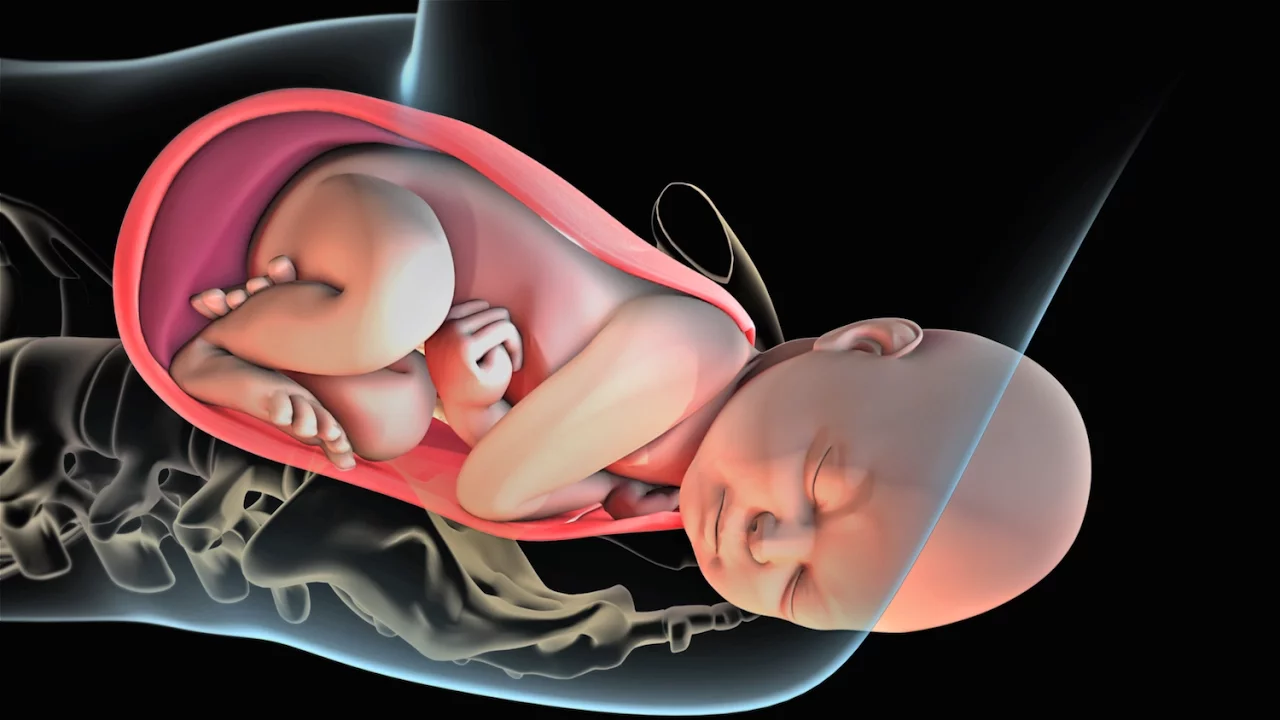
Stages of Labor and Vaginal Birth | Childbirth Animation
@nucleusmedicalmedia
52.1M views•2017-08-18
Related Study Plans & Knowledge Roadmaps
Structured learning paths in Medicine