


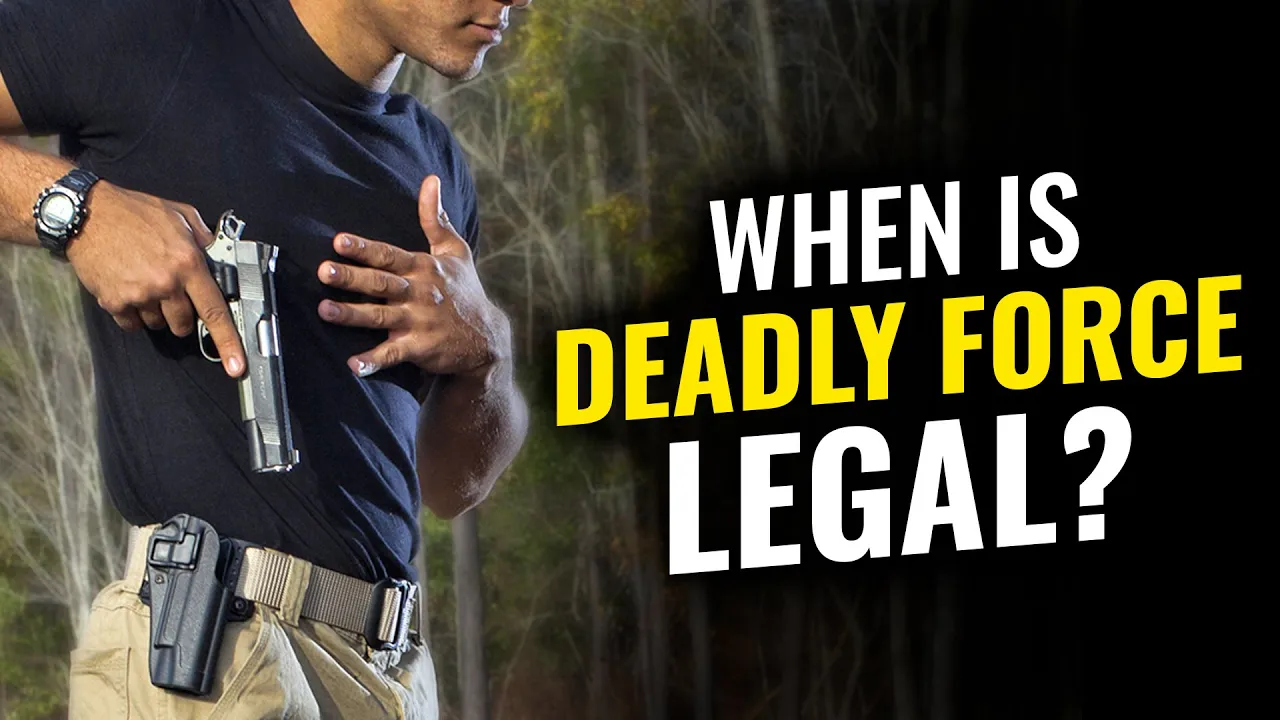











California's self-defense laws are among the most favorable in the country, featuring a stand-your-ground doctrine that allows individuals to defend themselves without retreating, and a castle doctrine that provides a presumption of fear when someone forcibly enters one's home; however, successful self-defense claims require meeting key elements including imminent threat, proportionality of force, and reasonable belief, with imperfect self-defense potentially reducing murder charges to manslaughter but still resulting in serious legal consequences.
California Castle Doctrine & Self-Defense Laws Explained (2024 Guide)
Added:Understanding the concept of an 'affirmative defense' in criminal law, where a defendant admits to the act but offers a legal justification to negate criminal liability.
The fundamental legal definitions of 'deadly force' versus 'non-deadly force' and the standard of 'objective reasonableness'.
General familiarity with the Second Amendment of the U.S. Constitution and the basic regulatory framework for Carrying a Concealed Weapon (CCW).
The core conceptual distinction between the common law 'duty to retreat' and 'stand your ground' doctrines.
In-depth analysis of California Penal Code Section 198.5 and seminal California Supreme Court rulings regarding defense of habitation.
The critical distinction between criminal acquittal and civil liability (tort law), exploring how a self-defense action can be ruled justified in criminal court but still result in wrongful death civil suits.
Examining the legal impact of Senate Bill 2 (SB 2) and recent legislative changes affecting 'sensitive places' where CCW holders are restricted from carrying in California.
The study of tactical de-escalation strategies and the psychological impacts of high-stress encounters, specifically how cognitive impairment during trauma affects subsequent legal statements.
17.6K views674likes58:19Original Release: 2024-10-11
[Applause] so this is different from the presentation yesterday yesterday we talked about what to do after a defensive use of force and I use three examples from three cases three cases I've had of ccws that have been arrested for felonies assault with a deadly weapon uh within the last two years in San Diego so we talked about those cases this is a different kind of case uh this is a case that went to trial as a murder if the trial if if Case goes to trial as a murder there's something there da usually just doesn't run straight into a wall they're Prosecuting a case because they think they have a reasonable ability of getting a conviction of something on the case might not be murder but they're pretty convinced they're going to get something out of this case and so this is one of those cases where you know there's problems on both sides and this is the reason if you didn't know it that 97% % of charged filed felonies 97% don't go to trial so if it starts as a felony in court 97% of them never end up in trial that's because most cases have problems on both sides and so there's always an accommodation to be reached or the case is so bad you're just out of the case because there's no point in going to trial you're getting some benefit by getting out getting out of it earlier this is one of those cases use an example but before I give you the the case this is about self-defense law in California we need to talk about self-defense law in California when you leave here you will all be internet qualified as legal experts on self-defense in California so I I I look forward to seeing your posts and on what's going on all right so here's murder in California so we can't understand what's happening and what's happening to you in court and I mean you put yourself in these situations you're either CCW or your home uh you have a firearm at home and you have just used that firearm successfully in self-defense and the person's died so put yourself in these positions the da disagrees with your use of force you are fortunate to be in a community where the da is relatively responsible with regard to the Second Amendment community in fact she's a big backer but if you're wrong she's still going to charge you or she beli you're wrong and your use to self-defense but it's a lot different than if we're in Northern California counties Northern California counties your use of forces is looked on dis favorably from the beginning that is not true in this County not true for most of the counties in Southern California so you're fortunate to live here an example of being fortunate to live here is four years ago there were 1550 ccws in San Diego County four years ago Bru came along the old sheriff and Sheriff Martinez firm Believers in the second amendment in CCW and how many there are today four years later 20,000 20,000 ccws from 1500 in San Diego County many more a month they're processing between 6 and 700 that means an extra 7 to 8,000 a year coming online and the sheriff has funded it and they have processed it here's the biggest problem f she's still running behind on interviews it's taking almost a year to get an interview uh and if you do that you're online on peridium and there systems called peridium it's really good easy to do but if you're online and you get a a delayed date keep checking every day sometimes dates came up you have to be flexible they're not going to be flexible you might get it shorter that you did that I saved one year on my way so I got I got my appointment this past March I would have had to wait till next march to get it and I put in for it December 31st of last year that comment was that somebody did that kept checking the peridium site after getting a year delay for an interview and managed to save a year and getting the interview but I bring that up for a separate reason and the reason is, 15004 years ago 20,000 now 5 years from now 60 to 70,000 ccws in San Diego County you know what I call that right the Full Employment lawy la law for lawyers because it's impossible statistically that someone isn't going to [ __ ] something up it's just impossible whether it's brandishing or dropping your gun or scaring the crap out of somebody or something never mind the defensive use so these classes are really important your understanding of the law is crucially important because more people with guns are going to come in contact with more people without guns and more people with guns are going to come in contact with cops with guns and you really really need to understand uh what's going to happen when you get a CCW if you don't have a CCW where are your rights within your home okay first degree murder in California this is surprised for many people there are four degrees of killing somebody basically in California first deegree murder second deegree murder voluntary manslaughter and involuntary manslaughter you get some other things but these are generally when somebody's dead and you caused it one of those things if they're going to prosecute you for one of those things is the way it's going to work out statistically what are the numbers associated with that people are surprised at this first-degree murders is 25 to life like there's no flexibility you get convicted of first-degree murder you're getting 25 to life there's no alteration what does that mean it means you have to do a portion of the 25 years before you're eligible for to go before the Board in state prison and the board determines when you get out 25 to Life can be life 25 to Life can be 18 depends how good you've been in prison so if you've been bad you'll be there for life you may good you might get out earlier depends on the nature of the crime too high-profile crimes obviously don't necessarily get out second degree murder 15 to life voluntary manslaughter is a term of years between 3 and 11 years so if you get convicted voluntary manslaughter you can only get three six or 11 you theoretically can get probation don't see too many people getting probation on on voluntary manslaughter you're not getting probation on second degree murder or first degree murder an involuntary manslaughter is 2 three or four 2 to four so the numbers are significantly different but if you use a gun that 25 to Life Is 50 to life if you use a gun that 40 to life is uh that 15 to Life Is 40 to life the gun adds 25 to life and you don't even need to kill somebody with it you could be convicted of assault with a deadly weapon with this gun allegation and because somebody got shot but they didn't charge you with murder you're looking at 25 to life for the gun because the gun was involved in a great bodily injury or death the point of this slide is that punishments are catastrophic criminal punishments for use of a firearm in California are catastrophic gun laws in California as you know are horrible the thing that's great in California believe it or not is self-defense law self-defense law is favorable for the person that's been charged with a crime it's one of the most favorable defenses defense laws in the country and I'll show you what I mean because this isn't Anarchy you're not going to trial and a jury says yeah we think that's self-defense no we don't think that's self-defense There are rules and the rules control everything one thing I left off on here there's a concept called imperfect self-defense you think self-defense you're not guilty well there's a concept called imperfect self-defense imperfect self-defense means guilty just not of murder so you could be tried on murder the jury doesn't buy your self-defense they only buy part of it yeah you really thought you needed to do that but boy you didn't need to do that okay we'll cut your break your murder becomes manslaughter that's what imperfect self-defense gets you but that may be the defense at trial hey I don't want to get you 50 to life I want to get you a term of years I want to get you that 11 years for the manslaughter and that 25 to Life gun doesn't attach to the manslaughter only a 10 gun attaches to it so the most you're ever getting on a voluntary manslaughter is 21 years that may be the the defense at trial this is imperfect self-defense not full self-defense all those things go into a calculation now you understand why only 3% of the felonies go to trial because everybody's doing the same calculations where does this fit what does this fit what do the what does the law say how do the facts fit okay we got too much risk let's settle the case from both sides all right when you uh when you leave here uh you you do qualify uh this is a DMV testing site so you're you're qualified for your next DMV IE exam because of the font I didn't realize it would come out that low uh this is the actual instruction that your jurors are given if you are charged with a crime and your defense is self-defense and that's called an affirmative defense basically you're putting forward a self-defense and here great thing about California as soon as you put forward self-defense and there's sufficiency of the evidence to give the instruction which is a really low standard then it becomes the District Attorney's burden to prove you didn't act in self-defense Beyond a reasonable doubt you don't have to prove you acted in self-defense they have to disprove you acted in self-defense and that's on the bottom of every one of these instructions that it's their job that's a great fact in California law all right so what does self-defense say self-defense is a defense to all of the charged crimes this jury instruction this one exactly was read to a jury in a murder case that you're going to see an animation about uh s years ago this was a murder case in mind where this was read to a jury that's where I got it the defendant is not guilty of those crimes if he used Force against the other person in lawful self-defense if first thing that the DA has to disprove remember not you have to prove they have to disprove the defendant would reasonably believed that he or someone else was an imminent danger of suffering bodily injury or imminent danger of being touched unlawfully this is the nonde calm calm stands for California criminal jury instruction every instruction given to a jury has a number attached to it even things like Reasonable Doubt like what you should believe in Witnesses how many have you been on juries okay so this is semi-familiar to but these are the rules you're given the facts you listen to the witnesses you see the evidence but in the end the judge reads you the rules it's not Anarchy in the Jury Room this is how you decide all 12 of you have to decide this Beyond A Reasonable Doubt or this needs to be disproved look at the thing two things in there it's not just death it's bodily injury you don't have to fear just being killed you can fear great bodily injury that opens up a wide variety of defenses depending upon the injury that you fear particular to your circumstances one of my last clients was a disabled veteran that had a injured knee and and an injured shoulder he was 75% VA because he fell off a uh he fell off a fast rope from a helicopter in Fort Campbell Kentucky two stories to a roof and then rolled off the roof middle of the night fully fully loaded so he was injured and he got into a beef with someone and brandished on him what we had to explain that he couldn't engage in a fist fight he was going to lose he was damaged his left side it was almost like a stroke he wasn't going to survive that and so he had to brandish in order to do that so your particular circumstances and fit in not just death but gbi remember this is the there are two instructions for self-defense in California this is the non-death instruction if you would have killed somebody you'd be getting the next instruction which is 505 this is the non-death instruction that's why it says being touched unlawfully you can't kill somebody for them touching you unlawfully you can defend yourself for somebody touching you unlawfully and I'm sure that there's some unlawful touching well I guess theoretically if somebody's shooting you they're touching you unlawfully I'm talking more about Hands-On unarmed kind of touching and that's another issue in California if you use law lawful lethal self-defense you better be sure that the person you killed was armed the only people that really get to kill in front of a jury on armed people in California are cops that's it because they have different rules with regard what they're thinking what they're seeing you if you kill an unarmed person there better be a huge disparity between you 110b woman and a 280b man that man says he intends to do you harm you get to shoot him because you're not overpowering him you don't have to wait you don't have to take the hit but you have to articulate why why death could could have been inflicted instantaneously or great bodily injury instantaneously if you can't cross that threshold then you're violating the wall the defense of another say like U yeah that's in here too know but say like that unarmed person is choking this guy here and I see him and he's he's actually trying to break his neck can I shoot him then AR intervening in intervening in third parties is always treacherous uh and one of the reasons is you lack context and the reason that that guy's strangling that guy is behind the car is the murdered body of that guy who's on top right the guy he just shot in the head so he was strangling the other guy I don't know how that would go uh I you I mean you might yeah you're you are where you are I'm hesitant to tell you to intervene in third- party events absent context save the life of context is everything well you could still intervene you don't have to kill him get off get off or I'll kill you pistol with them do something you just don't have to kill them you know it's uh always be looking for the deescalation point because no matter what you do whether you're right you're always going to be wrong at least in somebody's eyes what do you think like of people carrying a burner versus a firearm because you know then you could use it more often like what's your thoughts on carrying carrying a burner a burner like the the the hard CO2 oh I yeah uh I would say that that's going to work the 95% of the time that the other person isn't actually armed with a gun right and then that 5% of the time you're at a significant disadvantage right yeah so that's what I thought it's like 95% of the time you're in a position where someone's using their fist body or language to I I I think those are good for people that are uncomfortable with Firearms if if you don't feel comfortable carrying a gun then yeah carry that but why wouldn't you you said there's different rules for civilian compared to law enforcement yeah you know as far as the da but as far as the Da goes in the mind of The Da a lawful use of force is different a lawful use of force for Le is different than unlawful use of force for a civilian how do how does that pertain to someone who has a Le background but is no longer active uh I think that I I don't know uh based on different data points I think you would be treated similarly to a Civ ion but if your Advanced knowledge could be used against you negatively that would be used against you negatively it wouldn't be a positive let me say that it would it would always it would always work for your detriment uh all right let's move forward the defendant reasonably believed that immediate use of force was necessary that means imminent that's the imminence requirement your use of force must respond to imminent threats not somebody saying I'm going to kick your ass tomorrow or they're on the other side of a chain link fence if I could get through here I'd beat you to death bang ah you know unless there's a gate if there's a gate right there I'll go with you on that all right but we've got some trouble if it's a complete chain link fence at least at that point you know so there's no imminence imminence has to be there that that's what's accounted for and two and number three proportionality you use no more Force than was reason necessary guess where everyone gets hung in court this is where jurors disagree with you your force was not proportional your force was not reasonable that's where the da will push that what you did was not proportional or reasonable but all of these elements are part of self-defense and these are the I didn't put everything in there but this is really important stuff when deciding what whether the defendant's beliefs are reasonable consider all the circumstances there known and appeared to the person if the defendant's beliefs are reasonable the danger does not actually have to have existed so if someone says I'm going to kill you and they reach in their pants and they take out an unloaded gun that doesn't matter they said they're going to kill you and they brought out what looks like a gun I perceived I was in danger a great bottle of injury I don't have to wait I shot them the danger wasn't real but that doesn't matter and so that's a good part of self-defense again in California and look at this one the slightest touching can be unlawful if it is done in a rude or angry way making contact with another person including through his clothing is enough the touching doesn't have to cause pain or injury that means your right to self-defense is not dependent upon the damage inflicted upon you what about spitting on somebody that's assault spitting spitting spitting on someone is assault you are allowed to defend yourself your past IM your past in need to defend yourself you've been assaulted your past imminence it has happened where are we at now proportionality so someone spit on you and you killed them because you knew that they were infected with HIV and you believed that they were trying to infect you with HIV you're not going to win on that in court but you might get imperfect self-defense you might have you really belied that they were trying to affect you with a a disease but your belief was unreasonable and so there's always this is all the gray you know the the law is not black and white we live in Gray and that's why 3% of cases go to trial because people live in Gray and they're not sure if it's black or white I need I need white that that's right now well I give advice and options I create options for my clients then I give my advice on where I think the deficiencies lie and then the clients make the the choice you choose your life I don't live your life when this is over you live your life I'm providing you the best options possible given the facts I'm presented with and the tactics that I can use all right so remember that any touching is a touching any unlawful rude or angry touching is a touching for you but you're always in proportionality how should I respond to this and that's where we're back to maybe that you know pepper spray is better maybe taking out a pepper spray and popping somebody in the chest with a couple of balls is better than you know brand even brandishing a gun this is the death calcrim they're almost essentially the same but they raise the the they raise the standard for when you're getting to use uh self-defense you can see it almost reads the exact same way but you must believe that you in imminent danger of being killed or bodily injured or being a victim of an assault with a deadly weapon again I took this out of one of my cases so they they're two different instructions but they read almost exactly the same way 3470 the non-death instruction is a little more permissive look how wide wide ranging that unlawful touching is this kind of narrows it down and really brings it and as it should right you get to defend yourself differently against somebody spitting on than you do if somebody's trying to stab you and if that person winds up being killed it raises the bar on what you should have been able to do or know or say is part of that event nobody knows this most people don't this is this is the actual language out of the jury instruction both 3470 and 505 have this in it a defendant is not required to retreat he or she is entitled to stand his ground and defend himself or herself if reasonably necessary to pursue an as salant until the danger of death could has passed even if safety could have been achieved by retreating raise your hand if before you walked in here today you knew California was a stande ground state okay that's less than half you're interested in Firearms everybody in this room is a member of the gun Community or you wouldn't be here and yet you didn't know California was a stand your ground state why they don't want you to know because it is perhaps the one thing in California with regard to Firearms defense Firearms legis the one thing that the California legislature has not managed to [ __ ] up yet is this where did this come from this isn't a law California is not a standard ground state because the legislature passed laws many states are go to Florida it's written in the it's written in the code you can read the standard ground law in Florida can't read it in California doesn't exist legislature didn't give it to you Governor must have gave it now Governor didn't give it to you guess who gave it to you the courts gave it to you this is interpreting to 1890 cases if you go to the user notes either in there's notes after these instructions you can get them online you just go into Google pump in calcrim 3470 you'll get the whole thing user notes first hit the user notes refer to two cases from the 40s so the 40s cases referring to the 1890s cases so thank 1890s for this because it says you do not have to retreat and jurors take this seriously and I cram this down their throats you have no obligation to retreat if somebody in the Jury Room starts talking about well he could have got out of there pass a note saying they're not following the law I turn them into snitches against each other because remember no verdict is a win that's the primary win you want to do three trials and get no verdicts you lose we'll keep going no verdict verdicts mean I got to risk a losing no verdict means I can never lose so Gary standard ground applies to any place right not just your home any place stand your ground is anywhere that you are anywhere in California and look at that part did you miss this part if reasonably necessary pursue you can chase somebody to enact your Vengeance as long as you're doing it within the law could you believe that that's written in Cali law all right what scenario gang member got a car behind him you're in front of them nowhere to go wide open areas no Escape no cover no concealment says you're dead I'm going to my car I got a machine gun you get to follow him to his car and shoot him maybe you got to pursue right you don't have to retreat if you Retreat you're exposing yourself to greater danger there's nowhere to go guy's told you he's going to kill you and he's going his car to get a machine gun I'm going to stop that you know now we're back only into what proportionality not imminence not need to defend but that's great castle doctrine raise your hand if before you came in here you knew California was a castle doctrine State that's more more people get that you get you know why you're getting that in ccws you should be getting stand your ground in CC CWS that should be a big part of ccws but they don't and I I I sort of agree with that the law says you can stand your ground but deescalation as a CCW is what everything is about so if you can get away get away if you can distance yourself from whatever's happening distance yourself that's the first thing you need to do you do not want to get involved with me if you're involved with me things have not gone well in your life and perspectively aren't going to go well in the future so the best way not to get involved is to not to be involved don't engage with people eat it don't verbally attack people don't respond don't do anything you're armed you are essentially a victim up until that moment in time that it takes to defend yourself you know you you can't absorb this because bad things are going to happen I've got a couple examples for where does castle doctrine come from this is actually written under the law you can read this penal code section 1985 California's castle doctrine is codified in the penal code what is it mean legally what it says is remember we're going to jump back to that 505 instruction what it says is if somebody enters your house in this way they forcibly enter your house it's not your drunk brother-in-law that's actually in there can't be somebody that's related to you so castle doctrine doesn't apply against your drunk brother-in-law trying to get into your house uh you are presumed to fear great bodily injury or death you get a presumption that if this is happening inside your home you're you don't have to wait to figure out what's happening you don't have to stand in the middle of the dark and wait to that stranger that's back lit looking like Michael Myers only minus the mask in your house while you're standing there with just your t-shirt on saying okay now is he armed am I past IM imminence now what's proportionality here you know no it's bang bang you know as long as I the key is identification and that's why I encourage everybody that has a firearm at home if it is your night gun as I say you need a light on it you really need a light on your night gun because you need to make that identification you know it it can be instantaneous different different feelings on that that you're Illuminating yourself think it's more important that you know who you're shooting that's probably the most important thing uh and you can make that happen instantaneously but I'd really encourage you to put a light on your gun all right so here's the the big problem with the castle doctrine I don't think it means anything okay you got a presumption well so what it's the DA's job to prove I wasn't acted in self-defense anyway what do I care about a presumption so it's it's a toothless tiger I don't like California's castle doctrine I think castle doctrine should say that the because the burdens already on the da Beyond A Reasonable Doubt to negate your self-defense isn't that what the presumption is I don't know here's the problem with castle doctrine I'll get you in a minute castle doctrine is only the enclosed areas of your home that means your front lawn is not covered by the castle doctrine your exposed front porch is not covered by the castle doctrine your enclosed front porch is covered by the castle doctrine your is covered by the castle doctrine I haven't I haven't seen a case on that why do I believe that to be true I believe that to be true because if you go into somebody's attached garage you're committing a residential burglary and I think the same concept will be used in any case that decides castle doctrine you can't call an attached garage a residence for purposes of burgal Statute and then don't call it a residence for purposes of the castle doctrine at least I think that's the way that'll come out and if that ever happens to you come to me some really interested in that I want to see how that works out uh and so I've got a uh an entire case from seven years ago with some of these instructions came from dependent on the castle doctrine because remember I said it has to be inside not inside no presumption I really needed the presumption in this case this involved a 32-year-old pharmacist with no criminal history who owned his own condominium on voler between ocean in Ocean Beach and PB right on the dividing line he had a female roommate who had a new boyfriend and they did not get along so he was kicking out the female roommate and the new boyfriend had been texting him saying I'm going to kick your ass so he was freaked and he shut some doors and so what you're about to see is what happens when the girlfriend comes home to pick up her dog in order to leave we start at the front door of uh the pharmacist house 32 no criminal history uh lawful gun was a Glock 17 let me get rid of this uh I just need to find the uh there it is okay the middle of the all right there we go okay yellow is about to be dead guy uh blue is guy that's about to dead him red is the girlfriend putting on the uh putting on the dog's harness kneeling on the ground we got multiple shots of this from multiple angles what was I trying to show I was TR trying to show because you're going to see this guy's body falls outside the house there's also two 9mm casings right outside the door I got to explain how two 9mm casings that eject to the right and up from a non- gangsta fire fired Glock 17 go in that direction they got to get out of the house right somehow they got out of the house they got kicked they got ejected there initially and then they got kicked they got ejected into the house and then kied Ked outside that's a harder cell both managed to wind up around the corner of the door all right so here's where we are how the door opened is a subject matter in dispute but you can see that the person on the ground is blocked by the door you'll get a better view of that this all happened in a period of three 2 to 3 seconds so that door came open and this happened there was no discussion there was no talking this is the defendant's perspective the person on the ground's perspective is that the guy in blue ran down the stairs stuck his gun out the door and fired two rounds into the yellow the def the D the pharmacist perspective is this that as soon as he pushed the door open the guy took a wrestling stance I knew the guy was aggressive I'd seen I knew he was a wrestler I knew he was going to kick my ass first round went into the neck second round went into the chest body falls back New View and this was a view the juror spent all their time with why because you don't have to be in the house a piece of you has to be in the house I thought I was covered by the hand so if the jurors believed this they beli that he the castle doctrine then applied remember the da had to prove this Beyond a reasonable doubt that it didn't happen all right you see where the gun's placed now I've got a plausible explanation for ejection outside the door and based on the body warn cameras which were horrific by the way uh just soundwise emotion emotion-wise terrible but the body warns showed all of people running outside which made those two ejected charact uh cartridges susceptible to being moved you know how light brass is right you put brass on concrete you tap it with your finger it's going to go four five ft and so all the body movement could have pushed both brass didn't mean that the gun was stuck out the door and ejected right it could mean that but could also mean that it was ejected out and the foot traffic basically manipulated because the casings were located right here [Music] both of them within a foot of each other so I had two problems right I got a body that's outside oh by the way don't drag the body inside please don't [ __ ] up my case right what do you call people that what do you call people that drag people they just shot inside their house guilty defendants you're definitely going to be a defendant no matter what happened you know you've already lost your credibility and by the way that's the most important thing uh yesterday's lecture was pretty important for that how do you maintain your credibility in after defensive use of force uh it should be online at uh gun owners radio you might be able to see it either that or San Diego County gun owners one of those two should have it I would recommend you watch that it's only 45 minutes and it talks about uh what you do in the aftermath of of a defensive use of force all right so this worked out uh so how'd that case come out we went to trial on that you know because the da wanted a second deegree murder they wanted 15 to life they were willing to drop the firearm allegation but they wanted 15 to life out of that guy and we didn't he didn't want to bed a 15 to life being 32 professional with no record thinking he acted lawfully uh remember this guy's unarmed right and they're both even both same size know but the defendant had a gun uh how did it come out we went to trial he was acquitted of first-degree murder he was acquitted of second deegree murder he was convicted of voluntary manslaughter on an imperfect self-defense Theory you may have really thought you needed to defend yourself you based on those text based on this guy's background based on his actions all of that we're giving you we're giving you all of that so everything the defense said we believe I talk to the juror later said but it wasn't proportional and and two guys on the jury gave me the the thing that I'll always remember which is your guy needed to take a couple of hits like that guy needed to be all in the house he needed to at least get his hands on him so we weren't going to acquit him for shooting an unarmed guy so what was the punishment the punishment was 16 years 16 years he still he's still there now uh he will be released in April of next year and he's down at RJ Donovan so he will have he will have done eight years and 10 months of his 16year sentence wife is ruined oh he's he's a convicted felon with a voluntary man slaughter around his record he'll be on parole for probably another 3 to 5 years uh I doubt he'll ever get licensed again but it's possible because this had nothing to do with his licensing but he'd have to go jump a lot of Hoops he might get licensed as a pharmacist again but who knows that's what I said deescalation you know he was in a bad position why didn't he turn around because I was worried he was going to get me from behind I couldn't get up the stairs it's too narrow an area she's on the ground next to me with the dog I couldn't go anywhere the jur said sorry if that guy had a knife in his hand you walk that guy had a club in his hand bat you walk you know that guy with his hands out that's not enough for you to kill him that was their conclusion so was not the castle doct Yeah they used the castle doctrine used a presumption that he was in fear but they said it wasn't proportional the castle doctrine says it does and so basically they ignored the presumption of the castle doctrine because they thought that the shooting was disproportionate to the behavior just that lone why didn't feel what's that there's not an appeal for we did he did appeal and he lost on that issue he lost on I mean appeals generally don't reverse jur it's only legal issues there were a few legal issues in that case regarding collateral information that came in but there was none really around this it would have made a difference if bad guy was completely inside the doorway I think it would have made a difference for the jurors I I think the fight because remember this was our Theory yo they didn't agree with that I mean they put on 15 Witnesses including that woman kneeling down to say no that's total [ __ ] he ran down the stairs stuck the gun out the door and pulled the trigger twice and then the da said that's why the casings are over on the right that's why the body's outside the door so you know there's gray here you know that was our theory that the way this happened they had a completely different Theory with a witness so you prod this is your production the 3D model of what took place well I had it narrated yeah but that model is what you presented well this was our pres we we created this by the way this is like 9 years old now and it still cost us like five grand n years ago I think today I'd get like aliens moving you know and for 9,000 for 5,000 bucks I mean this is nine-year-old technology but I still think this was effective because I used this with uh with Mr Burke while he was testifying he was narrating what was happen happening and so he was the one that authenticated this document you know and you had her kneeling behind the door with obstructed Vision you know but their answer to that was it wasn't obstructed while he was running down the stairs before he pulled the door open and stuck the gun out you know so we had liability we could have theoretically in fact the jurors told us that the VA was a compromise they had five people convicting him a first-degree murder so how does a castle doctrine work if you are um say in an RV and you're on a resort castle doctrine still applies to the RV it does as long as it's your Prim primary place of residents well for that for that moment for that period of time right because I read an article years ago that a cross country truck driver had pulled onto a city street had a delivery at a warehouse he was parked on the city street two guys broke into his truck he shot and killed the one guy that was in the truck the other guy took off run and he got out chased the guy down and shot him as well wow they said he was good on the first guy but the second guy they you just don't get to chase people down right right you just don't I mean the example I gave you is like the one in a million that could happen I mean if somebody's running unless they have are are doing something that is a bodily threat to you is they're running away you're stuck I mean you might get to C run after them and catch them but you don't get to run after them and kill them that you're done if that happens it's just impossible to fight you know what threat was that person posing is he literally was trying to get away from you uh all right let me get the play the video uh well I got to go through a couple of slides sorry uh you know what I'm not really going to have time for that you know let's just play the video uh let's do this let's look at this so this is from uh two years ago this is a case of mine from 2 years ago about 11:45 on a Sunday night North County Bar uh uh Senor tequito it is a major dive in Escondido and it's uh it is a place where all the bad people congregate or many bad people congregate and so you've got a diverse clein hell uh there are three brothers that are there and one plumber my client's the plumber they never met or heard about each other before plumber doesn't have a CCW but he was applying for one I've heard that many times his 9mm semi-automatic was bought off Market also called illegally uh sometimes operational true and only had four rounds in the magazine he had it because he does cash jobs and he carries a lot of money because he works in the migrant Community mostly our our money jobs and so even that night he had 900 cash from from working during the day so he carries a gun to protect his money but it's illegal but here's the bad part you're already starting out with little leverage because you're getting convicted at trial of something something even though this is only misdemeanor but it might be misdemeanor possession of a firearm we depend on his past maybe felony but you're still leaving you know why that matters because you have you're going to jail you're you have the ability to go to prison and so it makes it more difficult to settle a case this isn't all or nothing you're you're leaving trial as a convicted felon no matter what happens so if you're committing a crime right off the bat it's generally bad news uh we don't know if the brothers had a gun in any either of their vehic Vehicles the plumber believes they did and I'll tell you what he heard and saw both sides drank beer neither was intoxicated 15 minutes before the shooting there was an argument inside the restaurant between two brothers and a group of people the plumber broke up the argument but wasn't involved in it the two brothers in the argument were not happy with how things resolved so this is security footage from the gas station that faces the bar and I'll narrate it for you as we go through that white car pulling up is the third brother the two brothers that got in the argument were not happy they called their older brother my client always believed these guys were cartel we had no proof of that because they all had lifted trucks new trucks they had the look they had the clothes they had the cars right location and so he believed they were cartel but there was nothing there except for one thing that came out a little later so the brother pulls up in Parks now you see this lighting this isn't happening in real time this is a program that is now expanding this video it's like you would think that somebody was watching this and manipulating the camera in real time they're not this was done on the basic video with the software programs that exist today it's just amazing that they lit it and then zoomed in you see brother getting out is that happening because it's zeroing in on the movement or what is it I no this is a post- production edit oh I see this this is a computer program that's taking the original program and re-editing it the way that it wants it edited which is scary as hell for me I mean look at what can you create what's falsehood anymore what's true what can't be manipulated and the answer is almost nothing all right so a brother gets out the person in the middle is the future defendant that's a guy nobody knows that's the brother what's down that way the bathrooms he was on his way to take a pee he had nothing to do with these guys and you'll see why that's supported you see them holding their arms out like look what why are you guys upset and then a friend of the brothers is about to intervene and he's pushing him away what are the brothers saying right now my client is saying the brothers are saying you're dead we're going to kill you you know don't get in our business he said that's what's being said and he can't figure this out and he goes he goes it did I said did it scare you he goes no it didn't scare me it pissed me off I don't know who these [ __ ] were you know I wasn't drunk I didn't think they were drunk you know all I did was break up an argument you know without physical Force so I don't know what they want from me and this was the guy with the gun with the four rounds in the that's the guy he's armed right now with a gun with four rounds on it and 900 bucks but the guy that made the best choice this entire night was the guy that went to go pee yeah AR the argument escalates they keep threatening him he says at this point I think I'm about to be hit I think I'm about to be beat down and so I'm going to fight no gun fists so it pushes back and you'll see it it it'll become a little lighter and it'll clear up and they'll zoom in right on what's Happening the next thing that happened with this fight is you'll see a splash see that Splash that Splash was the soon to be dead guy throwing a full glass beer bottle into the defendant's face and it exploding in his face he has a cut over his eye Blood starts pouring into his eyes along with the glass and he thinks at that point I'm about to be killed so he takes out his four round intermittently working 9mm gun and he fires into the ground the round hits the ground hits the sun Tobe dead guy in the lower leg and comes out through his upper thigh why we got the medical examiner showing me exact how how does he get a bullet wound in his leg that comes out here it's just not possible and there's a mark in the ground it's just you know it's just like physics you know that's how things happen so he unluckily hit him the guy hit drops to the ground you'll see him crawling away my guy is dazed leaning up against the wall trying to figure out what's happening you'll see somebody crawling on the ground around the car any second now see the lower over the right side he's crawling over to his car which is one of these lifted trucks on the side here's where things went bad for my client my a friend got in my client's ear and said those guys are cartel they're going to their car to get a machine gun to kill you and they're still yelling you're dead [ __ ] he's hit over the head he's fired one round in the ground he's trying to figure out what's happening and then he sees them over by their car and he walks over he's still on the sidewalk you'll see see him walking over in a minute he's trying to clear his face there he is it was this long walk that uh got him charged he gets the one brother out of the way and he shoots the guy that hit him with the bottle his him twice he dies in the back of the car the brother that's at the car but we're not done yet there's brother three's truck right brother three goes over and talks to brother two who says that guy just shot brother one and he's not having it so he takes his car and runs around the back of Senor Taquito and runs over the defendant at 45 miles hour putting him in a coma for two months and then he's still in the wind there's a warrant out for that brother's arrest so you got a dead brother in the car brother number two that drove him to the hospital and lied his ass off about what happened eliminated everything involving this fight but you've got this video of my client walking over to this car and capping this guy in the back seat who was helping right so now you're on you're allowed to pursue in self-defense I think there's some gray here remember he's going what we talk about he's going to trial and he lost right he's already carrying an illegal gun he's getting convicted of something although it's lightweight compared to this murder what's the da want Da wanted 15 to life on the first day of trial the da offered him 21 years voluntary manslaughter plus 10 years on the gun and he took it I was I wanted this to go to trial I wish I wish he had had I wish he had more courage on this one but it's his life I can't fault him for it you know he's going to be out in 10 11 years and he said he's he's only 36 goes look I'll have a life he goes if I get 50 to life I'm dying in here you know and I I don't want to do that I told him I thought that the chance of trial I always thought that this was an imperfect self-defense case I thought the jurors based on him getting hit with a glass bottle disoriented just the facts screamed and that was a Max 21 but he didn't want to risk 50 or 40 to life to get the 21 and I thought there's a chance we get you self-defense although I think it's weaker because of that walk you took to get to the car you know that's that's on you and us having to explain that you did that because you thought they were going to get a gun although nobody ever saw a gun can't ever prove a gun existed you know if if a MP5 had fallen out of the car we wouldn't we would have gone to trial you know but I couldn't prove a gun existed so it was all ether uh last thing police checked his vehicle see if was firearm in there yeah the there was no gun in the car I mean the car was parked at the hospital brother drove him right to uh Escondido to Palomar in Escondido and they impounded the car right there searched the car there was nothing in it there was however a whole bunch of money which leads me to believe that the cartel angle perhaps not may have not been too far off so this case was really decided on you know different instructions the calcum 505 imperfect self-defense provocation if you're the aggressor if you're the aggressor can you claim self-defense the answer is yes if the other side steps up the play to to weapons then you regain your self-defense if you're the aggressor you don't have self-defense rights until somebody steps up the game where did this take place La where where did this take place escondo yeah all right so uh there's my information if anybody wants it you take a picture of it if you're a CCW or have insurance I'd encourage you to call somebody or somebody like me if you need help with things thank you for your time and I got question I can only take a couple of questions Gary mention Insurance do you have an insurance that you recommends probably not I'd have to research that one I I don't shoot I don't shoot from the hip no pun intended you know it's I got to look at that one Gary do you have an insurance that you recommend uh Insurance I've been told not to recommend insurances uh I can tell you that my experience uh I respond I respond for uscca I resp respond for rtb I respond for uh uh a couple of others I haven't had any trouble with uscca they've paid everything here's my best example one of the cases I talked about yesterday guy got arrested for felony ADW I was on the phone with his wife wife as he was leaving the scene in an ambulance because he got stabbed uh I had my bondsman at the jail before he got there uh the 3,000 he paid my bondsman he had a check back from uscca insurance company within a week they were out of pocket zero on that uh and he didn't get charged I managed to talk them out of filing the case did you cover just San Diego County I cover all over Riv yeah where where wherever I'm not going to blle all right I just want to get that out on the table right away all right that's uh and so I've had good uh dealings with uscca I've got a current rtb case and I've had a good experience with them so far attorney on uh right to bear is the other one attorneys on ret trainer I'm for them I'm on them too I haven't had a case with them yet I I think that you know when people when you see these videos I haven't had any bad experiences with any companies I'm not saying it isn't coming I'm just saying I haven't had it uh and they've all been pretty good you know it's it's a tough call right because remember they're making a call on insurability at the instant the cas is has started there's no investigation there's no police reports I'm basically taking your word for it and anybody I can talk to so they're making an insurance determination almost uniformally to cover somebody right up front they may reverse that decision in the future I know of no case that has suffered a clawback that's always that word we're going to get money back from you I don't know any case if somebody's got one please tell me so I'll use it as an example I don't know anybody that's ever had money taken back I know a usca case stopped after the first trial because it looked dead to rights that it was an assassination not self-defense and so they made the decision we're not paying for it anymore but we're not taking any money back right and so uh uscca has been good for me they've also got a million a million plus people they got a lot of facilities a lot of resources I I just made a usca video with that guy that got stabbed and left the scene we flew out to their headquarters made a video that should be up within a month or two my name is Stephen um the question I've got is about the castle doctrine now let's get past all the rigar I know that no one has entry into my house without me acknowledging that and I've set up things outside to make sure that doesn't happen with that said if I know someone's in the house downstairs and I've got my points of view for these folks to access them when they come upstairs do I have to verbally let them know I'm going to shoot them you have no responsibility to say anything you just answered my question you you have no responsibility it's it's going to be the burden's going to fall on them and I'm glad you brought up that point because it's a it's a good point if you hear a burglary downstairs in your house unless you have a pet that you care about or a family member downstairs stay upstairs there's no reason for you to go downstairs none whatsoever you should be on 911 at the top of the stairs if somebody comes up the stairs take them out all right just there's no what are you protecting downstairs you're protecting with your property you know it's remember deescalate yeah it's hard bite your lip call 911 stand at the top of the stairs and you'll know when a won't be a cop because they'll make sure you know they're there you know if somebody I have a gun don't come up well I I think that that along with the light Expo is a tactical choice and I think tactically it exposes your position when you articulate where you are and so I want my introduction to be my 900 Lumen flashlight hitting somebody in the eyes and then when I know who you are if I don't recognize your face you're getting shot it's that simple if I recognize your face depending upon who you are there's a good chance I won't shoot you uh but if I if I if I'm going to I just need that identification made I'm not identifying where I am I'm not yelling hey I'm back here I have a gun it it's a personal choice I'm not exposing myself like that my my introductions going to be my light coming on that's why I encourage you get a light thank you for your time uh we got to do the
Up Next
54:15
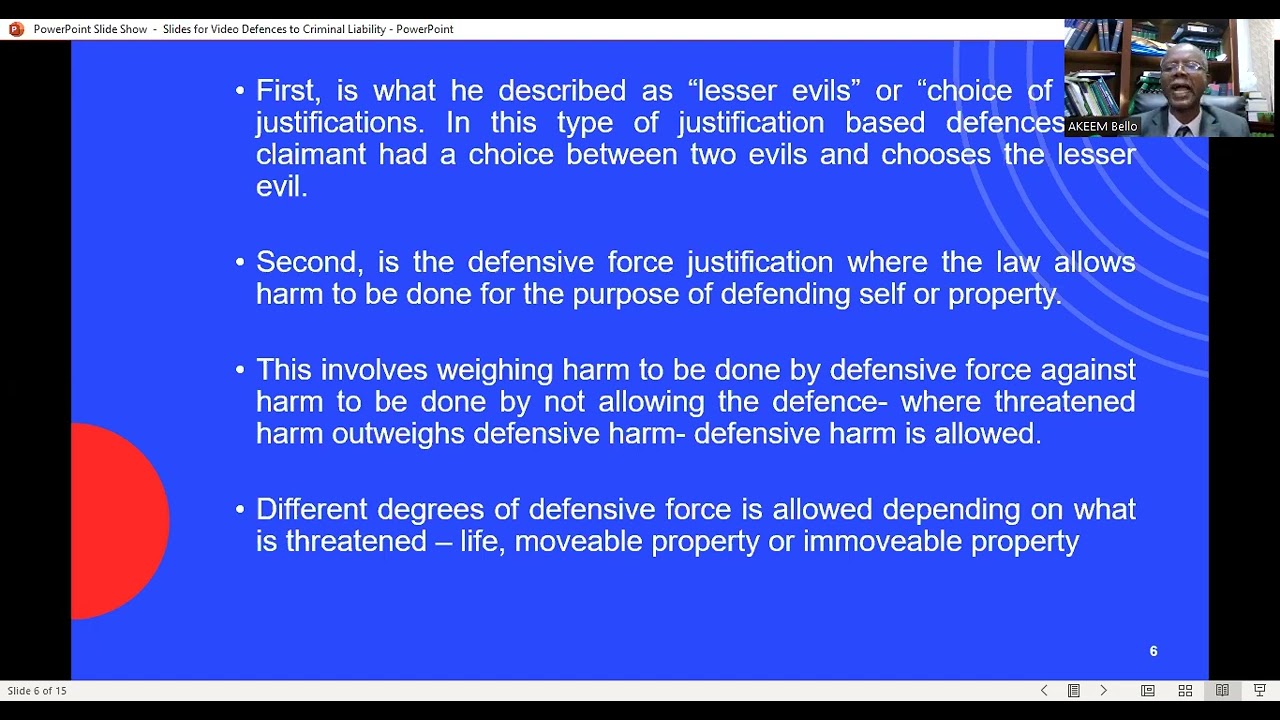
Defences to Criminal Liability: Justification and Excuse
@criminallaw-justice4635
6.2K views•2023-12-03

4:27
US Secondary Sanctions Impact on EU Businesses and Blocking Legislation
@Bureauvandijk
1.6K views•2019-03-20
5:27
Forensic Phonetics: Speaker Identification in Legal Cases
@nptel-nociitm9240
539 views•2025-03-19

24:42
Police Interrogation Tactics: False Confessions & Legal Reform
@LastWeekTonight
7M views•2022-04-18
Related Study Plans & Knowledge Roadmaps
Structured learning paths in Law
law
Self-Defense Law: Imminence & Castle Doctrine
01Foundations of Self-Defense Law
02Imminent Threat & Reasonable Belief
03The Principle of Proportionality
+ 3 more learning modules
12h6 modules
Explore Roadmap
law
Defamation Law: First Amendment & Actual Malice
01Introduction to civil torts and the First Amendment
02Elements of Defamation: Libel and Slander
03Public Figures vs. Private Individuals
+ 2 more learning modules
8h5 modules
Explore Roadmap
law
Hearsay Rule: Trial Evidence & Exceptions
01Introduction to Trial Evidence & Courtroom Basics
02Demystifying Hearsay: The Core Definition
03Non-Hearsay: Exclusions Under FRE 801(d)
+ 3 more learning modules
14h6 modules
Explore Roadmap
law
Medical Malpractice: Law, Liability & Care
01Foundations of Tort Law and Civil Liability
02The Four Elements of Medical Malpractice
03Defining and Proving the Standard of Care
+ 2 more learning modules
12h5 modules
Explore Roadmap