









![[고등 한국사1] Ⅲ-01-1. 제국주의의 확산과 동아시아의 변동_암기법 수록 [미래엔교과서 ver. 2026]](https://i.ytimg.com/vi/zHOh_DneNLI/maxresdefault.jpg)
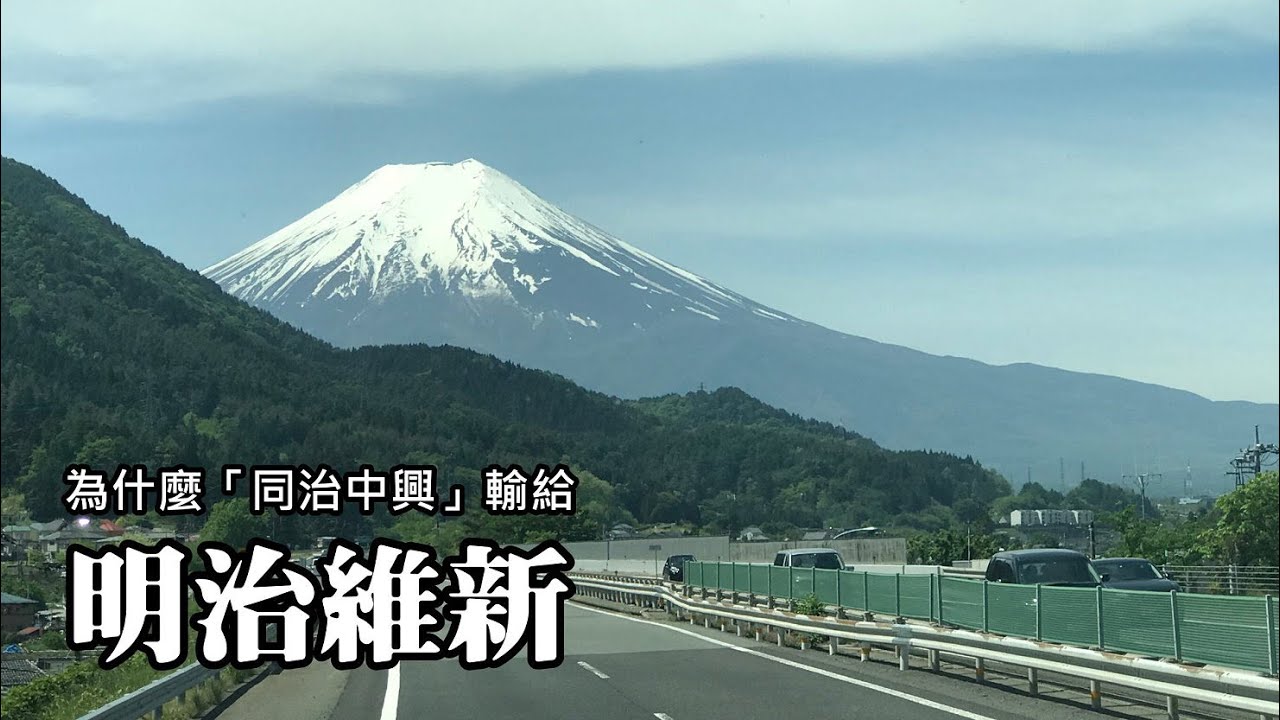
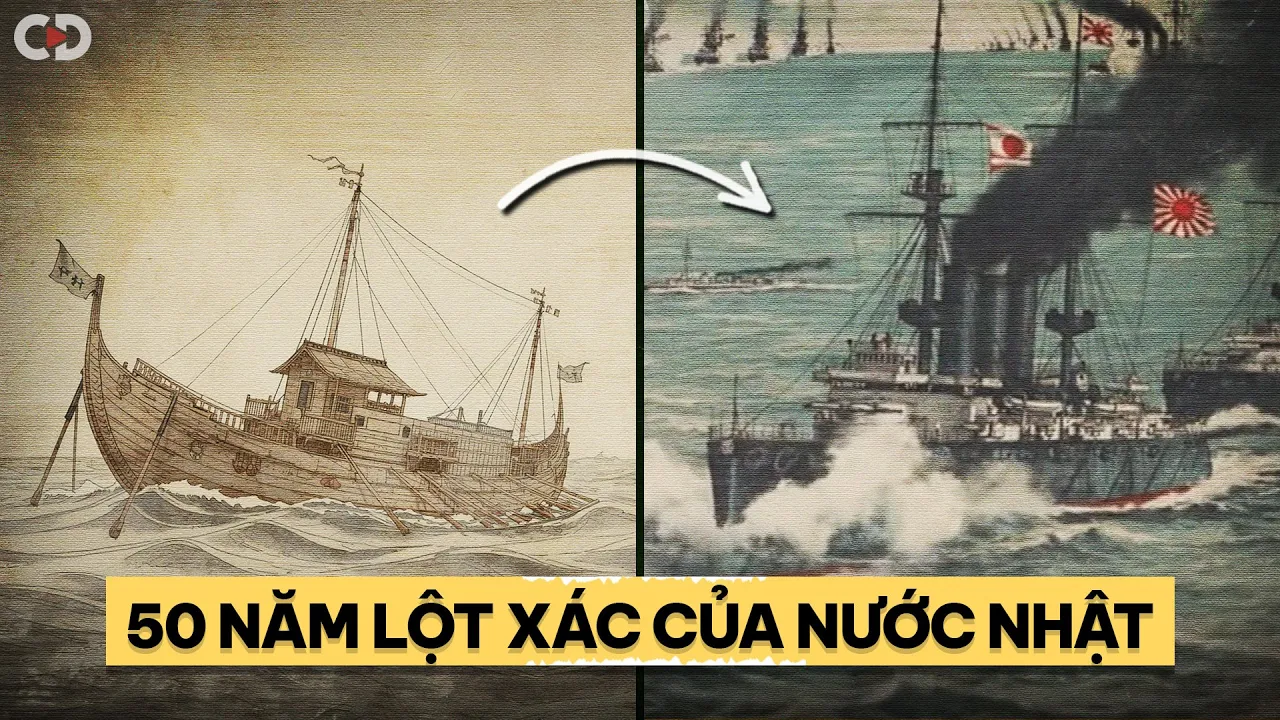
The Meiji Restoration (1868-1912) was a transformative period in Japanese history where Japan rapidly modernized from a feudal society into East Asia's first modern superpower by strategically adopting Western technologies, military systems, and governmental structures while preserving core cultural traditions, thereby avoiding colonization and achieving unprecedented industrial and military development within less than a century.
Meiji Restoration: Japan's Rise from Feudal Isolation (Documentary)
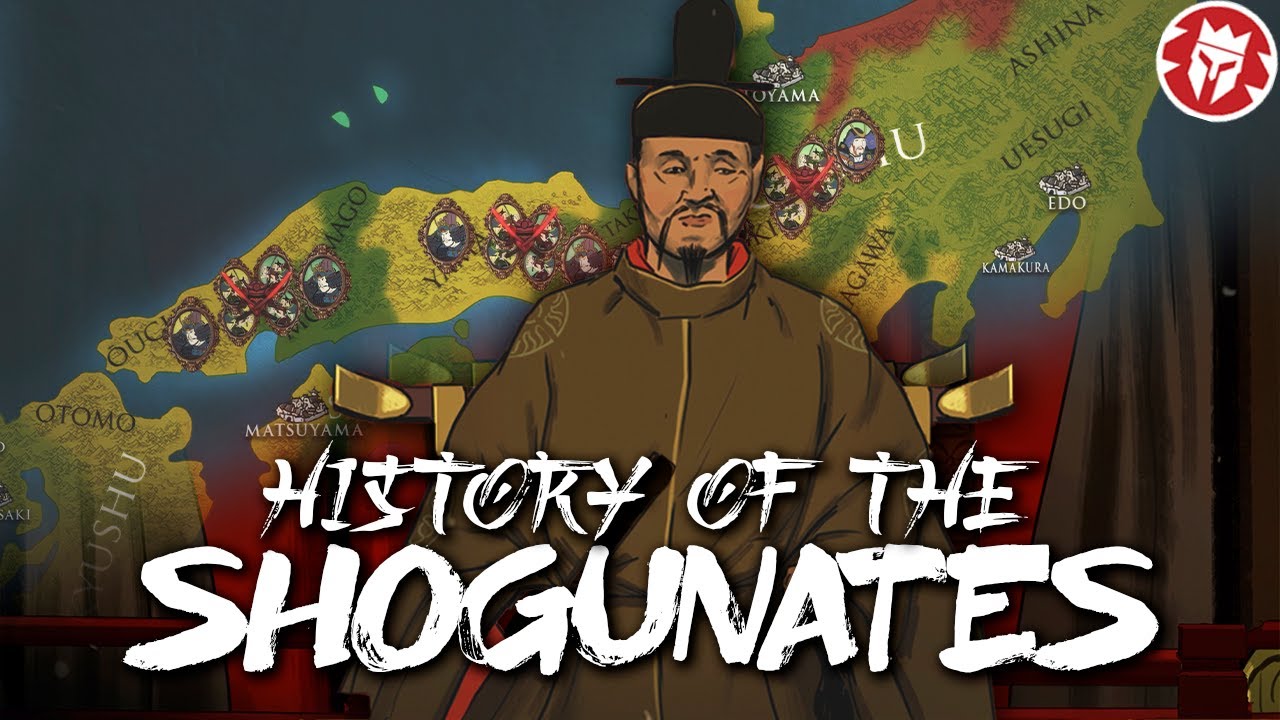
Added:The structure of the Tokugawa Shogunate (Edo Period), including the feudal social hierarchy of the Emperor, Shogun, Daimyo, Samurai, and peasants.
Japan's 'Sakoku' (closed country) isolationist policy and how it restricted foreign trade and influence for over two centuries.
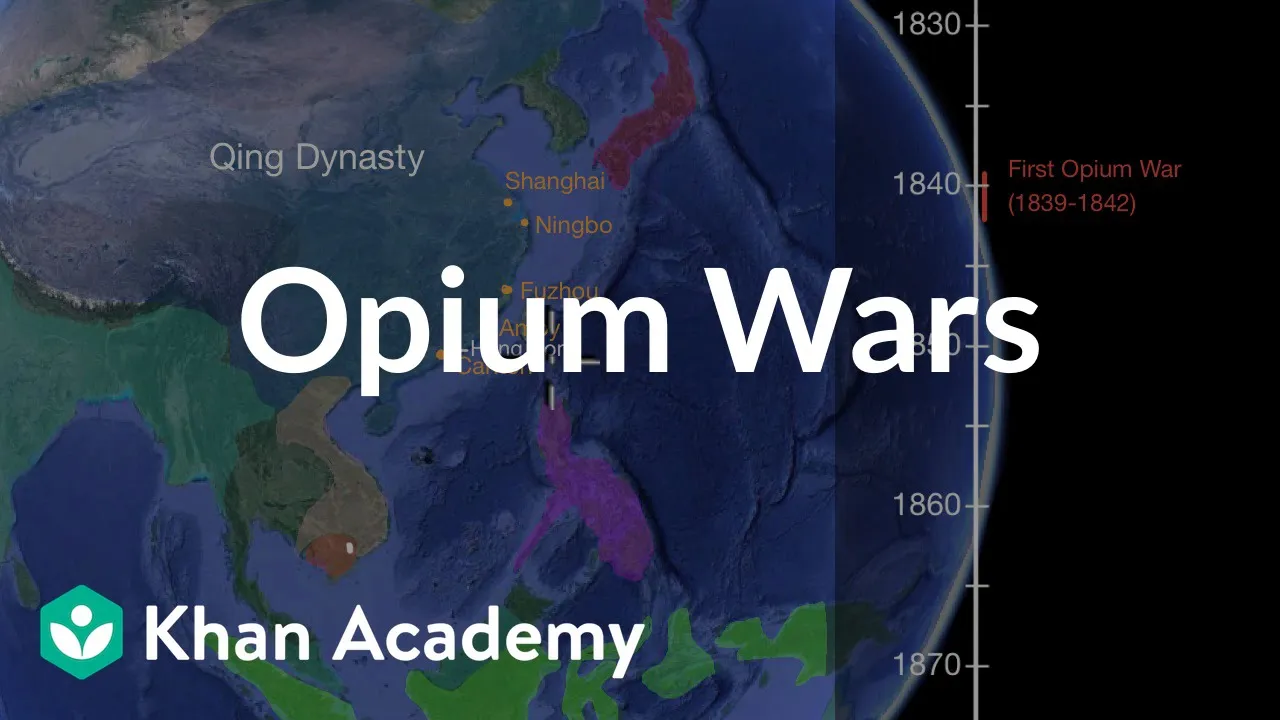
The rise of 19th-century Western imperialism in Asia, particularly the impact of the Opium Wars on China, which served as a warning to Japan.
The concept of 'gunboat diplomacy' and the significance of Commodore Matthew Perry's arrival in 1853, which forced the opening of Japanese ports.
The military expansion of Japan, including the First Sino-Japanese War and the Russo-Japanese War, which established Japan as a global imperial power.
The domestic social and economic consequences of rapid Westernization, such as the rise of industrial conglomerates (Zaibatsu) and the cultural dismantling of the samurai class (e.g., the Satsuma Rebellion).
The political transition from the Meiji era to the Taisho Democracy, followed by the rise of ultra-nationalism and militarism leading into World War II.
A comparative study of late 19th-century modernization efforts, contrasting the success of the Meiji Restoration with the limitations of China's Self-Strengthening Movement.
142.9K views6.5Klikes23:17Original Release: 2025-10-02
The Victorian Era is arguably the most crucial epoch of technological progress in human history. But while it was an age of rapid change, scientific discovery and invention, it was also a time of exploitative colonization. While huge swaths of Asia and Africa fell under the rule of Europe’s imperial juggernauts, one isolated island nation managed to thwart colonization, undergoing an incredible and rapid modernization that eventually led to its emergence onto the world stage as East Asia’s first true modern superpower. In this video, we will explore the Bakumatsu and Meiji periods of Japanese history and discuss how a nation stuck in the feudal age had one of the most successful modernization processes in world history in less than a century.
At the start of the Victorian age, in the 1830s and 1840s, Japan was in its Tenpō Era. Even since the Tokugawa Shogunate had united the nation in 1600, its population had tripled and reached the Malthusian limit; which is when agricultural subsistence or wages are outstripped by population growth. This exhausted possible resources, leaving the countryside heavily taxed and incapable of further growth. As such, the economy fell into decline, a process exacerbated by the sankin-kōtai system. This was a system implemented by the Tokugawa Shogunate to prevent rebellions from their most powerful feudal vassals, the Daimyos, from rebelling, by making it legally mandatory for them to travel and reside in the capital of Edo every other year and for their families to remain in Edo during their absences. This allowed the Shogun to keep an eye on them and leverage the safety of their families, but it was a massive drain on the Daimyos, who had to foot the bill for this mandatory airB&B stay. Moreover, as Japan’s population increased, so too did its cities. Rapid urbanization led to problematic luxury-seeking amongst the Daimyo, samurai and merchant classes. The samurai class was expected to maintain a certain standard of living appropriate to their honour, but inversely, Japan’s script caste-based society forbade them from engaging in agriculture or business endeavours, which would have helped them fund this lifestyle. To compensate for this prohibition, Samurai were forced to borrow money. As such, they increasingly fell into debt with the merchant class.
During the Tenpō Era, multiple natural disasters led to political unrest, economic decline, and societal shift. The Great Tenpō famine was the result of crop failures due to unnatural cold weather, leading countless people to starve to death. Japan's staple crop, rice, did not only feed the mouths of many Japanese, it was intertwined with Japan’s economy and societal order. Thus, as rice harvests failed in the countryside, prices increased astronomically, causing massive social unrest.
This led to the Tenpō reforms, an attempt by the bakufu government to try and curb merchant profits and lower prices. To that end, the government dissolved the great guilds that had been licensed to control internal commerce, a decision which turned out to be a terrible miscalculation. These guilds had operated to suppress producer prices to maximize profits. Still, with their dissolution, no regulations were left in place to stop the price of rice from increasing even more dramatically. Reacting to the unchecked inflation of their own making, the Bakufu led a campaign against monopolies and tried to increase their own revenue at the expense of certain Daimyo. This led to Daimyo and Hatamoto increasingly needing to borrow more money, which increasingly exacerbated their debt. Before long, the Shogun’s most powerful vassals had had enough of shouldering the cost of the Bakufu’s reforms at their own expense.
Everything came to a head in the years of 1837 and 1838. Mass starvation led to an epidemic in Osaka, killing one-tenth of its population. This led to the Ōshio Heihachirō's rebellion on February 19th, 1837, by the Samurai bureaucrat Ōshio Heihachirō who set fire to his Osaka house and signalled followers to rise in a revolt. Farmers and urban poor seized the property of wealthy merchants to redistribute it. 3000 houses and over 40,000 Koku of rice were burnt. Political unrest had increased dramatically because of harsh taxation resulting in protests collectively known as Ikki. Ikki were spontaneous, special-purpose organizations created contractually between elites and commoners to pursue goals impossible to achieve through ordinary channels. Bakufu officials responded by warning the Daimyo that they must cooperate to suppress these revolts. This led to Daimyo gradually losing their authority. The commercialized countryside was no longer as willing to subsidize urban guilds. Petty daimyo and bannermen were unwilling to bear the cost of administrative rationalization and centralization. A government desperate for income could have met that need only by decreasing the support it owed its samurai retainers. Samurai, except for the few who found public office, were becoming irrelevant and superfluous, consuming but not producing wealth.
Another event which strained the Tokugawa government in 1837 was the Morrison Incident, an international crisis involving several formerly shipwrecked Japanese sailors and an American merchant ship which stressed Japan’s isolationist Sakoku policy, but also resulted in a repeal of the edict to repel foreign vessels and an increase in the school of rangaku: the art of learning western knowledge. Throughout the 1840s, Japan was bombarded with foreign attempts to open their nation up to trade. Alongside this, news of the British winning the First Opium War against China caused alarm throughout the nation. If even China, the cultural epicentre of the East Asian world, could be humbled by the Europeans, then how much danger was Japan in? In response, the Bakufu government increased the study of Western weaponry, and a national debate emerged over what to do about foreign encroachments on Japanese waters and on Japanese soil. Despite this, the 1840s was ultimately a decade of further economic, political and societal decline for the Tokugawa regime, which already had one foot on its deathbed when Matthew Perry showed up with his gunships and opened Japan to the world.
Bakumatsu period 1853-1868 The Perry expedition came at a time when Japan was digesting news of numerous world events, most particularly that of the plight of China. Not wanting to share China’s humiliating fate, and out of fear of a war with Western nations they could not possibly win, the Tokugawa shogunate signed a series of unequal treaties with various Western nations, which created a dangerous social divide in Japan. Amongst the ishin shishi, the political activists among Japan’s noble class, two factions emerged: the first were loyalists to the Tokugawa shogunate, who saw signing the treaties and working with Western nations as necessary for survival. The second faction harboured treasonous sentiments against the Shogunate and sought “sonnō jōi,” a phrase which meant “revere the emperor, expel the barbarians!” Emperor Kōmei’s sympathies naturally came to align with the group whose catchphrase called for his worship. Eventually, he openly sided with the sonnō jōi faction and broke centuries of imperial tradition by taking an active role in matters of the state. On March 11th of, 1863, he issued an edict “to expel the barbarians.” The Tokugawa Shogunate had no intention of enforcing this order, and as a result, as tensions bubbled, violence soon broke out between pro-Tokugawa and sonno-joi factions, and was also inflicted upon westerners on Japanese soil.
In 1865, the Tokugawa shogunate received foreign military assistance from France, which aided the Shogun's land-based armed forces and helped build and purchase eight steam warships for the Shogunate’s navy. However, this foreign military assistance would not be enough however to win the Boshin War of 1868-1869. After this conflict, the Tokugawa shogunate was dissolved, and the Imperial Court, for the first time in centuries, regained its functional powers to rule over Japan, with their new Emperor, Meiji, taking the helm of the ship of state.
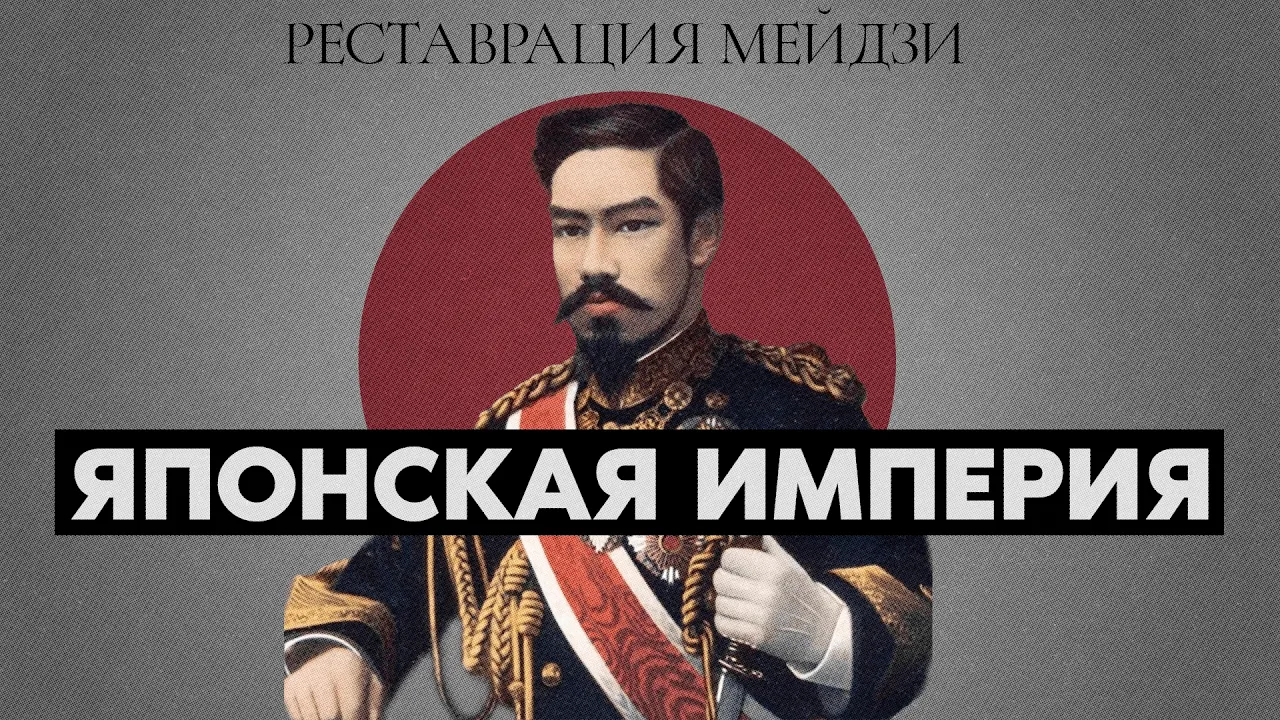
The Meiji restoration 1868-1912 The victors of the Boshin War, the Satsuma and Chōshū domains, became the leaders of reform, driving Japan towards a period of rapid modernization known as the Meiji Restoration. Their policy of “sonnō jōi” was quickly replaced with that of “Bunmei Kaika,” meaning ‘civilization and enlightenment,’ and “Fukoku kyōhei,” meaning ‘enrich the country’. The Meiji Restoration was an incredible transformation whose initial primary objective was to thwart the colonization of Japan by Western nations. Japan sought to use the best aspects of the western world while simultaneously promoting “fukko” to restore the cultural values of Japanese antiquity. In order to usher in seismic social and technological evolution, the new Meiji government had to learn from the Western world. To do this, they sent forth the famous Iwakura mission of 1871-1873.
After the Boshin War, the Daimyo surrendered their armies to the Emperor, and many were reappointed as governors of prefectures, formerly known as Hans. The prefectures would be governed by appointed bureaucrats from the new centralized government, which had been fully established by 1871. This new Meiji government sought to strengthen the national identity of Japan and established a standard language, “hyōjungo,” to replace the many variant dialects spoken throughout the country’s many regions. The Meiji government also allowed for the creation of local assemblies, which provided the common people opportunities to participate in politics, but importantly not to have the ability to challenge the authority of the government. When writing their new national constitution, the new Japanese government was picky about which Western nation to model it on. The United States Constitution was rejected for being to liberal, France and Spain’s models were considered too draconian, while Britain’s Westminster system seemed too unwieldy and granted too much power to parliament for their liking. Ultimately, the legal structure of the Reichstag of the new German empire proved to be the best fit. A cabinet was formed in 1885, headed by Itō Hirobumi as the first Prime Minister of Japan. The cabinet was aided by foreign advisors, mostly Germans, who helped their Japanese colleagues build a model that balanced the sovereign power of the Emperor with an elected legislature that could limit his power when necessary. The Meiji constitution of 1889 came into effect in 1890 and interestingly dictated that sovereignty resided in the Emperor rather than the people. The Emperor united within himself all three branches of government and he alone commanded the new Imperial Japanese Army and Imperial Japanese Navy. There were many ambiguities in the constitutional system revolving around cabinet selection and the relationship of the cabinet to the diet that would contribute to the future militarization of Japan in the 20th century.
The abolition of Shoguns, Daimyo’s and “Shinokosho,” Japan's feudal caste system, meant an end to the Samurai class, rendering everyone into a commoner who could pursue their ambitions as they saw fit. Ōmura Masujirō the former Daimyo of Chōshū and rival of Saigō Takamori was appointed “Hybou Daiyu”, vice minister of War. His task was to modernize the Japanese military, and this required the conscription and military training of commoners. The samurai had thus lost their monopoly on war and their special societal privileges. Samurai had previously been paid stipends, but there were 1.9 million of them and it was simply too expensive. Thus, these allowances were gradually abolished and all ex-samurai lost anywhere between 10-75% of their income. Many ex-samurai joined the new military, became businessmen and joined other institutions. However countless also fell into unemployment and poverty, unable to cope with the new age.
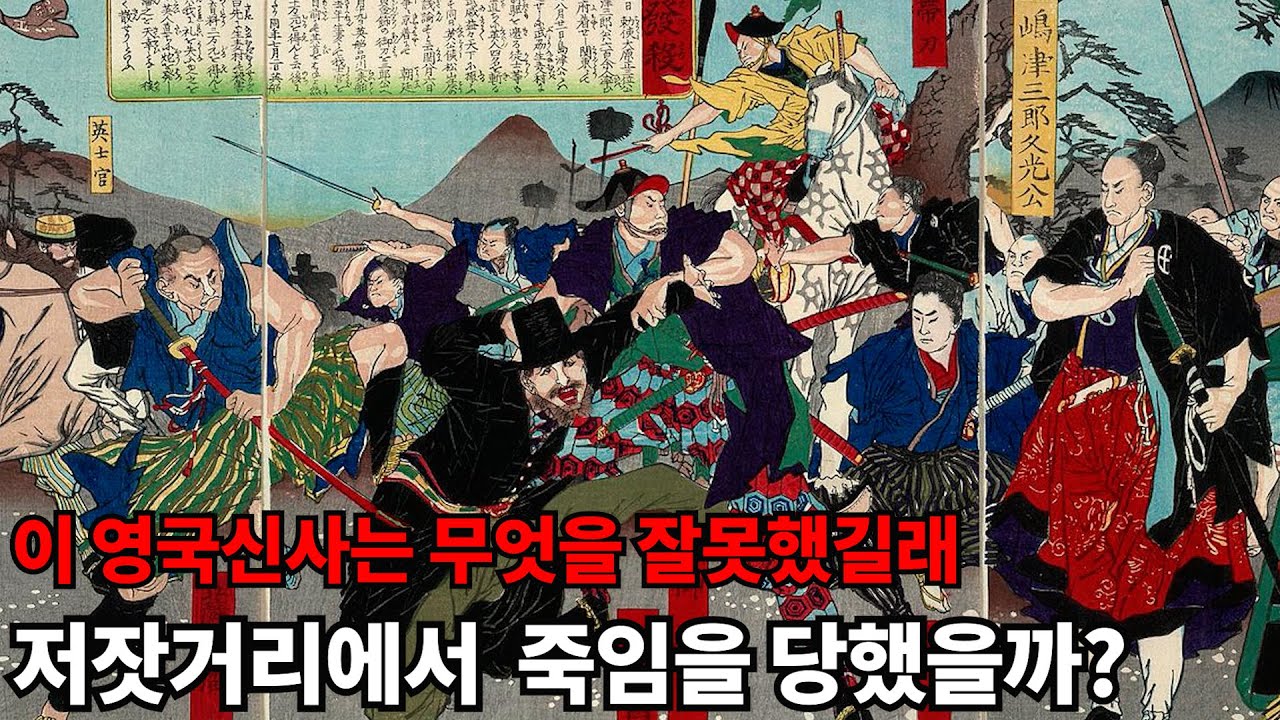
Saigō Takamori sought to help the disenfranchised ex-samurai and after a breakdown in relations with Korea after the Seikanron debate of 1869, he proposed a military expedition into the peninsula. One reason for this was to provide income to the disenfranchised samurai by giving them something to fight, and give them land to occupy Korea, like the Daimyo had once done in their former hans. This proposal was rejected because Japan was not nearly modernized enough to take on such a feat at the time. This rejection was one of the factors that pushed Saigō into unleashing the Satsuma rebellion of 1877. Ultimately Saigō and his fellow samurai lost their lives in the battle of Shiroyama, putting a final end to the Samurai, once and for all. However, the bushido code the warrior caste had long lived by would later be resurrected, albeit as a bastardized version of its original feudal from.
A major reason the Satsuma rebellion failed was because of the modernization of the Japanese military. In these new armed forces, commoners were conscripted for a four year mandate, and in 1872, the military was divided into the Army ministry and Navy ministry. The initial model for the military was built off the initial military reforms the Tokugawa Shogunate's relationship had undergone with French support. The French resumed their advisory role between 1872-1880 when they established the first school to train and educate Japanese officers and NCO’s, trained infantrymen using french rifles, created an arsenal for munition manufacturing, and created the military academy for Army officers in Ichigaya. However, after France’s defeat in the Franco-Prussian war in 1871, the Japanese gradually began shifting their military infrastructure from French to Prussian military models. By 1878, the Third Prime Minister of Japan, Yamagata Aritomo, was pushing to fully adopt the German military system. Another important change during this time was the adoption of the division of the army into two chains of command, operational and administrative.
The Imperial Japanese Navy was also originally influenced by France, but by 1870, an imperial decree determined Britain’s navy would be the new model upon which Japan’s maritime power would be developed. The Douglas Mission of 1873-1879 laid the foundations for Japanese naval officer to be trained and educated in the British fashion. 16 Japanese trainees were also sent abroad to Britain and the United States to study the naval sciences in those countries. The Meiji government began building 48 warships in 1882. Although France was no longer the main architect of Japanese modernization, it would still influence the Imperial Japanese Navy through the Jeune École doctrine of favoring smaller and faster warships such as cruisers and torpedo boats to face larger warships. In 1882, a imperial rescript called for the unquestioned loyalty to the emperor by the armed forces, which indirectly meant high ranking military officials were given direct access to the emperor and authority to transmit his proclamations directly to the troops. This would blur the lines between political and military leadership, a contributing factor to Japan’s entry in the Second Sino-Japanese War. The Japanese military got their baptism by fire in 1874 during a military expedition against Taiwan, which caused a minor conflict with the Qing dynasty. Both the IJA and IJN would see further actions during the First Sino-Japanese War of 1894-195 and the Boxer Rebellion of 1899-1901.
The Meiji Restoration represented revolutionary changes not just in the military but in civilian society too. Education was remodelled from the ground up, with school curriculums heavily influenced heavily by America, Prussia and then Germany. Three types of schooling emerged: elementary, middle and university. In 1872 there was an attendance rate of 28%, by 1878, it was 40%. A centralized school system gradually formed, mobilizing students to serve their nation, which entailed economic and political roles in an industrialized society. During the Meiji era, over 210 elementary, 32 middle and 8 university school districts were created, and by 1912, 98% of the population was being educated. The education system sought to take the best aspects from the western world while simultaneously promoting ancient aspects of Japanese culture, such as the Shinto faith. Chinese influences on Japanese culture, such as Confucianism and Buddhism, were gradually suppressed.
The primary role of the educational reform was to prepare the people for their new roles in the industrialized economy. During the early Meiji years, half of Japan’s imports came from Britain in the form of textiles, by 1890, Japanese textiles dominated its home market and were being exported. At the beginning of the Meiji era, 70% of the population was involved in forestry, farming and fishing, accounting for 60% of its economic output, by 1920 the population working in these sectors went from 70% to 50%. Exports dramatically rose between 1872-1915, Japan’s merchant fleet grew, lengths of train tracks expanded, and the government set up model factories in collaboration with entrepreneurs birthing the Zaibatsu business conglomerates, which began to hold significant influence over Japan's national and foreign policies. Being industrialized meant Japan had a need for coal, and this led the government to build factories, shipyards, railroads, mines, chemical industries and munition factories. The government sent thousands of students to Europe and the United States and hired 3000 Westerners to teach modern science, mathematics, technologies and foreign languages. The Zaibatsu and government together guided Japan into the modern world by borrowing the best aspects from the western world. Japan’s economy gradually dominated Asia for manufactured goods, which is quite impressive given Japan's lack of natural resources. Reforms such as unifying currency, modern banking, stock exchanges, communication and law all aided economic development.
Japan began the Victorian age as a feudal society and emerged out of it on the cusp of becoming a world power, a distinction it would achieve by WW1. Japan avoided colonization by adopting aspects of the West but did not become a Western state, retaining much of its ancient traditions and culture. More videos on Japanese history are on the way, so make sure to subscribe and press the bell button. Please, consider liking, subscribing, commenting, and sharing - it helps immensely. Recently we have started releasing weekly patron and youtube member exclusive content, consider joining their ranks via the link in the description or button under the video to watch these weekly videos, learn about our schedule, get early access to our videos, access our private discord, and much more. This is the Kings and Generals channel, and we will catch you on the next one.
Up Next
6:19
The Shogunate System of Japan: History, Structure, and Legacy Explained
@TheDragonHistorian
596.8K views•2016-04-10

33:02
The Great Schism of 1054: Causes and Consequences
@SacredCathedrals
113.5K views•2026-02-19
19:41
The Great Schism: Catholic-Orthodox Rivalry in Medieval Christianity
@KingsandGenerals
2.6M views•2020-02-06
17:05
Understanding the Cold War: Superpower Conflicts and the Road to Détente
@OverSimplified
46.1M views•2019-01-24
Related Study Plans & Knowledge Roadmaps
Structured learning paths in History
history
Byzantine Iconoclasm: Theology, Art & Politics
01Foundations of Byzantium and Early Christian Images
02The First Iconoclasm: Leo III and the Crisis of Images
03Empress Irene, Nicaea II, and the Second Iconoclasm
+ 2 more learning modules
9h5 modules
Explore Roadmap
history
Iranian Revolution (Causes, Events & Legacy)
01The Pahlavi Dynasty and the Roots of Discontent
02The Spark of Rebellion and the Rise of Khomeini
031979: The Fall of the Shah and the Climax of the Revolution
+ 2 more learning modules
8h5 modules
Explore Roadmap
history
Mali Empire: Mansa Musa, Trade & Timbuktu
01Foundations of the Mali Empire
02The Trans-Saharan Gold and Salt Trade
03The Reign and Pilgrimage of Mansa Musa
+ 1 more learning modules
6h4 modules
Explore Roadmap
history
1947 Partition: Politics, Borders & Legacies
01Foundations of British India and the Divide
02The Political Negotiations and the Mountbatten Plan
03Drawing the Boundary: The Radcliffe Line
+ 2 more learning modules
8h5 modules
Explore Roadmap