














Reconstruction (1865-1877) was a pivotal period in American history that served as a referendum on the Civil War's meaning, where President Andrew Johnson's lenient approach to readmitting Southern states clashed with Congressional Radical Republicans who sought stricter controls and protections for freedmen, ultimately revealing the fundamental tension between healing a divided nation and achieving justice for formerly enslaved people.
Reconstruction: Andrew Johnson & the Radical Republicans | History Lecture
Added:The causes, major events, and outcome of the American Civil War, including the economic and social devastation of the Southern states.
Abraham Lincoln's wartime presidency, his assassination, and his initial vision for post-war national reconciliation.
The constitutional separation of powers in the United States, specifically the relationship and potential friction points between the Executive (President) and Legislative (Congress) branches.
The passage and legal scope of the 13th Amendment, which officially abolished slavery except as a punishment for crime.
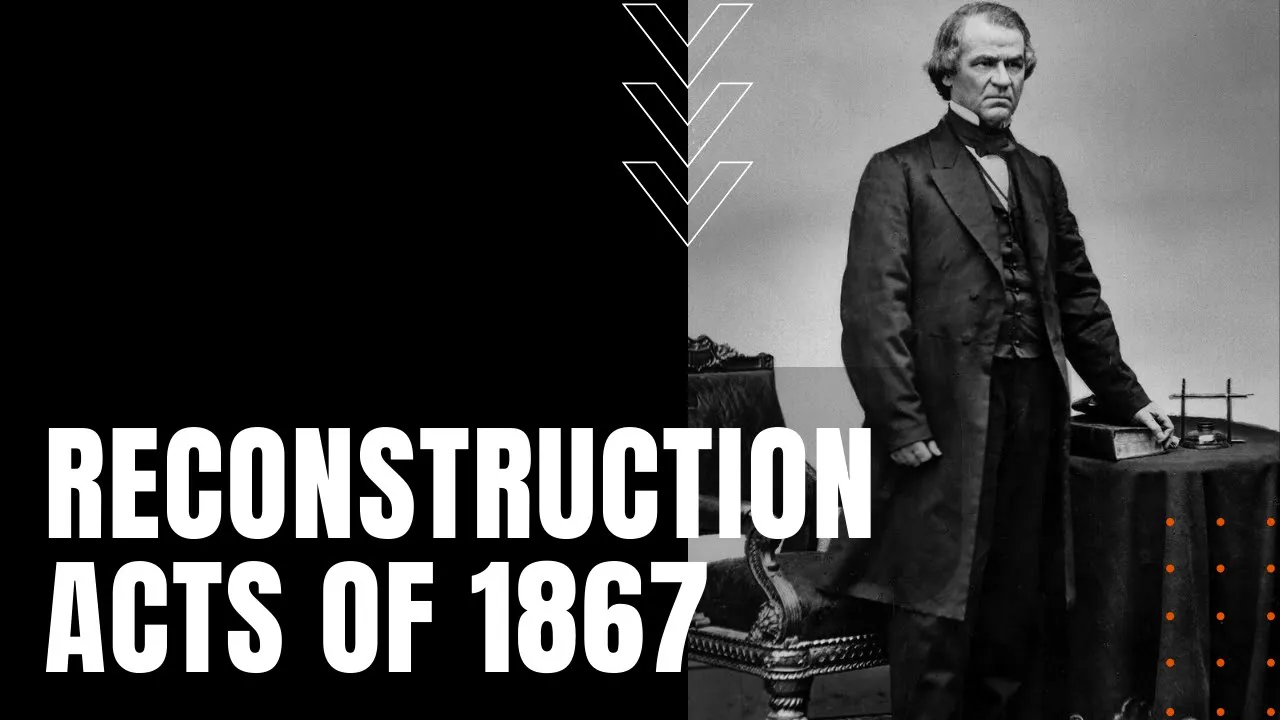
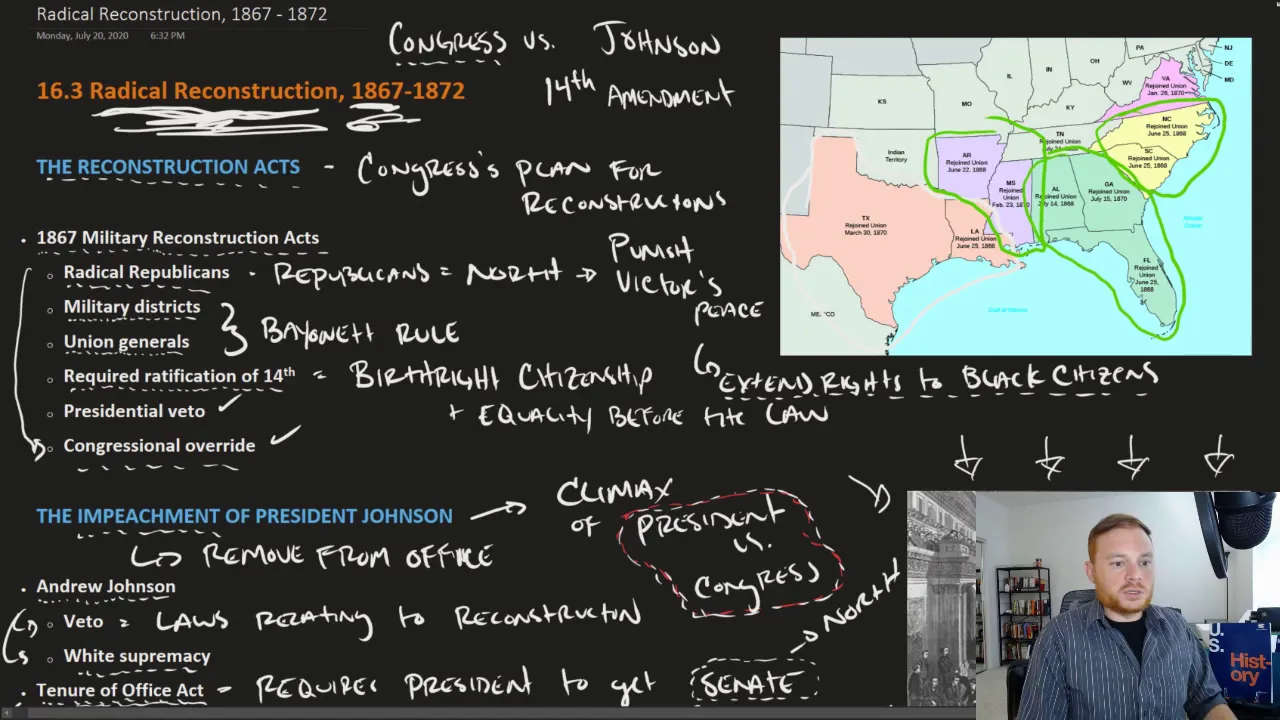
The Reconstruction Acts of 1867 and the implementation of Radical (or Congressional) Reconstruction in the South.
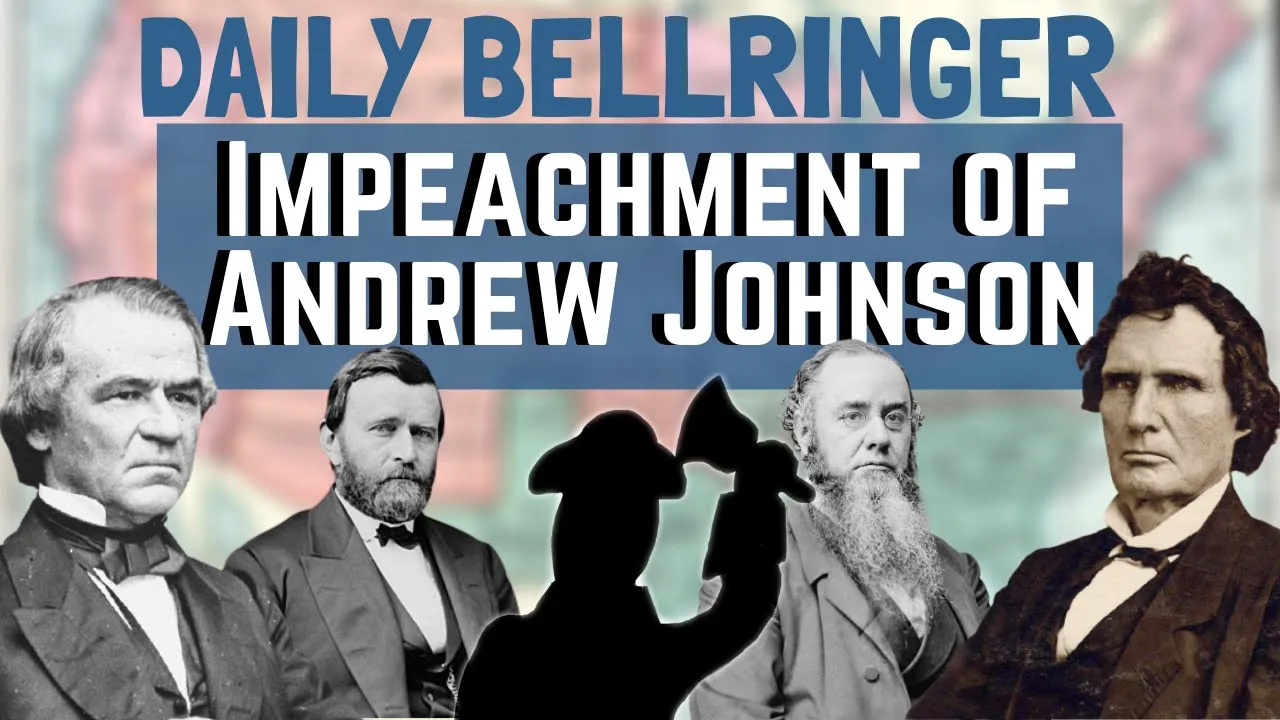
The impeachment of President Andrew Johnson, including the Tenure of Office Act and the constitutional significance of his narrow acquittal.
The drafting, ratification, and immediate impact of the 14th and 15th Amendments, which established birthright citizenship and prohibited racial discrimination in voting.
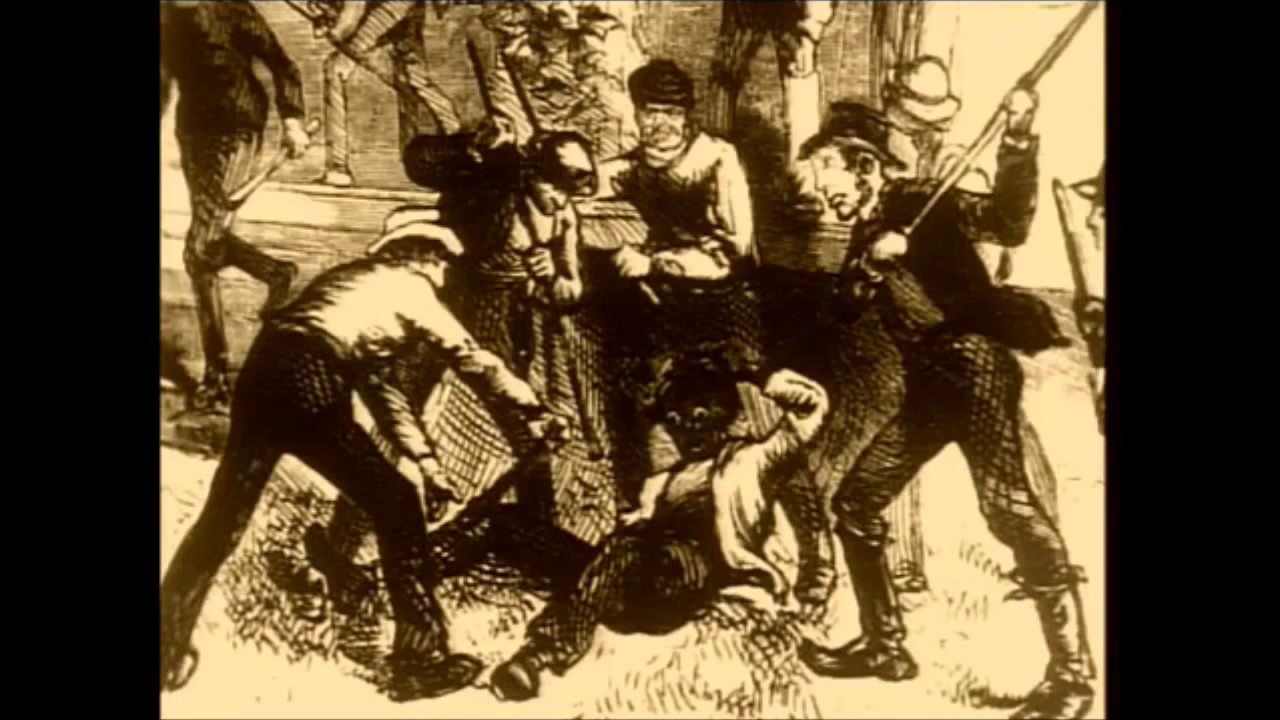
The rise of 'Black Codes', the Ku Klux Klan, and the systemic backlash against newly won civil rights for African Americans.
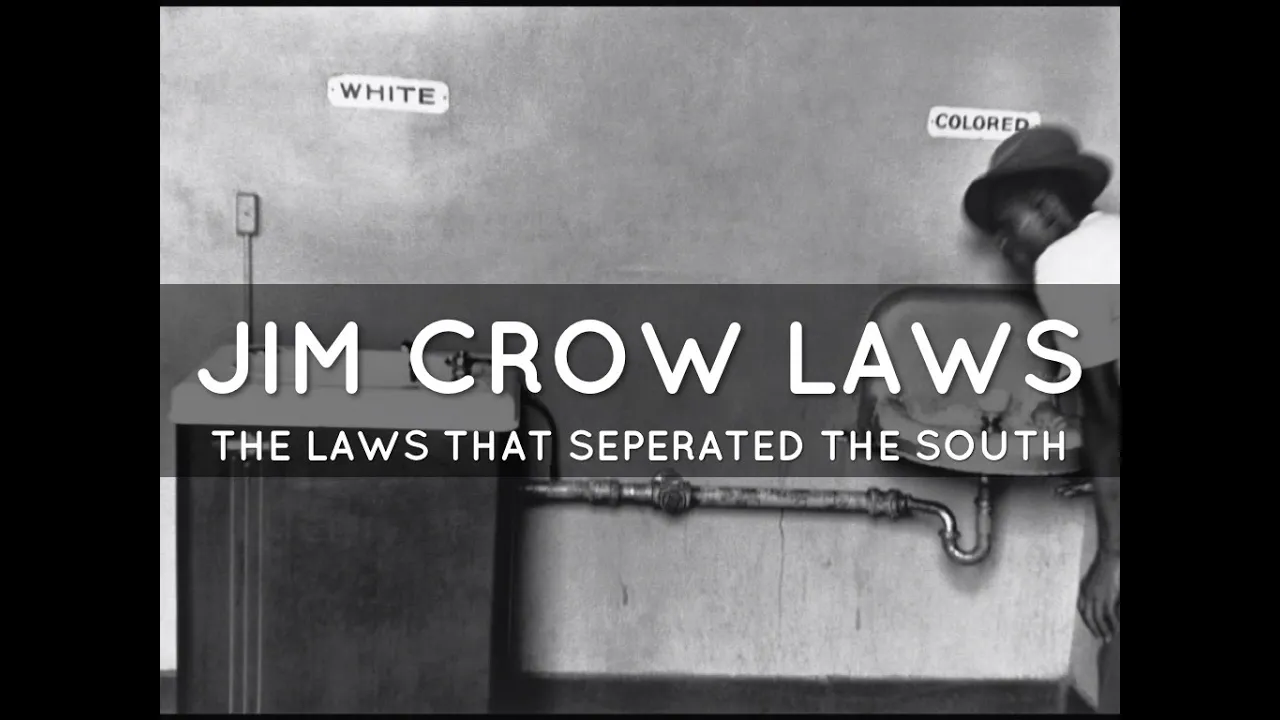
The Compromise of 1877, the formal withdrawal of federal troops from the South, and the onset of the Jim Crow era.
110.9K views687likes50:44Original Release: 2008-11-21
Professor David Blight: Reconstruction is that period of American history that I think still--I know still--is short-shrifted in the ways people tend to learn American history in this society, for whatever the reasons.
Part of the reason may be that it's messy and complicated, and part of the reason may be that it's full of violence, and part of the reason may be that it's just not as easy to find good heroes, and part of the reason may be that it comes after such a total, all out, and some may say, in so many ways a glorious war.
Or as Kenneth Stampp, a great historian, once put it, until 1865 there was glory enough to go around, but after 1865 where was the glory? It's also been a period in which we've almost insisted--and I wonder just how you have learned about this before; if this were a smaller class I would ask you--but it's as though our culture still insists, from this period of our history, that it be a melodrama, some kind of melodrama with, well, a sufficient number of heroes and a sufficient number of villains, and a melodrama that usually ends up with a story of an oppressed South, much in need of our sympathy.
Now, I've put a piece of words up here in front of you.
I walked back to see if you could read it.
I do think most of you in the room can read it.
Just hold onto the papers until the end, please.
This is the Thirteenth Amendment.
We're going to look at the Thirteenth and the Fourteenth today, or at least I'll get you up to the Fourteenth Amendment.
If the Civil War and Reconstruction were a second founding--and I'll put the "if" on that, although for the next three weeks I'm going to argue that--if it was a second founding, a second revolution of some kind, that second founding is in the Thirteenth, the Fourteenth, the Fifteenth Amendments to the Constitution.
Read the Thirteenth with me. It's the simplest, shortest--other than the actual parts of the Bill of Rights--it's the simplest, shortest amendment in the U.S.
Constitution. It outlaws slavery and involuntary servitude, except for imprisonment for crime. And then it has that very, very simple Section Two: "Congress shall have power to enforce this article by appropriate legislation.
That is almost, in some ways, a précis for what Reconstruction will become.
What will constitute appropriate legislation to enforce black freedom? I put it up today in part, too, because just this weekend I was out lecturing in Springfield, Illinois at the new Abraham Lincoln Presidential Library; and it's a magnificent place if you haven't been there. It's a museum full of lots of wax figures. There's at least one life size wax of Lincoln in every bloody room, sometimes two of them, and then they use holograms and he appears all over the place.
It's a little weird and scary. But at the end of the whole day and evening they took me down in the vault and asked me if I wanted to see some special documents and special possessions. They showed me one of Lincoln's three existing top hats, they showed me the cast of his hand; I got to touch.
They showed me personal notes he wrote to pardon deserters from the Union Army. They showed me all kinds of things. But one of the things they showed me was the original draft, the handwritten draft by the clerk of the House of Representatives, of the Thirteenth Amendment, and then signed by "A.
Lincoln" and most of the members of the House, at least those who chose to sign it.
And I realized, "damn, that thing is real."
And maybe someday I can live to see the Fourteenth Amendment.
Back to the Fourteenth in a moment.
Sorry about that, that's not the Fourteenth Amendment, that's just the outline.
Now, a few overall thoughts on Reconstruction, to just give you some hooks to hang your hat on before we look back again at this question of Reconstruction during the war, and then after Lincoln's death the fight that ensues, quickly, between the new president, Andrew Johnson, and the Congressional leadership that the Republican Party--soon now to be known as the Radical Republicans--and what will become a great constitutional crisis over who will control Reconstruction and what Reconstruction will be. Reconstruction, though, is often seen--it is indeed an era of almost gargantuan aspirations, if you think about what they were trying to achieve, and tragic failures.
But it's also an era of sudden and unprecedented legal, political, and constitutional change.
It's also a period of tremendous social and political violence. We've never experienced anything in America--other than sanctioned war, which the Civil War of course had been--we've never, ever experienced social and political violence on the scale which you'll see in Reconstruction.
In fact there's a whole batch of books coming out now on Reconstruction violence, and I suspect this has a lot to do with living in the age of terrorism; publishers are really promoting the subject.
You're reading one of them that's just been out a year or two by Nicholas Lemann called Redemption.
More on that in a week or two. In another way, Reconstruction was one long, ten, eleven year agonizing referendum on the meaning of the war.
What had the war meant? That's what Reconstruction was trying to explain, trying to settle, trying to codify.
What had actually been the verdict at Appomattox?
When Lee surrendered and then Johnston surrendered and the Confederate Army surrendered, what was the verdict?
Who got to determine it? Who had really won the war, and what had they won? What cause had lost?
Now, someone really won this war and someone really lost this war. This is not one of those wars where you can say, "You know, nobody ever wins a war." Nonsense.
Union victory is real, Confederate defeat was virtually total, in a military sense.
But what was the South to lose? One of the greatest challenges of Reconstruction was to determine how you take this massive, national blood feud, of unimaginable scale that's beginning, and then reconcile it into a new nation?
The problem, in part, is that the survivors on both sides in this war would still have to inhabit the same land and the same country. It wasn't as though an actual foreign country had been conquered and defeated.
It was part of North America, it was part of the U.S.--or soon to be New U.S. of some kind.
And the side that lost is going to have to in time inhabit the same government. How?
Where do you go in precedent? Where do you in history?
Where do you go in the Constitution?
Where do you look this up, to put Humpty Dumpty back together again?
Put another way, the task was how to make the eventual logic of sectional reconciliation--knitting North and South back together--how to make the eventual logic of sectional reconciliation somehow compatible with the logic of that revolution that was put in place in 1863--or in other words, Emancipation?
And by logic, I mean you have to put North and South back together, but you also now have to deal with the fact the slaves have been freed to some new status.
Got to do both.
Put another way, how do you square black freedom and all the stirrings of--the possibility at least--of racial equality now with that cause, in the South, that had lost everything--except its faith in white supremacy? How do you fold black freedom into white supremacy? How do you fold white supremacy into black freedom? Can they ever be--could those ever be reconciled? And what if they can't?
Lincoln spoke of a testing in the Gettysburg Address--if you remember the famous speech--testing whether that nation or any nation so conceived could long endure.
The testing of the war in some ways would become easier than the testing the country would now face with Reconstruction.
Or finally put yet another way--and I wrote about this at too much length in a book called Race and Reunion--the challenge of Reconstruction, and it's the challenge we've had ever since, is how do you do two profound things at the same time? One was healing and the other was justice. How do you have them both?
What truly constitutes healing of a people, of a nation, that's suffered this scale of violence and destruction, and how do you have justice? And justice for whom?
Here's what Lincoln said, next-to-the-last day of his life; no, three days before he was shot. It was his last public utterance, from a balcony at the White House.
He was discussing Reconstruction.
His audience that day wanted to just hear about the glories of the ending of the war, and he gave them a little mini lecture on Reconstruction because it's precisely what he was dealing with. He said this: "Reconstruction is pressed much more closely upon our attention now. It is fraught with great difficulty. Unlike the case of a war between independent nations, there is no authorized organ for us to treat with. No one man has authority to give up the rebellion for any other man.
We simply must begin with, and mold from, disorganized and discordant elements, with all.
So new and unprecedented is the whole case that no exclusive and inflexible plan can safely be prescribed as to detail, but important principles must be inflexible."
That's classic Lincoln. "No one plan must we necessarily commit to, but we must stick to some principles." It's Lincoln the pragmatist trying to figure it out. And then he's dead.
But back to wartime, at least for a few minutes.
The debate over Reconstruction, as it will play out through the next three years, four years, really five years, up to 1870/71, is the debate that ensued between Lincoln and his own party leadership in Congress, as early as late 1863. Here's Lincoln's plan again, and you can read all of this in Foner's Short History of Reconstruction, but let me give it to you at least in brief terms.
You'll remember I said the other day that Lincoln wanted Reconstruction to be presidential, lenient, and quick. He was openly friendly to Southerners his whole life, as I suppose everybody knows.
His four brother-in-laws had fought for the Confederacy, et cetera, et cetera. He was born in Kentucky.
He did not really have any kind of personal vindictiveness towards Southerners the way many others in the Republican Party will have; and they'll have reasons to have that. Some have argued, as Kenneth Stampp once did, that Lincoln actually had a deep personal need for personal absolution; that he carried this horrifying burden of all that death, and that he took it as his personal responsibility, and that this charity for all and malice toward none, and the leniency in Lincoln's Reconstruction ideas is somehow rooted in that sense of personal responsibility for all the suffering. There may be something to that.
But his Reconstruction policy, such as he put it in place, at least for awhile, was rooted in his Constitutional philosophy. Lincoln, number one, believed secession had never happened, that secession was essentially impossible, a state could not secede from the Union. He chose language carefully, as a good lawyer. He said as states, the Southern states, the Confederate states, were still in the Union, technically, during the war. Even though they seceded, they were simply, in his language, out of their normal relationship to the Union; whatever the hell that's supposed to mean.
And they fought this total war against the United States but they were not really out of the Union.
Now that's a legal position, rest assured.
He made a distinction between states and governments.
He said that governments may have failed and committed--he never used the word treason--made rebellion against the United States, but as states, an Alabama never ceased to exist.
Okay. He's famous for saying things like "physically we cannot separate."
His idea was to squash the rebellion, let a number of loyal citizens, in one of those seceded states, create a new loyal government, restore that state to the Union as quickly as possible, even before the war ends, by presidential authority, under presidential war powers, and begin a process before you'd ever have a surrender of what he was already calling restoration, or reunification.
He wanted it done by executive authority.
That wasn't necessarily a personal power grab by any means but he wanted to do it under presidential war powers, because he did understand, to the extent anybody could predict the future, that once the war did end, Congress's powers would rise. A president is never so powerful as in time of war.
Now, pause with me for a moment. What they're all thinking about now--Lincoln, the Republican leadership of Congress, anybody thinking about Reconstruction, during the war or even in the immediate aftermath--is really thinking about a set of questions, somewhat like those big questions I started with, but more specifically.
This is what they have to think about now.
And if you think American statesmen have been challenged at other times in our history, how would you like to have this challenge? Three main questions.
(1) Who would rule in the South, who?
Who gets to vote? Who gets to hold office; ex-Confederates, black people, whites who'd been loyal? How do you determine this?
(2) Who will rule in the federal government, Congress or the President, in this unprecedented blank slate set of issues? The country had never faced this before. How do you reconstruct a Union?
How do you re-admit states into the Union?
There's no blueprint in the Constitution.
There are hints, depending on how you interpret it. And (3) what will the dimensions of black freedom be, in law and in practice and in social life, on the ground, in the South?
All the while remembering this all must occur now in these desperate conditions of poverty, destruction, starvation and tremendous untold, as yet not even fully fathomed, bitterness and hatred.
Or let me give you one last little question.
I love asking questions I don't have to stand up right now and answer. Would Reconstruction be a preservation of something old, or the creation of something truly new? And if it's going to be new, how new?
Back to the war years. Lincoln issued, on December 8,1863, his State of the Union or annual message--part of his annual message--what he called the Proclamation of Amnesty and Reconstruction.
It was issued December '63. Remember the dates here, because this first major debate on Reconstruction is going to occur in some of the most terrible months of the war, and yet in Washington they're also having this debate.
There were several parts to this, but three main ones.
It's Lincoln's classic lenient, rapid, moderate and presidential Reconstruction. It's called the Ten-Percent Plan. He, number one, would pardon all ex-Confederates, with a certain list of exceptions.
High-ranking Confederate officials--although he didn't entirely clarify how high ranking--they wouldn't be pardoned, at least yet. He would not pardon those who had resigned commissions in the judiciary or in Congress, to support the Confederacy.
And he put in a clause that said he would not pardon those who could be convicted of mistreating black soldiers, of which there'd been a great deal of, and he was under some pressure to do something about that, by late '63. And then he said when ten percent of the voting population of a given Southern state--and that voting population was determined by how many voters in 1860--when ten percent of the male voting population--because that's the only people who could vote--would take an oath to the Union and establish a new government, then he as president, under presidential war powers, would recognize them and readmit them to the Union, just like that. Blacks were excluded from the entire process. There was no mention, at that point, of any black suffrage.
He wants ten percent. Now, right away members of his own party and Congress are saying, "Wait a second Mr. President, what about the other ninety percent?"
Well Lincoln's idea was if you can establish a pocket of people in lower Louisiana or upland Alabama, or part of Virginia that the Union troops occupy, and you get, if you can get ten percent of that state to take a loyalty oath and elect some kind of little rump legislature that can meet somewhere, like Wheeling, West Virginia, where they did for awhile, then he would call that the real Virginia, or the real Louisiana, and they'd be back in the Union.
And his idea was that you would begin then a political process of reunification. A political process would already be in place, as messy as it might be, as seemingly undemocratic as it might be, before the war would end. This actually happened.
Well he didn't--they didn't get admitted to the Union, but so-called Lincoln governments were established in three states, again where Union armies had significant occupation of the soil of that state--Louisiana, Tennessee and Arkansas--and so-called Lincoln governments were created there, in 1864 and early 1865.
They were pitifully weak governments.
They would've collapsed entirely without federal troops to protect them, and Lincoln did this utterly without consulting with Congress.
And we like to make a great deal of Abraham Lincoln as the greatest president, and he was; a political genius, and he was; magical with the music of words, and he was; et cetera, et cetera, et cetera.
And I was just out at the Lincoln Library where you can be sure Lincoln is God. But not consulting with Congress on this one wasn't the wisest thing he ever did.
Congress began to react with great hostility, in 1864. Some Radical Republicans sincerely believed that these new Lincoln governments were not only wrong and undemocratic, but dangerous, and they wanted much, much more to even consider the reconstruction of a Southern state, on any basis. They were led--they being the Republicans in Congress--by the two men on your right, Thaddeus Stevens on the top and Charles Sumner on the bottom.
Stevens, a Congressman from Pennsylvania who grew up and lived near Gettysburg; fascinating, interesting, driven, passionate, complicated, club-footed man; a brilliant lawyer, and a radical, and an old abolitionist, although he had some complications along the way. Stevens and Sumner.
Sumner the great Senator from Massachusetts--the Sumner who had had the brains nearly beaten out of him by Preston Brooks in the Senate in 1856, who left the Senate for nearly three and a half years and went all over the world to spas to try to put his head back together, including spending most of a year in Switzerland--was very, very much back in the game during the war; and he rose in power, of course, as the emancipation issue rose to the fore, as did Stevens.
And the two of them led the response to Lincoln's ideas on Reconstruction from the two different houses of Congress.
They had different names for their proposals, but they essentially argued the same thing; although Sumner's, you could argue, was even more radical. Stevens called his approach, or his constitutional approach, conquered provinces.
He said not only did the Southern states secede from the Union, they should be reverted to the status of unorganized territories; or, even further he went, he said now they're not only going to have to be put under territorial status, but they should be treated like a foreign nation that the United States has conquered, a conquered province of a foreign land.
They had been reduced by force of arms, they had made war upon the United States, and under international law, Stevens argued, they should be treated as, quote, his words, "conquered foreign land," subject to whatever the United States shall choose to do with it. Sumner, for his part, called this theory--it was even more direct--State Suicide.
That was pretty clear. He said not only had the Southern states seceded from the Union, they committed political suicide. They do not exist.
They experienced what he called, in his words, "instant forfeiture of their status as states."
They therefore must be reverted to what he called "the status of unorganized territories," as though Alabama was back in 1820, Virginia was back in 1787, or whatever year they officially became a state--I'm sorry, before that even, during the Revolution.
And therefore, in both cases, Stevens or Sumner's plan, all authority to re-admit any Southern state or determine the process, the means by which, the laws by which a state would be re-instituted into the Union, came under Congressional authority because only Congress has the power to readmit new states. Take that, Abraham Lincoln.
They issued this theory to Lincoln in what was known as the Wade-Davis Bill in July--4^(th) of July to be exact--1864.
Note the date. This is in the midst of the stalemate in Virginia; it's just after Cold Harbor; Grant has just begun to put Petersburg under siege; the terrible bloodletting in Virginia is coming in and the thousands and thousands of names on casualty lists, and Congress issues what's known as the Wade-Davis Bill, named for Senator Benjamin Wade of Ohio, a strong anti-slavery Radical Republican, and Henry Winter Davis, a Congressman from Maryland, also of at least moderate anti-slavery credentials.
What you have here is the blueprint of Radical Reconstruction, at least the beginning blueprint. The Wade-Davis Bill said, they took--the first part of it--was they took Lincoln's Ten-Percent idea, ten percent of the voting population of a Southern state, and they required a majority of white male citizens of a Southern state who must, secondly, take what the Radicals called an Ironclad Oath, and that oath said that they had to get up and swear they had never participated in the Confederate war effort or aided and abetted it.
Now, immediately you're wondering how in hell are you going to find a majority of the white males of Georgia, or Alabama, or Mississippi, or any other Confederate state that can get up and take that oath?
The answer is you couldn't. To the congressional leadership that was just fine for now. The Ironclad Oath was a political message, it was a symbolic oath.
They knew you'd never get a majority of whites who could take this. The third part, they said all officers above the rank of lieutenant, and all civil officers of all kinds in the Confederacy would not only be not pardoned, they would be disfranchised forever, declared not--the actual language in the bill was, "not a citizen of the United States."
It was almost as though they were giving every office holder, every officer, lieutenant and above, who was still alive in the South, an invitation to leave the country, because if they stayed in America they would be men without a country.
They did not set up, in spite of the lore that's set in over the years, a plan of arrest, indictments, and executions.
They didn't do that at all. But they did decide they were going to treat the Southern states as conquered enemies.
They sent the bill to Lincoln, and Lincoln did what many presidents have done, he gave it a pocket veto.
You know what that is. He simply let the bill die without either signing it, or vetoing it, or to some extent even answering it; although he did finally answer it.
He answered it actually four days after the bill was delivered to him, in what he titled "The Proclamation on the Wade-Davis Bill."
And this was a classic Lincolnesque statement as well.
It was conciliatory. He thanked them profusely for their work on this sensitive and terrible issue, and he didn't completely reject it.
He refused, he said, to be, quote, "inflexibly committed to any one plan."
"Okay Abe, but what are you committed to?"
is what congressmen began to say.
He was verbally willing to listen, but he really did not placate the Radicals. They had an impasse here, a big impasse. And note how deep the impasse is, it's constitutional. Who's going to run Reconstruction? Me, the president, or you the Congress? Well, the congressional leadership followed Lincoln's little Proclamation on the Wade-Davis Bill with what they called The Wade-Davis Manifesto, and they published it in national newspapers.
It was published on August 5,1864.
It was an unprecedented, vehement attack on a sitting president by the leadership in Congress of his own party.
They lambasted Lincoln. They attacked him on two grounds. They said his approach to Reconstruction was simply way too lenient--and they're arguing this now in August of 1864, with these thousands upon thousands of casualties flowing in.
This is the very time Lincoln comes to believe he's not likely to be re-elected. And there were some members in particularly the Radical wing of the Republican Party who'd been laboring to dump Lincoln from the ticket all summer, and probably could've succeeded in doing it if there wasn't so much at stake.
And they went a second step. They actually accused him of usurpation of presidential powers, an impeachable offense if anyone ever cared to take it any further step.
Here's the key, as the dispute emerged that summer. Lincoln viewed Reconstruction as a means to weakening the Confederacy and winning the war.
Think of it as a political strategy, that ten percent idea, trying to get some fledgling little state legislature and government, somehow get two or three of them into the Union. It was a strategy, and not a blueprint written in stone for the way Reconstruction would always be. But to the Radical Republicans, they viewed this as a much more far-reaching transformation in a building really of a new nation, when and if they could win the war. They really were at an impasse.
Now you know from our previous lectures and your reading that the fall of Mobile Bay on August 5, the same day as the Wade-Davis Manifesto, Admiral Farragut took Mobile Bay. That had a tremendous impact on public opinion. Then on September 3 or 4 Atlanta fell. It had an even greater impact on public opinion. And of course you've got the presidential race now happening in the fall, and Lincoln is re-elected. This impasse on Reconstruction, though, basically just sat there until Lincoln's death.
In the meantime he cooperated, and so did they, on two tremendous pieces of legislation, on two great enactments. One is the Thirteenth Amendment, which we just discussed; and I want to come back to that in a moment.
Well actually I'll mention it now.
The fact that it got passed is fairly remarkable; that it got passed at all is fairly remarkable.
It is, first of all, an amendment that Lincoln himself by late '64 began to advocate, especially after his re-election, vehemently advocate, and it's something exactly that the Radical Republicans want. They were absolutely on the same page on it. And the reason Lincoln was--well he had moral reasons to believe slavery should now be eradicated in the Constitution, make no mistake.
But he also had reason to want this Constitutional Amendment because he feared, and rightly so, that if the war ended, with only the Emancipation Proclamation as the legal sanction for all those freed slaves, that there would be nothing to stop Southerners from thousands upon thousands of law suits in federal courts, suing under Fifth Amendment for their property. And it would've--it did happen, to some extent anyway, but if you can get it in the Constitution as a constitutional amendment, then they would have no right to sue for property that is no longer property.
So a lot was at stake. They wanted a Thirteenth Amendment because of the potential invalidity of the Emancipation Proclamation legally; they wanted to remove legal doubt.
And you'll remember that the Proclamation had only freed slaves in the states in rebellion.
Technically slaves in Kentucky, Missouri, Delaware, Maryland, were still in a kind of limbo.
It passed the House of Representatives on January 31,1865, but it was not easy. You might think you live in the United States of America and of course there'd be a Thirteenth Amendment--finally, of course, we would outlaw slavery in the Constitution. The vote was 119 to 56; it passed by two votes--it takes a two-thirds majority for a constitutional amendment--it passed by two votes.
Lincoln began to twist arms; he began to have personal meetings with a select little list of Democrats.
They didn't have a two-thirds majority of Republicans.
They needed some Democrats to vote for this.
And by far the majority of Democrats wanted nothing to do with outlawing slavery in the Constitution, but about eight of them came over.
And on the day that it was passed there was unprecedented rejoicing in the House of Representatives.
The whole hall was full; congressmen, we're told, started yelling, crying, hugging each other, dancing on the tops of their desks--God knows why, in part because of the importance, the gravity of the issue, and in part perhaps because they'd lived through so much agony in the war, they truly had something to celebrate. You have to go to individual diaries and letters to really see it.
There was a Republican who recorded in his diary that day, quote, "Members joined in the shouting and kept it up for some minutes. Some embraced one another.
Others wept like children. I have felt ever since the vote as though I live in a new country."
Frederick Douglass's son, Lewis, veteran of the 54^(th) Massachusetts, in his uniform was sitting in the balcony, on the afternoon the Thirteenth Amendment was passed. His father was back home in Rochester. He immediately wrote his father a note, that I've read. It said, "Father, you should've been here today. Today was your day."
And then at the same time that Congress, with Lincoln's strong approval, worked on a bill to create the Freedmen's Bureau, an unprecedented agency in American history, certainly to that time. Formerly called the Bureau of Refugees, Freedmen and Abandoned Lands, it passed Congress on the 3^(rd) of March, 1865, just a day before Lincoln's Second Inaugural. It was social reform by military force. Americans had never done this before--a national, federal, social welfare agency, in a land that had lived and breathed laissez-faire government; in a land that had lived and breathed this idea that governments don't provide food for people, people provide food for people, healthcare, schools. Well the war, of course, had forced a new kind of history.
The basic purposes of the Freedmen's Bureau, when it was set up, was to aid refugees and displaced people, black or white.
And the estimate--and I may have used this before--the estimate on the ground in the South, by late winter 1865, was that there were at least a quarter million totally displaced starving white people; much less the four million soon to be liberated slaves.
The Freedmen's Bureau was to provide all kinds of physical supplies, medical services, schools where it could.
Its purpose was also legal, to supervise contracts between freedmen and employees--more on that later.
And its job--and this was an impossible task--but its job and its title was to manage confiscated and abandoned land.
Yes, property. But who really owns it now?
If the Union Army took your plantation, who owns it?
And there is nothing more primal, of course, especially to Americans, than property.
Now, more on the Freedmen's Bureau later, but it was a terribly important piece of legislation.
It passed with majorities in both houses, of course, because the Republicans had those majorities, and Lincoln gladly signed it, and it established, at least, an agency to be put in place once the war was over.
Now, let me take the last few minutes and set up what is now to happen between old Andrew Johnson and this same leadership of the Radical Republicans once Lincoln was gone.
This is the classic struggle of Reconstruction, Johnson and the Radicals. Now first of all, how did Andrew Johnson get on Lincoln's ticket?
Why did Abraham Lincoln choose Andrew Johnson as his running mate? I've often put this to major Lincoln scholars. Now look, I confess, I'm a great admirer of Lincoln, like most people.
But he couldn't do everything perfectly.
And he gave us Andrew Johnson, and we've never held him responsible for that. And I'm not willing to give him a total pass on that one, because Andrew Johnson ranks down there just about minus two on the list of presidents, I think, of all time.
Well how's that for directness? Sorry about that.
If you're an Andrew Johnson fan, you're lonely.
[laughter] He's on the ticket in '64 because--you know this?--he's the only senator from a seceded Confederate state who didn't secede with a state.
He stayed in the Union, from Tennessee.
He's a complicated guy. God, he could've been interesting. He had some big flaws.
I'm going to leave you with a little background on Andrew Johnson. As you can tell from the syllabus I've put myself nearly a full lecture behind in the course, but don't you worry, because we're planning for Reading Week a special review session when I can give another lecture.
Aren't you happy? There's an old saying about Andrew Johnson that, quote, "old Andy never went back on his raisin'," his raising up.
He's from East Tennessee. He was born in North Carolina.
He grew up illiterate. He once owned eleven slaves, although he did free them. He moved to East Tennessee with his wife, Polly, who taught him his literacy.
He grew up a Jacksonian Democrat.
His God was Andrew Jackson. If lovers of the New Deal believe FDR was somehow the son of God, as my grandparents did, Andrew Johnson thought Andrew Jackson was the son of God.
In 1861 he was the only Southern senator who did not secede with his state. In 1862 Lincoln appointed him the War Governor of Tennessee, in the occupied parts of Tennessee, out of which Lincoln eventually was going to--he did try to create a new government.
Andrew Johnson was his governor. It took tremendous courage to be a Unionist in Tennessee during the Civil War.
There was a lot of Unionism in East Tennessee, and in '64 Lincoln needed a border state running mate.
After all, who had been his running mate before?
Totally forgettable I realize; no one ever remembers the vice-presidents from--anybody remember vice-presidents from the twentieth century? Only those who get Nobel Prizes do we really remember I guess. But Hannibal Hamlin of New Hampshire had been Lincoln's running mate.
Now what good is a New Hampshirite on the ticket in '64? A New Hampshirite was useful in '60 but not in '64. So he dumps Hannibal Hamlin, in spite of the alliteration of his name, and goes for a political choice. What could send a better Unionist message to the border states than Andrew Johnson, the only Southern senator who doesn't secede from his seat?
Well, all was pretty well, at least until the inauguration. Andrew Johnson, unfortunately, was drunk at his inauguration as Vice-President of the United States.
Now his explanation for that is that he had a terrible tooth infection and he'd been sloshing down whiskey all morning.
But they literally had to stand him up, prop him up and point him in the right direction, and practically raise his hand.
On the day he was inaugurated, when Lincoln delivered the Second Inaugural, AJ had to be removed to a back room. Not an auspicious beginning.
Last thought. By far the most important thing about Andrew Johnson though, in spite of his early comments when he said, "Treason must be made odious," and Charles Sumner said, "Oh, he's speaking my language," the thing we must know about Andrew Johnson is number one, he was a virulent white supremacist, he was an ardent states' rightist. Yes he was a states' rightist and a Unionist. It's entirely possible to be that. He also hated the southern planter class. He was never anti-slavery.
He was not only not anti-slavery, he was an open racist. He believed the United States should remain, in his own words, "a white man's country forever."
And he had a disposition that could best charitably be described as hypersensitive and obstinate.
He was not a flexible politician.
Well, I'll leave you with old Andrew Johnson, now into the story and messing things up, and I'll see you Thursday.
Up Next
5:37
Reconstruction Amendments: 13th, 14th, 15th Explained
@thedailybellringer
84.2K views•2021-01-04

33:02
The Great Schism of 1054: Causes and Consequences
@SacredCathedrals
113.5K views•2026-02-19

46:32
Dutch and British Exceptionalism: Why They Rejected Absolutism | European Civilization (HIST 202) (56 chars)
@YaleCourses
183.7K views•2009-09-02
17:05
Understanding the Cold War: Superpower Conflicts and the Road to Détente
@OverSimplified
46.1M views•2019-01-24
Related Study Plans & Knowledge Roadmaps
Structured learning paths in History
history
Byzantine Iconoclasm: Theology, Art & Politics
01Foundations of Byzantium and Early Christian Images
02The First Iconoclasm: Leo III and the Crisis of Images
03Empress Irene, Nicaea II, and the Second Iconoclasm
+ 2 more learning modules
9h5 modules
Explore Roadmap
history
Iranian Revolution (Causes, Events & Legacy)
01The Pahlavi Dynasty and the Roots of Discontent
02The Spark of Rebellion and the Rise of Khomeini
031979: The Fall of the Shah and the Climax of the Revolution
+ 2 more learning modules
8h5 modules
Explore Roadmap
history
Mali Empire: Mansa Musa, Trade & Timbuktu
01Foundations of the Mali Empire
02The Trans-Saharan Gold and Salt Trade
03The Reign and Pilgrimage of Mansa Musa
+ 1 more learning modules
6h4 modules
Explore Roadmap
history
1947 Partition: Politics, Borders & Legacies
01Foundations of British India and the Divide
02The Political Negotiations and the Mountbatten Plan
03Drawing the Boundary: The Radcliffe Line
+ 2 more learning modules
8h5 modules
Explore Roadmap