

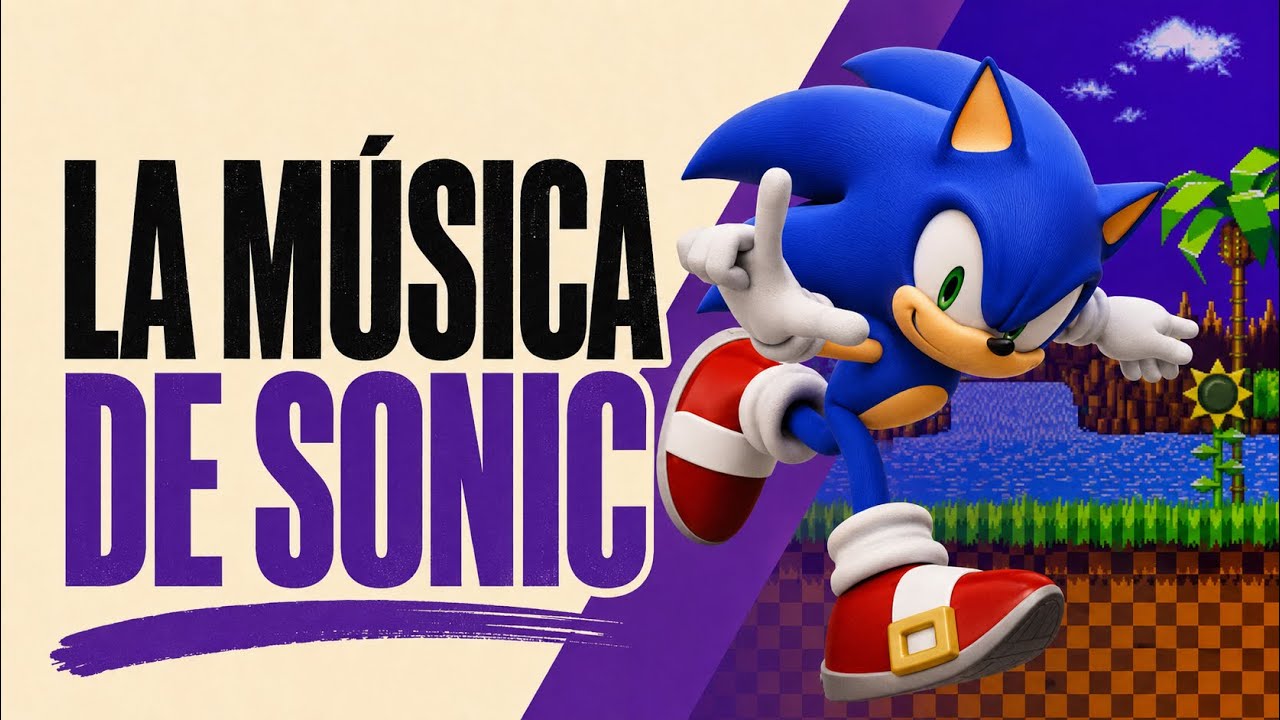
















A game's soundtrack can achieve artistic excellence independently of its gameplay quality, as demonstrated by Sonic Lost World, which features one of the most celebrated soundtracks of its year despite being widely criticized for its poor platforming mechanics and frustrating gameplay experience; this phenomenon reveals that music in video games can create emotional resonance and artistic value separate from the interactive systems that accompany it.
Sonic Lost World Soundtrack Analysis: Why the Game's Music Stands Out
Added:Basic principles of ludomusicology, specifically how music and sound design function within video games to guide player emotion and behavior.
An understanding of the Sonic the Hedgehog franchise's musical legacy, which is historically renowned for shifting genres from synth-pop and rock to orchestral arrangements.
Fundamental music theory terminology, including concepts such as leitmotif, orchestration, tempo, and genre-blending (e.g., big band jazz and electronic fusion).
The concept of aesthetic contrast in interactive media, where individual artistic assets (like audio or visual art) can diverge significantly in quality from core mechanics (gameplay).
In-depth analysis of dynamic and adaptive audio systems in video games, exploring how music shifts in real-time based on player input and game state.
Comparative case studies of other video games renowned for exceptional soundtracks despite critical or commercial gameplay failures (e.g., Sonic the Hedgehog 2006 or Chrono Cross).
Study of composition techniques used by Tomoya Ohtani and Sega's sound team, focusing on how they blend live orchestral recordings with synthetic elements.
Practical application of game scoring principles, analyzing how to compose music that maintains player engagement during repetitive or frustrating gameplay segments.
10.4K views691likes19:15Original Release: 2026-01-16
Gosh, in the year 2025, I committed to playing through as many Sonic games as possible, and I plan to continue that into the foreseeable future as I go through each of the Sonic games. That said, I have hit a bit of a wall with Sonic Lost World here. I was thinking that all of the things I heard about Sonic Lost World were exaggerations and not true. No, they were true. Wow, this game is rough. No sense of speed. I I get motion sick just playing it. trying so hard to be Super Mario Galaxy, but uh failing in so many ways. The platforming is thick. It feels rough to play. It is kind of uh unbearable. Actually, I have to tell you the truth. I really rarely dislike games, but Sonic Lost World is a game that I truly feel is deserving of the word mid, as much as it pains me to say that. But you know what's not mid is Sonic Lost World's soundtrack. Holy hell. Listen to this.
>> [music] >> Daddy, daddy daddy.
[music] Sonic Lost World is so incredibly average and yet its soundtrack is probably one of my favorites. In fact, one of my most played soundtracks of the year besides the incredible Sonic Unleashed soundtrack was in fact Sonic Lost World. That was Owl Lights. I mean, listen to the listen to this. Listen to this incredible desert desert theme.
Da [music] da da da da da.
I love this harmony here.
Papa [music] P. [music] >> [music] >> It's great. You know what it is? Because it kind of defies the standard thing that we think about when we hear of desert themes in video game music. Like, yeah, it does have the modal movement. I believe that's the frigian mode, that wonderful aesthetic, the desert aesthetic, but it also like kind of takes it and does something really fun cuz it gets a little bit of this like sky quality. Whether or not that's actually sky, I don't know. But like I think I think using trumpets and this a brassy sound in there is just really incredibly fun to listen to. So it's interesting because I never really got the sense of speed in Sonic Lost World, right? But what I do get is speed within the melodies of these uh of these pieces from the soundtrack which is crazy. So even though like the whole thing Oh god.
And then you know Desert Ruins zone one and there's the one zone with all the worms. You know, the problem too is the platforming is so stodgy. There's a lot of dead zone in the stick. So like you're jumping it takes forever to jump.
It's like it kind of the game also like is constantly it feels like it's fighting you at all times. So you never get this sense of like you're in control. It always feels like things are super random whether or not you actually hit a jump or find a path. It's so frustrating. Desert Ruin Zone 1 is absolutely awesome. The reason why I even decided to start listening to the music of Sonic Lost World was because of Honeycomb Highway, which actually Honeycomb Highway as a level I actually don't mind. And I think like that's also my point when I say that like it's mid or average. I don't mean like it's mid it's swap. I don't I don't mean it that way. What I mean to say is that like the levels just feel incredibly average.
Like there's nothing compelling about them per se. There are certain like the juice archipelago kind of interesting cuz there's like you know when the when the apples fall into the spinning blades and they shoot out that explosion of of juice. Like I guess that's cool cuz then like it's visually pretty at times but like even Honeycomb Highway it's like bro I can't even keep track of what the hell I'm doing half the time. Then you're like turning the corner and then you're supposed to move in between lanes but then moving in between lanes.
Anyway, listen. Listen to how good honey Honeycomb highway is.
Absolutely love the percussion in the very background. This is some nice like 70s flare kind of disco sort of. [music] Love the again the brass is for divine.
Love the [music] rhythmic accentation.
Little accent with the [music] trumpet there.
A little bit of almost uh drum and bass kind of. Not really.
[music] Love that.
So again, like even this is like sort of this like somewhat of a fusion style where you get like the real I just love the rhythm too.
And there's a kind of like a celebratory nature in that. And it's also interesting because the music doesn't always necessarily fit the visuals. I mean sometimes it does. It's also tough with Sonic Lost World because you're literally like going down a straight line. Like the whole thing is just going straight and you're like, "Okay, for instance, Cab Bottom. My thoughts are a little jumbled, but like listen, listen to Cabbottom.
[music] I love the percussion in the background.
>> [music] [music] >> Gorgeous piano, drum and bass.
[music] Is that is or is it four on the floor?
[music] Like, do you understand this is gorgeous? This is a single straight line track. There's nothing happening in this. This is literally a straight line.
Like, that's that's what this this is.
Honeycomb highway has a little bit more complexity because you actually have to move angles, but it's still just like a straight shot down, right, until you get to the boss. So, it it's it's just mind-blowing to me how like incredibly average the play the play experience is because Seab Bottom Segway is a gorgeous piece of music that is not accompanied by gorgeous gameplay. It's It's just shocking. It's just shocking because like visually it's not even bad. Like visually, it's kind it's nice. I'm so perplexed by Sonic Lost World because it doesn't have any of the like meat on it.
It's like a a terrific piece of of of bread, which would be the music, but the gameplay meat, it's not there. And like Honeycomb Highway is a blast. Like I mean like like you know, [music] you get real nice accentation with this flute, you know, and you get this [music] real nice percussion segway.
Awesome trumpet accents up there.
[music] And like honestly like this is a kind of I I don't really like this style of of of music really. It's not really my my cup of tea. I'm not really crazy about sort of disco ' 70s ' 60s7s mostly 70s.
Like I I don't really vibe with this.
And yet Honeycomb highway I'm just like love it you know. But again, Cabba bottom segue too. It's just like so like ethereal and like you know peaceful [music] kind of even though it has nice rhythm and momentum.
really [music] nice doubling with the piano and the violin sound or, you know, the string sound. And and honestly, the funny thing is that like there are levels that are beautiful. I mean, when you start Windy Hill Zone 1, you're greeted with like a kind of like a visual thing that makes you feel like, "Wow, what is this? This actually has potential to be. This is so interesting.
Wow, Super Mario Galaxy, but Sonic." And then it's just everything that Super Mario Galaxy does, which I've only played a couple levels of, but but worse. And I don't really necessarily like Super Mario Galaxy either because it kind of just makes me a little nauseous. The 3D elements kind of throw me off. But like listen how good Windy Hill Zone is.
And listen, it's like such a celebratory sound, right?
[music] I What an amazing intro. Listen to this again. Listen to how celebratory that is, right? And then the tempo is fantastic.
>> [music] >> It's cool because it's just [laughter] right. It's pretty straightforward, but then you get this gorgeous melody over top.
It's just nice, isn't it?
And it's like you see like the bright sunny sky, right?
Wow, what a great life we have, you know? It's it's it's very sonic. And it's actually like such a great first level.
[music] Oh, listen to how fun that little gesture is.
It's like they they call in response a little bit, but it's like the the two they're just like it's it's all building up, right? But it's kind of celebratory still. And also just the call and response is just nice.
[music] It's just such a joyful piece. Isn't it?
It's so energetic. But I have to say my my absolute favorite. There's actually two. Uh, Silent Forest Zone one. [music] I I like it cuz it's like somewhat pseudo mysterious, but I don't but it also has this again that that that very ' 70s disco like you hear it like this Austin Powers, you know what [laughter] I mean? Like it's it just has this real like oh what's going to happen there kind of energy.
Nice crescendo in that, [music] right?
And it feels like a chase, right? It feels like a little bit of a hunt. It feels like what's going to happen?
[music] >> [music] >> right there.
I love that melody.
[music] >> [music] >> Also listen to the background.
Like that's so cool, you know, with the with the melody up top and then we pull all the way back.
>> [singing] [music] >> It's just amazing because there's tension in it, but then also there's just like confidence and it's it's just it's just very exuberant. I mean, it's like fun. It's exciting. It's energetic.
I mean, like like all Sonic pieces. And again, like this is the thing like I I' I've been actively listening to this soundtrack quite a bit. Like I said, Sonic Unleashed and Sonic Lost World are two of my most played soundtracks of the year 2025. I listen to them a lot while doing chores, you know, around the house, doing dishes, whatever. Like, it's just a it's a mood. I mean, all of Sonic music tends to be a mood, but there's something about Lost World that feels very, very, very fleshed out, very interesting. There's like so many little details that you can like sort of isolate in your ears that just make it really, really fun. Listen to Midnight Owl. Obviously, we have a bit of like a tango swing, but we still have momentum.
[music] Right.
And it's just like it's mysterious if we use the accordion in a really nice way and and just like just like again the rhythm, right? Long shorty stretch. It's like stretching taffy [music] and the gorgeous gorgeous piano. Kind of improvisatory in a way, [music] right?
[music] It's [music] I love the lower cello kind of uh dancing with the the violin or viola in that case.
>> [music] >> Now the Now the piano takes over. So this like real like jazz kind of trading off. And I actually love this percussion instrument mixing now with the cello.
We add that [music] in.
Excellent. counter [music] harmony therea the playful accents there right [music] little bit of a tremolo tension is excellent and again like this entire thing this is the most average game I've ever played one of the most and I'm not trying to be too hyperbolic or like lean into the you know kind of the poking of Sonic Lost World cuz I understand that like maybe someone loves Sonic Lost World and I can't fault you for it.
There is there is charm in it. There is charm in it, but you have to get through so much jank and maybe this is just what happens. Maybe I've become a real like Sonic fan. Maybe I'm officially a Sonic fan and so like now I recognize that sometimes I have to play incredibly mediocre games with stunningly good soundtracks uh in order to like really feel like I belong in the world of Sonic. But it's also tough because like before this we had Sonic Unleashed, which yes, Sonic Unleashed does have problems with the jazz theme, the fight theme always playing and some of the fight sequences are quite long, so on and so forth. But like I think Sonic Unleashed is I played Sonic Unleashed in 2025 and is by far one of my absolute favorite games ever. Like it's in my top 10 most favorite games. I love the soundtrack of Sonic Unleashed. I'm gonna do a sound a video on Sonic Unleashed, but Sonic Lost World, I'm astounded by how much I love the soundtrack and how much I like really find myself having an active disdain towards the game while playing it. And I and I I just had to come on and like make a video about this because it's just kind of mind-blowing.
I I truly truly love Sonic Lost World soundtrack so much. And I actively actively find myself incredibly frustrated by the by the gameplay. And that is a juxosition that I've not actually I don't think I've ever really experienced where I'm like, "Oh god, I know that I should keep playing because the music is good, but God, I hate I am I'm am so frustrated by this experience." I don't know. Maybe you relate, maybe you don't.
What's a What's a game for you that has incredible music, but incredibly average gameplay that actually makes you uh hurt? Is it Sonic Lost World? I'd love to know. Thanks for tuning everybody.
Feel free to join the Discord, the Meatball Kingdom. Feel free to check out the Patreon, patreon.com/markmeatball.
Thanks a ton and I'll see you later.
Up Next
23:32
Beginner's Guide to Composing Video Game Music
@composercode
373.5K views•2020-12-07

26:22
Walking in the City: Urban Rituals and the Flâneur in Contemporary India
@PSBTIndia
1.9K views•2016-08-02

9:49
FastAPI vs Flask vs Django: Choosing the Right Python Web Framework
@TechWithTim
302.5K views•2024-05-26

1:42
Game of Thrones Opening Credits: A Cinematic Analysis
@gameofthrones
46.3M views•2011-04-18
Related Study Plans & Knowledge Roadmaps
Structured learning paths in General & Interdisciplinary Studies
general-studies
Artificial Light: History, Tech & Human Impact
01The Pre-Electric Era: Fire, Oil, and Gas Lighting
02The Incandescent Revolution and Grid Electrification
03Gas Discharge and Fluorescent Illumination
+ 3 more learning modules
14h6 modules
Explore Roadmap
general-studies
Elevator Engineering: History, Physics & Cities
01From Hoists to Safety Brakes: The Dawn of Vertical Lift
02Hydraulic vs. Traction: The Engineering Physics of Elevators
03Modern Speed, Safety, and Algorithms
+ 2 more learning modules
12h5 modules
Explore Roadmap
general-studies
Rubber: Material Science, History & Geopolitics
01Origins of Natural Rubber & Mesoamerican History
02The Chemistry of Natural Rubber & Vulcanization
03The Geopolitics of the Rubber Boom & Colonization
+ 2 more learning modules
12h5 modules
Explore Roadmap
general-studies
Containerization: Evolution, Logistics & Trade
01Ancient Trade & Bulk Cargo: Amphorae to Barrels
02The Industrial Revolution & Cardboard Packaging
03The Containerization Revolution: Malcom McLean
+ 2 more learning modules
12h5 modules
Explore Roadmap