John Locke proposed that personal identity is determined by memory rather than bodily continuity; he argued that memories connect the different parts of our lives, meaning that if two people switched memories, the person with the criminal's memories would be responsible for the crime regardless of their physical body, and that genuine forgetting of an action absolves one of responsibility because one cannot be held accountable for actions they cannot remember.
John Locke on Personal Identity and Memory
Added:Deep Dive
The basic concept of metaphysical identity and persistence (e.g., how an object remains the 'same' over time, illustrated by puzzles like the Ship of Theseus).

Strange Questions No One Knows the Answers To
274.3K
The Ship of Theseus paradox explores identity and change. After Theseus slays the Minotaur, the Athenians preserve his ship, gradually replacing each worn part with an identical new piece over centuries. Eventually, the ship contains no original parts. The paradox asks: is this still the Ship of Theseus? If replacing one part doesn't change identity, then replacing all parts shouldn't either. Yet a ship with no original parts seems different. This demonstrates the vagueness of identity persistence in a world of change. The Criterion of Identity asks what makes an individual thing distinct from others—what makes you you and not someone else or a different version of yourself across time.
Click to watch →
![PHILOSOPHY - Metaphysics: Ship of Theseus [HD]](https://i.ytimg.com/vi_webp/dYAoiLhOuao/maxresdefault.webp)
PHILOSOPHY - Metaphysics: Ship of Theseus [HD]
521.3K
Jennifer Wang of Stanford University introduces the ancient philosophical puzzle known as the Ship of Theseus, a problem that has challenged philosophical thought since antiquity. The scenario involves a ship whose planks are gradually replaced over time—until no original component remains. The central question is whether the ship at the end is still the same ship. Wang extends this thought experiment beyond physical objects to explore the broader metaphysical issue: what conditions allow an object to persist through change over time? She presents the problem not merely as a historical curiosity but as a rigorous inquiry into identity and continuity. The puzzle forces consideration of whether identity depends on material composition, structural form, historical continuity, or some other criterion. By framing the Ship of Theseus as a gateway to deeper metaphysical questions, Wang emphasizes its relevance to understanding persistence in both physical and abstract entities. Her approach is described as modern, clear, and rigorous, suggesting a structured analytical method to unpack a problem often treated abstractly. The video does not resolve the puzzle but aims to clarify its structure and implications, inviting viewers to grapple with the underlying philosophical tensions.
Click to watch →
The Philosophical Paradox Iceberg Explained
313.5K
The Ship of Theseus paradox asks whether a ship that gradually replaces all its planks over time remains the same ship. If all original parts are collected and rebuilt, which is the 'real' ship? Applied to personal identity, this challenges whether we remain the same person despite continuous physical and psychological change. The paradox reveals tensions between psychological continuity and bodily persistence in defining identity.
Click to watch →

if i'm you and you're me then...who's that
333.5K
The Ship of Theseus thought experiment explores whether identity depends on components or continuity. A ship with one plank replaced annually becomes entirely new after 100 years—yet is it still the same ship? This puzzle illustrates that the self is perpetually changing, both physically (cells renew every seven years) and mentally. You cannot truly see yourself in three dimensions, and there are aspects of yourself only others can perceive. Identity is social, performative, and context-driven, raising questions about whether the most honest self-representation could only come from others.
Click to watch →

O jogo que te da MEDO de ESTAR VIVO! - SOMA
113.1K
The Ship of Theseus is a philosophical paradox about identity and change. The paradox asks whether an object that has had all its parts replaced over time remains the same object. In the game, this concept is applied to human identity: if all cells in our body are constantly replaced, are we still the same person? The game uses this philosophical concept to explore whether consciousness transfer creates a new entity or simply continues the original self.
Click to watch →
Deep Dive
Descartes' rationalist view of the self as an immaterial substance (the soul), which Locke's psychological theory directly challenges.

IDENTIDADE PESSOAL: O QUE É O EU? ALMA EXISTE?
4.6K
René Descartes, the founder of modern rationalist philosophy, argued that the self is not a material substance but an immaterial substance called the soul or 'res cogitans' (thinking thing). This substance is distinct from the body, which is extended in space. The self has mental order rather than spatial order. In contrast, John Locke, an empiricist, argued that space-time continuity alone is insufficient for personal identity. Using a thought experiment where a prince's consciousness is transferred to a cobbler's body, Locke demonstrated that if the prince committed a crime with the cobbler's body, punishing the cobbler would be unjust because the consciousness that committed the crime belongs to the prince. Therefore, personal identity must be based on psychological continuity of consciousness rather than bodily continuity.
Click to watch →
Descartes’s and Locke’s Perceptions of the Self - Essay Example
294
This essay compares René Descartes' rationalist view of the self as a thinking substance derived from reasoning and doubt, against John Locke's empiricist perspective that defines the self through consciousness and sensory experiences; while both philosophers agreed that self-awareness can expand throughout one's lifespan, Descartes emphasized the mind-body dualism where the self exists independently of the physical body, whereas Locke argued that physical aspects do not influence self-perception, fundamentally differing in their understanding of consciousness and its role in defining personal identity.
Click to watch →
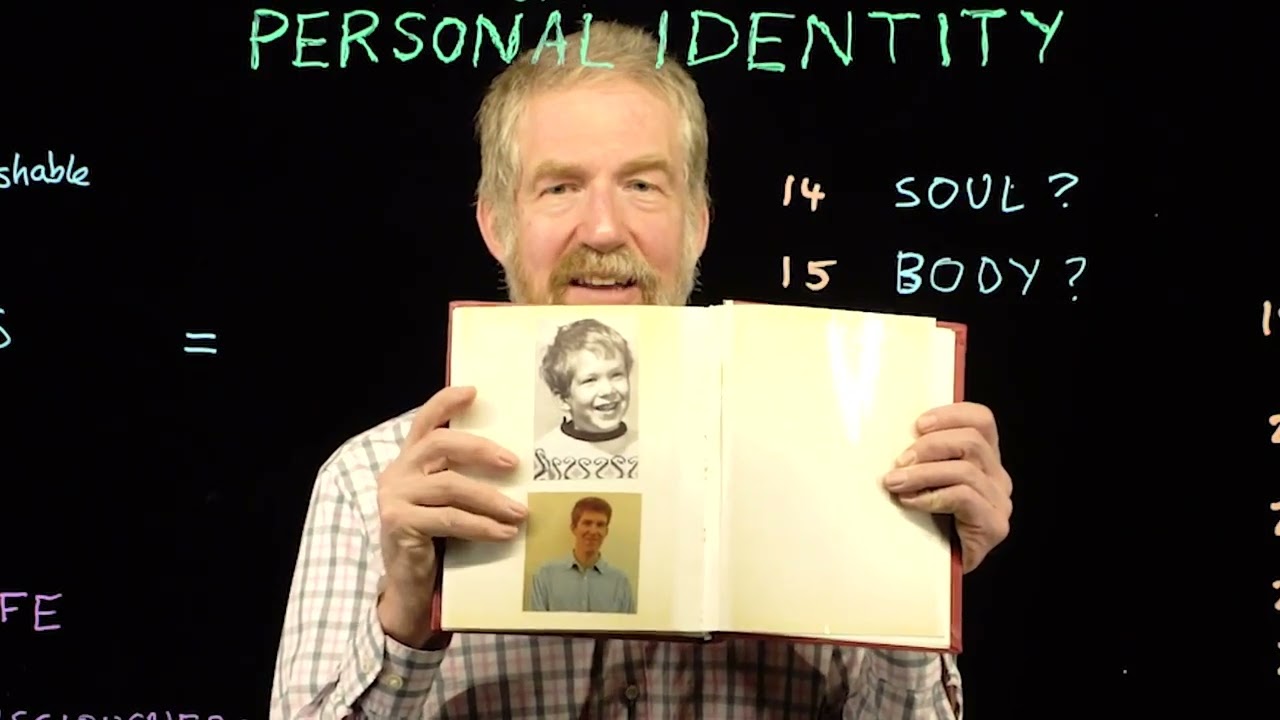
John Locke: "Of Identity and Diversity"
3.8K
Locke challenges Descartes' soul theory by distinguishing necessary from sufficient conditions. Having the same soul is neither necessary (since souls could be replaced) nor sufficient (as shown by the Socrates example). Locke argues that consciousness, not soul or body, determines personal identity. The famous 'Prince and Cobbler' thought experiment demonstrates that if a prince's soul enters a cobbler's body, the person who is now in the cobbler's body is still the prince, proving that body alone cannot determine personal identity.
Click to watch →

The Philosophical Self (GE USelf: Understanding the Self)
6.9K
This section explores the philosophical debate between rationalism and empiricism regarding self-knowledge. Descartes, the father of modern philosophy, employed methodological doubt to establish 'cogito ergo sum' (I think therefore I am), viewing the self as an immaterial soul unaffected by time. Locke countered that the self consists of consciousness and sameness of memory, proposing the mind as a 'tabula rasa' (blank slate) shaped entirely by experience. Hume, opposing rationalism, argued through empiricism that the self is merely a bundle of successive perceptions in perpetual flux, concluding no independent persisting entity exists beyond these impressions.
Click to watch →

Dr. İbrahim SARI-"Nörofelsefe Giriş"
697
The concept of 'self' has been one of philosophy's most significant and debated topics. Descartes introduced dualism, proposing that the self consists of a non-material thinking substance (res cogitans) separate from the physical body. Using methodological doubt, he established that even if we doubt our physical existence, we cannot doubt that we are thinking beings. Locke challenged this dualism by proposing that personal identity is based on psychological continuity rather than the persistence of a thinking substance. According to Locke, what makes a person the same over time is the continuity of conscious experience and memory. This view introduced the concept of psychological continuity as the basis for personal identity, suggesting that what makes us the same person over time is not a persistent substance but rather the continuity of our conscious experiences and memories.
Click to watch →
Deep Dive
Locke's empiricist epistemology, specifically the idea that knowledge and concepts arise from sensory experience rather than innate ideas.

लॉक की ज्ञान मीमांसा सरलीकृत, हिंदी|| John Locke's Epistemology || UPSC PCS NET Philosophy by Prabal
21.9K
John Locke's empiricist epistemology holds that all knowledge originates from experience, not innate ideas; the mind at birth is like a blank slate (tabula rasa) that accumulates ideas through sensation (sensory input) and reflection (mental processing), where simple ideas combine into complex ideas, but human knowledge is limited to ideas themselves rather than direct access to external reality, as ideas serve as representations of objects rather than the objects themselves.
Click to watch →

|EL MUNDO DE SOFÍA| |AUDIOLIBRO| |CAPÍTULO 20 "LOCKE"|
12.2K
John Locke's empiricism holds that the human mind at birth is like a blank slate (tabula rasa) - completely empty before experience. All knowledge comes from sensory experience, not innate ideas. Locke distinguishes between simple ideas from sensation (direct perception) and complex ideas from reflection (elaboration through thought). He argues that if an idea cannot be connected to experienced facts, it is false. This challenges rationalism and Plato's theory of innate ideas, establishing that we know nothing about the world before experiencing it through our senses.
Click to watch →

مباحث الفلسفة ومشكلاتها | فلسفة 1 ث | الدرس السادس | شرح + حل + فرم | عام وأزهر 2026
46.9K
John Locke proposed that ideas come from sensory experiences that humans undergo, not from innate ideas that exist in the mind from birth. This view represents an empiricist approach to epistemology, which studies how knowledge is acquired. According to Locke, all knowledge originates in experience and sensory perception, challenging the notion of innate knowledge or ideas that are present in the mind before any experience.
Click to watch →

Mod-01 Lec-14 The empiricism of John Locke: ideas and their classification;
26.8K
John Locke, the founder of British empiricism, established that all knowledge originates from experience rather than innate ideas; he refuted the notion that the mind is pre-filled with ideas at birth by demonstrating that even supposedly universal principles like 'whatever is, is' are not universally assented to by all humans (such as children and idiots), and instead proposed that ideas arise from two fundamental sources: sensation (perceptions from external objects through the senses) and reflection (perceptions of one's own mental operations), which then combine to form complex ideas including modes, substances, and relations.
Click to watch →

UGC NET 2026 Philosophy| जॉन लॉक का दर्शन | Philosophy of John Locke
119
John Locke's epistemological work is primarily found in 'An Essay Concerning Human Understanding' (1689). He proposed that the human mind at birth is like a blank slate (tabula rasa), and all knowledge comes from sensory experience, not from innate ideas. This empiricist view challenged the rationalist position that knowledge is innate. He distinguished between primary qualities (inherent properties like shape, size) and secondary qualities (powers to produce sensations like color, taste). This work established him as the founder of empiricism.
Click to watch →
Deep Dive
The philosophical distinction between a 'man' (a biological organism) and a 'person' (a thinking, self-aware agent capable of moral responsibility).
![[149] Identity and Difference: John Locke and the Invention of Consciousness By Etienne Balibar](https://i.ytimg.com/vi/q7pU4qIsK_Y/maxresdefault.jpg)
[149] Identity and Difference: John Locke and the Invention of Consciousness By Etienne Balibar
197
Locke makes a subtle distinction between 'man' and 'person': man simply refers to the biological organism—the physical body—while person goes beyond that to refer to the self-conscious being who thinks, feels, remembers, and is accountable for their actions. A man could age, lose limbs, and still be the same person as long as that consciousness remains.
Click to watch →
REVISÃO DE FILOSOFIA PARA O ENEM: FILOSOFIA ILUMINISTA
8.7K
John Locke made an important philosophical distinction between 'man' and 'person.' According to Locke, 'man' refers to the physical body and biological organism, while 'person' refers to the thinking, rational being with consciousness and self-awareness. This distinction has significant implications for Locke's views on personal identity and the soul. Locke argued that personal identity is based on consciousness and memory rather than on the physical body, suggesting that the same person could potentially inhabit different bodies over time. This view influenced later philosophical discussions about personal identity and the nature of the self.
Click to watch →

Jeff McMahan's "Embodied Mind" account of identity
1.2K
John Locke distinguished between 'human being' (an organism beginning at conception and ending at death) and 'person' (a self-conscious entity with shorter existence). Persons have moral value and can be subjects of praise or blame, while mere organisms cannot. This distinction underlies the neo-Lockean position that we are persons, not merely human beings, and has significant implications for moral philosophy, particularly regarding abortion and the treatment of animals.
Click to watch →
Abortion - The personhood argument
101
There is a fundamental distinction between human organism (biological) and person (moral and philosophical). A skin cell is human but not a person, while a human being is both human and a person. Being human alone is not sufficient to settle the abortion debate; the key question is when biological humanity becomes moral personhood.
Click to watch →

In Defense of Political Traditionalism, with Sebastian Morello
473
A fundamental philosophical distinction exists between 'human being' and 'human person.' The term 'human being' denotes what we are according to our species kind—our biological and natural classification. However, 'person' refers to something quite different, representing a moral relation that exists between rational beings who can call each other to account. This concept draws from thinkers like Martin Buber, who emphasized interpersonal relatedness (I-Thou relationships), and Robert Spaemann, who argued that persons stand like lodestars in a magnetic field between two rational agents. We are persons in as much as we are persons to one another through these relational bonds.
Click to watch →
Prerequisite Knowledge
- Concept 01The basic concept of metaphysical identity and persistence (e.g., how an object remains the 'same' over time, illustrated by puzzles like the Ship of Theseus).
- Concept 02Descartes' rationalist view of the self as an immaterial substance (the soul), which Locke's psychological theory directly challenges.
- Concept 03Locke's empiricist epistemology, specifically the idea that knowledge and concepts arise from sensory experience rather than innate ideas.
- Concept 04The philosophical distinction between a 'man' (a biological organism) and a 'person' (a thinking, self-aware agent capable of moral responsibility).
Subsequent Learning
- Step 01Thomas Reid's 'Brave Officer Paradox' and Joseph Butler's circularity objection, which expose potential logical flaws in Locke's memory-based theory.
- Step 02Derek Parfit's psychological continuity theory (Relation R) and the 'bundle theory' of the self, which modernize and revise Locke's views.
- Step 03The 'Animalist' critique of psychological identity (e.g., Eric Olson), which argues that human beings are fundamentally biological organisms rather than psychological entities.
- Step 04Practical applications of personal identity in bioethics and law, specifically regarding moral responsibility in cases of severe dementia, amnesia, or multiple personality disorders.
Personal Identity
Personal Identity
0:04Playing Section
- 1
Explores what defines a person over time versus species membership.
- 2
Discusses 17th-century concerns about resurrection and cannibalism.
- 3
Highlights Locke's memory-based theory of personal identity.
The Circularity Objection and the Brave Officer Paradox
John Locke’s memory-based theory of personal identity faced immediate and enduring criticism from philosophers like Joseph Butler and Thomas Reid. Butler argued that Locke's theory is circular: memory cannot define personal identity because memory presupposes identity. To genuinely remember an action, one must have been the person who performed it; thus, identity must exist prior to memory. Reid illustrated a logical flaw in Locke's view with his famous 'Brave Officer' paradox. Suppose an old general remembers his deeds as a brave young officer, and the young officer remembers being flogged as a boy, but the general has forgotten the childhood flogging. According to Locke, the general is the officer, and the officer is the boy, yet the general is not the boy. This violates the logical law of transitivity (if A=B and B=C, then A=C). These critiques suggest that memory is merely evidence of personal identity, not its constituting factor, pointing instead toward theories of bodily continuity or substantial soul-based identity.
Deep Dive
Thomas Reid's 'Brave Officer Paradox' and Joseph Butler's circularity objection, which expose potential logical flaws in Locke's memory-based theory.

The problem of personal identity: Andrew Ward at Barnes Philosophy Club Nov 2022
179
John Locke proposed that personal identity depends on sameness of consciousness through memory, not continuous substance. Unlike Descartes, Locke allowed consciousness to be sustained by either spiritual or material substances that could change over time. Bishop Butler and Thomas Reid launched three devastating criticisms: (1) memory cannot constitute identity because one must already be identical to remember; (2) the Brave Officer Paradox creates logical contradictions; (3) Locke's theory would exculpate criminals who lose memory, which is morally unacceptable. These criticisms led Butler and Reid to return to Descartes' substance theory of a continuing self.
Click to watch →
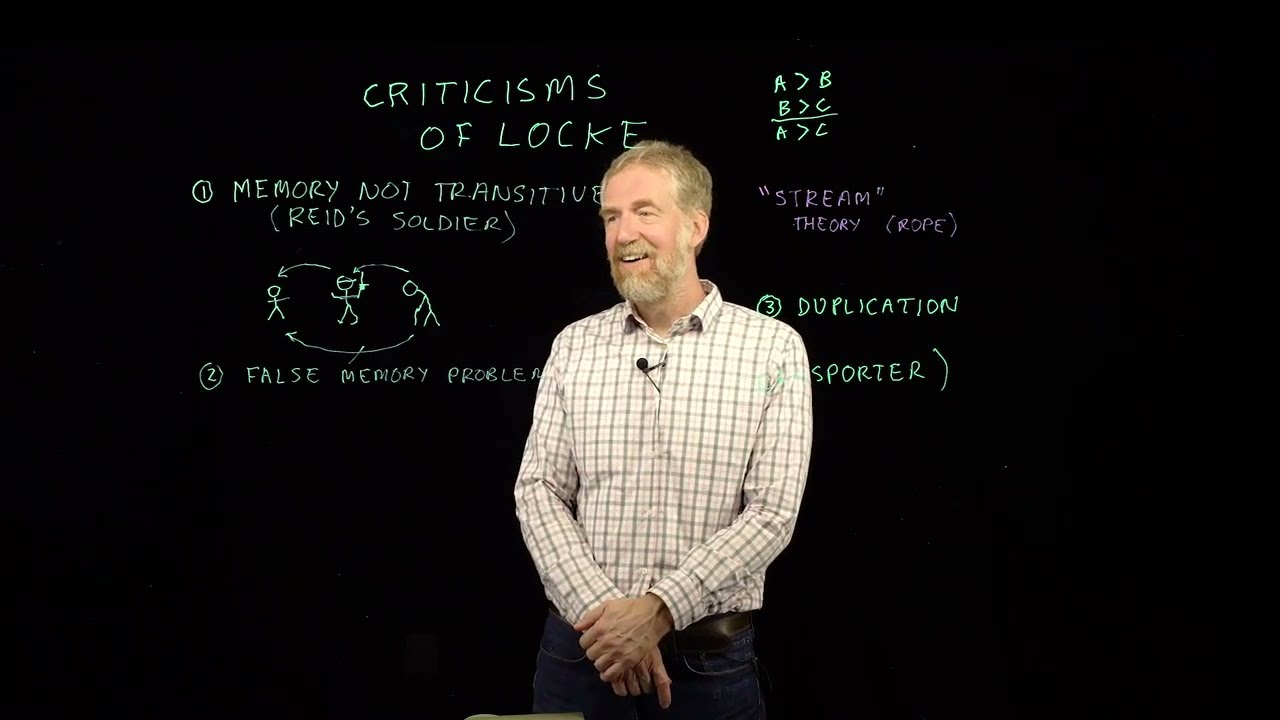
Criticisms of Locke on Personal Identity
1.6K
Thomas Reid presented two major criticisms of Locke's theory. First, memory is not transitive: if A=B (soldier remembers being boy) and B=C (general remembers being soldier), then A=C (general should be same person as boy), but the general doesn't remember being the boy, creating a contradiction. Second, the false memory problem shows Locke's theory is circular—memories define identity, but identity defines memories, making it impossible to distinguish true from false memories. Locke accepted strange implications like forgetting crimes absolving guilt, but Reid argued these showed the theory fundamentally fails. These criticisms reveal that defining personal identity solely through consciousness and memory leads to logical contradictions and circular definitions that undermine the theory's coherence.
Click to watch →

Sydney Shoemaker on Personal Identity Part 2: Defending the Consciousness Theory of Locke
462
Bishop Butler's circularity objection argues that defining personal identity through memory presupposes personal identity itself, as having memories from the inside requires assuming one already exists. False memories (implanted through hypnosis or Total Recall machines) demonstrate this problem—they can have proper causal origins while remaining false. Sydney Shoemaker responds by developing a three-stage definition of apparent memory: (1) apparent memory includes actual memories; (2) content matches past events the subject was appropriately related to; (3) memory was caused in an appropriate way by someone experiencing the event at the time. This third clause rules out artificial implantation. In brain transplant cases, we can identify the new individual as the original person through psychological continuity and first-person perspective responses, avoiding circularity.
Click to watch →

History of Modern Philosophy - 15 | John Locke (Part 6)
245
If someone undergoes painful surgery and is given amnesiac drugs that cause them to forget the experience, Locke would say that person who went through the pain wasn't you—it was someone else. If you have no memory connection to that consciousness, it's a completely separate consciousness. Thomas Reid raised an objection: if someone has severe mental illness where they have completely different streams of consciousness that are unconnected to one another, then by Locke's account, these would be different persons. Joseph Butler raised concerns about how we discern true memories from false ones.
Click to watch →

Locke's View of Personal Identity: Problems and Solutions
32.7K
John Locke distinguished between physical organism identity and personhood, linking personhood to consciousness and memory. Thomas Reid challenged this by presenting a case: a lieutenant remembers childhood actions (stealing an apple), becomes a general who remembers the lieutenant but not the child. If memory constitutes identity, then lieutenant=child and general=lieutenant, implying general=child—a contradiction since identity should be transitive. This reveals a fundamental tension between Locke's memory criterion and the logical properties of identity relations.
Click to watch →
Deep Dive
Derek Parfit's psychological continuity theory (Relation R) and the 'bundle theory' of the self, which modernize and revise Locke's views.

What Does it Mean to be You?
23.9K
Personal identity requires continuity of mental life, not substance. John Locke argued that even with the same immaterial soul, without psychological connection, we wouldn't be the same person. Contemporary neuroscience confirms this: there's no single brain location for consciousness, and our mental experience is fragmented. We're remarkable ordered collections of thoughts, beliefs, desires, and memories. Derek Parfit extended this by arguing identity over time isn't what matters—psychological continuity matters instead. The question of whether we're the same person as yesterday has no simple answer—it's always partly yes and partly no. This challenges the common-sense view of an enduring 'I' that possesses these things.
Click to watch →

Who Are YOU?
74K
The teletransporter thought experiment, presented by Oxford philosopher Derek Parfit, imagines a device that scans your body, disintegrates it, and creates an atom-for-atom replica on Mars. The question is whether this replica is still 'you.' English philosopher John Locke asserts that personal identity is tied to consciousness rather than the substance of a mind, soul, or body. Locke defines the self as a series of repeated acts of consciousness concerning thoughts of the past, future, and present. Scottish philosopher David Hume proposed the bundle theory of self, stating that 'Man is a bundle or collection of different perceptions which succeed one another with an inconceivable rapidity and are in perpetual flux and movement.' Hume argues that these perceptions do not belong to any one thing—the self is identified as the 'togetherness' of these views. Philosopher James Giles interprets this as a 'no-self' theory, suggesting the self does not exist and is instead an evolutionary artefact.
Click to watch →
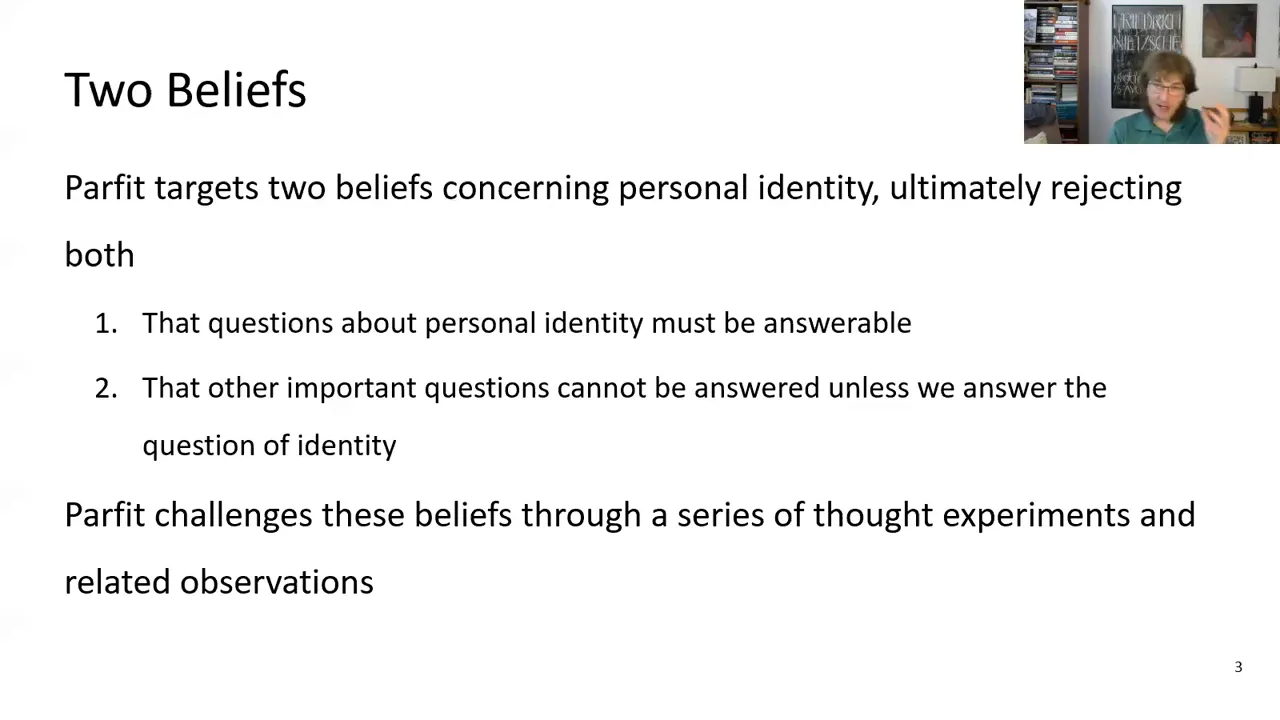
Lecture 16, Parfit on Personal Identity
3.5K
Parfit distinguishes between psychological connectedness and psychological continuity. Psychological connectedness is a direct relation based on degrees and is not transitive—for example, if X remembers most of Y's life and Z remembers most of X's life, it does not follow that X remembers most of Z's life. Psychological continuity, instead, involves overlapping chains of direct psychological relations and is transitive. Parfit argues that connectedness is more important for survival than continuity, and that we should focus on questions of survival rather than identity. He also discusses memory and Locke's account, sketching an account of 'cue memory' to free memory from presuppositions about personal identity: a belief about a past experience that seems like a memory, where someone did have such an experience, and the belief is dependent upon that experience. This allows us to separate memory from the presupposition that it must be connected to individual people.
Click to watch →
Level 1 to 100 of Philosophy That Will Shatter Your Worldview
116
The paradox challenges the intuition that psychological continuity is sufficient for personal identity—the view associated with John Locke and Derek Parfit that what makes a future person the same person as a present person is the continuity of memories, personality, beliefs, desires, and other psychological characteristics. This view seems plausible for ordinary cases of survival through time—the person who wakes up tomorrow is the same person who went to sleep tonight because there is psychological continuity. But the duplication case shows that psychological continuity cannot be sufficient for identity because identity is one-to-one while psychological continuity can be one-to-many. Multiple future individuals can all be psychologically continuous with a single past individual. If we say that only one of them is the original person, we need a criterion to distinguish that one from the others. No such criterion seems available if all the copies are physically and psychologically identical. One response distinguishes between survival and identity—survival is a looser relation than identity. Survival can occur without identity if there is sufficient continuity and connectedness, and in duplication cases all the copies survive even though none is identical to the original.
Click to watch →
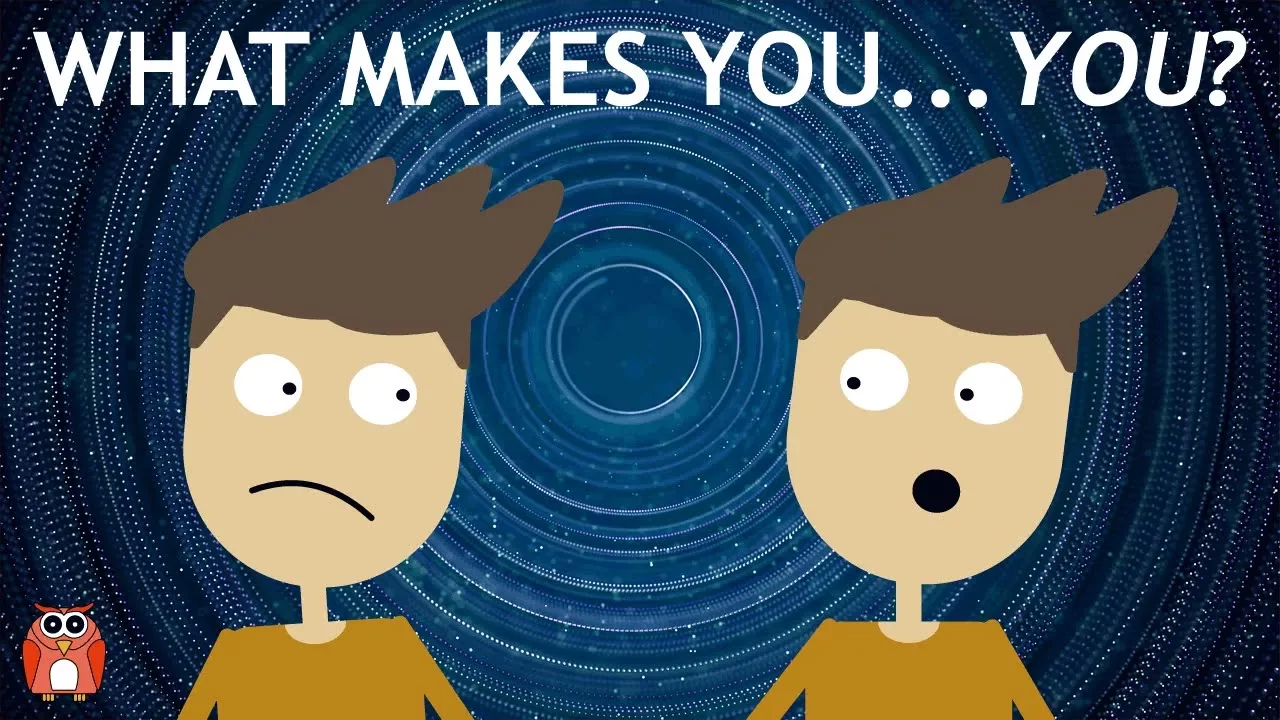
The Philosophy Of Personal Identity - Who Are You?
189.7K
Personal identity—the question of what makes a person the same over time—has been debated by philosophers for centuries, with three main theories: (1) Bodily Continuity Theory argues that having the same body maintains identity, but this fails when considering cell replacement or brain transplants; (2) Psychological Continuity Theory, proposed by John Locke, claims identity depends on memory and psychological connectedness, though this implies people with lost memories are no longer the same person; (3) Derek Parfit challenges both, arguing that survival and psychological continuity matter more than strict numerical identity, suggesting we might survive as multiple versions of ourselves without being identical to any single version.
Click to watch →
Deep Dive
The 'Animalist' critique of psychological identity (e.g., Eric Olson), which argues that human beings are fundamentally biological organisms rather than psychological entities.

Olson's Animalism
2.6K
Philosopher Eric Olson's theory of Animalism argues that human beings are essentially biological organisms (human animals) rather than psychological entities, supported by two key arguments: the 'icky animal argument' (if there's a thinking human animal in a chair, and you're the thinking being there, you're that human animal) and the 'fetus argument' (since we were once fetuses lacking mental properties, we cannot be essentially psychological entities but must be essentially human animals).
Click to watch →

Interview with Eric Olson
1.3K
Animalism is the philosophical theory that personal identity consists in biological continuity rather than psychological continuity; according to this view, we are biological organisms (animals) and our persistence through time depends on the persistence of our biological bodies, not on the preservation of mental states or psychological properties. This theory challenges the traditional psychological continuity view that has dominated personal identity debates for centuries, arguing that accepting psychological continuity views leads to absurd conclusions such as the existence of two separate thinkers (a person and an animal) that could come apart from each other, which violates the intuitive principle that there cannot be two distinct thinkers occupying the same space at the same time.
Click to watch →

Continuité psychologique ou biologique?
276
Animalism challenges the psychological continuity thesis by arguing that personal identity is constituted by biological continuity rather than psychological states. According to animalists, what makes a person who they are is their physical body—the animal organism they constitute. They argue that intuitions about psychological continuity in thought experiments are illusions. Even when we feel a person with a transplanted brain is the same person, animalists claim this is mistaken. The person who wakes up after a brain transplant would be the one with the transplanted body, not the one with the transplanted brain.
Click to watch →

Animalism and Personhood (Eric Olson)
673
Eric Olson argues that human beings are fundamentally animals (animalism), and that being a person is a superficial metaphysical property rather than a fundamental one; he contends that consciousness is the fundamental property for all conscious beings, including non-human animals, and that there are no persistence conditions that apply exclusively to humans, meaning humans share the same persistence conditions as other conscious animals like dogs and cows.
Click to watch →
Animalism and Personal Identity: Philosopher Eric Olson Interview
1.7K
Animalism is the philosophical view that human persons are biological organisms. Despite seeming obvious, it is a minority view among philosophers because many established theories conflict with it. The core argument focuses on psychological properties: if any material thing could be conscious, it would be an animal, and since human animals can think, we must be animals. Animalism also claims that if we are animals, we are necessarily animals (essential property), unlike contingent properties like color. Regarding organism composition, human animals are societies of cells working together in tight cooperation, though whether cells themselves are organisms remains a difficult metaphysical question independent of animalism's main claims.
Click to watch →
Deep Dive
Practical applications of personal identity in bioethics and law, specifically regarding moral responsibility in cases of severe dementia, amnesia, or multiple personality disorders.
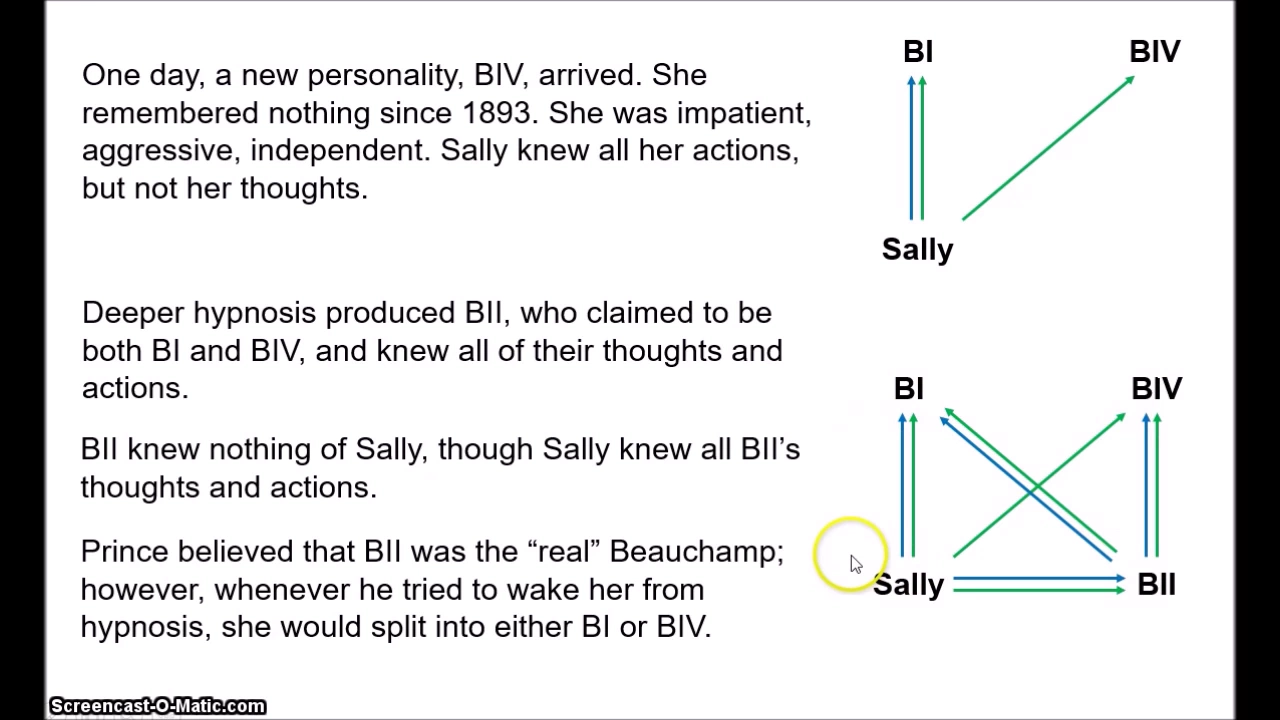
Personal Identity 4 - Multiple Personality
2.3K
Kennett and Matthews argue that people with dissociative identity disorder are not morally or legally responsible for actions committed by alternate personalities because: (1) They cannot control the sudden emergence of altered states without warning; (2) In altered states, they are under delusion about their identity and moral values, diminishing their capacity to appreciate moral reasons; (3) They have severely diminished autonomy—they cannot make commitments binding across different states. Unlike someone who can plan against future intoxication, DID sufferers cannot implement preventive strategies because alters emerge unpredictably and different personalities cannot influence each other's motivations.
Click to watch →
John Locke: "Of Identity and Diversity"
3.8K
Locke argues personhood is a 'forensic term' tied to legal and ethical issues—specifically reward and punishment. In the Prince and Cobbler case, if the cobbler commits a crime and swaps consciousness with the prince, the person who remembers committing the crime (now in the prince's body) should be punished, not the body with blood on it. Locke applies this to amnesia: if you commit a crime and develop complete amnesia with no consciousness of it, you aren't guilty. This has profound implications for criminal law and moral responsibility.
Click to watch →

#984 Andrew Khoury: Moral Responsibility, Punishment, and Forgiveness
397
There are two senses of personal identity: numerical identity (strict identity over time, relevant for legal systems) and moral/practical identity (psychological content like values and concerns). When people say 'I'm no longer the same person' after changing values, they're referring to moral identity, not numerical identity. For moral responsibility, what matters is whether the person still has criticizable psychological states, not whether they are numerically identical to their former self. Legal systems care about numerical identity, but moral responsibility tracks psychological persistence.
Click to watch →

Severance Is Legal?
465.8K
Criminal cases involving people who have dissociative identity disorder (DID) have established that a person with DID is still one legal person. Courts have held that criminal or civil liability still attaches to the whole individual even if one alter committed the act and another has no memory of it. In State versus Milligan (1978), the defendant raised DID as a defense. Billy Milligan was charged with kidnapping, rape, and robbery, and experts diagnosed him with DID. The judge found that Billy was not guilty by reason of insanity, and the court accepted the premise that an alter could be legally distinct enough to negate the criminal intent of the host personality. However, since 1978, the law and psychiatry have evolved significantly, and today a person pleading not guilty by reason of insanity must prove that they are unable to distinguish right from wrong or lack control over their actions due to their mental defect.
Click to watch →

IT WASN'T ME! System Responsibility in Dissociative Identity Disorder
57.5K
In Dissociative Identity Disorder (DID), system responsibility means that all parts of a person's system are fundamentally connected and therefore collectively accountable for each other's actions, regardless of how separate or amnesiac the parts may feel; this is supported by structural dissociation theory which states that DID results from a failure to integrate segregated identity states, and legally established through cases like Billy Milligan where courts ruled that multiple personalities do not absolve criminal responsibility since all parts share the same underlying identity and capacity for action.
Click to watch →
Personal Identity
Personal Identity
0:04- 1
Explores what defines a person over time versus species membership.
- 2
Discusses 17th-century concerns about resurrection and cannibalism.
- 3
Highlights Locke's memory-based theory of personal identity.
The Circularity Objection and the Brave Officer Paradox
John Locke’s memory-based theory of personal identity faced immediate and enduring criticism from philosophers like Joseph Butler and Thomas Reid. Butler argued that Locke's theory is circular: memory cannot define personal identity because memory presupposes identity. To genuinely remember an action, one must have been the person who performed it; thus, identity must exist prior to memory. Reid illustrated a logical flaw in Locke's view with his famous 'Brave Officer' paradox. Suppose an old general remembers his deeds as a brave young officer, and the young officer remembers being flogged as a boy, but the general has forgotten the childhood flogging. According to Locke, the general is the officer, and the officer is the boy, yet the general is not the boy. This violates the logical law of transitivity (if A=B and B=C, then A=C). These critiques suggest that memory is merely evidence of personal identity, not its constituting factor, pointing instead toward theories of bodily continuity or substantial soul-based identity.
The basic concept of metaphysical identity and persistence (e.g., how an object remains the 'same' over time, illustrated by puzzles like the Ship of Theseus).
Descartes' rationalist view of the self as an immaterial substance (the soul), which Locke's psychological theory directly challenges.
Locke's empiricist epistemology, specifically the idea that knowledge and concepts arise from sensory experience rather than innate ideas.
The philosophical distinction between a 'man' (a biological organism) and a 'person' (a thinking, self-aware agent capable of moral responsibility).
Thomas Reid's 'Brave Officer Paradox' and Joseph Butler's circularity objection, which expose potential logical flaws in Locke's memory-based theory.
Derek Parfit's psychological continuity theory (Relation R) and the 'bundle theory' of the self, which modernize and revise Locke's views.
The 'Animalist' critique of psychological identity (e.g., Eric Olson), which argues that human beings are fundamentally biological organisms rather than psychological entities.
Practical applications of personal identity in bioethics and law, specifically regarding moral responsibility in cases of severe dementia, amnesia, or multiple personality disorders.
169.1K views1.6Klikes1:46@bbcradio4Original Release: 2015-01-19
[Music] what makes me human is that I'm a member of the species Homo sapiens but what makes me the same person over time may be something different in the 17th century many philosophers were understandably very worried about what might happen to them on the day of judgment traditional Christianity emphasized the resurrection of the body however some people were very concerned about cannibals what would happen if you were unfortunate enough to be goed up by a hungry human flesh eater on the day of judgment how could you be raised and judged since you would have been absorbed within somebody else's body John Lock's account of personal identity avoided that sort of problem rather than bodily continuity he focused on memory it is our memories that connect together the different parts of our Lives if a poper and a prince switched memories and the pper had committed a crime it would be the person with the prince's body and the paa's memories that deserved punishment for Lo person was a forensic term one that is particularly relevant when judging an individual for their actions if someone had genuinely forgotten their crime Lo believed they weren't responsible for it to be responsible you have to be aware of what you have done and if you can't remember your own action then you are literally a different person [Music]
Up Next

15:06
John Locke on Personal Identity: Philosophy Lecture
@oxforduniversity
59.1K views•2011-04-14

164:01
John of Damascus on Holy Images: A Theological Defense
@BannedBooks
139 views•2026-04-25

1:48
Edmund Burke on the Sublime: A Philosophical Inquiry
@bbcradio4
230K views•2014-11-07
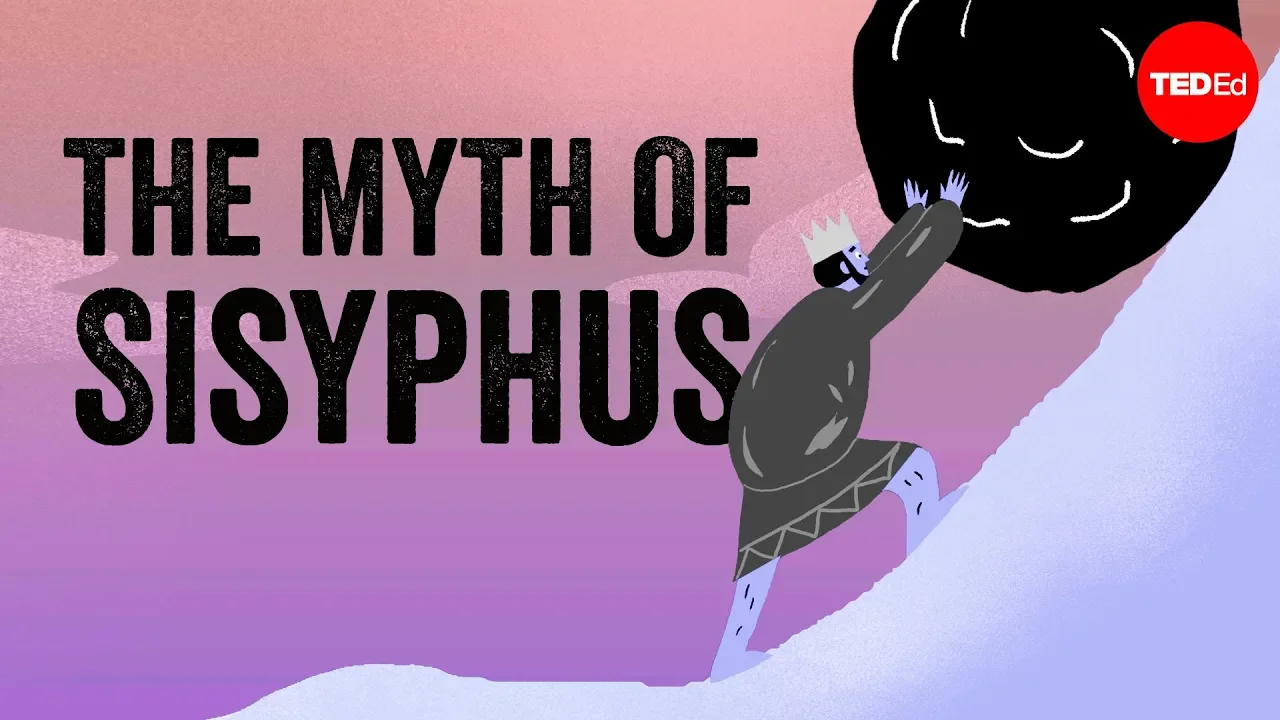
4:57
The Myth of Sisyphus: A Greek Legend of Eternal Punishment
@TEDEd
8.6M views•2018-11-13
Related Study Plans & Knowledge Roadmaps
Structured learning paths in Philosophy
philosophy
Frankfurt School: Critical Theory & Culture
01Foundations of the Frankfurt School and Critical Theory
02Horkheimer & Adorno: The Critique of Instrumental Reason
03The Culture Industry and Mass Deception
+ 2 more learning modules
12h5 modules
Explore Roadmap
philosophy
Philosophy of Language: From Frege to Austin
01The Linguistic Turn: An Introduction to Language in Philosophy
02Gottlob Frege: Sense and Reference
03Early Wittgenstein: The Picture Theory of Meaning
+ 3 more learning modules
15h6 modules
Explore Roadmap
philosophy
Feminist Epistemology: Standpoint & Injustice
01Introduction to Epistemology and Feminist Critiques
02Sandra Harding and Standpoint Theory
03Donna Haraway and Situated Knowledges
+ 2 more learning modules
12h5 modules
Explore Roadmap
philosophy
Environmental Philosophy: Ethics & Deep Ecology
01Foundations of Environmental Ethics & Anthropocentrism
02Biocentric Individualism and Animal Liberation
03Ecocentric Holism and Deep Ecology
+ 1 more learning modules
10h4 modules
Explore Roadmap