







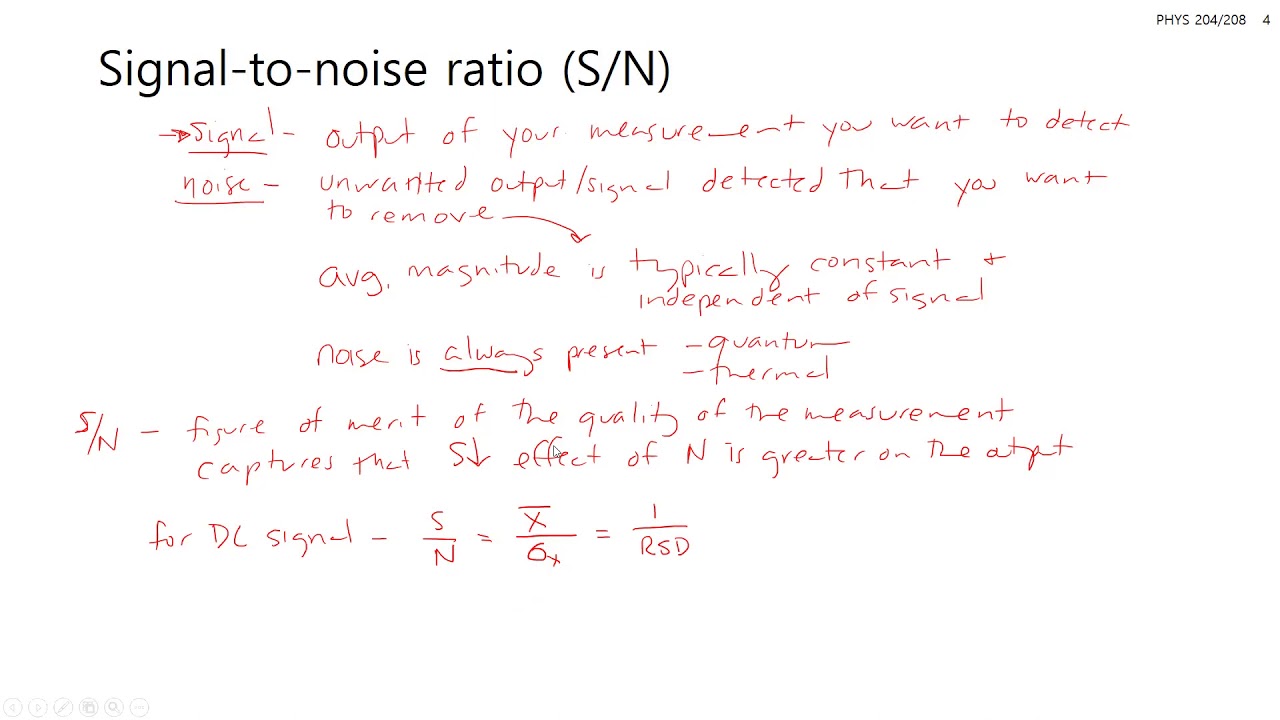

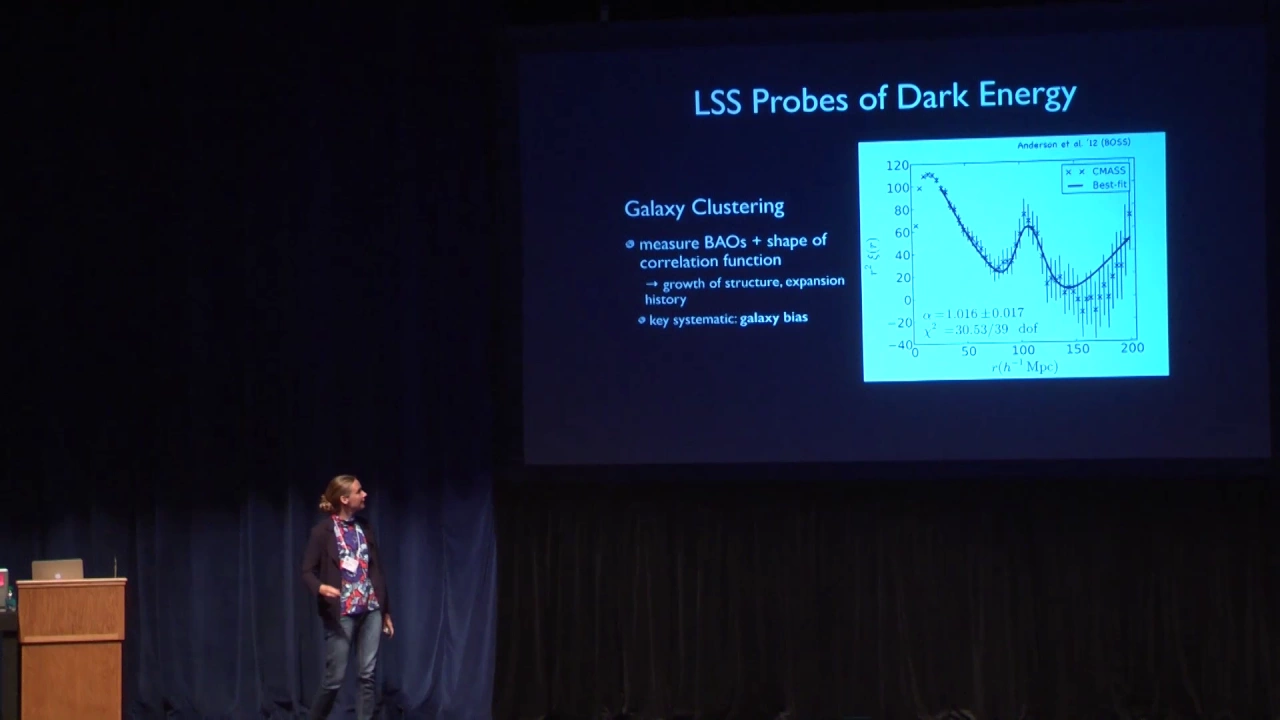
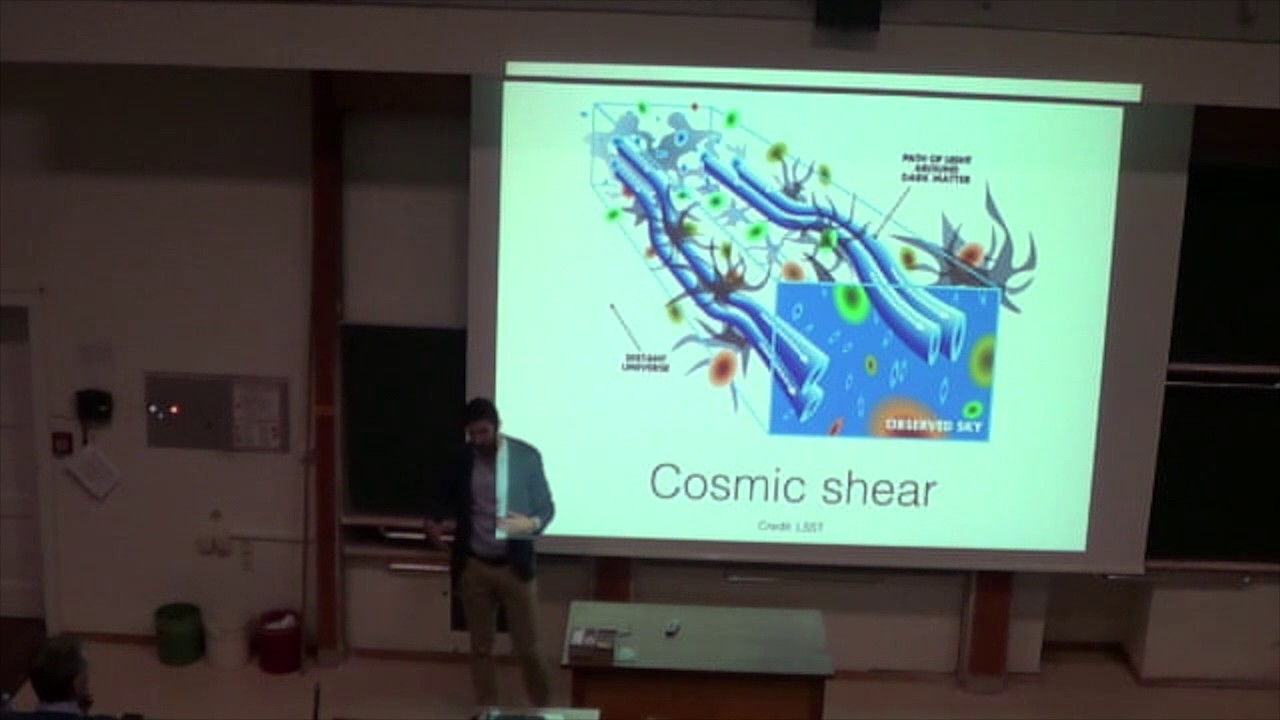








Weak gravitational lensing measures the subtle distortions of background galaxy shapes caused by intervening dark matter, allowing astronomers to map the total matter distribution in the universe. The technique relies on measuring the convergence (magnification) and shear (distortion) patterns across millions of galaxies, which are statistical observables derived from the second derivatives of the gravitational potential. Due to the inherent shape noise from intrinsic galaxy ellipticities (~0.3) being much larger than the lensing signal (~0.01), weak lensing requires averaging measurements from hundreds of thousands to billions of galaxies to detect the cosmic shear signal. This statistical approach enables cosmologists to reconstruct the projected mass distribution and measure cosmological parameters like the matter density (Ω_m) and amplitude of density fluctuations (σ_8), providing a direct probe of dark matter that complements other cosmological observations.
Measuring Weak Gravitational Lensing | Cosmology Lecture
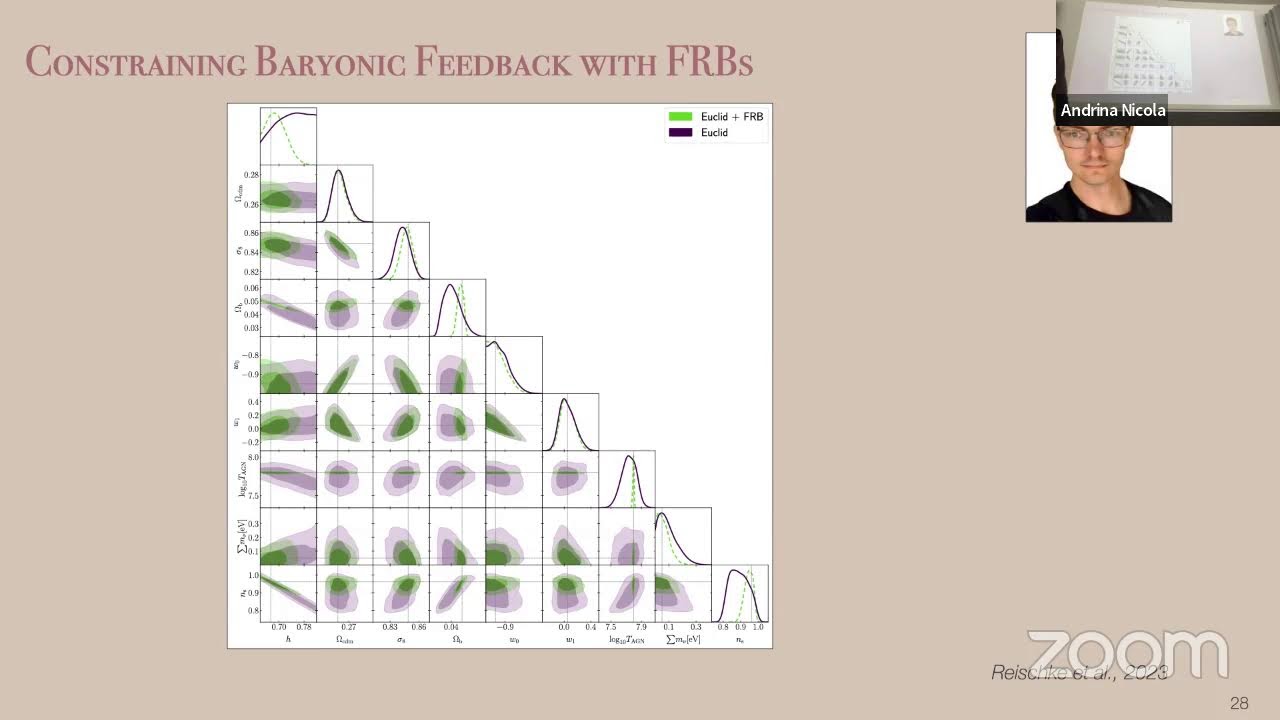
Added:yes so you can join her for lunch maybe and ask more questions you know that's might be one good option the same for other lectures you know join for lunch to ask more questions of course you can ask questions on Zoom as well meanwhile we go to Gary Bernstein who is going to continue talking about weak gravitational lensing hello again everybody I hope you still remember something from yesterday uh I'm gonna continue today with uh describing how the general topics that I we discussed yesterday of what shear and magnification are and how they're related to Mass yesterday we were talking about just a single circularly symmetric lens first thing I'm going to do is just lead you through rather quickly some the formalism about how we take a circular symmetric lens and we make formulas that are for an arbitrary Mass distribution in two and then three dimensions and then turn that into things like power Spectra that you've learned earlier in the week are the the key some of the key observational quantities the things that we're gonna get predictions about once we have a model for cosmology for dark matter as Elise was talking about Etc okay and then I'm gonna switch gears a bit and talk about the techniques that are used to actually measure these uh these sheer fields from images of the sky give you a brief and introduction to that I may rush through those things a little bit because I would I would like to try to leave some time at the end for you to try to analyze a simulated catalog of Galaxy shapes that I have on the notebook on the collab right uh if your arms aren't too tired from rowing uh or paddling to type on your computer later today so all right so let's get going here uh if you recall we had yesterday a a formula for uh the deflection of light that the Theta The Source position of an object is equal to the image position minus some constants and then we had this expression here for the mass uh divided by the impact parameter now this is for the circular symmetric lens case we can make a generalization of that to an arbitrary Mass distribution and it looks like this in this case here again we have an observer and then we have a source back here and a lens plane but now we're going to let this lens plane be made up of a whole bunch of infinitesimal pieces of mass that are scattered around that plane and will give them the X Prime thing and then our light Ray is going to cross that plane at X um so if we have a surface Mass distribution across this whole thing here uh we can write um the apparent deflection angle here as an integral with again these constants here of the surface Mass distribution times DX and then we have the the one over R kind of formula here so this is just like Newton's law in 3D except it's a 2d version right where we we have a deflection just in two dimensions um so one can also just as with Newton's law recognize that this deflection Vector here right the alpha is now a 2d Vector in the space of angles uh is the gradient of a 1D potential where uh you know in in 3D gravitation if the force law is one over r squared the potential is one over R in this case the force law or deflection law is one over R so the potential is a logarithm okay so this quantity uh here in Brackets is called the lensing potential and uh it's an integral of the mass across the whole thing and so what we get basically is that the deflection is the gradient of the lensing potential so there are some consequences of that the first is that the gravitational deflection field if you were to write it as a bunch of vectors it's curl free so that limits the the number of possibilities of what a deflection field could be uh and then it's also true that if you then take the Divergence of the deflection or the uh the poissonian uh second derivative of the potential you get back the mass density or more specifically you get two times the surface density over Sigma crit so this quantity Sigma of uh in a given Direction divided by the critical density is called Kappa or the convergence for a reason that we'll see in a moment all right so you have a complete analogy here to the poisson formula for uh the origin of electric fields for instance okay all right now let's get back to weak lensing weak lensing is when we're talking about slight displacements of the image due to the lensing so what we're interested in in Weak lensing is the Jacobian derivative of the source position with respect to the image position all right and uh so you can see that's like taking the second derivative Matrix of the um of the potential right and we usually write that derivative as in this form it's going to be symmetric because these are second derivatives so that has to equal that and so we write 1 minus Kappa minus Gamma 1 1 minus Kappa plus Gamma 1 on the diagonal and then minus gamma 2 on um the off diagonals and uh we can do that just by taking uh two Kappa uh uh is the trace of a and we know that's true that's the same thing as our poisson relations saying that the trace of this relation um is uh to Kappa uh and uh well two minus two Kappa and then Gamma 1 and Gamma 2 are these different combinations of second derivatives these asymmetric second derivatives of the potential all right so why do we write it that way well because it lets us visualize what the second derivative Matrix is doing so if I have just Kappa and no Gammas then the second derivative Matrix looks like this and you can see that what it's doing is sort of expanding or Contracting the X and the Y directions equally so that means if the Galaxy actually looks like the blue circle then either a positive or negative negative Kappa will mean that the Galaxy was either overall shrunk or overall expanded so that's why we call this magnification or or convergence all right and then uh if we had just a gamma one then the Matrix has a one minus up here and a one plus or on the y-axis so the circle is going to be stretched in the y-axis and shrunk in the x-axis or vice versa depending on the sine of gamma 1. so that's taking my circle and making it do this right so that's what we would call gamma one or sometimes we call it gamma plus because well I don't even have to explain that I hope uh and then um if we have a gamma 2 um the horizontal and vertical directions are not changed but I get an X stretching along the y direction and a y stretching along the X Direction uh if you could think about what what that means is basically that I'm going to take this circular object and I'm going to stretch it either diagonally at plus 45 or minus 45 degrees and we call that gamma 2 or I like to write it as gamma cross again for what I hope are obvious reasons so these kappas and Gammas are the weak lensing observables right and they are the second derivatives of a lensing potential right uh just a quick diversion here the shape of a galaxy and the shear those are what we call spin two quantities all right so uh how can we Define it well uh if we have a source of light you know with a elliptical shape with a major and minor axis A and B uh there are different ways to to find the ellipticity the way I'm going to use today is to say that it's a squared minus B squared over a squared plus b squared and uh if the position angle of the major axis relative to the x-axis is beta we write E1 or E plus is equal to e times cosine 2 Beta And E2 or E cross is equal to e times sine 2 Beta now in most vectors right if you if you had a vector quantity you would or a spin one quantity you would have a COS beta or a sine beta here but if I have an ellipse and I rotate at 180 degrees right it's indistinguishable from the original ellipse so I only have to rotate an ellipse 180 degrees to come back to the identity whereas for a vector you have to rotate at 360 Degrees to come back to the identity right so that's why these uh ellipticities it's like a polarization field as well it's a spin two quantity and what that means is that if I have a certain object whose E1 and E2 I've measured in a certain coordinate system X and Y if I want to measure it in a different coordinate system say x Prime and Y Prime that's rotated by Phi then my new E's the E primes are related to E the original E's by a rotation Matrix but I have a factor of 2 on the angle here okay now I bring this up by all the way by the way there's also this very nice complex notation where E1 plus ie2 is just altered by a factor of e to the minus two I Phi okay and the reason that we need this rotation especially if you're going to do some of these exercises later is that remember that when we were doing the circularly symmetric uh lenses we talked about Shear that was always tangential to the mass in the middle right well if I have a mass in the middle here and a Galaxy over here that's tangential I want to know what part of this if it's electricity is tangent here while E1 and E2 they tell me what parts of the electricity are you know either Plus or cross-shaped relative to the X Y axis but when we're doing our galaxy Shear measurements we usually want to know it relative to the radius Vector from the lens to the source right so we're going to have to execute some rotation to get components in a different set of axes okay all right so uh you know those equations sort of sped by I'm going to throw some more at you in a minute but those equations were giving you the the way to get from a mass distribution in two Dimensions to a uh a shear and a a convergence versus Direction uh now let's jump into three dimensions since the universe actually is three-dimensional and the way that we do this is by uh adding up all the deflections that happen between the source Galaxy uh and the Observer and so we're adding up the effect of all the lenses between our eyeball and the source of the light right now technically we should add them up along this sort of Wiggly path that the photon is going to take from uh on its Journey but we use here the born approximation which you might have had in some classes which is we're going to add up those deflections by integrating them along the unperturbed line of sight okay and that is a very good approximation for gravitational lensing so we're okay with that um so in the born approximation uh if I just let uh if I add up all the potential and deflections Etc along the line of sight and I use some general relativity uh Friedman Robertson Walker metric identities we can get that uh the effective convergence in a given direction is going to be the integral from us to the co-moving cosmological distance um to some source of some familiar looking things here right this is uh Sigma crit coming in here and then I have the density uh along that line of sight um times uh oh sorry as a function of direction and distance okay so rho here is the actual three-dimensional density of the universe now and then I have a a um differential for the integration of the line of sight and a is the scale factor okay which is implicitly a factor of the distance on the line of sight because we're integrating back in time as well as back in Direction uh anyway you can do some manipulations and uh end up with um an equation here that says the Kappa the Divergence is equal to the integral from us to the source of light uh of all the lenses and Delta remember is the over density right the fractional density relative to critical density um times this combination of distances and constants that uh are generally called the lensing kernel and going back to a discussion yesterday this lensing kernel if you look at it it's going to Peak about halfway between the source of the light and the Observer all right so if I have a bunch of sources that are located at redshift two I'm going to be most sensitive to mass distrib fluctuations that are around redshift one or something like that okay all right so this is all zipping by you can look at the details here later but basically I just want you to realize that what we're doing in three dimensions is basically just integrating up all the the masses along the line of sight and it's going to still be true that uh there's a lensing potential which is the integral of the actual 3D gravitational potential along the line of sight with some kernel attached and that uh the poissoni of that is going to equal 2 times the Kappa and the deflection angle is still the gradient and the shear is still the second derivative so we save all those formulas they're all preserved when we jump from 2D into the full 3d thing right so it's still true that our uh our deflection is a curl free field right uh and because the um these equations here show that if I know Kappa I can use I can solve that poisson equation and I can get the potential and I can get uh the deflections and I can get the the shear right but it's also true that if I know the potential I can get the shear and the magnification and if I know the shears I can also get back the mass distribution okay so that is part of the magic of weak gravitational lensing is we we measure this pattern of distortions and then there's some pretty simple calculus that will get you back the actual mass distribution and remember it's the total mass distribution it's not just the baryons or the things that are emitting light okay another way you think about this by the way is that you're you're measuring actually the the space-time metric along a line of sight okay now it may be hard to believe that you can measure this deflection pattern and get back the mass distribution but let me show you what they tend to look like all right so on the left is a projected Mass map of some slice of a universe determined from an endbody simulation on the right is one of these whisker diagrams of what the shear pattern would look like as we looked through that mass at some galaxies in the background and you can see some very familiar things for instance here's a big cluster or something like that and in its vicinity here you see this characteristic tangent uh alignment of the shears all right and where I see that kind of pattern here here I can see they all correspond to mass concentrations over here okay you are you may think that there's some magic here but actually uh your brain can do this transformation very well without you even having to think about it speaking of neural Nets um here's a picture from a catalog of the kind of glass that you use on shower doors right it's called obscure glass and remember the purpose of this is so that you can't see the naked person on the other side of the shower right um but if I show you these here's a picture of clear glass here's a picture uh taken of the same scene through one of their products and uh I bet that you can already tell by looking at that what the texture of the glass is that you're looking through right by just looking at the distorted image uh in all of these cases so our brains are somehow capable of of making these kinds of Transformations also and I should say that this bumpy piece of glass is a fairly Perfect Analogy to what the universe is because remember we're looking at the projected mass density or some projected potential and uh if I were to cut a piece of glass that had the same surface shape as the potential does it would generate the same Shear pattern has to do with the time delay formalism if you want to think about it a little deeper and yet another way to think about this is uh you know our theorist friends like to predict what the power Spectrum or the Fourier modes of the mass distribution are going to be so let's imagine that we have one Fourier mode some sine wave of uh more mass less Mass more mass less mass as Illustrated here okay and that we're looking through it at a bunch of circular galaxies behind it right well what's going to happen is that in the in the less rare in the rarified regions um the the light is being uh stretched apart before it gets to us and in the denser regions it's getting pulled back together and what that is going to mean is that we're going to see a Shear pattern that is uh alternately a long and perpendicular to the K Vector the wave Vector of the mass itself okay so uh in Fourier space if you're a person well there are some weird people like me that like to think in Fourier space but uh in the Fourier space the race the relation between the sheer pattern and the mass underneath it is very simple right Euphoria transform the shear pattern you basically right away have the Fourier transform of the mass okay and one thing that you'll see is that there's uh as far as the K direction is concerned this is all e plus right it's all either a long or perpendicular to the K Vector what cannot happen is to have the opposite kind of behavior the E cross pattern where the Galaxy shape is oscillating from positive to negative at 45 degrees to the K Vector that kind of pattern cannot be produced that's what we call B mode and that is has to be absent from your Shear measurements and so if you actually uh after you make your Shear Mass one of the your Shear measurement one of the first things we do is uh take the proper derivatives to generate this B mode component and see that it's zero because if it's not zero we know that we have some instrumental or some other contamination of our sheer patterns uh just to go back for a second this this e-mode B mode split uh if we think about again our our circular Mass distributions if we have some kind of uh Halo then uh of over density we're gonna expect this kind of pattern and this is an e-mode pattern if you do the right calculus where the derivatives where the the shear is always uh perpendicular to the radius vector if I had a place in the universe with negative Mass uh well what is negative mass that is it doesn't exist but I can have a negative over density which would be a void right then a void will generate a negative eat tangent which means that instead of look going this way it will go vertically at the top and so we would have this radial looking Shear pattern and in the dark energy for instance survey for instance this pattern has been detected around places that are absent of galaxies right we can tell that they have essentially negative Mass what you will never see is a pinwheel pattern like this where we have the component that's at 45 degrees to the radius Vector that has to vanish mathematically okay so this is a good check uh that we have a gamma one and a gamma two um and and those are two different fields but we know that the whole deflection field was generated by a scalar one component Mass Field and so there must be some redundancy between Gamma 1 and Gamma 2 because we only have one degree of freedom and the absence of this B mode is what uh explains why there's two Gammas but only one Kappa okay all right so those are some things to keep in mind all right so now uh the last bit of math I want to show you is that we have this way to take a a sheer field that we might measure using methods we'll describe in a few minutes and we can transform it into a map of the mass okay well uh our uh our theoretical friends when they're making predictions of what a given cosmology is going to generate um the easiest thing to predict is What's called the the mass power Spectrum which you learned about earlier this week and uh that means that the power spectrum of Kappa of the lensing Divergence is related uh to the power spectrum of the actual mass fluctuations and that relation in something called the limber approximation uh is very simple okay I can measure with gravitational lensing this projected matter power Spectrum right a Kappa where everything has been compared to Sigma create and integrated along the line of site uh and the theoretical prediction for what I should matter what should measure is related to what the theorists say we're going to get for p Delta here by this simple integral between us and the source of the light and it's pretty simple because you just take the DZ along that line of sight take the power Spectrum here you put the this lensing kernel thing that we had a couple of slides ago and you just Square it and there's an h and a chi-squared in there okay so this is the beauty of the weak gravitational lensing technique for uh for cosmology which is that what you see is very closely related to the total matter distribution not the baryon matter not the visible matter but the total matter including you know most of Elisa's dark matter as the majority all of the dark matter but it's the majority of the matter and so it's a relatively clean signal compared to Galaxy surveys which are actually easier to do in some sense if I make a map of the Galaxy distribution I have to worry about the relation of the locations of the galaxies to the location of the the dark matter because it's the dark matter that the theorists are really better at predicting okay so this is why we love I fell in love with uh with weak gravitational lensing which is that it is a simple thing to relate to the theory and I like simple okay okay that was the simple part measuring this can get harder right and we've already encountered uh one of the reasons and that is that uh to remind you from yesterday what lensing will do is take a bunch of circular sources and uh stretch them out you know around any Mass so that you see these coherent shape patterns right but as mentioned galaxies aren't really circles they come born with a variety of shapes everybody knows that and so you can't look at just one Galaxy and decide how much it's been lensed because the amount of stretching that weak lensing generates on average is much smaller than the amount of variation intrinsic variation in the shapes of galaxies uh so what that means is that this is necessarily a statistical Pursuit we're going to have to collect images of a bunch of galaxies and average them down to try to get to uncover the lensing signal okay and this is called shape noise all right uh and just to uh get into this a little bit more so here uh is the unit circle of ellipticity ellipticity can't be more than one so if I plot this e plus an eex for a given Galaxy it's going to lie somewhere on this unit circle with the horizontally stretched galaxies here on the right the vertically stretched ones are at negative E1 uh or and Etc okay now if a Galaxy uh is circular and it gets I apply a Shear to the field it will move to the right a little bit if I apply a stretch of all the images this way and this little Vector diagram shows you that if a galaxy is say born here after it gets sheared by the same Shear it'll end up there okay so this is just real pretty simple math to make this uh this this graph um so what it essentially means and this is not exactly true but each Galaxy is going to have an intrinsic shape that we'll call e i right which we can break into its two components and again here's our definition in terms of uh major and minor axes and it's altered by some applied Shear so that roughly speaking The observed ellipticity is the intrinsic one plus twice this gamma number okay so if I go out and I measure a pile of galaxies and I average their observed Shear then what I'm going to get is the average of their intrinsic shears which is going to head towards zero as I average more and more galaxies because Galaxies have no preferred Direction in space right uh they occupy this unit circle uh in an isotropic fashion all right uh now if I average a finite number of them together this isn't going to average to exactly zero it's going to average to uh Sigma e over root n where Sigma e is the dispersion of the ellipticities right in other words it's sort of what is the RMS or typical not roundness of a galaxy okay so that Sigma e is an important number that's what we call the shape noise uh and so if we average and galaxies together and then uh average their shapes um the gamma is going to be the same for all of them if they're close to each other on the sky uh so I can turn this around and say that my estimator for Gamma 1 for instance is going to be the average one component of all my observed things divided by two and I know that I'm going to have a noise of Sigma e over 2 root n in that measurement okay so this is our first issue is that measurements of weak lensing are intrinsically noisy uh and uh how would you reduce the noise therefore in a weak lensing measurement if I wanted to measure gamma to more and more accuracy what do I have to do anybody can shout something out what do I have in my capacity to change here I am not licensed by the Creator to change the ellipticity distribution of galaxies I just have to increase n right so that's what weak lensing is practically it's the quest to measure the shapes of more and more galaxies okay how many would we need well typically this Sigma e value if you just look at galaxies is 0.3 or 0.4 uh and if I have a Galaxy out at redshift one um you do your cosmology calculations in theory and you'll find that the stretching or shrinking of that Galaxy the gamma on it is typically about 0.01 or 0.02 so if I look back at uh this formula and I want the noise here to be say a hundred times smaller than the shear so that I've measured my shear and my cosmology to high accuracy right then that's going to require that I measure the shapes of 10 to the six galaxies a million galaxies and that's actually wildly optimistic there's some things in here that we haven't talked about that are going to push that up more towards 10 to the 7 10 to the eighth okay so weak lensing is a numbers game I want lots of galaxies okay so I'm going to give you a little bit of History here uh the first detection the claim detection of any weak gravitational lensing effect was made or published in 1990 by uh my postdoc advisor Tony Tyson uh who was the first one who said hey I'm going to try to actually measure this stuff in 1990 Tyson Valdez and Wing uh published a paper with this chart in it where they were looking at the faint galaxies surrounding one of the universe's most massive Galaxy clusters uh Abel 1689 and dividing them into whether they were aligned sort of tangent to the circle around the Galaxy around the cluster sorry are they radially aligned or are they somewhere in between or are they round enough that you can't tell which direction they point and they saw this excess in the tangent category right uh and then another cluster um uh 1409 same thing here more galaxies in the tangent category okay um not coincidentally this observation was done not long after photograph after the first people started to use charge coupled devices or digital detectors instead of photographic plates on telescopes and uh that was a huge Advance because first of all if you get things off a digital detector you can put them into digital form and then you can do things like measuring shapes carefully on with algorithms and numbers instead of just with your eyeball which is important if you're trying to eventually measure a few billion Galaxy shapes um and also because these are more sensitive detectors so they could actually see the shapes of galaxies that were behind these massive clusters right all right so this was a very big advance and uh uh then uh us about 10 years later it took 10 more years to First detect the shear in random directions of the sky remembering remember that looking for Shear in the vicinity of a massive Galaxy cluster that's the easiest place on the sky to find Shear because that's where there is the most right but to find it in random directions or what we call Cosmic Shear that was not accomplished until 2000 and uh about three different groups um published referee papers within a few months of each other um claiming this detection and uh I'll show you of course the picture from the one that I was on so uh but our measurement if to do this one we had to measure the shapes of 10 to the fifth galaxies and uh what you can see here is the uh tendency the y-axis on this plot is How likely are galaxies at a certain separation from each other to point in the same direction uh it's what we would call the the two point function of Shear okay or the ellipticity correlation and you can see this uh barely significant Rise um away from zero all right so so this is the signal of Dark Matter fluctuations in the generic universe first detection and that was made uh by surveying one and a half Square degrees of sky on a 16 million pixel camera which you all have in your pocket now but at the time that was a big deal that camera is sitting in the Smithsonian institution and was also the camera that was used to discover a lot of the high rate shift um Supernova that led to uh the um discovery of the acceleration okay let's step ahead uh this is uh my former postdoc who some of you know now Mike Jarvis we uh another paper again I'm showing you mine but there are other papers going on at the same time uh by 2006 we had used that camera to measure um uh about 2 million galaxies over 75 Square degrees uh using that same 16 megapixel camera which was soon superseded by a 64 megapixel camera and now this two-point function is becoming more significantly detected right we can start to actually say something about cosmology at this point not just that there is lensing but how much um Step Ahead till after the the final publication of the so-called Canada France Hawaii telescope lens project they looked at four million galaxies over 154 Square degrees of the sky using 340 million pixels and now you can see uh even uh better measurements of this um this correlation function and then jump ahead again to uh last year when the project that many of us at Michigan and Penn are involved in released uh the cosmological analysis of half of our Dark Energy survey data and that includes 10 to the eighth galaxies spread over 4 200 square degrees of the sky with a 500 megapixel camera okay and now there's more dots than you can look at but each of these yellow lines is a measurement of um this two-point correlation function between galaxies at two different sets of redshifts okay so there's all these different squares because we've divided the galaxies into four sets at different distances and uh can measure the auto and cross correlations of all of them these are the B modes which you can see are all nicely consistent with zero but uh the total signal to noise in here is much higher and this has allowed us to measure the cluster during amplitude uh in the universe to a Precision of about five or seven percent I think I don't remember the exact number okay so that's the state of the art as of today although there's two other surveys going on right now or actually all of us have finished taking our pictures and we're still analyzing our data the kilo degree survey our kids and the hyper Supreme cancer array or HSC you're going to see news from all of those in in uh the next couple years and then in the future things are really going to get wild the Reuben telescope is going to conduct this Legacy survey of space and time lsst and that's a brand new telescope with a a a 2 billion pixel camera uh that is nearly complete in uh the mountains of Chile and it's going to survey probably about 18 20 000 Square degrees of sky that are useful for wheat gravitational lensing uh and uh it should measure well over a billion Galaxy shapes and sometime in the next few years well actually uh in about 28 days the Euclid spacecraft is supposed to be launched uh from on a SpaceX rocket with a ESO payload and then a few years from now the Roman spacecraft will be launched by NASA and both of those are meant to uh have among their primary goals measuring the um this sheer correlation function and being in space helps because you get a sharper view you have less atmospheric blurring so you can see the shapes of smaller galaxies right they're not just blurred away to nothingness right so that's what's coming in the future those two galaxies these two space projects won't measure as many galaxies as lsst but they will and they have fewer pixels but they uh will be you know kind of distinct measurements that uh have less fewer difficulties in some ways with their measurements all right so that is uh kind of the road map right you now can sort of see how we go from a simple deflection formula to statistics that we can uh turn back into cosmological constraints right okay um so maybe I'll spend a few minutes on this before we take a break um let's back up now and think about all right one of these nice new telescopes gives you a picture of the sky uh how do you actually determine the shear uh or these ellipticities of the galaxies from this image right well if it's an elliptical galaxy elliptical galaxies have that name because they're elliptical in shape and you can choose a major and a minor axis now for a Galaxy it's not like it has an edge right it just Fades from Bright to faint from the center out so for an elliptical galaxy though if you were to choose a certain brightness level and say draw the Contour or what's called an isofot of that brightness level that would be an ellipse and you could assign an A and A B to it and get an ellipticity but uh what's the obsessity of that guy right here's a irregular galaxy how do you define an e for this if we were stuck using just elliptical galaxies this would be a much harder thing because ellipticals are a small fraction of the galaxies that you see on the sky most of them are much Messier they don't have actual ellipses as their ice votes but it turns out that they're okay you can do it and uh what we do instead of actually trying to draw an ellipse is to measure the second moments the uh Central moments of the Galaxy's light distribution your detector hands you back uh a grid saying how many photons you know landed uh on the telescope at each part of the sky and that's our intensity function I and it's a function of X and Y on the sky well I can uh take the moments of that so if I just integrate the intensity across the sky I get the total flux from the Galaxy but if I put uh if I choose a center for the Galaxy X naught and why not I can measure the centroid or what we would call MX and my here and I can also measure these squared quantities x squared or X Y or Y squared okay and uh if I turn uh if I Define E1 to be mxx minus I'm YY over m x X Plus myy an E2 to be 2 m x y over m x x plus M my Y and a radius squared uh in this way using the flux then I have E1 E2 and a size that transform under the action of gravitational shearing or magnification in exactly the same way as the E1 and E2 and size that I would have measured from the isophobe of a perfectly elliptical galaxy okay so what we do with the galaxies is we don't sit and draw the circles we measure the second moments of the light that's coming from each particular Galaxy right okay um and maybe I will uh take the break here for five minutes and when I come back we'll see a little bit more about this and I think we'll have time to let you try to analyze a Galaxy catalog right so five minutes is that nominal break time well we'll reconvene at five of all right um so the thing that you did yes yeah good all right so we've got a way that if you give me a picture of a galaxy I can assign it an e a shape uh and then I can start using that and averaging it with all the other galaxies to say something about the matter distribution uh or these distance factors which come from whether there's a a Lambda or not yeah um I think I'll skip this slide this is just explaining again how these kappas and Gammas are related to the different shapes um but uh there is a problem with what I just described which is that whatever image I give you from my telescope of a galaxy it's not really what the Galaxy looks like because every image has been blurred to some extent by uh the Optics of our telescope and uh if it's a ground-based telescope the atmosphere as most of you know is constantly roiling about and for optical images at least it also blurs the images okay they're uh and so even a source of light that was a Delta function would be spread out into something of finite width even if you have perfect Optics you're still going to get this spread because of diffraction uh you're probably mostly heard of you know in your e m classes right the the diffraction limit of the telescope Lambda over D so we're never gonna we don't get to view galaxies exactly as they are we're viewing them through what's called a point spread function or psf that's going to be characteristic to that observation right uh so that means that the size of the Galaxy that we see is bigger than its true size and in most cases it also means that the ellipticity of that Galaxy that we see is not it's true the ethnicity because the psf itself is usually not perfectly circular uh just to give you an example if I'm taking my picture of you know coordinate so and so of the sky and somebody came along and kicked my telescope while I was taking the picture um all the Galaxy images on my detector would look stretched out right and uh so I I detect this enormous correlation of their shapes and I you know I write my paper and send it to Nature about how I've discovered this huge concentration of dark matter in the universe or something and probably nature would publish that but uh but uh the experts who look at it will say no that's just something an instrumental effect right so what we have to do is uh before we can proceed we have to take these ellipticities that we measured and somehow remove from them the effect of the instrument the Optics the atmosphere Etc so uh how do we do that well it turns out this is the reason that nature put stars in our sky as cosmologists we generally don't care about stars they're they're just in the way of the galaxies and all that extra Galactic stuff that we care about but stars are basically Delta functions right so every time I look at the image of a star I am looking at the point spread function okay so I can measure the point spread function of any image by picking out the Stars uh in that image and by the way how do I tell a star from a Galaxy in an image does anybody know that uh the Stars might have diffraction spikes yeah um and uh on a bad night you can't see those spikes about what would I do I'm gonna try to fit a gaussian to it now the psf is sort of a gaussian but not exactly um but I think you're on the right track because when I fit a gaussian I have to fit the size right and stars are the smallest images in the sky because they're intrinsically Delta functions a galaxy has a finite intrinsic size uh and it will look bigger okay so we try to separate out the Stars by finding the things that are basically all the same size and the image and then we use those to measure the psf and then we have this nice little miracle that occurs which is that if I assume that my observation here is the convolution of the true Sky image with the point spread function uh which you can write a convolution this way right uh you integrate over an X Prime and then have an x minus X Prime in the psf well if I ask what is say the second moment mxx of that observed image I will uh jump past the actual proof here but show you that in fact if I have uh an image that's the convolution of the sky and the psf then it's second moments normalized to the flux are equal to the second moments of the Galaxy plus the second moments of the psf so when I convolve two things I actually add their second moment sizes together okay so that gives us an obvious strategy for correcting our observed moments back to the intrinsic moments of the Galaxy and that is to take our observed moments here and subtract from them what we measured from the point spread function okay and that will recover for me the intrinsic Sky moments of each Galaxy which I can then do my mxx minus myy over m x x plus YY on to get my E1 and likewise for E2 all right so it's very important that we know to Great accuracy the psf and that we subtract it away okay um now just to give you a sense here of how well we have to do that uh remember that the typical Cosmic shear is one or two percent change in shape right a gamma of 0.01 or 0.02 to do Precision cosmology we want to measure that to about a percent accuracy of itself right so that means any spurious effect that's in our galaxy shapes that's at the level of e of 0.0002 is going to mess up our cosmological results right so we have to measure these shapes each individual Galaxy gives us a rather crude measurement of the shape right because of the shape noise but what we need is for the collective accuracy to be extremely precise and because we're using the same psf for every Galaxy if we get that psf wrong we've gotten the whole Cosmic Shear wrong okay all right so we solved our problem of shape noise or of galaxies that aren't ellipses we solve the problem of the instrumental blurring of the images but there are other problems in this measurement too to overcome one of them is that images have noise in them right when you collect a finite number of photons there's always a poisson noise you're not measuring you know the perfect rendition of that so every galaxy image every image of everything is noisy and the formulas that I gave before these simple formulas here for getting a shape out of a galaxy it turns out that if you divide two noisy things there the quotient is biased okay you can just do a simple experiment on python to show yourself that that's true uh even worse and it's also true that those moments those ease ones and e2s also have noise on them okay now to some in some sense we're okay with measurement noise on our E1 and E2 because we already know that there's shape noise of like 0.2 on each galaxies so if I have a measurement noise of 0.02 because of finite photons I don't mind you know that's that's not really hurting me because it's not the dominant source of noise on the other hand if I use these formulas here these integrals go uh formally from zero to infinity and that means that I will actually have an infinite amount of noise on my measured E1 and e2s if I try to use these second moments okay so this beautiful mathematically perfect version of E1 and E2 turns out to be completely impractical uh it's necessary to measure the second moments in a way that has uh finite and hopefully small noise and the way that we end up doing that is instead of taking this integral for our second moments to be over all of uh all of the sky we um put a window function in that it's some kind of function that cuts off at a certain radius so that we keep it finite but unfortunately uh once you put this window function into your definition then uh these perfect formula these perfect properties well there are ways back of knowing exactly how the shapes transform under the application of gravitational lensing they don't work anymore okay so it actually took us uh about 20 years of development as the experiments kept getting more galaxies and we had to measure things more and more accurately we had to keep on coming up with new algorithms for measuring the shapes of actual galaxies from images to keep the noise level and the biases in particular down below the square root of N Shape noise all right but at this point we I've Gotten Good at it uh good enough that galaxies uh well basically we can measure Shear to a part per thousand accuracy okay and I won't begin to try to explain how we did that to you but uh there's there's plenty of interesting reading and math there uh there's three methods in fact that have been proposed by different people that have uh achieved this part per thousand accuracy and by the way how do we test that we can't test it on the real Sky because we don't know the right answer for the real sky so what we do is we make simulated images of this guy that we have sheared ourselves measure them with their algorithms and see if it they output of the measurement matches the shear that was put into the simulated image all right so that's uh some stuff I won't explain uh but let me just give you a few other things that we have to worry about um here uh well another thing is that the detector does not give us a pure function a continuous function of X and Y right every detector basically has pixels where it's gathered the photons into little squares that turns out to be not so much of a problem all of the integrals over X and Y that we wrote down can be turned into sums over the pixels um and that's okay as long as the pixels have uh done something called Nyquist sampling of the point spread function so uh if the pixels are too big you have a problem but for any given telescope there's a pixel size that works okay uh and then we have to worry about the fact that detectors themselves aren't perfect for instance the number that we get out of the detector is typically not a strictly linear function of the amount of light that hit it um but we have also gotten quite good at uh understanding what our detectors are doing so that we can uh remove this what are so-called the uh instrumental effects uh or the personality of the detector take that out so that we get an image back that is a true reflection of the light that hit it okay uh and then a couple other things that are minor problems um the point spread function is a function of wavelength and uh every observation we make is through a certain finite range of wavelengths so the psf was different for some of our photons than for the for the blue photons and for the red ones and uh you have to look out for stuff like that um and then there's other things like selection biases anytime you make a catalog of galaxies you have to decide which ones are in your catalog and which ones aren't did I you know detect it at a certain level of significance and it turns out that sometimes shearing a Galaxy can make it easier to detect and that's a selection bias because it now it means the Galaxy's in my catalog are not a random sample of the sky they're biased towards the places where the shear is in a certain direction okay uh so this is just some details that we've had to worry about over the years the big problems are in red here uh one is blending let's see if I have a nice picture no um once we start measuring more and more galaxies on the sky and taking deeper and deeper images we will see that there are places where galaxies overlap on the sky you can see that easily if you look at something like the Hubble Deep Field or something like that so that means that every pix some pixels have two galaxies contributing light to them so how do you decide how many of those photons belong to this galaxy versus to this galaxy right this can make it hard to measure the shapes without biases and so that's a frontier research problem that's particularly tough for these next Generation surveys that are taking very deep images of very many galaxies and then the last thing that's really important is redshifts it doesn't do us any good to measure the shear to inaccuracy of a part per thousand if we don't know what redshift the light originated at right because we have to know how much of the universe the light has traveled through if we're going to be able to convert our Dark Matter densities you know into the proper cosmological things and uh if you're doing a billion Galaxy survey uh it's really completely unfeasible technically right now to go and take Spectra of a billion galaxies and measure their redshifts from absorption and emission lines um the biggest spectrosophic spectroscopic experiment Daisy is going to measure I think 10 or 20 million Spectra by the time it's done okay so we have to do something that's a little cheesy uh we look at the colors of the galaxies the Broadband colors which are cheap to obtain and we try to estimate the redshift of the Galaxy just by what color it is this is called photometric redshifts they're clearly going to be less precise um but that's been a big topic of research for a few decades now and uh I could give you three more well I really wouldn't want to but uh you could you know have a whole week like this that's just about photometric relationships if you want but suffice it to say that at the moment they are not a limiting factor to our accuracy okay uh we are still able to conduct the latest gravitational lensing surveys Dark Energy survey kids HSC um the uh the results that we are obtaining as of today uh look like this when translated into um cosmological parameters so this is uh from a very recent paper that has a lot of authors on it uh that is combining the results of The partially completed Dark Energy survey and the partially completed kids into one analysis and the Contours here the dark and light colors are the 68 and 95 confidence or I guess what's the Bayesian word for that credible regions um four parameters and on this this one may be a little bit easy to understand Omega matter we all know that's on the x-axis and then Sigma 8 is a measurement of the amplitude of the fluctuations of um density uh well in the current Universe in some linear limit okay so this is how lumpy the universe is this is how much mass there is and the results from the cosmic microwave observations plonk are right here and this is uh assuming that um the universe is a Lambda CDM Universe because they measure the lumpiness of the universe at redshift of uh of 1100.
but what we're measuring with weak lensing is the lumpiness of the universe at redshift 0.2 or 0.3 okay so in green we see some results from Des in yellow we see some results from kids uh so the combination of them is Pink and uh this is the same thing but just with a slight coordinate transformation so let's look over here and what you can see is that the blue and the purple look kind of in the wrong place kind of in different places this is what's called the sigma 8 tension which is a word that I really hate this word tension is what people who write papers say when they see two numbers that are different but not different enough to draw an actual conclusion from um so they just say their intention and it's been consistently true that the weak gravitational lensing experiments are coming up with Sigma 8 values that are about two Sigma or maybe ten percent lower than the Planck measurements imply okay so this is one of the biggest questions in cosmology because if we had that result at say a Six Sigma difference we would have to conclude that Lambda CDM is the wrong Theory right and that would be pretty exciting okay but uh at the moment it's really only about a two Sigma although it is a two Sigma result that like three different experiments have gone okay so that gives you a little bit more of an inkling that there might be something going on okay but you know I I'm gonna try to discourage you from writing papers that explain why it looks like this from Theory because it's still quite possible that this is uh just measurement uncertainties okay but we're getting more data so we're gonna see okay uh so that leaves us with how long about 25 30 minutes less okay less than that but uh maybe with that time what I so this is my this is today this is where it all ends up right um let me see if I can give you the opportunity uh if you can type to try to do some weak lensing analysis right so on the collab uh there are two problems um there's a problem six and a problem seven uh in problem six I've given you a catalog of Galaxy shapes the e1s and e2s and I'm gonna try to lead you along to see if you can tell me uh and these are the shapes around a single Mass say a cluster of galaxies and I'm gonna see if you can figure out like what the velocity dispersion of that cluster of galaxies is from this shape catalog uh yeah problem seven is harder so if you're ambitious you could jump into that one in this one I've given you an actual image of the sky uh which is not shown here so I'm gonna have to run the notebook but it's an image with a bunch of dots on it they're stars and galaxies both lens galaxies and Source galaxies and I've given you some code that will measure those second moments and it would be your job to turn that into a shape catalog and then say something about the masses of the lens galaxies so we don't have enough time for certainly for anybody to do both of them and I think it's too little time to do uh any one of them maybe to completion but I would suggest you know working with somebody next to you on them uh and see how far you get and um meanwhile we can do some questions or something um for part of the time maybe we'll give it 10 minutes or something and then do questions uh and um I do have as I said there's a notebook up with solutions that I came up with um that you can if you want you can just look through the solutions that I wrote to see how it was done or you can try to do it yourself all right so uh as again it's more work that we could do now but uh go ahead and give it a a little bit of a shot and if you have any questions I'll wander around here too okay we let people work for what do we have 10 or 15 minutes okay so let's let's start taking questions 10 minutes before okay yeah so we'll give you 15 minutes to just work on analyzing your share catalog thank you and uh maybe I should just point out if you're doing either of these problems remember that that you're going to get the e1s and e2s of the galaxies and you're going to have to rotate them to get the part that aligns tangent to the circle to the source for your friends oh that's fun and then you go to miscellaneous I'm gonna add all these different little friends I don't know somebody showed me yesterday yeah it's such a Google yeah what is all levels I don't know maybe I don't know many followers I don't know something look act meaning X and Y those are it's my position of the centers for the Galaxy and the E1 and E2 that's going to incur the moment information yes okay get moments now I see yeah you're saying like how do you input those yeah like what is [Music] um we're supposed to be left with yeah assertive right right ultimately the third point is that given like you know some ra index or excellent coordinate you can attribute an actual like density or mass today or is it that specifically you're only measuring a mass or the one Galaxy that you're lens right now we're doing all of them you know you're getting sort of analytics how do you attribute what's part of this Halo versus what part of that Halo you know what I mean is okay um I guess with the five to seven minutes left um I know this is not enough time to finish that problem but it's there if you feel inspired to take it up later or look at my Solutions but uh let's see I guess I can run this notebook um so uh you can keep working but also maybe at this time we could take questions on anything from the past two days including the problem here here's one online can you do something to reduce intrinsic shape noise mm-hmm um the answer is yes and no mostly no can you reduce the sigma e of a bunch of galaxies uh you have a limited set of tools with the standard data that we have um because galaxies are galaxies you can try not to make any dumb mistakes like measure e in some way that uh makes a much noisier result but you're kind of stuck with the galaxies that you got you could for instance it turns out that elliptical galaxies are less elliptical than spiral galaxies if that makes any sense in the current lingo they tend to be rounder and they have lower shape noise so if you were interested in this you might say well maybe I'm only going to use the elliptical galaxies so then you lowered Sigma e but until you paid a price of having a lower end because you you aren't using all your galaxies anymore okay so short answer is no there's a longer answer which I'll just hint at which is that uh some of our University of Arizona colleagues have this really cool idea that uh for spiral galaxies we know there's a Tully Fisher relationship between the velocity dispersion and uh the brightness of that Galaxy and if you play around with that a little bit you can figure out that if you could measure the velocity dispersion of your spiral galaxies you could get an independent measure of its intrinsic ellipticity which could lower the shape noise quite a bit so that is a pretty cool idea um that's uh called kinematic lensing but to do that you would have to have a spectrum of all of your Source galaxies right and a pretty good one there's one my question was about will be about image distortion uh in when we use different um observe different telescopes so if you know a psf for our data uh we should we firstly you make the convolution of image for obtain for restoring image risk to take into account point spread function and only after this through anything else yeah I'll repeat that question uh so the point spread function of the instrument gives you a distorted image and the question is basically should we deconvolve or try to undistort that whole image before we start measuring shapes and the answer is that you could but it would be a little bit of a waste of your time and the reason is that when you deconvolve you're asking please tell me the entire image the way it looked we don't really care what galaxies look like so unlike other if you're a weak lensing person Galaxies have no intrinsic interest of their own they're just wallpaper of the universe right that you're trying to measure shapes from so all we really care about galaxies is uh what their moments or their ellipticity is and most of our algorithms instead of deconvolving the whole image they actually use algebra to skip that step to say I know this for instance in the algorithm that we saw here the super simple one we didn't have to deconvolve we just measured the second moments of the psf we measured the second moments as observed and we corrected the moments right for the psf we didn't correct the whole image so most of the techniques do something in the processing that is in effect deconvolving but only for the parts of the image information that we care about yeah why is planning a problem because eventually we will add up all of the images together right so yeah I like the product details currency is stuck out together themselves right uh so the question is is blending really a problem because if we're gonna add up the galaxies later right to to get a mean a sheer estimate by averaging them uh is that any different from just having the galaxies added up on the picture to start with and the answer is that yes it is different because what we want to average are the ellipticities of the two galaxies uh which is not a linear the electricity of the sum of two images is not the same as the uh sum of two ellipticities or the images those those operations don't commute I could give you an example um here's one Galaxy and another galaxy right actually let me make them overlap so they blend all right these galaxies both have an electricity of zero if I put them together though it's an object with a pretty substantial electricity right another problem is that this galaxy might be at 0.5 redshift and this could be at 0.8 so now I have a problem because these two have been sheared by different amounts because um you know they're passing through different sets of dark matter and so when I go to do my statistics if I measure a Shear from this which as a blend like how should I model that right so yeah it's it's harder yeah if they're at the same redshift it's actually okay to just let them be overlapped but yeah there's one so when the Library travels from The Source or encountering the lens given the fact that universe is mostly occupied by voice so they will travel more and Country void reasons and because voice do this radial alignment of the of uh yeah orientation of these relative basic has any effect on the result I mean yes so the question is basically we have to account for the fact that most of the photons voyages are through void regions not through over densities right and that's okay right because uh if we look at our formulas here uh we integrate this Kappa on the whole line of sight including the voids right uh here okay right where so there are most of the integral as uh most of the Z in the grand is places where Delta would actually be negative however uh it's only a little bit negative whereas if you pass through a Galaxy it's a lot positive right then this is just the skewed distribution of delta in the non-linearly evolved Universe right so our formulas are taking into account otherwise we would be making some very bad mistakes right you're correct about that um but we do have to integrate through the voids as well thank you looks like lunch huh before we go to lunch let me mention one of our local students Chi posted on the here he is raising his hand posting on the random Channel there's an informal and unofficial uh tour of the top of Angel Hall with telescopes he is a telescope smaller telescopes people who like telescopes highly recommended that's on the random Channel check it out see you at two o'clock we we meet again
Up Next
JWST Maps Dark Matter Distribution in COSMOS Field
@whatdamath
162.5K views•2026-02-08
First Billion Years of the Universe with the Square Kilometre Array
@iaaudc
121 views•2022-05-26

Kepler's Laws of Planetary Motion Explained (Educational Astronomy Video)
@Peekaboo_Kidz
404.9K views•2023-02-17

Gamma-Ray Bursts: Cosmic Snipers Explained | Astronomy
@kurzgesagt
15M views•2016-07-31
Related Study Plans & Knowledge Roadmaps
Structured learning paths in Astronomy