



![[18강] 당신이 연주가 잘 안되는 이유는 이렇게만 연습해서ㅣ진짜 실력을 향상시키는 연습 방법 ※※ 따라하세요.](https://i.ytimg.com/vi_webp/llHUR6x9uEQ/maxresdefault.webp)








![[Music Theory in 5m #7] Cadences, the BEST tool for good chord progressions (VOSTFR)](https://i.ytimg.com/vi_webp/EpOdV3di7DY/maxresdefault.webp)





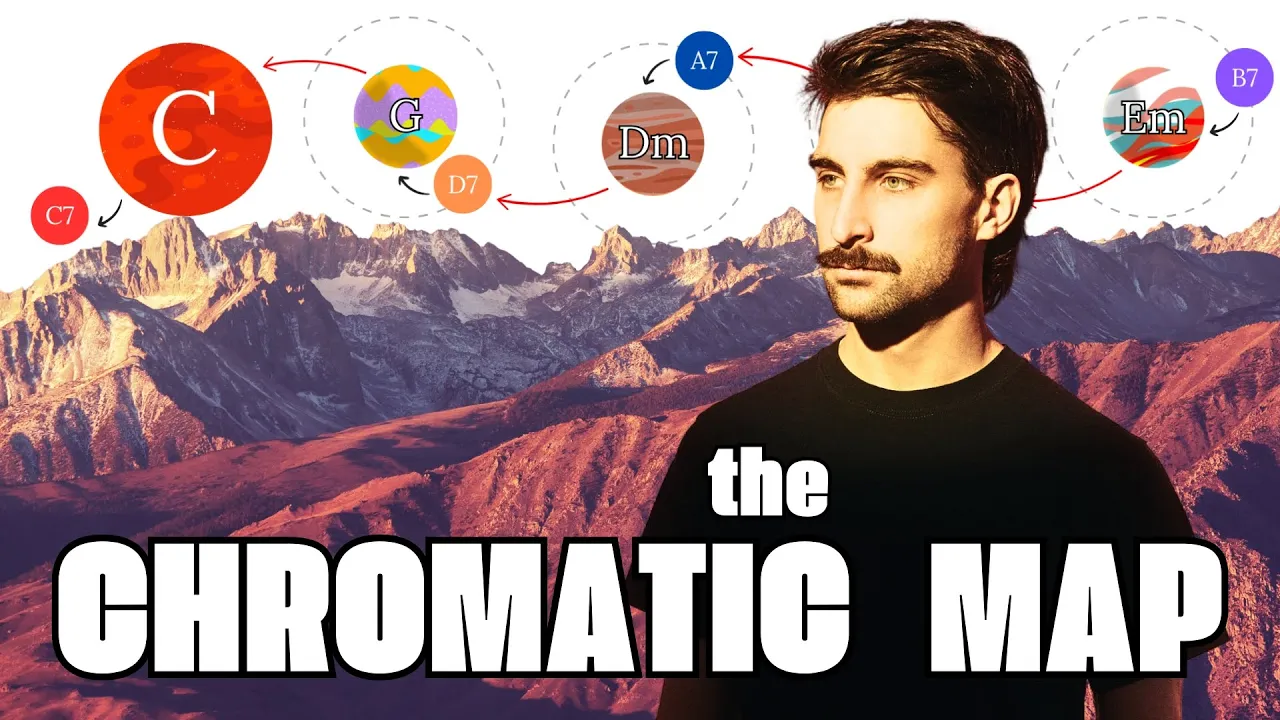


Functional harmony is a music theory framework that categorizes diatonic chords into three groups based on their behavior within a key: tonic function chords (I, VI, III) provide stability and represent the home base; dominant function chords (V, VII) create tension and drive musical progression toward resolution; and subdominant function chords (IV, II) serve as transitional elements that move away from home without immediate directionality. This system uses Roman numeral analysis to describe chord relationships relative to the key, allowing musicians to understand how different chords interact and support harmonic progression in compositions.
Music Theory: Functional Harmony Explained (Chord Functions)
Added:Understanding of major and minor scale construction and key signatures.
Basic triad construction, including major, minor, and diminished chord qualities.
The concept of diatonic chords (how chords are built on each scale degree of a key).
Familiarity with basic Roman numeral notation used to represent chord qualities.
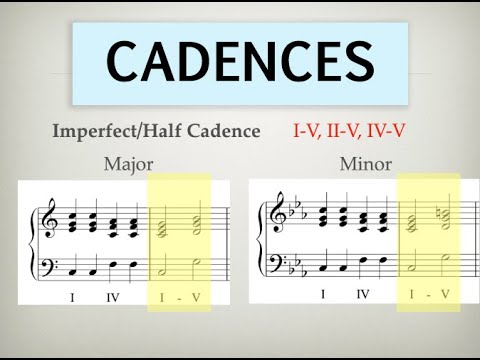
The study of musical cadences (Authentic, Half, Plagal, Deceptive) and how chord functions create tension and resolution.
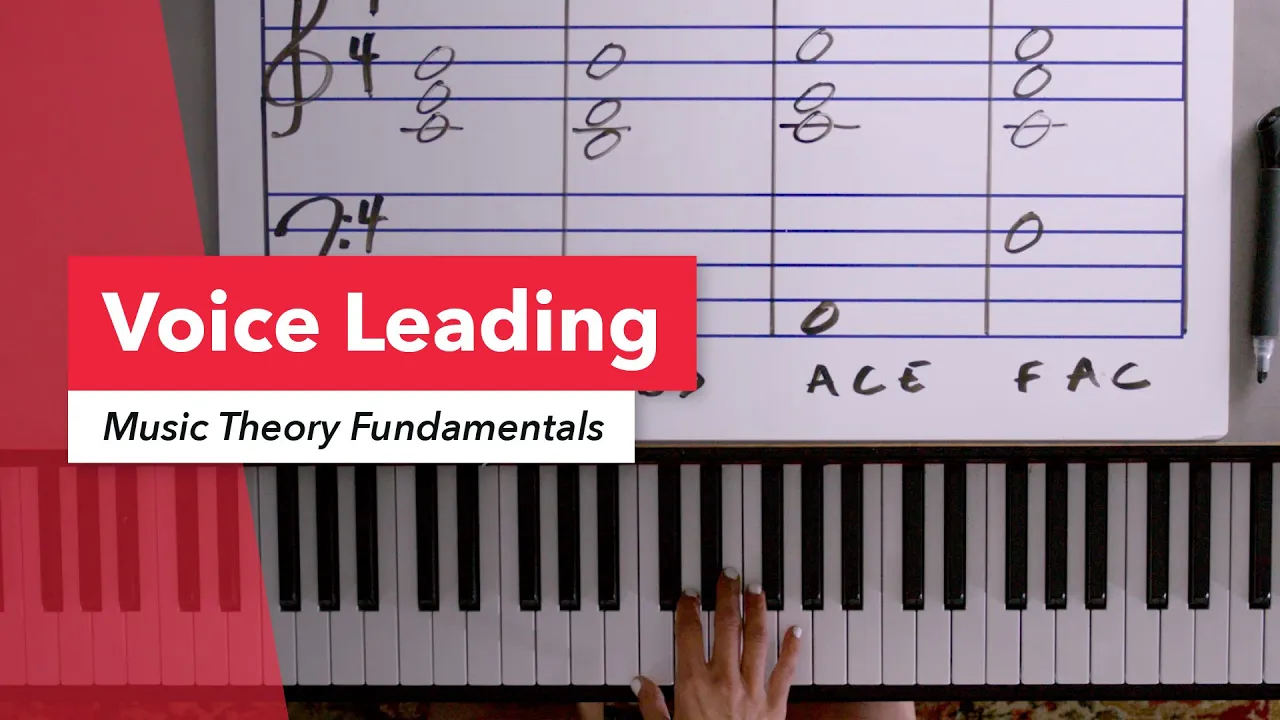
Voice leading principles, including how to smoothly connect chord functions in four-part writing.
Applying Roman numeral analysis to real-world musical scores, such as Bach chorales or pop chord progressions.
Introduction to chromatic harmony, including secondary dominants, modal mixture (borrowed chords), and modulation to foreign keys.
146.8K views4.6Klikes4:30Original Release: 2017-03-27
hey, welcome to 12tone building blocks, our monthly series about the fundamentals of music theory.
we've already covered scales, keys, and chords, but for the most part, we've only talked about them as separate ideas.
in practice, though, they're all deeply related.
after all, chords are built out of notes, keys tell us which notes we're allowed to use, and scales tell us how those notes are going to feel, which gives us a pretty good idea of what to expect from chords that include them.
each scale and each key has a specific set of chords that goes along with it.
for instance, F major (bang) has these (bang) but, well, how do we know that?
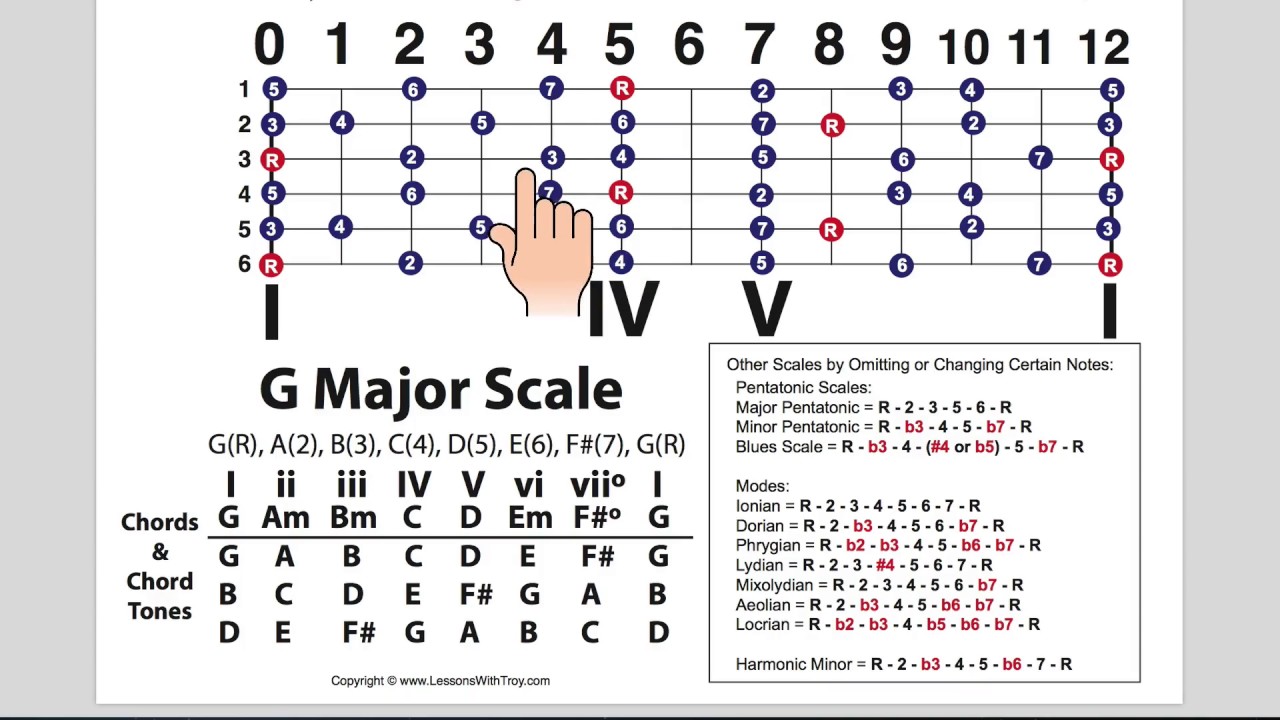
finding the right chords for a scale is called harmonizing, and it's actually pretty simple.
we pick a starting note, like this F, skip the next note, then include the third one, A, skip the fourth, and then add the fifth, C, on top.
because of the way normal scales are arranged, taking every other note like this will always create some kind of triad, in this case F major.
(bang) if we repeat this alternating process for every possible starting note in the scale, and we wind up with this, (bang) a fully harmonized major scale.
and if we want to get extra fancy, we can add a seventh on top, making this.
(bang) of course, no matter where you start your scale, you'll always get the same pattern of chords, and it's often useful to describe them not in terms of their actual roots, but their relationship to the key.
for instance, the keys of F major, G major, and C major all have A minor triads in them, but the way the chord feels is different in each one.
that's where roman numeral analysis comes in, and it's as simple as it is game-changing: all you have to do is take the chord symbol and replace the note name with the roman numeral representing the scale degree it's built on.
for instance, in F major, the A minor chord is built on the third note in the scale, so we'd write it as IIImi.
on the other hand, in C major, it's built on the sixth note, so we call it VImi even though it's the same underlying chord.
as a brief aside, this notation definitely isn't universal: there's a couple different schools of thought on how best to approach it.
they're all pretty similar, but many people prefer to show minor triads by writing the roman numerals in lowercase, so our A minor would just be iii.
I don't use that system, but you'll definitely encounter it at some point so you should probably know what it means.
also, for me, the roman numerals always represent the note's position in the major scale, so if you're using a different scale with different intervals, you show that change by adding a sharp or flat in front of the number.
so in F minor, Ab major would be the bIII chord, because its root is a half step lower than the major scale's third degree.
that, again, is not universal, though.
it's just how I was taught.
(NOTE TO REVIEWERS: I kinda struggled with making this part clear.
does it make sense, or do I need to work on it more?)
anyway, back to chords, there's one more thing we need to talk about: chord functions.
modern music theory is built on the idea that different chords in a key behave differently, based on what notes they contain and how those notes interact.
this is called functional harmony, and we tend to break the chords into three main groups.
the first is called tonic function.
these are chords that feel like they're at rest.
they're often called home chords, and they're incredibly stable.
this includes the I chord (bang) as well as the VI minor chord (bang) and, normally, the III minor chord.
(bang) an easy way to remember this is that they're the three triads that contain the third degree of the scale, which is probably the most important note for defining the scale's overall sound.
the second group is called dominant function.
these are unstable chords that point you back to the tonic, and they're the main engine that drives songs forward.
these include the V chord (bang) and the VII diminished, (bang) which both contain the seventh degree of the scale.
this is a half step below the root, and it has such a powerful pull upward that theorists often call it the leading tone.
dominant function chords also often include the fourth degree of the scale which, combined with the leading tone, creates a tritone, (bang) a very unstable interval that makes the whole chord want to collapse.
(bang) the third group is the subdominant function chords, including the IV chord (bang) and the II minor.
(bang) these serve as a sort of bridge between the other two functions: they're a bit unstable, containing the fourth degree, which wants to fall back down to the third, but they don't have a leading tone, so they're not nearly as directional as dominant function.
these take you away from home, but they don't point you back yet.
that's not their job.
the idea of chord functions is critical to our modern understanding of harmony, but it does have its problems.
for instance, since dominant function is so dependant on the leading tone, it doesn't work in scales that have a lowered seventh degree, like natural minor.
in fact, a lot of these functions get way more subjective when we stray from the major scale, but still, it's one of the best frameworks out there for explaining most contemporary music, and that's gotta be worth something.
anyway, thanks for watching!
Building Blocks was made possible thanks to our Patrons on Patreon, so if you want to see more stuff like this please consider supporting.
you can also join our mailing list for scans of all our episodes, like, share, comment, subscribe, and keep on rockin'.
Up Next
10:03
Jazz Guitar Chromatic Voice-Leading | Passing Chords Explained
@JensLarsen
18.4K views•2020-07-06

10:20
Mozart's Musical Dice Game Explained: History, Rules, & Fun
@webpianoacademy
5K views•2023-03-13
5:00
Understanding Figured Bass: A Complete Guide
@12tone
94.3K views•2015-11-27
10:49
Understanding John Coltrane's Giant Steps: A Music Theory Analysis
@Vox
10.4M views•2018-11-12
Related Study Plans & Knowledge Roadmaps
Structured learning paths in Music Theory
music-theory
Composing Galant Music: Partimento & Schemata
01Foundations of Figured Bass and Keyboard Harmony
02The Rule of the Octave (Regola dell'Ottava)
03Galant Schemata: The Building Blocks of Form
+ 2 more learning modules
30h5 modules
Explore Roadmap
music-theory
Decoding Overtone Series: Tuning & Drone Music
01Acoustic Foundations: The Physics of the Overtone Series
02Tuning Systems: Equal Temperament vs. Just Intonation
03Microtonality and Spectralism: Beyond Standard Pitches
+ 2 more learning modules
24h5 modules
Explore Roadmap
music-theory
Impressionist Harmony: Scales, Planing & RPGs
01Foundational Music Theory: Keys, Intervals, and Seventh Chords
02Impressionist Color: Chord Planing and Parallel Harmony
03Whimsical Textures: Pentatonic Cascades and Whole-Tone Scales
+ 1 more learning modules
14h4 modules
Explore Roadmap
music-theory
Negative Harmony: Axis Reflection in Indie Pop
01Music Theory Foundations: Scales, Intervals, and Triads
02Functional Harmony and the Circle of Fifths
03Demystifying the Negative Harmony Axis Reflection
+ 2 more learning modules
16h5 modules
Explore Roadmap