















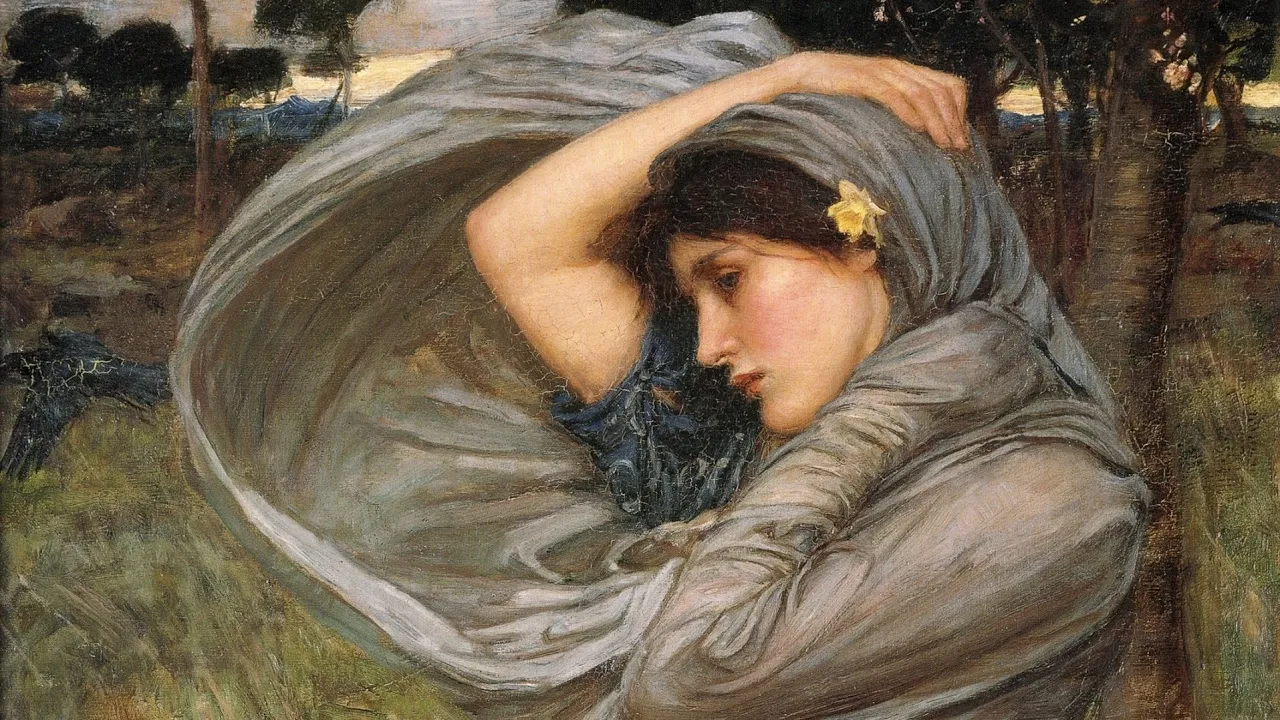





John William Waterhouse's painting 'The Lady of Shalott' (1888) exemplifies how Victorian artists used visual symbolism to convey complex themes of isolation, freedom, and mortality; the painting depicts the cursed lady breaking free from her tower to pursue love, with symbolic elements like the cracked mirror, red poppy, and candles representing her transition from shadow-bound existence to a fleeting moment of authentic living, challenging viewers to see beyond surface tragedy toward themes of defiant determination and the human desire for genuine experience.
Decoding Waterhouse's Lady of Shalott: Art History Analysis
Added:Familiarity with Alfred, Lord Tennyson's 1832 poem 'The Lady of Shalott', which serves as the direct literary source for Waterhouse's work.
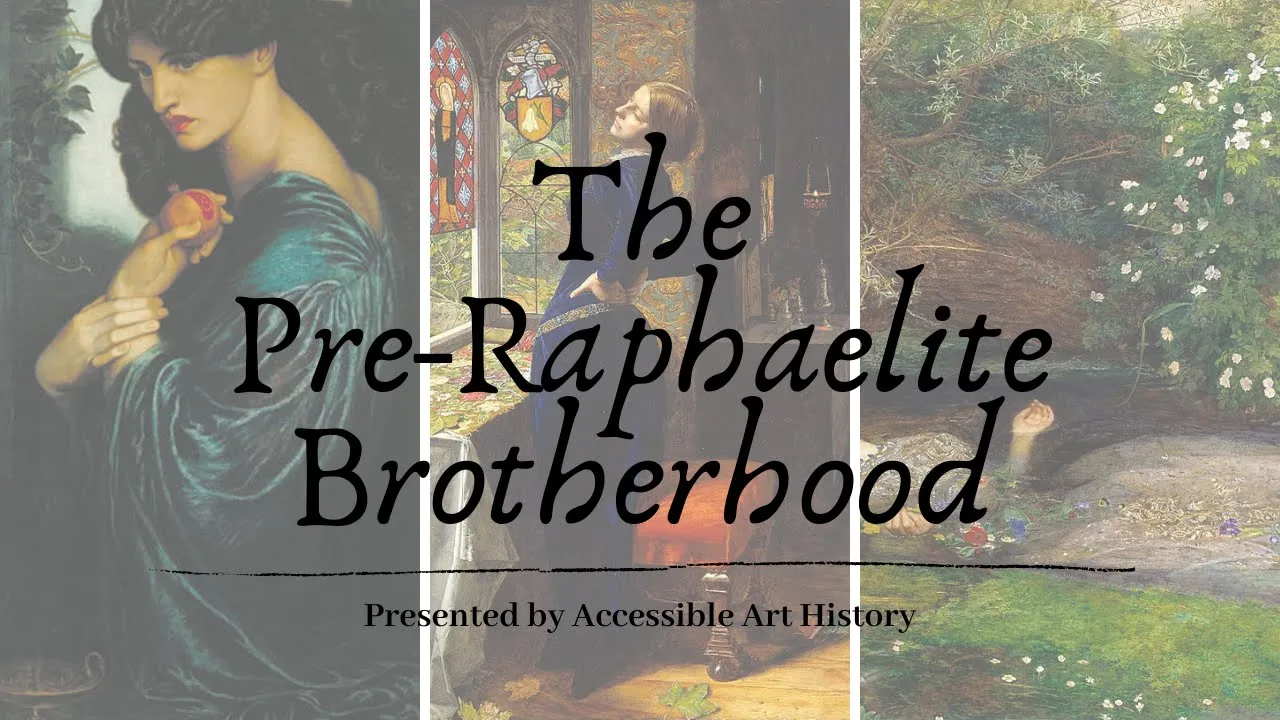
An understanding of the Pre-Raphaelite Brotherhood, their artistic principles, aesthetic style, and rejection of academic art conventions.
Basic knowledge of Arthurian legend, specifically the roles of King Arthur, Sir Lancelot, and the realm of Camelot.
An introduction to art history terminology, specifically 'iconography' (the study of symbols and themes in visual arts).
The representation of Victorian gender roles, the 'domestic sphere', and the 'fallen woman' trope in 19th-century art and literature.
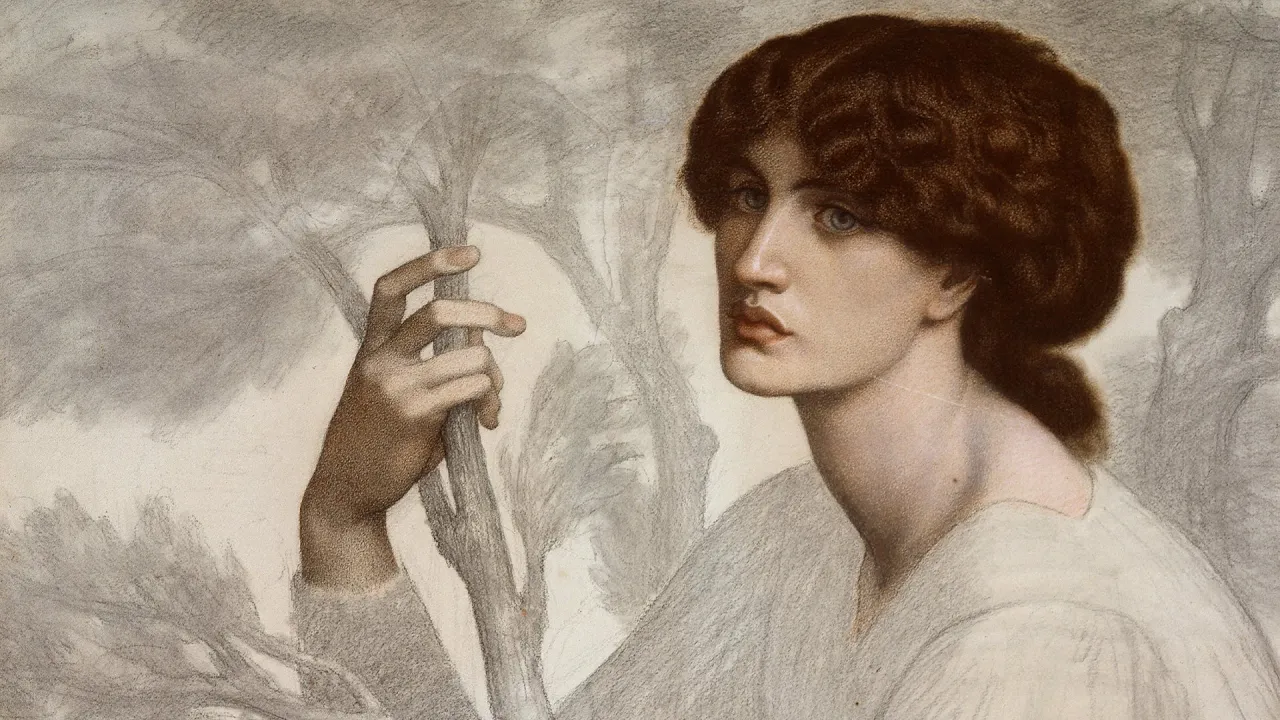
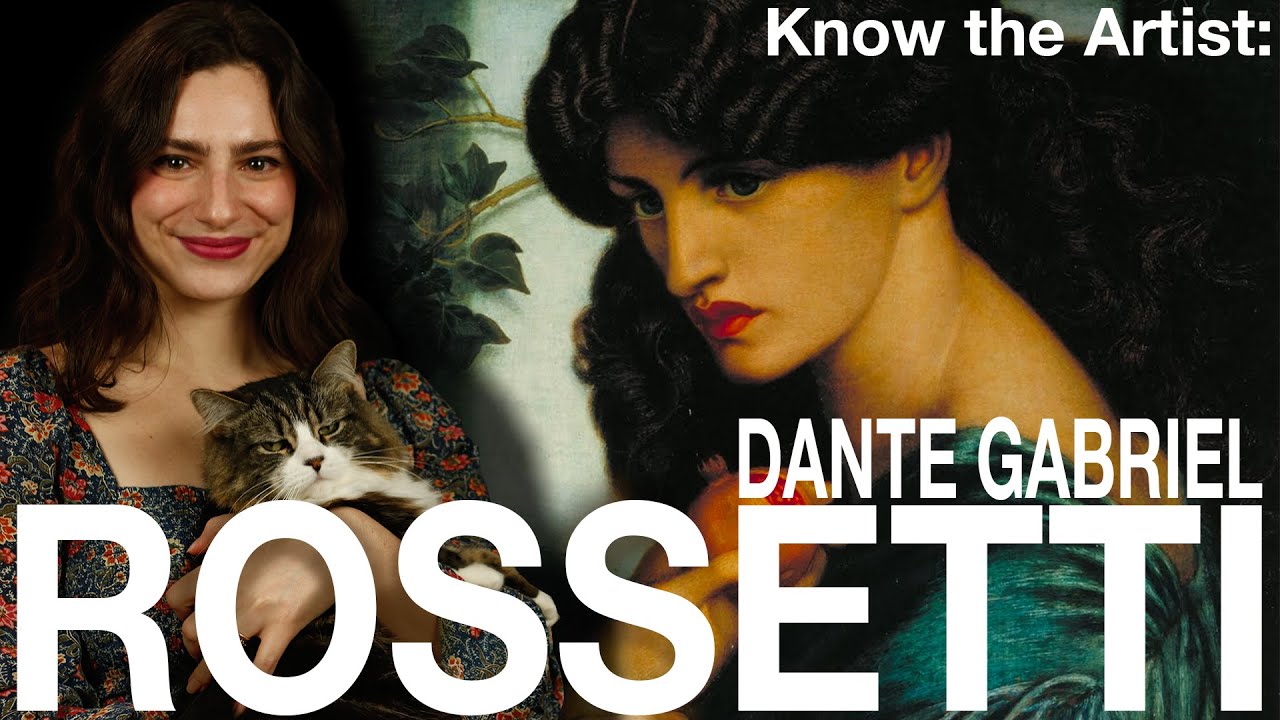
A comparative study of other artists who illustrated Tennyson's poem, such as William Holman Hunt, Dante Gabriel Rossetti, and Elizabeth Siddal.
Deepening research into John William Waterhouse's broader portfolio, examining how his style evolved from late Pre-Raphaelitism to Neo-Classicism.
An analysis of the transition from Victorian Romanticism to the Aesthetic Movement ('art for art's sake') in the late 19th century.
148.8K views10.1Klikes11:25Original Release: 2025-10-11
This is the Lady of Shalot by John William Waterhouse. One of the most beloved paintings in all of Britain, but I never really liked it.
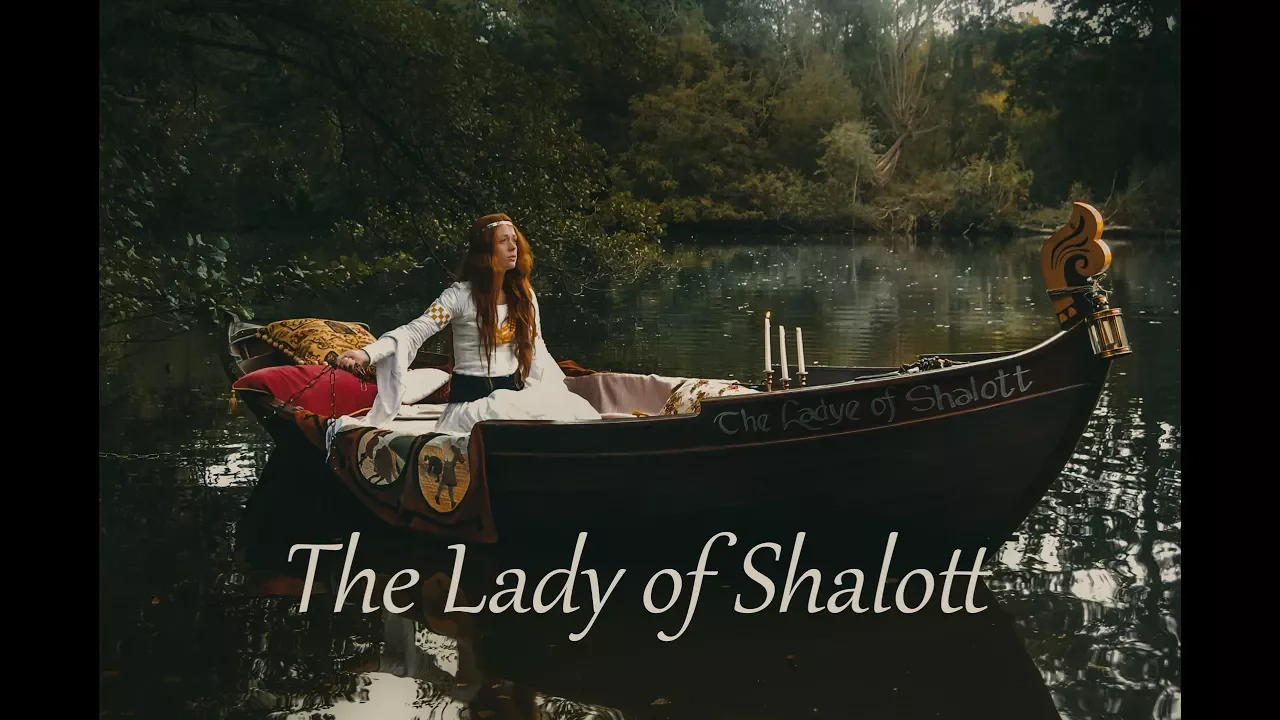
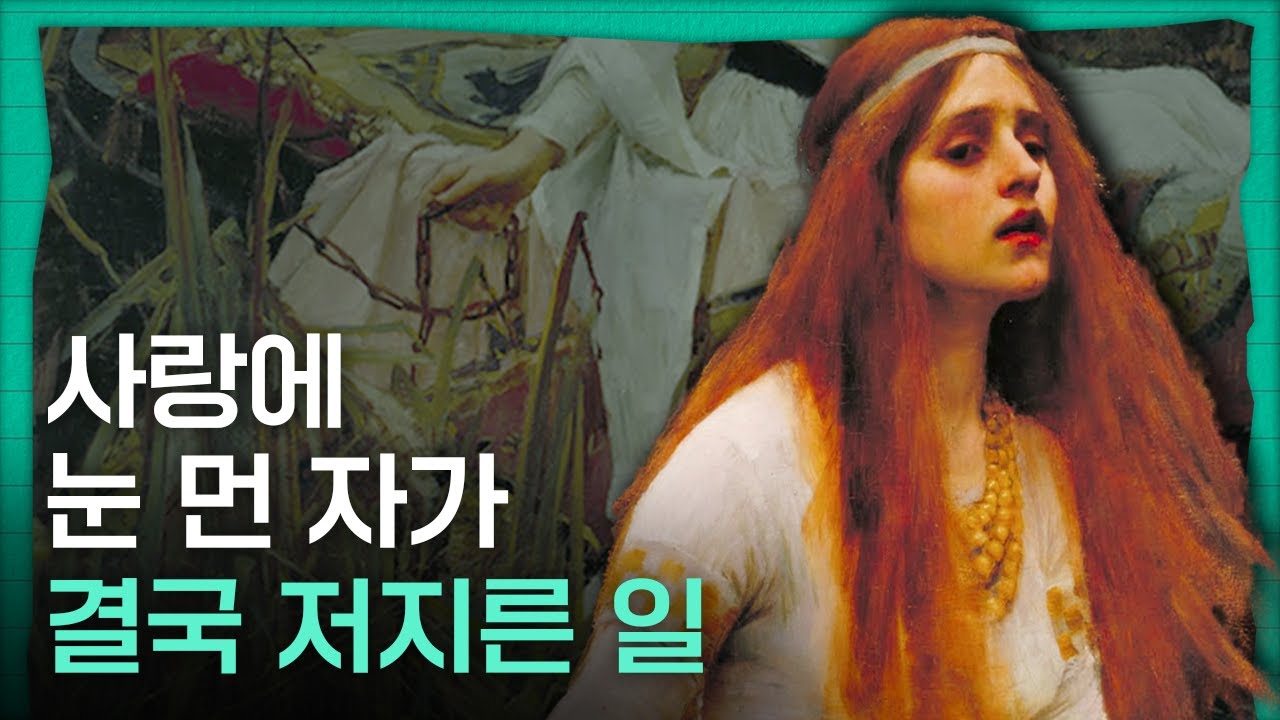
I always found it moody and ethereal, which was good. But the melodramatic wispiness of it all always bothered me for some reason. Then one day, I really looked at it and it was like a switch flipped in my brain. Now I love it, and I'll show you why. We're placed along the river's edge before a small boat drifting along glassy water. Its surface dappled with freshly fallen autumn leaves. Inside the boat sits a young woman with long flowing red hair wearing a white dress. The scene feels calm and peaceful, but the look on her face says otherwise. Something's terribly wrong.
Is she upset because of the mosquitoes?
I don't see any bugs. Maybe she's mad her fancy blanket's getting wet. I don't think that's it either. But if we take a look to the left of the painting, we get a clue. Low-flying swallows warn us that something ominous is about to happen.
But what? This painting is based on Sir Alfred Tennyson's poem, The Lady of Shalot, set in the medieval time of King Arthur, who may or may not have existed, but that's not all that important.
Tennyson made two versions of this poem, one in 1833 and a revised one in 1842.
Waterhouse was so obsessed with Tennyson's poem that it inspired him to create not one, not two, but three different paintings. And this isn't where her story begins, or even really where it ends. So, who exactly is this Lady of Charlotte? Oops, the Lady of Shelot, I mean. And how did she get here? To really understand what's going on, we need to take a few steps back and get this girl out of this boat and back in her tower. And don't worry, there's a painting for that, too. But before we dive in, I want to thank the sponsor of today's video, June's Journey. June's Journey is a beautifully crafted hidden object mystery game set in the glamorous 1920s where we follow June Parker, an amateur detective on a mission to uncover the truth behind her sister's murder. Each hidden object scene is like a little masterpiece. It actually reminds me of the way we uncover hidden symbols and meanings in the paintings we talk about here. But it isn't just a game. It's a story that pulls you in chapter by chapter with new clues and plot twists that keep you guessing. As you progress, you unlock new scenes, features, and events, and you can even decorate your own island to make it uniquely yours. There are also special seasonal events and rewards like this Halloween decor I picked up. It's such a relaxing way to unwind at the end of the day, but there's just enough challenge that it's always interesting. The aesthetic of the game is very tropical and glamorous, very art deco vibes. What a coincidence. You can download June's Journey for free by clicking the link in the description or scanning the QR code on the screen. Now I think a certain someone is waiting for us in her tower.
And I heard it's rude to keep a lady waiting. But in her web she still delights to weave the mirrors magic sights. For often through the silent nights a funeral with blooms and lights and music came from Camelot. Or when the moon was overhead came two lovers lately wed. I am half sick of shadows said the lady of Shalot. The lady spent her days in a tower on an island called Chalot, down river from the city of Camelot. She lived under a curse that prevented her from going outside or even looking out her window. She could only view the world through a mirror. Because of the curse, she spent her days weaving images of the outside world she saw in the reflection of her mirror onto a tapestry. We're placed in an interior room inside the Lady of Shelots's castle. She wears a red dress as she leans back in her chair, seemingly lost in thought. She stretches her arms overhead. Her face is turned in our direction, but her eyes drift toward a huge round mirror on the far wall.
Reflected in the mirror is a view out the window. We see a bridge leading to the city of Camelot and a couple walking alongside one another. Perhaps these are the two lovers lately wed referred to in the poem. We can also spot a red poppy flower. In Victorian art, poppies often symbolized eternal sleep or death.
Interestingly, we see this poppy in the reflection of the mirror, but when we look for it in the foreground of the painting, it's not there. This might be foreshadowing, a little hint of what's to come. Positioned in the front of the lady is her loom, where we get a peek at what she's been weaving. We can see the shuttle. The tool she passes back and forth through the threads looks like a tiny boat. This might be another subtle foreshadowing. So there she is, the lady of Shalot, suspended in a moment of listlessness. She has no idea her whole world is about to come undone. That's when a handsome knight named Sir Lancelot walks by in her mirror, who is so smoking hot that she can't resist it any longer. She turns her back to the mirror to gaze at him directly through the window. But when she does, the mirror cracks from side to side. She left the web. She left the loom. She made three paces through the room. She saw the water flower bloom. She saw the helmet and the plume. She looked down to Camelot. Out flew the web and floated wide. The mirror cracked from side to side. The curse is come upon me, cried the lady of Shalot. The golden thread wraps around her knees like a snare. The curse has come upon her, and now she has to die. With a steady stony glance, like some bold sear in a trance, beholding all his own mischants, mute with glassy countenance, she looked down to Camelot.
It was the closing of the day. She loosed the chain, and down she lay. The broad stream bore her far away. The lady of Shalot. Determined to meet Lancelot, the lady leaves her castle for the first time, finds the nearest boat, carves her name into it, climbs in, and begins her journey toward Camelot. She barely grips the chain she used to release the boat from the shore to set herself free. To the left of the painting, steps descend from a tall stone building, likely the very steps the lady took as she fled the tower she had been living in her whole life up until this very moment. And underneath it, we see the swallows flying just above the water.
Traditionally, low-flying swallows signal doom. But if we take a look at Waterhouse's preliminary sketches, we see that he initially wanted to portray the woman looking up at the birds, which makes me wonder if they might represent the woman's freedom and release into the world for the first time. Maybe they mean both at once. The day is coming to a close as the sun fades behind the trees in the background. A lantern hangs on the front of the boat and signals that it'll be dark soon. Despite this, the Lady of Shellot with her white dress and long flowing red hair appears to almost glow against the muted colors of the background. A single red leaf stands out against her gown and might signal that she's a fallen woman. The fallen woman was a prevalent trope in Victorian England at a time when a woman's virtue was defined by her sexual innocence.
This myth typically involved a young woman who after giving into seduction in some way found herself destitute and usually dead under a bridge somewhere.
She has a wistful melancholic expression on her face as she looks down toward a crucifix lying on the bow of the boat.
This might represent her sacrifice and imminent death. Beside it are three candles. Two of them are extinguished and the last one hangs on by a thread, signifying that her light will soon burn out. The boat is draped in an elaborate tapestry that dips into the inky black river water. This is the same tapestry the girl was weaving in her tower. The image to the right shows a group of knights. One appears to be riding a white horse. The image to the left appears to show a castle with a long-haired woman in front of it that looks a lot like the lady herself. There even seems to be a little boat behind her. This makes me wonder if the lady of Shalot wasn't just weaving images of the shadow world, but if she was also weaving the life she dreamed of to escape to Camelot and finally be free.
Either way, those beautiful pictures unravel with her as she drifts downstream. According to Tennyson's poem, the Lady of Shelot sang a song as she drifted to her death. She reached Camelot only after she was already gone.
A crowd gathered around her body and among them was none other than Sir Lancelot. When he saw her, he said, "She has a lovely face. God in his mercy, Lantra grace." This painting is so beautiful, so tactile. And when you think about it, this is her first time outside ever. It's almost like Waterhouse is giving us her eyes in a moment that must have felt both electrifying and terrifying all at the same time. The first time feeling the boat rock beneath her. The very boat that will rock her to sleep forever. The first time catching the breeze off the water. The same breeze pushing her toward death, teasing the last flicker of her candle. Waterhouse was a true Tennyson fan. He apparently owned a copy of Tennyson's collected works and covered every blank page with pencil sketches for paintings. So, he couldn't just depict one part of his poem. He had to make three. But for some reason, he decided to create them out of order. He made the Lady of Shalot in 1888. The Lady of Shalot looking at Lancelot in 1894. And I am half sick of shadows, said the Lady of Shalot two decades later in 1914. When I look at this painting, I see death and I see doom.
But I also see something I never expected to before I really took a good look at this painting. I see a bittersweet image of someone who's finally living for the first time.
someone who understands the chains that held her back and is choosing to let them go. Well, I guess she's technically still holding on to them, but you know what I mean. She spent her whole life in the confines of her tower inside four gray walls, as Tennyson writes in his poem, experiencing the world through the filter of a mirror, the shadow world.
And I can't help but see the parallel today of how many of us experience the world through our screens. It is the world, but a specific version of it. And when I look at her face, preparing to let out her final breaths, I wonder what was the real reason she got on that boat. Was Sir Lancelot really that much of a medieval thirst trap? Or was he simply the excuse she'd been waiting for? Because as far as I can tell, the Lady of Charlotte was half sick of shadows before Prince Charming rode in on his white horse. It's tempting to read the Lady of Shelot as pure tragedy.
a woman who lived at the margins, sacrificing herself for a man she never knew, dying without ever experiencing real human connection with another person. But that's not what I see when I look at it. Instead, I see raw and defiant determination, a choice to live, if only for a single fleeting moment.
But in that moment, everything is alive.
And shout out again to June's Journey for sponsoring this video. You can download the game for free by clicking the link in the description or scanning the QR code on the
Up Next

49:33
Rembrandt Biography: The Life and Art of a Dutch Master
@PerspectiveArts
140.2K views•2023-07-25

114:18
Christian Iconography: History, Theology, and Meaning | Fr. Panayiotis Papageorgiou
@Trisagionfilms
58.8K views•2020-02-21

7:48
Ukiyo-e Art: History, Woodblock Printing & Influence
@japanathand
6.3K views•2023-06-08

16:34
Earliest Depictions of Jesus in Art: 10 Ancient Images Explained
@UsefulCharts
5.9M views•2022-06-03
Related Study Plans & Knowledge Roadmaps
Structured learning paths in Art History
art-history
Gothic Cathedrals: Engineering, Light & Society
01The Birth of the Gothic: Romanesque to Suger's Vision
02The Structural Triad: Pointed Arches, Ribbed Vaults, and Flying Buttresses
03Theology of Light: Lux Nova and Sacred Geometry
+ 2 more learning modules
14h5 modules
Explore Roadmap
art-history
Pre-Raphaelites: Realism, Symbolism & Critique
01The Victorian Art Establishment and Academic Formula
02The Founding of the PRB and Radical Realism
03Medieval Revivalism and Literary Symbolism
+ 1 more learning modules
8h4 modules
Explore Roadmap
art-history
Street Art: From Subways to Art Market
01Subcultural Origins in Philadelphia and New York (1970s)
02The Subway Era and Style Wars (Late 1970s - 1980s)
03The East Village Scene and Early Gallery Crossover
+ 2 more learning modules
10h5 modules
Explore Roadmap
art-history
Classic Maya Art: Iconography, Glyphs & Ritual
01Foundations of Classic Maya Visual Culture
02Deciphering Maya Hieroglyphs & Text-Image Integration
03Sacred Geography and Cosmological Architecture
+ 2 more learning modules
14h5 modules
Explore Roadmap