






















Iron Mountain, California hosts one of the world's most extreme acid mine drainage environments, where pyrite oxidation generates water with pH values as low as -3.6—the most acidic water ever recorded—due to the unique combination of massive sulfide deposits, fractured rock allowing oxygen access, and active iron-oxidizing bacteria that accelerate acid production beyond natural rates; this extreme environment has enabled groundbreaking research on negative pH chemistry, sulfate mineral formation, and served as a Mars analog for studying iron-oxidizing microbial processes that could indicate past life on the Red Planet.
Extreme Acid Mine Drainage at Iron Mountain, California | USGS Lecture
Added:Understanding of the pH scale, including the mathematical definition of pH as the negative logarithm of hydrogen ion concentration, and how negative pH values can theoretically and practically occur.
Basic chemical principles of redox (reduction-oxidation) reactions, particularly how elemental iron and sulfur compounds oxidize when exposed to oxygen and water.
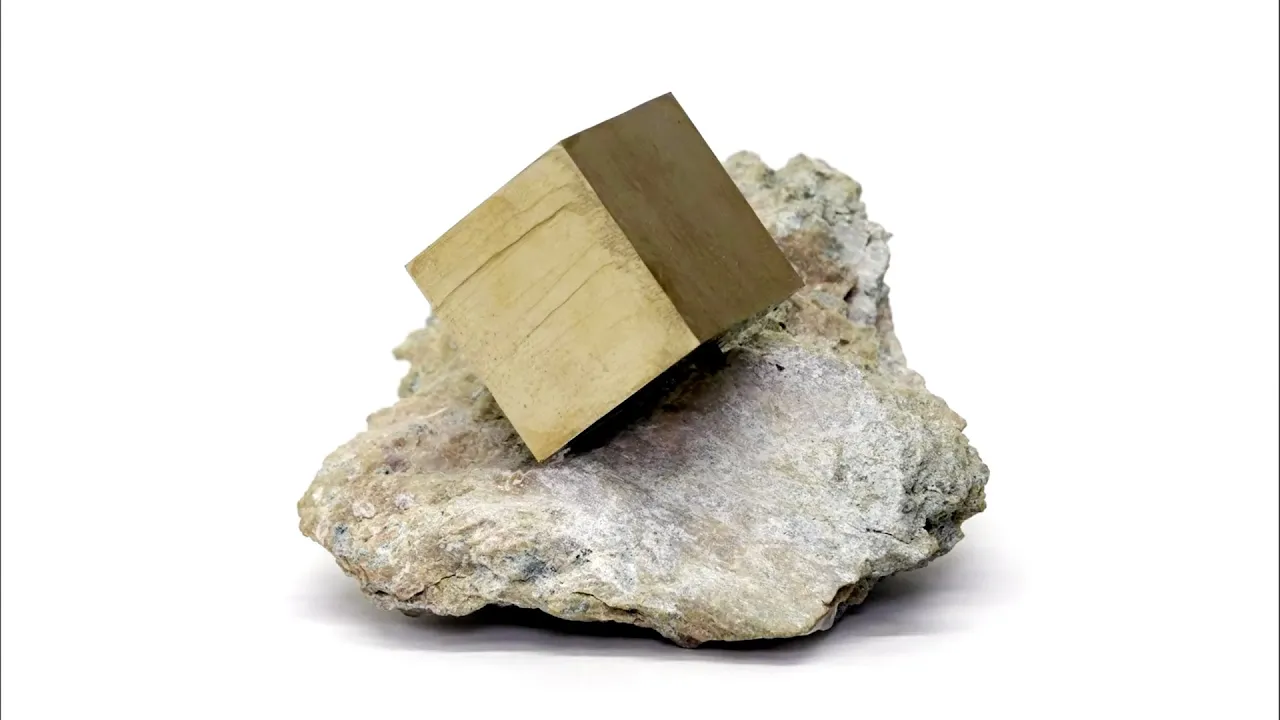
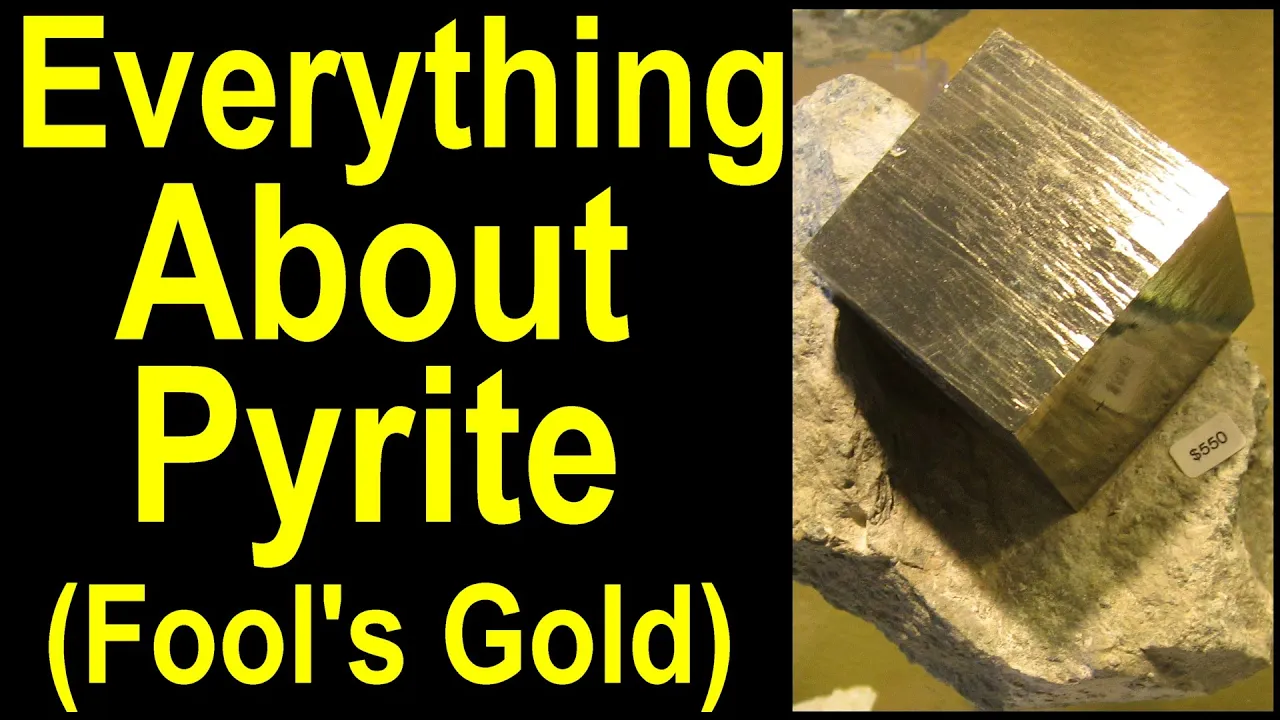
Fundamental knowledge of mineralogy, specifically the properties of pyrite (fool's gold) and how its weathering leads to sulfuric acid generation.
Introduction to acidophilic microorganisms (extremophiles) and their role in catalyzing the oxidation of metal sulfides.
Advanced remediation engineering techniques for Acid Mine Drainage (AMD), such as active lime neutralization, bioreactors, and passive constructed wetland systems.
The geochemical modeling of complex, highly concentrated aqueous solutions (brines) using specialized software like PHREEQC to predict mineral precipitation and dissolution.
Biomining and bioleaching applications, exploring how the same microbial processes that cause acid mine drainage can be harnessed to extract valuable metals from low-grade ores.
Policy and environmental law studies surrounding the Comprehensive Environmental Response, Compensation, and Liability Act (CERCLA/Superfund) and its long-term funding mechanisms for perpetual site maintenance.
2.7K views27likes1:37:40Original Release: 2018-08-09
[Silence] This video is a one-hour presentation of the USGS Evening Public Lecture Series, titled Iron Mountain, California – an Extreme Acid Mine Drainage Environment.
The presentation is being hosted in the USGS Menlo Park facility.
The host welcomes the audience and introduces the speaker, Charles Alpers, who is a USGS research chemist.
As Charles is giving his presentation, he is continually pointing to and referring to slides presented on the screen.
The slides are a mixture of charts, graphs, and photos.
At the end of the presentation, there is a question-and-answer session with members of the audience.
[Silence] [inaudible background conversations] - Good evening, and welcome to the United States Geological Survey’s public lecture. I’m Diane Garcia, and I work with our Science Information Services group here in Menlo.
And I’m really happy to see you all here for our July lecture.
Before we get started, we always like to plug our next lecture, which is going to be on August 30.
It’s – let me see. [laughs] It’s going to be – Kyle Anderson is – with our Volcano Science Center is going to give a talk about Kilauea eruptions. And that’s August 30, 2018.
Please take a flier from the back, and please mark it on your calendar, and please come back. We hope to see you.
But tonight’s lecture is Iron Mountain, California – an Extreme Acid Mine Drainage Environment.
And it will be presented by Charles Alpers.
Charlie Alpers is a research chemist with the USGS Survey – with the USGS’ California Water Science Center in Sacramento, California.
He has an undergraduate degree in geology from Harvard University and a Ph.D. in geology from the University of California-Berkeley.
Dr. Alpers has authored or co-authored more than 125 peer-reviewed publications on various topics related to the environmental legacy of historical mining, including acid mine drainage, sulfate minerals, mercury contamination and bioaccumulation, and arsenic – arsenic [chuckles] speciation and bioavailability.
His current projects include quantification of erosion and sediment sources at Malakoff Diggins State Historic Park in Nevada County, California; investigations of mercury transport, methylation, and bioaccumulation at the Cache Creek Settling Basin in Yolo County, California; and geochemistry and minerology related to extreme mine drainage, including negative pH, at the Iron Mountain Mine Superfund site in Shasta County, California.
So let’s everybody give a nice, warm welcome to Charlie.
[Applause] [Silence] Hang on while we have technical difficulties solved.
- Okay. Is that working? - No.
[Silence] - Okay. Back to Plan A.
Thank you, Diane, for the nice introduction.
And thank you to the organizers for inviting me to speak today.
- [inaudible] - Louder. Speak up.
- Okay. How’s that?
- There you go. - There you go.
- Okay. I’ll start over. Thank you, Diane, for that introduction, and thank you for the – to the organizers for inviting me to speak today.
Are we going to change back? [laughter] - I think it will [inaudible]. - Okay. All right.
All right.
Okay. Can you hear me? All right. Thank you. Sorry for that.
So tonight’s topic is Iron Mountain, California.
And it’s a natural laboratory that we’ve been fortunate to be able to work at for several decades now at USGS.
And it turns out to be among the most, if not the most, acid water ever recorded in the world. So it’s a pretty special place.
And, as we’ll see, we’ve had a chance to do some pretty interesting research there.
Here’s an outline of what I plan to cover tonight.
I’ll give some background on Iron Mountain, including the geology, geochemistry, and hydrology of this – of the site as well as the mining history and the environmental history.
A lot of the work by USGS has been in support of U.S. Environmental Protection Agency, or US EPA’s, work there.
It’s in remedial actions. The site has been on the Superfund list since about the very beginning of Superfund in the 1980s.
And so our goals have been to improve the scientific understanding and to support those remediation decisions by EPA.
And along those lines, we’ve investigated the minerology and the geochemistry of the efflorescent salts.
Efflorescent – also known as flowering – these salts of iron sulfates that kind of bloom out of the rocks there. And they’re important for understanding metals cycling and wet-dry cycles and that – how that interacts with the – with the acid waters of the site. And all this information was used to understand the – and predict the effects of plugging the mine, which was a proposed remedy that was never actually implemented.
Along the way, we discovered negative pH, which a lot of people thought just wasn’t possible. When you learn about pH and acidity in school, you learn that it goes from zero to 14 – the pH scale.
But we’ve kind of rewrote the book on that in this situation, and I’ll explain how we came to those realizations, and we actually recorded these extremely negative pH values.
And another study we’ve been doing in the last few years for EPA has to do with pipe scale. It’s an iron-rich precipitate that’s formed in some of the pipes that transmit water from the sources of the mine to a treatment plant downstream. And this iron precipitate tends to clog up the pipes and cause a lot of expensive maintenance issues.
And so our scientific studies are helping EPA and the other folks working at the site to minimize the cost of that maintenance and to anticipate how scale forms and try to reduce the amount of scale formation moving into the future.
And there’s bonus science. We get to use Iron Mountain as a analog for Mars. And Mars being the red planet, you know, iron – red – you can see there might be a connection there.
So we’re – I’ll explain how the site has also been useful in Mars research.
Here’s a photograph. I think it was the one on the flier.
And I’ll explain a little more of the features that you see here a little later.
I’m just going to use it here as backdrop for some acknowledgements before I forget. I want to acknowledge several colleagues who have been instrumental in the work we’ve done over the years.
And first and foremost is Kirk Nordstrom – the first name on the list.
Kirk actually did his Ph.D. at Iron Mountain back in the 1970s.
He’s been working at the site for 45 years.
He did his Ph.D. at Stanford and worked right here in Menlo Park for the first few years of his career with USGS.
Then he moved to Colorado and recently retired, but he’s an emeritus now and still a very active researcher. He’s one of the world’s authorities on acid mine drainage. And this is where it all started for him.
This is kind of ground zero for acid mine drainage research, and I’ve been privileged to be a postdoc with Kirk back in the late 1980s here in Menlo Park. And then I moved to Sacramento where I’ve been working also on this and many other projects since then.
Kate Campbell is a current colleague who’s also working at the site with us.
And the work I’ll be describing about pipe scale has been headed up by Kate.
And I don’t have time to mention all the contributions of the other USGS people.
I just want to – I want to mention Jo Burchard – the last one on the first part of the list there. Jo worked with Kirk and myself here back in the – in the early ’90s when I was doing my postdoc, and she got – she’s also worked quite a bit on the site in the early days, as did Jim Ball.
The next group of names are people at US EPA.
As I mentioned, US EPA has been heavily supportive of this work.
They funded USGS to work at the site since the mid-1980s.
And Lily Tavassoli is the current site manager.
She was planning to be here tonight, but there’s actually a fire up at Iron Mountain right now. I don’t know if you’ve heard about that – near Redding.
And she’s up at the site trying to manage that, and it is actually a pretty serious situation up there.
Jim Sickles and Rick Sugarek were former site managers, and they both were very supportive and instrumental in getting USGS involved in doing science in support of EPA’s remediation activities at the site.
EPA has had several contractors or consulting firms that have done work for them over the years, and we’ve worked closely with many people there.
CH2M Hill, which is now known as Jacobs Engineering – several of those scientists there and engineers.
And now also we’re working with folks at Remedy Engineering, also located in Redding.
The next group of folks are at UC-Davis, or were at some time in the past.
Amy Williams is a Ph.D. student, and I’m going to present – be presenting some of her work toward the end of the presentation on the Mars analog research.
Her thesis adviser was Dawn Sumner.
Dawn is heavily involved in the current Mars Rover program – the Mars Curiosity mission, or Mars Science Laboratory.
And two other – the two latter people on the list there – Christy and Marion – are postdocs with Dawn right now also working on Iron Mountain.
Their work is still in the initial stages.
Won’t be talked about a whole lot tonight.
And then, at the end of the list there, several people who work up at the Iron Mountain site, or who have in the past, who were also very helpful to us with logistic support during our field work.
Here’s a map showing northern California.
You see the red box there within the state.
Here at the northern end of the Sacramento Valley and the – so the southeastern portion of the Klamath Mountains.
The red dot represents Iron Mountain Mine.
Here’s the city of Redding at the north end of the valley right along the Sacramento River.
Of course, this is Lake Shasta and Shasta Dam.
There’s a small reservoir just downstream of Shasta known as Keswick Reservoir.
It doesn’t really look like a reservoir on this map, but it’s a long, skinny reservoir known as an afterbay where it regulates the flow out of Shasta.
And Iron Mountain drains through some creeks that flow into this Keswick Reservoir.
The main creek is Spring Creek, and we call this the Spring Creek arm of Keswick Reservoir. And then Slickrock Creek is on the southern side of Iron Mountain and Boulder Creek on the northern side.
These are the creeks that are most heavily contaminated by the acid drainage coming off of the mountain itself.
And this aerial photograph shows the same area, pretty much.
There’s Slickrock Creek on the southern side of Iron Mountain.
You see this scar. You can actually see this from – well, from space, but you can also see it from Highway I-5 as you’re driving north as you go from Red Bluff to Redding.
If you look to your left, you’ll see a scar on the hillside, which is this waste pile.
Here’s Boulder Creek draining the north side of the mountain flowing into Spring Creek. They flow by this Minnesota Flats Treatment Plant, which is actually the place where mine tailings and mill tailings – the ground-up stuff that didn’t have valuable minerals – was stored. But they removed those tailings, and it was the only flat space around to build this treatment plant that I’ll describe a little later.
Here’s Keswick Reservoir – that long, skinny afterbay.
And here’s the Spring Creek Debris Dam, which collects water from Spring Creek before it flows into the Spring Creek Reservoir – or, the Keswick Reservoir.
The pH down here used to be quite low, and it’s improved quite a bit, as we’ll describe in the remediation.
First I want to talk about the geology and the mining history.
The deposit in Iron Mountain is known as a massive sulfide.
Sulfides are minerals such as pyrite, iron sulfide – or fool’s gold – and other minerals that are more valuable are chalcopyrite and sphalerite.
They’re also metal sulfides. Chalcopyrite is copper, iron, and sulfur.
Sphalerite is zinc and sulfur.
And they all tend to form, in this case, on the seafloor.
Maybe some of you have seen pictures or videos of black smokers – these deep-sea vents that have hydrothermal water.
It comes up, and it has the metals in it – in some cases, the sulfur also – and it mixes with seawater, it chills, and then these particles rain back down.
And these, in some cases, are pretty pure sulfur – sulfides.
You can get layers of iron, copper, and zinc deposits forming in the mid-ocean ridges of the – these days after they’re forming.
So we have a pretty good idea how these things form.
This particular one formed over 400 million years ago in the Devonian period.
But it’s been very well-preserved. And the host rocks are volcanic rocks – kind of marine volcanics. And there’s also some alteration that took place as the hydrothermal solutions interacted with seawater.
So the extra sodium from seawater got into the rocks, creating a rock we call spilite, which is just an altered volcanic rock with a lot of sodium.
But the other rock types are rhyolites and greenstones – intermediate volcanic rocks.
So this was a series of these massive sulfide lenses that were almost 95% or more pyrite, and now they’re sulfide.
So very pure sulfur deposits, really, with metals.
And they were surrounded – kind of sandwiched between volcanic rocks.
This is a very attractive target for mining because you can really get a high concentration of the ore minerals you’re looking for.
Some mines, you know, the minerals are dispersed through.
You have to mine a lot of rock.
In this case, it was a very concentrated deposit and fairly high-grade in terms of the copper grades. You know, 2 to 5% copper, for example, was typical.
And overall, about 7 million tons of this sulfide ore was mined, mostly by underground methods, between late 1800s – and about 1962, that stopped.
In addition, 9 million tons of material called gossan was mined near the surface. You can’t really see it at this scale, but there’s some red scars on the top of Iron Mountain that are – this massive sulfide, when it weathers in place – and I’ll show a picture of it in a moment – it creates an iron-rich caprock.
And “gossan” is the German word for “iron hat.” And it’s a very distinctive type of deposit.
It makes it easy to find these deposits. These are among the easier things to find as an exploration geologist. You see this big iron outcrop.
You say, well, there might be something underneath where the iron wasn’t oxidized, and it’s the sulfide minerals I’m looking for that have – still has the copper and zinc in it.
The copper and zinc tend to get leached out during weathering, but it leaves gold and silver behind, and that’s what was mined in this gossan between the late ’20s and the early ’40s when gold mining was shut down as part of World War II.
So there’s a lot of underground workings in this area here between Slickrock and Boulder Creek – extensive honeycombs of tunnels and big stopes the size of this room that might have been hollowed out where all the ore minerals were removed.
And then there was also an open pit that’s also in this area – this little scar right here – where they actually just mined the pyrite, and they converted it to sulfuric acid at a plant down in the Bay Area.
And that occurred in the late 1950s and early ’60s.
Overall, Iron Mountain is known as the largest copper producer in California historically. It’s pretty small compared to some of the big copper mines in Arizona and New Mexico, but for California, it’s the largest we had.
So here’s another view of that photograph that I showed initially.
And now that you know a little more of these features, this is the Brick Flat pit where they mine the pyrite.
And this is the waste material from that area.
This is – this is some, you know, fairly good-sized rocks, but at this scale, just looks like a debris fan of – the way they threw this waste down the hillside.
There was actually a landslide. This is pretty unstable.
And it covered up a small town that was here back in the 1950s.
There’s a bunch of underground workings that are collapsed here.
It’s kind of a mess. There’s a lot of acid water seeping out of the ground.
And so what EPA decided to do was build the dam on the Slickrock Creek and actually collect and treat all the water coming off the south side of the mountain – a pretty radical idea, and it was pretty expensive, but it’s turned out to be very useful in terms of cleaning up the site and the water coming off the site.
They also diverted clean water around. If you can see my pointer here, this is Upper Slickrock Creek where the water is pretty clean.
They built a canal that diverts clean water around the site so it doesn’t interact with the sulfide-rich rocks and doesn’t become acidic.
So that’s another strategy for minimizing the amount of water that does become polluted.
They did the same thing – not exactly on Boulder Creek, but Upper Spring Creek was diverted around as well. And you’ll see that perhaps a little later.
Now, what is acid mine drainage? This is a little cartoon that shows some of the chemical reactions in a schematic way.
They’re not balanced chemical reactions, but they give you the idea of what the products and the reactants are. You start with pyrite, or fool’s gold.
It has a formula FeS2. So one mole of iron and two moles of sulfur.
Because there’s more moles of sulfur than iron, that helps lead to the formation of sulfuric acid. Sulfide minerals such as a chalcopyrite, which has copper, iron, and two moles of sulfur, has less of an excess of sulfur.
Same thing with zinc sulfide. ZNS is the formula of that.
That doesn’t generate much acid at all compared to pyrite, which has this extra sulfur that basically leads to free sulfate and sulfuric acid.
Notice that the product over here is iron 2-plus, and this is shown in green.
Iron 2-plus is known as ferrous iron, and the more oxidized version is called ferric iron here shown in orange. And they’re pretty important differences.
We need to understand iron chemistry in detail to really understand acid mine drainage. And one of the things that’s interesting about it is that the iron – initially, oxygen is the oxidant, as you might expect, just like in a fire. You know, you need oxygen to fuel it, right?
But bacteria help these reactions. And the oxygen starts producing some iron 2-plus, but then bacteria can convert that iron 2-plus to iron 3-plus.
And the iron 3-plus can actually become the oxidant for future reactions.
So once this gets going, the rates increase quite a bit, and you start getting more and more acid water.
And this becomes the rate-limiting step, this – again, hard to pronounce, but Acidithiobacillus ferrooxidans is one of the more common iron-oxidizing bacteria.
And they can be free-floating in solution or attached to the surface of the pyrite.
So those are some of the basics of pyrite oxidation and how it relates to acid mine drainage.
Here’s another cartoon that represents kind of the hydrology and geochemical setting of the site. This pink mound is representing Iron Mountain itself and the Brick Flat Pit here at the top.
The green area is saturated in groundwater.
Anything about that is now above the groundwater table, or would be, you know, partly wet or dry. And this water table used to be higher, but the mining actually caused the water table to drop.
And that gives access to the – of oxygen to all the sulfide minerals that might be left behind. They said they mined about 7 million tons of pyrite ore and copper- and zinc-bearing ore out of this mountain. But they left at least that much behind.
And what they left behind was highly fractured, and it had – so it’s easy for water to run through it.
There’s drill holes all through it. And there’s waste piles that are just sloughing off the sides of the mine after it was in disuse for many decades.
And so it’s almost a perfect factory for acid drainage now because it has accessibility of oxygen.
It has lots of the reactive sulfide or pyrite material.
And the water just runs right through it, especially when there’s big rainstorms.
So the mine tunnels are a little hard to see.
Where it says “Portal” and “Mine tunnels,” this is where the water drains out, actually.
But there’s also groundwater that runs through and seeps through and comes out in other places.
The pink is supposed to represent acidic water that comes off the site.
As I mentioned, Spring Creek Reservoir, which was built in the early 1960s, trapped that acidic water but didn’t trap it for long.
It just kind of regulated the flow into the Sacramento River system here through Keswick Reservoir.
And these red little splotches here are meant to represent deposits of iron oxides that form when this acid water that has dissolved iron mixed with neutral water. It precipitates the iron back out.
And I’ll show you some pictures of that a little later.
There’s a lot of water diversion. As I mentioned, the Spring Creek is diverted around here. Slickrock Creek is diverted.
And there’s also diversion as part of the Central Valley project.
Water that’s being delivered from northern California to southern California through that federal project actually initiates in the Trinity River system, comes through Whiskeytown Reservoir, comes to the little power plant right here, generates some electricity, and then becomes part of the Sacramento River system.
And then eventually, some of that water goes through the delta and into the canals that go to southern California. That’s part of the Central Valley project.
Some of that water is part of the system here.
And this is one of the mixing zones where we’ll see in a moment that iron aluminum can precipitate.
I’ll mention that the green areas got affected by Iron Mountain drainage, so there’s contamination in all these areas.
They’re trying to protect fish that spawn right here.
This is a barrier to fish passage for winter-run Chinook salmon and spring-run Chinook salmon, which are threatened or endangered species.
There’s also steelhead trout, which are threatened or endangered in this area.
And if copper gets above about 6 parts per billion, or micrograms per liter, then this is a problem for these fish.
A lot of them can die, and they all pretty much die around 50 parts per billion of copper.
There is copper sources from other copper mines above Lake Shasta as well.
So it’s a pretty complicated system, but I’m hoping to give you just a sense of how Iron Mountain is, you know, very contaminated in these areas, a little less contaminated down here.
And this area was bad before, but now it’s been cleaned up and is looking pretty good, as we’ll see.
Here’s one other cartoon, and then we’ll get you some real photographs.
So this is a cross-section through the deposit showing how the massive sulfide was originally one continuous lens that formed on the seafloor.
But then – it had been 400 million years – a pretty long time geologically, these rocks were faulted. And a normal fault just kind of moves one block up and the other block down.
And that caused a little displacement in the ore body.
So they’re now called – they have different names.
This is called the Hornet ore body, and this is called the Richmond Mine – the Richmond deposit. And then the Brick Flat Pit deposit up here.
So they’re all originally part of the same lens, but now they’re given different names.
And we’re going to focus mostly on the Richmond deposit – the Richmond Mine.
You can see its tunnel drains out here. And next thing I’ll show you is a photograph right here where the Richmond tunnel comes out.
That’s known as an adit, where you can walk into the mine.
And the water draining out here is pretty distinctive.
It’s this really pretty bluish-green color called Iron Mountain lemonade, but you really don’t want to drink it. [laughter] Its pH is between 0.5 and 1. So this is more acid than just about any water that’s actually flowing out of a mountain.
You can – and, as we’ll see, we get lower than that.
I told you we’re going to get negative here, but – at least in terms of the chemistry, but the – but this is what we’re looking at coming out of the mountain, and sometimes pretty high – pretty large quantities.
In fact, I’ve got the flow rates here. These happen to be in liters per second.
If you multiply by 16, you get gallons per minute, which might be more familiar to folks.
So looking at about 30 to several hundred gallons per minute flowing out of this – at these very high concentrations.
The concentration of copper, for example – 250 milligrams per liter.
I can’t seem to get my pointer to show up here.
250 milligrams – so usually people – geochemists reports copper in micrograms per liter, which is 1,000 times lower.
So that’s 250,000 micrograms per liter.
And I mentioned the standard is 6. So this is way, way above the standard.
You would – you would instantly kill just about any wildlife that came into contact with that water.
The only thing that lives in there, pretty much, is bacteria.
And if you put a shovel in this water, well, it doesn’t stick around very long.
This is an anecdotal but verified story of a shovel that spent 24 hours in that stream, and that’s all that was left of it.
If you take a fresh rock hammer and put it in, you can copper plate a piece of steel that goes in there.
But you don’t want to leave it in too long, or it might look like that.
So it’s a pretty active geochemical environment.
Now, this is a picture of the gossan – that oxidized portion that’s up on the surface. And this is, again, what explorationists would look for.
Here’s a residual piece of pyrite that’s in the middle of the gossan that didn’t get oxidized. And there’s a lens cap for scale.
If you – can’t see it very well at this scale, but there’s little holes in this rock, and they’re actually little cubes where the pyrite grains were before they – and then they became oxidized and left behind what we call a boxwork texture.
So there’s a very – some very distinct textures in the gossan here.
And it’s evidence that this was formerly a rock that was almost all sulfide and now is – the iron stayed behind, but the sulfur left when we had that oxidation action. Remember, you make ferrous iron and sulfate.
Well, any ferric iron that stays behind becomes insoluble and makes a solid product.
So in terms of the environmental history, Iron Mountain is known for being one of the first environmental regulation places or lawsuits.
The Sawyer decision that ended hydraulic mining was the first large environmental lawsuit in California involving mining.
But this was the second one. They actually shut down – the precursor to the U.S. Forest Service sued the owners, and they shut down the smelters up here because it was killing all the trees up in Shasta County, pretty much, downwind of this. And that ended in 1907.
And then – here we go – but the smelters moved down to the Bay Area, where there were additional problems.
The drainage out of the mountain and down Spring Creek into the river was actually on the order of hundreds of kilograms a day – almost a ton a day of just copper and zinc.
And 5,000 kilograms a day, or 5 metric tons, of iron going into the Sacramento River, on the average, every day.
And this is why EPA listed on the Superfund site – one of the first sites that every got listed under Superfund in one of the – clearly one of the worst mine sites in the country.
And there were numerous fish kills in the Sacramento River.
Some were documented in the 1960s, for example.
And so, as I mentioned, it was an early member of the national priority list in Superfund. Over the years, hundreds of millions of dollars have been spent on remediation and on water treatment.
And the biggest event in the whole environmental history was a settlement that took place between the responsible parties, which were the old mining company and their corporate successors, some insurance companies and chemical companies – too long a list to go through in detail.
But $160 million passed from those companies to the EPA.
And some of that money has gone for perpetual water treatment at the site.
Some of it’s gone for other mitigations in the area.
So it was one of the largest environmental lawsuit settlements overall in the nation’s history.
Here’s some pictures from the 1970s. Kirk Nordstrom took this picture during his Ph.D. thesis, and it’s Boulder Creek with a very distinct reddish-brown color that represents a high ferric iron content – the oxidized iron.
And again, no real aquatic life in Boulder Creek at that time.
Here’s the picture you already saw of the Richmond adit flowing out around pH of 0.5. Here’s one of my favorites.
The Richmond Mine – inside the mine – this is the same color bluish-green, and this is now a stalactite, or a – you’re familiar with those in a cave where it’s made out of limestone.
Here’s a stalactite made out of iron sulfate.
And it’s a beautiful blue color, and the water dripping down is the same color as this, pretty much.
And this is the first place we measured negative pH – minus 0.7.
We went further into the mine and up a level or two.
And it was very hot. I’ll tell you the exact temperatures a little later, but we found this other place where it was dripping this coffee-colored liquid, and we collected some of that.
It turned out to have a pH of minus 2.6.
And I’ll explain how we calculated that a little later.
So this is just a range of the colors and the chemistry that we see outside the mine and inside the mine.
A little more on the environmental history and the remedial actions that EPA was able to do over the years.
And, again, starting in the 1980s, when they first listed it, they did some studies.
And they decided to do that clean water diversion I mentioned.
They did three different diversions, which have been highly effective at reducing the amount of water that gets contaminated by the system.
They renovated the underground mine workings at some great expense so that we could get in there – and not just we, but engineers as well as scientists, could get in and see where the acid water is coming from.
They thought, well, maybe they could control it somehow if we could get in there. They also wanted to keep it from collapsing and then building up a lot of pressure and then blowing out all at once. Some of you might have heard of Gold King Mine in Colorado that had a blowout a few – couple years ago now.
And that, you know, caused some downstream problems.
And this would be a lot worse, I can tell you, if this built up to a large amount of pressure and then blew out a large volume of this much more concentrated water than they saw at Gold King.
So the EPA wants to avoid that type of thing, so they’re renovating the mine, which is actually, on an annual basis, they have a guy – an engineer go in and make sure that everything’s free and clear and there’s no collapses and no problems of a structural kind. But they had to put in some extra steel sets to keep up the – keep the mine from collapsing.
Some of the rock is pretty degraded – again, because it’s such a highly chemically reactive system, the rocks and the rock just doesn’t hold up very well.
Plus you’re going across a couple of underground faults that I showed you on that previous cross-section.
So they had to do some renovation like that.
They did a partial capping to try to keep water out of the mine in 1990.
Some of the smaller tailings piles and waste piles were moved and put in little depositories and capped. There wasn’t very much of this material left at the site. Some of it had previously been either sold or probably sent down the river, as people did back in the old days.
One of the biggest developments is the – building this lime neutralization plant at this Minnesota Flats site. These are the lime towers here – quite large.
They actually use millions of dollars a year of lime to neutralize this water.
This is the high-density sludge unit where they make sure that the sludge has a lower water content, so when they do store it back up in the Brick Flat Pit, it takes up less volume.
So this is a very sophisticated and efficient treatment plant that’s been active since about 1994, and it’s been very effective at reducing the loads of copper and zinc that leave the system.
And, as I mentioned, they dam and treat the sources, and they also removed those contaminated sediments from Keswick Reservoir in the late 2000s and early – I guess ending in 2011.
Here’s Brick Flat Pit. And this is where they mined pyrite originally. Now they’re filling it in with this red-colored sludge from the treatment plant.
And pretty soon, they’re going to run out of capacity.
They’re going to have to raise this little dam here and the dam that – where this picture is taken from will also be raised up several tens of feet – I think maybe even another hundred feet – to increase the capacity of this pit so it’ll store sludge for at least another hundred years.
But after that, they’ll have to figure something else out.
You can see the iron staining on some of these wall rocks here.
And then this is actual – there’s actual gossan in the area too – this bright red rock.
Here’s a graph from EPA and their consultants that shows the dramatic decreases in copper concentration.
Time goes from left to right, starting in 1980.
And this particular graph ends at about 2010.
But it shows how, prior to the treatment plant coming online in 1994, concentrations of copper down in Lower Spring Creek getting into the Sacramento River system at Keswick Reservoir ranged up over 10,000.
This is now micrograms per liter. Remember I said the aquatic limit is 6.
So we’re more than 1,000 times the limit, even in the water that’s down at the bottom of the system, you know, draining – getting ready to drain into the river.
So that was clearly unacceptable. The first round of treatment got the level down into the low thousands and hundreds – there’s still – but there’s still hundreds of parts per billion, or micrograms per liter, still 100 times the limit.
But then starting – after they started damming and treating the water at Slickrock Creek, we saw another quantum decrease in copper concentrations. And there’s now some periods of time when the water in this Lower Spring Creek actually is, you know, acceptable to fish. And actually, fish have been observed in this part of the system now, which is a really dramatic turnaround, considering how badly contaminated it was just a few years ago.
As I mentioned, Kirk Nordstrom did his Ph.D. thesis at Stanford in the 1970s.
And then he also was working here at USGS during that time and came to work here full-time. Went to the East Coast for a while and taught in Virginia, then he came back here and worked here in Building 1 where I was his postdoc in the late 1980s.
And he documented the low pH in Boulder Creek and some of the sources and did the very important first work on this that helped create that listing that EPA was able to do on the Superfund list in 1983.
Kirk looked at the oxidation of iron, and here’s the results of an experiment he did where the vertical axis is ferrous iron – the reduced form.
And over time, as the – as the ferrous iron converts to ferric, the ferrous concentration is lowered, and you end up with zero ferrous iron when all the iron is oxidized. So this is in hours.
It took about 10 days – 240 hours – to oxidize all the iron initially.
Then, when he added more of the acid drainage, you know, the ferrous iron spiked back up, it only took about 1 or 2 days to oxidize.
Then he did it a third time, and the same thing happened.
It was much more rapid later.
It turns out the bacterial community gets established, and then that oxidation of iron is faster.
He did a filtration of some of the water, and you can see a much slower rate of oxidation. And if he had used a slightly smaller filter, this might have been essentially a zero rate.
We reproduced this experiment, and Kate Campbell did it in her lab a couple years ago, and you’ll see a little later in the talk, you’ve got a much flatter line here. So it’s pretty much proof that this is a microbial reaction. All you have to do is filter the water and shut it down by filtering out the microbes.
So as we go through the talk, I mentioned – you’ll see these names and dates. These represent publications that we’ve done over the years.
This one’s in Sciences Géologiques Bulletin, the French journal, where I did the results of my postdoc. And this mineral jarosite was interesting because Kirk Nordstrom had taken some water samples back in the ’70s and just put them on a shelf, basically. And when I showed up for my postdoc, there were these yellow precipitates at the bottom.
He said, hey, why don’t you look at that and see what mineral it is and analyze the water and see what we’ve got here?
So it turned out to be the mineral jarosite.
I’ll show you the formula in a later slide, and had some nice crystals of it.
And we were able to document the solubility of that mineral by looking at the water and the solids together as kind of like an experiment that happened naturally over 15 years as the water – as the iron oxidizing created this mineral.
So that was a neat opportunity. And this is kind of a recurring theme at Iron Mountain. We can catch minerals in the act of forming and then get some information about their chemical and thermodynamic properties. Thermodynamics are a branch of geochemistry where you can actually make predictions of what’s going to form and what isn’t, how much of a mineral can dissolve – it’s known as its solubility. You can get all that from thermodynamic data.
And so it’s pretty rare to get a situation where you have a sort of a natural experiment that yields actually useful thermodynamic data, but we’ve had several of those here at Iron Mountain because it – just because it’s such an active system.
And some of the minerals are so soluble, and the reactions actually reverse themselves in a way that you can use the data that you – that you get just from measuring water and the co-existing minerals.
So another example of this was using this melanterite I mentioned with the pH of minus 0.7. When you collect this green water and take it to a cooler part of the mine, little green crystals start floating down in the bottle.
It’s just precipitating right out of solution.
You take it back to a warmer part of the mine, and they disappear.
It’s a reversible experiment. So we actually used that, and I took some of these waters – this and a few other seeps that were like it back to the lab right here in Building 1, and we put them in water baths at the temperature they were collected.
And we cooled it down and made the crystals, and we heated it back up and dissolved them again. And we analyzed the crystal chemistry as well as the water chemistry. We learned some things about how zinc and copper fit into the iron sulfate mineral, and we actually were able to develop a story about seasonal variations and zinc-copper ratio of the water being controlled by the formation and the solution to these minerals.
So we learned a lot from just taking a few samples of this kind and working with it in the laboratory.
So now it’s the bottom part of the system where the acid drainage flows into this Keswick Reservoir. There’s some photographs of that.
Here’s the nasty acid water coming out of Spring Creek Reservoir and down into the clean water of Keswick Reservoir.
And you see the mixing zone is along here where the pH goes from, in this case, about 3 to 7. And all the iron and aluminum comes out.
Iron and aluminum are not soluble at pH 7, but there’s a lot of it in the water here at pH 3.
So when the resulting mixture, which is dominated by the neutral water, the iron and aluminum have to come out of solution.
It makes this very fine precipitate. Over time, this builds up on the – on the – on the bed of the reservoir. And so we took these soft push cores – it’s very, very soft material. You can just basically push a core, and if you have a suction on the top, like a – almost like putting a straw in a drink, and just pull it up, you can get nice samples of this stuff.
And these are about 3 inches in diameter, just to get a sense.
We’re looking at about 4-foot cores here.
And we looked at the chemistry of these, and we broke it into sections, and we actually use a centrifuge to extract the water from each of these different depths in the core to see if there were any changes with depth.
And upstream, we see a more black or organic-rich core, which is more typical of a lake sediment. But in this area affected by the acid drainage, we see this very orange material that’s quite distinct.
So I’m going to blow up the graph here so you can see that – if you focus on the red dots, this is iron – again, iron-II, the reduced form.
And it was close to zero near the surface, but it increased up to 2,000.
And the units here are actually milligrams per liter.
So 2,000 milligrams per liter is a gram per liter of iron.
That’s, again, a very high concentration of iron.
And this is in the dissolved phase in the pore water that we spun out of these sediments once you got down about 2 meters deep in this profile.
One of the things that we learned from this is that a high concentration here with a lower concentration as you get near the surface, this is what we call a concentration gradient. And the process of diffusion can take place, where, even though the water stays still, the iron atoms can actually move along that concentration gradient and make it up into the overlying water.
They tend to try to even things out.
They go from the high concentrations to the low.
And the iron-II would then re-oxidize and then re-precipitate and rain back down. So there’s kind of a cycle of iron going from 3 in the solids to 2 in this water and then back up here into 3 again.
But why is there iron-II in this material? That was an interesting question.
We figured that bacteria were probably to blame for that also.
We know that bacteria are involved in oxidizing iron, but the reverse process – the reduction of iron – turning it from 3 back to 2 – also can involve bacteria.
So we partnered with a group out of the University of Wisconsin – Professor Eric Roden and his graduate student George Tangalos.
And we were able to work with them to prove that iron reducers were there.
Those are certain types of bacteria. And, again, using fairly modern methods – 16S RNA work. We were able to prove that Geobacter and Geothrix – two iron reducers – were present in this material.
Another aspect of the Wisconsin study that was interesting – it’s a little obscure, but isotopes of iron are increasingly being used in environmental studies, and the difference between the ratio of iron – 56 to another standard isotope of iron was able – we were able to show that the differences between the liquid and the solid forms was consistent in the lab and the field.
This is the first place that had been done. And those results have been used to help interpret ancient formations of iron known as banded iron formations.
So, again, this is an example of using the Iron Mountain area as a laboratory for other scientific studies that prove to be useful in completely other settings.
So now we’re going to go inside the mine and look at some of the interesting sulfate minerals that we’ve seen – the so-called efflorescent, or flowering, sulfate salts.
You can tell how old this picture is. Remember film?
That’s a film canister. [laughter] Taken approximately 1990. So in case you don’t know, they were about this big if anybody – I think most people in the room have used those.
So I’ve got some mineral formulas here.
We’ll have a quiz at the end, so take good notes.
The purple one is kind of pretty, and it’s fully oxidized iron – iron III-plus, or ferric iron, with sulfate. A pretty simple mineral formula.
It’s just ferric sulfate.
And this dot here and the H2O means there’s water hydration in the mineral.
And so when you get a mineral like this, the water’s actually structurally part of it. It’s not just, like, absorbed.
It’s actually in the mineral crystal structure.
And if you were to heat that mineral up, you could dry off the water and create a different form that had lower water.
And actually, decreasing the humidity has the same effect.
So these minerals are actually kind of hard to collect and store.
They’re not real popular with mineral collectors because you’ve got to keep them in controlled humidity conditions, controlled temperature, and also, in some cases, you put them in mineral oil that kind of excludes them from the atmosphere altogether. And it’s not quite as much fun to take your minerals out and play with them if they’re in oil. [laughter] But they are nice to look at, as you’ll see.
There’s some minerals that are just pure iron-II, such as this halotrichite-pickeringite.
This is the creamy – but it’s kind of a velour texture, kind of like a blanket.
And we’ll see a close-up of some of these a little later.
That’s a series – there’s a whole group of these – different compositions.
And I just picked two here with iron and magnesium along with aluminum.
This one has a lot of water – 22 moles of water.
And then voltaite is a black or very dark green mineral, and it also has – it has essential potassium as well as both kinds of iron – iron-II and iron-III.
So there’s quite a range of iron chemistries in the water and in the solids.
And it makes it a really fascinating place to study iron and iron sulfates.
By the way, the pH of the stream that’s flowing by this area is 1.5, which, in most settings, would be considered pretty low.
But at Iron Mountain, it’s actually – there’s actually several that are lower.
Here’s a close-up of the coquimbite – the ferric sulfate.
And these – this picture and the next few are taken by George Robinson as a professional mineral photographer. So we had some help with that.
Here’s a picture of the halotrichite.
This is a – almost looks like asbestos – very long, wispy crystals.
This is the one, again, that makes kind of a blanket texture at a larger scale.
And then this is voltaite – again, a stalagmite of voltaite that’s made up of small crystals that are kind of octagonal shape.
But you get some pretty spectacular forms of these.
And here’s, again, my favorite, melanterite, and the bucket we collect it in. And this shows some detail in the composition.
It’s mostly the ferrous sulfate. Just pure melanterite would be one mole of the Fe-II and one mole of sulfate and 7 waters of hydration.
But when we analyzed this chemically, we found that there were small amounts of zinc, copper, and magnesium in there as well.
And, as I said, I did some experiments regarding the zinc and copper contents, and that turned out to be quite interesting.
The temperature of this water, by the way – 38 degrees C – that’s over 100 degrees Fahrenheit. And this is – I’ll mention that the reason the temperatures are high inside this mine is actually because pyrite oxidation is an exothermic reaction. It gives off heat.
And the faster it goes, the more heat. And so we actually had a – there’s a thing called the silica geothermometer. By the silica content of the water, you can tell how warm that water might have been once.
And back before we even went into mine, Kirk Nordstrom and a colleague named Bob Potter back in the ’70s said, hey, you know what, there’s 150 milligrams per liter of silica in this water.
According to the thermometer, it should be 60 degrees centigrade back in there.
And sure enough, that’s a pretty good prediction.
We actually – we’ve measured temperatures now as high as the high 40s and probably – there is a 60-degrees portion of the mine.
So the hot temperature is not just because it was a hot day.
It’s because that mine naturally is producing heat as this pyrite oxidation reaction moves forward.
A couple of very nice studies were done by Heather Jamieson, who is a professor at Queen’s University in Kingston, Ontario.
We were able to partner with her and her graduate student, Claire Robinson, and another professor up there named Ron Peterson.
They studied the copiapite-group minerals as well as jarosite-group minerals that were forming.
The jarosite is in these little drip – these are stalactites again.
Again, not made out of carbonate like in a regular cave, but made out of iron sulfates – in this case, potassium, sodium, iron sulfate.
And this is the ferric sulfate, and this is – hydronium is actually essentially acid.
It’s H-plus and H2O together. We call it H3O, or hydronium.
And these stalactites are pretty neat because, when you cut them in cross-section and look at them on a scanning electron microscope, you can see zonation of the potassium-rich and sodium-rich portions.
It may be an annual cycle as these things form.
So there’s quite a lot of variation within each of these little stalactites.
We also saw variation in the – in the composition of the drip water off of each one – quite a range of colors and iron chemistries here.
And we used this information, again, to get information about the thermodynamic properties and solubility of this mineral.
Because we basically caught it in the act of forming here.
Another one, the copiapite group, there’s both aluminum- and magnesium-rich portions here that – here are the textures that you see.
And this was in a muck pile – just a pile of yellow sediment, it looked like, on the floor of the mine. But we took it and put it in a centrifuge.
We actually carried a centrifuge with us into the mine.
There was power. We had a small centrifuge.
We spun out, again, the interstitial, or pore, water.
And we measured its pH of minus 1, which was pretty novel at the time.
And it’s still pretty novel.
And it had very, very high iron concentrations.
And this is – again, is one of the only measurements of the solubility of copiapite-group minerals taken from field measurements.
Here’s another very interesting mineral that we see called rhomboclase.
The scale here isn’t shown, but it’s about a couple inches across.
It’s a nodule, and I’ll show you exactly where we got it in a – in a later slide.
It’s mineral formula has the H3O. It’s, again, water plus one extra hydrogen, which we call the hydronium ion.
It’s essentially a form of acid. So it’s like a – you could just think of it as H-plus, which is a form of free protons.
And it’s got a mole of iron-III – the oxidized iron – and two moles of sulfate.
So it’s a pretty simple mineral formula, and it’s basically a solid form of sulfuric acid plus ferric sulfate. So, as you can imagine, if you dissolve that in water, it’s going to get pretty acid.
And so we went underground, as I mentioned, to a part of the mine that was a little higher temperature and was pretty interesting.
We – this is a stalagmite now. This is actually a couple meters high.
So imagine this big spire of sulfate minerals.
And when we walked in there, first of all, it’s about 48 degrees centigrade, or almost 120, I think. And it was – we were wearing ice vests.
And it was kind of humid, and it turned out that there was, like, sulfuric acid in the humidity. Like, you felt your teeth were dissolving as you were in there. [laughter] It’s kind of a place you didn’t want to hang out very long.
But we went in. We also didn’t want to, like, disturb these things. Not only were they interesting and beautiful, but some of them had fallen over, and they were quite heavy.
So you didn’t want it to fall on you.
So we very gingerly walked up and took some samples.
And this is a close-up of one of them. You see there’s a pen for scale and – right here. It’s those same minerals – the rhomboclase, the voltaite, and the coquimbite.
And then we saw what was really the coolest thing, was this puddle of the coffee-colored water.
We put a bucket in to start collecting some of it.
We saw these nodules of rhomboclase actively forming.
And then we had this little pool of greenish water here.
And that’s the one that turned out to be the very lowest pH – minus 3.6 at a temperature of 46 degrees C.
So now we’re in the really most extreme environment that I’d ever been in, and actually I’ve never been back. I’m not sure I want to go back.
[laughs] It was pretty hazardous. But it was fascinating scientifically.
So we got these samples, and we documented this very extreme condition.
And so there’s evaporation going on that’s leading to the concentration of the hydrogen ions along with other things.
And it’s a very soluble mineral, but it actually found a place to form here where you basically have evaporated away everything.
And then we got on the cover of Environmental Science and Technology – one of the better journals in the geochemical field.
And they gave it the title, “Most Acidic Water Known,” and nobody’s beaten it yet. So we still have that title even though it’s been 18 years.
So here’s a little bit of an explanation of how we measured the negative pH and what gives us confidence that these numbers are real.
And then, again, here’s the citations of these two papers that describe it.
There’s some water that came from that green pool and then the black pool, and here’s the pHs, and there’s the one from the melanterite stalactite I showed you with the minus 0.7.
So there’s a program called PHRQPITZ.
PHREEQC is actually a standard geochemical program, and the Pitzer coefficients were developed by Professor Ken Pitzer at UC-Berkeley for concentrated brines.
And he worked out pure sulfuric acid and a few other interactions.
And we took his information in the – and used this program to put together sulfuric acid standards. We basically took different – 10 different concentrations of sulfuric acid in pure water and then used the program to calculate what the pH was of those.
So this is a known thing that other – we based it on work that other scientists had done to take a known concentration, or molality, of the sulfuric acid, H2SO4, and correspond it to a pH.
So once we had those, we just put those solutions, actually, in a little rack and put it in the [inaudible] stream to use it as a temperature bath.
And we measured the voltage on a pH meter using a standard – what we call a combination electrode. And the EMF is just the voltage you get.
Instead of the readout of pH, most pH electrodes, you can turn it to a mV setting, where it just gives you the millivolts of a raw number.
And we created our own little calibration curves here that were basically just observing the millivolts for each one of these standards and at four different temperatures that represent the different places we collected water.
So then, when we had an unknown, all we had to do was match up the temperature and read the pH off of one of these curves.
So it was really pretty simple. We call it, like, an empirical approach.
And then to make sure that iron wasn’t going to complicate things – because our standards had no iron, but the waters had lots of iron.
So we partnered with a couple of colleagues at University of Waterloo in Canada – Carol Ptacek and David Blowes, who are now full professors there, and – but this was a few years before that.
And they had glove bags and all the equipment they needed to do careful work with iron solution so that they wouldn’t oxidize during the experiments.
And they were able to prove that adding iron to these standards didn’t change their signal as far as the millivolts. And so we were able to get this work published and show that, yes, these negative pH readings were real.
Now, how do you get to negative pH? It just doesn’t seem intuitive.
A scale should stop at zero, right?
So it turns out that that’s what you see in the literature, or some of the literature, like the common literature or textbooks or what you find on the internet that pH scales go from zero to 14. That’s what everyone learned in school.
So the problem is that it doesn’t work that way.
So I’m going to go through just a few equations here.
So if you want to zone out for a little while, I’ll understand, but … [laughter] But we’ll try to go through this quickly for people who really want to dig down a little bit and understand where these negative numbers come from.
I’ll try to explain it. The definition of pH is the minus logarithm of the activity of the hydrogen ion.
It’s not the concentration.
Activity is kind of a thermodynamic concentration.
It’s very close to the concentration, but there’s an adjustment factor called the activity coefficient. We’ll talk about it later in the next slide.
But basically, just think of it – right now, think of activity – the “a” meaning concentration.
So when you just take water and break it into H-plus and OH-minus, you may be familiar with the fact that you can write a equilibrium constant for this reaction, multiplying these two essentially concentrations together.
And it always equals 10 to the minus 14.
This is a fact of – at least at 25 degrees C.
And when you multiply one number by the other, you’ll always get 10 to the minus 14.
So when these numbers are equal to each other, that’s neutral pH – pH 7.
You have 10 to the minus 7 of H-plus and 10 to the minus 7 of OH-minus.
And so that’s what neutral water is, and that’s a pH of 7.
And logarithmic scale just means that every pH unit that you move up or down is a 10-fold increase in the hydrogen ion.
So pH 3, for example, would be four orders of magnitude, or four – 10,000 times more concentrated than pH 7.
So basically, every time you go up one unit, you add a zero in terms of the concentration.
So – and this is the last wonky slide, so bear with me here.
The H-plus – now, the activity, as I mentioned, is a concentration times a fudge factor called the activity coefficient that has a gamma symbol.
So “m” stands for molality, which is the scale we use for concentration.
So this chart here shows, for a given pH, what the activity is.
This is just a negative logarithm of the pH – or, the pH is a negative logarithm of the activity. So 10 to the 7th, neutral.
A pH of zero means it’s just an activity of 1.
And a negative pH just means the activity is greater than 1.
And it’s logarithmic, so an activity of 10 is a pH of minus 1.
An activity of 1,000 is a pH of minus 3.
But remember, activity isn’t just concentration.
It also has this fudge factor that relates to the non-ideality of the solution.
So if solutions are ideal, this fudge factor is 1.
But in a highly non-ideal solution, like the pH minus 3, the fudge factor, or activity coefficient, is actually 125.
And the actual molality of the hydrogen ion, the concentration is only 8.
So it’s a – it’s an activity of 1,000, but it’s a molality of hydrogen ion of 8 and a molality of sulfuric acid of about 7-1/2.
So this is one of the things that people had a hard time when we first published this to say, how can you have an activity of 1,000 when water only has 55 moles of H2O in it?
How can you have all those moles of hydrogen ion?
Well, you don’t. You only have 8 moles of hydrogen ion.
And this number is high because of the activity coefficient of a non-ideality situation.
So I hope that gives a little more insight on how we got negative pHs and what these represent.
And so there’s a very nice little article in the journal of chemical education, published in 2006, that says, yeah, you should really be using an open-ended pH scale.
This zero to 14 isn’t realistic because we have examples of negative pH.
We actually have examples of highly basic solutions that are greater than pH 14.
15 is possible, and even higher.
So I went to the literature and actually found, in addition to the Iron Mountain sample here, the highest – the lowest pH at a hot spring was minus 1.7.
And this was published back in the 1950s and ’70s.
So negative pH was known before we did our work.
We just kind of moved the bar a little further negative.
And it’s the most acid mine water by far that’s been recorded.
But on the high end, just for interest, saturated sodium hydroxide solutions have a pH of about 15.
Concentrated KOH solutions can be as high as 17 on the pH scale.
In terms of natural water, some work done here by Ivan Barnes, who was a USGS scientist here working in Menlo Park, he found pHs over 12 in some of the springs related to serpentinization and perhaps metamorphic fluids coming up from deep in the crust near the coast ranges.
And then, over in Jordan, they found the highest pH ever recorded, which is almost 13.
And there's also a high one in pore waters from the Mariana Trench in – again, associated with serpentinite down deep in the ocean.
So it’s – we’re talking about very extreme environments, but it’s interesting that there’s no natural pHs above 14 – only in the laboratory.
Whereas, there’s definitely natural hot springs that – pH less than zero, and our mine water, which you could sort of say is semi-natural.
I mean, it’s formed by natural processes, but it’s in a manmade opening.
Okay, I guess there is one more wonky slide. Sorry.
This is what we call a phase diagram, and the pH is on the horizontal axis.
And the vertical axis, which is labeled p-E is actually like an oxidation potential, or you think about, it’s just an oxygen scale.
And so fully oxidized iron minerals are shown near the top.
These are all the ones with ferric iron. And melanterite, the one with ferrous iron, has a stability field here in the middle.
And then pyrite, where this all began, is down here at the bottom.
And these lines here are actually the stability of water at the top and bottom.
And just want to show that what we observed in the mine as far as rhomboclase forming at the most extremely low pH.
Copiapite – we found it at about a minus 1. Jarosite at a plus 2.
They’re in the right order for the thermodynamic properties.
And this system doesn’t include potassium and some of the other things that were there. So we expect these fields to grow as you add more elements.
So we’re very pleased with the way these turned out, and some of these are based on experiments done by my co-author, Juraj Majzlan, who now teaches in Germany.
And so we have a – you know, a framework for interpreting the natural world using fundamental thermodynamics, and it agrees with our observations, and that’s always a good thing.
And this slide shows some modeling we did that helped EPA understand what the constants would be for plugging the mine.
Remember, we mapped out all these sulfate minerals.
We said the rhomboclase is going to turn acid when you add water to it.
Some of the other sulfate minerals also lead to acid.
So we mapped out between 1 and 10% sulfate salts in some of these areas.
And even with pure water entering the mine, if it interacts with about 1% of sulfate salts, our model says the pH would be less than 1.
And if you start with mine water of around pH 0.5 and use that to flood the mine, or the let the mine fill up on its own and not inject pure water, you’re already starting at very low pH, and then it’s just going to go down from there.
So EPA was faced with this decision about, do we plug the mine and have this very large volume of extremely acid water kind of poised to bust out and cause a lot of damage?
Or do we just do the more conservative thing and treat the water?
And that’s, of course, what they ended up doing.
So now we’re going to change our focus to the pipe scale part of the – am I already out of time? Wow, I’m sorry.
Kind of went on a little bit. You guys want to stay a little longer?
- Yeah. - [audiences responses] A little more? Okay. Sorry about that.
But we have two more, say, 10-minute sections to the talk – one on the pipe scale and then one on the Mars stuff.
So I’ll try to go through them relatively quickly.
So here’s that map again – the photograph.
And the Richmond Mine, which has the pH 0.5, leads to this green pipeline, and then the water goes down to the treatment plant.
And then there’s this Slickrock Creek, the area that had the landslide, and it had – it actually pumped water out of the old collapsed mine workings here.
They call that PW3. And then there’s the Slickrock Creek Reservoir, as I mentioned, where they collect all the water on this side of the mountain, and they treat that.
That’s shown here. You can’t really see it too well.
But if we focus on the chemistry of these – again, we’ve already showed you that the iron and sulfate are very high in the – in the Richmond Mine.
And then over here in PW3, they’re about 10 times lower of iron and maybe 7 times lower of sulfate. And the pH is 2.6.
This is now sort of what you might consider normal acid mine drainage around the country – 2.6 would be found at many sites.
But here, it’s the – sort of, you know, lesser of the two evils.
But it’s still pretty nasty stuff. It’s still going to kill fish.
So they’re treating this water as well.
And then this map now shows – I’m going to show in red some pie charts that show the proportion of ferric in red and ferrous in blue.
So this water we’re pumping out of the PW3 is about 1,000 milligrams per liter of iron and a little bit of it is the ferric. But we’ve taken samples as we go down this pipeline at these various sampling locations, and we see a systematic increase in the amount of the red, which is the ferric iron – the oxidized portion.
And the amount of total iron is decreasing a little as you go down.
And the pH is subtly increasing a little bit by a few hundredths of a pH unit as we go down here. And this is all consistent with the oxidation of iron by microbes. And so we were able to model this, and we’ll show you how that comes out in a little bit.
And this is just a picture of what the pipe looks like with that pipe scale in it.
And so the management challenge is how to – they have to clean out these pipes fairly often.
Like, every year, they have to shut the whole system down and bring in these mechanical vices to scrape out the scale.
And it’s very expensive.
It costs literally hundreds of thousands of dollars a year to the company that’s doing this maintenance and water treatment.
So they were trying to prevent the scale from forming or at least make the clean-up easier.
So we studied the pipe scale to try to give some insights on that.
It’s – the stuff is kind of full of biomass and microbial goo here up at the upper part.
And it gets more and more consolidated as you go down.
And when you get several hundred meters down the – down the pipe, it’s very hard and compact. And you actually need a chisel to get it out down further, especially if you let it build up for a few years.
Which they don’t let that happen anymore, but when we first started this, they had a pretty thick deposit, and it took quite a bit of work to clean out this part of the pipe.
We looked at the minerology of this stuff.
As I mentioned, goethite, or FeOOH, is one of the main phases.
There’s another phase called schwertmannite, named after a German scientist, and it’s similar to goethite.
Goethite is FeOOH – one of the most common oxidized iron minerals.
If you multiply this formula by 8, and then you substitute a little bit of sulfate for some of the OH, instead of OH8, it’s OH with an SO4 that has a minus 2 charge. That’s one formula of schwertmannite.
It’s a little bit variable, but that gives you the idea.
You’re basically stuffing some sulfate into a Goethite-type formula.
So we did x-ray diffraction and added a standard here, which was corundum, just to make sure everything lined up properly. And we found, no matter where we sampled it along the pipeline, we saw pretty much the same mix of minerals – the goetheite and the schwertmannite.
And here’s a scanning electron microscope.
This is a scale bar of 10 micrometers, or about 1/10 of a human hair.
So this is very fine-grain material – very fluffy precipitate that forms in the pipes.
We’ve measured carbon and nitrogen concentrations, and they decrease as you go downstream in the pipe.
In the upper part, there’s a lot of this biomass – this floating goo, microbial slimes, et cetera.
It really shows that this is a very organic process.
Kate Campbell measured what they call most probable number of cells.
10 to the 10th – that’s a very large number of cells per milliliter at the upper part. So very large biomass going on here.
And it decreases 10 to the 4th as you go downstream.
As I mentioned, she redid the oxidation experiment that Kirk Nordstrom had done several years earlier.
And, again, we saw that, when you filter the sample, there’s very slow oxidation – the abiotic rate as you filtered out the microbes.
When you just have water by itself, it takes a couple days to – or, in this case, about a day to get going.
And then the ferrous iron decreased and went down to zero after about 4 or 5 days. But if you have scale present in your experiment, the oxidation starts right away.
So the scale is harboring some of these microbes and making it faster to get the oxidation going.
Whereas, you just have water – even though it’s not filtered – it takes a while to build up enough microbes to start the oxidation process.
So we did some DNA work on these samples as well.
We got a very diverse community, but we did show that there are iron oxidizers present, along with some carbon- and nitrogen-fueled microbes.
And we did a laboratory culture also that showed that there was – there was iron oxidizers.
And we’re using that to develop a geochemical model.
We’re actually turning it into a one-dimensional transport model.
We did some tracer injections into the pipeline to measure travel times.
And you see how the peaks of lithium, in this case, spread out a little bit. We call that dispersion.
And that’s another thing we need to account for in the model.
So we were able to get some very nice data.
This actually shows actually the data and the model together.
They’re pretty tightly correlated.
And so another thing that – for management that’s turned out to be interesting is, if you mix some of the acid water from the other side of the mountain – the Richmond Mine stuff – 5 or 10% of that will cause the scale to not form at all.
Because it brings the pH down below 2, and these iron minerals that are forming are too soluble.
They won’t form at pH 2. They only form pH of 2-1/2 to 3.
So the company is actually using this idea.
I won’t say this is our idea. It was their idea.
But we tested it geochemically with our code, and we calculated the exact percent you would need to avoid the pipe scale from forming.
So they’re considering injecting some of the more acid water in the less acid pipeline to prevent the scale from forming.
Another thing we figured out is that, if you let the water flow faster, it doesn’t have time to oxidize. And so they were sometimes running it at a pretty slow rate, and that’s going to lead to more scale formation.
But if you flush that stuff through, don’t give it time to oxidize and make the scale, that will also improve the situation.
We’re continuing some of this work, looking at trace metals in the scale and other aspects of the chemistry. And I want to mention also that there’s increasing work at the site, mostly by the private company that’s working up there, in recovering metals from the mine drainage.
And so this is a work-in-progress, but the – if you look at just the value of the metals that are currently going into the sludge, it’s in the millions of dollars per year of copper, zinc, and other metals.
So it’s – but there’s some serious technical challenges to doing this is an economic manner.
But there should be more information coming out on that fairly soon.
So finally, the Mars research, which you’ve probably all been waiting for, right? The fun stuff.
My colleague – again, Juraj Majzlan published a nice paper that had three different kinds of spectroscopy.
These are all instruments that are – the exception of the XANES.
The FTIR are Fourier-Transform Infrared. And Mossbauer.
And down here, the Raman and LIBS, or Laser-Induced Breakdown Spectroscopy, done by Pablo Sobron, my colleague who was in Spain at the time he did this work.
These are all types of spectroscopy. They’re either – been to Mars or going to Mars, either in a rover or in a remote platform, so that, by building up a library of these spectral properties of some of these minerals, we can see if they might be detected on Mars.
And Iron Mountain, having some of the best specimens of these minerals, so the folks doing this work, you know, requested to borrow some samples from Iron Mountain, and we were happy to collaborate on that.
And finally, the search for life on Mars, which took us, again, to the gossan – the oxidized cap – as well as the pipe scale.
The gossan, we were looking for preserved textures that formed perhaps thousands or tens of – tens, or even hundreds, of thousands of years ago as the gossan was forming.
The pipe scale we know is pretty much currently forming – maybe, at the most, two or three years old in between clean-outs.
And so, by finding similar textures in the two, it’s kind of proof – we know this is a microbial reaction. It’s proof that we had microbial reactions in the gossan. And Amy Williams, who did this work, went through great pains to kind of prove that these textures were biological.
And one of the most significant things she found in the pipe scale were these tiny, thin filaments. They’re actually – this is, again, a 10-micrometer scale bar – 1/10 of a human hair width.
These filaments are less than a micrometer wide, and they’re a little longer than that. But they’re very, very small, and they tend to degrade over time. But she has a model where they form kind of a central place for iron crystals to crust onto them.
And then you get a feature called a lumen, which is basically a hollow hole in the middle of this crusty filament. And so this texture, with a certain amount of curvature, she’s quite convinced is biological.
And the case – here, you really see how it forms.
You start with a microbial filament, and then you encrust it and then degrade the filament. You get a hollow set of spheres, basically, stacked up.
Well, she saw some similar textures in the gossan when she looked at those in the scanning electron microscope, we see again these collections of spheres lined up in filamentous forms. And she has a similar kind of conceptual model of how you might evolve these textures over time and preserve the filamentous texture of this with a central lumen in some cases.
So finally, here’s a high-resolution picture of a collection of these filaments.
She calls it a Z-stack when you have kind of a vertical stack of a bunch of filaments. You get a certain texture from that.
So the question is, could you – if you saw some of this on Mars, you could say, well, this is evidence of microbial life.
That would be pretty exciting news, of course, even if it was ancient life.
Nobody has ever really proven there ever was a life on Mars of any kind.
So the problem is, we don’t have a microscope or instrument on Mars that is that high-resolution. This is less than a micrometer per pixel.
But the current best instrument on Mars for this is the Mars Hand Lens Instrument, or the MAHLI. It has about a 14-micrometer pixel.
So if you – if you take this photograph and kind of fuzz it out to 14-micron pixels, you still could maybe make out a filamentous network here.
And that’s one thing they’re looking for now is they zoom in on iron-rich rocks on Mars.
That would be a clue that perhaps there’s evidence of microbial life in the past that oxidized that iron and left this signature behind.
So in conclusion, shown that the mines in Iron Mountain have some of the most acidic and metal-rich water in the world and a wide array of pretty interesting metal-sulfate salts.
USGS has done some environmental chemistry and minerology work that has improved understanding of these processes and helped EPA that’s – in remediation decisions. Especially that key decision in 2000 to treat water instead of plug the mine as part of the settlement that occurred.
And, as I mentioned, EPA has been very successful overall in reducing copper and zinc levels in the Sacramento River by more than 95%.
So overall, a big success in terms of the overall environmental signature of the deposit.
And we continue to be able to use Iron Mountain as a useful laboratory for scientific research and environmental science, including the biogeochemisty of iron oxidation and, as mentioned, the pipe scale.
The Mars analog studies. And one part of the study I haven’t mentioned that’s ongoing, I just wanted to mention briefly, Lower Spring Creek, where that water flows from the mountain down into the Sacramento River, EPA is interested in the cycling of copper and pH and how those things change, and what are the geochemical processes.
So USGS is working together with EPA and its consultants to try to address that, and we hope to have some more information on that in the near future.
So I’ll just conclude saying I’ll be happy to take your questions, and I’ll just point you a couple of places to find more information if you’re interested.
We have a website down here at the bottom that – if you just Google USGS Iron Mountain in California, this will come up.
We have all the references that I’ve mentioned today are available online and are linked there.
There’s pages about the Mars research, the sulfate minerals, and the pipe scale.
And finally, this reference over on the right, this is a photograph on the cover of a book I’ve co-edited on sulfate minerals published back in 2000.
But it’s still, I think, the definitive resource on sulfate minerals.
And, again, my co-editors were Kirk Nordstrom, who has been instrumental on all of this work over the years, and John Jambor, an excellent geochemist who unfortunately passed away a few years ago.
But this book is out there, and it’s available for digging deeper into the sulfate mineral kingdom. So I’ll stop there. Thank you.
[Applause] - Thank you, Charlie. So folks who have questions, please use that microphone, or raise your hand, and I’ll bring this handheld to you.
- Oh, should I go over there? - Sure.
- Or, can you hear me? - No. We need you to be into the microphone for online viewers. - Oh, I see.
I was just curious of the people who work in the mines, what kind of protective clothing or breathing apparatus – what do they need to stay healthy? - Well, when the mine was active, you know, back in the turn of the 19th – the 20th century and up into the – they probably weren’t as concerned about occupational hazards.
And they probably didn’t use much protection equipment at all.
But nowadays, when we go in and access the mine, of course, we have to use personal protective equipment, such as goggles and gloves and bodysuits and things like that.
When we went into the very hot area, we had ice vests.
And we had oxygen – well, air being pumped in, at least some of the time.
[chuckles] And, you know, it’s still hazardous.
But we did take some precautions on that point.
And we got medical surveillance before and after.
Our blood and urine was tested to make sure we didn’t get any acute metal exposures – things like that.
But it’s definitely a hazardous environment.
There’s no doubt about it. And it probably wasn’t – the acid drainage is probably worse now than it was during the mining.
It took a – all those decades when the mine was just abandoned and kind of festering, and stuff was caving in and creating more opportunities for oxygen and water to interact with the – with the pyrite.
That probably increased over time through the ’60s, ’70s, ’80s, before the mine was re-opened in 1990.
- I know this isn’t your job, but I’m curious about the – you know, maintaining this in perpetuity, you know, which will be dependent on future generations.
I assume this is going to have to keep going for hundreds, if not thousands, of years. [laughs] - Yes.
- Are there any wild ideas about how this could actually be solved?
Or, you know, genetic engineering or any other remediation approaches that might take the burden off future generations?
- Well, it’s an excellent question. And I think people have given that some thought. I think probably the best way to stop this is to fully mine the deposit in an environmentally friendly way.
That would be one way to remove the source.
But shy of that, I don’t know about any way of stopping the microbes.
I had some ideas about the pipeline, like with ultraviolet lights or other things that could be used to kind of slow things down, but nothing real practical.
Like filtering the water is not practical given the volumes and the flows.
There are bacteriacides that could be used.
But, you know, that’s going to stop the oxidation, but it’s not going to kick the metals out. So this active water treatment is probably the only thing that’s going to be seen in the future – in the near future.
Now, the metal recovery could defer some of the costs.
And it might be – as was pointed out at the noon version of this talk, someone said, well, you know, have they considered the economics of doing metal recovery here, which means you don’t have to open another copper mine somewhere else? That’s a benefit to society as well.
So if you look at the big picture of what the benefits would be of recovering these metals, it would be broader than just this site.
But these are all questions that need to be thought about.
In terms of the perpetuity of the treatment, I mentioned that settlement of $160 million back in 2000. Some of that was put into an annuity that pays – I believe – because interest rates were pretty high back then, it pays, I think, about $450 million in 2030, that EPA gets that money.
But then they have decide, are they going to build a new plant if they need to? They have to re-invest that money somehow so it pays off again maybe in 2060 with enough to keep things going.
So it’s – if interest rates are low, that’s going to be a challenge.
They may not be able to get as much return on that money.
And that’s going to be difficult.
So it was a very creative solution in 2000.
It definitely gave us 30 years of treatment plus that opportunity to carry it further, but there’s definitely no guarantee that one could keep rolling it over in that manner.
So there’s definitely some challenges in the long-term picture.
- I’ve got a couple questions about the history of how this developed.
First, a little bit of speculation.
Before there was any mining in this area, was there acid runoff from the area?
- An excellent question.
Of course, nobody took samples and did that at that time.
I’ve actually – we’ve actually done some research on that.
We would call it baseline conditions or natural background.
This is a general field of study.
And the short answer is, I think the mining has probably increased the amount of acidity by about a factor of 1,000.
So if the pH in Boulder Creek was 2 after the mining, maybe it was 5 before.
So it was probably slightly acidic, but it was nowhere near as acidic.
Now, were there fish in Boulder Creek before mining?
That’s really hard to say. People have looked at that question from, like, the genetics of the fish above and below the mine.
But there’s always questions about what that means.
But that’s my general answer. And I can go through how I got to that number, but it’s consistent with a number of different avenues that we looked at, that there clearly was – I mean, just because there was a gossan there, we knew that there was natural pyrite oxidation.
You could see the evidence of it.
But there was a question of how long it was taking place.
One thing I didn’t talk about was an interesting study we did of the magnetism of the gossan. You know, the Earth’s magnetic field fluctuates every so often, and it turns out the last time it was fully reversed was 780,000 years ago.
Well, we actually drilled and found some parts of the gossan that had reversed polarity that, in our minds, was proof that some of that gossan formed at least 780,000 years ago. And if you – we did a whole mass balance and figured out how much material was there and how long it would take to oxidize. And the bottom line is, the mining company was trying to say, hey, this is all natural.
If you – you could – if it’s all natural at the current rate, you would create the gossan in about 30,000 years. But since we know that the gossan took about 30 times longer than that to form, we think that the rate of oxidation was about 30 times less. Bear in mind, that’s just, again, orders of magnitude between 100 and 1,000 times in that case of faster oxidation after the mining started.
- Interesting. So one other follow-on question.
That is, the biological culturing of it, you partially answered this already because it was already going on.
Those species were attacking the minerals.
But is there any possibility that other cultures could be introduced or – from one part of the mine to the other or from somewhere else on the Earth?
- I suppose. One of the curious things about microbiology, and I’m not a microbiologist, but I’ve interacted with a few.
I just get the feeling that these microbes are sort of everywhere in sort of a dormant state.
When they find the right environment, then they flourish.
It’s just amazing how quickly they establish themselves in a place where they aren’t necessarily seeded, but they just kind of show up and do their thing.
So, but yes, it’s certainly possible that there’s some that are adapted to one environment or another that could populate one area more than another.
I wanted to mention, there’s been some excellent research on the microbiology by a group at UC-Berkeley headed by Jill Banfield, a professor there.
She was actually at University of Wisconsin originally and moved to Berkeley quite a few years ago.
And they did some pioneering work on the microbes.
They found archae, which is different from bacteria – a more primitive form.
And some of the world’s smallest organisms in terms of number of genes.
I think 64 genes or something. It was very primitive.
There’s speculation that these are some of the first forms of life on Earth, actually, that were these very primitive microbes that lived, basically, in chemical energy of the oxidation of iron.
So it’s a fascinating topic that – again, I haven’t been directly involved in that work, but I wanted to bring to your attention.
[Silence] - What is the corporate history of that mine?
I think it – well, go ahead. - [laughs] I don’t know if I can recite all of it because it’s a little complicated. But Iron Mountain Mines existed in the – at least starting in the 1920s.
And it was – it was, I think, a British-owned company at some point.
And they sold – they stopped mining in 1962.
They were purchased by Stauffer Chemical.
And they were the ones who took over – because I think they liked that sulfuric acid production part of it. They liked that asset.
They didn’t quite realize they were buying a liability along with it.
There’s some very interesting paperwork during the litigation that took place with Superfund in the 1980s, and it might have gone into – yeah, through the ’90s.
There was a memo saying, we need to find an unsophisticated buyer because [laughter] it’s clear – it’s clear that there’s liabilities here.
And so anyway, but they did. But meanwhile, Stauffer Chemical was bought by several other chemical companies along the way, including Rhône-Poulenc and ICI Americas.
And those are also companies that were involved in the litigation of the settlements.
And now, the folks paying for things out there is AIG Insurance Group, which I believe had an insurance policy taken out by one of those large chemical companies for – so AIG is basically the ones paying the bills out there for some of this right now. But, you know, there’s also a complication in that the treatment contract – it’s a 30-year contract that EPA bought in 2000 to go from 2000 to 2030 with part of that settlement money. I think about $40 million went toward paying for treatment for 30 years. And the company that did that, I believe, was IT, and then they went bankrupt. [chuckles] But there’s now Iron Mountain Mines – I’m sorry – Iron Mountain Operations is the company on-site that took over from IT and is still managing that contract.
And AIG is involved, and I’m not sure if it’s involved in the IT bankruptcy or one of the other companies. I’m a little unclear on where AIG comes into it, but they’re an insurance company that is currently involved at the site.
- I’m curious about this highly acidic low-pH fluid that’s coming out.
Is that – I take it that’s the most acidic fluid you can have? Yes or no?
- Well, I mean, in the laboratory, you can mix up acids in almost any concentration. And so, like, the sulfuric acid content of the stuff we measured at pH minus 3.6, that’s about a 50/50 mix of sulfuric acid and water.
And don’t do that at home. [laughter] Because remember, you add acid to water, not water to acid.
But anyway, at that concentration, it gets very hot. I made some of that.
I told you I had to make those sulfuric acid standards.
You do it very, very slowly. [laughs] - So pure sulfuric acid would be much more acidic than that mix would.
- Yes. And I’m not sure you can get pure-pure.
I think it’s always a little bit of water in it.
But, yes, you can get more than 8-molar. I think you can get 16-molar sulfuric acid, which we didn’t need to do, fortunately, for this.
- So looking at those photos that you had of the adit, for example, where it looked like there was a metal flume or something that the water was running over, why wasn’t that dissolving?
- Well, stainless steel holds up pretty well to it, actually.
But I think, over time, it might degrade.
- So my last question. What would happen if you stuck your finger in that water? - Your finger?
You’d find out if you had any cuts pretty quickly. [laughter] [Silence] Not good for mucus membranes, either.
- But you wouldn’t just dissolve … - Your finger wouldn’t fall off or anything. It would – it would – you know, it wouldn’t be like a chemical burn, but it would – you’d probably – your skin would start absorbing some of those metals.
It’s not a good idea. You’d get exposure over time.
But, you know, I don’t think it would be life-threatening or anything like that.
- So I have a question about the copper content and drainage before and after remedial action. You had a slide on that. - Mm-hmm.
- The data before the remedial action showed another spike on that.
- Yes. - What are the – what is the meaning of the spikes? - Okay.
I think that’s an annual cycle. And you’d tend to get the – a flush – the very first rainfall sometimes dissolves these salts that are forming on the – on the surface as well as in the underground workings.
And you see a spike in the concentration during what we call the first flush.
So that – I think that’s the most common explanation for why you see the highest concentrations.
But there’s another factor, which is, when the – when the sort of engine of acid production gets going, and you get water in there, you can start generating more acid and more metals also.
So, but then you have more flow, and that causes dilution.
So there’s competing factors. And I think – I think the very highest concentrations are from those first flushes.
But you can get a secondary high from the sort of things heating up and getting cooking in there in a longer wet season. But it’s definitely an annual cycle.
And even though you couldn’t see it at that scale, the cycle continues still today.
It’s just at much lower concentration. But if I were to show you a different plot on a logarithmic scale, you would – you would still see pretty severe fluctuations from wet season to dry season.
And today we see concentrations kind of decreased through the wet season.
They’re highest, again, in the late fall, and they get lower as you go through the wet season. And they’re actually lowest in the summer.
Over here.
- There’s also the microphone back here. [laughter] - Getting tired, huh? - This is good for me.
- Two questions.
Is there any type of plastic pipe that can be used for the drainage?
And, two, roughly, what would be the price of copper to re-open the line?
- First question, the plastic pipe.
The pipes that have the scale in them are made of plastic.
It’s – I believe it’s HDPE, or high-density polyethylene.
And it’s about an inch thick.
And I believe these pipes are very expensive.
I don’t know if there was a price installed or anything, but I’ve heard the term – the figure of a million dollars a mile to build these pipe – this pipeline.
So it’s pretty – because they have leak detectors and bypasses, and it’s not just a simple pipeline. They have a lot of safety factors built-in.
And some of it’s 18-inch diameter, and some of it’s 24-inch diameter.
So it’s a pretty serious pipe.
Your second question, I do not know the answer to – the price of copper that would be needed.
You know, from a purely economic point of view, one could run the numbers on that, but there’s so many other factors, like, to really do that at this site, you know, you might have to inherit some of the liability, and that might be a non-starter for some companies also.
So unfortunately, you know, things get complicated with environmental regulations, and it’s kind of, you touch it, you own it, kind of situation in some cases. So, but, you know, maybe creative solutions could be found in the future to that.
- So presently, there’s no way to recycle the minerals?
- It’s not happening right now. I would say that, prior to the lime neutralization treatment for – during the 19 – let’s see – ’90s – well, no, go back a little further. During the ’70s and ’80s, the regional water board, which is the state agency that’s responsible for water quality, they actually encouraged the company to have what’s called a copper cementation plant. And they put scrap metal in these tanks, and put the water over it, and it actually removed, I think, over half – up to even 90% of the copper concentration.
And I don’t think it was very costly.
In fact, it may have even made money. I’m not sure of the economics of it.
And the current conversation involves, like, maybe some aspect of that technology could be used in combination with some other technologies that are out there for removing metals. So basically, everything is on the table right now, and finding an economic mix is important.
That, you know, anything that’s done up there has to kind of pay for itself, or at least reduce the cost of maintenance.
- Would you run the slide back that shows the history over time and – with the spikes in it? - Sure.
[Silence] I think we’re almost there. There we go.
- There it is.
I just wanted to say, congratulations to the team that made that happen.
- That’s EPA. USGS can’t take any credit for that, but I agree.
- It’s a good use of tax dollars.
- Yeah. It’s one of the success stories, I think, of Superfund.
- One of your early aerial photos showed the side creek joining the main Sacramento River.
And it was – it was a different color. - Is that … Am I going back too far now? This one here? Or the … - Yeah. - The one that was red. This one?
- Yeah. That – the Spring Creek is … - So this is Spring Creek coming down here. This is the Spring Creek Debris Dam, and this is the Spring Creek arm of Keswick Reservoir, and this is Keswick Reservoir. It’s kind of a light green color here.
- Yeah, but the Spring Creek, where it joins the reservoir, is a different color.
- Oh, yeah. It’s kind of red. Is that what you mean?
- No, down – post-treatment. Downstream.
- Oh, down – okay, let me get my pointer here, sorry.
Can’t quite find it.
Here we go. So this area right here that’s darker green?
- Yeah. - Okay.
Yeah. And you can see that dark green color kind of hugs this bank of the reservoir. That’s probably due to, like, cleaner water coming from the power plant that connects to Whiskeytown Reservoir. I don’t know when this particular photo was taken, whether – you know, in relation to the treatment history.
But, yeah, you often see two water types, and they don’t mix particularly well in this part with the – this is water from Shasta Dam, and this is water from the Trinity River through Whiskeytown Lake.
And then, you know, most of the time, these days, there’s no discharge, or minimal discharge, from the Spring Creek Reservoir.
And the copper content in there, it’s a lot less than it used to be.
I mean, this used to be pH 2 or 3, and now it’s pH 6.
So that’s another sign that the treatment has gone extremely well.
And you don’t really see much iron in the Spring Creek Reservoir anymore.
But there’s still iron kind of lining the banks of this creek below, just from legacy pollution. - So is the – is the darker green the clear water? It’s the … - I think, in this case, it is.
The darker green is water probably from Whiskeytown Lake that was relatively clear. And the water coming from Shasta here might have had, like, fine-grain sediment or something in it.
Can’t explain why it’s more of a green color.
There’s typically not a lot of algae in this lake – either one of them.
They’re pretty clear water.
So, again, I don’t know the date the photo was taken, so can’t really comment on the different shades of green.
- All right. Any more questions? Oh, yes. [chuckles] - Yes. I was wondering if electrochemical – electrowinning had been considered for the removal of at least – if not the iron, at least, like, copper and perhaps, like, the silver out of the … - Yeah. It’s definitely one of the technologies that’s being evaluated.
And my understanding is, electrowinning is used for zinc, typically.
And there’s – in the processes of – where they do this type of mining for zinc, they need to remove the iron first for the zinc to get a pure product.
So that’s the bigger challenge.
There’s a lot more iron than zinc in this water.
So you would need to remove that iron first before you could electrowin zinc.
- And then possibly re-acidify it. [laughs] - Yeah. You know, you have to do something with all that iron.
That’s kind of what the sludge is now. It’s a big – mostly iron.
It’s actually a lot of gypsum because all the lime, that’s calcium hydroxide, combines with the sulfate in the water and makes calcium sulfate.
And then there’s a small amount – relatively, of iron that stains it red.
So it looks like a pure iron sludge, but it’s really mostly gypsum with some iron staining. But it also has, you know, several hundred parts per million of copper and zinc in there because they’ve made no attempt to separate those metals.
So in addition – so electrowinning, there’s – you can – you can do a thing called solvent extraction. The copper mines in Arizona have done a pretty good job of removing copper from some of the water draining through their waste piles.
And there’s ways of doing this economically.
But the concentrations in Arizona are typically higher than we see here.
They’re up in the thousands of milligrams per liter, not just hundreds.
So one of the proposals a long time ago was to take the water coming out of the Richmond Mine, which is that bright greenish-blue color, and circulate it back in the mine a few times to build up the concentrations even higher, so then it would be more economical to extract the metals.
But, you know, that never happened.
But, you know, people are trying creative ideas, and they need to be tested at kind of a bench scale before they can be tried in the field.
So it’s a – it’s a process. And because the mine – the water has so many things in it, and most of the metal recovery schemes want to get one metal at a time, you have to kind of figure out the right sequence and things – do things that work economically.
So it’s pretty challenging.
Yes. - You mentioned that the steel sets were replaced with stainless steel? - No.
- No. - I don’t think I said – somebody mentioned, why not use a fluid – I’m not sure which – what they were referring to when they saw the steel, but those steel sets are – I don’t believe are stainless. I’m not sure, though.
- Yeah. I was wondering what – in that environment, what kind of [inaudible] … - Yeah. I think – I think the steel does deteriorate after a while.
That’s one of the maintenance issues. - Yeah. The cost would have been astronomical. - Yeah. Yeah.
But I think they figured, probably replace it every 10 years would be cheaper than building it with something that expensive.
- Okay. One last question I see. I’m coming to you.
- What are the conditions at Iron Mountain that are unique that haven’t occurred elsewhere?
- That’s a very good question. Because if it’s the most extreme, then it must be unique in some way. And so I think it’s the – the same ingredients are present in a lot of places, but it’s the physical setting where – and I could come pretty close to this cartoon that I can show.
This one here.
Where the fact that the deposit was up on top of the mountain.
So that, when the water table dropped a little bit, it was exposed above the water table. And all that sulfide is now in a reactive environment.
The sulfides are actually pretty stable when they’re in water that doesn’t have any oxygen, or reduced water conditions.
Down below the water table, they’re pretty happy.
But put above the water table, and it’s just – it’s out of equilibrium, and it’s highly reactive. And then the combination of just the fractured nature of it and the fact that they only mined half of it and left it behind. And the stuff they left behind was fractured and slumping. And, again, it’s kind of a perfect storm of all the physical and chemical situations that – in addition to the microbes being basically everywhere. When they get a niche, they start taking advantage, and this led to this very reactive system.
I wanted to mention one other little factoid.
Someone said that this might have to be done – this treatment – for hundreds or maybe thousands of years.
We actually calculated, based on the ore reserves, how much sulfide was left in the mountain, and figured out how much pyrite’s oxidized, on the average, every year. It’s about 2,500 tons of pyrite oxidizing every year to make the drainage that’s coming out.
But there’s, like, something on the order of 8 million tons of sulfide left in the mountain.
And if you divide the 8 million by the 2,500 per year, you get about 2,500 or 2,300 years, at the current rate, that this would continue.
And it probably would tail off over time and last even longer.
So, again, we’re looking at many, many centuries of continued acid drainage because of this situation.
- All right. Well, thank you very much, Charlie.
[Applause] - Thank you. - And thank you all for showing up.
I hope to see you to hear about Kilauea eruptions – a good update from one of our senior scientists – on August 30.
[Silence]
Up Next
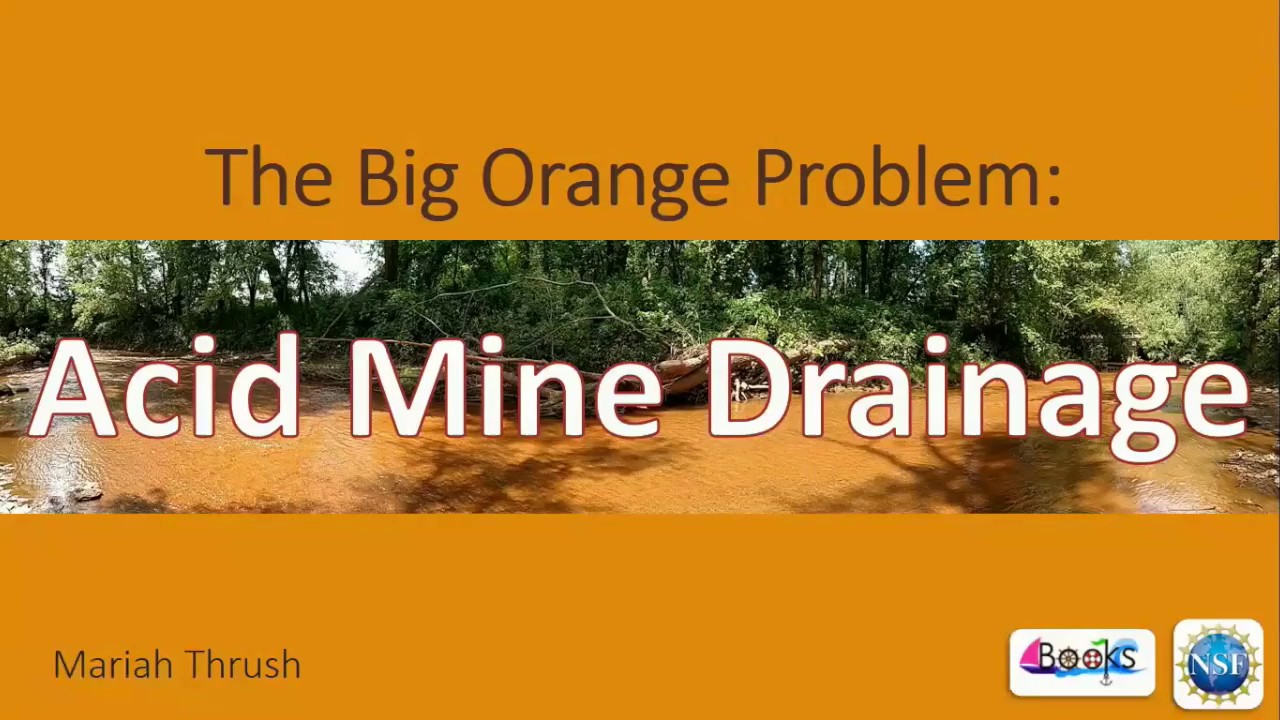
15:03
Acid Mine Drainage Chemistry and Stream Remediation Explained
@boatofknowledgeohiounivers6
36.2K views•2017-01-18
83:56
Biocatalysis and Catalysis in Islatravir Synthesis | Merck Webinar
@SCIwheresciencemeetsbusiness
675 views•2020-10-08
10:06
1H NMR: Determining Number of Peaks from Structure
@MSJChem
59.2K views•2017-04-06

17:31
Edible Water Bottles: A DIY Guide to Sodium Alginate Spherification
@ryan
10.5M views•2019-06-21
Related Study Plans & Knowledge Roadmaps
Structured learning paths in Chemistry
chemistry
Nuclear Chemistry: Decay, Meds & Fuel Cycle
01Introduction to Nuclear Structure and Radioactivity
02Decay Dynamics and Kinetics
03Radiation Interaction and Detection
+ 2 more learning modules
24h5 modules
Explore Roadmap
chemistry
Supramolecular Chemistry: Forces & Machines
01Foundations of Chemical Bonding and Intermolecular Forces
02Introduction to Host-Guest Chemistry
03Thermodynamics and Dynamics of Self-Assembly
+ 2 more learning modules
16h5 modules
Explore Roadmap
chemistry
Photochemistry: Excited States & Reactions
01Foundations of Light-Matter Interactions
02Molecular Orbitals and Electronic States
03Photophysical Processes and Jablonski Diagrams
+ 2 more learning modules
18h5 modules
Explore Roadmap
chemistry
Coordination Chemistry: Bonding & Properties
01Introduction to Transition Metals and Ligands
02Crystal Field Theory (CFT) and Geometry
03Magnetic Behavior and Spin States
+ 2 more learning modules
14h5 modules
Explore Roadmap