
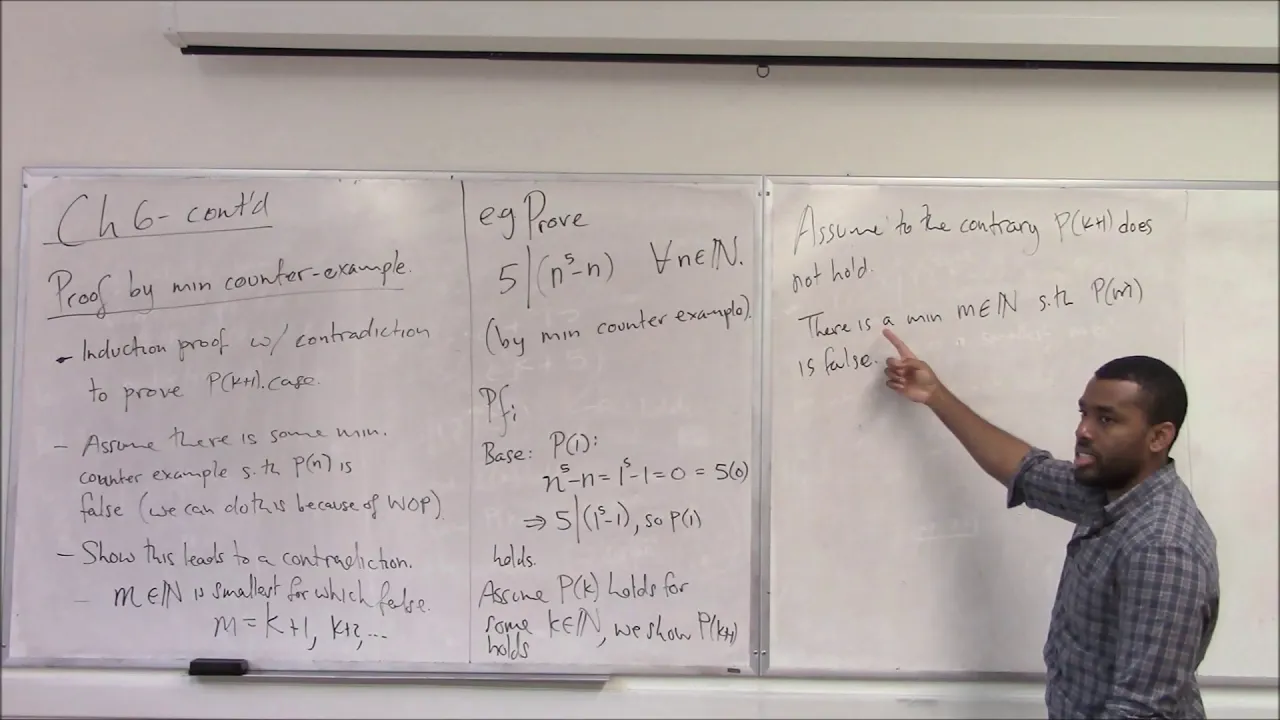







![Curso de Análise - Topologia da Reta [1/4]](https://i.ytimg.com/vi/pTa8SIJKSXc/hqdefault.jpg)





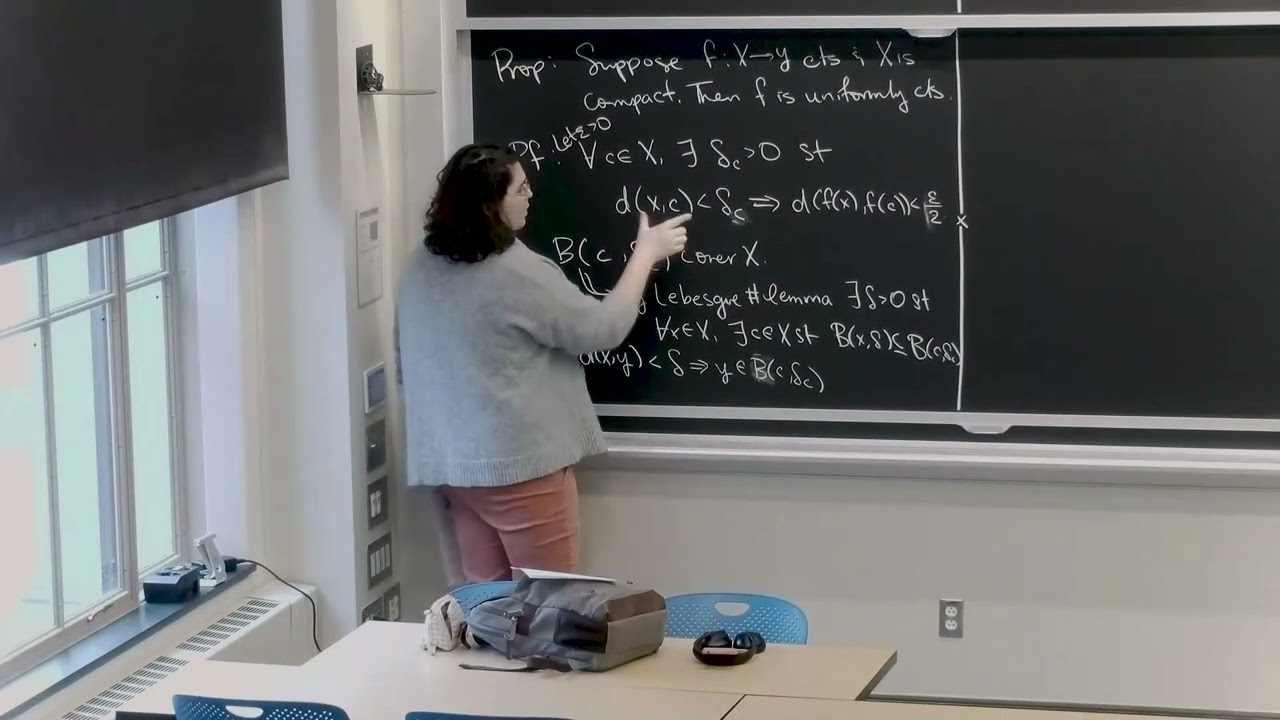
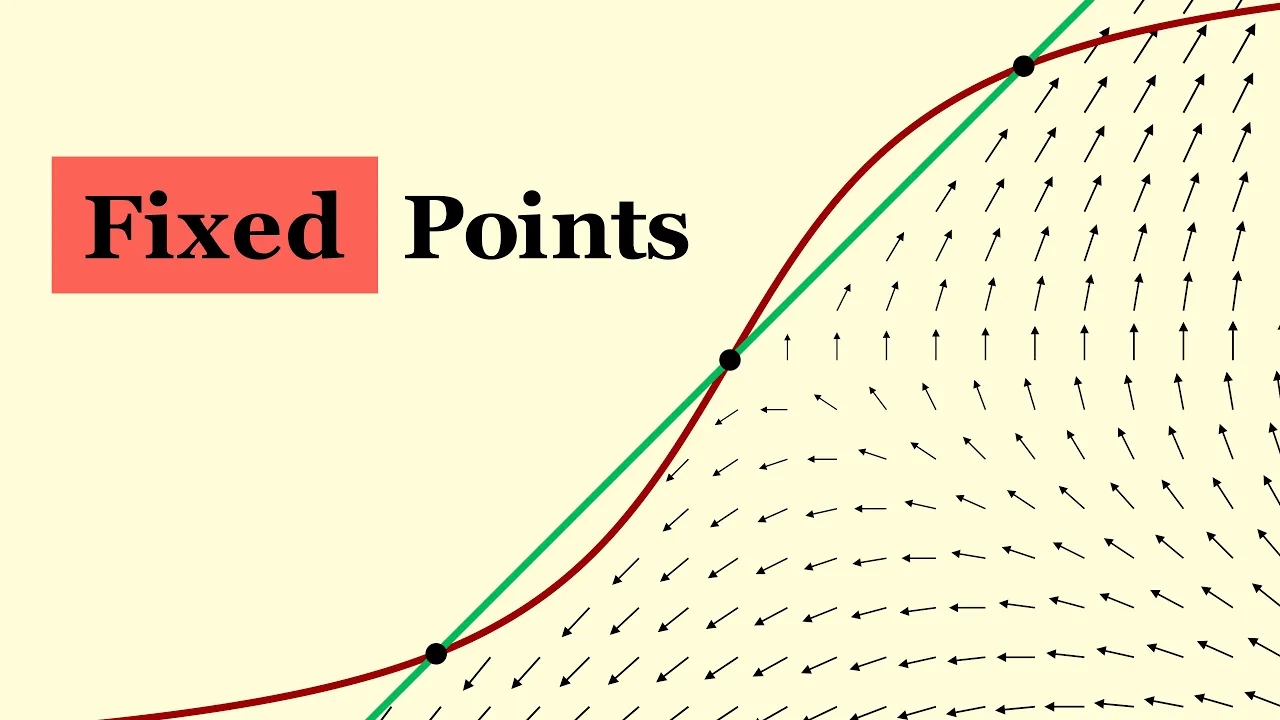



In a metric space, a subset is compact if and only if it is complete and totally bounded (equivalent to having the Bolzano-Weierstrass property); additionally, given a pre-measure on an algebra, Carathéodory's criterion characterizes measurable sets as those satisfying μ*(A) = μ*(A ∩ E) + μ*(A ∩ E^c) for all A, and the restriction of the exterior measure to these measurable sets forms a complete measure.
Real Analysis Lecture 7 | Metric Spaces & Heine-Borel Theorem
Added:A strong foundation in basic set theory and mathematical logic, including proof techniques like contradiction and induction.
An understanding of the real number system, particularly the Completeness Axiom, suprema, and infima.
Familiarity with sequences, limits, and the Bolzano-Weierstrass theorem in the context of the real line (R).
Basic topology of the real line, including open and closed sets, limit points, and neighborhoods.
Continuous and uniformly continuous functions on metric spaces, and how compactness relates to continuity (e.g., the Extreme Value Theorem).
The concept of connectedness in metric spaces and its topological implications.
Complete metric spaces, Cauchy sequences, and foundational results like the Banach Fixed-Point Theorem.
An introduction to general topology, exploring how spaces are defined axiomatically by open sets rather than metrics.
274 views0likes1:21:43Original Release: 2019-10-10
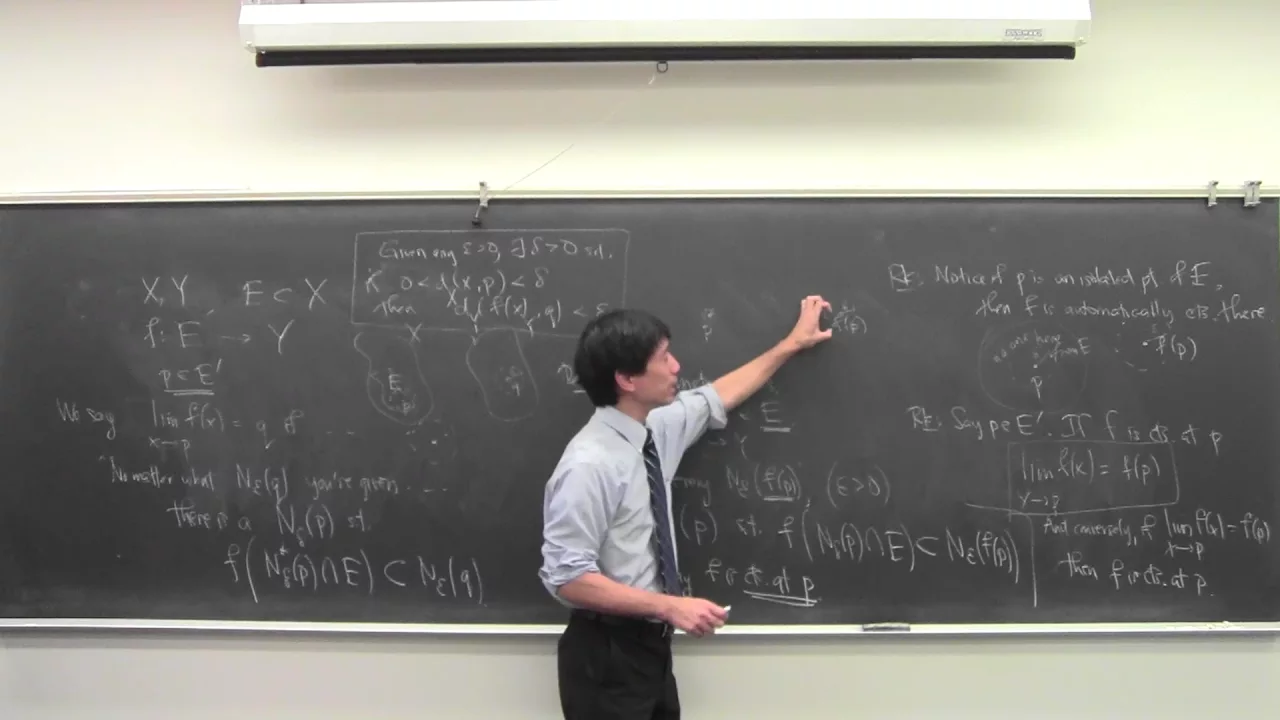
let's review what we've what we've done by putting it all in a general set so general setting is that you have a metric space so what does it mean to be a metric space what does it mean to be a set yeah exactly we're not gonna go into this Ermelo Frankl right now we're just gonna if these are undefined terms right but what we there are elements of this set and movie with this D thing is supposed to give us as distances okay so if the distance between x and y well first of all for any two points the distance is not negative and distance of x and y equals zero implies X is equal to Y okay we want symmetry and finally we want triangle inequality from X to Z getting from X to Z should be no worse than going from X to Y and then Y does okay good all right that's a general metric space given a metric space we it induces a topology so induces its apology by Falls open balls about a point this is the set of all Y question well I'm defining now what open means we can talk about abstract topology built through first and Briggs version of the the infinitude of primes it's a fun topological argument but anyway once you have once you have this map from so DD I should say D is a function from pairs of points in X to real numbers guess now we know that they're non-negative real numbers once you have this you can pull back the topology from our so this is all the the points so a ball of radius open ball of radius R about X is the set of all points whose distance of all points Y whose distance to X is strictly less than R okay so that gives us a a basis for a topology and what does it need for domain to be bounded yes if there exists some are with E and some R and X and X with D contained in the ball of radius R about X ok so your bounded if you're in some finite said you are this is an apology that it induces another way another equivalent definition I'll I'll leave this as an exercise is or if the diameter of the diameter which is diameter of e which is the supremum over all distances if you don't want to have if you don't want to think about where this thing's supposed to be centered so you just look at all distances over x and y and E and you look at a supreme em with that if that's finite well then just pick some X and E it will have distance no fart no larger than whatever that finite thing in spices okay alright let's prove the general Heine Borel theorem so general well you'll see it's not really Heine Borel but I'll call it minded barrel anyway so a subset e of a metric space let e be an arbitrary subset of a metric space the following are equivalent okay one is that e is complete and totally bounded e is complete and totally bounded so I have two so completely no complete is IE all every Cauchy sequence yep every Cauchy sequence xn in E has a limit which is in need and what is totally bound is mean totally bounded is that for any epsilon you can cover your space by finite number of balls of radius epsilon okay totally bounded for every epsilon there exists finitely many balls so X 1 through X n of radius epsilon that cover E I will give you I guess I should give you now maybe a counterexample - what - this definition and why it's not why it seems like why is this stronger than bounded does anybody know a counterexample why this is strong isn't valid you have to go to a pretty weird space it's not that weird that's completely natural but I guess we haven't talked about Hilbert spaces I think it may be ok ok then consider that's another green magic yeah yeah just yet so the trivial I guess yeah if you allow the the trivial metric then but then it's not so what I'm asking is what's something that's that's bounded but not totally bounded yep yeah so the discrete metric because everything is in a ball of size 1 and then it's not totally bounded because you can't it's infinite said with a discrete metric so you're not gonna pick everything and a fine number of balls well it's being defined in terms of the metric because so topological means instead of balls I should just consider opens but I want to I want to know that for every epsilon I can cover this SETI with open balls of radius epsilon and only five using only finitely many balls so to talk about balls I have to talk about the very good question okay so if so we really talked about what it means for two metrics to be equivalent if they differ by constants up above and below and what do you think I think it's why exactly okay so this is one criterion so the following are equivalent so one condition is that it's completely and totally bounded when I want you to think about our proof of our being complete our being our having the Heine Borel property so so these two things are certainly satisfied for our you'll see all the elements of that proof coming up in the proof of this property to is I guess I can go either way all right let's just let's do bolzano-weierstrass property follows oh no fire strauss which says that we do we talked about this yeah so every exactly every every infinite sequence has a sub sequence that converges every sequence arbitrary sequence in E has sub sequence has convergent subsequence convergent subsequence and of course by convergent I mean in as a convergent subsequence name and the third equivalent properties compactness compact we have a topology so we can speak of open covers any open cover has a finite sub cover so in a sense your question about I mean this is a purely topological thing but if you have a metric then that induces that topology that's that's compatible with that topology then three I mean this theorem that three implies Y tells you that it was totally bounded in this condition it's kind of a topological condition because three is a logical condition but assuming the topology is consistent with that yes so every sequence in e so E is complete and totally bounded if and only if every arbitrary sequence of E and and I mean the same with compactness right to practice in in the real world compact is closed and bounded so in the general world that's basically true but the reason that it's true is because the real numbers are complete and totally bounded or the closed and bounded subset of the real numbers is complete and totally bounded yeah okay let's prove these you can still see everything let's prove so I'll slide it up just a little bit let's prove that one equals two proof that one let's say let's first go in this direction 1 implies 2 so I'm assuming I'm complete and total e bounded let's take a subsequence let sorry let's take a sequence be an infinite sequence I'm trying to prove that it has a convergent subsequence okay but E is totally bounded so there exists a cover a cover of e by balls by finite number by a finite number of balls of radius 1/2 I guess I shouldn't call these XJ they're like they're not related to these call these YJ and maybe this is n 1 and 1 okay so you cover ee by these balls of Brady's to have at least one of those balls must have infinitely many of the X ends because the xn that's only there's a finite list and the X ends are infant so some ball of radius 1/2 about some yj1 contains infinitely many of the original x ends cover that ball since you can cover all of e you can cover that ball cover this ball of radius a half about yj1 with some finite number as J goes from 1 to n 2 of balls of radius 1/4 about Y so these are y ones these are y twos this is y 1 is y 1 y 1 is covered so the ball over it you see what I'm doing you have your set E you cover it with balls of radius 1/2 you have some infinite set of x ends well one of those balls has implementing accents because they're implementing x ends and there's only finitely many balls so let's take one ball which has infinitely many of those cover that by balls so cover e intersect that I guess since I don't know that cover e intersect that since I don't know that the ball itself can be covered but certainly it can be covered so e intersect this ball so there's just this bit of it can be covered by balls of size 1/4 and using only finally many balls one of those has infinitely many which can so one of those contains implementing X ends and so on so you're getting balls of smaller and smaller radius that have you have more and more of these sequences so the set of x ends that remain or rather let's take let's do it like this so once you have this sequence of balls or Y J's who had just so we have a ball of size a half about yj1 which contains inside it a ball of size 1/4 about yj2 which contains inside a ball of and so on a ball of size 1 over 2 to the K at y JK in the Kate sequence and some collection of the X ends it's a some infinite subset of x ends is contained inside each of these balls so let's take the least for each up you see how to finish it right for each K for each K let's n sub K to be the least n such that X and K is in this ball of radius 1 over 2 to the K about xj k YJ k okay this is getting pretty awful in notation but it's hopefully pretty obvious otherwise yes the least distinct I mean if the sequence so you're saying yes yes least N greater than n K - strictly greater than let's say n K minus 1 so I'm creating a subsequence of the x ends and I'm gonna claim that that subsequence is cushy oh well yeah I guess if so if there's a if for some reason you have a sequence of balls if one of the X ends let's say X 1 is the limit of the X ends then I'm taking X 1 initially often the algorithm will continue taking X 1 X 1 X 1 X 1 X 1 but that's not a subsequence if you could touch X 1 once let's say you touch root 2 once and then you wiggle around root 2 converging to root 2 yes take different indices where that path would still be the same one it could be root 2 yet root 2 appears incoming often in the sequence go ahead and take it but don't take X 1 yeah sorry oh I want a genuine subsequence so that's the increasing and then I gave away the ending this is a Cauchy sequence because they're all inside a ball of radius 1 over 2 to the K so that's how far you need to go out so this is a Cauchy sequence this is a sequence so we use the total boundedness at every stage because there are finitely many balls of an arbitrarily small epsilon which we're taking to be one over two to the case now we're using the completeness this sub sequence is a Cauchy sequence and hence converges so this subsequence of X and k's converges to some X in because E is assumed to be complete okay what is this argument mimic when we were proving completeness of the real numbers there was a step in that yes exactly right how did we prove that the interval negative eight eight the closed interval negative eight a is compact or to the end for doing work exactly we were chopping up into balls using the finiteness of those balls to say busy minion in one of those balls or cubes or whatever it was were using and zooming in okay so that's what I meant by that argument is a general argument even though it's only an RN argument the idea proves the general statement okay any questions on the proof of one implies to you zoom in on balls every stage you have to have a plea many because there's only fine with mini balls by total includes total ballots sequential convergence so this is so to define Kashi I need a metric because yeah but so this is every well so what do you mean by converges then so we can do it topologically very very open so yes and no let me get through this but let's talk about that because that's um there's some subtleties if you drop a metric um okay can you see so that was one implies too many questions on one applies to let me put back a statement now let's prove what do I want to prove next how about two implies one since Butte they're all equivalent so so we proved 1 implies 2 now we're going to prove two implies 1 it's a proven that two implies one yes there's a you'll see why I'm going in this order this this makes things slightly slicker you can obviously there'll they're all cool you'll see that it'll be useful I will do 2 implies 3 by using the fact by using 1 so first I want to prove the 2 implies 1 and then 2 implies 3 we'll say well I might as well assume 1 and 2 to prove through that'll make things a little easier ok so now I'm assuming that every subsequence every sequence has a convergent subsequence I need to prove both completeness and total values ok so the first thing I want to prove so the way all the way to one way of proving this is to prove the contrapositive so not 1 what we really prove is not 1 implies not to okay so if so let's say there's a Cauchy sequence so let's say completeness fails if there exists a Cauchy sequence with no limits in E then there's a convergent subsequence because if there was a convergent subsequence then the Cauchy sequence would converge to that limit that's clear right then there is no convergent subsequence all right so that's the completeness is necessary why is total boundedness necessary so if there exists if he is not totally bounded there exists some epsilon such that there is no finite there does not exist a finite epsilon ball cover of e so what's your sequence take one point in each bolt and take let me just be a little bit more careful yeah let's do it a little bit more carefully which is to do it sequentially so you take an X 1 and e ok and then sequentially what you'll do is take take any X 1 and E and iteratively take take any X and in E take away the union of all of the epsilon balls about the previous XJ as J goes from 1 to n minus 1 ok sums so these balls cannot ever cover e in finite time and hence there is such an exam this set is non empty because if it was empty then I would have covered in finite time of size pepsin we're using epsilon balls the set e so there is such a sequence and these points all differ by half distance at least epsilon epsilon over 2 from each other are you gonna block Oh X and have distance at least let's say epsilon from each other so they can't have a good version subsequence out I think it's clear is always so let's look again at the at the argument so you start with some let's draw a picture so here's e I take some points I'm sorry okay here's E I take some point next one and I remove the bowl of size so here's a ball of size epsilon around X 1 that can't be empty otherwise I will have covered a finite and finally many epsilon balls and I'm assuming it's not possible for any there does not exist any finite epsilon ball cover okay so then I take a point next to anywhere outside of it I take an epsilon ball around that that those two balls together can't cover you and so I never said the balls are District so okay so if this is X 3 here's the radius epsilon ball there the point is X 3 is not in the epsilon ball around X 2 and that's why the distance is at least epsilon maybe I want to equal sign there because this is it you know okay good it seems arrestor I study well it can be very close I can put an X for here but then I have an epsilon ball and I'm not allowed to say any more points in that epsilon ball so I can take another point there and then I have an epsilon ball and I can take another point there and that's an epsilon ball that's it I'm out of room I have to start putting more epsilon balls here and so on and this process has to go on forever by the assumption that it has no finite sub cover how it has no finite epsilon ball covers so that's that's the creation of a set of X ends each of which differ from one another by Epsilon so if they had a limit whatever that limit is well once you get one guy near that limit nobody else will be near that limit again okay let's prove all right so we prove the equivalence of 1 & 2 they do this can I fold this is everyone happy with two implies one because not one implies not to pull this over so we can still look at the statements ok let's prove that 3 implies two that's this direction and then we'll be almost done all right compactness implies sequential compactness so let xn be an arbitrary sequence in E I want to prove that as a convergent subsequence so here's what I want to do first I want to cover e it's the same argument oh by the way in this argument in this argument how is this argument similar to what we proved in well I guess we didn't talk about sequential come back that's when we were proving our n so we don't so there's no parallel because we were you went straight to compact missing in terms of complete and totally benefits okay right so let's cover ebuy cover e by balls of radius 1/2 arbitrary balls but then any arbitrary cover as a finite sub cover around the points no sorry J oh wait a second yes what am I trying to say no I'm just saying an arbitrary arbitrary cover has a finite sub cover it is the same it's the same proof as before you take E you cover it by a finite number of radius 1/2 balls and one of them has infinitely many since it's the same I mean what we used in totally boundedness we can use in compactness it's the same proof so I look at balls of radius 1/2 the balls of radius 1/2 about every point in E cover E which means there's a finite sub cover that's where that that'll be the last step yes but compactness yes implies totally Bowden is just trivially ok and totally boundedness so so this will create a Cauchy sequence and and hence but that sequence converges okay so so same organ so continue continue as before okay and finally 2 implies 3 so the proof that 2 implies 3 you can still see everything so and and we're gonna use 1 plus 2 because 2 implies 1 so I can I could throw in one as I as I wish I think when we use when we did 1 implies 2 we also used completeness every open cover has a finite sub cover we get a crochet sequence yeah maybe I want to do sorry maybe I want to do 1 in 2 implies 3 first to know that 3 implies no no what am I trying to say what am I trying to say I'm trying to rush through this to get to better stuff yes exactly so we've created our kocchi sequence well that's that's that's 3 implies 1 yeah I guess I can prove 3 implies 1 which then implies 2 but that's yes then we're done ok so the total boundedness is obvious because because if this is a take the set of all epsilon balls that's a cover so it has a finite sub cover so for every epsilon there is a finite sub cover the completeness from compactness I mean that's what we proved for the real numbers and that argument is the same I mean this is how you get the subsequence this is how you get the convergent subsequence is you get this series of points it's exactly what we did before I mean that's what I mean by continue as before all I wrote on my notes is continuous before but the continuous before is what we did to prove the completeness of the what did we call those cubes whatever is you keep subdividing and you keep subdividing until you zero in on the limit here's your limit okay well yes because they're all subsets of e so so that's your limit form okay we can return to that if you're not happy with it I'll try to give you a better better but it certainly seems to be obvious and now we'd like to have a better argument it so 2 implies 3 but I'm allowed to use 1 so assume so I'm trying to prove compactness so assume E is covered by some arbitrary collection of opens a in some indexing set capital e ok I want to know that I have a finite sub cover so here's what we're going to do so my claim is that there exists some epsilon so that every every ball of radius epsilon about a point intersecting E with with a non-empty intersection is in one of these is in one at least one of these be alphas I shouldn't really call them bees they're not balls they're just Brett opens so let's call them o alphas okay so one more time here's e if I have some ball of radius epsilon about X so here's my ball of radius epsilon about X if it has nonzero intersection with e non-empty intersection with e then this ball is already contained inside some open okay that's my claim the statement clear my claim is that there is some epsilon there exists an epsilon so that for that epsilon every epsilon ball that intersects Enon tribulus is already contained in some hope okay sorry yes so I mean that's what we're proving we haven't proved yet so if not if not then for every epsilon there does not exist this property so for every epsilon or let's let's make a sequence of epsilon so for every n for every n there exists a ball BN which is a ball of radius 1 over 2 to the N about some xn which intersects E not in a non empty and BN is not contained not contained in any oh L right that's the that's the negation of the statement that there exists an epsilon so if not then I'll choose epsilon to be 1 over 2 to the ends and I can always find reacts reacts yes so xee or yeah let's take X I need well I don't care about I mean I think this will be true in general but but let's take X and E because what I'm about to say I do want X and E so this was kind of a misleading picture yeah I do want X and E and then a ball of radius epsilon okay and here again let's take xing me I do want Xing Yi for this for this argument okay yes every ball thank you for every I guess what I mean is for every X in E such that the ball of radius epsilon about X intersects in e non-trivial e then so then this ball of radius epsilon about X is contained in oil alpha for some for some alpha in the indexing set that's a better way of saying okay yes so the claim is there is some epsilon so that anytime I have a point X and E which for which the ball of radius X is contained in in which the intersection is non-empty then now let me think I'm changing the argument on the fly I mean this is trivially true because X isn't yi so what I guess I yeah what I really mean is yeah what I really mean is what I said before all I will use is the ones that are that are in E so any epsilon ball yeah all I really want is that for every X in G the epsilon ball about X is in kit is contained in some Oh Elsa okay if that's not true then I can find this sequence of balls sequence of X ends in E with balls of size 1 over 2 to the N because it's not true so for every epsilon this fails there does not exist an epsilon for which this holds for every epsilon this fails that means I can take epsilon to be the sequence 1 over 2 to the N and I'll find a sequence of X ends which are in E so they intersect non-trivial e but this is not contained this this radius 1 - to the Inbal is not contained in any allowing okay so what does that mean the X ends the X ends are a sequence an infinite sequence in E and I'm assuming - I'm assuming Bolzano vahana zoom using specific sequential compactness so there is subsequence but there exists a subsequence subsequence of the X ends xnj with X and J converging to X in E what does that mean yes right so so X is in the point is but still see but X is in E so X is in some o o alpha which we lose the ball of radius epsilon around X that's in some ho alpha which means there exists a ball of radius epsilon about this limit point X which is in some alpha and all of these balls of rate of sufficiently small radius sit inside this ball of this ball of fixed radius epsilon okay so that's the contradiction I guess I don't need a contradiction if it's not true then do this until it is true so so sum 1 over 2 to the N ball and all the future balls are contained in this subsequence are contained R contain in this Oh alpha and if click ok so once we know so let's go so we prove the claim so this proves the claim so once we know that there is such a ball there is such an epsilon so that every epsilon ball has this property now we're done because yes exactly we're gonna use the total boundedness okay so once we have this epsilon that means that e can be covered by finitely many of these special epsilon balls this epsilon but each one is in some epsilon each in some Oh Alf a-- so that those are the only with finally many Ounces that you need to cover all of you question like it's true that every point has just continuing so let's let's look again yeah so there exists an epsilon so that every epsilon ball around e is contained in some well okay yep so now take the epsilon balls that you need to cover finally many epsilon balls that you need to cover eat which is what totally boundedness guarantees then each one is in somehow alpha those are the Oh alphas you need to keep so for your finite sub cover that's a finite sub cover finite okay all right and that is that three implies two and okay so everybody applies anyway how do we get rid of the contradiction in this last in the last step yes it seems like it was important well it's not so what I'm saying is assume it's not true assume we haven't succeeded yet in defining the Alpha right then continue until you find the Oh alpha now I guess he really is useful to have I guess we really do want to assume that the contradiction yeah this really is a proof by country it's not a finite algorithm because I need to get the subsequence which means I need equally many terms of this contradiction yeah as you do positive I mean in some sense they're all occurring right so we can we can dissect this up the wazoo right yeah you're right it's not a finite process when I said before is that right it's not a finite process because we really are using the sub sequence has a limit we've used nimbly many of these contradictions now then that limit is in some some epsilon so there's a ball around it because this is open and okay any questions on general Heine Borel so again this is kind of review um yeah if e satisfies one if e satisfies one I don't know how big these balls yeah we're not talking about Continuum Hypothesis but I don't even know how what the cardinality of this is I wasn't I didn't think that it was just a like they it was a quick proof from one to I don't see why because if I have a set of cardinality larger than the continuum a ball of radius epsilon about a point in in the metric could also have that cardinality so just because you have finitely many of them doesn't mean that the cardinality is list is that most the cardinality of the continuum sure if it's true no I don't I don't I don't think it's true I think there are things that have larger part knowledge ease although I'd have to think to come up with like Nix and Wiser's they don't know there's something that's been Cardinal is incredibly hard right they don't know what it's like well we know we know that we know that it is up to you to decide whether you want there to be one or not yeah right that's Independence of the continuum hypothesis from axiom of choice ins your male pinnacle and all the other good stuff question right this was this step that I that I said continued as before in the interest of time let me try to give you a so I'll put a star next it is to give you a better argument okay let's do can we continue oh yeah more questions more discussions yes so we haven't talked about superb ility everybody no super ability is what separable ad Kendall dense subset so again yes in metric spaces yep but I haven't proved that so but it wants to be one over two to the N you can find many of them for each end and just picking in the interest of trying to get through I love this discussion let's continue it offline if you don't mind because I do want to get through the measure theory but that was supposed to be review of the metric general general Heine Borel this is all supposed to be review but review from a general abstract point of view ok we talked about measure the naive notion of measure fails so we're gonna restrict to we're gonna build up measures from pre measures and exterior measures and so on so let's just recall what does it mean for so X a mu 0 is a pre measure this is again just recalling definitions is a pre measure if yes a is an algebra not a sigma algebra just an algebra or Sigma finite some people will say Sigma finite algebra which means yes closed under complements and finite unions and intersections yeah and you want to put the empty set and the whole end let's say non-empty at least if it's empty than than the empty sets in there so that's what it means to be an algebra and the triplet is a pre-measure if mu zero is a a pre-measure space I should say is a pre-measured space is something with an algebra and a pre-measure and mu zero is a pre-measure which again means and countably additive and countably not finitely but countably additive in other words it is a measure it's just it's not museos fault that it's not a measure it's ace fault that it's not a measure countably additive ie if it so happens that you have a bunch of sets in a and they're disjoint Union is also in a so this is the the thing that is not guaranteed and this is a countable disjoint union then mu zero of this countable disjoint union is equal to the sum of MU 0 of the EJ's ok so that's the general pre-measure the way we got a general pre-measure in our study of the big measure on the reals was through rectangles cubes or whatever that was our kind of algebra and pre-measure and the notion of pre-measure was then you know four rectangles just the links and and here's the theorem so that's the extension theorem oh I have to define exterior measure we know what an exterior measure is countably sub additive on the entire power set on any subset so the theorem is if X a mu zero is a pre-measure then X mu star is an exterior measure outer measure exterior measure where new star of any set any subset of X is defined to be this this is a comma so X comma mu star I'm defining new star below and once I define new star X comma mu star will be an exterior measure space a new star will be an exterior measure where this is the infimum over all covers of ej in your finite sigma finite algebra of the sum of mu zero of the ejs so with the infimum over all these sums over all covers with sets taken in a that will be a exterior measure moreover so this is part one or two moreover for every e in a the exterior measure of e matches what it would have been if you hadn't done this okay all right what do we need for a pre-measure pre-measure needs to give the empty set measure zero you can cover it by the empty set and empty sum is zero okay so if e 1 is contained in D 2 then any a cover of e 1 is an a cover of e 2 so the infimum is that is that most game female ok a cover of e 2 is 1 1 which implies monotonicity I'm testing I'm checking the axioms of being an exterior measured yes so we have the empty set as measure zero with monotonicity and the last thing we need countable subadditivity yeah countable sub additive 'ti so if we have a bunch of sets arbitrary sets ej and their total union is sunset e naught this joint but countable so this is arbitrary it's trivial unless I the statement I'm about to make is trivial unless the measure of each of these things is finite assume assume each of these has finite exterior measure then what are we gonna do you're on the standard algorithm I want to prove that what am I trying to prove that the measure of e is at most the sum of the exterior measures of the J everything here is arbitrary nobody's here is measurable don't you make you could you don't even have to yeah so each so what is the definition of mu star of each of these EJ's each EJ has a cover by what am I gonna call things in a I guess regular haze a k-j with a ke jaise in a such that by the definition of what u star is such that the some of the new zeros of the a ke jaise is that worst exactly so the measure of EJ plus epsilon over two to the J something like that again this was the exactly the same argument we used in the real case I'm just showing you that it works completely I'm reviewing that by showing you that it works in complete generality so E itself is covered by the Union over all J in over all K of these a JK's and so the measure exterior measure of e is bounded by the exterior measures by the the since it's an infimum it's bounded by the sum over J and a sum over K of the pre measures of all these AJ's agent case but each AJ K so this is a sum over K let's be careful about the indices so each of these is bounded by the sum of the so this is sum over J the exterior measure of EJ plus Epsilon say Martin goes through justice so that's the accountable sub additive 'ti send epsilon0 any questions on why this is pre-measure I still have to prove them moreover yes arbitrary arbitrary yep definition is arbitrary not disjoint a little bit yeah arbitrary countable yes because I'm going to use the countable uncountable is countable so this is a countable cover feee okay so again this was the same argument we did with reals it works in general here's the general theorem the general extension theorem and the last thing I have to prove is the moreover so let me slide up so to prove them moreover the the obvious observation is this inequality because he is a cover of itself if he is so this is if if E is in the algebra to begin with this is obvious let's go in the other direction why can't it somehow get smaller by some cover okay so let a be covered by some AJ AJ AJ a and said e ek DK to be e intersect a que take away the union of all the previous aks so this is the disjointed argument yeah I'm running out of room let me put it here set ek that's the thing you can't do on blackboard you can scroll up okay II intersect a K take away the union of all the previous all the previous AJ's let's parse this but a a is in a the AKS are you a this is a finite union this is a complement this is a intersection all these things so this is innate I have a right to say that this has a measure this is in a and so these are all disjoint things that add up to so the measures fight by the fact that musi Row is a pre measure the measure of E is at most the measure of these disjoint eks okay and that is equal to see if I can finish it on this line that is equal to the sum of the eks because mu zero is a pre measure so here I'm using that disjoint sets EK have add up this is mu zero you can't see 0 UK and this is true for any a cover okay and this is true for any a cover so it's true for the infimum of the a covers so that it covers can't get below the measure which implies mu star can't get below the measure I did yes and this and this is equal to mu zero of the AKS thank you because it's up so so because because the construction of this sum so finite sums of this the measure of each of these eks yeah good so if you add up the ii case from 1 to k that gets you a cake intersect P so so these things are adding up to to these things okay so what that means is any cover has a sum which is at least nu 0 so the infimum over all covers is at least mu 0 and the infimum over all covers is mu stuff 2 mu star is at least mu 0 and it's also at most me sir so it's equal to me sir okay any questions on the extension from pre measures to exterior measures some people call these inner measures inner to outer measures put the theorem back up so this is what we did to go this is exactly what we did when we had rectangles and we argued with rectangles but really what we were arguing was three measures please how did the rectangles form an alibi right so we didn't prove it rigorously but if you look at rectangles so we want the algebra generated by rectangles so if you take the intersection the point geometrically let me make it here the point geometrically is that when I have a finite number of rectangles it decomposes into a finite number of so if I have complements of rectangles I can make open rectangles and I can also make rectangles that are infinitely thin and so this decomposes into so this is something that's in the algebra because it's a countable intersection of in a finite number of it so a finite set of rectangles will only ever break up into things that are complements and intersections and unions finite many rectangles including a rectangle go to infinity emphasis well the right right so the the complement of a rectangle will be an infinite an infinitely large thing yeah everything outside of this rectangle is is a set that's in the algebra okay and that has internet three measure and that's okay [Music] the analogy between these and arcades and pre-measure and so all I'm saying is the way that we constructed exterior measure when we were doing this just for our D for the real space it was exactly the same thing and we were using you can do this with cubes or with open sets or with you have any number of notions of pre-measure balls whatever but you in the end it's something completely general it's a general statement about three measures extending to exterior measures so this is the abstract of the same thing that we did for our D okay and now let's do almost the same thing but these are there's no I never said this has a topology I never said this had a metric so we can't take open our definition the way we finish this before so recall recall in Rd the finish was to say that E is open E as an open is measurable is measurable if for every epsilon there exists an open cover with exterior measure o take away E at most Epsilon but now we don't even have a topology we could give ourselves in topology we could just assume we're on a metric space the metric induces topology and then work from that there's something even slicker which is the car third or a notion of measurability so definition given an exterior measure exterior measure space measure space X mu star a set E is called carathéodory measurable a set E is Kara fyodor e measurable or mu star measurable if you need to specify if there are several exterior measures floating out for some reason but let's not do that to ourselves given the exterior measure space ascent E is kathira a measurable measurable if here's what you want to do it's kind of like a separable ax T condition thank you they don't need this anymore if for every other set a and X the exterior measure a can be obtained from taking the exterior measure of a intersect B and adding that to the exterior measure a intersect B complement this is the substitute for the real notion of measurability elevate notion of measurability which we have trouble expended extending incomplete generality because it assumes it's apology you will see so there's an exercise in fact I think I haven't posted the exercises okay so I'm going to post the exercise that this notion in the case of Rd implies this notion or in the case of apology implies the open ocean and if you have a topology than their den they're clear okay so okay so here's a little Emma to get us started in the territory extension theorem so if you have a pre measure pre-measure and mu star is the extension is the extension as in the previous theorem then what I want to say is every every E in a is car theodora measurable or just here's a long last name I sympathize so I'll just say measurable in this notion of measurability so again we had our finite Sigma finite algebra we made this new notion of measurability which is about arbitrary subsets of X and now I'm saying if you were in your pre-algebra in in your algebra not Sigma algebra and mu star is the extension then that set is indeed measurable it's not obvious because you're gonna try to interest you you need an equality of exterior measures across arbitrary subsets of X is that there so let's prove this okay so let's he be in a and a arbitrary this is maybe awful notation but now okay the upper bound so this follows from but subadditivity you can't see yourself slighted up okay so this just follows from subadditivity which we prove because we prove that new star is an exterior so we need to go in the other direction so cover a by some EJ in a with the property that you haven't covered you haven't overdone it so the some of the MU 0 e JS is at most the eventual exterior measure of your set 8 plus Epsilon now each of these by the additive 'ti in fact Sigma activity of MU 0 each of these is equal to the sum so this is sum over J of MU 0 of each a intersect II plus mu 0 of EJ intersect B complement these are two disjoint sets they add up to EJ mu 0 is equal on on each of these again I should have said from the beginning assume everything is finite assume this neustar's is finite otherwise there's nothing to prove this covers a intersect II and this covers so what I mean is the union of over all of these the Union over J of these things of these things covers a intersect these cover a intersect B complement and so this is an upper bound for MU star of a a intersect II and this is an upper bound for MU star of a intersect B complement so that's a lower bound with an Epsilon and we're done so far so good okay so that's dilemma that these ease are indeed measurable with this notion and then we prove although maybe we'll just not time to state the carathéodory extension theorem did I already state this before fyodor II I can't remember if I did or not okay good then it's new if you have an exterior measure is an outer measure is an outer measure then let's call this the set M which is the set of E in X that are measurable Karthi dori measurable measurable is a sigma-algebra not just an algebra but a sigma algebra of course it contains so this is a general theorem I'm not assuming any longer that mu zero is generated by some pre-algebra but if it was generated by some pre-algebra we would know that M contains the pre-algebra the algebra the Sigma finite object okay this M is a Sigma algebra and of course this is Part one and Part two altogether now restricted exactly the exterior measure so mu of e defined to be the exterior measure well so what I mean is mu defined to be the exterior measure restricted to this isn't is a measure in other words it's countably additive not sub additive the only thing we're missing is countable countably additive not subtitles alright I think we had time proof proof of one proof of one slide this page okay proof of one so first of all if e if e is in M if so if E is measurable again what does measureable mean this is what I want to be able to do this up and down measurable means that for any set the measure of a is equal to the measure of K in your psychie plus the measure of a intersect complement you compliment the definition is already symmetric so if E is M then e complement does he now because definition is symmetric so that's nice remember before we had to find closed subsets detained inside of its at the complement would right that's a little annoying so this is a slightly nicer now I want to know about countable unions so okay the empty set is in there the whole set is in there okay so so first let me claim that if let me claim that if e1 and e2 let me get finite unions first he won an e2 or in M implies the e 1 Union V 2 is in M because even that takes proof now okay so that's true that might be we have time for that's okay so that's my first claim so let's look at so let's a be an X arbitrary this is a simple subdivision so here's a and here's e e 1 and here's E 2 I have to make sure I get a little bit of everything that shouldn't be too hard of a Venn diagram they get a little bit of everything yes is that a intersect D 1 but not e to a intersect e2 but not e1 intersect both intersect neither good the measure of a intersect B 1 and E 2 let's see let's try to get this clean so I know that the measure of a because e 1 is measurable the measure of a can be decomposed into the measure of a intersect D 1 plus the measure exterior measure a intersect e1 complement that's because e 1 is measurable and that was the definition of measurability now this I'm going to break up so this is this bit a intersect D 1 I'll break up as the measure of a intersect B 1 and our set e 2 plus the measure of a intersect B 1 intersect e2 complement okay so I just broke up this a intersect D 1 into a intersect D one intersect e2 compliment and a intersect e1 intersect e2 why is that true why is it true that new star of these adds up if the if the sensor disjoint and add up because e2 is measurable ok so here I'm using so far that e 2 is measurable to break up this into these two pieces and similarly I'm gonna break up this the compliment a intersect you one compliment into two pieces again using the fact that II two is measurable so this is a measure this is a simple argument right II one complement intersect e2 plus the measure of a intersect B one complement intersect e2 complement now what's the observation I don't know I'm trying to prove that II one union e 2 e 1 Union e 2 I'm trying to prove that this thing is measurable but all I know is subadditivity so what is what are these three pieces these this is a intersect so there's an intersect B one complement e to complement that's this that's this bit so this is also a intersect B one union e to complement that's just an equality but these three pieces together add up to a intersect B 1 Union e 2 and I and so this is plus a intersect e1 Union e to complement so I'm going to group these three together and they are disjoint things that add up to whose union is is this so by subadditivity I have I have this inequality okay but I need an equality not an inequality how about the other inequality it's always true still sub additive ik and mu star a is that most mu star of a intersect B one union e two
Up Next

31:45
Measure Theory 1: Non-Measurable Sets | Intro to Lebesgue Measure
@impabr
152.5K views•2018-05-04

4:43
Elliptic Curve Cryptography Explained: ECC, ECDSA, ECDH
@PracticalNetworking
28.5K views•2024-10-21
10:44
Fourier Series Introduction: The Big Idea Explained
@DrTrefor
387K views•2021-05-03

6:00
The Mathematical Impossibility of Accurate World Maps
@Vox
23.3M views•2016-12-02
Related Study Plans & Knowledge Roadmaps
Structured learning paths in Mathematics
mathematics
Tensor Calculus: Vectors to Riemann Curvature
01Mathematical Foundations: Linear Algebra & Calculus
02Covectors, Dual Spaces, and Tensor Basics
03The Metric Tensor and Index Gymnastics
+ 2 more learning modules
40h5 modules
Explore Roadmap
mathematics
Gödel's Incompleteness: Logic, Proofs & Limits
01Introduction to Formal Systems & Hilbert's Dream
02Set Theory, Cardinality, and Cantor's Diagonal Argument
03Arithmetization and Gödel Numbering
+ 2 more learning modules
14h5 modules
Explore Roadmap
mathematics
Galois Theory: Fields, Groups & Solvability
01Foundations of Abstract Algebra: Groups & Fields
02Polynomials & Field Extensions
03Splitting Fields & Symmetries
+ 2 more learning modules
24h5 modules
Explore Roadmap
mathematics
Non-Euclidean Geometry: Models & Geodesics
01Euclid's Fifth Postulate and the Birth of New Geometries
02Hyperbolic Space and the Poincaré Disk Model
03Geodesics: Defining Straight Lines in Curved Spaces
+ 2 more learning modules
15h5 modules
Explore Roadmap