





![[오르비 클래스] Zola 생윤 2 - 킬러ㆍ통수의 모든 것 0강 강의 안내](https://i.ytimg.com/vi/U9glHAdDKwU/maxresdefault.jpg)






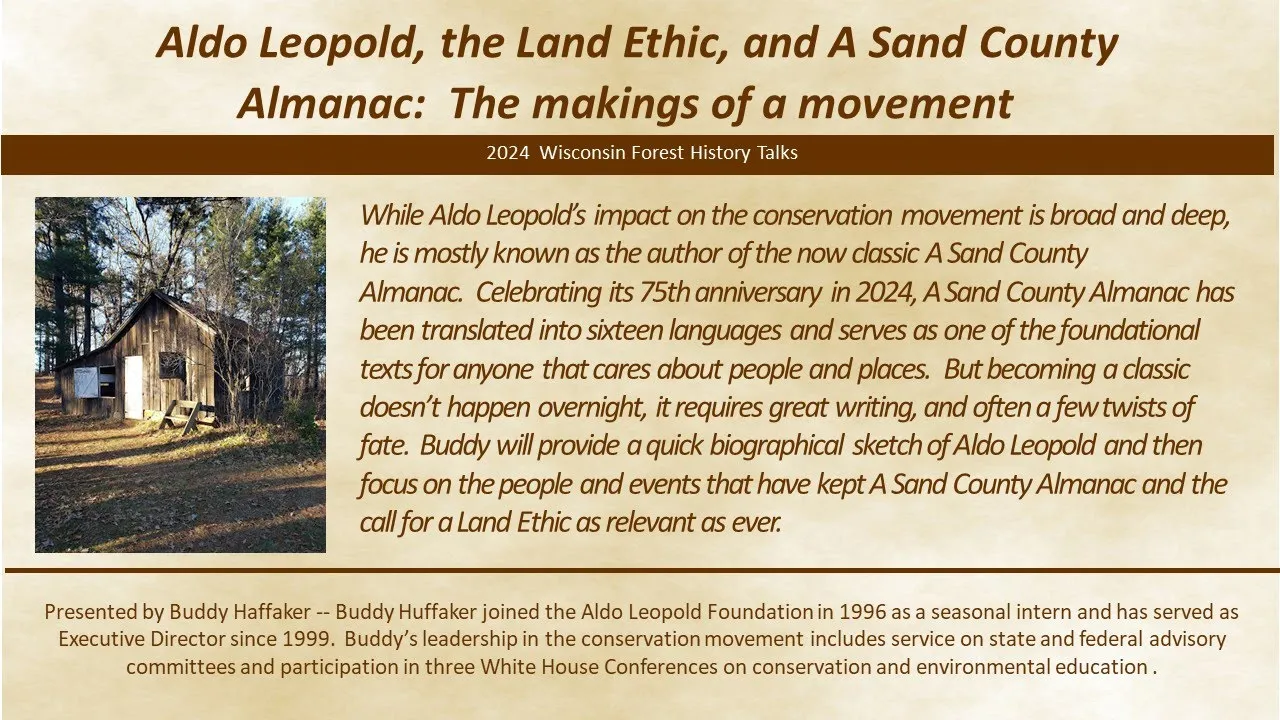









Aldo Leopold, a pioneering American forester and conservationist, developed the 'land ethic'—a philosophy stating that a thing is right when it preserves the integrity, stability, and beauty of the biotic community, and wrong when it destroys these qualities. Unlike viewing land as a commodity to be owned and exploited, the land ethic proposes that humans belong to a larger ecological community and thus have moral responsibilities toward all its members, including soil, water, plants, and animals. Leopold's journey from early sportsmanship ethics to this comprehensive ecological philosophy was shaped by his upbringing in Burlington, Iowa; his work with the U.S. Forest Service creating the first wilderness area (Gila Wilderness); his recognition that conservation requires private landowner participation; and his personal experiment restoring his Wisconsin farm. His landmark book 'A Sand County Almanac' (published posthumously in 1949) became the ethical foundation of the modern environmental movement, emphasizing that conservation tools like regulations and subsidies are insufficient without cultivating an ecological conscience rooted in personal ethical commitment.
Aldo Leopold's Land Ethic — Conservation & Wilderness Legacy
Added:[Music] [Applause] [Music] examine each question in terms of what is ethically and aesthetically right as well as what is economically expedient a thing is right when it tends to preserve the integrity stability and beauty of the biotic community it is wrong when it tends otherwise Aldo Leopold welcome to voices of the wilderness I'm Jeff Ryan to say that Aldo Leopold was a giant in American conservation history seems deficient over six decades in the 1900s this remarkable man influenced or entirely redefined the ways we look at our relationship with the land he was responsible for the creation of the world's first wilderness area he created the profession of game management and was a champion for maintaining habitat for waterfowl and game he was among the first to recognize that watersheds extended beyond stream beds and river banks and to see every land holders stake in keeping our waterways healthy he was one of the eight original members of the Wilderness Society an organization that would become the leading force in establishing wilderness areas throughout the u.s. he was the first to bring the concept of land restoration into the public consciousness Leopold and his family embarked on an experiment to reestablish woodlands and prairie on their own hardscrabble Wisconsin farm in 1949 Aldo Leopold's life's work culminated in the publication of a collection of essays entitled the sand County Almanac in it he put forth the notion of a land ethic saying that we abuse land because we regard it as a commodity belonging to us when we see land as a community to which we belong we may begin to use it with love and respect the more I wondered how Leopold's land ethic came into being the more I realized I needed to jump into my van to go visit the places that shaped his views and to talk to the peep who knew most about his life's work our story begins in Burlington Iowa I am glad that I will not be young in a future without wilderness Aldo Leopold yeah well when you're trying to understand Leopold's life there's no way to fully understand it unless you're grounded in the places that he knew and loved and that influenced him so deeply and first and foremost among them is his childhood home of Burlington Iowa which in terms of its natural and cultural features was already made for a young man of his inclination so in terms of the natural setting yeah this amazing spot along the Upper Mississippi River the bluffs looking out over this vast floodplain which was still a wild place at that point in his his life in the late 1880s and 1890s so you had a chance to grow up in an area that was for the Midwest as it was in going through this epic conversion through the late 1800s was still retaining that sense of wildness his also placed rich in history including of course the native history which was still present we forget sometimes and how recently the native people of Iowa are still you know they're living it's a living memory at that point and of course and remain so but the cultural changes going on in the Midwest which Leopold's family exemplified immigrants from Germany primarily who opened up as we used to say the area and his grandfather who helped to set the stage for that that process by bringing hundreds of people over from the old country but with his deep appreciation of the natural world that was really a part of the family and legacy all through the generations there had been this love of land in fact there's a story that the family homes his farmstead it sort of was a farmstead because it was an old orchard area but I was rapidly becoming part of town in Burlington that the family name for it was Logan's land in Germany which means left to the land and so you know what could be more appropriate than Aldo Leopold to literally be looking to the land from atop the bluffs in Burlington Iowa so combined that rich family cultural appreciation of the natural world with the setting in which he found himself and was already made for for Leopold to absorb lessons of adventure of curiosity about the way nature works and of sense of responsibility which is especially coming through his father Carl some even later memorialized as a pioneer in sportsmanship long before there was a conservation movement all those father had this sense of moral responsibility for their sustaining of the natural world and Leopold grows up a very active kid at the outdoors especially fishing and hunting on Mississippi River and absorbs that sense of ethical responsibility he probably would not have known what that meant at that stage in his life but it was part of his his early upbringing and his psychological makeup so at that formative age Aldo Leopold was definitely influenced by his father who was a very enthusiastic outdoorsman and who was quite adamant about ethical behavior in the field for sportsmen which is of course it's really what ethics come into play when you're out there alone no one's watching are you going to do the right thing or the wrong thing so from a very early age Aldo Leopold was imprinted almost with this idea of ethical behavior when you're in the outdoors plus of course we as people are responsible for the natural world that sustains us there was of course the field of wildlife ecology and management didn't get invented until Leopold himself would do that helped to do that decades later the conservation movement even had not yet last the turn Conservation wasn't even widely used yet but all those father and others he was not alone but as we saw as they saw the decline of wildlife populations they understood that change had to come to the culture of hunting moving away from the old free-for-all of market hunting to a sense of again personal responsibility for conserving the world that consists aids us serves us protects us and so yeah these kind of very personal ethical codes for how you ought to conduct yourself in relationship to the world around you becomes part of his again is curly framing of an ethical outdoor appreciation of nature so Leopold is coming of age at a time when Natural History as a was the cutting edge science of the day understanding the diversity and functioning and beauty of the natural world through the 1800s it was a golden age of Natural History and a young person like Leopold was able again to benefit from that really widespread cultural appreciation of science not as a distant way of understanding the world but simply as a channeling of curiosity our job is to sharpen our tools and make them cut the right way the sole measure of our success is the effect which they have on the forest Aldo Leopold his professional career of course took him first to the u.s. Forest Service where as one of the first wave of professionally trained foresters he was responsible for the management of literally millions of acres of wild plants in the newly created national forests of the southwest and I think it was during that phase with his life that he translated the ethics of sportsmanship in the field to thinking more about the ethics of your behavior with respect to the natural world and lay upon this is where that the tenor of the times meets the psychological intellectual makeup of this young man he was the most curious human being I've ever encountered alive or not all you have to do is look into any of Leopold's archival records and you can see this man was he was curiosity personified and not only knowing the pieces of the natural world the plants and animals soils waters and so forth he was curious about the human history of our interaction with the natural world he was curious about people and what drove us and what our value systems helped us to appreciate or not in our interaction saves he deeply in lifelong curious human being who just wanted to understand how the world worked but he took it beyond that to say even if you understand how the world works that's not where it ends it doesn't tell you how you are relate to it that's where the ethics training comes and you mentioned his father his father ran a Furniture Factory a very successful outfit in Burlington a center for picking off furniture and if you look at the logo of the company historically there their ass there's description for themselves and their own ethic as business was built on honor to endure they stamped into their furniture that was them that was the we call a mission statement now of their company built on honor to endure and I use that and I worked worked on the biography because that seemed to capture this family spirit of looking beyond mere economic dollar value to understand that anything we do whether in business or in our recreation or in our spiritual lives our inner aesthetics involves his ethical appreciation and so that was again part of the family ethic that would grow over Leopold's lifetime into this broad comprehensive philosophy of conservation called the land ethic and it came of course in the context of Aldo Leopold as a public servant he was responsible as a supervisor of national forests he was responsible for making decisions about how those national forests were going to be managed and of course because the National Forest System was new at the time people like Leopold who were visionaries perhaps haven't a disproportionate influence but of course he was in a bureaucracy and he was a supervisor so his personal views of what was right or wrong to do in these wild lands of the southwest got translated essentially into regulations into policy it was a very bureaucratic top-down sort of way of thinking about our responsibilities toward nature so his initial thinking about what eventually became the land ethic was framed in this kind of restrictive regulatory framework well this isn't Leopold's great characteristic as a human being as a character as a historical figures his capacity to grow this is what attracted me to Emma's first as a scholar as a conservationist myself though it's also real admirable trait watching him grow through his triumphs and his defeats through his under growing scientific understanding through his growing capacity to work with many different kinds of people and to meld all that this curiosity we talked about all of this goes into his is evolving as a person you know aa friend of mine has a phrase for this he says conservation is in the scent of policies or Nasik conservation is a journey and it's a personal journey for everybody and Leopold is a really great historic exemplar that watching him navigate through his own personal hard times through his intellectual understanding about nature works the southwestern landscape could not have been again a better place for him to try out his own evolving ideas understanding landscape change in this sensitive semi-arid landscape of Arizona New Mexico and northern Mexico as well culturally again he the most important story and relationship of his life is his marriage with Estella who comes from a different cultural background she's coming from the old Hispanic tradition coming up through Mexico and in New Mexico and the fact that he marries out of his Midwestern European Northern European background and understands there's many different ways of seeing the world and interacting with it and being humble and is probably rule number one and so the southwestern landscape again both culturally and ecologically becomes a place for him to continue growing through his work as he understood the complexity of the ecological change in the complexity of human relationships Aldo Leopold spent nearly 15 years working for the u.s. Forest Service in New Mexico during those years he became convinced that some pieces of wild land should simply be left alone in 1921 Leopold lobbied his supervisors to create a continuous stretch of country preserved in its natural state three years later as Leopold embarked on a new phase of his career in Wisconsin he got word that his proposal had been accepted the Forest Service set aside seven hundred and fifty thousand acres of desert rivers and mountains in New Mexico as the Gila wilderness it was the first area in the world to be designated and protected as a wilderness and it set the stage for the creation of wilderness areas in the decades to come the destruction of soil is the most fundamental kind of economic loss which the human race can suffer Aldo Leopold and when he gets promoted in 1924 and moves to the Midwest and yep Station of the u.s. Forest Products laboratory in Madison Wisconsin he of course finds himself in a totally different context for thinking about the ethics of our relationship with nature he's no longer in an environment that's dominated by publicly owned land in which state or federal agencies essentially made decisions about how the land was going to be used he was no longer in a place where there was even very much wild land left most of it was privately owned working lands and the landscape certainly in the Upper Midwest was dominated of course by agriculture by farming and by forestry but taking place almost entirely on privately owned land so Leopold's thinking about the ethics of our relationship with nature now had to evolve into a completely different context and if we explore his writings you can actually trace his evolution as he goes through the mental process of thinking how do you induce somehow conservation on privately owned land what does it take to get a private landowner to in Leopold's words preserve the public's interest in things like water and soil and wildlife that you don't technically own it's part of the public trust and initially perhaps not surprisingly given his background in the Forest Service his first thought was my gosh we'll make them do it by regulations that had worked for him and he quickly of course figured out that that was not going to cut it with the private landowners of the Upper Midwest they resented being told what to do by anyone it's my land and I'll do what I please on it thank you mmm so Leopold quickly had to sort of turn his attention away from the first tool that he had in his toolbox which was regulations and start thinking about alternative ways to get private landowners to engage in conservation and after he quit the Forest Service in 1928 he spent three years on a contract job doing a wildlife survey of the Upper Midwest he toured extensively looking at the status of wildlife populations talking to people who were engaged in conservation activities at the time to get the sense of conservation policy and legislation and he came back from those three years of looking at conditions on the ground with a very new view of what it was going to take to get conservation on this predominantly privately owned working landscape and he made it a priority to communicate but with anyone and everyone and it starts with his own family and but it's his students it's the general public and the case will here we are in Wisconsin it was the agricultural community because he was in a college of agriculture and his his job was to be talking to landowners and typical smaller farmers at that point in Wisconsin's history he was well known among Wisconsin farmers right he's talking to hunters he's to bird watchers he's talking to urban people he's talking to rural people he's talking to wilderness aficionados he's talking to hardcore businessmen every day he's reaching a new audience and at the very heart of that is as he matures because that poetic lyrical writing we remember him for really is a late flower mm-hmm only when he's 50 years old and he starts writing Iowa which the joke has always been there's hope for all of us but what he's trying to do especially is to convey why this new emerging science of ecology how it explains in the world or at least helps us understand the world why that was so important to citizens to students to foresters and wildlife managers to government officials to simply the average neighbor and person who wants to understand and get maximal enjoyment Leopold saw all of those different constituencies and understood that this new science which had its own vocabulary and its own specialized way of understanding things and describing things he was a translator and he had to be a translator because no one knew what ecology was and again as we unfold his story of his life this becomes more and more and more important and he realized right off the bat the the central problem was habitat mm-hmm it was basically how private landowners were treating the land it was determining how the status of wildlife would be determined so Leopold is at a point where he has to start thinking now about how do you get this done and in 1933 big geared for Aldo Leopold a very big year he publishes a blockbuster book gained management it introduced to the world this new idea that sprang largely from his experience doing those game surveys with the north-central States that you can actually manage wildlife by manipulating habitats as opposed to the prevailing paradigm of the time which was wildlife needed to be protected so up until 1933 when Leopold publishes his book if you were engaged in wildlife conservation you were a game board you were there to enforce laws not to manage wildlife we were there to basically protect wild but after 1933 the paradigm shifts largely because of all the way Pole to this idea of wildlife management and for the first time people who were employed in wildlife conservation became wildlife managers rather than just game wardens so 1933 was also a big year because that's the year that the University of Wisconsin creates the special chair you can gain management for him really almost unthinkable sort of thing for the university to do you have to imagine 1933 still the end of the Depression the university's budget must have been really lean and yet the Dean of the College of Agriculture decided to offer a faculty position to this guy who had no graduate degree had never taught a course his life and who represented a field but it never before been present in the halls of academia but Leopold got the position and right off the bat he got an opportunity to engage in an experiment and it was part of the Roosevelt sort of era of conservation which was largely based on providing government subsidies and government incentives to landowners to do the right thing and Leopold was part of the nation's first watershed management project then brand-new so then called the soil erosion service now called the Natural Resource Conservation Service but one of their first projects was to look around the country for a really damaged watershed and put some experts to work on figuring out how do we get this watershed back in shape and they picked a watershed in western Wisconsin called Valley as the watershed and they gave the task of figuring out what to do to the faculty in the College of Agriculture at the University of Wisconsin and Leopold said even though he was then the new man on the block and definitely low man on the totem pole he made to play a significant role in shaping the direction that that project went from a strictly agricultural engineering project of how do you build check dams and do contour plowing to thinking more about the ecosystem in a holistic way what today we would call ecosystem manager and the Valley project definitely went in that direction largely because of Leopold's influence but it was an experiment in using centas and subsidies to basically coerce private landowners into doing the right thing it was it was the carrot rather than the step of regulations which seemed more amenable you might say to the prevailing attitudes about property rights and so on so the Valley experiment was Leopold trying out a new tool see whether could we actually get private landowners farmers for the most part to create and maintain habitat for wildlife on the farm if we give them some financial incentives and some help to get it done and it looked really promising until the project ended and Leopold learned a painful lesson and that was it works as long as the subsidies and incentives continue to flow once they stop many individuals will go right back to their old ways a lesson that we still have to learn today our tools are better than we are and grow faster than we do they suffice to crack the atom to command the tides but they do not suffice for the oldest task in human history to live on a piece of land without spoiling it Aldo Leopold in 1935 Aldo Leopold and his wife Estella announced to the children that they had bought a farm on the Wisconsin River not far from Madison the property was worn out due to over farming and Leopold and his family set out to rebuild the land with five children it's interesting we have stories from each of them about their time their own memories of their father and so often you you ask one question and you get six different answers from five children one story that was exactly the same from all of them was their first experience at the shack their father had come home said they bought this new place on Wisconsin River they come up here on a cold February day they they drive in they get out all that's sitting there is this little ramshackle building they open the door there's chicken and cow manure frozen waist-deep in it and their dad asks well what do you think and they say we all thought he was crazy they kind of all pause there they give their mother a lot of credit and saying it can be great let's get to work and so what did they do they started cleaning it up and from there they then started planting trees and prairies and hardwoods and now is in fact one of the earliest examples of ecological restoration and as you say an international icon for this sense of a land epic and living lightly on there on this sand farm in Wisconsin first worn out then abandoned by our bigger and better society we try to rebuild with shovel and axe what we are losing elsewhere it is here that we seek and still find our meat from God Aldo Leopold they would plant 3,000 trees a year a thousand white pine a thousand red pine and a thousand jack pine I remember the first five years the drought and Dust Bowl was continuing to kind of linger here in the Upper Midwest they lost almost a hundred percent of all of those trees my family we would have quit at year three but no year six they come back out they plant another three thousand trees they try some different techniques the climate begins to change a little bit the trees start to take root and now you can see that the fruits of their labor during the years Aldo Leopold and his family planted prairie grasses and trees his land ethic continued to evolve so he's in a quandary by the mid 1930s he basically has recognized that we can't buy enough land for conservation we can't do conservation just on publicly owned land there's not enough of it we can't get people to agree to do things by regulations and subsidies and incentives are tools but they're not the Silver Bullet essentially so at that point the toolbox was pretty empty that's all that conservationists were working with at the time and Leopold comes to the realization that what we really need going back to his ethical thinking about public lands and his ethical thinking about his own personal behavior as a sportsman what we really need is a new ethic we need a new moral compass essentially for private landowners and it is essentially out of this cauldron of conundrums about you know how do we get conservation done and the fact that he was trying to do it on private lands that the land ethic really evolves he thinks that this is going to be the way forward we have to get private landowners to think about not only their own private interest but the public interest and the public interest is in waters and soil and plants and animals that occupy their land and the way that we can get them to do the right thing on their land is to have what we opal called an ecological conscience hmm a personal sense of what's right and wrong to do and as he said in one of his more quotable quotes it it's hard to make a man by pressure of law or money do a thing that doesn't scream naturally from his own personal sense of right and wrong and that sense of right and wrong is the essence of Leopold's land ethic and Leopold quickly seized on community that humans are used to living in human communities and everyone understands that if the human community is going to be healthy and thrive and function well there has to be a set of ethics a code of ethics essentially that all of the individuals that are part of the community adhere to and if that doesn't work sure you can have regulations and you know punish people by the law but basically everything works a lot more smoothly if it is coming from people's heart so Leopold translated that sort of common understanding to an ecological community instead just is the same way that you live in a human community whether you recognize it or not you live in an ecological community and the members of that community are the other elements of the natural world that share the land with you and we have responsibilities toward those other members of the community in the same way that we have responsibilities toward the other members of the human community that we live in so it's kind of a brilliant formulation on on his part and the people spend essentially the last 10 years of his life thinking about this refining is thinking writing essays about how this idea is sort of taking shape in his own mind as he's working through this collection of essays he didn't know is going to become a book and it's one of the oddities of history they never even knew the title he's saying County Almanac this book that becomes a transform and it bub for conservation he didn't even know that title so we have to put ourselves back in his time and he's struggling with everybody to understand what the heck is happening to our world like global conflict takes over and he has several levels two of his sons are involved in the war effort emotes very direct and personal thing even as he's thinking about the global human condition but what does he do he doesn't again yeah tell you what to think it's ironic that he's remembered for the land ethic especially which would seem to be all this prescription of how we ought to behave with the natural world and in our relationships well you know he was doing his best to frame what he understood an ethic to be and the ironies people remember him for that but again point I've often made is that if you read the essay he says no one writes an ethic and I think evolves in the minds of the thinking community and we're all invited to be part of that thinking community in fact we all have an obligation to be part of that thinking community and so Leopold is doing his best he's making his own final conclusions or summary judgments and best he can but then at the same time he's inviting us because he knew that that's what it would take to keep it alive and vital and growing and evolving as our world evolves and as our social and ecological relationships evolve Leopold couldn't give us the answers to the dilemmas we face now we know a lot more scientifically we have had many streams of discussion about ethical relationships from various traditions everything from Native American frameworks of thought to the global religion News rustling with what it means to think about our human relationships with the creation but Leopold was there framing it for for us not telling us how and where we're gonna go but telling us how to think about it and provided an example himself and at the heart of that is yeah stay curious stay respectful of relationships try to incorporate an understanding of history into the way you think about things consider our traditions of Justice that have guided us since civilization began and evolved and and have evolved all of this in a very simple language gets layered into his writing in a way that allows us not to see him as a distant historical figure but seeing him as an early framer of these big questions we still answer and so he's not the only source we are we have a great wealth of rich thinking on these complex issues from so many different traditions but what Leopold's special contribution was was to come up at that point in history and tie the scientific understanding to the ethical understanding and then again provide this personal example of it in his own way and with his own very intimate landscape and his own personal relationships and of course it all reaches its culmination really in his book listening in County Almanac I do not imply that this philosophy of land was always clear to me it is rather the end result of a life journey Aldo Leopold Aldo Leopold's collection of essays entitled the sand County Almanac was published after his death and went on to sell over 2 million copies worldwide Leopold didn't live long enough of course he died tragically at age 61 just shortly after he'd learned that the book was going to be published by Oxford University Press and he never got to see the impact that his book had and it's an interesting story because initially it didn't have much impact the book had been rejected by a number of publishers who all pretty much said the same thing we don't there's any readership for this type of book an Oxford University Press clearly took a gamble and published it despite knowing that the other reviewers the other publishers had basically said the second half of the book is pretty dense that's the loss of being the ethnic stuff nobody's going to be addressed in that and they write the book was a bust through the 1950s hardly sold at all and it wasn't really until nineteen the 1960s 1966 my Oxford University Press I always say it was either brilliant marketing or dumb lot that they came out with the paperback edition of a sand County Almanac just at the right time on the modern environmental movement was suddenly launching itself and suddenly 20 years after Leopold had written the land ethnic as an essay and published the book books and County same County Almanac suddenly there was an audience ready to read it ready to be inspired by Aldo Leopold's ideas and ready to adopt his land ethic as essentially the ethical foundations of the modern environmental movement in terms of the big arc of conservation history yep yep Leopold there is a pioneering young guy in forestry which was the cutting edge of conservation he pushes beyond that to talk about watershed yesterday watershed protection and restoration about wilderness lands and wild lands and protecting wild lands he goes on to you know develop wildlife management as a new field new whole new branch of conservation but then even beyond that coming to the Midwest and realized look we have pretty much transformed this landscape that again he was a product of this boy there wasn't much Prairie left in him in his own state of Iowa which was almost 100 percent Prairie and he didn't mean it was already almost gone by the time he was born but just 130 years later 40 years later he he's part of this radical new idea and that conservation isn't just about protecting special places it's not just about sustaining economic resources it is also about taking the responsibility for restoring lost ecological diversity and function and that is an entirely new branch of conservation that now almost a century later and we are still developing even as the global environment goes through rapid change so these lessons from Leopold's life of again growing personally but also growing with the movement for all these different stages as part of what makes him a fascinating figure and on this particular aspect of ecological restoration what's interesting to think about is ferry that's an important new area and research and demonstration as he did down at the University Wisconsin Arboretum where he took his new professorship and this was a key part of that wants to work to create the first Prairie restorations in the world but then also the very personal intimate level doing it right here right where we're sitting on the family's own land and so another key dimension of Leopold's legacy and his continuing relevance is he's thinking of all this stuff all the time he's every minute he's alive I think he's thinking about human relationships with land that out of change our institutions to make conservation real on the other hand he's also doing it very personally with his own family and his own hands on his own small piece of a pretty degraded landscape right and that that's part a little I think that really the magical Leopold story is he's he's at the forefront intellectually globally there's very few other people in his generation thinking at this level but he's also doing it in the most personal way and direct way possible and so he's living it and showing it as as part of his own personal commitment and that connection between the abstract and intellectual and the concrete and local is really a special part of Leopold's story I have purposely presented the land ethic as a product of social evolution because nothing so important as an ethic is ever written it evolves in the minds of a thinking community Aldo Leopold the subject of our relationship with the land has never been more important and although the upholds writings are just as relevant today as they were 70 years ago we are so fortunate to have people come here daily again from all over the world that you know really are invested in committing to building this relationship building a land ethic and so it's a it's pretty amazing place to work to have folks like you and others arrive on site and interested in the history but but as importantly what it means for the future I'm Jeff Ryan please join me next time for another episode of voices of the wilderness [Music] you [Music]
Up Next

Constructed Wetlands for Wastewater Treatment Explained
@EscolaCamins
90.6K views•2013-05-24

Life in Biosphere 2: Sustainable Ecosystems & Human Survival
@TED
334.9K views•2009-06-16
Microplastics Everywhere: How Plastic Impacts Our Lives
@TEDx
100.9K views•2018-05-08
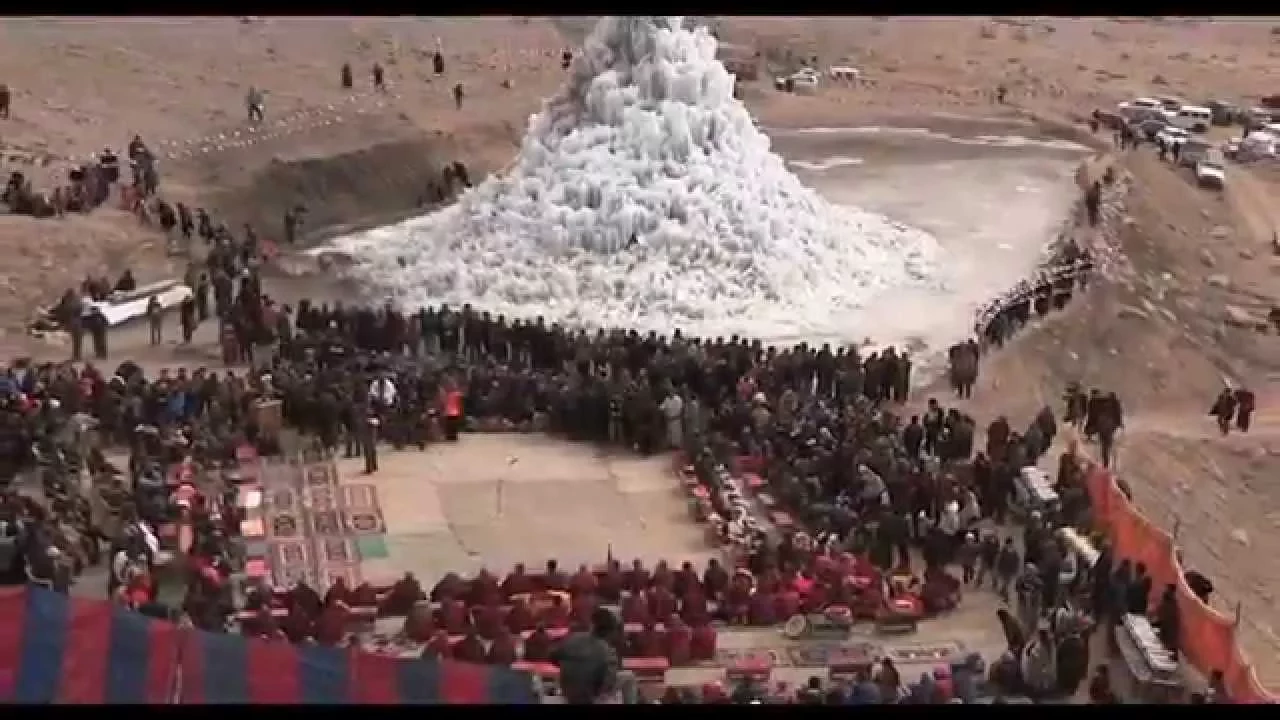
Ice Stupa Artificial Glaciers: Solving Ladakh's Water Crisis
@SonamWangchuk66
3.2M views•2015-05-03
Related Study Plans & Knowledge Roadmaps
Structured learning paths in Environmental Science