













Agbogbloshie, Ghana's largest e-waste scrapyard, demonstrates how informal urban mining communities practice sustainable innovation by recovering valuable materials from discarded electronics and repurposing them into new products, forming a grassroots circular economy where makers learn through hands-on experimentation rather than formal education, and where connecting these self-taught technicians with students in STEAM fields creates a powerful innovation engine called 'Sankofa Innovation' that emphasizes learning from the past to build a better future.
Urban Mining in Ghana: Innovation and Circular Economy | DK Osseo-Asare
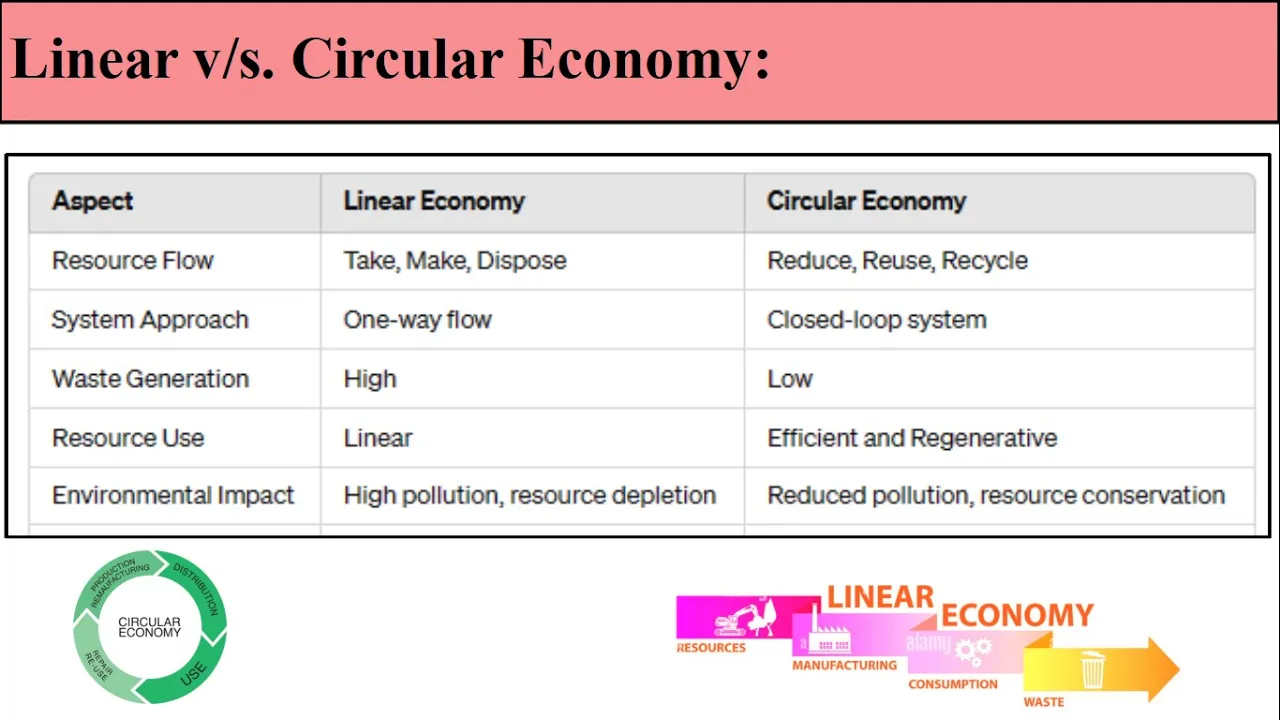
Added:Understanding of the Circular Economy model, specifically how it contrasts with traditional linear 'take-make-dispose' economic systems.
Basic knowledge of 'urban mining' and the global flow of electronic waste (e-waste) from developed to developing countries.
Familiarity with the concepts of maker culture, grassroots innovation, and open-source hardware development.
Awareness of the environmental and public health challenges associated with informal recycling sectors in the Global South.
Design for Disassembly (DfD) and Cradle-to-Cradle (C2C) design principles for consumer electronics.
The role of the Basel Convention and Extended Producer Responsibility (EPR) regulations in managing transnational e-waste.
Case studies of collaborative, low-cost technological hubs (such as Fab Labs or Maker Spaces) in emerging economies.
Strategies for formalizing informal waste management sectors while preserving local livelihoods and grassroots ingenuity.
73.7K views1.9Klikes14:18Original Release: 2018-08-30
Come with me to Agbogbloshie, a neighborhood in the heart of Accra, named after a god that lives in the Odaw River.
There's a slum, Old Fadama, built on land reclaimed from the Korle Lagoon, just before it opens into the Gulf of Guinea.
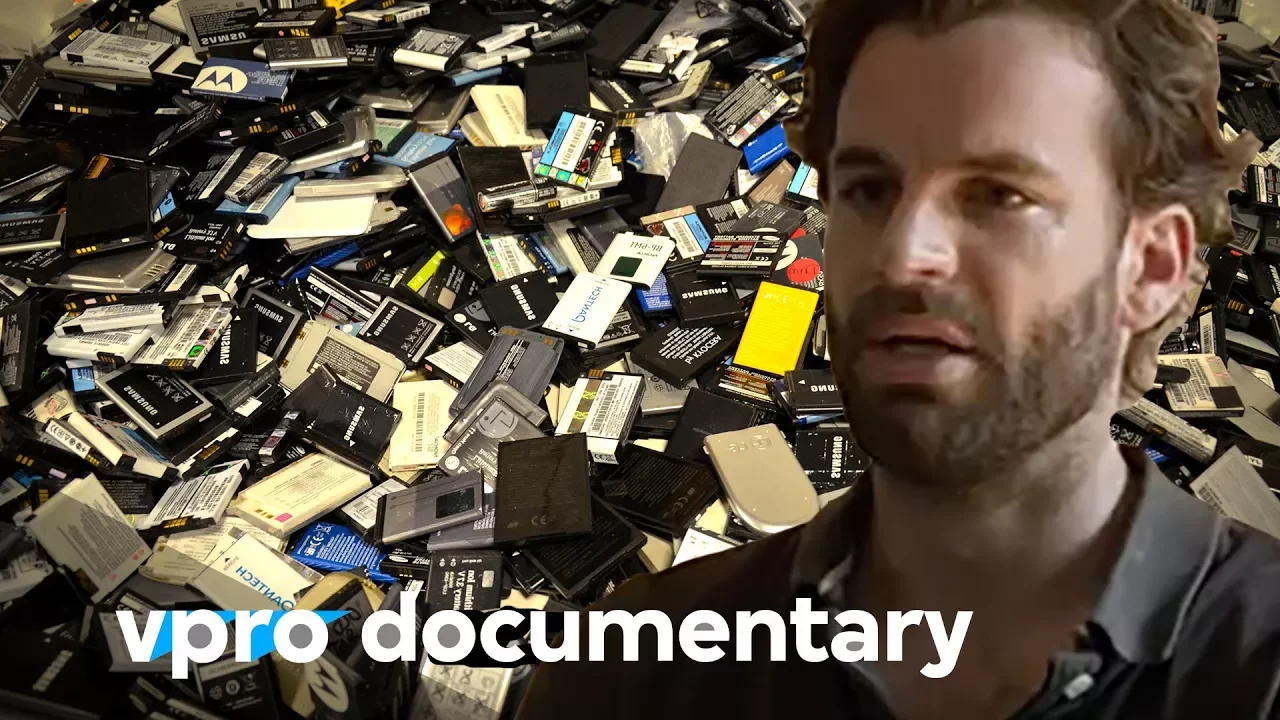
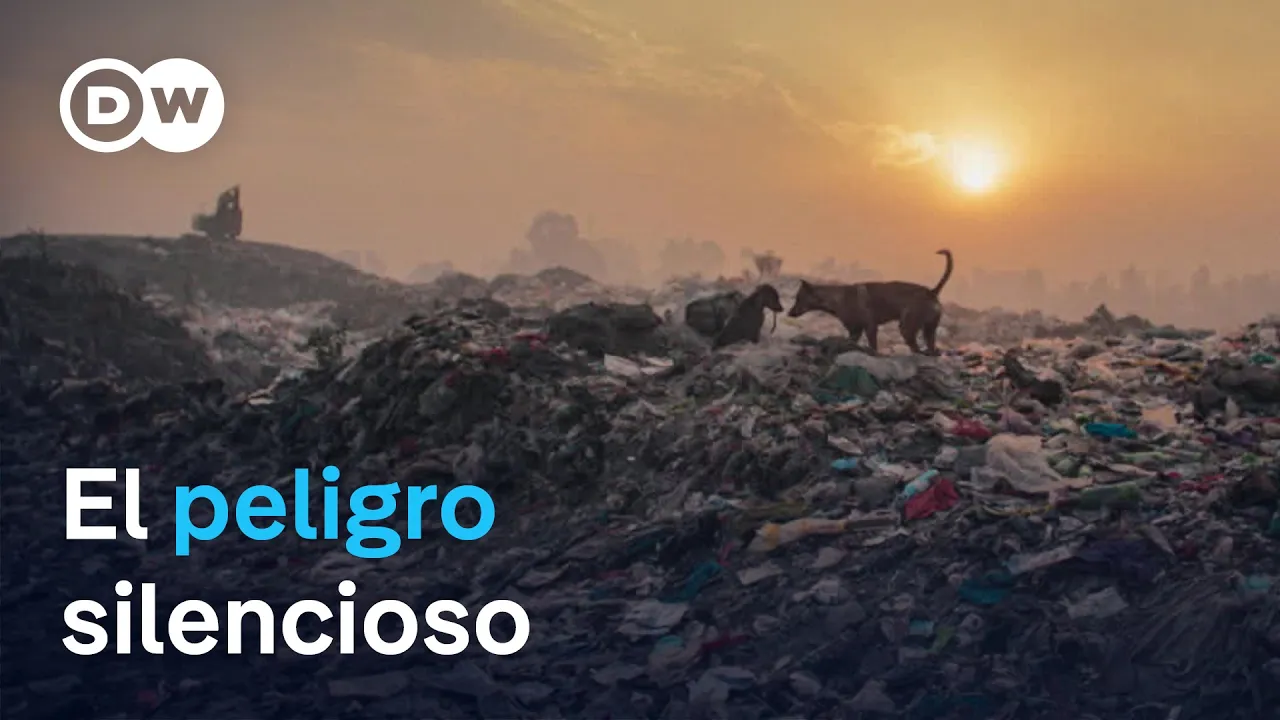
There's a scrapyard here where people take apart all kinds of things, from mobile phones to computers, automobiles to even entire airplanes.
Agbogbloshie's scrapyard is famous because it has become a symbol of the downside of technology: the problem of planned obsolescence.
It's seen as a place where devices from around the world end their life, where your data comes to die.
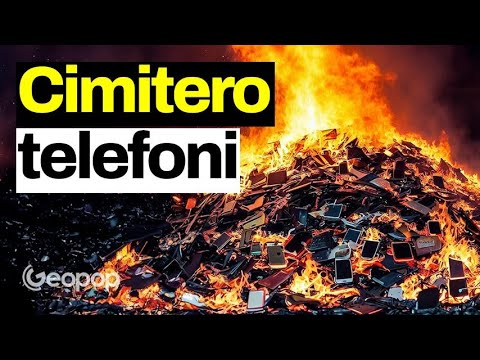
These are the images that the media loves to show, of young men and boys burning wires and cables to recover copper and aluminum, using Styrofoam and old tires as fuel, seriously hurting themselves and the environment.
It's a super-toxic process, producing pollutants that enter the global ecosystem, build up in fatty tissue and threaten the top of the food chain.
But this story is incomplete.
There's a lot we can learn from Agbogbloshie, where scrap collected from city- and nationwide is brought.
For so many of us, our devices are black boxes.
We know what they do, but not how they work or what's inside.
In Agbogbloshie, people make it their business to know exactly what's inside.
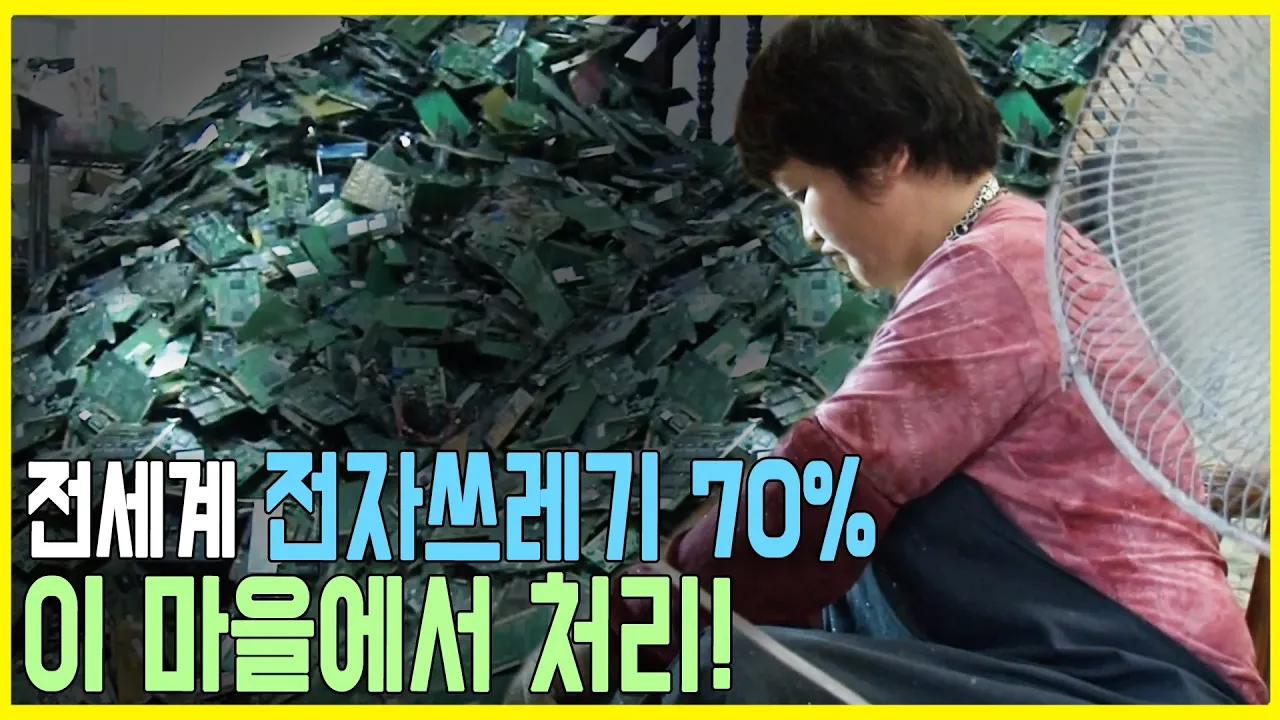
Scrap dealers recover copper, aluminum, steel, glass, plastic and printed circuit boards.
It's called "urban mining."
It's now more efficient for us to mine materials from our waste.
There is 10 times more gold, silver, platinum, palladium in one ton of our electronics than in one ton of ore mined from beneath the surface of the earth.
In Agbogbloshie, weight is a form of currency.
Devices are dissected to recover materials, parts and components with incredible attention to detail, down to the aluminum tips of electric plugs.
But scrap dealers don't destroy components that are still functional.
They supply them to repair workshops like this one in Agbogbloshie and the tens of thousands of technicians across the country that refurbish electrical and electronic equipment, and sell them as used products to consumers that may not be able to buy a new television or a new computer.
Make no mistake about it, there are young hackers in Agbogbloshie -- and I mean that in the very best sense of that word -- that know not only how to take apart computers but how to put them back together, how to give them new life.
Agbogbloshie reminds us that making is a cycle.
It extends to remaking and unmaking in order to recover the materials that enable us to make something anew.
We can learn from Agbogbloshie, where cobblers remake work boots, where women collect plastic from all over the city, sort it by type, shred it, wash it and ultimately sell it back as feedstock to factories to make new clothing, new plastic buckets and chairs.
Steel is stockpiled separately, where the carcasses of cars and microwaves and washing machines become iron rods for new construction; where roofing sheets become cookstoves; where shafts from cars become chisels that are used to scrap more objects; where aluminum recovered from the radiators of fridges and air conditioners are melted down and use sand casting to make ornaments for the building industry, for pots which are sold just down the street in the Agbogbloshie market with a full array of locally made ovens, stoves and smokers, which are used every day to make the majority of palm nut soups, of tea and sugar breads, of grilled tilapia in the city.
They're made in roadside workshops like this one by welders like Mohammed, who recover materials from the waste stream and use them to make all kinds of things, like dumbbells for working out out of old car parts.
But here's what's really cool: the welding machines they use look like this, and they're made by specially coiling copper around electrical steel recovered from old transformer scrap.
There's an entire industry just next to Agbogbloshie making locally fabricated welding machines that power local fabrication.
What's really cool as well is that there's a transfer of skills and knowledge across generations, from masters to apprentices, but it's done through active learning, through heuristic learning, learning by doing and by making.
And this stands in sharp contrast to the experience of many students in school, where lecturers lecture, and students write things down and memorize them.
It's boring, but the real problem is this somehow preempts their latent or their inherent entrepreneurial power.
They know books but not how to make stuff.
Four years ago, my cofounder Yasmine Abbas and I asked: What would happen if we could couple the practical know-how of makers in the informal sector with the technical knowledge of students and young professionals in STEAM fields -- science, technology, engineering, arts and mathematics -- to build a STEAM-powered innovation engine to drive what we call "Sankofa Innovation," which I'll explain.
We took forays into the scrapyard to look for what could be repurposed, like DVD writers that could become laser etchers, or the power supplies of old servers for a start-up in Kumasi making 3D printers out of e-waste.
The key was to bring together young people from different backgrounds that ordinarily never have anything to do with each other, to have a conversation about how they could collaborate and to test and develop new machines and tools that could allow them to shred and strip copper instead of burning it, to mold plastic bricks and tiles, to build new computers out of components recovered from dead electronics, to build a drone.
And here you can see it flying for the first time in Agbogbloshie.
(Applause) Yasmine and I have collaborated with over 1,500 young people, 750 from STEAM fields, and over 750 grassroots makers and scrap dealers from Agbogbloshie and beyond.
They've joined hands together to develop a platform which they call Spacecraft, a hybrid physical and digital space for crafting, more of a process than a product, an open architecture for making, which involves three parts: a makerspace kiosk, which is prefab and modular; tool kits which can be customized based on what makers want to make; and a trading app.
We built the app specifically with the needs of the scrap dealers in mind first, because we realized that it was not enough to arm them with information and upgraded technology if we wanted them to green their recycling processes; they needed incentives.
Scrap dealers are always looking for new scrap and new buyers and what interests them is finding buyers who will pay more for clean copper than for burnt.
We realized that in the entire ecosystem, everyone was searching for something.
Makers are searching for materials, parts, components, tools, blueprints to make what it is they want to make.
They're also finding a way to let customers and clientele find out that they can repair a blender or fix an iron or, as we learned yesterday, to make a french fry machine.
On the flip side, you find that there are end users that are desperately looking for someone that can make them a french fry machine, and you have scrap dealers who are looking how they can collect this scrap, process it, and turn it back into an input for new making.
We tried to untangle that knot of not knowing to allow people to find what they need to make what they want to make.
We prototyped the makerspace kiosk in Agbogbloshie, conceived as the opposite of a school: a portal into experiential and experimental making that connects local and global and connects making with remaking and unmaking.
We made a rule that everything had to be made from scratch using only materials made in Ghana or sourced from the scrapyard.
The structures essentially are simple trusses which bolt together.
It takes about two hours to assemble one module with semi-skilled labor, and by developing tooling and jigs and rigs, we were able to actually build these standardized parts within this ecosystem of artisanal welders with the precision of one millimeter -- of course, using made-in-Agbogbloshie welding machines, as well as for the tools, which can lock, the toolboxes, and stack to make workbenches, and again, customized based on what you want to make.
We've tested the app in Agbogbloshie and are getting ready to open it up to other maker ecosystems.
In six months, we'll have finished three years of testing the makerspace kiosk, which I have to admit, we've subjected to some pretty horrific abuse.
But it's for a good cause, because based on the results of that testing, we've been able to redesign an upgraded version of this makerspace.
If a fab lab is large, expensive, and fixed in place, think of this as the counterpoint: something low-cost, which can be locally manufactured, which can be expanded and kitted out incrementally as makers acquire resources.
You can think of it as a toolshed, where makers can come and check out tools and take them via handcart to wherever they want in the city to make what it is they want to make.
And moving into the next phase, we're planning to also add ceiling-mounted CNC bots, which allow makers to cocreate together with robots.
Ultimately, this is a kit of parts, which can be assembled locally within the informal sector using standardized parts which can be upgraded collectively through an open-source process.
In totality, this entire makerspace system tries to do five things: to enable emerging makers to gather the resources they need and the tools to make what they want to make; to learn by doing and from others; to produce more and better products; to be able to trade to generate steady income; and ultimately, to amplify not only their reputation as a maker, but their maker potential.
Sankofa is one of the most powerful Adinkra symbols of the Akan peoples in Ghana and Cote d'Ivoire, and it can be represented as a bird reaching onto its back to collect an egg, a symbol of power.
It translates literally from the Twi as "return and get it," and what this means is that if an individual or a community or a society wants to have a successful future, they have to draw on the past.
To acquire and master existing ways of doing, access the knowledge of their ancestors.
And this is very relevant if we want to think about an inclusive future for Africa today.
We have to start from the ground up, mining what already works for methods and for models, and to think about how might we be able to connect, in a kind of "both-and," not "either-or" paradigm, the innovation capacity of this growing network of tech hubs and incubators across the continent and to rethink beyond national boundaries and political boundaries, to think about how we can network innovation in Africa with the spirit of Sankofa and the existing capacity of makers at the grassroots.
If, in the future, someone tells you Agbogbloshie is the largest e-waste dump in the world, I hope you can correct them and explain to them that a dump is a place where you throw things away and leave them forever; a scrapyard is where you take things apart.
Waste is something that no longer has any value, whereas scrap is something that you recover specifically to use it to remake something new.
Making is a cycle, and African makerspaces are already pioneering and leading circular economy at the grassroots.
Let's make more and better together.
Thank you.
(Applause)
Up Next

104:47
L/N Ratio Advances: 30 Years of Landfill Leachate Monitoring
@hydroterraptyltd4278
301 views•2024-02-23

26:22
Walking in the City: Urban Rituals and the Flâneur in Contemporary India
@PSBTIndia
1.9K views•2016-08-02

17:40
Visual Storytelling & Future Media: Scott McCloud’s Comic Theory
@TED
332.3K views•2009-01-15

1:42
Game of Thrones Opening Credits: A Cinematic Analysis
@gameofthrones
46.3M views•2011-04-18
Related Study Plans & Knowledge Roadmaps
Structured learning paths in General & Interdisciplinary Studies
general-studies
Artificial Light: History, Tech & Human Impact
01The Pre-Electric Era: Fire, Oil, and Gas Lighting
02The Incandescent Revolution and Grid Electrification
03Gas Discharge and Fluorescent Illumination
+ 3 more learning modules
14h6 modules
Explore Roadmap
general-studies
Elevator Engineering: History, Physics & Cities
01From Hoists to Safety Brakes: The Dawn of Vertical Lift
02Hydraulic vs. Traction: The Engineering Physics of Elevators
03Modern Speed, Safety, and Algorithms
+ 2 more learning modules
12h5 modules
Explore Roadmap
general-studies
Rubber: Material Science, History & Geopolitics
01Origins of Natural Rubber & Mesoamerican History
02The Chemistry of Natural Rubber & Vulcanization
03The Geopolitics of the Rubber Boom & Colonization
+ 2 more learning modules
12h5 modules
Explore Roadmap
general-studies
Containerization: Evolution, Logistics & Trade
01Ancient Trade & Bulk Cargo: Amphorae to Barrels
02The Industrial Revolution & Cardboard Packaging
03The Containerization Revolution: Malcom McLean
+ 2 more learning modules
12h5 modules
Explore Roadmap