

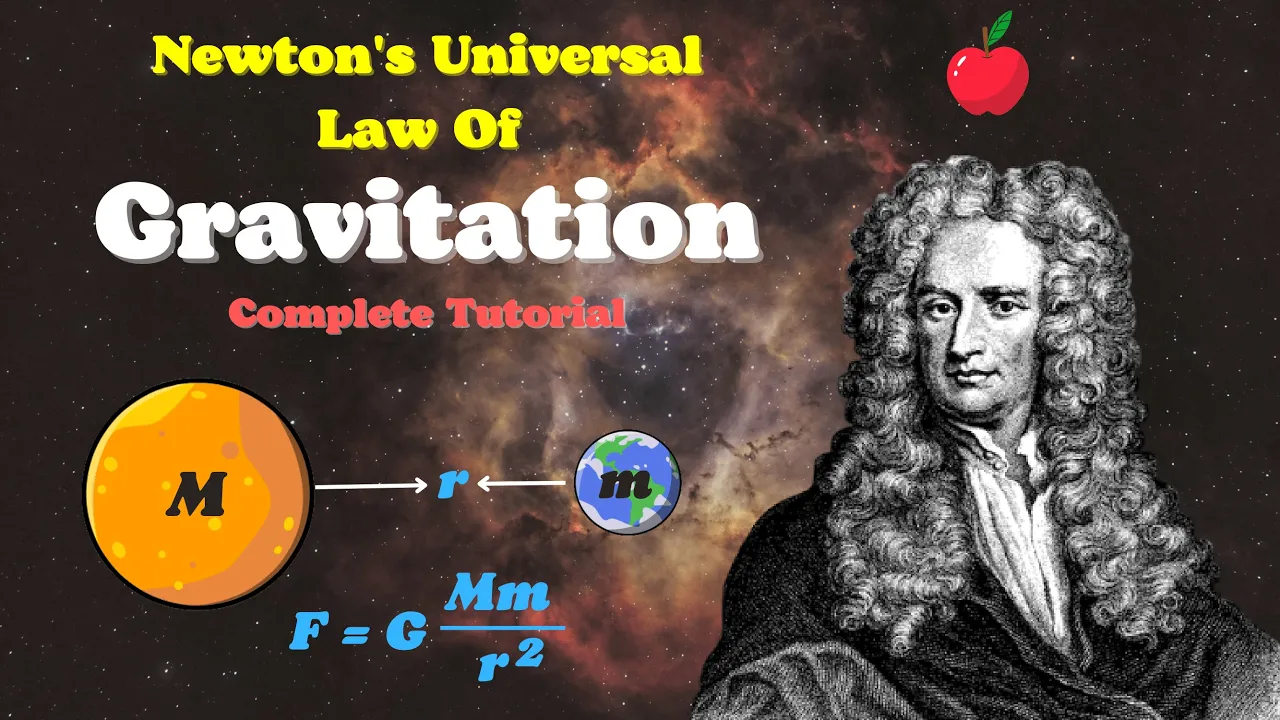

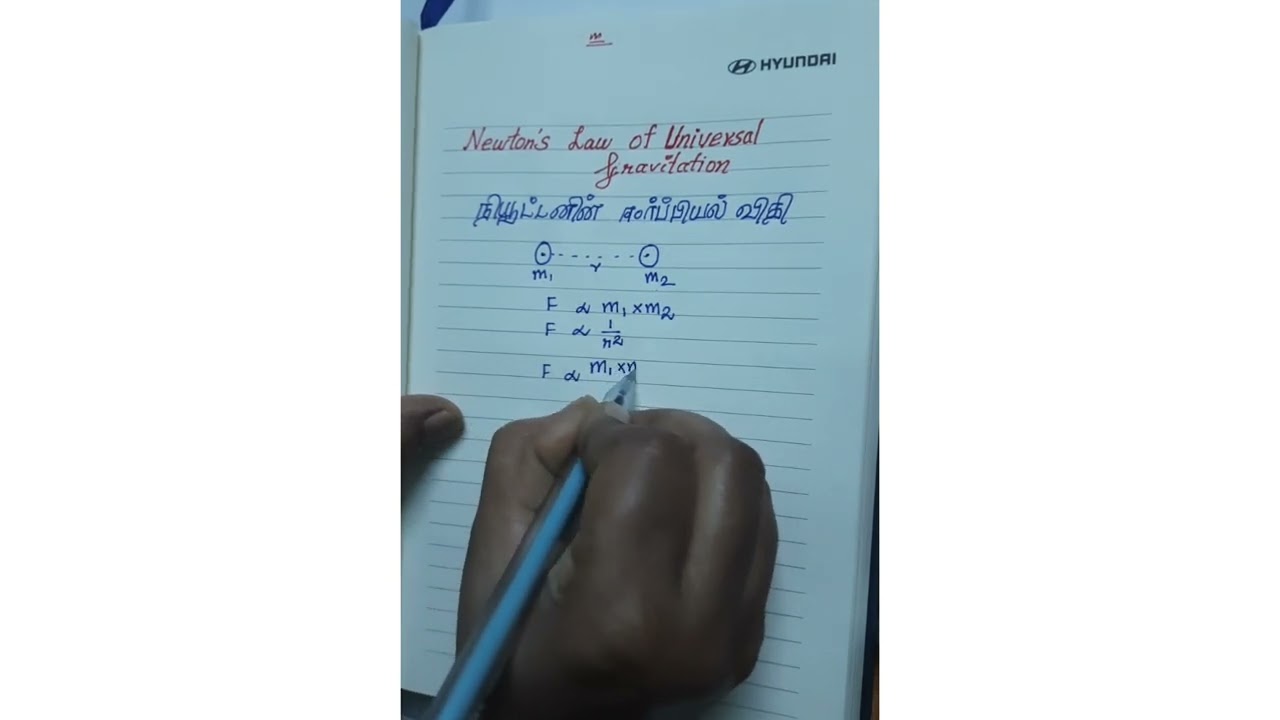














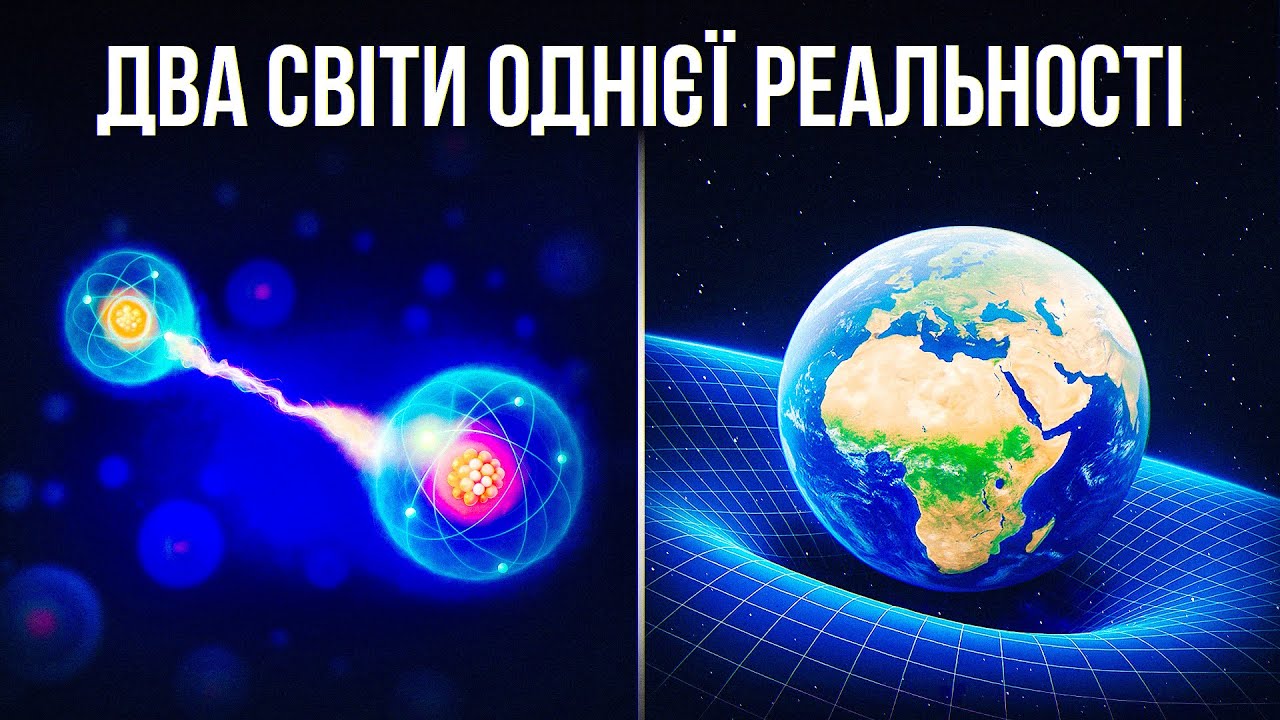




Newton's Law of Universal Gravitation states that every mass attracts every other mass with a force that is directly proportional to the product of their masses and inversely proportional to the square of the distance between them (F = G(m₁m₂/r²)), which elegantly explains planetary motion, tides, and the formation of celestial structures from star clusters to galaxies, representing one of humanity's greatest scientific generalizations.
Richard Feynman: The Character of Physical Law, Part 1 - Gravitation
Added:Newton's Law of Universal Gravitation: Familiarity with the inverse-square law and the concept of gravitational attraction between masses.
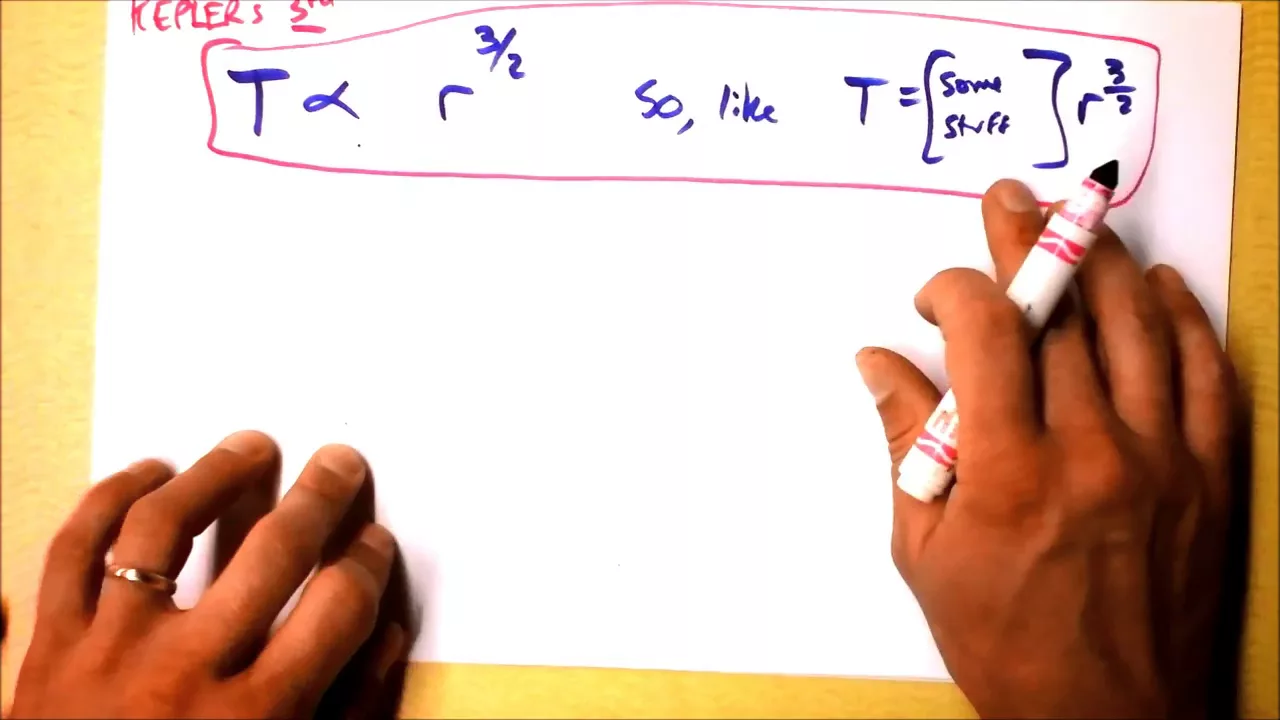
Kepler's Laws of Planetary Motion: Understanding the empirical laws of planetary orbits that Newton's theories mathematically unified.
Basic Classical Mechanics: Core principles of force, mass, acceleration, and Newton's three laws of motion.
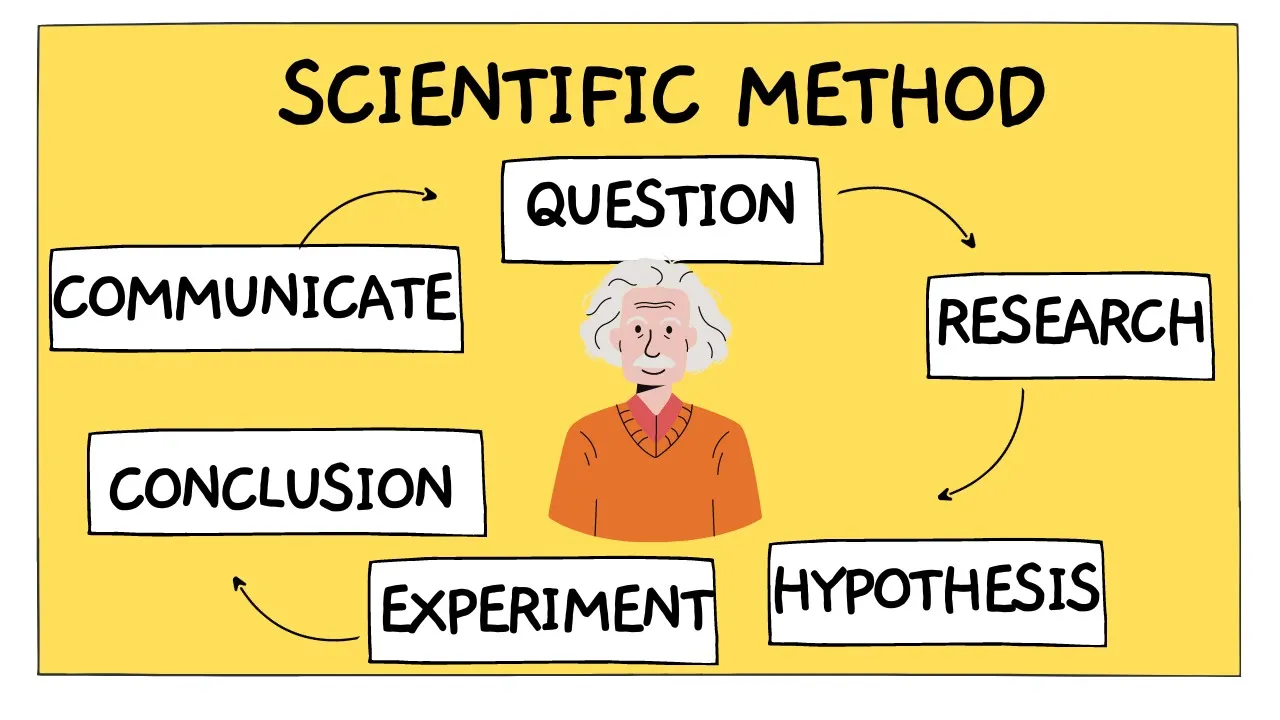
The Scientific Method: Concept of how physical laws are hypothesized, tested, and established through observation and mathematical modeling.
Einstein's General Theory of Relativity: Investigating gravity as the curvature of spacetime rather than an instantaneous action-at-a-distance force.
The Relation of Mathematics to Physics: Exploring Feynman's subsequent lectures on why mathematics is the deep, essential language of physical laws.
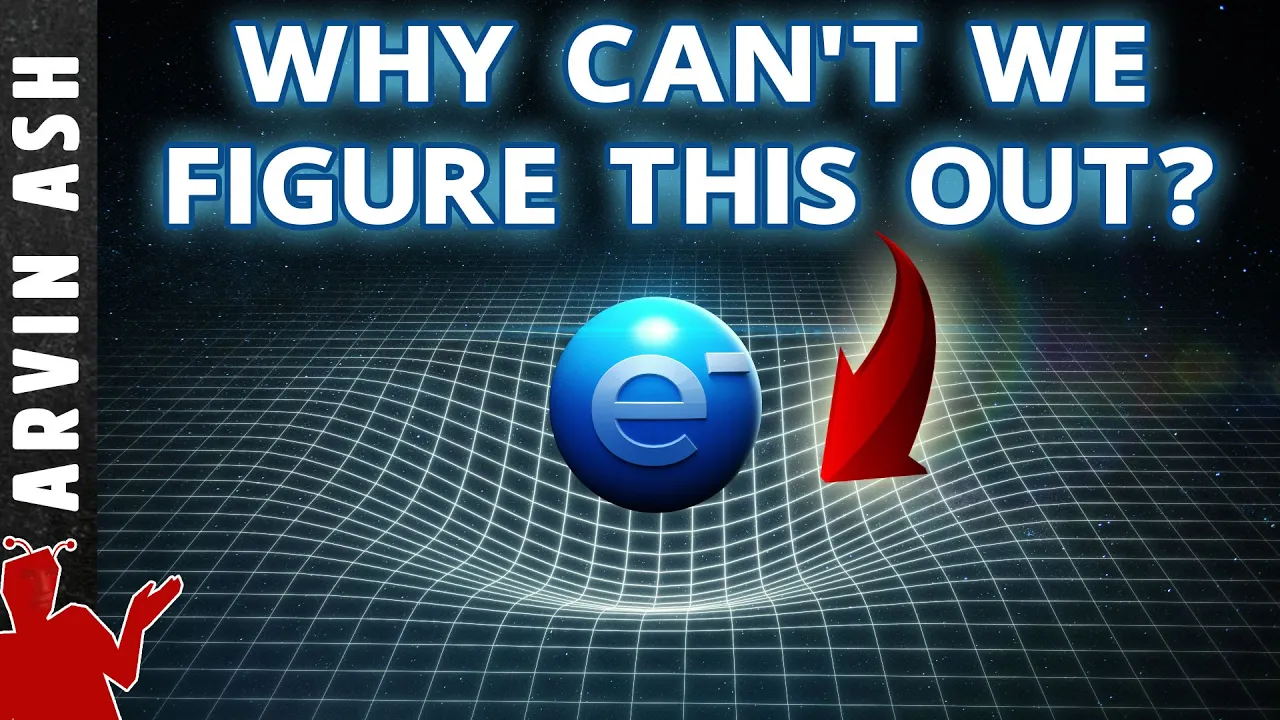
Quantum Gravity: Understanding the modern theoretical quest to unify general relativity with quantum mechanics (e.g., String Theory, Loop Quantum Gravity).
Observational Cosmology: Studying real-world applications and proofs of gravitational theory, such as gravitational lensing, black holes, and gravitational waves.
1.4M views13Klikes56:04Original Release: 2011-01-27
[Music] [Music] ladies and gentlemen it's my privilege to introduce the messenger lecturer mr. Richard P Fineman of the California Institute of Technology professor Fineman is a distinguished theoretical physicist and he's done much to bring order out of the confusion which is marked much of the spectacular development in physics during the post-war period among his honours and awards I will mention only the Albert Einstein award in 1954 this is an award which has made every third year and which includes a gold medal and a substantial sum of money professor Fineman did his undergraduate work at MIT and his graduate work at Princeton he worked on the Manhattan Project at Princeton and later at Los Alamos he was appointed an assistant professor here at Cornell in 1944 although he did not assume residents until the end of the war I thought it might be interesting to see what was said about him when he was appointed at Cornell so I searched the minutes of our board of trustees and there's absolutely no record of his appointment there are however some 20 references to leaves of absence salary and promotions one reference interested me especially on July 31 1945 the chairman of the physics department wrote the Dean of the Arts College stating that dr. Fineman is an outstanding teacher and investigator the equal of whom develops infrequently the [Music] the Chairman suggested that an annual salary of $3,000 was a bit too low for a distinguished faculty member and recommended that professor Fineman salary be increased $900 the Dean in an act of unusual generosity and with complete disregard for the solvency of the university crossed out the $900 and made it an even thousand you can see that we thought highly a professor Fineman even then Fineman took up residence here at the end of 1945 and spent five highly productive years on our faculty he left Cornell in 1950 and went to Caltech where he has been ever since before I let him talk I want to tell you just a little bit more about him three or four years ago he started teaching a beginning physics course that Caltech and the result has added a new dimension to his fame his lectures are now published in two volumes and they represent a repricing approach to the subject in the preface of the published lectures there's a picture of Fineman performing happily on the bongo drums my Caltech friends tell me that he sometimes drops in on the Los Angeles nightspots and takes over the work of the drummer but professor Fineman tells me that that's not so another of his specialties is safecracking one legend says that he once opened a locked safe in a secret establishment removed the secret document and left a note saying guess who I could tell you about the time that he learned Spanish before he went to give a series of lectures in Brazil but I won't this this gives me enough this gives you enough background I think so let me say that I'm delighted to welcome professor Fineman back to Cornell his general topic is the nature of physical law and his topic for tonight is the law of gravitation an example of physical law professor fine you saw it but in the infrequent occasions when I've been called upon in a formal place to play the bongo drums the introducer never seems to find it necessary to mention that I also do theoretical physics [Music] I believe that's probably that we respect the arts more than the sciences the artists of the Renaissance said that man's main concern should be for man and yet there are some other things of interests in the world even the artist appreciates sunsets and the ocean waves and the march of the stars across the heavens and there is some reason then to talk of other things sometimes as we look into these things do we get an aesthetic pleasure from them directly on observation but there's also a rhythm and a pattern between the phenomena of nature which isn't apparent to the eye but only to the eye of analysis and it's these rhythms and patterns which we call physical laws what I want to talk about in a series of lectures is the general characteristics of these physical laws that's even another level if you will of higher generality over the laws themselves and that's really how I am talking about is nature as seen as a result of detailed analysis but only the most overall general qualities of nature is what I mean we wish to speak about now such a topic as a tendency to become too philosophical because it becomes so general that person talks in such generalities that everybody can understand him and it's considered to be some deep philosophy if you however I would like to be very rather more special and I would like to be understood in an honest way rather than in a vague way to some extent and so if you don't mind I'm going to try to give instead of only the generalities in this first lecture an example of physical law so that you have at least one example of the things about which I am speaking generally in this way I can use this example again and again to give an instance to make a reality out of something which otherwise be too abstract now I've chosen for my special example of physical law to tell you about the theory of gravitation phenomena of gravity why I chose gravity I don't know I whatever I chose you would ask the same question actually it's a was one of the first great laws to be discovered and that has an interesting history you might say yes but then it's all had I would like to hear something about science more modern science more recent perhaps but not more modern modern science is exactly in the same tradition as the discoveries of the law of gravitation it is only more recent discoveries that we would be talking about and so I have no they do not feel at all bad about telling you of the law of gravitation because I am in describing its history and the methods the character of its discovery and its quality talking about modern science completely modern this law has been called the greatest generalization achieved by the human mind and you can get already from the introduction I'm more interested not so much in the human mind as in the marble of nature who can obey such an elegant and simple law as this law of gravitation so our main concentration will not be on how clever we are to have found it all out but on how clever she is to pay attention to it now what is this law of gravitation that they're going to talk about the law is that two bodies or bodies exert a force upon each other which is inversely as the square of the distance between them and varies directly as the product of their masses and the mathematician mathematically we can write that great law down and formula some kind of a constant times the product of the two masses divided by the square of the distance now if I add the remark then a body reacts to a force by accelerating well by changing its velocity every second to an extent inversely as its mass it reacts to changes velocity more if the mass is lower and so on inversely is the mass then I have said everything about the law of gravitation that needs to be said everything else is a consequence mathematical consequence of those two things that I said that's remarkable enough phenomenon itself that the next lecture will consider this in more detail now I know you're not all here I know some of you are but you're not all mathematicians and so you cannot all immediately see all of the consequences of these two remarks and so what I would like to do in this lecture is to briefly tell you the story of the discovery tell you what some of the consequences are what the effect of this discovery had on history of science what kinds of mysteries such a law entails something about the refinements made by Einstein and possibly the relation to other laws of physics the history of the thing of briefly is this that the ancients first observed the way the planets seemed to move about in the sky and concluded that they all went around we along with the earth went around the Sun this discovery was later conveyed independently by Copernicus if they had forgotten that people had forgotten that had already been made now the next thing question that came up in to study was exactly how do they go around the Sun that is exactly what kind of motion do they go with the Sun at the center of a circle or do they go in some other kind of how faster they move and so on and this discovery took a longer to make the times after Copernicus four times in which there were great debates about whether the planets in fact went around the Sun along with the earth or whether the earth was at the center of the universe and so on and there were considerable arguments about this when a man named Tycho Brahe got an idea of an own way of answering the question he thought that it might perhaps be a good idea to look very very carefully and to record where the planets actually appear in the sky and then the alternative theories might be distinguished from one another this is the key of modern science and as the beginning of the true understanding of nature this idea that to look at the thing to record to the mission to details and to hope that in the information thus obtained may lie a clue to one or another of a possible theoretical interpretation so Tycho was a rich man and owned I believe an island near Copenhagen outfitted his Island with great breasts circles and special observing positions as situation chairs that she could look through a little hole and record a night after night the position of the planets it's only through such hard work that we can find out anything when these all these data were collected they came into the hands of Kepler who then tried to analyze what kinds of motions the planets made around the Sun and he did this by a method of trial and error at one stage he thought he had it he assumed figured out that they went around the Sun in circles with the Sun off-center and noticed that one planet I think it was Mars but I don't know was eight minutes of Arc off and he decided this was too big for Tycho Brahe to have made an error and that this was not the right answer so because of the precision of experiments he was able to proceed and find that to go on to another trial and found in fact ultimately this three things first that the planets went in ellipses around the Sun with the Sun of the focus and ellipses occur viewed all artists know about because it's a foreshortened circle when children know about because somebody told them and if you take a string and tie it the two tax and put a pencil in there it'll make an ellipse these two tacks are the foci and if the Sun is here the shape of the orbit of a planet around the Sun is one of these curves the next question is I'm going around the ellipse how does it go does it go faster when it's near the Sun slower when it's further from the Sun and so on we take away the other focus we have the Sun then and the product going around and Kepler found the answer to this - he found this that if you put the position of the planet down in two at two times separated by some definite time let's say three weeks and then in another place in the orbit put the positions of the planets again separated by three weeks and draw lines from the Sun to the planet technically called radius radius vectors anyway lines from the planet Sun to the planet then the area that's enclosed in the orbit of the planet and the two lines that are separated by the finest position three weeks apart is the same no matter what part of the orbit the thing is on so that it has to go faster when it's closer in order to get the same area does it go slower when it's braided away and in this precise manner some several years later he found the third rule and that had not to do with the exactly of motion of a single planet around the Sun but related the various planets to each other and it said that the times that took the planet to go all the way around was related to the size of the orbit and that the times went as the square root of the cube of the size of the orbit and for the size of the orbit is the diameter all the way across the biggest distance on the ellipse so he has these three laws which are summarized by saying it's an ellipse and that equal areas are swept in equal times and that they time to go around varies as a free hare power of the size the square root of a to decide so as three laws Kepler which is a very complete description of the motion of the planets around the Sun the next question was what makes him go around well how can we understand this in more detail or is there anything else to say in the meantime Galileo was investigating the laws of motion incidentally at the time of Kepler the problem of what drove the planets around the Sun was answered in suntanned served by some people by saying that there were angels behind here beating their wings and pushing the planet along or on orbit as we'll see that that answer is not very far from the truth the only differences that the Angels sit in a different direction and where wings gonna but the point that the Angels sit the different direction is the one that I must now come to Galileo in studying the laws of motion and doing a number of experiments to see how balls roll down inclined planes and pendulous swung and so on discovered a idealization a great principle called a principle of inertia which is this that if a thing has nothing acting on it for object has nothing acting on and is going along at a certain velocity in a straight line it will go at the same velocity at exactly the same straight line forever unbelievable though that may sound to anybody who has tried to make a ball roll forever if the idealization did is correct and that that there were no influence is acting such as the friction on the floor and so on the thing would go at a uniform speed forever the next point was made by Newton who discussed the next question which is when it doesn't go in a straight line then what and the answered this way that a force is needed to change the velocity in any manner first for instance if you're pushing it in a direction that it moves it will speed up if you find that it changes direction then the force that must have been sideways and that the force can be measured by the product of two effects first how much does the velocity change in a small interval of time how fast is the velocity changing how much is it accelerating in this direction or how much is the velocity changing when it changed this direction let's call the acceleration and when that's multiplied by a coefficient called the mass of an object or its inertia coefficient then that together is a force one can measure the for instance if one has a stone on the end of a string and swings it in the circle overhead then one can measure every one finds one has to pull the reason is that the speed of this the velocity speed is not changing as it goes around the circle but it's changing its direction so there must be perpetually in in pulling force and this is proportional to the mass so that if we were to take two different obvious first swing one and then swing another one at the same speed around the head and measured the force in the second one that's everyone the NuForce is bigger than the other force in the proportion that the masses are different this is a way of measuring the masses by how much how hard it is to change the speed now then Newton saw I found this but for instance to take a simple example if a planet is going in a circle around the Sun no force is needed to make it go sideways tangentially if there were no force at all on it it would have just keep coasting this way but actually the planet doesn't keep coasting this way but finds itself later not out here where it would go if there were no force at all but further down toward this the Sun in other words its velocity its motion has been deflected toward the Sun so what the angels have to do is to beat their wings in toward the Sun all the time that the motion to keep it going in a straight line has no known reason the reason why things Coast forever has never been found out the law of inertia is no known origin so the angels don't exist but the continuation of the motion does but in order to obtain the falling operation we do need a force so it would became apparent that the origin of that the force was toward the Sun as a matter of fact Newton was able to demonstrate that the statement that equal areas are swept in equal times was a direct consequence of the simple idea that all of the changes in velocity are directed exactly to the Sun even in the elliptical case and maybe I'll have time next time to show you how that works in detail so from this law he would confirm the idea that the forces toward the Sun and for knowing how the periods of the different planets vary with the distance away from the Sun it's possible to determine how that force must weaken at different distances and he was able to determine that the force must vary inversely as the square of the distance now so far he hadn't said anything yes because he only said two things which Kepler said in a different language one is exactly equivalent to the statement that the forces thought the Sun and the others exactly he couldn't the statement that the Lord's in Percy is a square the distance but people had seen in telescopes the Jupiter's satellites going around Jupiter and it looked like a little solar system so the satellites were attracted to Jupiter and the moon is attracted to the earth and this goes around the earth is attracted the same way so it looks like everything's attracted to everything else and so the next statement was to generalize this and to say that every object attracts every other object if so the earth must be pulling on the moon just as the Sun pulls on the planet but it's in known that the earth pulls on things because you're all sitting typing in your seats in spite of your desires to float out of the hole of this time the pole allowed for objects on the earth was well-known in the phenomenon of gravitation and there was newton's idea then that maybe the gravitation which held a moon in the orbit also applied was the same gravitation that pulled the objects toward the earth now it is easy to figure out how far the moon falls in one second because if it went in a straight line you know the size of the orbit it know it takes a month to go around and if you figure out how far goes in one second you can figure out how far the circle of the moon's orbit has fallen below the straight line that it would have been in if it didn't go the way it does go and this distance is one twentieth of an inch now the moon is 60 times as far away from the Earth's center and we are with 4000 miles away from the center in the moon is 240,000 miles away from the center so if the law of inverse square is right an object that the Earth's surface should fall in one second by a 120th of an inch times 3600 being the square of 60 because the force has been weakened by 60 times 64 the inverse square law in getting out there to the moon and if you multiply a 20th of an inch by 3600 you get a about 16 feet and low it is known already of Galileo's measurements that things fell in one second on the Earth's surface by 16 feet so this mean meant to see that he was on the right track there was no going back now because a new fact that was completely independent previously which is the period of the moon's orbit and his distance from the earth was connected to another fact which is how long it takes something to fall in one second so this was a dramatic test that everything's all right further he had a lot of other predictions he was able to calculate what the shape of the orbit should be if the law were the inverse square and found indeed that it was an ellipse so he got 3/4 to does it work in addition a number of new phenomena had their obvious explanations one was the tides the tides were due to the pull of the moon on the earth this had sometimes been thought of before with the difficulty that if it's the pull of the moon on the earth the earth being here the water's being pulled up to the moon then the would only be one tide a day where that bump of water is under the moon but actually you know there are tides every 12 hours roughly and that's two tides a day but you must there was also another school of thought that had a different conclusion their theory was that it was the earth that was pulled by the moon away from the water so actually Newton was the first one to realize what actually was going on that the force of the moon on the earth and on the water is the same at the same distance and that the water here is closer to the moon and the water here is further from the moon than the earth then the rigid earth so that the water is pulled more toward the moon here and here is less toward the moon than the earth so there's a combination of those two pictures that makes a double pipe actually the earth does the same trick as the moon it goes around a circle it really I mean the force of the moon on the earth is balanced but by what by the fact that just like the moon goes in a circle the balance the Earth's force the earth is also going in a circle actually the center of the circle is somewhere inside the earth it's also going in a circle to balance the moon so the two of them go around a common center here and if you wish this water is thrown off by centrifugal force more than the earth is and this one is attracted more than the average of the earth at any rate the tides were then explained in it and the fact they were two a day a lot of other things became quite clear why the earth is round because everything gets pulled in and why it isn't round because it's spinning so that the outside gets thrown out a little bit net balancing and why the Sun and Moon around and so on now as the science developed and measurements were made ever more accurately the tests of Newton's law became much more stringent and the first careful tests involved the moons of Jupiter by careful observations of the way they went around for the long period of time one could be very careful to check that everything was according to Newton and turn out not to be the case the moons of Jupiter appeared to be first get sometimes to eight minutes ahead of time and sometimes eight minutes behind tight schedule where schedule is the calculated values according to Newton's laws it was noticed that they were ahead of schedule when they were closed when Jupiter was close to the earth and behind schedule and was far away around a Hajj circumstance and mr. Roma having confidence in the law of gravitation came to an interesting conclusion that it takes light some time to travel from the moon's to the earth and that what we're looking at when we see the moons and not how they are now but how they were the time or gold that it took the light to get here now when Jupiter's near us it takes less time for the light to come and when Jupiter's further it takes longer time so he had to correct the observations for the differences in time and by the fact that they were this much too early or that much too late was able to determine the velocity of light this was the first demonstration that light was not an instantaneously propagating material I bring this particular matter to your attention because it illustrates something that when a law is right it can be used to find another one that by having confidence in this law if something is the matter it suggests perhaps some other phenomenon and with we had not known the law of gravitation we would have taken much longer to find the speed of life because we would not have known what to expect that Jupiter's satellites this process has developed into an avalanche of discoveries each new discovery permits the tools for much more discovery and this begin is the beginning of that avalanche which has gone on now for 400 years in a continuous process and we're still avalanching along at high speed another problem came up the planets shouldn't really go in ellipses because according to Newton's laws they're not attracted only by the Sun but also they pull on each other a little bit only a little bit fell a little bit is something and will alter the motion a little bit so Jupiter Saturn and Uranus were big planets that were known and the calculations were made as to how slightly different than the perfect ellipses of Kepler the planets ought to be going Jupiter Saturn and Uranus by the pull of one on each other and when they were finished the calculations I mean and the observations it was noticed that Jupiter and Saturn went according to the calculations but that Uranus was doing something funny another opportunity for Newton's laws to be found wanted but courage two men both who made these calculations Adams and Lovera independently and almost exactly the same time proposed that the motions of Uranus were due to an unseen as yet new planet and so they wrote letters to their respective observatories telling him to look turn your telescope and look there and you'll find a planet how absurd said one of the observatories that some guy sitting with pieces of paper and pencils can tell us where we look to find something new planet and the other Observatory was more well less well the administration was different they found the Neptune more recently in the beginning of the 20th century it became apparent that the motion of the planet Mercury was not exactly right and this caused a lot of trouble and had no explanation until a modification of Newton's this vid to show ultimately the Newton's laws were slightly off and that they had to be modified I will not discuss the modification in the tale it was made by Einstein now the question is how far does this law extend does it extend outside the solar system and so I show on the first slide evidence that the law of gravitation is on a wider scale than just the solar system here is a series of three pictures of a so-called double star there's the third star fortunately in the picture so you can see that they're really turning around and that nobody just simply turned the frames of the pictures around which is easy to do on astronomical pictures but the stars are actually going around and by watching these things and plotting the orbit you see the orbit that they make on the next slide it's it's evident that they're attracting each other and that they're going around under ellipse according to the way expected these are succession of pictures going for all these different periods of time I think yes it goes around this way they didn't see it well when it was too close and here it is in nineteen five my slide is very old it's gone around maybe once more since and you'll be happy except when you notice if you would have noticed already that this Center is not and a focus of the ellipse puts quite a bit off so something's an hour the Lord know if God hasn't presented us with this orbit face on it's tilted at a funny angle and if you take an ellipse and Mark its focus and then hold the paper in an odd angle and look at it in projection this but the focus doesn't have to be at the focus of the projected image so it said because it's orbit is tilted in space that it looks that way that looks like it's not the right pattern but it's alright and you can figure everything out satisfactorily for that how about a different a bigger distance there's forces between the stars does it go any further than these distances which are not more than two or three times systems diameter here's something in the next slide that's a hundred thousand times as big as a solar system in diameter and this is a large number of stars tremendous numbers this white spot is not a solid white spot it's just because of the failure of our instruments to resolve it but are very very tiny dots just like the other stars well separated from one another of not hitting each other each one falling through and back and forth through this great globular cluster it's one of the most beautiful things in the sky as good as sea waves and sunset and the distribution of this material it's perfectly clear that the thing that holds us together is the gravitational attraction of the stars for each other and the distribution of the material in the sense of how the stars peter out as you go out in distance permits one to find out roughly how what the law is a force between the stars and of course it comes out right that it is roughly the inverse square the accuracy of these calculations and measurements is not anywhere near as careful as in the solar system on would this gravity extend still further this is a little pinpoint inside of a big galaxy in the next slide shows a typical galaxy and it's clear that this thing again is held together somehow and the only candidate that's reasonable is gravitation but when we get to this can this size we have in any way any longer to check the inverse square law but there seems to be no doubt that these great agglomerations of stars and soap these galaxies which are fifty to a hundred thousand light years across the solar system is welcome of the earth to the Sun is only eight light minutes this is 100,000 light years that the gravity is extending even over these distances and in the next slide as evidence say extends even further here is what is called a cluster of galaxies there's a galaxy here and here and here galaxies here they're all in one lump of galaxies analogous to the cluster of stars but this time what's clustered are those big babies that I showed you in this previous slide now we this is as far as is about one tenth or well a hundreds maybe of the size of the universe and as far as we have any direct evidence that gravitational forces extended so the Earth's gravitation if we take the view as no edge as you may read in the newspapers when we plan to get outside the field of the gravity it keeps on going ever weaker and weaker inversely as the square of the distance dividing by for each time you're twice as far away until it mingles with the strong fields and gets lost in the confusion of the strong fields of other stars but all together with the stars in its neighborhood pulls the other stars to form the galaxies and all together they pull on other galaxies to make a pattern a cluster of galaxies so the Earth's gravitational field never ends but Peters out very slowly in a precise and careful law probably to the edges of the universe the law of gravitation is different than many of the earth well is is very important in the economy or in the machinery of the universe there are many places where gravity has its practical applications as far as the universe is concerned but a typically among all the other laws of physics gravitation has relatively few practical applications I mean the new knowledge of the Lord has a lot of application keeps people in their seats on but it has few that knowledge of the law has few practical applications relatively speaking compared to the other laws this is one case in which I picked an atypical example it is impossible by the way by picking one example of anything to avoid picking one which is atypical in some sense that's the wonder of the world in the only applications I could think of were first in some geophysical prospecting in predicting the tides nowadays more modern lee in working out the motions of the satellites and the end of planet probes and so on that we send up and also modern lee to calculate the predictions of the planets position which have great utility astrologists to publish their predictions and horoscopes in the magazines that's the strange world we live in that all the advances in understanding are used only to continue the nonsense which has existed for 2,000 years now that that shows that gravitation extends to the great distances but Newton said that everything attracted everything else do I attract you excuse me I mean do I attract you I was going to say excuse me do I attract you physically I didn't what I mean is to choose it really true that two things attract each other can we make a direct test and not just wait for the planets and look at the planet to see if they attract each other and this experiment that the direct test was made by Cavendish on equipment which you see indicated on the next slide I got my slides right well I made a mistake I was talking about the he occurred the importance of the gravitation I was overwhelmed on my clever remark about astrologers and forgot to mention the important places where gravitation does have some real effect in the behavior of the universe and one of the interesting ones is the formation of new stars in this picture which is a gaseous nebula inside our own galaxy and it's not a lot of stars but as gas there are places where the gas has been compressed or attracted to itself here it starts props by some kind of shock waves to get collected but the reason remained therefore of the phenomenon is that gravitation pulls up the cloud of gas closer and closer together so big mobs of gas and dust collect and form balls which as they fall still further the heat generated by the falling lights them up and they become stars and we have in the next slide some evidence of the creation of new stars it is unfortunately harder to see than I thought it was when I looked at it before but this is not exactly the same as this this bump here is further out than here and that this also has a new dot here there are I have found better examples but were unable to produce a slide there is one example of a star patch a light that grew in a place in 200 and 200 days so that when the still isn't making the same kind of condition of a gas cloud when the guest collects too much together by gravitation stars are born and this is the beginning of new stars so the stars belch out dirt and gases when they explode sometimes in the dirt and gases then collect back again and make new stars sounds like perpetual motion I now turn to the subject I meant to introduce which was the experiments on the small scale to see whether things really attract each other and I hope now that the next slide does indicate this is the second try ya Cavendish's experiment the idea was to hang by a very very fine quartz fiber a rod with two balls and then put two large LED balls in the positions indicated here next to it on the side then because of the attraction of the balls there would be a slight twist to the fiber it had to be done so delicately because the gravitational force between ordinary things is very very tiny indeed and there it was and it was possible then to measure the force between these two balls Cavendish called his experiment weighing the earth we're pedantic and careful today we wouldn't let our students say that he would have to say they measuring the mass of the earth no but the reason he say that said that is the following by a direct experiment he was able to measure the force and the two masses and the distance and thus determine the gravitational constant you say yes but we have the same situation on the earth we know what the pull is and we know what the mass of the object pulled is and we know how far away we are but we don't know them either the mass of the Earth or the constant but only the combination so by measuring the constant and knowing the facts about the pull of the earth the mass of the earth could be determined so indirectly this experiment was the first determination of how heavy or how massive is the ball on which we stand it's a kind of amazing achievement to find that out and I think that's why Cavendish named his experiment that way instead of determining the constant in the gravitational equation weighing the earth he incidentally was weighing the Sun and everything else at the same time because the pull of the Sun is known in the same manner now when one other test of the law of gravitation is very interesting and that is the question as to whether the the pull is exactly proportional to the mass if the pull is exactly proportional to the mass and the reaction to forces the motions induced by forces that changes in velocity are inversely proportional to the mass that means that two objects of different mass will change their velocity in the same manner in a gravitational field or two different things no matter what their mass in a vacuum will fall the same way toward the earth that's Galileo's old experiment from the Leaning Tower I took by some young son of two and a half to the Leaning Tower of Pisa and now he every time a guest comes he says meaning Tala so anyhow it means for example that in a satellite I mean if a man-made satellite an object inside will go around the earth in the same kind of an orbit as a satellite on the outside and thus float in the middle apparently so that this fact that the force is exactly proportional to the mass and that the reactions are inversely proportional of mass has this very interesting consequence the question is how accurate is it and it has been measured by an experiment by a man named boss in 1990 and more accurately by deke and it is known that one part in 10,000 million the mass is exactly proportional I mean the forces are protective a portion for the mass how it's possible to measure without accuracy I wish I had the time to explain but I'm afraid I I cannot it's a remarkably clever I'll give a hint Howard I'd give one hint that suppose that you wanted to measure whether it's true for the pull of the Sun you know the Sun is pulling us all it pulls the earth - but suppose you wanted to know whether that you had a piece of lead here and the piece of copper here or polyethylene and lead was first done with sandalwood now it's done with polyethylene whether the pull is exactly proportional to the to the inertia the earth is going around the Sun so these things have thrown out by inertia and they're thrown out to the extent that these two objects have inertia but they're attracted to the Sun to the extent that they have mass in the attraction law so if they're attracted to the Sun in a different proportion then they're thrown out by inertia one would be pulled toward the Sun and the other away and so hanging on another one Cavendish quartz fibers the thing will twist for the Sun it doesn't twist to this accuracy so we know that the sun's attraction for these two objects is exactly proportional to the centrifugal effect which is inertia so the force of attraction on an object is exactly proportional to its coefficient of inertia in other words its mass I should say something about the relation of gravitation to other forces to other parts of nature other phenomena in nature and I'll have more to say of a general quality later but there is one thing that's particularly interesting UNITA is that the inverse square law appears again it appears in the electrical laws for instance that electricity also exerts forces inversely as the square of the distance this time between charges and one thinks perhaps inverse square the distance has some deep significance maybe gravity and electricity at different aspects of the same thing no one has ever succeeded in making gravity and electricity different aspects of the same thing today our theories of physics the laws of physics are a multitude of different parts and pieces that don't fit together very well we don't understand the one exactly in terms of the other we don't have one structure from which all is deduced we have several pieces that don't quite fit exactly yet and that's the reason why in these lectures instead of having the ability to tell you what the law of physics is I asked to talk about the things that are common to the various laws because we don't know we don't understand the connection between them but what's very strange is that there are certain things that are the same in both but now let's look again at the law of electricity the law goes inversely as the square of the distance but the thing that is remarkable is the tremendous difference in the strength of the electrical and gravitational laws people who want to make electricity in gravitation out of the same thing will find that electricity is so much more powerful in gravity that it's hard to believe they could both have the same origin now how can I say one thing is more powerful than another it depends upon how much charge you have and how much mass you have I'm certainly well the you can't talk about how strong gravity is by saying I take a lump of such-and-such a size because you chose the size if we try to get something that nature produces her own pure number that has nothing to do with inches or years or anything to do with our own dimensions we can do it this way if we take the fundamental particles such as an electron any different ones will give different numbers but to get an idea a number take electrons two electrons a fundamental particle it's an object is not something I can't I don't have to tell you what units I'd measure in its two particles or the fundamental particles may repel each other inversely as a square the distance due to electricity and they attract each other inversely as the square that this is due to gravitation question what is the ratio of the gravitational force to the electrical force and that is illustrated on the next slide the ratio of the gravitational attraction to the electrical repulsion is given by a number with 42 digits and goes off here that's all this is written very carefully out so that's 42 digits now therein lies a very deep mystery where could such a tremendous number come from that means if you ever had a theory from which both of these things that to come how could they come in such disproportion from one equation has a solution which has four one two kinds of forces an attraction and a repulsion with that fantastic ratio people have looked for such a large ratio in other places they looking for a large number they hope for example that there's another large number and if you want a large number why not take the diameter of the universe to the diameter of a proton amazingly enough it also is a number with 42 digits and so an interesting proposal is made that this ratio depends is the same as a ratio of the size of the universe to the diameter of a proton but the universe is expanding with time and that would mean the gravitational constant is changing with time and although that's a possibility there's no evidence to indicate that it's in fact true and there are several difficulties was having partial indications that it doesn't that the gravitational constant has not changed in that way so this tremendous number remains a mystery I must say to finish about the theory of gravitation two more things one is that Einstein had to by the laws of gravitation in accordance to his principle with his principles of relativity the first was one of the principles was that if X cannot occur instantaneously Y aligns the Newton's theory said that the force was instantaneous he has to modify Newton's laws they have very small effects these modifications one of them is all masses fall light has energy and energy is equivalent to mass the light should fall and that should mean that light going near the Sun is deflected it is and also the force of gravitation is slightly modified in his theory so that the laws slightly changed very very slightly and it is just the right amount to account for the slight discrepancy that was found in the movement of Mercury finally with reconnection to the laws of physics on a small scale we have found that the behavior of matter on a small scale obeys laws so different very different than things on a large scale and so the question is well does gravity how does gravity look on a small scale what is what is called the quantum theory of gravity there is no quantum theory of gravity today people have not succeeded completely in making a theory which is consistent with the uncertainty principles and the quantum mechanical principles I'll discuss these principles in another election now finally you will say to me yes you told us what happens but what is this gravity where does it come from and what is it do you mean to tell me that the planet looks at the Sun have seized how far it is takes the inverse of the square of the distance and then decides to move in accordance with that law and move in other words our law of state of the night mathematical law I've given you no clue as to the mechanism I will discuss the possibility of doing this in the next lecture which is the relation of the mathematics of physics but finally in this lecture i would like to describe two remark just at the end here to emphasize some characteristics that the gravity has in common with the other laws that we have mentioned as we passed along the first is that it's mathematical in its expression the others are that way too we'll discuss that excellent second it's not exact Einstein how to modify it we know it isn't quite right yet because they have to put the quantum theory here that's the same with all our laws they're not exactly there's always an edge of mystery there's always a place that we have some fiddling around do yet that of course is not a property probably not a property it may or may not be a property of nature but it certainly is common with all the laws as we know them today it made the only lack of knowledge but the most impressive fact is that gravity is simple it is simple to state the principle completely and have no left have not left any vagueness for anybody to change the ideas above it's simple and therefore it's beautiful it's simple in its pattern I don't mean it's simple in its action the motions of the various planets and the perturbations of one or another can be quite complicated to work out what to follow how all those stars in the globular cluster move is quite beyond our ability it's complicated in its actions but not in the basic pattern or the system underneath the whole thing is that's a simple thing that's common to all our laws they all turn out to be simple things or low complex in their actual actions finally comes the universality of the gravitational law the fact that it extends over such enormous distances that Newton in his mind worrying about the solar system was able to predict what would happen in an experiment of Cavendish where Cavendish's little model of the solar system the two balls attracting has to be expanded 10 million million times to become the solar system and then 10 million million times expanded once again and we find the galaxies attracting each other by exactly the same law nature uses only the longest threads the Weaver patterns so that each small piece of her pride of her fabric reveals the organization of the entire tapestry thanks [Applause] [Music] [Applause] [Music]
Up Next
58:20
Two-Body Problem in Classical Mechanics: Lagrangian Approach | Physics Tutorial
@theoreticalphysics3784
123 views•2023-01-03

12:53
21cm Hyperfine Transition in Neutral Hydrogen: Radio Astronomy Basics
@AaronRobertParsons
12.4K views•2011-10-13

32:32
NMR Spin Physics I: Zeeman Effect, Resonance Condition & Larmor Frequency
@nptel-indianinstituteofsci8064
2.3K views•2024-01-17

27:14
Entropy and the Second Law of Thermodynamics Explained
@veritasium
27.5M views•2023-07-01
Related Study Plans & Knowledge Roadmaps
Structured learning paths in Physics
physics
Nuclear Physics (Decay, Fission & Reactors)
01Atomic Structure and the Binding Force
02Radioactive Decay and Half-Life
03Nuclear Fission Mechanics and Chain Reactions
+ 2 more learning modules
12h5 modules
Explore Roadmap
physics
Soft Matter (Polymers, Colloids & Rheology)
01Foundations of Soft Matter & Thermal Forces
02Polymer Physics and Macromolecules
03Colloids, Surfactants, and Self-Assembly
+ 2 more learning modules
38h5 modules
Explore Roadmap
physics
Analytical Mechanics: Lagrangian & Hamiltonian
01Mathematical Foundations: Calculus of Variations
02From Newtonian Mechanics to Constraint Dynamics
03The Principle of Least Action & Lagrangian Mechanics
+ 3 more learning modules
28h6 modules
Explore Roadmap
physics
General Relativity (Spacetime & Cosmology)
01Foundations of Relativity: Special Relativity
02The Geometry of Spacetime: Equivalence Principle & Curvature
03Einstein's Field Equations: The Mathematics of Gravity
+ 2 more learning modules
55h5 modules
Explore Roadmap