
















Sound design in film and media relies on creative deception rather than literal accuracy, using techniques like reverb to convey spatial information, silence to create tension, and acousmatic sounds (where the source is hidden) to build mystery and emotional impact, demonstrating that effective storytelling depends on beautiful lies rather than realistic representations.
Sound Design Lies: Crafting Cinematic Reality | TEDx Talk
Added:Understanding the fundamental categories of film sound: dialogue, sound effects (SFX), music, and ambience.
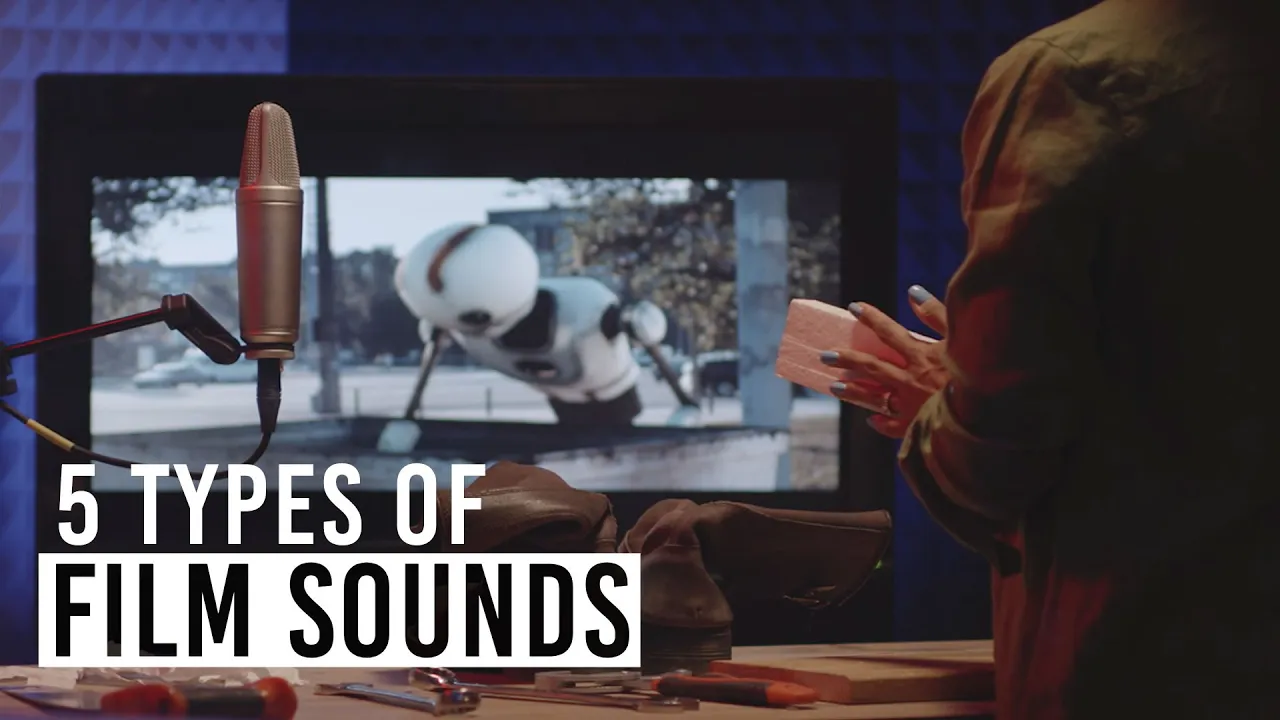
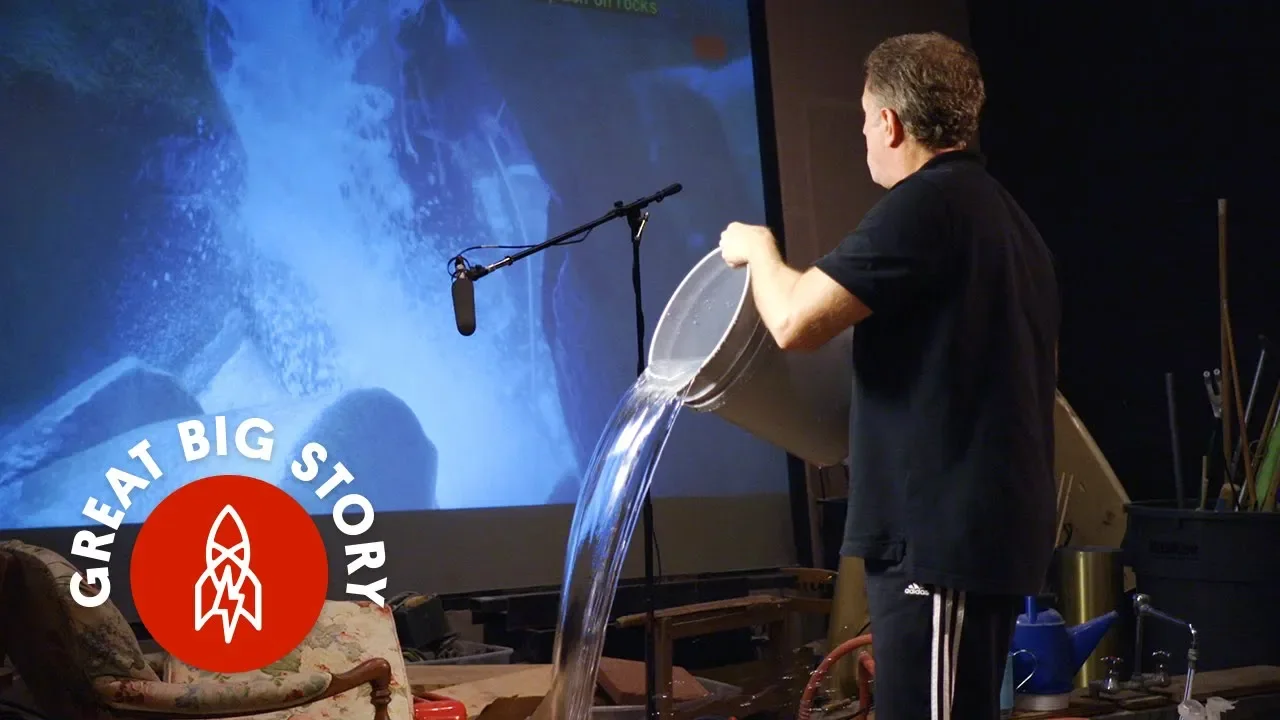
The concept of 'Foley' and how everyday objects are traditionally used in post-production to recreate realistic sounds.
The distinction between diegetic sound (sounds originating from within the story world) and non-diegetic sound (such as the musical score).
Basic principles of psychoacoustics, specifically how the human brain perceives and emotionally interprets different auditory cues.
Advanced Foley artistry, including practical material selection, microphone placement, and precise synchronization techniques.
Digital audio manipulation using DAWs (Digital Audio Workstations) to stretch, pitch-shift, and layer recordings to create fantastical or non-existent sounds.
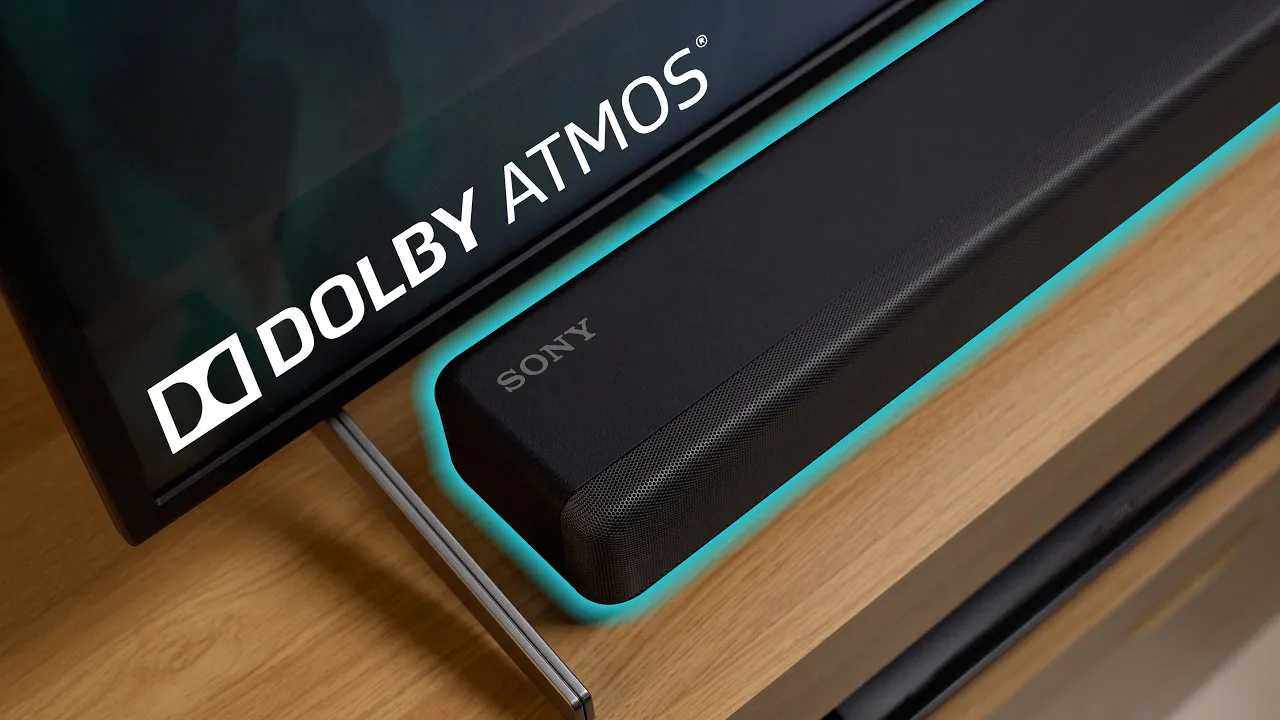
The implementation of spatial audio and immersive formats (such as Dolby Atmos and binaural recording) to build three-dimensional acoustic environments.
Interactive sound design principles for video games and virtual reality, where audio must dynamically adapt to user inputs and non-linear storytelling.
512.2K views13.6Klikes17:02Original Release: 2016-03-21
Transcriber: Camille Martínez Reviewer: Ivana Korom I want to skip the introduction.
I want to start by doing an experiment.
I'm going to play three videos of a rainy day.
But I've replaced the audio of one of the videos, and instead of the sound of rain, I've added the sound of bacon frying.
So I want you think carefully which one the clip with the bacon is.
(Rain falls) (Rain falls) (Rain falls) All right.
Actually, I lied.
They're all bacon.
(Bacon sizzles) (Applause) My point here isn't really to make you hungry every time you see a rainy scene, but it's to show that our brains are conditioned to embrace the lies.
We're not looking for accuracy.
So on the subject of deception, I wanted to quote one of my favorite authors.
In "The Decay of Lying," Oscar Wilde establishes the idea that all bad art comes from copying nature and being realistic; and all great art comes from lying and deceiving, and telling beautiful, untrue things.
So, I want to make this clear - when you're watching a movie and a phone rings, it's not actually ringing.
It's been added later in postproduction in a studio.
All of the sounds you hear are fake.
Everything, apart from the dialogue, is fake.
Not the only thing that's fake in Hollywood, by the way.
Laughter) When you watch a movie and you see a bird flapping its wings -- (Wings flap) They haven't really recorded the bird.
It sounds a lot more realistic if you record a sheet or shaking kitchen gloves.
(Flaps) The burning of a cigarette up close -- (Cigarette burns) It actually sounds a lot more authentic if you take a small Saran Wrap ball and release it.
(A Saran Warp ball being released) Punches?
(Punch) Let me play that again.
(Punch) That's often done by sticking a knife in vegetables, usually cabbage.
(Cabbage stabbed with a knife) The next one - I'm not going to play the video but it's breaking bones.
(Bones break) Well, no one was really harmed.
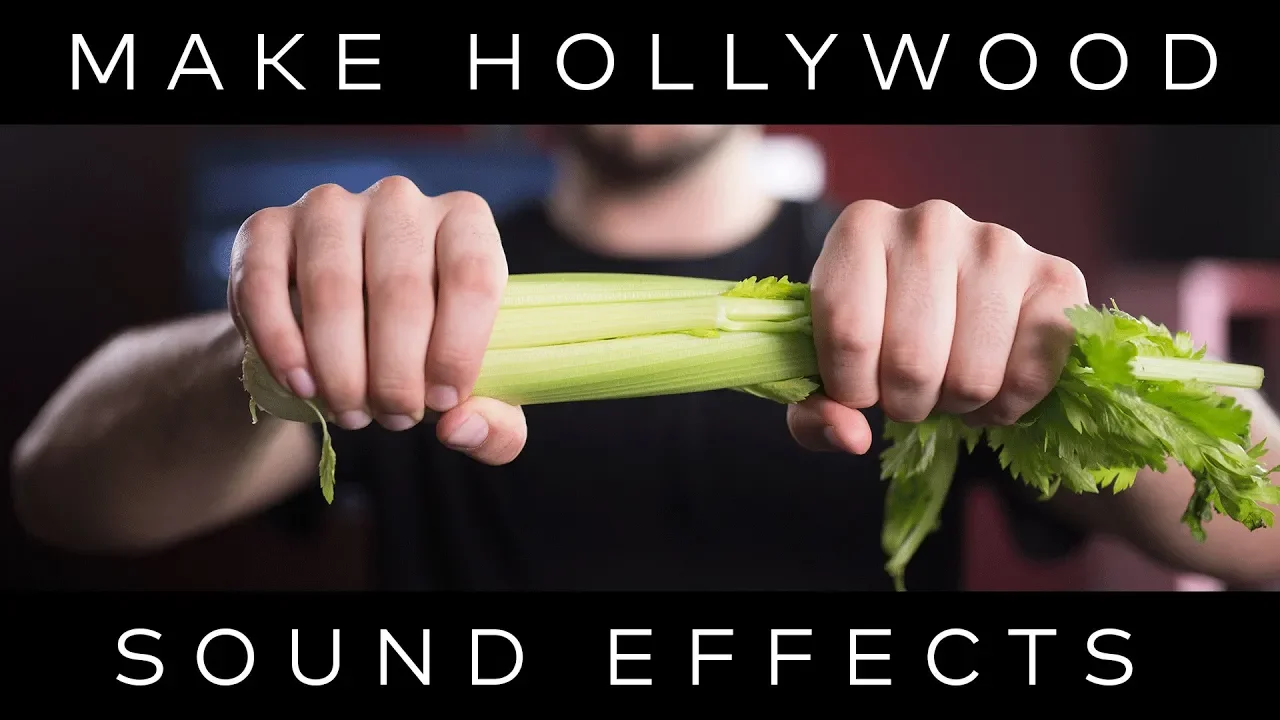
It's actually... breaking celery or frozen lettuce.
(Breaking frozen lettuce or celery) (Laughter) Yeah. Thanks to my three friends who are laughing.
Making the right sounds is not always as easy as a trip to the supermarket and going to the vegetable section.
But it's often a lot more complicated than that.
So let's reverse-engineer together the creation of a sound effect.
One of my favorite stories comes from Frank Serafine.
He's a contributor to our library, and a great sound designer for "Tron" and "Star Trek" and others.
He was part of the Paramount team that won the Oscar for best sound for "The Hunt for Red October."
In this Cold War classic, in the '90s, they were asked to produce the sound of the propeller of the submarine.
So they had a small problem: they couldn't really find a submarine in West Hollywood.
So basically, what they did is, they went to a friend's swimming pool, and Frank performed a cannonball.
They placed an underwater mic and an overhead mic outside the swimming pool.
We recreated the sound.
So here's what the underwater mic sounds like.
(Underwater plunge) Adding the overhead mic, it sounded a bit like this: (Water splashes) So now they took the sound and pitched it one octave down, sort of like slowing down a record.
(Water splashes at lower octave) And then they removed a lot of the high frequencies.
(Water splashes) And pitched it down another octave.
(Water splashes at lower octave) And then they added a little bit of the splash from the overhead microphone.
(Water splashes) And by looping and repeating that sound, they got this: (Propeller churns) So, creativity and technology put together in order to create the illusion that we're inside the submarine.
But once you've created your sounds and you've synced them to the image, you want those sounds to live in the world of the story.
And one the best ways to do that is to add reverb.
So this is the first audio tool I want to talk about.
Reverberation, or reverb, is the persistence of the sound after the original sound has ended.
So it's sort of like the -- all the reflections from the materials, the objects and the walls around the sound.
Take, for example, the sound of a gunshot.
The original sound is less than half a second long.
(Gunshot) By adding reverb, we can make it sound like it was recorded inside a bathroom.
(Gunshot reverbs in bathroom) Or like it was recorded inside a chapel or a church.
(Gunshot reverbs church) Or in a canyon.
(Gunshot reverbs in canyon) So reverb gives us a lot of information about the space between the listener and the original sound source.
If the sound is the taste, then reverb is sort of like the smell of the sound.
But reverb can do a lot more.
Listening to a sound with a lot less reverberation than the on-screen action is going to immediately signify to us that we're listening to a commentator, to an objective narrator that's not participating in the on-screen action.
Also, emotionally intimate moments in cinema are often heard with zero reverb, because that's how it would sound if someone was speaking inside our ear.
On the completely other side, adding a lot of reverb to a voice is going to make us think that we're listening to a flashback, or perhaps that we're inside the head of a character or that we're listening to the voice of God.
Or, even more powerful in film, Morgan Freeman.
(Laughter) So -- (Applause) But what are some other tools or hacks that sound designers use?
Well, here's a really big one.
I think some people guessed it.
It's silence.
I didn't really forget this part of the talk but I sort of wanted to show that a few moments of silence is going to make us pay attention.
And in the Western world, we're not really used to verbal silences.
They're considered awkward or rude.
So silence preceding verbal communication can create a lot of tension.
But imagine a really big Hollywood movie, where it's full of explosions and automatic guns.
Loud stops being loud anymore, after a while.
So in a yin-yang way, silence needs loudness and loudness needs silence for either of them to have any effect.
But what does silence mean?
Well, it depends how it's used in each film.
Silence can place us inside the head of a character or provoke thought.
We often relate silences with... contemplation, meditation, being deep in thought.
But apart from having one meaning, silence becomes a blank canvas upon which the viewer is invited to the paint their own thoughts.
But I want to make it clear: there is no such thing as silence.
And I know this sounds like the most pretentious TED Talk statement ever.
(Laughter) But even if you were to enter a room with zero reverberation and zero external sounds, you would still be able to hear the pumping of your own blood.
And in cinema, traditionally, there was never a silent moment because of the sound of the projector.
And even in today's Dolby world, there's not really any moment of silence if you listen around you.
There's always some sort of noise.
Now, since there's no such thing as silence, what do filmmakers and sound designers use?
Well, as a synonym, they often use ambiences.
Ambiences are the unique background sounds that are specific to each location.
Each location has a unique sound, and each room has a unique sound, which is called room tone.
So here's a recording of a market in Morocco.
(Voices, music) And here's a recording of Times Square in New York.
(Traffic sounds, car horns, voices) Believe me, it's a lot better to have to listen to Times Square than to have to smell Times Square.
Room tone is the addition of all the noises inside the room: the ventilation, the heating, the fridge.
Here's a recording of my apartment in Brooklyn.
[You can hear the ventilation, the boiler, the fridge and street traffic] [(is that an electric toothbrush or just my neighbor having some fun?)]
Ambiences work in a most primal way.
They can speak directly to our brain subconsciously.
So, birds chirping outside your window may indicate normality, perhaps because, as a species, we've been used to that sound every morning for millions of years.
(Birds chirp) On the other hand, industrial sounds have been introduced to us a little more recently.
Even though I really like them personally -- they've been used by one of my heroes, David Lynch, and his sound designer, Alan Splet -- industrial sounds often carry negative connotations.
(Machine noises) Now, sound effects can tap into our emotional memory.
Occasionally, they can be so significant that they become a character in a movie.
They are a lot more low maintenance than some actors, as well.
For example - The sound of thunder may indicate divine intervention or anger.
(Thunder) Church bells can remind us of the passing of time, or perhaps our own mortality.
(Bells ring) And breaking of glass can indicate the end of a relationship or a friendship.
(Glass breaks) Scientists believe that dissonant sounds, for example, brass or wind instruments played very loud, may remind us of animal howls in nature and therefore create a sense of irritation or fear.
(Brass and wind instruments play) So now we've spoken about on-screen sounds.
But occasionally, the source of a sound cannot be seen.
That's what we call offscreen sounds, or "acousmatic."
The term "acousmatic" comes from Pythagoras in ancient Greece, who used to teach behind a veil or curtain for years, not revealing himself to his disciples.
I think the mathematician and philosopher thought that, in that way, his students might focus more on the voice, and his words and its meaning, rather than the visual of him speaking.
So sort of like the Wizard of Oz, or "1984's" Big Brother, separating the voice from its source, separating cause and effect sort of creates a sense of ubiquity or panopticism, and therefore, authority.
There's a strong tradition of acousmatic sound.
Nuns in monasteries in Rome and Venice used to sing in rooms up in galleries close to the ceiling, creating the illusion that we're listening to angels up in the sky.
Richard Wagner famously created the hidden orchestra that was placed in a pit between the stage and the audience.
And one of my heroes, Aphex Twin, famously hid in dark corners of clubs.
I think what all these masters knew is that by hiding the source, you create a sense of mystery.
This has been seen in cinema over and over, with Hitchcock, and Ridley Scott in "Alien."
Hearing a sound without knowing its source is going to create some sort of tension.
Also, it can minimize certain visual restrictions that directors have and can show something that wasn't there during filming.
And if all this sounds a little theoretical, I wanted to play a little video.
(Toy squeaks) (Typewriter) (Drums) (Ping-pong) (Knives being sharpened) (Record scratches) (Saw cuts) (Woman screams) (Laughter) What I'm sort of trying to demonstrate with these tools is that sound is a language.
It can trick us by transporting us geographically; it can change the mood; it can set the pace; it can make us laugh or it can make us scared.
On a personal level, I fell in love with that language a few years ago, and somehow managed to make it into some sort of profession.
And I think with our work through the sound library, we're trying to kind of expand the vocabulary of that language.
And in that way, we want to offer the right tools to sound designers, filmmakers, and video game and app designers, to keep telling even better stories and creating even more beautiful lies.
So thanks for listening.
(Applause)
Up Next
13:28
Analyzing Trauma Representation Through Editing in Sharp Objects
@HBO
170.2K views•2019-08-05

26:22
Walking in the City: Urban Rituals and the Flâneur in Contemporary India
@PSBTIndia
1.9K views•2016-08-02

11:43
Indigenous Astronomy: Rethinking Space Ethics | Karlie Noon TEDx
@TEDx
15.1K views•2025-11-30

1:42
Game of Thrones Opening Credits: A Cinematic Analysis
@gameofthrones
46.3M views•2011-04-18
Related Study Plans & Knowledge Roadmaps
Structured learning paths in General & Interdisciplinary Studies
general-studies
Artificial Light: History, Tech & Human Impact
01The Pre-Electric Era: Fire, Oil, and Gas Lighting
02The Incandescent Revolution and Grid Electrification
03Gas Discharge and Fluorescent Illumination
+ 3 more learning modules
14h6 modules
Explore Roadmap
general-studies
Elevator Engineering: History, Physics & Cities
01From Hoists to Safety Brakes: The Dawn of Vertical Lift
02Hydraulic vs. Traction: The Engineering Physics of Elevators
03Modern Speed, Safety, and Algorithms
+ 2 more learning modules
12h5 modules
Explore Roadmap
general-studies
Rubber: Material Science, History & Geopolitics
01Origins of Natural Rubber & Mesoamerican History
02The Chemistry of Natural Rubber & Vulcanization
03The Geopolitics of the Rubber Boom & Colonization
+ 2 more learning modules
12h5 modules
Explore Roadmap
general-studies
Containerization: Evolution, Logistics & Trade
01Ancient Trade & Bulk Cargo: Amphorae to Barrels
02The Industrial Revolution & Cardboard Packaging
03The Containerization Revolution: Malcom McLean
+ 2 more learning modules
12h5 modules
Explore Roadmap