![ECONOMÍA - Modelos de Mercado [CICLO FREE]](https://i.ytimg.com/vi/jLcqz9m03r4/maxresdefault.jpg)


![Dr. R.k Coaching Centre 🌍live up police 100%success ## by kasana sir [phd]##](https://i.ytimg.com/vi/D86nGf0QndM/sddefault.jpg?v=69fe8f26)











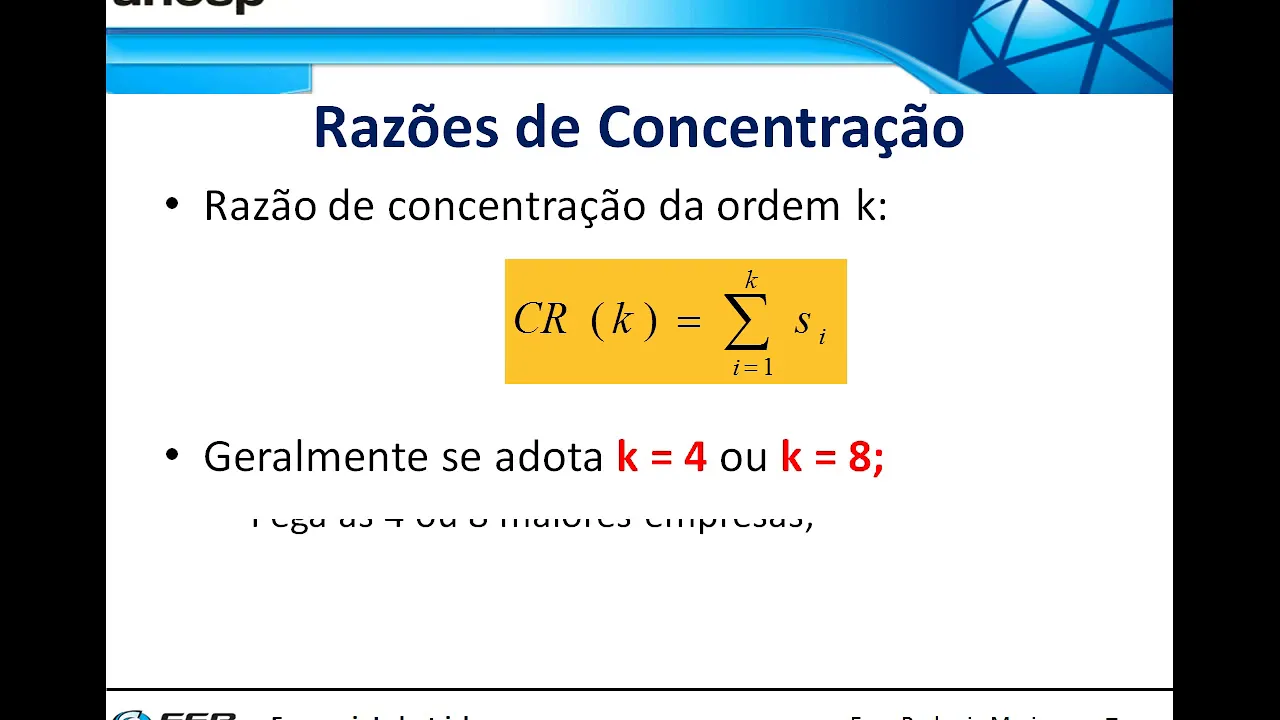


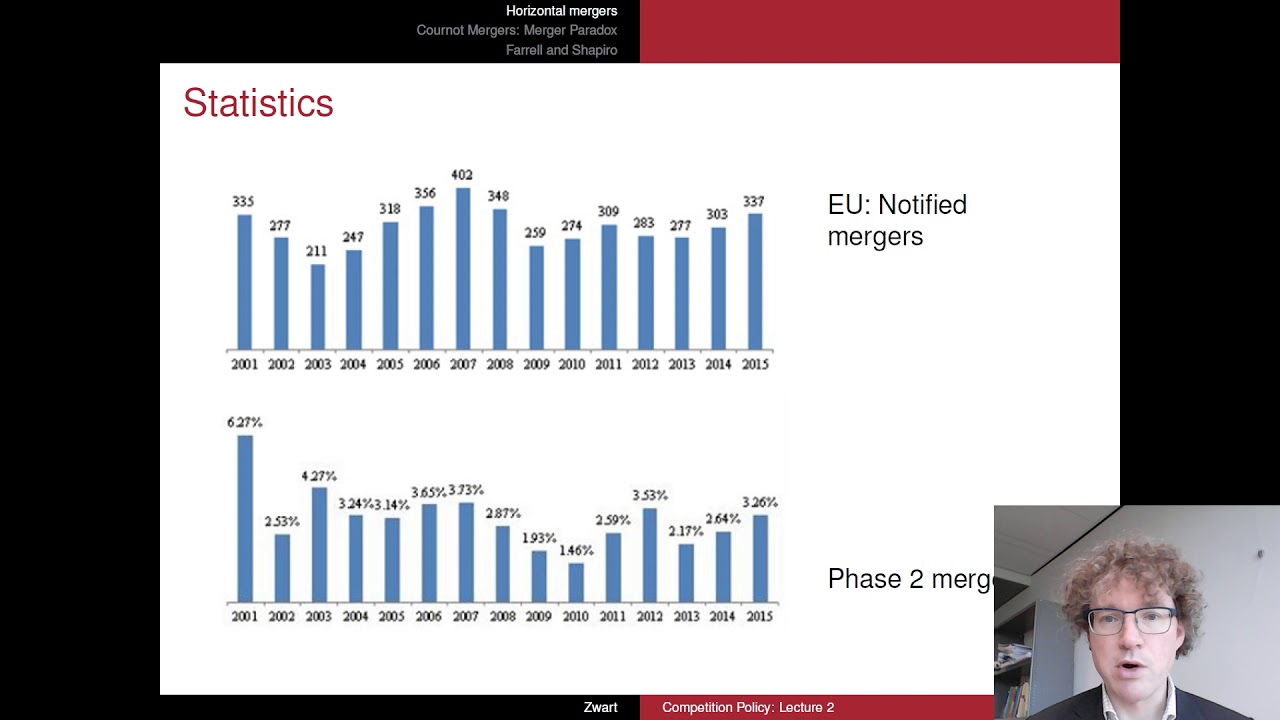







The Herfindahl-Hirschman Index (HHI) is an economic measure of market concentration calculated by squaring each firm's market share (expressed as a percentage) and summing these values; it ranges from 100 (perfect competition with many small firms) to 10,000 (monopoly with one dominant firm), helping regulators assess whether business mergers would reduce competition and potentially harm consumers by increasing prices.
Herfindahl-Hirschman Index (HHI) Explained: Market Concentration in Economics
Added:Basic understanding of market structures, specifically the characteristics of perfect competition, oligopoly, and monopoly.
The concept of market share and how to calculate a firm's percentage share of total industry revenue.
Fundamental algebra skills, particularly working with percentages, squaring numbers, and summation notation.
The general economic definition of market power and why governments monitor anti-competitive behavior.
Department of Justice (DOJ) and Federal Trade Commission (FTC) merger guidelines, including specific HHI thresholds for challenging mergers.
Alternative metrics of market concentration, such as the Four-Firm Concentration Ratio (CR4) and Eight-Firm Concentration Ratio (CR8).
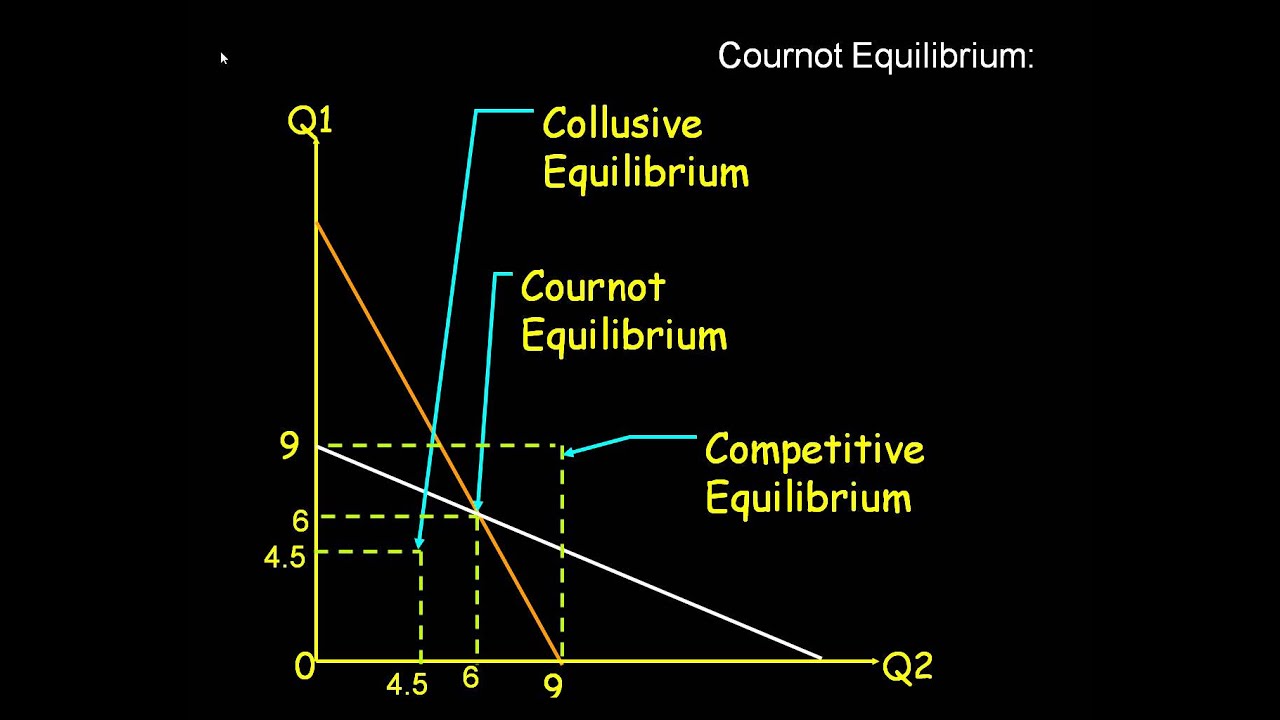
The theoretical connection between the HHI and the Cournot oligopoly model of competition.
In-depth analysis of antitrust laws and real-world legal cases involving monopoly power and regulatory intervention.
26.3K views531likes6:43Original Release: 2022-04-13
in economics what is hhi and this is short for the hirschmann herfendal index which is a measure of how concentrated the power in a market is how close is the market to a monopoly in other words how much power does each firm in the market have to drive up the price because of course in economics we have different models for monopoly versus oligopoly versus monopolistic competition versus perfect competition and if we want to know in the real world what type an industry is we're going to need some way of sort of measuring how competitive each industry is so it's it's a measure of a particular industry and how concentrated that that power there is now what is the specific formula for hhi that's just you take the market share where the market share is um if it's a hundred percent that's actually 100 in this formula not one if it's 25 this enters into this formula as 25 not 0.25 so sometimes people will say it's the market share times 100 squared and you just add up the market share of each firm in the industry and basically the highest possible hhi is 10 000 that's if the firm is a monopoly you only have one firm in the industry so the hhi is 100 squared and that's the highest possible hhi meaning that one firm has a ton of power now with oligopoly there are actually a lot of different structures to oligopoly for example you might have four firms with 25 each in which case the hhi is 25 squared times four so that's an hhi of 2500 and each of these firms has quite a bit of market power you might have another industry where two firms have 25 percent of the market share and five firms have 10 percent of the market share and of course that's going to be less concentrated in terms of power and so you can see here okay if we have 10 firms with 10 each the hhi 10 squared times 10 is 1000 so you get a sense for the range of hhis within an oligopoly and this number is going to basically say how much power does each of these firms have to control prices and to control other things that oligopolies will control and of course perfect competition if a hundred firms have one percent each then the hhi formula gives an hhi of 100 which is way low compared to 10 000. so basically this is used a lot in court cases where firms are trying to merge and the government is trying to decide is this an anti-competitive industry is this an industry where these firms merging is going to increase their hhi so much that they're likely to jack up prices in a way that's not good for the population now coming up with hhi is actually more complicated than this makes it seem and that's mainly because defining an industry is not actually always straightforward for example imagine a local small business office supplies store you might ask what's the what's the market for office supplies and does that include amazon does it include walmart is the nearest other office supply store a hundred miles away or two miles away what's an appropriate distance within which to define a market and those questions aren't always easy to answer as a matter of fact the devil's in the details with this one because you have to come up with assumptions about distance for which it matters that people will drive to find something cheaper it matters online versus in person it's really not that straightforward to define firms that are actually competing and i've done this before with hospitals where it's really not straightforward because you have these local hospitals that serve the local population but a lot of people will drive hundreds of miles to a different hospital that's that you might not think is a real competitor for example i've looked at california hospitals and ucsf is sort of the biggest hospital with the most technology where you can enroll in studies it's this big hospital that basically serves the whole state even though it serves obviously more people around san francisco so you have to ask the question is the local small town hospital competing with ucsf this huge academic hospital and in some ways the answer is yes but in other ways the answer is no and it may depend on the specific service so do you want to boil hhi down to specific services like emergency room care or labor and delivery there's all these questions you have to answer when you're coming up with what is an appropriate group of firms to include in the market and those the answers to those little questions can lead to really different answers about what the hhi is foreign industry so you might imagine when these court cases happen where the government is trying to stop firms from merging both sides have their own lawyers and have their own economists and both sides are going to come up with their own hhi numbers that support their case where the government is saying we don't think you should merge that's going to be anti-competitive so they're going to try to go for higher numbers for hhi whereas the lawyers who work for the two businesses trying to merge they're going to try to make these little decisions about defining the market in ways that will lead to a lower hhi and they battle that out in court where the department of justice and the trade commission those are the government agencies that sort of fight for higher hhi and the companies fight for a lower hhi with different ways of defining markets so that's just an overview of what is hhi and how it's defined and why it's useful this is something that economists will use it's in some ways it's a crude measure of market power but we need measures so this is just one that's very very commonly used
Up Next

8:25
Market Definition in Antitrust: The SSNIP Test Explained
@oecdcompetitionlawandpolicy
13.5K views•2022-06-09

67:20
Globalisation and the 21st Century Enlightenment | Joseph Stiglitz
@EdinburghUniversity
44.8K views•2009-02-10

11:06
Adverse Selection vs. Moral Hazard Explained (Economics)
@AshleyHodgson
51.3K views•2020-05-02

113:18
The Age of Easy Money: Fed & Inflation | Full Documentary
@frontline
21.2M views•2023-03-15
Related Study Plans & Knowledge Roadmaps
Structured learning paths in Economics
economics
Intellectual Property: Innovation vs Monopoly
01Foundations of Market Power: Monopolies & Deadweight Loss
02The Economic Trade-Off of Intellectual Property
03Patents: R&D Incentives vs. Market Monopolization
+ 3 more learning modules
12h6 modules
Explore Roadmap
economics
Sovereign Debt: Defaults, IMF & Restructuring
01Introduction to Sovereign Debt & Government Bonds
02Debt Sustainability & Credit Ratings
03Anatomy and History of Debt Crises
+ 2 more learning modules
12h5 modules
Explore Roadmap
economics
Market Design: Matching Theory & Gale-Shapley
01Introduction to Market Design and Price-Free Markets
02Two-Sided Matching & The Gale-Shapley Algorithm
03School Choice Systems and Mechanism Design
+ 2 more learning modules
10h5 modules
Explore Roadmap
economics
Impossible Trinity: Forex, Capital & Policy
01Introduction to Monetary Policy and Central Banking
02Exchange Rates and International Capital Flows
03The Mundell-Fleming Model
+ 2 more learning modules
8h5 modules
Explore Roadmap