






























The DLCO (diffusing capacity of carbon monoxide) measures how much CO diffuses across the alveolar capillary membrane per minute per unit pressure, calculated using Fick's Law where diffusion rate equals the diffusion coefficient times surface area times partial pressure gradient divided by membrane thickness; it helps differentiate between restrictive lung disease subtypes (low DLCO suggests interstitial lung disease while normal DLCO indicates extrathoracic restriction like neuromuscular disease or obesity), and characterizes obstructive lung disease severity (low DLCO suggests emphysema subtype while normal DLCO suggests chronic bronchitis), with clinical indications including categorizing restrictive lung disease, identifying early interstitial lung disease in high-risk patients, quantifying emphysema in COPD, and documenting disability.
DLCO Explained: Diffusing Capacity in Pulmonary Function Tests
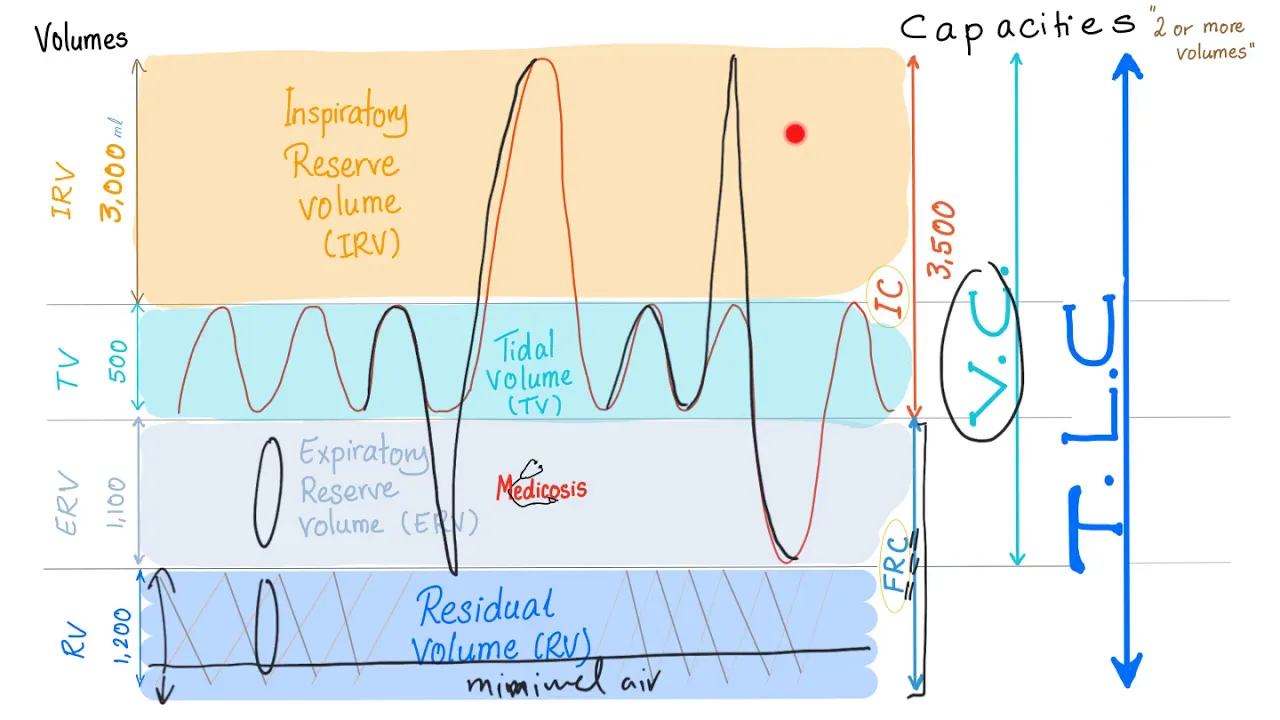
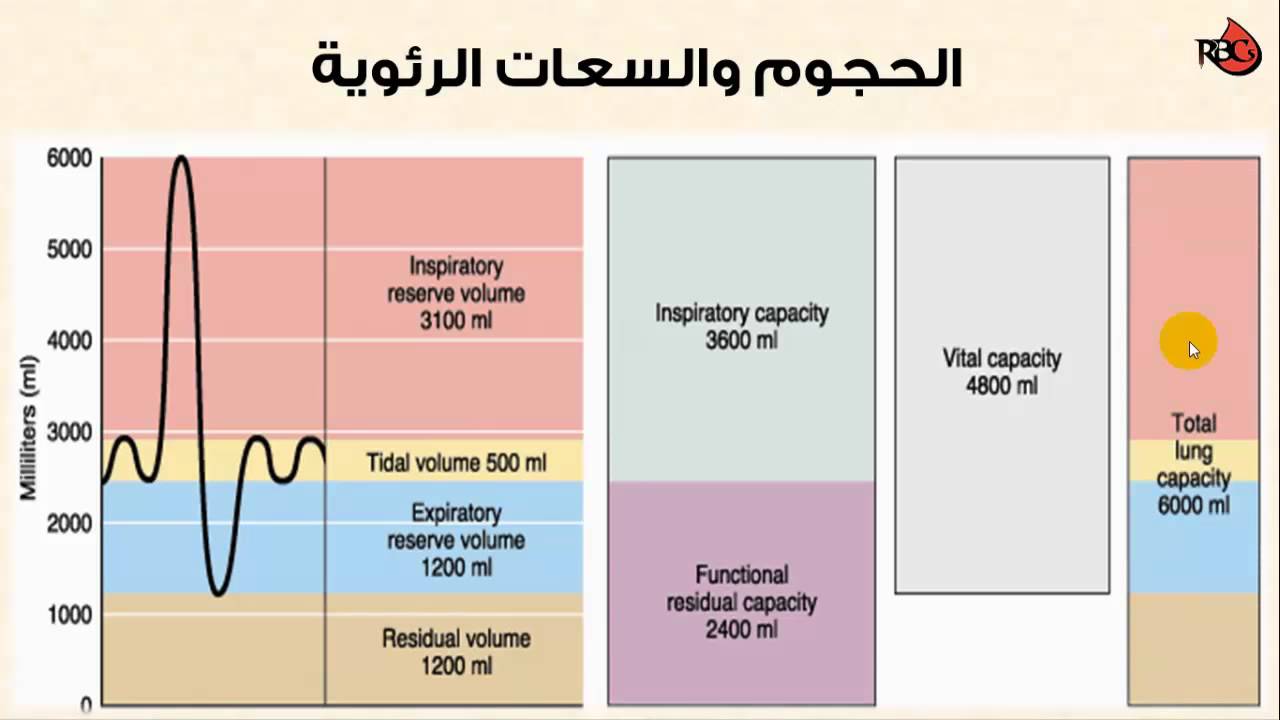
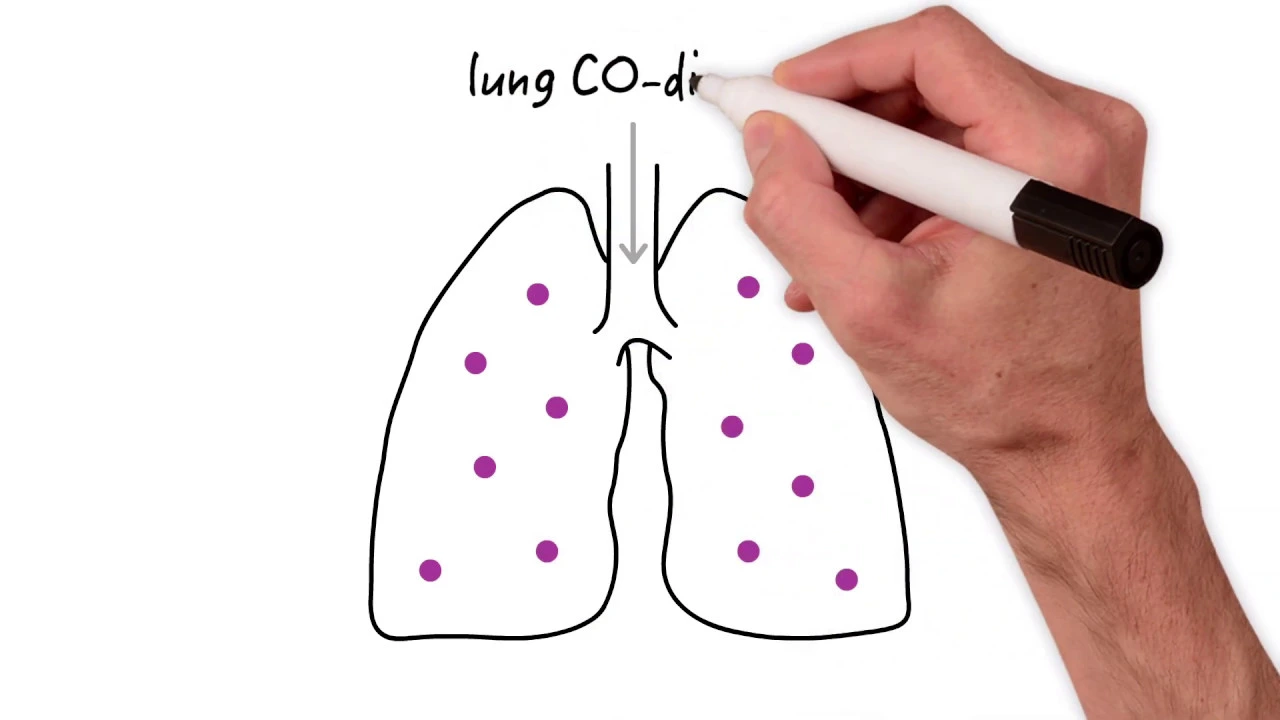
Added:this is the fourth video in this series on pulmonary function tests and today's topic is the diffusing capacity of carbon monoxide abbreviated dlco the learning objectives are to understand the physiologic significance of the dlco to be able to use the dlco to further characterize both obstructive and restrictive lung disease and to know the conditions that can alter the dlco which are unrelated to lung disease let me start with explaining how the dlco is measured because that will make it clear as to what the value means we start with a patient who takes in a single very deep breath of a mixture of air helium and 0.3% carbon monoxide although carbon monoxide is very dangerous when inhaled in high concentrations this is far below the concentration that would adversely affect gas exchange the reason carbon monoxide is used is because it's highly soluble in blood has a high affinity for hemoglobin and is not normally present in the lungs or blood in any significant quantities the patient holds his or her breath in maximal inspiration for 10 seconds during which some fraction of the carbon monoxide will move from the alveoli across the alveolar capillary membrane via simple diffusion and into the bloodstream after 10 seconds the patient exhales the first liter of exhaled gas is discarded as dead space and the next liter or so is analyzed for remaining carbon monoxide concentration the dlco is a measure of how much volume of carbon monoxide diffuses per minute per unit of pressure across the alular capillary membrane in the US the units used are usually milliliters of carbon monoxide per minute per millimeter of mercury the test is then repeated after several minutes and provided that the two are in rough agreement the mean will be the value reported which is usually compared against a predicted value given the age gender and height of the patient a measured dlco that is less than 40% predicted is considered severe impairment since the carbon monoxide travels via simple diffusion the dlco effectively measures the overall function of the Alvar capillary membrane this function can be qualitatively understood using fixed law of diffusion which states that the rate of gas diffusion is equal to something called the diffusion coefficient times the surface area across which the gas is diffusing times the partial pressure gradient all divided by the thickness of the diffusing membrane thus any lung disease which either decreases functioning Alvar surface area or increases the thickness of the Alvar capillary membrane will lead to a decreased dlco in many ways the dlco measures something quite similar to the alular arterial gradient as measured by an ABG although there is some conditions which affect the dlco without affecting the ABG for the most part when the a gradient is elevated the dlco is almost always decreased there are many pathologic conditions and physiologic states that can alter the dlco those that decrease it include as I just mentioned anything that decreases surface area such as empyema or anything that increases membrane thickness such as interstitial lung disease it also includes pulmonary hypertension of any cause it includes anemia since a decreased carrying capacity of carbon monoxide will necessarily result in a smaller partial pressure gradient driving the diffusion although it doesn't come up often in a clinically relevant context there are a number of reasons while the dlco could be higher than predicted exercise immediately prior to the test increases cardiac output and the suine position changes the distribution of pulmonary blood flow and ventilation asthma has been empirically found to be occasionally associated with an increase in the dlco this has been speculated to be due to increased perfusion of the lung Apes in asmatics though I personally wonder if asmatics may also have increased surface area of the Alvar capillary membrane due to modest hyperinflation pulmonary Hemorrhage increases dlco by providing a pool of hemoglobin that carbon monoxide can bind to without needing to diffuse across at all polycythemia helps to increase the local partial pressure gradients as an opposite effect to that of anemia finally mild left heart failure which there is increased lefts side of pressures but with preservation of cardiac output can result in an increased dlco as a consequence of increased pulmonary blood volume obesity is occasionally listed among the causes of an elevated dlco however the actual scientific literature on the effect of obesity on the dlco is inconsistent the predicted dlco is often adjusted based on one or two issues first as I just mentioned anemia and polycythemia can influence the dlco so the predicted dlco should be adjusted downward for anemia and upwards for polycythemia to make this adjustment the PFT technicians use standardized equations the details of which most providers will never need to know the predicted dlco is also occasionally adjusted to abnormal lung volumes creating something called the dlco to ventilation ratio this adjusts the dlco downward for low lung volumes and upwards for high lung volumes unfortunately this adjustment can be misleading if the ideology of the abnormal volume is not carefully considered and thus this should only be done cautiously and is usually not necessary so how does a dlco help us diagnostically you will hopefully recognize this algorithm that we've been working on over the past two videos in this series what additional information does the dlco provide the greatest diagnostic benefit is probably with differentiating the ideologies of restrictive lung disease if the dlco is low it implies the patient likely has interstitial lung disease while if the dlco is normal it implies the patient has an extrathoracic cause of restriction such as a chest wall disorder neuromuscular disease like ALS or dimatic paralysis or obesity in addition the dlco can be used for patients with obstructive lung disease a low dlco suggests more of an empyema subtype of COPD while a normal dlco suggest a pure chronic bronchitis subtype of COPD as most patients with COPD fall somewhere in the middle of the spectrum most have low dlco and it will be normal in only very few in addition patients with asthma also have a normal dlco in most circumstances but occasionally a high dlco can be observed as mentioned a few moments ago finally among patients with normal lung mechanics the dlco can differentiate people with pulmonary vascular disease from people with completely normal pfts testing the dlco is not always done as part of the conventional pfts because the equipment it requires is relatively expensive therefore one must be selective as to who warrants the measurement of the dlco primary indications include categorizing a patient with restrictive lung disease as either probable I versus extra thoracic restriction identify ation of early I in high-risk patients such as those on long-term amone a history of chest radiation and Stage 1 sarcoidosis quantification of anatomic empyema in patients with COPD and finally to document disability for legal purposes such as receiving state disability funds that concludes this video on the dlco the next and final video in the series will present some example cases to test your PFT knowledge
Up Next
Diffusing Capacity (DLCO): Clinical Significance & Measurement
@MedMastery
44.6K views•2020-03-24

Memory and Long-Term Potentiation | Physiology | MBBS Exam Prep
@doctutorialsmbbs
307 views•2025-08-27
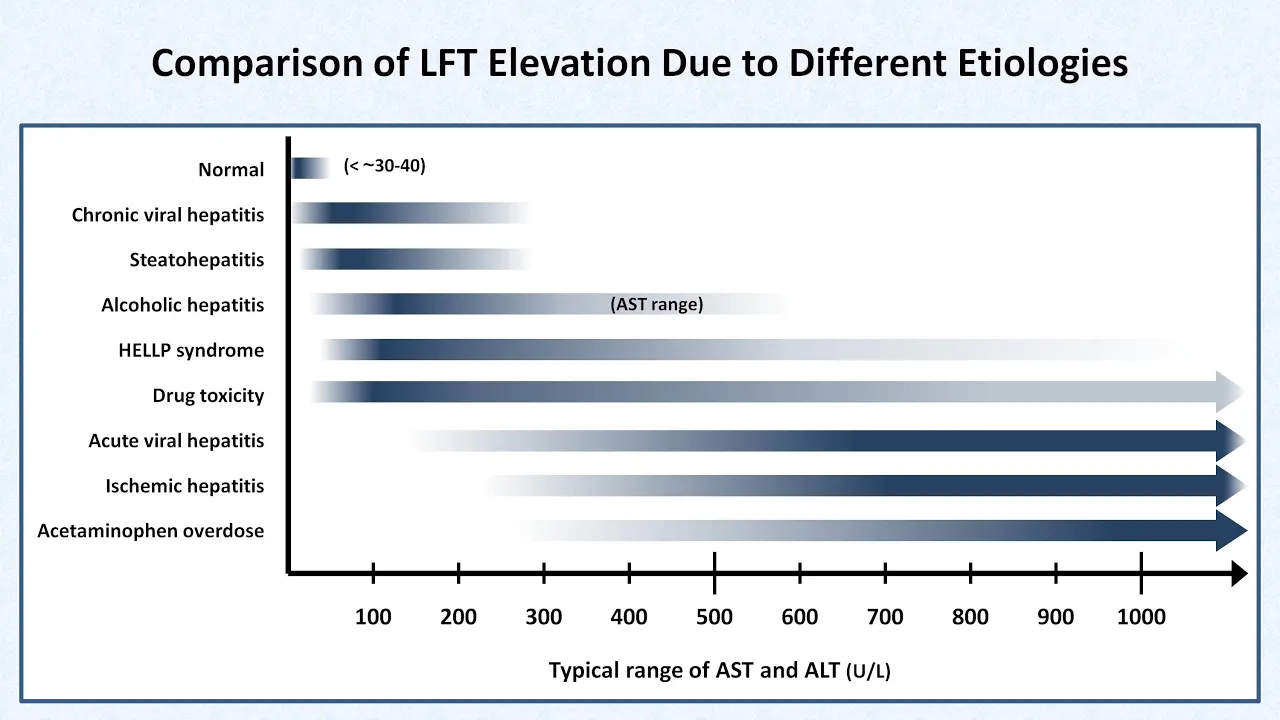
Liver Function Tests (LFTs) Interpretation Guide for Medical Students
@StrongMed
386.9K views•2014-10-08
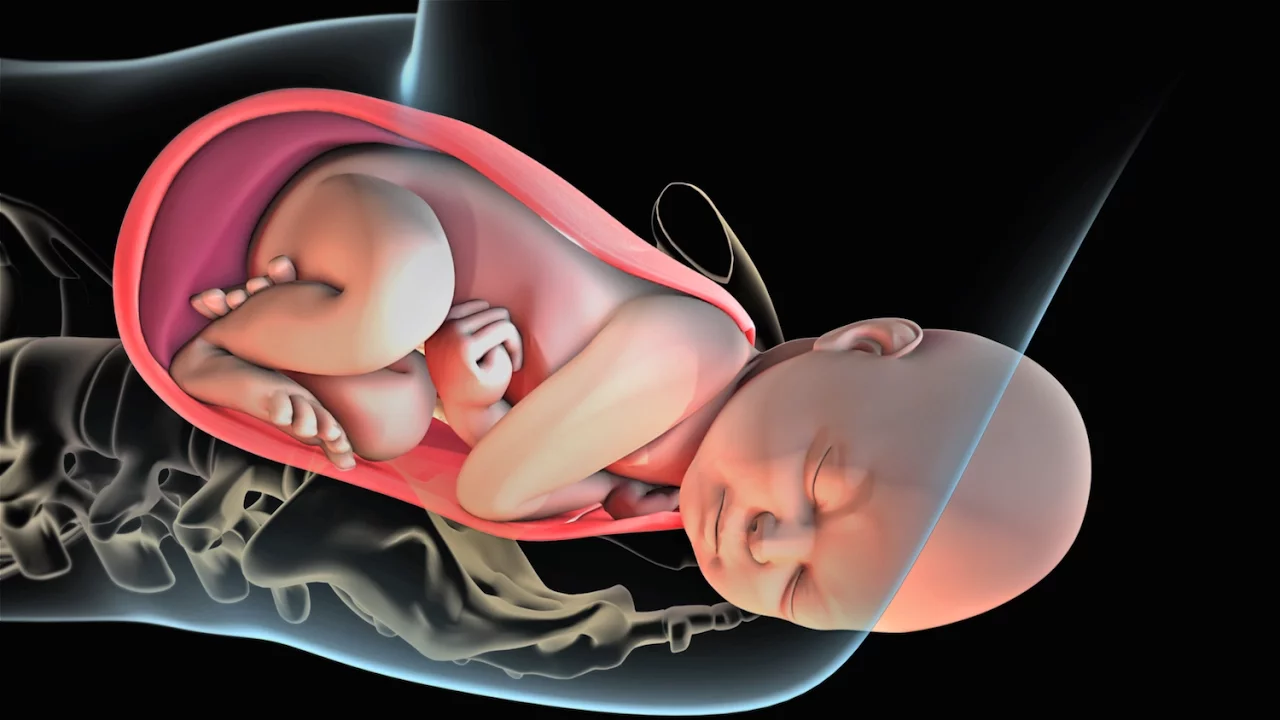
Stages of Labor and Vaginal Birth | Childbirth Animation
@nucleusmedicalmedia
52.1M views•2017-08-18
Related Study Plans & Knowledge Roadmaps
Structured learning paths in Medicine