






![[호평고2학년]물리학1_특수상대성이론(1)](https://i.ytimg.com/vi/A-V2PS0CtVQ/maxresdefault.jpg)









Time stopping is philosophically impossible because time was never actually moving to begin with; in a B-Theory universe where all moments exist equally, time functions like the word 'here'—an indexical that merely identifies our current position in time rather than indicating actual passage, meaning that what we perceive as time passing is merely our changing perspective within a static block of reality.
The Philosophy of Time: What If Time Stopped?
Added:An introductory understanding of metaphysics, specifically how philosophers define 'existence', 'reality', and 'change'.
The basic distinction between subjective time (human perception of the flow of time) and objective physical time.
Familiarity with the concepts of absolute time (Newtonian physics) versus relative time (Einsteinian physics).
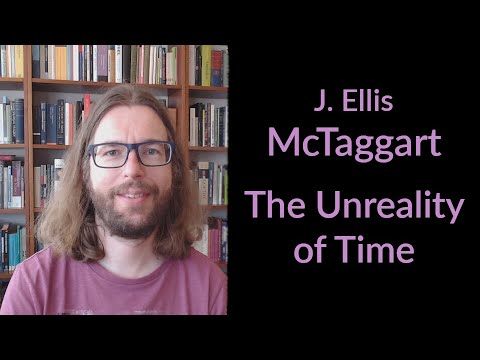
A foundational awareness of J.M.E. McTaggart's work on the unreality of time, which introduced the concepts of the A-series and B-series.
Exploring the debates between Presentism (only the present is real), Eternalism (past, present, and future are all equally real), and the Growing Block Universe theory.
Investigating the Thermodynamic Arrow of Time, specifically how entropy and the second law of thermodynamics dictate the direction of time in physics.
Analyzing the philosophy and physics of time travel, including causal loops and how different theories of time handle logical paradoxes.
Examining the 'Problem of Time' in modern quantum gravity, exploring theories where time is treated as an emergent property rather than a fundamental element of reality.
127.9K views5.1Klikes9:47Original Release: 2017-09-08
From Doctor Who to Rick and Morty to Star Trek to The Twilight Zone and many, many others, we have lots of stories about time standing still. But does that idea actually make sense, and what would it be like if it did?
There seems to be an intimate connection between time and change. One way that philosophers think about change is to say that objects have properties and then they have different ones, and that use of the word 'then' means that we must be talking about time here.
In most of the fictional stories where time stands still, the protagonists notice because everything around them is frozen i.e. not changing. In fact, it's tempting to just wrap this question up here and say that time is change. And a cursory look at physics might support that idea.
The smallest interval of time that we can measure is the time it takes for a photon of light, which is the fastest thing in the Universe, to travel across the smallest measurable distance, which we call a Planck length. In school you probably learned the equation speed is distance over time, which if we rearrange it gives us time is distance divided by speed.
One Planck length is roughly 1.6 x 10⁻³⁵m, which is way, way smaller even than a proton.
A Planck Time is the time it takes a photon to travel that far, which is very fast: 5.39 x10-44 seconds. That's zero, then forty-three more zeroes, five three nine. The smallest measurement of time that makes sense. And interestingly for us, that smallest interval of time is a measurement of change - the change in position of a photon.
If time were to stop then photons couldn't be moving. Which means you wouldn't be able to see anything because no photons would be entering your eyes. And everything would be very, very cold because no molecules would be vibrating, and molecules vibrating is what heat is. You also wouldn't be able to breath or move, because the air around you can't move. And you also wouldn't know this was happening because your brain would be frozen too.
If you were just moving really, really fast, faster than everything else, like the Flash, then you would perceive that as everything else moving more slowly, which would be kindof like time almost stopping.
But if all the molecules around you were slower than you that would mean you were much hotter than them because temperature is just mean kinetic energy. Even assuming that that temperature differential didn't kill you, your own heat would leak into your surroundings causing them to begin speeding up anyway.
But from physics to Physics, The Physics: Aristotle's book, Physics. In it, the famous Greek philosopher notes the connection between time and change, but he doesn't think they're the same thing, because change, he says, only happens in the thing that changes, whereas time is everywhere. Change can occur faster or slower, and faster and slower are measurements in time, not of time. So Aristotle thinks that time is what we measure change with, just like space is what we measure size in.
But...well, sorry Aristotle, does change only happen in the thing that changes? Surely change is just as much in the relation between the thing that changes and everything else? Doesn't everything change relative to something, even if it's just the other parts of itself? And even more seriously is change something that occurs within the passage of time?
I wanna float a contrary idea here and say that it doesn't make sense to talk about time stopping because time was never moving to begin with.
We're gonna have to make a quick detour here to talk about the Universe. All of it.
Philosophers of time distinguish between A-Universes and B-Universes, and we're gonna need to understand this distinction.
An A-Universe is more or less how we've been imagining it so far. Time passes in an A-Universe. There is a definite past, present, and future and time flows like a river from one into the next.
In a B-Universe, time doesn't pass. And it's less like a river, more like a swimming pool.
The best way to explain is with an analogy to space and the word 'here.' I am here in my room and you are there wherever you are, but there is no property of 'hereness.'
We could do endless scientific tests in both locations but we wouldn't find any particles or anything that would explain why this place is 'here' and your location is 'there.' And that's because the word 'here' is what philosophers call an indexical, a word whose meaning changes depends on who uses it.
For me, my bedroom is here and your location is there. But for you it's the other way around, and that's not a contradiction because that's just how the words work.
So in a B-Universe where time doesn't pass, 'the present' is works like the word 'here,' an indexical, and 'past' and 'future' are like the word 'there.' 'The Present' just refers to the bit of time where we are, but in fact all times exist equally.
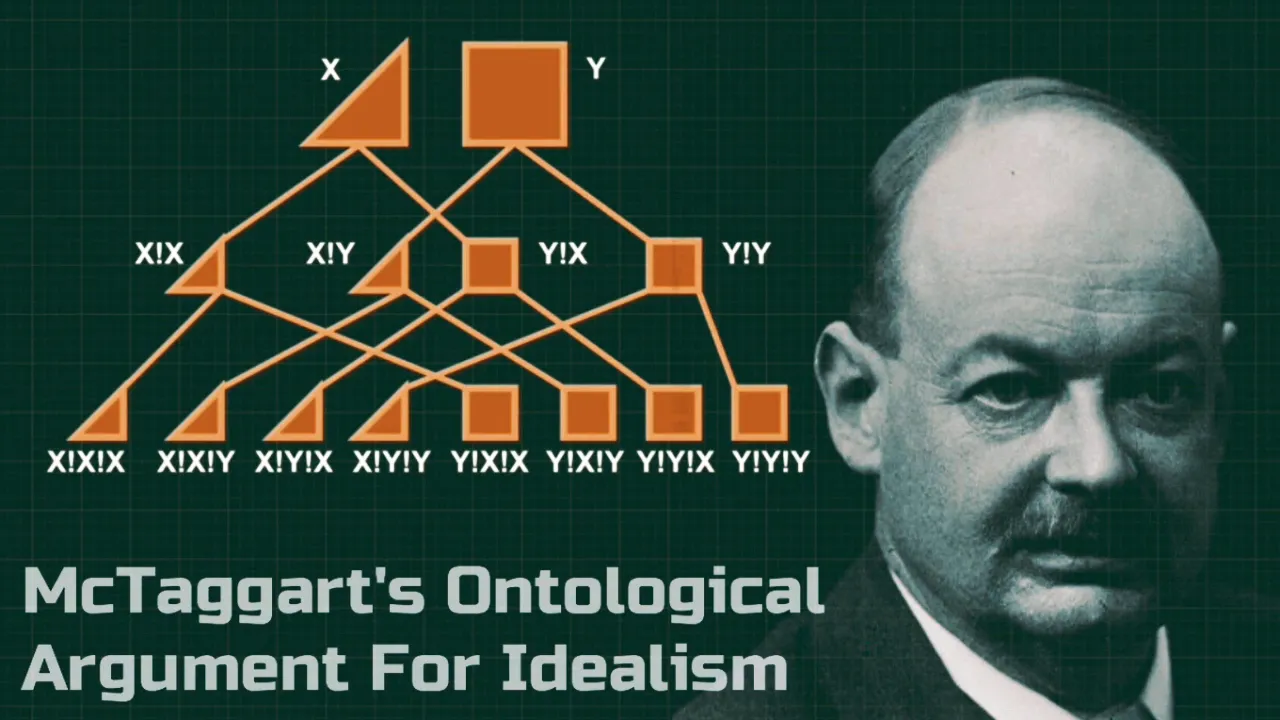
Earlier on we said that one way of thinking about change is to say that objects have properties and then they have different properties. And some philosophers, notably John McTaggart, who invented the distinction between A-Series and B-Series, said that if you're a B-Theorist you can't explain change.
The B-Theorist account of change is to say that objects have temporal parts. So imagine that there's a hot pie that's cooling down.
There is an earlier bit of the pie that is hot, and a later part of the pie, which is cool, but the B-Theorist says that the pie as a whole is an object that exists across time, a 4D object. To us, it looks as if the pie is changing but that's just because we're looking at a different part of it. And McTaggart doesn't buy this, he sats that isn't a description of change anymore than you could say that the text of a book changes as you read it. It doesn't; you're just your looking at a different part of it.
And McTaggart wasn't the only philosopher to say that we need time to pass for human ideas to make sense. A.N Prior talked about the sentence, "Thank Goodness That's Over!" If I go to the dentist and have a really painful surgery and I say, "Thank Goodness That's Over!" Prior says that sentence doesn't make sense in a B-Universe, because it's not really over, it's just located at a different time.
So we've got McTaggart saying that the idea of change wouldn't make sense unless time passed, and we've got Prior saying that the idea of relief wouldn't make sense unless time passed. But a philosopher called Simon Prosser, who incidentally was my metaphysics teacher, has pointed out that the Universe isn't necessarily bound to make sense to human beings.
The key to Prosser's argument is something that we've touched on on Philosophy Tube many times before, so you should be able to roll with it pretty easily. You can say the same thing twice and have very different results depending on how you say it.
The example I like to use is the sentence, 'I love you.' Whenever I say it, assuming I'm telling the truth, the meaning is the same - I, the person speaking, have some feeling of love towards you, the person to whom I am speaking. But depending on the way in which I say it you might receive the message very differently. I could say, 'I love you' as a reminder, I could say it as comfort, I could say it as pleading: if I send you as a text message that says 'I love you every two minutes for a week you might start to get a little bit unnerved by it! The meaning is the same but the affect it has can change.
And the same is true for sentences about time. Prosser argues that the sentence, "Thank Goodness That's Over!" quite right, doesn't have the same affect as the sentence, "Thank Goodness That Experience is At A Time Prior to the Indexically Defined Present," which is how the B-Theorist would technically rephrase it, but that doesn't mean that they aren't actually saying the same thing.
Ditto for sentences about change: just because talking about temporal parts feels a little bit different to talking about past, present, and future, doesn't mean that B-Theory is bogus.
In which case, it wouldn't make sense to talk about time stopping because time was never moving to begin with. So you might wanna throw out your watch because it might only be a useful as a piece of paper that says, 'You Are Here.'
Patreon.com/PhilosophyTube is how I keep making this show and affording food. If you could give me a couple of dollars a month, it goes towards making education free. And don't forget to subscribe.
Up Next

62:42
God and Time: Physics, Eschatology, and the Divine Nature
@CosmicSkeptic
222.2K views•2025-10-12

164:01
John of Damascus on Holy Images: A Theological Defense
@BannedBooks
139 views•2026-04-25

36:39
Queer Theory Explained: History, Language, and Identity in Philosophy
@PhilosophyTube
1.6M views•2019-10-28
4:57
The Myth of Sisyphus: A Greek Legend of Eternal Punishment
@TEDEd
8.6M views•2018-11-13
Related Study Plans & Knowledge Roadmaps
Structured learning paths in Philosophy
philosophy
Frankfurt School: Critical Theory & Culture
01Foundations of the Frankfurt School and Critical Theory
02Horkheimer & Adorno: The Critique of Instrumental Reason
03The Culture Industry and Mass Deception
+ 2 more learning modules
12h5 modules
Explore Roadmap
philosophy
Philosophy of Language: From Frege to Austin
01The Linguistic Turn: An Introduction to Language in Philosophy
02Gottlob Frege: Sense and Reference
03Early Wittgenstein: The Picture Theory of Meaning
+ 3 more learning modules
15h6 modules
Explore Roadmap
philosophy
Feminist Epistemology: Standpoint & Injustice
01Introduction to Epistemology and Feminist Critiques
02Sandra Harding and Standpoint Theory
03Donna Haraway and Situated Knowledges
+ 2 more learning modules
12h5 modules
Explore Roadmap
philosophy
Environmental Philosophy: Ethics & Deep Ecology
01Foundations of Environmental Ethics & Anthropocentrism
02Biocentric Individualism and Animal Liberation
03Ecocentric Holism and Deep Ecology
+ 1 more learning modules
10h4 modules
Explore Roadmap