



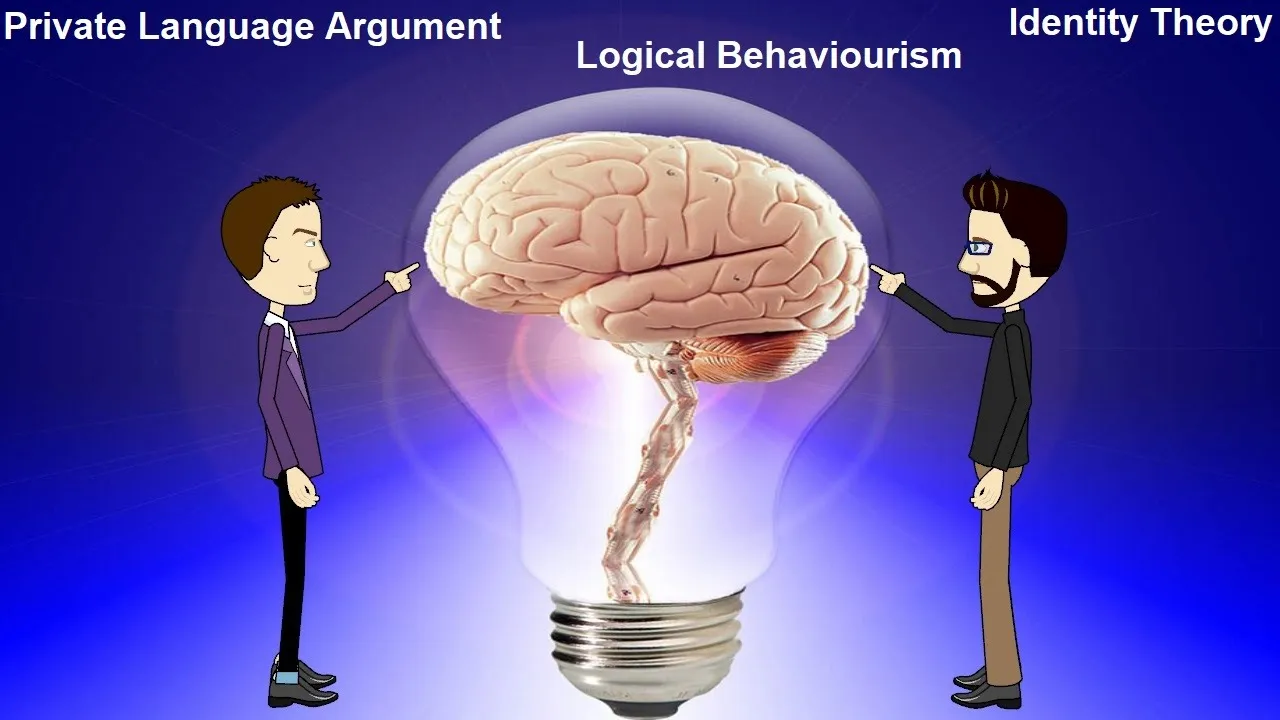

















Behaviorism is a physicalist theory of mind that proposes mental states are not inner, private processes but rather dispositional properties—tendencies or liabilities to behave in certain ways under specific circumstances. This sophisticated version avoids the counterexample that doomed crude behaviorism (where mental states were identified with actual behaviors) by defining mental states like anger not as the act of punching or yelling, but as the disposition to punch or yell if provoked. This approach maintains that mental states are entirely physical while addressing the problem of mental states existing without observable behavior.
Behaviorism in Philosophy of Mind: Armstrong's Theory Explained
Added:The Mind-Body Problem: A basic understanding of dualism (Descartes) versus physicalism/materialism regarding the nature of the mind.
Logical Behaviorism: Familiarity with Gilbert Ryle's rejection of the 'ghost in the machine' and the reduction of mental states to observable behaviors.
The Concept of Dispositions: Understanding how physical properties can be dispositional (e.g., a glass being fragile means it is disposed to break under certain conditions) and how this applies to human behavior.
Philosophical Methodology: How conceptual analysis, definitions, and counterexamples are used in analytic philosophy of mind to test theories.
Mind-Brain Identity Theory: Exploring the physicalist alternative (advanced by J.J.C. Smart and Armstrong himself) that mental states are actual brain states, not just behavioral dispositions.
Functionalism: Investigating the philosophical successor to behaviorism, which defines mental states by their causal relations to sensory inputs, other mental states, and behavioral outputs.
Classic Counterexamples: Deeper study of Hilary Putnam's 'Super-Spartans' argument and the 'Perfect Actor' thought experiment as challenges to behaviorism.
Eliminative Materialism: Examining the radical physicalist perspective of Paul and Patricia Churchland, which argues that our common-sense concepts of mental states should be eliminated entirely rather than reduced to behavior.
95.8K views1.9Klikes17:14Original Release: 2020-08-18
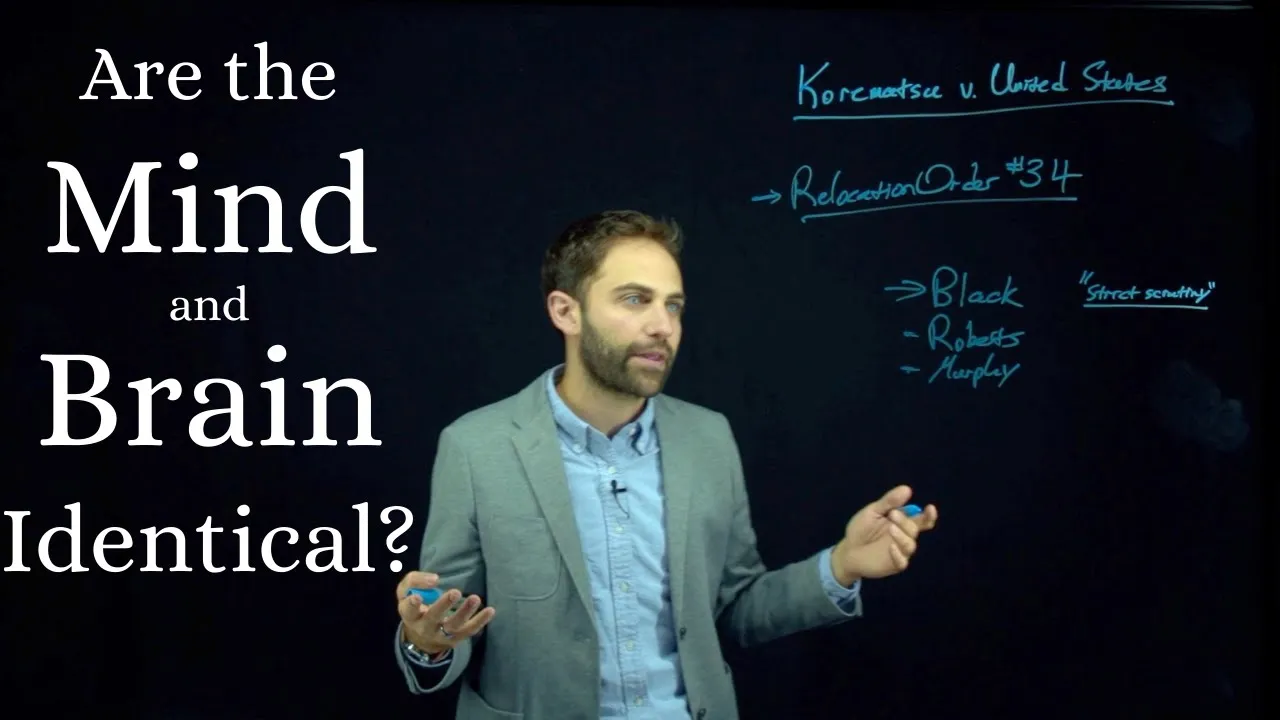
this glass is brittle right now today it's brittle but it's not breaking it's not you know shattering into pieces but that's because no one has punched it today's lecture is about a theory of mind called behaviorism behaviorism is a theory of the human mind specifically it's a version of physicalism it's a version of the theory that everything in the universe including human minds is physical stuff the type of thing that is studied by physics that's physicalism the theory that everything including the human mind is made up of physical stuff physicalism is mainly contrasted at least in this course with dualism dualism was descartes theory it's the theory that there's two kinds of stuff in the universe there's the mental stuff and there's the physical stuff the mental stuff is what thinks or has consciousness and the physical stuff is you know what's extended in space and located in space okay so you'll remember from our discussion of descartes there was a problem with dualism and the problem was it seemed impossible that these two kinds of things such different things the non-material non-extended mind and the material extended body it seems impossible that they could ever causally interact with one another but descartes thinks that they do that problem of course was due to princess elizabeth that was princess elizabeth's problem if you think that that problem is really serious you might look for an alternative to dualism which is physicalism the idea that the mind is just some of the physical stuff if the mind is made up entirely of particles physical particles then it's not mysterious how the mind could move the body because the mind just is some bodily stuff but if you go the physicalist route you then have an obvious question that arises which is okay so the mind is physical which physical stuff is it and that is what behaviorism is an answer to behaviorism specifies some of the events or things in the physical world and says those that's what the mind is that's what mental activity is it's those physical events specifically of course behavioral events and by behavior we mean outwardly observable movements so you know when i like lift this marker up and down or i flap my lips around and sound waves move that's all of my behavior it's stuff that other people can see it's important to note at this point and this will be a relevant big deal later that behavior is outwardly observable like anyone can watch my behavior and and you might know more about how i move my hand right like you know how many inches up or down it goes you might know more about that than i do right because you know i can measure how much my hand moves and you can measure it there's nothing private about my behavior that is in contrast with descartes view on descartes view the mental was private like what you really think or what you feel that's something that you know more intimately than other people know that was a component part of at least descartes version of the duelist theory of mind okay so now we understand all of that we understand that behaviorism is a version of physicalism we understand that it's in opposition to the dualist theory of mind and for today we read an article by david armstrong actually we didn't read an article by david armstrong we read a selection from an old book of his and it was sort of re-reformed as an article armstrong is not a behaviorist however armstrong does a really really good job summarizing behaviorism and so for our course we are just using his summary of behaviorism as the statement of the theory that we're going to assess and consider and criticize and whatever here's what armstrong says as a sort of initial presentation of the behaviorist theory of mind if you're following along in the reading this was on page 296 the mind was not something oh he's talking in the past tense about a previous presentation of the behaviorist theory of mind that's why he used the word was the mind was not something behind the behavior of the body it was simply part of that physical behavior my anger with you which is an example of a state of of the mind my anger with you is not some modification of a spiritual substance which somehow brings about aggressive behavior rather it is the aggressive behavior itself my addressing strong words to you striking you turning my back on you and so on those are all examples of anger behavior the behavior that's typically associated with anger and the claim of this initial version of behaviorism is that anger just is shouting and turning your back and and punching you or whatever then we get another example immediately after that thought is not an inner process that lies behind and brings about the words i speak and write it is my speaking and writing the mind is not an inner arena it is outward act there you go when i have some thought or belief we normally think of that thought or belief as being expressed or revealed causing my words to come out of my mouth but the claim of this initial version of behaviorism is no the words just are the thought or the belief that's it okay so it should be clear why this initial version of behaviorism that armstrong sketches definitely is a version of physicalism right if anger just is punching and yelling well punching and yelling are things in the physical world and so on this theory anger is part of the physical world but this initial version of behaviorism is just obviously false like there's an obvious counter-example to it and armstrong points this out like two sentences after presenting this version of behaviorism if you'd like a refresher on what a counter example is i have another video that hopefully i've edited by now and it just explains what a counter example is and how philosophers use them in philosophical argument and i will put a link to that in the description here is armstrong destroying easily this initial version of behaviorism however the version of behaviorism that i have just sketched is a very crude version and its crudity lays it open to obvious objections one obvious difficulty is that it is our common experience that there can be mental processes going on although there is no behavior occurring that could possibly be treated as expressions of these processes a man or a woman or any person with a mind may be angry but give no bodily sign he may think but say or do nothing at all there you go that's the counter example let me just write out the simple version of behaviorism and explain how the counter-example worked really quick here's a sort of claim that this initial crude version of behaviorism might make anger is punching or yelling or whatever well we can think of a scenario where someone feels genuine anger they really and truly are anger this is a state of their mind but nonetheless they don't punch or yell or do anything like that so you have an example a counter example where you've got one one thing anger but you don't have the other thing the behavior so this initial crude version of behaviorism is false what armstrong does next is he presents a more sophisticated version of behaviorism but if we're going to understand this more sophisticated version of behaviorism we have to understand what a dispositional property or a dispositional characteristic is a disposition is a tendency okay i need an example of a characteristic of something that is dispositional namely that characteristic consists in some tendency of the object take for example this glass right the board that i'm writing on this light board here this is made of glass one of the characteristics of the glass is that it is brittle but what is brittleness well brittleness is just the characteristic of being disposed to break if put under a certain amount of pressure to shatter this glass is brittle right now today it's brittle but it's not breaking it's not you know shattering into pieces but that's because no one has punched it if i were to i would wrap my hand in something maybe before i did it but if i were to punch this glass hard enough and if i weren't worried about hurting my hand i could punch this glass probably part enough i'm not that strong but probably i could break the glass if the glass were put under a certain amount of pressure then it would shatter so it's brittle but this is true of the glass even if the glass never breaks right so like what's the story of this glass i don't know some glass folks made it in a glass factory one day right and then it got shipped here and assembled in this room um and then it lived its whole life and i wrote on it all the time with these like fancy you know neon markers and then maybe one day i bring it back to a glass recycling place and they melt it down and it never shatters in its whole life nonetheless that whole time it was still brittle it was brittle even though it never broke because the characteristic of being brittle depends only on the glass having that disposition and something can have the disposition or the tendency to shatter even if it never actually shatters okay so now we understand what a disposition is armstrong explains this same idea by the way on page 297 here's what he says a piece of glass may never shatter or break throughout its whole history but it is still the case that it is brittle it is liable to shatter or break if dropped quite a small way or hit quite lightly now a disposition to behave is simply a tendency or liability of a person to behave in a certain way under certain circumstances what armstrong is saying there is certain characteristics of people are dispositional characteristics right some people are easy to anger they're excitable someone who's excitable in this way is someone who like if you say one little thing to them they explode in rage or whatever right and it's true of this person that they're excitable even if on that particular day they don't explode they don't they don't act out it's even if they go through the whole day without without freaking out that's just because no one pushed their buttons right but it was nonetheless true that they had the disposition they were still you know on the edge during that whole day even if they never exploded okay so now that we have the notion of a disposition we're able to revise our understanding of the behaviorist theory so that it's no longer the claim that you know being in a mental state just is exhibiting some behavior it's now going to avoid the the counter example it's now going to avoid the counter example by being changed we're going to change the theory we're going to alter the version of behaviorism we're going to present a new version and this version is going to be immune to the previous counter example here's a statement of the new revised version of behaviorism behaviorism is the theory that mental states are dispositions to behave in certain ways so it was pointed out in the counter example right that it's possible for someone to be angry but not you know punch or cry or yell or anything like that so it can't be that anger just is that anger behavior instead according to this version of behaviorism this more sophisticated version anger is certain dispositions to exhibit anger behavior right so the idea is that even though someone doesn't you know yell out or punch maybe they're ready to yell out or punch and that's what anger is anger is the idea that if the right thing hits you at the right time you'll punch something like that here is armstrong's statement of this more sophisticated version of behaviorism which happens on page 297 in the reading the glass does not shatter but it is still brittle the man does not behave but he does have a disposition to behave we can say he thinks although he does not speak or act because at that time he was disposed to speak or act in a certain way if he had been asked perhaps he would have spoken or acted we can say he is angry although he does not behave angrily because he is disposed so to behave if only one more word had been addressed to him he would have burst out that's the more sophisticated version of behaviorism and it avoids the initial counter-example that doomed the less sophisticated crude version of behaviorism okay so for next time we're going to read an article by hillary putnam which attacks even the more sophisticated version of behaviorism but before we get to that you know sort of larger attack on behaviorism i want to say something in favor of it remember that on descartes theory of the mind the duelist theory the mind was private it was something that the person with the mind has special access to right the idea is that i feel a certain way and i know that i feel that way and you might not know unless i tell you or unless i i let it out or express that feeling or that state of my mind in some way that you can see you might think that behaviorism runs into a certain problem with this because behavior is outwardly visible and so behaviorism would seem to suggest that the mind is not something private that the agent knows more directly than other people but instead is something that anyone can know as much as anyone else and that might seem like a problem but i want to suggest that maybe the mind isn't so private after all maybe you don't have such special access to your own mental states take for example jealousy is that how you spell jealousy i hope so anyway you don't think you're jealous as far as you know right as far as your access to your own mind goes you're not jealous but there you are breathing heavily sitting in a parked car at 3 a.m staring out at their closed front door maybe you're actually jealous and maybe other people someone who saw you exhibiting this behavior maybe they would know that you're jealous maybe they would know your own mind better than you know your own mind if that seems plausible to you if if it seems possible to you that someone else can know your mental states better than you can know your own mental states well then maybe behaviorism isn't so crazy
Up Next
7:01
Self-Determination Theory: Autonomy, Competence, and Relatedness
@sprouts
399.7K views•2022-11-03

68:32
Cognitive Skills for Differentiated Instruction | Teacher PD
@BrainWareLearning
631 views•2017-12-17

9:55
Thinking, Fast and Slow: Daniel Kahneman Animated Book Summary
@FightMediocrity
2.3M views•2015-06-05

6:40
The Nocebo Effect: How Beliefs Can Cause Real Harm
@CGPGrey
10.4M views•2013-12-23
Related Study Plans & Knowledge Roadmaps
Structured learning paths in Psychology
psychology
Neuroscience of Creativity: Networks & Training
01Foundations of Creative Cognition
02The Cognitive Neuroscience of Insight & Fixation
03The Triple Network Model of Creativity
+ 1 more learning modules
15h4 modules
Explore Roadmap
psychology
Imposter Syndrome: Etiology & CBT Framework
01Defining the Imposter Phenomenon
02Socio-Developmental Etiologies
03CBT Fundamentals & Thought Distortions
+ 2 more learning modules
15h5 modules
Explore Roadmap
psychology
Adult ADHD: Executive Dysfunction & Scaffolding
01Neurobiology of the ADHD Brain
02The Core Triad of Executive Deficits
03Executive Dysfunction and Emotional Regulation
+ 2 more learning modules
12h5 modules
Explore Roadmap
psychology
Loneliness: Evolution, Neurobiology & CBT
01Evolutionary Origins of Human Connection and Loneliness
02The Neurobiology and Physiology of Chronic Loneliness
03Maladaptive Social Cognition: The Psychological Loop
+ 2 more learning modules
12h5 modules
Explore Roadmap