



















![[ОВиТМ] Основы вероятности и теория меры (продвинутый поток) 7.](https://i.ytimg.com/vi/PBnyDHOpYLA/maxresdefault.jpg)
![[s3 | 2025] Математический анализ, Семенова О.Л., лекция 31](https://i.ytimg.com/vi/Cd1idJsO670/maxresdefault.jpg)
![[s2 | 2025] Математический анализ, К. В. Правдин, лекция 26](https://i.ytimg.com/vi/0nwjqd7GkVI/maxresdefault.jpg)








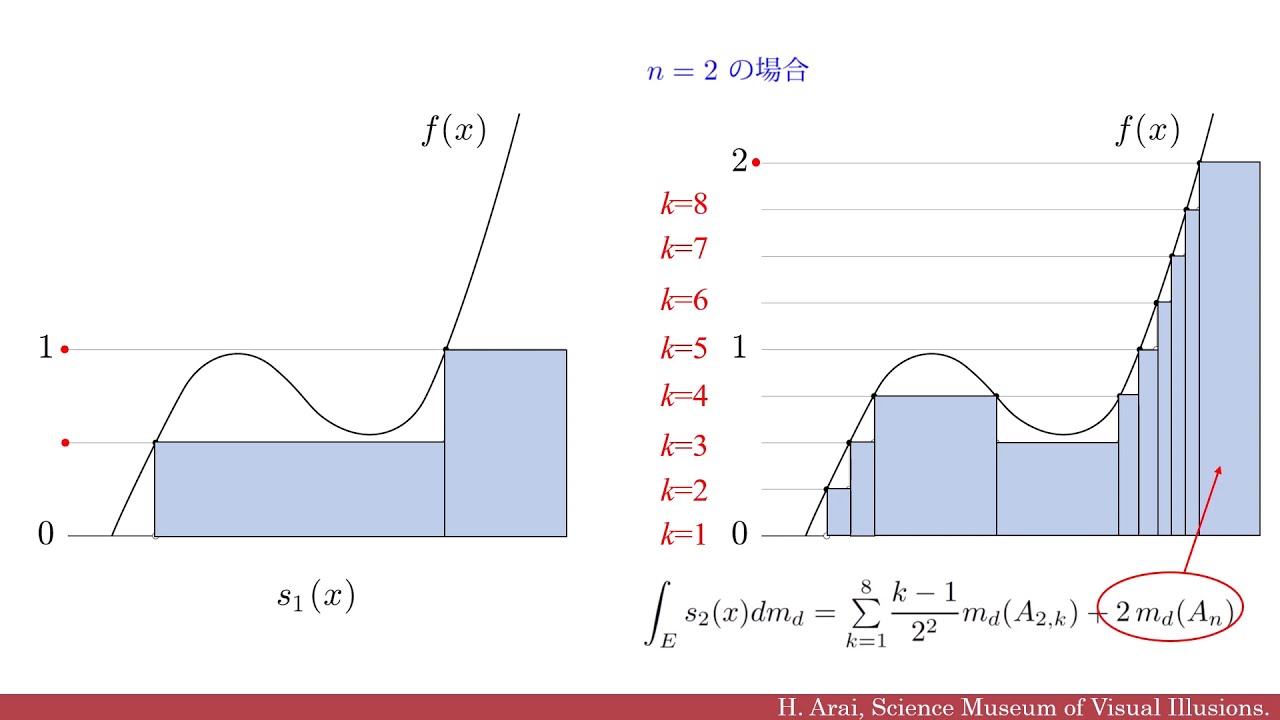

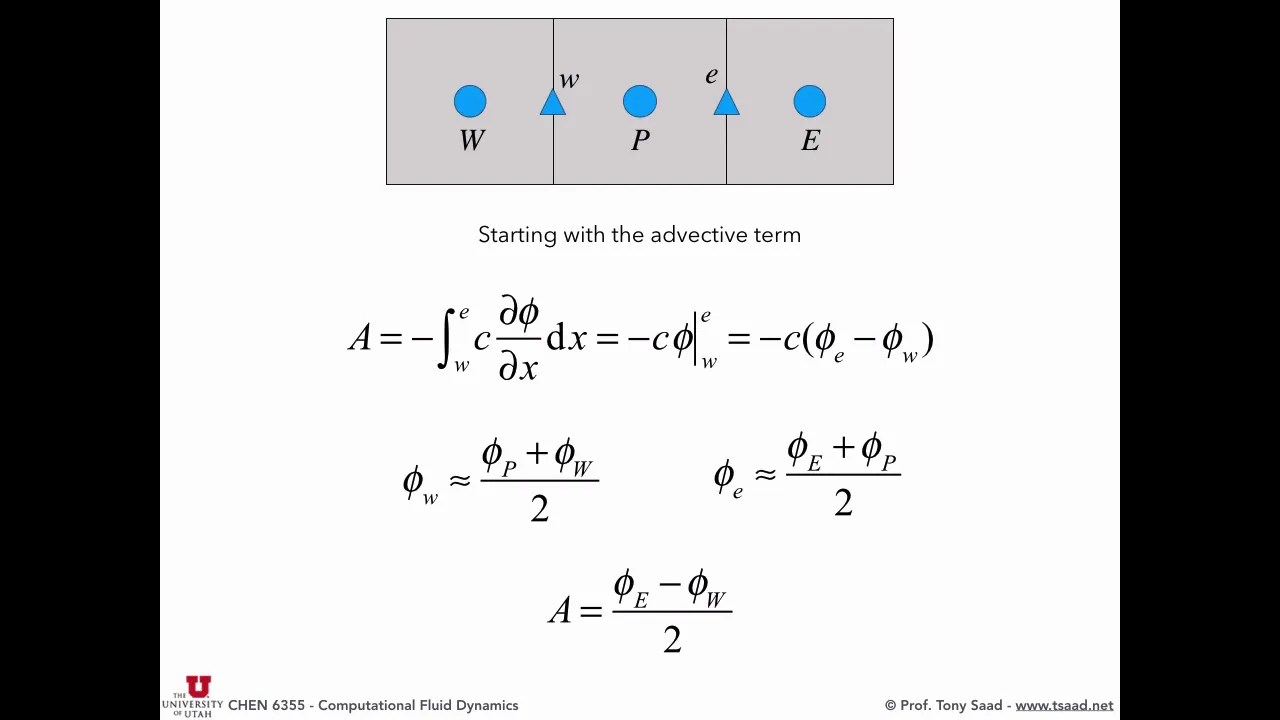


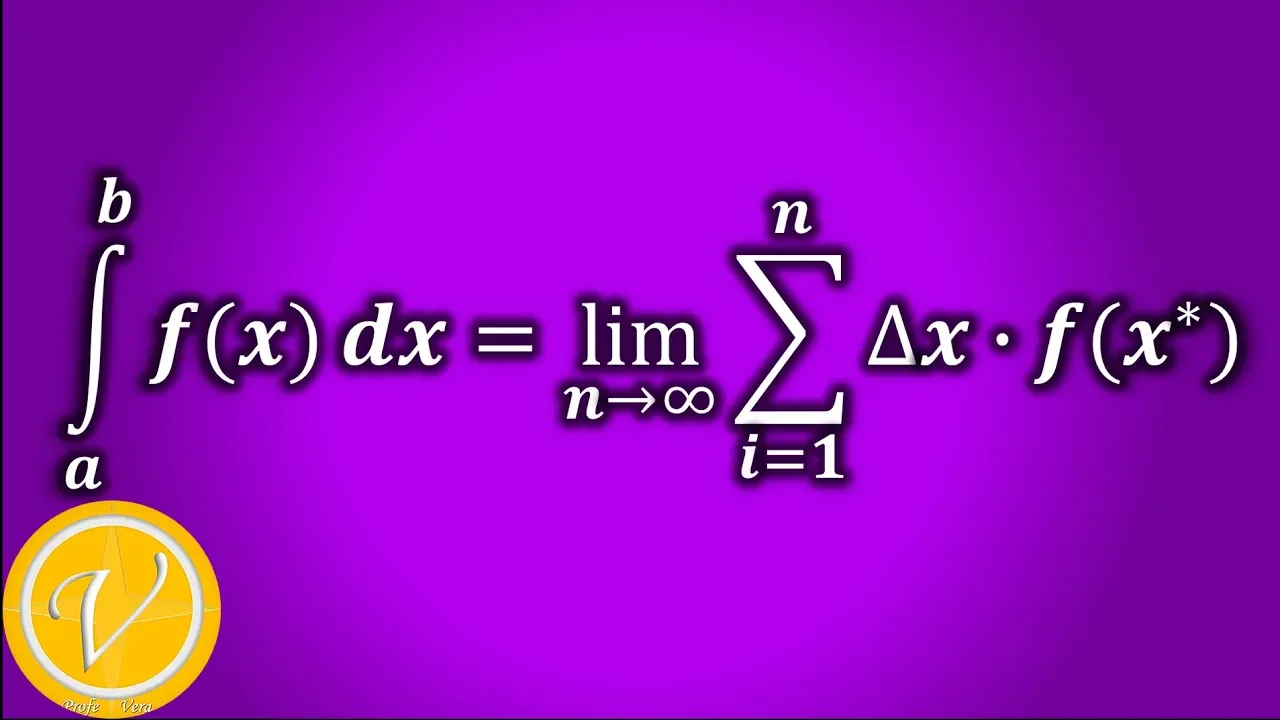
The Riemann integral is formally constructed by first defining a partition of the interval [a, b] as a set of points x₀, x₁, ..., xₙ that divide the interval into subintervals, then selecting any sample point cᵢ in each subinterval to form a Riemann sum Σ f(cᵢ)Δxᵢ, and finally defining the definite integral ∫ₐᵇ f(x)dx as the limit of these Riemann sums as the norm (width of the largest subinterval) approaches zero, provided this limit exists; for practical computation, regular partitions with equal-width subintervals Δx = (b-a)/n are typically used, and the limit is taken as n approaches infinity.
Riemann Integral Formal Construction and Definite Integrals
Added:Concept of Limits and Continuity: A solid understanding of limits of functions and sequences, as the definite integral is defined via a limiting process.
Basic Sigma Notation and Series: Familiarity with summation notation (sigma) and manipulating finite sums to represent accumulated quantities.
Supremum and Infimum of Sets: Understanding the least upper bound (supremum) and greatest lower bound (infimum) of real numbers, which are essential for defining upper and lower Darboux sums.
Intuitive Area Under a Curve: A basic geometric understanding of integration as the approximation of the area under a function's graph using rectangles.
The Fundamental Theorem of Calculus: Establishing the formal connection between differentiation and integration to evaluate definite integrals analytically.
Integrability Criteria: Analyzing the necessary and sufficient conditions under which a function is Riemann integrable (e.g., continuity, monotonicity).
Improper Integrals: Extending the Riemann integral to unbounded intervals and functions with infinite discontinuities.
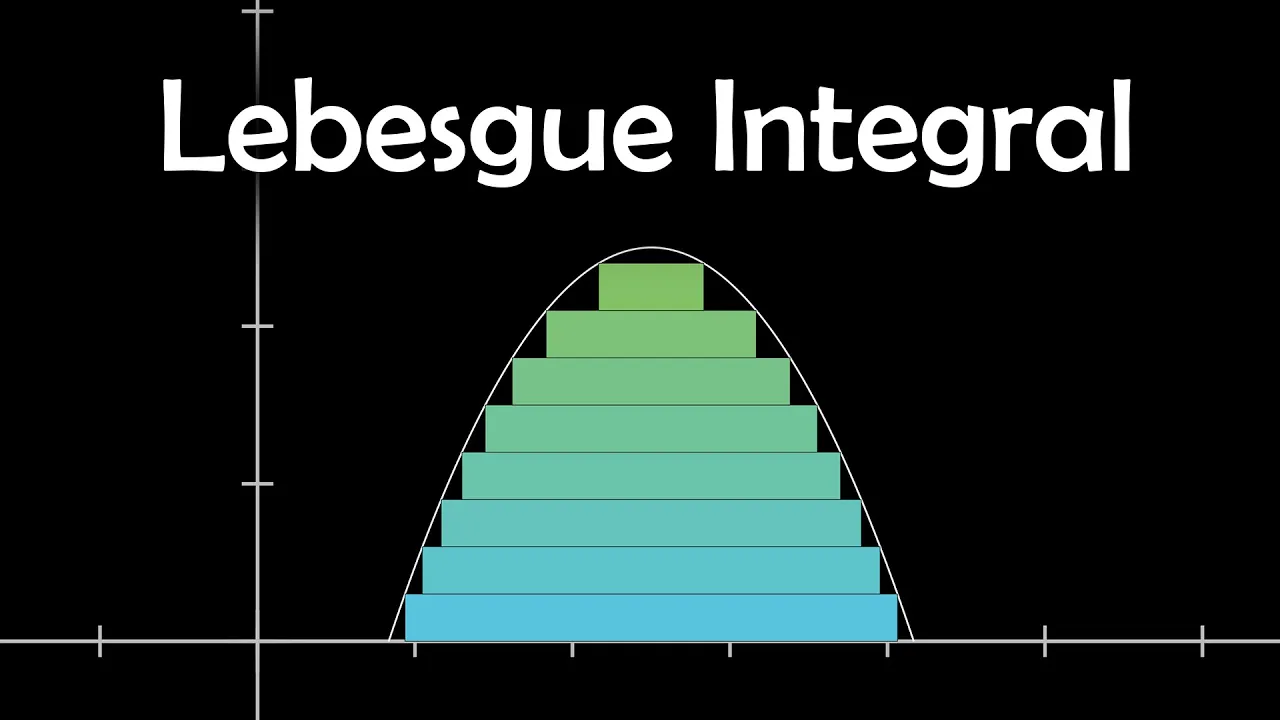
Introduction to Lebesgue Integration: Exploring the limitations of the Riemann integral (e.g., with the Dirichlet function) and transitioning to measure theory.
Numerical Integration Techniques: Applying the concept of Riemann sums to computational mathematics, such as the Trapezoidal Rule and Simpson's Rule.
2K views65likes12:13Original Release: 2019-09-08
hi everyone in this video we're going to define Riemann sums definite integrals and then I'll give you the formula to find the area under a curve before we do that let me just tell you what a Riemann sum is intuitively so let me draw a picture here so this is the y-axis and this is the x-axis and say we have a function f goes from here to here okay and this is a and this is B okay so we have some function and now I'm going to draw a bunch of random rectangles so I'm going to draw a rectangle here I'll draw a rectangle here okay I'll draw a rectangle here okay I'll draw a rectangle here it's a big rectangle I'll go ahead and draw a little skinny rectangle here I'll draw one here I'll draw one here so I have a graph and I just drew a bunch of random rectangles okay if you add up the areas of all of these rectangles you get a Riemann sum so a Riemann sum basically all you do is you take a graph you draw a bunch of rectangles and you add up their areas that's a Riemann sum the catch is it can be any random rectangles right so it's you don't you can't specify what they are so let's go through the formal construction of the definite integral so you see how how intense this actually is it's really really cool so we'll start by having a function f and it's defined on a B so f is defined on a B okay so that's our a and our B just like in our picture above and capital Delta I believe this is the capital Greek letter Delta there's a there's another Delta I think it's lowercase I'm not positive but I'm pretty sure this is a partition partition partition of a B given by so a partition is just a bunch of numbers that break up an interval right so so our partition in the picture above I'm you scroll up so you could see it and the picture above our partition is these dots here at which I'm about to draw that's our partition those random numbers there that we picked to break up the interval okay that's our partition so here we're going to give them names so the first number notice here it's a in this picture so I'll say it's a and I'll call it we'll call that X sub zero that's less than the neck then the next one which is X sub one so maybe this is X sub one in our picture less than dot less than X sub n and we'll call that B so I'm going to go back to our picture and just call this X sub N and X sub zero just for added clarity and this would be X sub two etc so we're taking an interval and we're just breaking it up randomly so taking an interval and randomly breaking it up we don't know what these numbers are where Delta X sub I is the width of the iith sub interval is the width of the iith sub interval so in our picture this here is Delta X sub I they're all different in our picture or some of them might be close to the same but they don't necessarily have to be the same so in our picture it's the width of the rectangle right we haven't formed the rectangle yet down here in our description but we will we will now if C sub I is any I'm gonna underline this this is key is any point so any number in the eyuth sub interval so you just basically pick a random number in the sub interval so like for example let me scroll up so you can see a little bit better I'm so like here maybe here this is my c c sub i right that's my c sub i right there and that what happens is we're going to plug that into the function to get the y-value here F of C sub I you see so when you plug in C sub I into the function that will give us F of C sub I and that will give us the height of the rectangle which you'll see shortly so if C sub I is any point in the I it sub interval then the sum so there's some here we have a sum the sum goes from I equals 1 to N and it's the sum of the areas of the rectangles so it's the height which we said was f of C sub I times the width of the rectangle which is Delta X sub I so this is the Riemann sum of F for the partition Delta so again we take a bunch of we take a bunch of random rectangles and we add up their areas and we call that a Riemann sum all of this is just a formal way of saying all that so what is an integral so here's where it gets really crazy okay so if or what is the definite integral that's what we're defining so if each just a random comment if each subinterval is of equal width so if they're all the same width the partition is called regular so the partition we can't assume that but it's important to know it so the partition is called regular and in this case we don't need delta x sub i we just have Delta X and that's B minus a over N so in actual calculus problems when you do these problems you use this formula which I'll write down again in a little while you assume it's regular right because you assume that you can find the answer so you can use any partition you want so that's that's that's what that would be so now we're gonna define something we're gonna let this symbol here so like these double bars around the partition we're gonna say this is the norm of Delta and what is this this is the this is the width of the largest sub interval okay the largest sub interval it's the width of the biggest one okay the width of the largest sub interval notice if the partition is regular they're all the same so if the partition is regular in the regular case you would get that the norm is equal to Delta X which is equal to B minus a over N that's kind of a cool to notice and we'll come back to that all right so here's the key so if so if we take the limit as the width of the largest sub interval goes to zero the finite sum of the areas of these random rectangles okay and if this limit exists so if this limit exists we say the function is integrable we say f is integrable integrable on a bee okay we say it's integral on a bee and the limit right since it exists is I'll write it again we have the limit and I'll explain why intuitively this is the case as well in a second the limit as the norm goes to zero of the finite sum as I runs from 1 to N of F of C sub I times Delta X sub I we're going to say it's equal to what's called the definite integral of our functions the definite integral of f of X with respect to X from A to B that's what it's called it's called the definite integral of F from A to B ok and in the case if f is non-negative so if it's greater than or equal to zero on a B then the area under the curve will be this okay that will be the area under the curve before I give you the formula for the area let me just explain why this should make sense [Music] because it probably doesn't yet or might not so if you if you have a bunch of rectangles right and you're trying to find the area you're either going to get an under approximation or an over approximation so if you let the width of the biggest rectangle go to 0 what's gonna happen is you're gonna get you're gonna get smaller and smaller rectangles you'll get more rectangles so eventually you have infinitely many rectangles and they cover the area and so you get the area so because if the biggest rectangle in width goes to 0 all the other ones must go to 0 too so you get like tons of really super skinny rectangles and you get all of the area notice and the case where it's regular so if all of the sub intervals have equal width we just got Delta X which was B minus a over N so if this goes to 0 then and goes to infinity so if you like you can replace this with n going to infinity in your mind and that way you can actually compute it in fact in the problems that's what we do right we let n go to infinity and the reason we do is because we assume a regular partition so the formula that we tend to use in problems is the following so the area under the graph from A to B we say it's the limit as n goes to infinity of the finite sum as I runs from 1 to N of F of C sub I times Delta X ok and so Delta X here is B minus a over N and notice this agrees with our definition up here right if the length of the largest sub interval goes to 0 and Delta X is equal to this that means n must get really really big so n goes to infinity that lets us actually do the computation mathematically and C sub I well before it was any number in the interval so we forced it to be a plus I Delta X so we can actually compute it this is the right endpoint so this is the formula we use to find area so definitely not going to do an example in this video because they take like 10 minutes they're really long you have to work through all of this but I hope this video was helpful and yeah that's it
Up Next

49:57
Uniform Convergence and Riemann Integration | Math Lecture 34
@wcwou
231 views•2024-07-31

4:43
Elliptic Curve Cryptography Explained: ECC, ECDSA, ECDH
@PracticalNetworking
28.5K views•2024-10-21
7:18
Linear vs Nonlinear Differential Equations Explained
@TheMathSorcerer
332.9K views•2018-05-15

6:00
The Mathematical Impossibility of Accurate World Maps
@Vox
23.3M views•2016-12-02
Related Study Plans & Knowledge Roadmaps
Structured learning paths in Mathematics
mathematics
Tensor Calculus: Vectors to Riemann Curvature
01Mathematical Foundations: Linear Algebra & Calculus
02Covectors, Dual Spaces, and Tensor Basics
03The Metric Tensor and Index Gymnastics
+ 2 more learning modules
40h5 modules
Explore Roadmap
mathematics
Gödel's Incompleteness: Logic, Proofs & Limits
01Introduction to Formal Systems & Hilbert's Dream
02Set Theory, Cardinality, and Cantor's Diagonal Argument
03Arithmetization and Gödel Numbering
+ 2 more learning modules
14h5 modules
Explore Roadmap
mathematics
Galois Theory: Fields, Groups & Solvability
01Foundations of Abstract Algebra: Groups & Fields
02Polynomials & Field Extensions
03Splitting Fields & Symmetries
+ 2 more learning modules
24h5 modules
Explore Roadmap
mathematics
Non-Euclidean Geometry: Models & Geodesics
01Euclid's Fifth Postulate and the Birth of New Geometries
02Hyperbolic Space and the Poincaré Disk Model
03Geodesics: Defining Straight Lines in Curved Spaces
+ 2 more learning modules
15h5 modules
Explore Roadmap