





























Acoustic treatment improves sound quality within a room by managing reflections and reverberation using materials like foam or panels, while soundproofing prevents sound from entering or leaving a space through specialized construction techniques such as building a room within a room, adding floating floors, or creating air gaps between walls; importantly, low-frequency sounds travel farther and penetrate barriers more easily than high frequencies, meaning bass instruments will be heard outside even if treble sounds are blocked.
Acoustic Treatment vs Soundproofing: Key Differences Explained
Added:Basic physics of sound waves, including reflection, absorption, and transmission.
The difference between airborne noise (sound traveling through air) and structure-borne noise (vibrations traveling through solid materials).
Understanding decibels (dB) and how human hearing perceives changes in sound level.
The concept of sound frequency (bass vs. treble) and how different wavelengths interact with physical obstacles.
In-depth study of acoustic treatment materials (e.g., absorption coefficients of fiberglass, rockwool, and foam).
Construction techniques for sound isolation, such as decoupling (double-stud walls), adding mass (mass-loaded vinyl), and damping.
Analyzing room modes, standing waves, and using software tools like Room EQ Wizard (REW) to measure room acoustics.
Designing specialized environments, such as home recording studios, home theaters, or commercial podcast rooms, based on targeted acoustic targets.
117.8K views530likes4:40Original Release: 2011-09-08
Oh YouTube stick here this is a real quick video because I've had quite a few people asking me about this and qua few people asking choppers be much no Jam videos and stuff about but Bank questions is about acoustic treatment and soundproofing and loads of you seem to be getting very confused between the two you gotta remember acoustic treatment is not soundproofing so when you look in this live room and logy people comment on the foam and stuff and it's acoustic treatment it's not noise blocking material - to create a soundproof room us just googling it and stuff and checking out I mean sano-sama magazine has done loads of articles on this you're really looking at building a room within a room isolating your floor or floating floors you know really heavy lined walls with a gap air gap between the two walls all kinds of stuff it's quite expensive to do and obviously if you build a room within a room it's gonna end up small providing you know unless you're lucky enough to have a really really big room so why did here at maple is I I'm fortunate enough this isn't my dining area really my dining room I've got concrete wall here brickwork wall to start wall over there over here we've got the the glass sliding doors I had put in and then behind me for the front we've got the the window they present to the garden the window that's already double glazed wood frame on the outside swipers secondary glazing on the inside so I've got an a haircut a cavity in there so that's quite you know behaves quite well does the job quite well concrete wall pretty good cavity or the internal stud wall not so hot and the glass doors they work pretty well but one thing you gotta remember is low frequencies travel if you think about it whenever you hear music in a distance parties or that kind of stuff you always hear the bass you hardly you know you here the treble notes of guitars or that kind of stuff it's just low frequencies low frequencies are long sound waves they travel they will go through walls you can hear them outside so for example when I'm playing in here I can get a way of playing up to sort of half 10:00 at night but the bass drum and bass guitar from jamming with bands you can hear that outside row faintly but you can hear it you won't hear cymbal crashes and I kind of stuff so please bear that all in mind don't get yourself confused between the two whatever room you are in whether you're in a a soundproof room or a room like this you still need acoustic treatment either way so I hope that clears a few little things up as I mentioned in a previous video for acoustic treatment this duffel thing Bay is really really good really impressed with it and so go check it out it's a good cheap and you know option you're not going to break the bank and it's one of those things you can buy you know a couple of boxes or a box at a time as and when keep adding to it and finding you know what suits your room so you don't have to buy stacks in one go the other option of course is the ghost acoustic paneling again they're various companies out there you can make a lot of this stuff yourself if you've got a little little bit of DIY savvy timber framework and rock wall in there and cover the material again get googling loads of people do it out there but the ghost stuff is really cool I use that in the control room and I'm really lucky hit the nail on the head there or managed to create myself pretty neutral mixing environment I actually remember the other day I got the the event opal monitoring kit and I've all excited about doing it and I haven't shot a video about it and it's a yeah so go do that because that the results from that were actually our standing and that's all treated by the ghost acoustics anyway I hope that clears a few questions or answers a few questions clear view issues confusion bits blah blah blah about acoustic treatment and soundproofing so just remember that soundproofing is stopping noise going out treatment is about making the room sound good not really caring how noise you are on the outside okay quick video stick out
Up Next
7:13
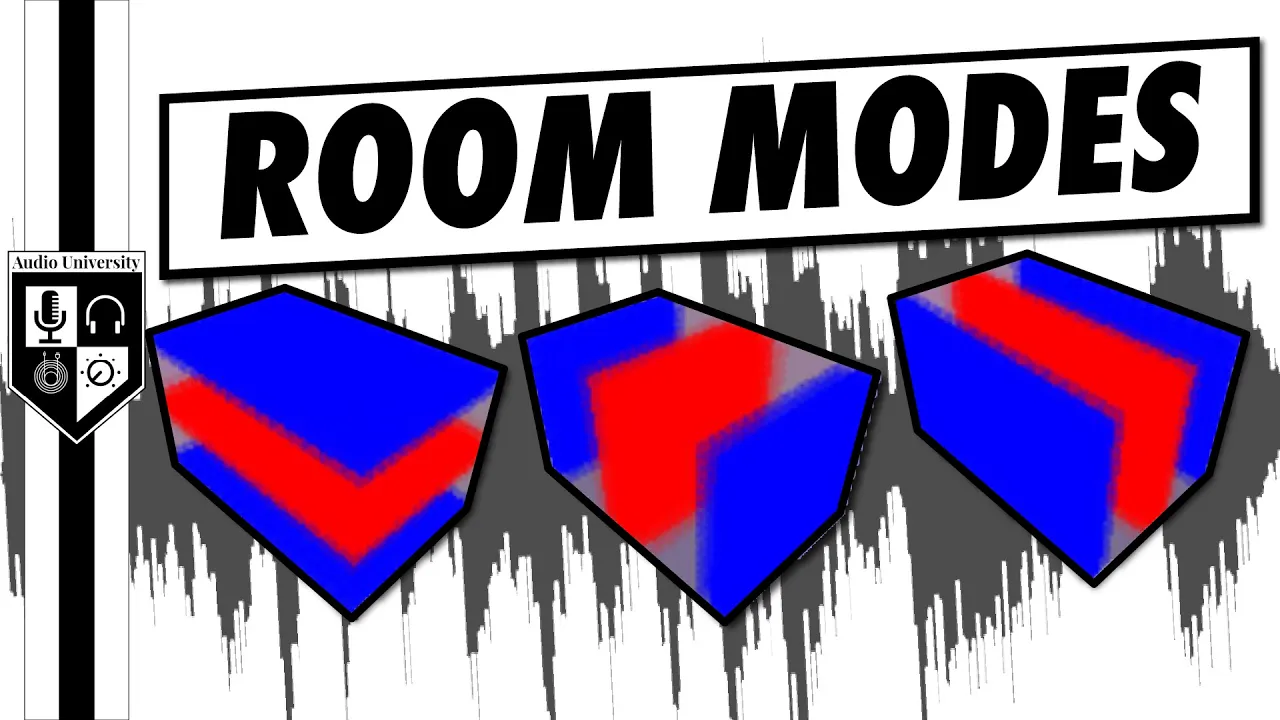
Understanding Room Modes: The Biggest Problem in Small Room Mixing
@AudioUniversity
166.6K views•2022-08-25

12:54
Triumph of Orthodoxy Icon: Byzantine Art & History Explained
@BenCallan
2.1K views•2024-08-06

9:49
FastAPI vs Flask vs Django: Choosing the Right Python Web Framework
@TechWithTim
302.5K views•2024-05-26

1:42
Game of Thrones Opening Credits: A Cinematic Analysis
@gameofthrones
46.3M views•2011-04-18
Related Study Plans & Knowledge Roadmaps
Structured learning paths in General & Interdisciplinary Studies
general-studies
Elevator Engineering: History, Physics & Cities
01From Hoists to Safety Brakes: The Dawn of Vertical Lift
02Hydraulic vs. Traction: The Engineering Physics of Elevators
03Modern Speed, Safety, and Algorithms
+ 2 more learning modules
12h5 modules
Explore Roadmap
general-studies
Rubber: Material Science, History & Geopolitics
01Origins of Natural Rubber & Mesoamerican History
02The Chemistry of Natural Rubber & Vulcanization
03The Geopolitics of the Rubber Boom & Colonization
+ 2 more learning modules
12h5 modules
Explore Roadmap
general-studies
Containerization: Evolution, Logistics & Trade
01Ancient Trade & Bulk Cargo: Amphorae to Barrels
02The Industrial Revolution & Cardboard Packaging
03The Containerization Revolution: Malcom McLean
+ 2 more learning modules
12h5 modules
Explore Roadmap
general-studies
Textile Tech: Evolution, Labor & Global Impact
01Pre-Industrial Textiles: Handloom & Cottage Industry
02Mechanization: The Spinning Jenny to the Power Loom
03The Factory System & Global Labor Transformation
+ 2 more learning modules
10h5 modules
Explore Roadmap