Between 1945 and 1991, the United States and Soviet Union engaged in a nuclear arms race, building over 100,000 nuclear weapons each, beginning with the 1945 Trinity test and evolving from atomic bombs to hydrogen bombs and intercontinental ballistic missiles, ultimately leading to the doctrine of mutually assured destruction that prevented direct conflict despite both nations possessing devastating nuclear capabilities.
Cold War Nuclear Arms Race: A Historical Overview
Added:Deep Dive
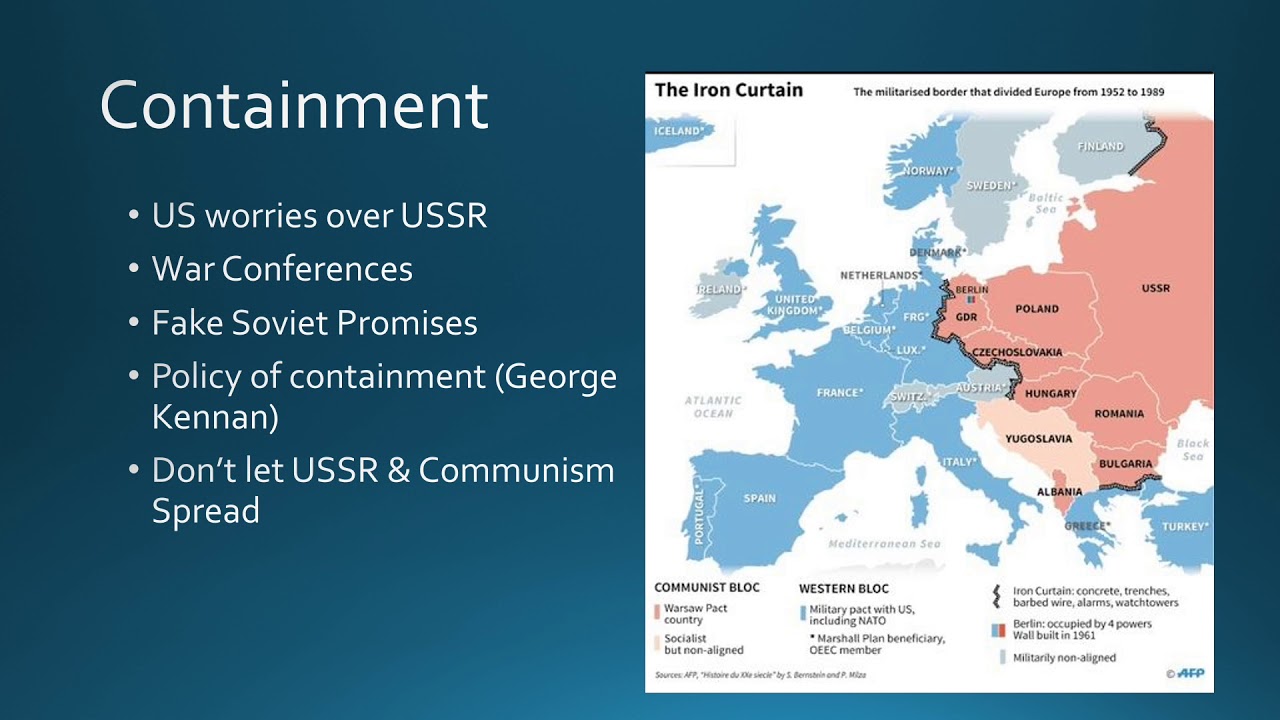
The geopolitical outcome of World War II, specifically the emergence of the United States and the Soviet Union as rival global superpowers.
Continued Cold War
138
The biggest political effect of World War II was the emergence of two new superpowers: the United States and the Soviet Union. Britain and France, traditionally major powers, were weakened by the war. The US and USSR, who had been allies during WWII, quickly became enemies after Hitler's defeat in 1945. This shift created a bipolar world structure that defined the Cold War era.
Click to watch →

The Iron Curtain - The U.S. and USSR After World War II
810
After World War II, the United States and Soviet Union emerged as the world's two superpowers. The U.S. remained safe from direct war destruction, had a booming economy, and possessed the strongest military including atomic weapons. The Soviet Union suffered greatly (over 20 million deaths) but rebuilt quickly through centralized government control and also developed atomic weapons by the late 1940s. These superpowers had different visions for postwar Europe: the U.S. promoted democracy with voting, freedom of expression, and individual success, while the Soviet Union promoted communism with government-distributed resources and no private property. These incompatible ideologies led to the division of Europe.
Click to watch →

CLASS 12 POLITICAL SCIENCE // THE COLD WAR & NON-ALLIGNED MOVEMENT (CH-1) IN ONE SHOT
171
After World War II ended in 1945, two superpowers emerged to dominate the world: the United States of America and the Soviet Union. These two nations became the central powers of the Cold War. The United States and Soviet Union had fought together during World War II but became rivals afterward. The world became divided into two camps, with countries choosing to align with either the United States or the Soviet Union. This bipolar world structure defined international relations for nearly five decades.
Click to watch →

World History | Second World War | Causes & Events | World History in Hindi | By Rishabh Sir
9.2K
World War II established the United States and the Soviet Union as the two dominant superpowers of the world. In Europe, the Soviet Union played the most important role in defeating Nazi Germany, which led to its rise as a major power. In the Pacific, the United States defeated Japan and gained control over its former territories. This power dynamic led to the Cold War, as these two nations became rivals for global influence. The war had fundamentally reshaped the world's political landscape.
Click to watch →

(GÜN 24) II. DÜNYA SAVAŞI 2 - 30 GÜNDE AGS/KPSS TARİH KAMPI
8K
World War II established the United States and the Soviet Union as the world's superpowers. These two nations emerged as the dominant global powers, with the USA controlling the Western bloc and the USSR controlling the Eastern bloc. This power dynamic led to the Cold War.
Click to watch →
Deep Dive
The core ideological differences between Western democratic capitalism and Soviet communism that fueled mutual distrust.

iGCSE History: 20th Century International Relations - KQ4 Causes of the Cold War
27.7K
The fundamental ideological divide between the Western democracies (USA, Britain, France) and the Soviet Union stemmed from incompatible political and economic systems. Western nations practiced democracy with free elections and capitalism where private ownership of property and businesses was protected, promoting international free trade. In contrast, the Soviet Union implemented communism, abolishing private property and redistributing resources through state control, operating as a one-party dictatorship. Both ideologies sought global influence, creating inherent hostility from their very foundations.
Click to watch →

Was wäre wenn die UdSSR der NATO beigetreten wäre?
49.6K
The fundamental problem between the superpowers lay in their completely different ideologies. The Soviet Union under Stalin pursued a communist state form based on centrally planned economy and a single-party system. In contrast, the USA and its Western allies supported capitalism and parliamentary democracy. These irreconcilable ideologies created deep mutual distrust. The Soviet Union installed communist governments in Eastern European countries like Poland, Hungary, Czechoslovakia, and Romania, turning them into satellite states with no independent political systems.
Click to watch →

Origins of the Cold War (1917-1945)
26.2K
The fundamental ideological conflict between Soviet communism and Western capitalism created enduring tensions. Soviet communism established state control over all property and economic activity, eliminating private ownership and democratic elections. In contrast, Western democracies emphasized private economic control with democratic elections. The Soviet Union faced diplomatic isolation, with American presidents Wilson, Harding, Hoover, and Coolidge refusing recognition throughout the 1920s. Stalin's brutal rule, including forced collectivization, purges, and Gulags, further damaged the USSR's international reputation. The Molotov-Ribbentrop Pact of 1939, a secret non-aggression pact between Stalin and Hitler, demonstrated how ideological enemies could cooperate for mutual benefit, setting precedents for future Cold War alliances.
Click to watch →

Ronald Reagan Jokes about DDR and Erich Honecker, outlines NATO values and Berlin Wall
1.3K
During the Cold War, there was a fundamental ideological difference between Western democracies and Soviet communism. Western democracies believed in individual liberties and freedoms, while Soviet communism denied people their god-given liberties. This ideological conflict was not merely a political dispute but represented a fundamental struggle between freedom and oppression.
Click to watch →

LET OP! OUDE VIDEO! 10. de Koude Oorlog
532.4K
The Cold War arose from fundamental ideological differences between the United States and the Soviet Union. The United States was proud of its capitalist system, democracy, free elections, and economic freedom. The Soviet Union, since 1917, was communist and characterized by a totalitarian state, dictatorship, and a single-party system. The Soviet state had significant influence over the economy through a planned economy that determined how economic activities should be regulated.
Click to watch →
Deep Dive
Basic scientific concepts of nuclear physics, particularly the difference between nuclear fission (used in early atomic bombs) and nuclear fusion (used in thermonuclear weapons).
Nuclear Fission and fusion | Difference |Nuclear Physics|Science Briefing
202
Nuclear fission involves splitting heavy atomic nuclei (like uranium-235) into lighter nuclei, releasing energy through chain reactions used in nuclear reactors and atomic bombs; nuclear fusion combines light nuclei (like hydrogen isotopes) into heavier, more stable nuclei, releasing even more energy but requiring extreme temperatures (1.5×10^7 K) to overcome electrostatic repulsion, with fusion powering stars and being researched for clean energy production.
Click to watch →

Cực nóng: Trung Quốc bất ngờ khai hỏa bom hạt phi hạt nhân giữa lúc Mỹ liên tiếp giáng đòn thuế quan
9.8K
Nuclear fusion and nuclear fission are fundamentally different nuclear reactions. Nuclear fission (used in atomic bombs) involves splitting heavy nuclei like uranium-235 or plutonium-239. Nuclear fusion (used in hydrogen bombs) involves combining light nuclei like deuterium and tritium to form helium, releasing energy hundreds to thousands of times greater than fission. This fundamental difference explains why hydrogen bombs are significantly more powerful than atomic bombs.
Click to watch →

2nd PUC Physics Part 2 | 3 Marks Sure Questions 🔥 Final Revision 2026 | Passing Package
274
Key differences between nuclear fission and fusion: (1) Fission involves splitting of a heavy nucleus (like uranium) into lighter nuclei when bombarded with neutrons, while fusion involves combining lighter nuclei (like hydrogen) into heavier nuclei; (2) Fission occurs in nuclear reactors and atomic bombs, while fusion occurs in stars and hydrogen bombs; (3) Fission releases energy when heavy nuclei split, while fusion releases energy when light nuclei combine; (4) Fission can be controlled (reactors) or uncontrolled (bombs), while fusion requires extremely high temperatures and is difficult to control; (5) Fission produces radioactive waste, while fusion produces minimal radioactive waste.
Click to watch →
Nuclear Bombs and The Pacific Proving Grounds
42.4K
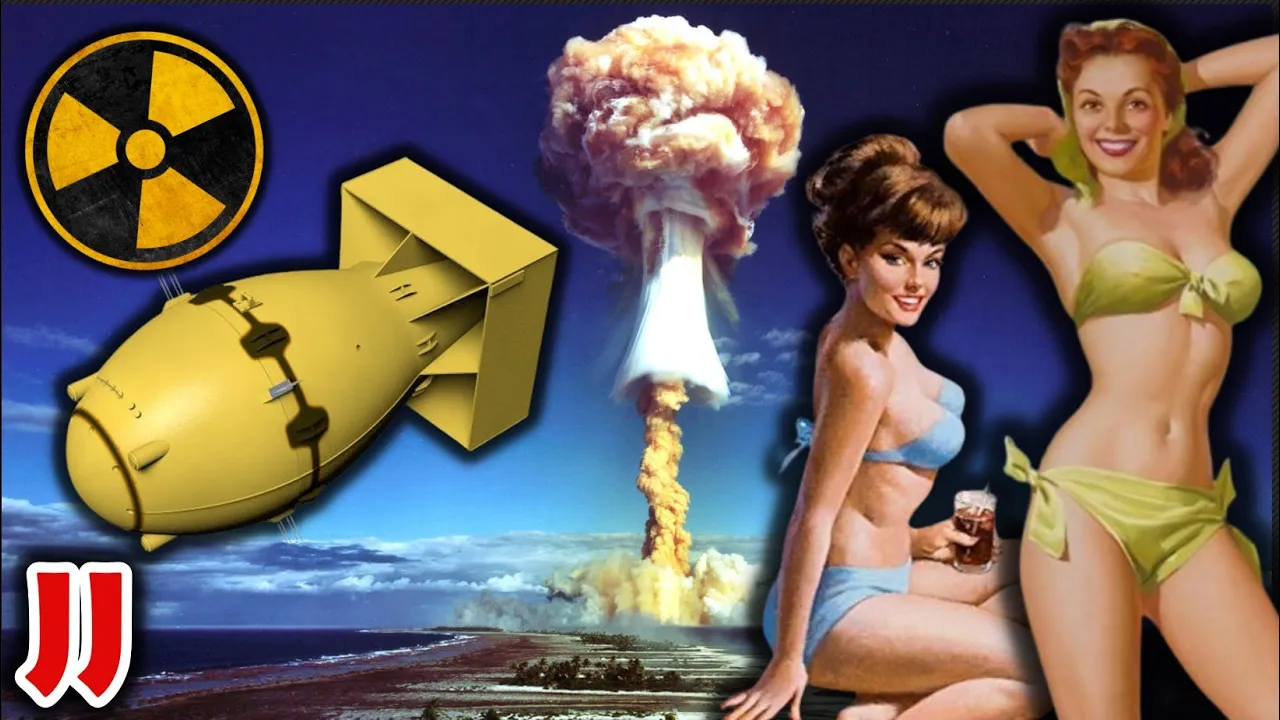
Thermonuclear weapons use both fission and fusion reactions, unlike atomic bombs which use only fission. Fission bombs like the Fat Man bomb are commonly referred to as atomic bombs, atom bombs, or A-bombs. Technically, these terms can refer to any nuclear weapon since the energy from both fission and fusion comes from the nucleus of the atom. Fusion differs from fission in that instead of energy created from splitting atoms, energy is created by fusing light nuclei together, forming heavier nuclei and releasing energy in the process.
Click to watch →

नाभिकीय विखंडन और नाभिकीय संलयन में अंतर बताइए/ nabhikiy vikhandan aur nabhikiy sanlayan me antar
1.5K
Nuclear fission is the process where a heavy nucleus splits into lighter nuclei, releasing large amounts of energy and occurring in radioactive materials, which is used to create atomic bombs; whereas nuclear fusion is the process where light nuclei combine to form heavier nuclei, releasing less energy and requiring extremely high temperatures, used to create hydrogen bombs.
Click to watch →
Deep Dive
The historical significance of the Manhattan Project and the subsequent atomic bombings of Hiroshima and Nagasaki in 1945.
The Atomic Bombings of Hiroshima And Nagasaki - Part 1
1.6M
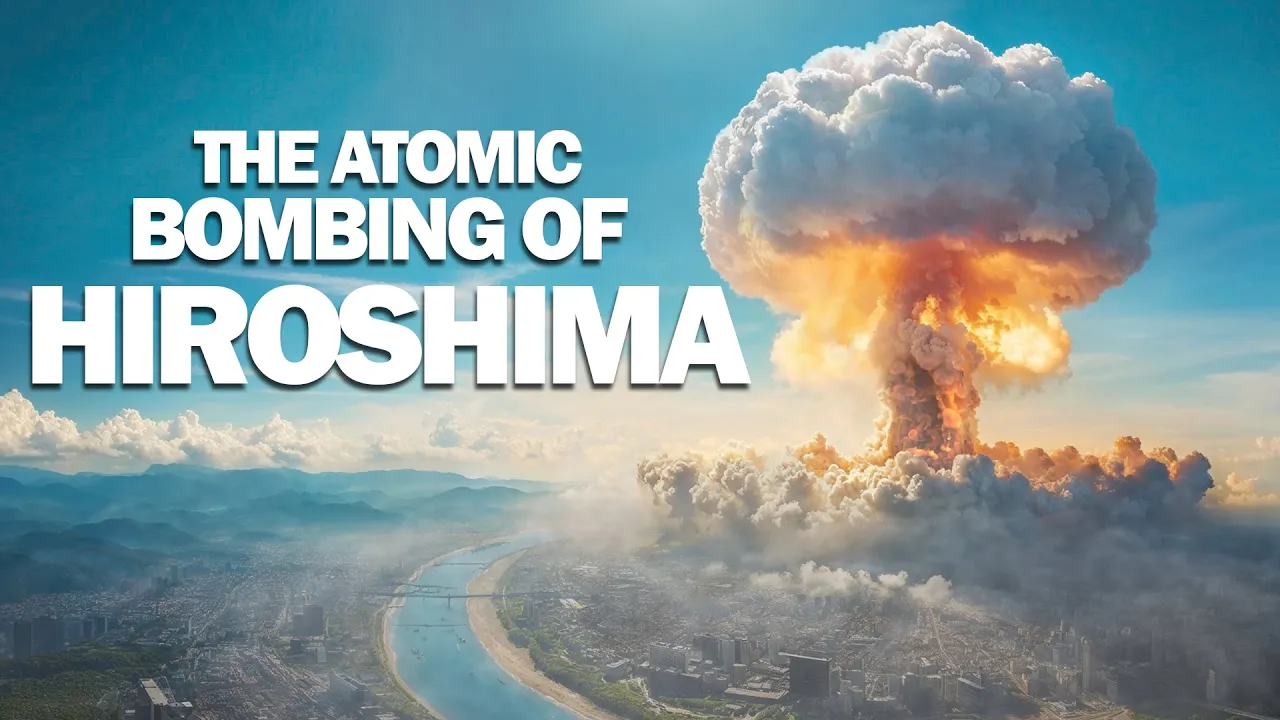
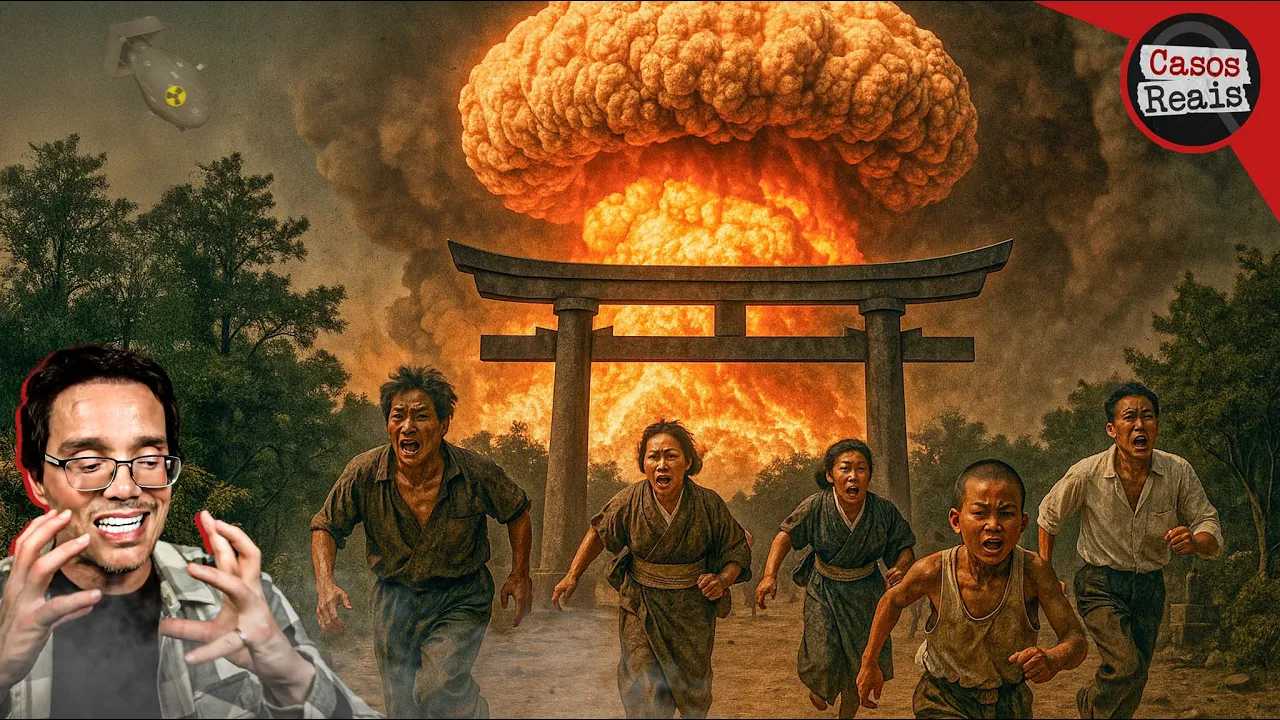
The Manhattan Project (1942-1946), a top-secret U.S. government initiative led by Major General Leslie Groves and physicist J. Robert Oppenheimer with a $2 billion budget and 130,000 workers, successfully developed the world's first nuclear weapons; after the Trinity test on July 16, 1945 confirmed the bomb's viability, President Truman used this capability to force Japan's surrender following the Potsdam Declaration, ultimately dropping 'Little Boy' on Hiroshima on August 6, 1945 and 'Fat Man' on Nagasaki on August 9, 1945, resulting in approximately 126,000 deaths in Hiroshima alone and bringing World War II to an end.
Click to watch →
HIROSHIMA E NAGASAKI: A HISTÓRIA NAO CONTADA DO MAIOR MASSACRE NUCLEAR DA HISTÓRIA
1.6M
On August 6 and 9, 1945, the United States dropped atomic bombs on Hiroshima and Nagasaki, Japan, killing an estimated 150,000-250,000 people instantly and causing hundreds of thousands more to die from injuries and radiation in the following months. The bombings were part of Operation Downfall, the planned Allied invasion of Japan, which military planners estimated would result in 4 million American and 10 million Japanese casualties. Colonel Paul Tibbets, a medical student who had joined the Air Force to learn to fly, was selected in 1943 to pilot the Enola Gay that dropped the 'Little Boy' bomb over Hiroshima. Meanwhile, 12-year-old Sadako Hiran, a civilian in Hiroshima, experienced the devastating effects of the explosion, including severe burns and radiation sickness, and survived for 20 days before the war ended. These bombings marked the first and only use of nuclear weapons in warfare, fundamentally changing the nature of modern conflict and leaving lasting psychological and physical scars on survivors (hibakusha) for generations.
Click to watch →

அதிர்ச்சி | World War 2's Darkest Chapter: Hiroshima & Nagasaki Untold Story | Jayasim Jayakumar
274.8K
On August 6, 1945, the US dropped the uranium-based atomic bomb 'Little Boy' on Hiroshima, creating a 5 km destruction radius and killing approximately 70,000 people instantly. Three days later, on August 9, 1945, the plutonium-based 'Fat Man' was dropped on Nagasaki, killing 40,000 instantly with total deaths reaching 70,000. The bombs were detonated at specific altitudes (600m and 503m) to maximize destructive effects. The Manhattan Project, costing $2 billion (equivalent to $27 billion today), developed these weapons over nearly three years under J. Robert Oppenheimer's leadership.
Click to watch →

Modern Marvels: The Manhattan Project - Full Episode (S9, E21) | History
4.3M
At 8:15 AM August 6, 1945, the Enola Gay dropped Little Boy from 31,000 feet. The bomb detonated 1,900 feet above Hiroshima with 12,500 tons of TNT force. Winds of 500 miles per hour leveled 90% of the city, charred victims' skin 2 miles away, and incinerated those directly beneath the detonation. The Japanese death toll rose to 130,000 killed by blast and radiation sickness. Three days later, a second more powerful plutonium bomb, Fat Man, fell on Nagasaki with similar devastating results. Japan surrendered on August 14, 1945, ending the most catastrophic war in human history.
Click to watch →

History Today EPI - 100 | ഹിരോഷിമയിൽ അമേരിക്ക ആദ്യത്തെ അണുബോംബിട്ട ദിനം | Safari TV
866.7K
On August 6, 1945, the United States dropped the first atomic bomb (Little Boy) on Hiroshima, Japan, killing approximately 130,000 people, followed by the bombing of Nagasaki on August 9, 1945, which killed around 80,000 people; these devastating attacks led to Japan's surrender on August 15, 1945, officially ending World War II. The bombings were the result of the Manhattan Project, a secret American research program led by Robert Oppenheimer that developed nuclear weapons, and marked the first use of atomic weapons in warfare, fundamentally changing the course of human history and raising profound ethical questions about the use of nuclear weapons.
Click to watch →
Prerequisite Knowledge
- Concept 01The geopolitical outcome of World War II, specifically the emergence of the United States and the Soviet Union as rival global superpowers.
- Concept 02The core ideological differences between Western democratic capitalism and Soviet communism that fueled mutual distrust.
- Concept 03Basic scientific concepts of nuclear physics, particularly the difference between nuclear fission (used in early atomic bombs) and nuclear fusion (used in thermonuclear weapons).
- Concept 04The historical significance of the Manhattan Project and the subsequent atomic bombings of Hiroshima and Nagasaki in 1945.
Subsequent Learning
- Step 01The strategic doctrine of Mutually Assured Destruction (MAD) and how it prevented direct military conflict between the superpowers.
- Step 02Major Cold War flashpoints where nuclear tensions peaked, most notably the Cuban Missile Crisis of 1962.
- Step 03The history of international arms control and disarmament efforts, such as the Nuclear Non-Proliferation Treaty (NPT) and the Strategic Arms Limitation Talks (SALT).
- Step 04Modern-day nuclear geopolitics, including the challenges of contemporary non-proliferation, nuclear terrorism, and the modernization of existing arsenals.
Origins & Start
H-Bomb Race
Deterrence & End
Origins & Start
0:05Playing Section
- 1
Tracks nuclear competition from 1945, highlighting early US monopoly and USSR's rapid catch-up via espionage.
- 2
Covers atomic bombings and first Soviet test, shifting global power dynamics.
Revisionist Historiography: Atomic Diplomacy and US Responsibility
Traditional narratives often frame the Cold War nuclear arms race as a symmetrical "action-reaction" security dilemma where both superpowers reluctantly sought mutual deterrence. In contrast, the "Revisionist" school of Cold War history argues that the United States bore primary responsibility for initiating and accelerating the race. Scholars like Gar Alperovitz suggest that the U.S. used its early nuclear monopoly not for defense, but for "atomic diplomacy" to coerce the Soviet Union and secure postwar global hegemony. From this perspective, the atomic bombings of Hiroshima and Nagasaki were intended as a demonstration of power to intimidate Moscow, forcing the Soviets to rapidly develop their own arsenal to restore geopolitical balance. This counterpoint challenges the idea of equal blame, portraying the arms race as a product of American aggressive posturing and domestic military-industrial pressures rather than a purely defensive, bilateral struggle.
Deep Dive
The strategic doctrine of Mutually Assured Destruction (MAD) and how it prevented direct military conflict between the superpowers.

Nuclear War - Mutually Assured Destruction Explained
633.2K
Mutually Assured Destruction (MAD) is a nuclear deterrence strategy where two opposing powers maintain sufficient nuclear arsenals to ensure that any nuclear attack would result in the attacker's own complete annihilation, thereby preventing either side from initiating nuclear warfare; this doctrine relies on maintaining a nuclear triad (ground-based ICBMs, nuclear bombers, and submarine-launched ballistic missiles) to ensure that no matter how devastating a first strike might be, enough retaliatory capability would survive to guarantee mutual destruction, which has prevented nuclear war between major powers for nearly eight decades since the invention of the atomic bomb.
Click to watch →

Nuclear Crisis: The Escalation Of The Cold War | M.A.D World | Timeline
467.8K
The Cold War was a period of intense geopolitical tension between the United States and the Soviet Union from 1947 to 1991, characterized by the doctrine of Mutually Assured Destruction (MAD), which held that both superpowers possessed sufficient nuclear weapons to ensure that any nuclear attack would result in total annihilation for both sides, thereby preventing direct military conflict while still causing significant global instability through proxy wars, espionage, and ideological competition.
Click to watch →

I Watched WATCHMEN For The First Time And It Blew My Mind!
31.5K
The concept of nuclear deterrence is illustrated through the Soviet Union's 51,000 warhead stockpile. Even if a hero like Dr. Manhattan could stop 99% of nuclear attacks, the remaining 1% would still be sufficient to kill every living thing on Earth. This demonstrates the principle of Mutually Assured Destruction (MAD), where the existence of nuclear weapons creates a paradoxical stability because neither side can win a nuclear war. The film explores how nuclear weapons, while terrifying, also prevented direct conflict between superpowers.
Click to watch →

Az Orosz Katona, Aki Megakadályozta A 3. Világháborút
140.9K
The Cold War between the United States and Soviet Union was defined by the doctrine of Mutually Assured Destruction (MAD), where both superpowers maintained sufficient nuclear arsenals to destroy each other completely. This created a deterrent effect where neither side would initiate nuclear war. The arms race escalated dramatically: the US dropped atomic bombs on Hiroshima and Nagasaki in 1945, then developed hydrogen bombs in 1952 (100 times more powerful). The Soviet Union followed in 1953. Both nations developed intercontinental ballistic missiles (ICBMs) capable of delivering nuclear warheads across continents within minutes. By the 1970s, MIRV technology allowed single missiles to carry multiple warheads targeting different cities. The US possessed 31,000 warheads by the 1960s, while the Soviet Union accumulated over 40,000 by the 1980s—enough to destroy the entire human population multiple times over.
Click to watch →

¿SE VOLVIÓ LOCO? B0MBARDE@R MOSCÚ Y PEKÍN: FILTRACIONES DE TRUMP
329.2K
The video explains Mutually Assured Destruction (MAD) as a Cold War concept where nuclear-armed nations avoid direct conflict because any attack would result in mutual destruction. The speaker describes how this mechanism emerged from the experience of World War II's devastation, leading to an arms race where nations developed nuclear weapons capable of destroying entire cities. The concept creates a strategic balance where neither side can initiate nuclear conflict without facing certain destruction. The speaker references Kenneth Waltz, a Harvard professor and structural realist, who argued that nuclear weapons paradoxically reduce the likelihood of major wars between nuclear-armed states. The video explains why the Cold War was called 'cold' - because the superpowers (US and USSR) avoided direct military confrontation due to the risk of nuclear escalation, instead engaging in 'hot' conflicts through proxy wars in countries like Vietnam, Afghanistan, Nicaragua, and various African nations.
Click to watch →
Deep Dive
Major Cold War flashpoints where nuclear tensions peaked, most notably the Cuban Missile Crisis of 1962.

الدرس الثاني تاريخ -الأزمات الدولية- خاص بشعبة آداب وفلسفة وتسيير فقط BAC 2024 عبدوش
105.8K
The Cold War featured several dangerous flashpoints that came close to nuclear war. The Korean Crisis (1950-1953) began when North Korea invaded South Korea with Soviet support, prompting US intervention. This proxy war lasted until 1953, causing approximately 4 million deaths and leaving Korea divided. The Suez Crisis (1956) erupted when Egypt nationalized the Suez Canal, prompting invasion by Britain, France, and Israel. Soviet intervention forced withdrawal, ending British colonial influence and leading to the Eisenhower Doctrine. The Cuban Missile Crisis (1962) was the most dangerous moment when the Soviet Union placed nuclear missiles in Cuba, directly threatening US cities. The crisis was resolved through diplomatic negotiations, with the Soviet Union removing missiles from Cuba and the US secretly removing missiles from Turkey. A direct communication 'Hotline' was established on June 20, 1963, between Moscow and Washington to prevent future misunderstandings.
Click to watch →
![Guerra Fría | Estados Unidos vs Unión Soviética [Rony Campos]](https://i.ytimg.com/vi_webp/fm8w8v95JUQ/maxresdefault.webp)
Guerra Fría | Estados Unidos vs Unión Soviética [Rony Campos]
76.2K
The Cold War created several critical flashpoints that nearly triggered nuclear war. The Berlin Blockade (1948-1949) saw the Soviet Union close all land routes to West Berlin, prompting the Western Airlift. The Berlin Wall (1961) physically divided East and West Berlin, symbolizing the Iron Curtain. The Korean War (1950-1953) and Vietnam War were major proxy conflicts where superpowers supported opposing sides. The Cuban Missile Crisis (1962) brought the world to the brink of nuclear war when Soviet missiles were installed in Cuba, pointing toward American cities. Through diplomatic negotiations, both superpowers agreed to remove their missiles, avoiding catastrophic war.
Click to watch →

DE LESTE A OESTE, COM ANA PAULA HENKEL - 22/05 | RUBIO DESAFIA HAVANA, O FUTURO DE CUBA
42.5K
The Cuban Missile Crisis was the closest the world came to nuclear war during the Cold War, lasting 13 days in October 1962. The crisis began when the Soviet Union installed nuclear missiles in Cuba, less than 150 kilometers from Florida, as a response to the failed Bay of Pigs invasion and American missiles in Turkey. President John F. Kennedy faced pressure from military advisors to launch an immediate attack, while Soviet ships advanced toward the US-imposed naval blockade. Through tense diplomatic exchanges and behind-the-scenes negotiations, Kennedy and Soviet Premier Nikita Khrushchev reached an agreement: the Soviets would remove their missiles from Cuba, the US would not invade Cuba, and secretly, the US would remove its missiles from Turkey. Kennedy emerged as a leader who prevented nuclear apocalypse, though the Cold War continued more armed and tense.
Click to watch →
TODAS LAS VECES Que Realmente el FIN DEL MUNDO estuvo muy cerca
42.2K
The Cuban Missile Crisis (October 16-28, 1962) was the most dangerous moment of the Cold War, when the Soviet Union deployed nuclear missiles in Cuba, threatening the United States. The crisis was resolved when the USSR agreed to remove the missiles in exchange for a public US pledge not to invade Cuba and secret removal of US missiles from Europe. This 13-day standoff is widely considered the closest the world came to nuclear war.
Click to watch →

ವೆನಿಜುವೆಲಾ ಬಳಿ ರಷ್ಯಾದ ಆಧುನಿಕ ಮಿಸೈಲ್ಸ್..! ಏನಿದು ಕ್ಯೂಬಾ ಕ್ರೈಸಿಸ್ ಕರಾಳ ನೆನಪು..?
97.9K
The video explains how Venezuela's current tensions with the US mirror the 1962 Cuban Missile Crisis, where the US and Soviet Union nearly triggered nuclear war when the Soviets placed missiles in Cuba; similarly, Venezuela now has over 5,000 Russian missiles and has formed alliances with Russia, China, and Iran to resist US pressure, demonstrating how smaller nations can leverage international alliances to counter superpower threats.
Click to watch →
Deep Dive
The history of international arms control and disarmament efforts, such as the Nuclear Non-Proliferation Treaty (NPT) and the Strategic Arms Limitation Talks (SALT).
Kann man PUTINs neue Atomwaffen NEUTRALISIEREN? | VisualPolitik DE
183.9K
In 1968, the Nuclear Non-Proliferation Treaty (NPT) was created to slow the proliferation of nuclear weapons among nations. In 1972, the first Strategic Arms Limitation Treaty (SALT I) was signed, limiting the number of intercontinental ballistic missiles and ballistic submarines for the USA and USSR. In 1979, SALT II was signed, further reducing arsenals. In 1987, the Intermediate-Range Nuclear Forces Treaty was signed. After the Soviet Union dissolved in 1991, Russia continued this policy by signing START I and START II with the USA, improved versions of SALT.
Click to watch →

Security in the Contemporary World (समकालीन विश्व में सुरक्षा) - Full Chapter Explanation | Class 12
13.3K
This section traces the history of disarmament and arms control efforts. The Atomic Energy Commission was established in 1946 to address nuclear weapons issues. The Partial Nuclear Test Ban Treaty (1963) was the first significant disarmament agreement, prohibiting nuclear testing in the atmosphere, space, and underwater. The Non-Proliferation Treaty (1968) aimed to prevent the spread of nuclear weapons. SALT I (1972) and SALT II (1979) were arms control agreements between the US and USSR. START I (1991) required both countries to reduce their nuclear arsenals by 30%. The Comprehensive Nuclear Test Ban Treaty (1996) prohibits all nuclear testing and establishes an international monitoring system.
Click to watch →
PRÓXIMOS DO FIM DO MUNDO - “fim acordo nuclear coloca mundo em risco”! 85 segundos para fim do mundo
99.2K
Several international treaties have attempted to regulate nuclear weapons since the Cold War. SALT I (1972) froze the construction of new intercontinental ballistic missiles and submarines. START I (1994) reduced the number of nuclear warheads. SORT (2002) further limited nuclear arsenals. These treaties represented a gradual process of nuclear disarmament and arms control between superpowers.
Click to watch →
러, 美에 핵 멸망전 선언!
169.5K
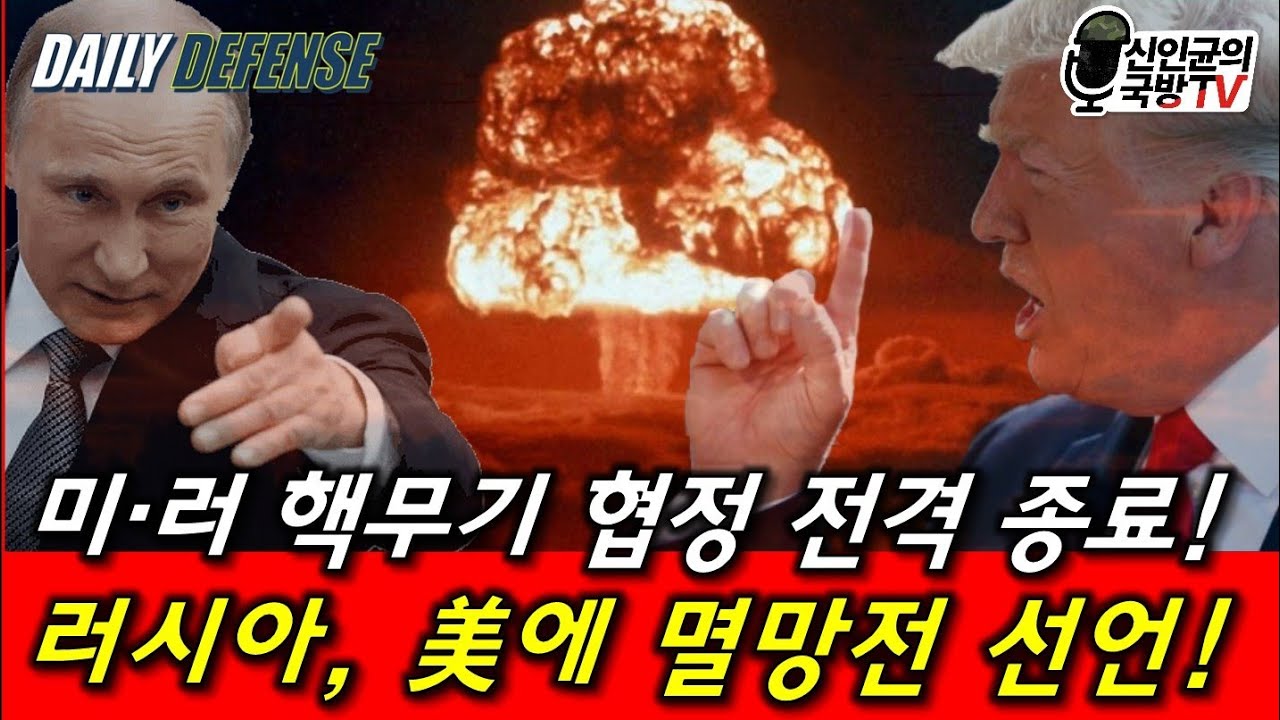
The history of US-Soviet/Russian nuclear arms control began with SALT I in 1972, limiting ABM systems to two per country. START I in 1991 limited delivery vehicles to 1,600 and warheads to 6,000, but Russia failed to fulfill obligations after the Soviet collapse. The New START treaty (2010) limited delivery vehicles to 700 and warheads to 500, but expired in 2023 after negotiations failed. President Trump demanded Russia bring China to negotiations, but both refused. The US announced it would not renew the treaty, ending the last major nuclear arms control agreement.
Click to watch →
Disarmament efforts|International Relations in Hindi Urdu HUM221 LECTURE 25
1.3K
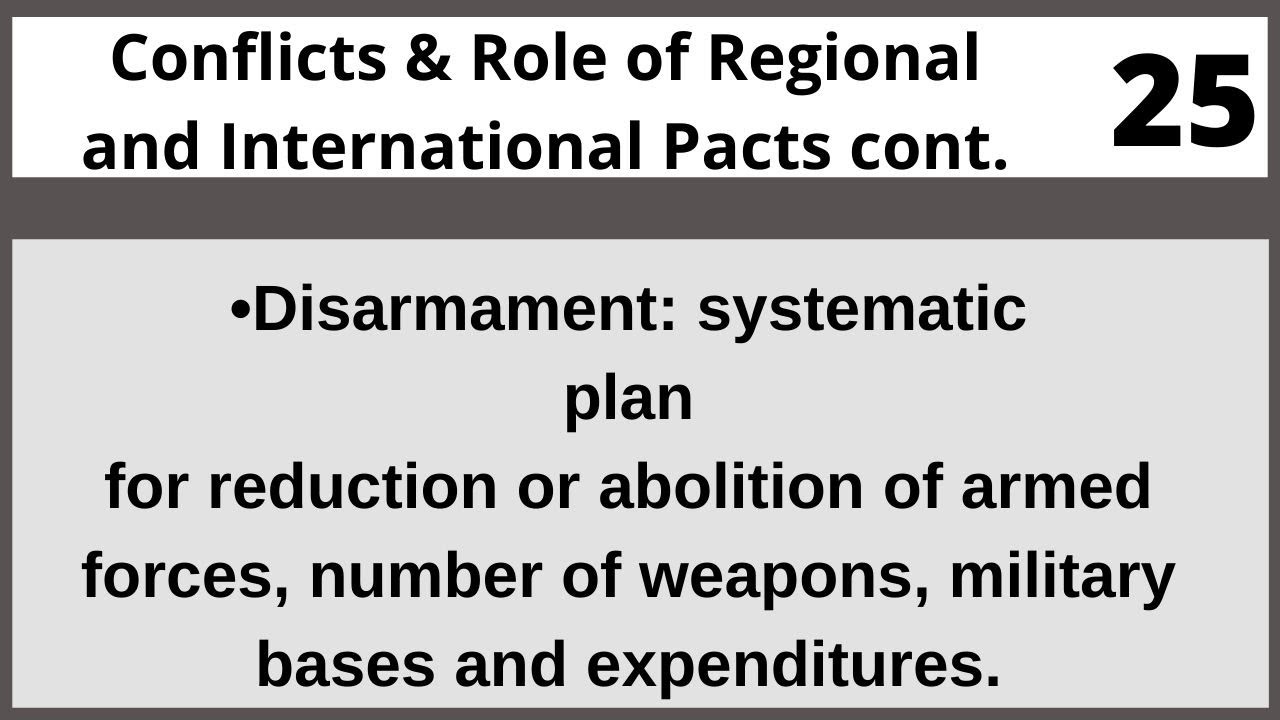
Disarmament is a systematic plan for the reduction or elimination of armed forces, weapons, military bases, and defense expenditures, which differs from arms control (which may allow for increases in arms) by seeking to reduce military capabilities and disturb the status quo. The need for disarmament arises because armament leads to fear, tension, and war, while disarmament promotes peace, confidence-building, and resource savings for socio-economic development. Historical disarmament efforts include the Treaty of Westphalia (1648), proposals by the Czar of Russia (1816, 1898), President Wilson's proposals after WWI, the League of Nations efforts, the UN Office for Disarmament Affairs (1945), the Atomic Energy Commission (1946), the Antarctic Treaty (1959), the Limited Test Ban Treaty (1963), the Non-Proliferation Treaty (1968), SALT I and II (1972, 1979), the INF Treaty (1987), START I and II (1991, 1993), the SORT treaty (2002), and the New START treaty (2010). These efforts demonstrate that security can only be achieved through international cooperation and binding multilateral agreements rather than continued reliance on armaments.
Click to watch →
Deep Dive
Modern-day nuclear geopolitics, including the challenges of contemporary non-proliferation, nuclear terrorism, and the modernization of existing arsenals.

O TRATADO DE PROIBIÇÃO DE ARMAS NUCLEARES - HENI OZI CUKIER | Cortes do Inteligência Ltda.
365.9K
The Non-Proliferation Treaty (NPT) allows the five permanent UN Security Council members (US, Russia, France, UK, China) to possess nuclear weapons while prohibiting other signatories from developing them; however, Israel, India, Pakistan, and North Korea have not signed the treaty, creating significant global security risks as more countries with nuclear capabilities increase the danger of nuclear terrorism and proliferation.
Click to watch →

BREAKING: China SURROUNDS Taiwan, Israel DESTROYS Entire Syrian Military | Enforcer News
230.2K
Russia is upgrading RS-23 Rubes missiles into Arkan missiles, claiming to produce 300 per year (25 per month), though this rate seems financially infeasible given current production capabilities. The Arkan is essentially a rebranded and slightly upgraded version of the older RS-23 missile from the 1980s. Belarus has stated that nuclear weapons moved into Belarusian territory are being operated and controlled by the Belarusian government itself, not Russian nuclear forces, representing a blatant violation of nuclear non-proliferation treaties.
Click to watch →
ДНЯО. НОВОЕ СТАТУС-КВО В МИРЕ. СЕРГЕЙ ПЕРЕСЛЕГИН
159.9K
The Nuclear Non-Proliferation Treaty (NPT), established in the 1960s, faces fundamental inadequacies for the modern world. The US uranium import restrictions reflect broader strategic concerns about nuclear supply chains and domestic capabilities. Kazakhstan's emergence as a potential nuclear state complicates the treaty's framework, as it was part of the Soviet Union—a nuclear state—yet became independent after dissolution. The treaty's asymmetric obligations require non-nuclear states to forgo weapons while nuclear states must reduce arsenals. Post-Soviet nuclear status created legal ambiguity, with Russia claiming treaty succession while Western policies supported Ukraine and Kazakhstan's independence. Creating new non-proliferation frameworks during current geopolitical tensions is nearly impossible, as no neutral country exists to establish new global nuclear status quo. The original NPT aimed to prevent nuclear weapons from triggering catastrophic escalation from regional conflicts, yet the system has only partially succeeded in limiting proliferation.
Click to watch →

Oliver Stone & Peter Kuznick: War Profiteering, Nuclear Tech, NATO v. Russia, & War With Iran
632.7K
Despite international efforts toward nuclear disarmament, all nine nuclear powers are currently modernizing their arsenals, marking the first time since the Cold War peak of 1986 (when global stockpiles reached approximately 70,000 warheads) that nuclear arsenals are increasing rather than decreasing. The United States has committed $1 trillion over 30 years to modernizing its nuclear delivery systems and weapons, with costs now approaching $2 trillion. This modernization involves making existing weapons more efficient and lethal, including development of hypersonic missiles capable of traveling at ten times the speed of sound and evading missile defense systems. The simultaneous modernization by multiple nuclear powers increases the risk of accidental or intentional escalation.
Click to watch →

History of nuclear power - Summary on a Map
5.7M
This final major section addresses the ongoing challenges of nuclear proliferation and disarmament efforts. It covers the Comprehensive Nuclear-Test-Ban Treaty's limitations due to non-ratification by key nations, the emergence of new nuclear states (India, Pakistan, North Korea), and the A.Q. Khan network that facilitated illicit nuclear transfers. The Fukushima disaster (2011) is analyzed as a catalyst for Germany's nuclear phase-out and renewed global safety reviews. The video concludes with current statistics (417 operating reactors, 46 under construction), the Treaty on the Prohibition of Nuclear Weapons' limited acceptance, and the ambitious ITER fusion project representing humanity's long-term hopes for sustainable nuclear energy.
Click to watch →
Origins & Start
H-Bomb Race
Deterrence & End
Origins & Start
0:05- 1
Tracks nuclear competition from 1945, highlighting early US monopoly and USSR's rapid catch-up via espionage.
- 2
Covers atomic bombings and first Soviet test, shifting global power dynamics.
Revisionist Historiography: Atomic Diplomacy and US Responsibility
Traditional narratives often frame the Cold War nuclear arms race as a symmetrical "action-reaction" security dilemma where both superpowers reluctantly sought mutual deterrence. In contrast, the "Revisionist" school of Cold War history argues that the United States bore primary responsibility for initiating and accelerating the race. Scholars like Gar Alperovitz suggest that the U.S. used its early nuclear monopoly not for defense, but for "atomic diplomacy" to coerce the Soviet Union and secure postwar global hegemony. From this perspective, the atomic bombings of Hiroshima and Nagasaki were intended as a demonstration of power to intimidate Moscow, forcing the Soviets to rapidly develop their own arsenal to restore geopolitical balance. This counterpoint challenges the idea of equal blame, portraying the arms race as a product of American aggressive posturing and domestic military-industrial pressures rather than a purely defensive, bilateral struggle.
The geopolitical outcome of World War II, specifically the emergence of the United States and the Soviet Union as rival global superpowers.
The core ideological differences between Western democratic capitalism and Soviet communism that fueled mutual distrust.
Basic scientific concepts of nuclear physics, particularly the difference between nuclear fission (used in early atomic bombs) and nuclear fusion (used in thermonuclear weapons).
The historical significance of the Manhattan Project and the subsequent atomic bombings of Hiroshima and Nagasaki in 1945.
The strategic doctrine of Mutually Assured Destruction (MAD) and how it prevented direct military conflict between the superpowers.
Major Cold War flashpoints where nuclear tensions peaked, most notably the Cuban Missile Crisis of 1962.
The history of international arms control and disarmament efforts, such as the Nuclear Non-Proliferation Treaty (NPT) and the Strategic Arms Limitation Talks (SALT).
Modern-day nuclear geopolitics, including the challenges of contemporary non-proliferation, nuclear terrorism, and the modernization of existing arsenals.
69.5K views389likes5:38@zacksstuffOriginal Release: 2017-03-28
A nuclear arms race.
Two global superpowers, locked in a fight for nuclear domination.
Between the years of 1945 and 1991, the United States and the Soviet Union built over 100,000 nuclear weapons, each side trying to achieve nuclear dominance over the other.
This was… The Cold War.
The Nuclear arms race began in 1945, after the first successful test of the atomic bomb, Trinity.
On July 24, 1945, Soviet leader Josef Stalin was officially briefed on the existence of the atomic bomb at the Potsdam Conference.
Two weeks later, atomic bombs were dropped on the Japanese cities of Hiroshima and Nagasaki, ending World War II.
At this point, the Soviet Union did not yet have the bomb, but that was about to change… On August 29, 1949, the Soviet Union detonated its first Atomic Bomb.
This shocked the Western world, who had believed that the USSR would not have the bomb until the mid-1950s.
The source of their success was soon discovered: Soviet spies operating inside the Manhattan Project.
Now that they were no longer the only nation with the atomic bomb, the United States set its sights on the next phase in nuclear weaponry: the hydrogen bomb.
On November 1, 1952, the United States detonated its first hydrogen bomb, with a yield 20 times greater than any traditional fission bomb.
August 1953.
The Soviet Union explodes its first thermonuclear bomb.
March 1, 1954.
Castle Bravo.
The biggest bomb ever detonated by the United States.
14.8 megatons.
The equivalent of 14.8 million tons of TNT.
This battle for the biggest bomb continued for several years, culminating in 1961.
On October 30, 1961, the Soviet Union detonated Tsar Bomba.
With a yield of 57 megatons, this was the most powerful nuclear weapon ever detonated, and the largest human-made explosion in history.
However, by this point in the arms race, focus had shifted to intercontinental ballistic missiles, capable of delivering multiple-megaton nuclear warheads to targets thousands of miles away.
The introduction of ICBMs brought about a new era of the Cold War: mutually assured destruction.
If either side had launched nuclear missiles, the other would retaliate, and both countries would be obliterated.
Through the 1960s and 1970s, both nations expanded and upgraded their missiles and warheads.
Thankfully, none of these weapons were ever used.
By the end of the 1980s, the Cold War was coming to a close, and the arms race was ending.
The United States and the Soviet Union signed several nuclear disarmament treaties, and both sides began to reduce their nuclear stockpiles.
In 1991, the Soviet Union dissolved, and the Cold War was finally over.
Up Next

115:06
The Bomb: History of Nuclear Weapons Documentary Analysis
@documentaries2u447
1.4M views•2017-09-03

33:02
The Great Schism of 1054: Causes and Consequences
@SacredCathedrals
113.5K views•2026-02-19
91:57
The Geopolitics of the Ukraine War and the Rise of Global Autocracy
@JordanHarbingerShow
468K views•2025-04-19

17:05
Understanding the Cold War: Superpower Conflicts and the Road to Détente
@OverSimplified
46.1M views•2019-01-24
Related Study Plans & Knowledge Roadmaps
Structured learning paths in History
history
Byzantine Iconoclasm: Theology, Art & Politics
01Foundations of Byzantium and Early Christian Images
02The First Iconoclasm: Leo III and the Crisis of Images
03Empress Irene, Nicaea II, and the Second Iconoclasm
+ 2 more learning modules
9h5 modules
Explore Roadmap
history
Iranian Revolution (Causes, Events & Legacy)
01The Pahlavi Dynasty and the Roots of Discontent
02The Spark of Rebellion and the Rise of Khomeini
031979: The Fall of the Shah and the Climax of the Revolution
+ 2 more learning modules
8h5 modules
Explore Roadmap
history
Mali Empire: Mansa Musa, Trade & Timbuktu
01Foundations of the Mali Empire
02The Trans-Saharan Gold and Salt Trade
03The Reign and Pilgrimage of Mansa Musa
+ 1 more learning modules
6h4 modules
Explore Roadmap
history
1947 Partition: Politics, Borders & Legacies
01Foundations of British India and the Divide
02The Political Negotiations and the Mountbatten Plan
03Drawing the Boundary: The Radcliffe Line
+ 2 more learning modules
8h5 modules
Explore Roadmap