


















In Einstein's theory of relativity, mass is not constant but increases with velocity according to the equation m = m₀γ, where γ is the Lorentz factor; this leads to the fundamental relationship E = mc², which shows that mass and energy are equivalent and interchangeable, explaining why objects cannot reach the speed of light and why nuclear reactions release enormous amounts of energy.
Mass, Momentum, Energy: Einstein’s Relativistic Mechanics
Added:Newtonian Mechanics: Fundamental definitions of classical mass, momentum (p = mv), and kinetic energy as a baseline for comparison.
Einstein's Postulates of Special Relativity: Specifically the constancy of the speed of light (c) in all inertial reference frames.
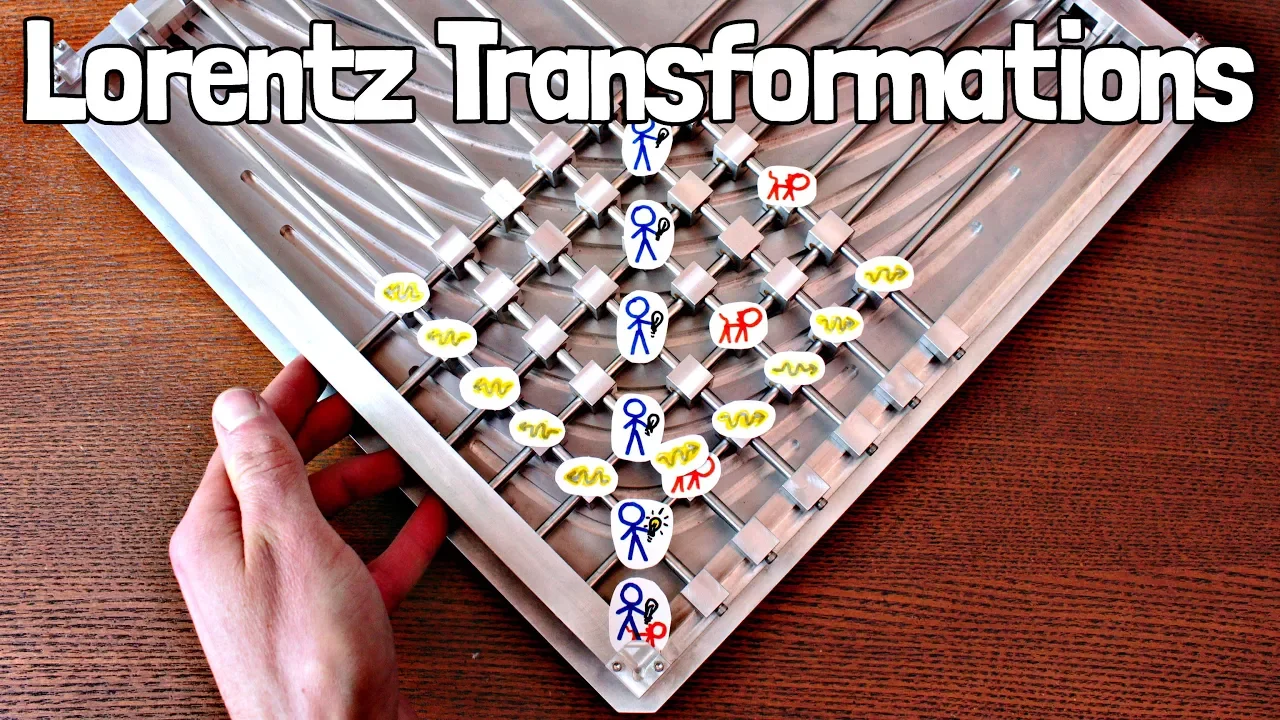
Lorentz Transformations: Understanding the gamma factor (γ) and how measurements of time and space change between moving observers.
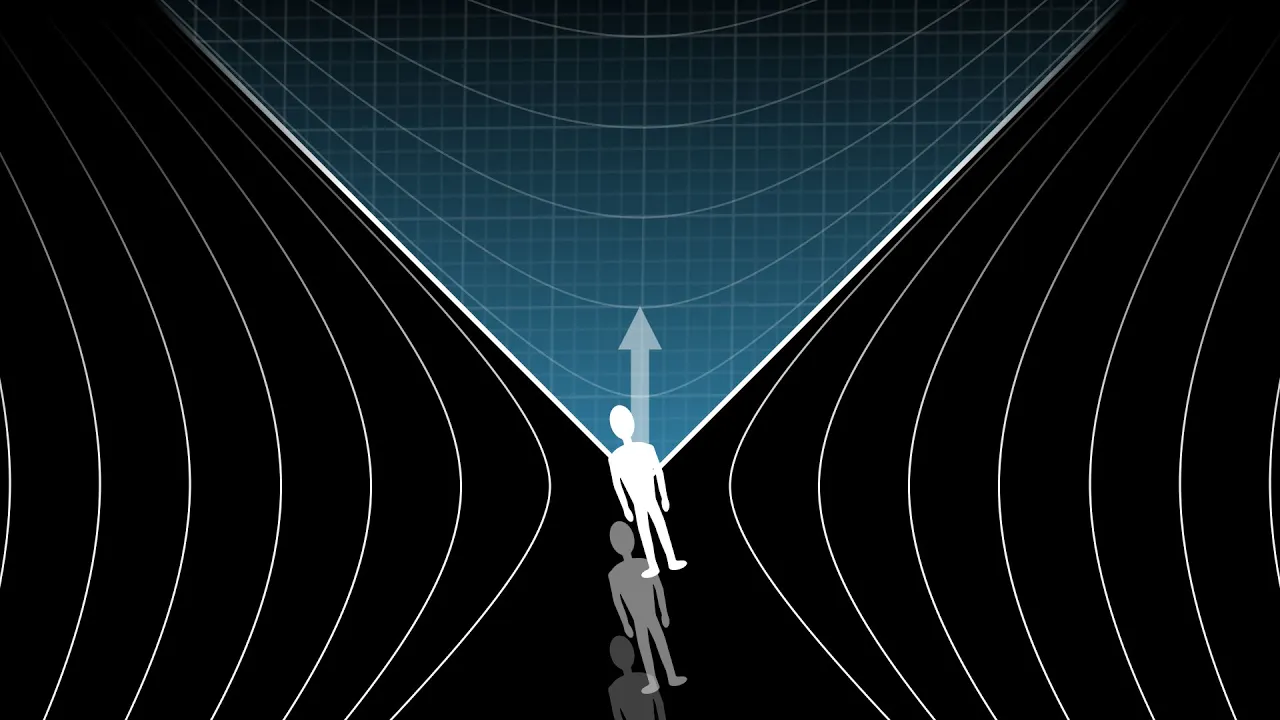
Four-Vectors and Spacetime Physics: Unifying energy and momentum into a single four-vector (energy-momentum vector) in Minkowski space.
Relativistic Particle Collisions: Analyzing high-energy physics interactions, threshold energies, and particle decay in accelerators.
Nuclear Binding Energy and Mass Defect: Applying E=mc^2 to explain energy release in nuclear fission, fusion, and stellar nucleosynthesis.
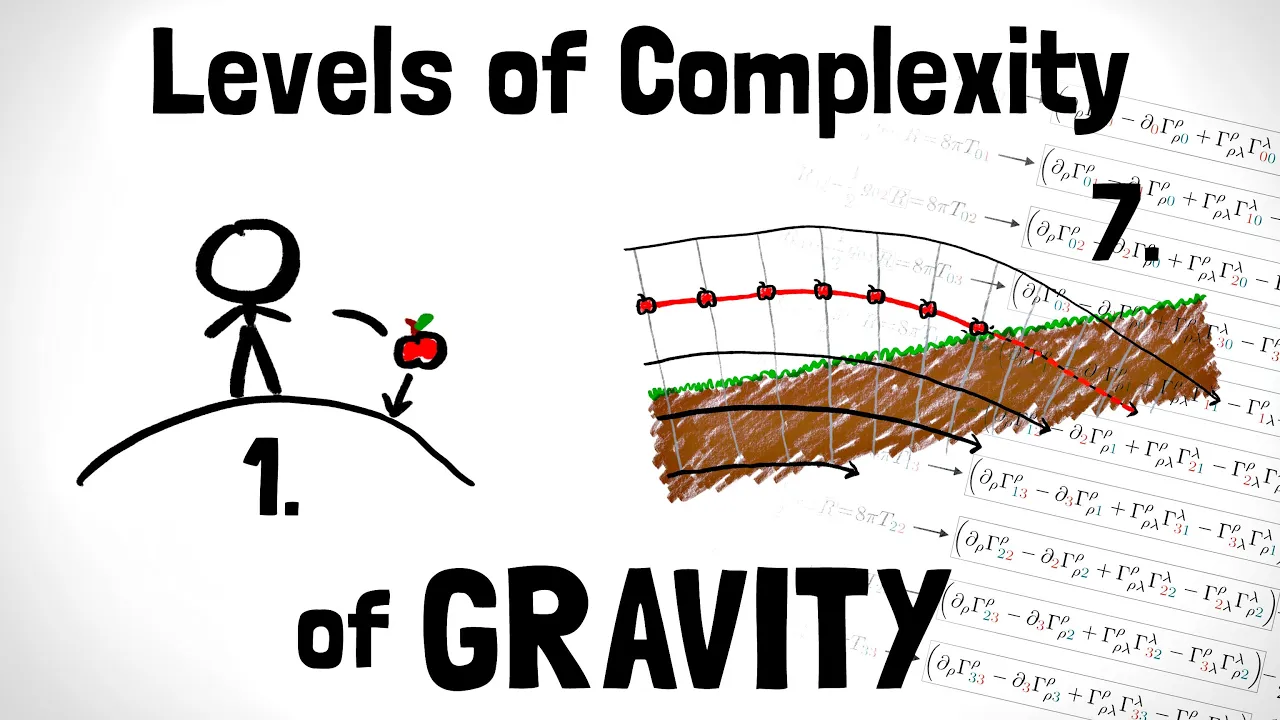
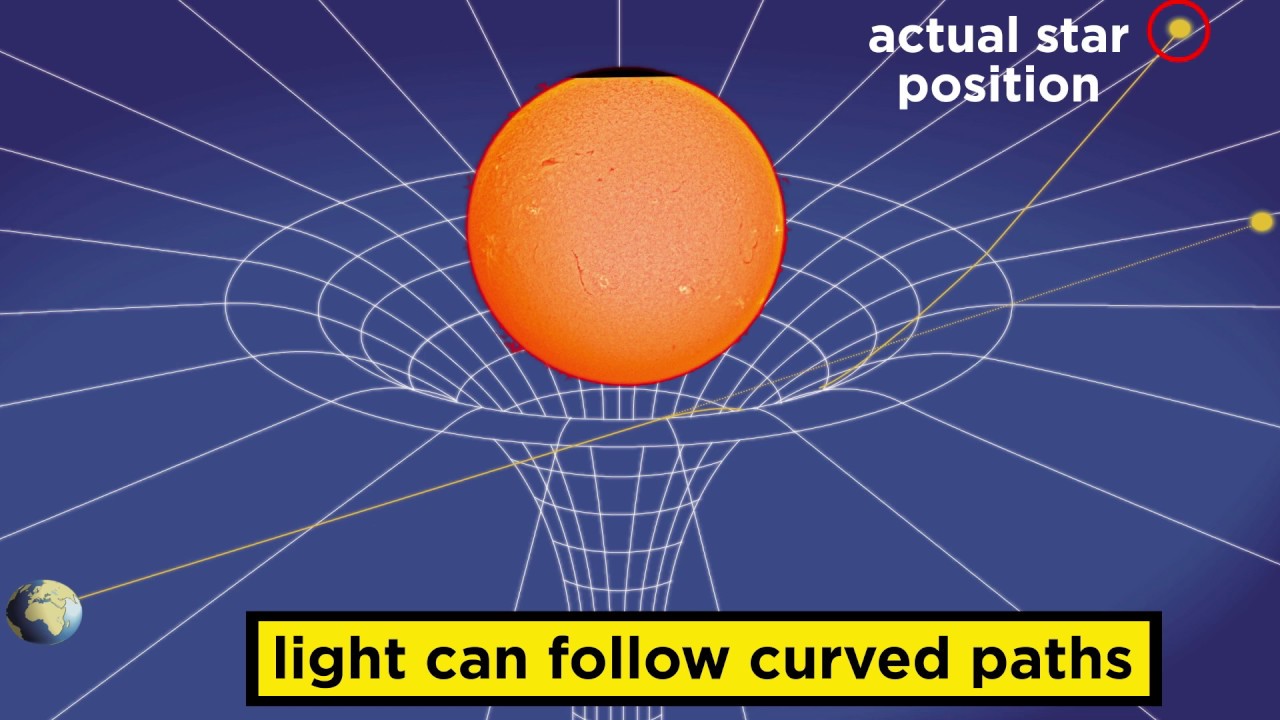
General Relativity: Exploring how mass-energy equivalence dictates the curvature of spacetime to create gravity.
48.9K views637likes28:46Original Release: 2016-12-19
[Music] foreign [Music] thank you thank you [Music] as a young physicist in 1905 Albert Einstein gave the world something special the theory of relativity a half century later in 1955 the year of Einstein's death they're here it's really good the United States is rapidly turning its attention away from a war and the devastating effects of the atomic bomb and toured a future bright with the promise of a peaceful atom two for the creature is it scary my grandmother Einstein's ideas have progressed from Theory to reality and in 1955 popular imagination is soaring to science fiction and worlds beyond my dad's okay and as the Creature from the Black Lagoon lurks and the Celluloid dips a young physicist to be makes his way to the local theater where Destiny awaits he is about to encounter Einstein's great ideas for the first time [Music] foreign [Music] ER a time for the fall classic once again as World Series fever spreads Across America in 1955 may prove to be the year of the bombs and that's nothing to cheer about in The Bronx so let's pick up the action at Yankee Stadium Village and Johnny finally makes the throw to first after the ball stuck in his glove and the Dodgers are only one out away from their first world series title Padres looks like the coolest person in the stadium Elston Howard sends a ground at a pee wee reach and these Dodges at last our world champion Delirious with joy teammates and fans mob the Brooklyn pitcher and wild acclaim Clubhouse is the pandemonium only a great Victory can generate and setting the zany pace of Gil Hodges Luke Snyder and Don Newcomb this is Brooklyn's greatest baseball day newspapers straight to Tiny Brooklyn Bridge goes to topsy-turvy at this Monumental event meanwhile on the other side of the tracks amateur athletes are already working toward victory in next year's Olympic Games in Melbourne Australia is down under but these Olympic Opals are already up for the games but the Melbourne Olympic trials weren't the only games being played in 1955.
just down the street from the Lido at the legendary chalkies billiard Academy there are things going on in the shadows that even the Creature from the Black Lagoon shouldn't know about [Music] at the moment Bertrand the machine gun Berkowitz is fighting to retain his crown and both the high and low rollers are going for Brooklyn not surprisingly the champ resorts to every trick at his skilled and highly polished fingertips [Music] however under the watchful eyes of the referees not even the machine gun can break the rules at least it appears on the surface that some rules simply cannot be broken they're Isaac Newton's Laws of classical mechanics and at least until Albert Einstein came on the scene they'd been firmly in place for the past 300 years [Music] according to Newton's first law a ball won't come to rest unless something stops it [Music] his second law which remains equally unbreakable explains how a ball can be stopped and at the same time how a ball can be started foreign the momentum of a billiard ball or anything else is equal to mass times velocity and the momentum is changed only if a force is impressed upon the ball [Music] but when two balls Collide the force on one ball is equal and opposite to the force on the other foreign and so the changes in momentum are also equal and opposite [Music] that's why the total momentum of both balls remains constant [Music] [Music] and although machine gun Berkowitz might not know or care momentum would continue to remain constant even in Einstein's theory of relativity [Music] Bill Haley in the Comets have climbed to the top of the charts with their new hit single Rock Around the Clock in the world of film there's sad news millions of adoring fans refused to accept the fact that James Dean is gone but on September 30th the rising star of 1955 Fell In Flames and as moviegoers mourn the loss of the Rebel Without a Cause the world over has reason to Bid Farewell to everyone's favorite professor with Albert Einstein's death said his friend and colleague I I Robbie a great light has gone out in the world of physics many knew him for the warmth of his friendly personality his kindness and his Rich sense of humor though Einstein's gone the power of His ideas which changed the very meaning of time and space will surely play a role far into the future and the game of space Builders played in the far future can illustrate one of its more powerful consequences foreign like his old friend Henry gets around it nearly the speed of light and like the boy's shooting pool on earth Albert and Henry play their game strictly by the rules [Music] for example especially in outer space it's easy to see that nothing is really ever at rest [Music] the difference between moving and standing still depends only on who's doing the looking but no matter who's looking Albert and Henry head toward each other at nearly the speed of light [Music] and at the critical instant Albert tosses his ball upward to Coast off into space [Music] Henry likewise launches his identical ball at exactly the same speed foreign just right the balls Collide in space and each returns to its owner [Music] to make that happen Albert sent his ball up with velocity U sub a [Music] and at the same instant Henry sent his down with the velocity use of H [Music] with perfect timing they were on a collision course and sent each one right back where it came from [Music] Chuan had changed its velocity by an equal amount in the opposite direction so with identical masses the changes in momentum were as equal and opposite as they would have been back at chalky's billiard parlor [Music] at least that's how it looked from one point of view that all serious critics of the game know that it takes a space-time diagram to see things in proper perspective The Spectators may have seen these events this way but from Albert's point of view it's a whole new ball game [Music] with Henry firing first and Albert's ball bounces back to Albert long before Henry's gets to him [Music] in other words from Albert's point of view Speedy Henry first got the game going while Albert waited at Rest For The crucial incident to launch his billiard ball into space [Music] the game takes Exquisite timing because from Albert's point of view Henry's billiard ball takes longer than his own to get down to the collision and back up to the ship foreign [Music] the same thing could happen to two balls colliding on a pool table it would seem as if the blue ball were more massive because it doesn't get deflected as much as the tan ball [Music] can that be true quantitatively in Albert's frame Henry's ball was launched at velocity U Prime sub h while his own drifted straight upward at U Prime sub a [Music] in the Collision each one changed its velocity but at least from Albert's point of view not by the same amount so in order to have the same change in momentum Henry's Speedy ball acts as if it has a larger Mass but what is mass and how can it change with speed [Music] writer's number is strong into the Coliseum for the 42nd National automobile show is being held in New York for the first time in 16 years and as if to make up for lost years the show is saved on a lavish scale the power of Plenty is represented here my name new engines and power accessories Galore on the 124 makes and models the slave the cars are longer and lower than ever this year too thanks in part to the smaller 14-inch Wheels most of the 51 million Passenger cars in use today seem drab and boxy stacked up against these new extreme boats I am the Dreamboat class this one is everything for the busy executive late work worthwhile there's a trend of the sporty and more colorful Detroit's designing Geniuses keep pace for the nation the American Automobile may be massive but even a weightless spacecraft has a certain Mass according to Newton's law mass is what relates Force to acceleration [Music] so to start with mass is a measure of how hard a body resists a change in velocity for example a car puts up more resistance than a billiard bomb the ball at rest resists a change in velocity less than a ball in motion [Music] particularly when it's traveling at nearly the speed of light according to the theory of relativity the mass of any moving object depends on how fast it's moving the mass m is equal to rest mass m Sub Zero times the factor gamma [Music] so throughout the Universe Mass like time and distance depends on one's point of view in other words an object's Mass depends on its speed [Music] there's a new television show for the little ones on the Columbia broadcasting system in this fall it's called Captain Kangaroo and this week kids of all ages are speeding on mass to Walt Disney's newest attraction in Southern California [Music] welcome to this happy place welcome Disneyland is your land here Aid relives fond memories of the past and here you may Savor the challenge and promise of the future Disneyland is dedicated to the ideals the dreams and the hard facts that have created America with the hope that it will be a source of joy and inspiration to all the world thank you [Applause] Disney had to mortgage his home and life insurance but it looks like the gamble will pay off in the future already at hand on the scientific front the future is now in Berkeley California Ernest o Lawrence is already turning Einstein's theories into reality and the bevatron when finally completed should be able to propel modern physics well into the 1960s inside the machine powerful electromagnetic fields will accelerate tiny particles faster and faster and finally they'll smash into other apps from other flying pieces but wait since such machines push the particles faster and faster will they ever reach the speed of light no and here's why inside any accelerator electromagnetic fields exert force on a tiny ion [Music] this Force increases the ions momentum M times V so the speed increases but as an object's speed increases its mass also increases as it becomes more massive it becomes harder and harder to make it go faster the ions momentum and its energy keep increasing but its speed never reaches the speed of light no matter how hard it's pushed [Music] pushing a body increases its momentum not only by increasing its velocity but also by increasing its mass [Music] but what about a body's energy anytime a force does work on a body or a body does work on an object kinetic energy is increased [Music] and increasing the kinetic energy of an object also increases its mass foreign [Music] the work done on the body is equal to the force integrated over the distance through which it moves that work turns into the body's kinetic energy [Music] Force changes momentum [Music] momentum depends on mass which also changes with speed [Music] so kinetic energy may be expressed as an integral overchanging speed from rest until the force stops pushing [Music] the result looks more complicated than it really is at low speed K is one half the mass times the velocity squared but at higher speed the curve for increasing Energy starts to look just like the curve for increasing Mass [Music] foreign the equation shows why at any speed the kinetic energy is equal to the change in mass times c squared since M Sub 0 is the mass of the body at rest the quantity M Sub 0 c squared is called [Music] the rest mass energy foreign adding the kinetic energy to the rest mass energy gives the total energy of the body and there it is E equals m c squared in the theory of relativity energy and mass are one and the same thing but if added energy adds Mass does an object yield some of its mass if it loses energy Einstein said it does and it does for example inside the sun nuclear reactions reduce the Sun's mass by billions of kilograms every minute as it radiates energy into space [Music] [Music] from the first moment man unleashed the power of the sun on Earth mankind itself has lived under a cloud of potential devastation but today scientists are learning to detain the mighty atom and to channel its power toward peaceful lands at the United Nations assembly last week President Eisenhower Rose to the new challenge of Atoms for Peace against the dark background of the atomic bomb the United States does not wish merely to present strike but also the desire and the hope for peace [Applause] and in such capable hands nuclear energy can work toward peaceful and almost Limitless possibilities those possibilities start to take shape when a Uranian atom with a certain rest Mass breaks up into fragments with a lower total wrist Mass that small difference in Mass equals an enormous amount of energy and that energy can show up in a variety of uses [Music] last month Arco Idaho became the first city in the world to be lit by atomic power where when and how it will end it is still a matter of speculation and a concern of the scientists of tomorrow [Music] foreign but no matter where it ends it all began with Albert Einstein [Music] playing by the rules Einstein discovered that mass changes with speed [Music] and that mass itself must therefore be one and the same with energy thank you obviously in 1955 the atomic age has arrived [Music] [Applause] foreign [Music] foreign [Music] [Applause] [Music] [Applause] foreign foreign media for information about this and other Annenberg media programs call 1-800 learner and visit us at www.learner.org [Music]
Up Next

27:40
How Einstein Derived E=mc²: Intuitive Explanation
@Mahesh_Shenoy
527.3K views•2023-12-01

12:53
21cm Hyperfine Transition in Neutral Hydrogen: Radio Astronomy Basics
@AaronRobertParsons
12.4K views•2011-10-13

32:32
NMR Spin Physics I: Zeeman Effect, Resonance Condition & Larmor Frequency
@nptel-indianinstituteofsci8064
2.3K views•2024-01-17

27:14
Entropy and the Second Law of Thermodynamics Explained
@veritasium
27.5M views•2023-07-01
Related Study Plans & Knowledge Roadmaps
Structured learning paths in Physics
physics
Nuclear Physics (Decay, Fission & Reactors)
01Atomic Structure and the Binding Force
02Radioactive Decay and Half-Life
03Nuclear Fission Mechanics and Chain Reactions
+ 2 more learning modules
12h5 modules
Explore Roadmap
physics
Soft Matter (Polymers, Colloids & Rheology)
01Foundations of Soft Matter & Thermal Forces
02Polymer Physics and Macromolecules
03Colloids, Surfactants, and Self-Assembly
+ 2 more learning modules
38h5 modules
Explore Roadmap
physics
Analytical Mechanics: Lagrangian & Hamiltonian
01Mathematical Foundations: Calculus of Variations
02From Newtonian Mechanics to Constraint Dynamics
03The Principle of Least Action & Lagrangian Mechanics
+ 3 more learning modules
28h6 modules
Explore Roadmap
physics
General Relativity (Spacetime & Cosmology)
01Foundations of Relativity: Special Relativity
02The Geometry of Spacetime: Equivalence Principle & Curvature
03Einstein's Field Equations: The Mathematics of Gravity
+ 2 more learning modules
55h5 modules
Explore Roadmap