























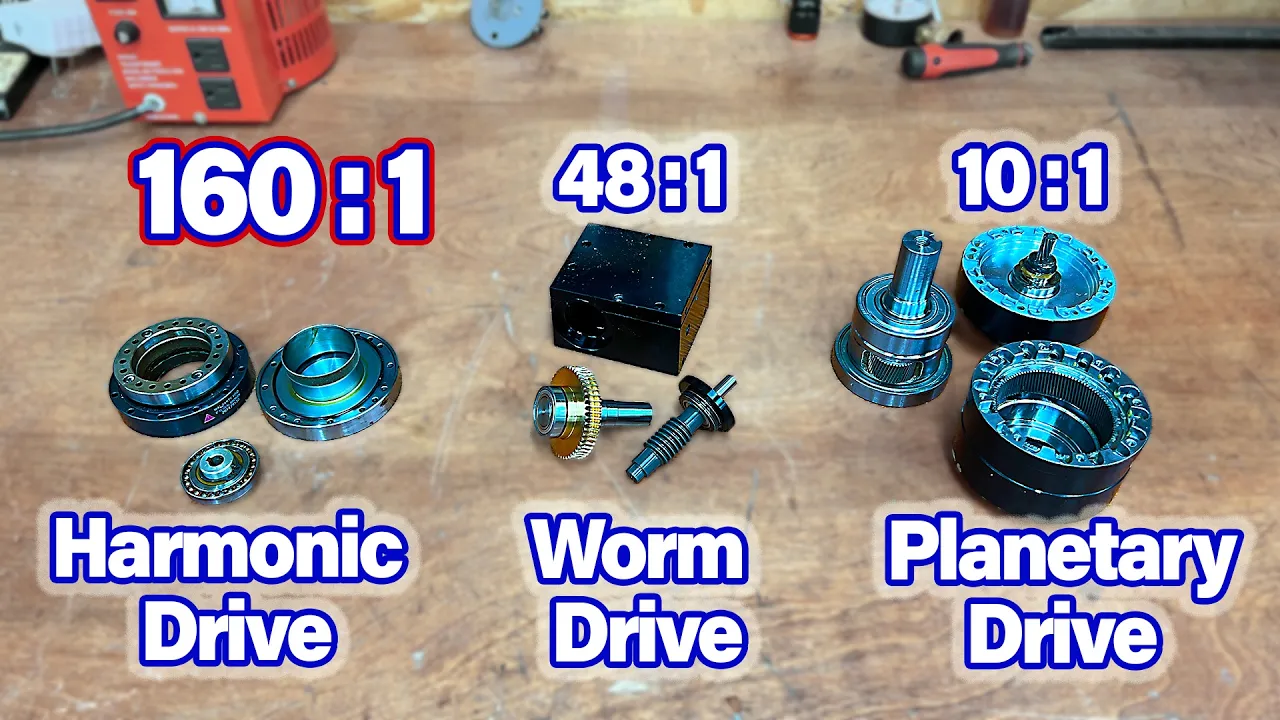
Gearboxes are essential mechanical components that modify speed and torque, with three main types serving different purposes: worm gears provide 90-degree angle changes and high reduction ratios (1:30 to 1:10) but suffer from low efficiency (70% or below) and heat generation; planetary gearboxes offer high torque density and alignment advantages but require complex hollow ring gears; spur gears are cost-effective but have more backlash. Gear tooth design significantly impacts performance, with helical gears being quieter than straight gears due to smoother tooth engagement, while herringbone gears eliminate axial forces but are difficult to manufacture. Gear failure modes include wear, pitting, and tooth breakage, which can be mitigated through material hardening and proper tooth geometry. The module system standardizes gear sizing, with larger tooth counts providing more comfortable operation and better load distribution.
Understanding Gearbox Types: Worm, Planetary, and Spur Gears
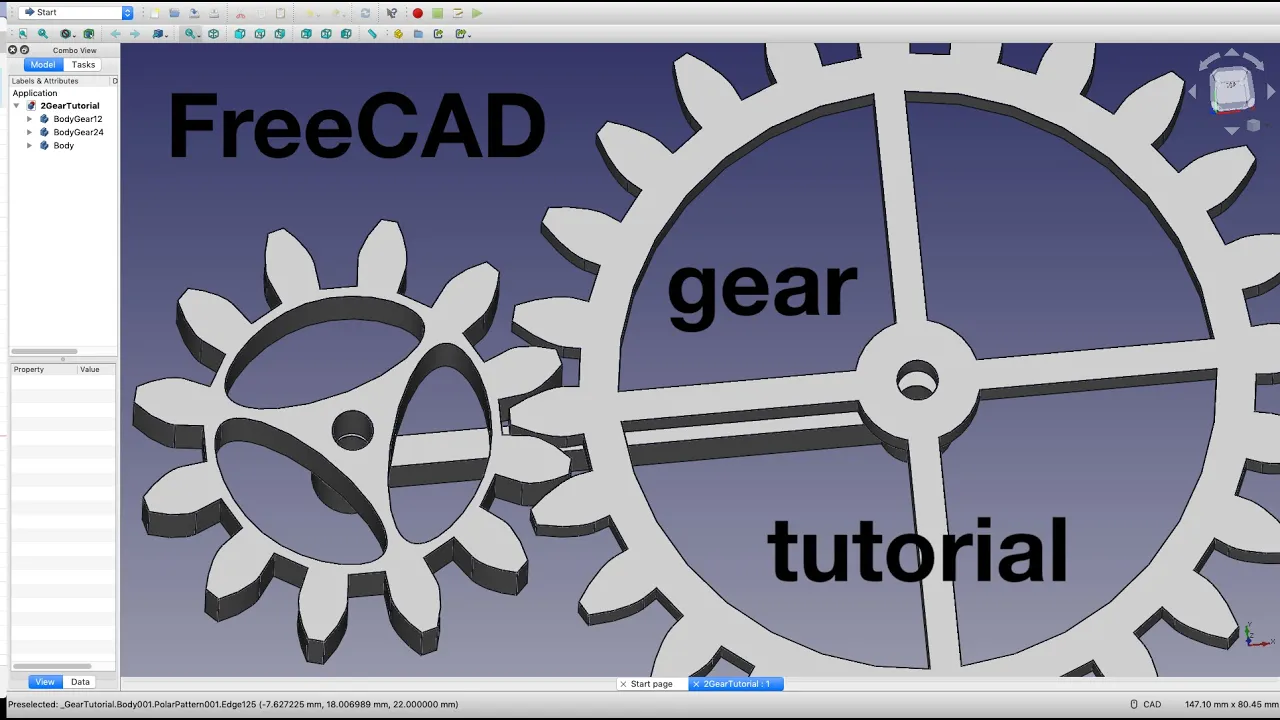
Added:hello ladies and gentlemen it's again Alexis from tailored motor TV and this time I want to talk to you about gears because we want to offer gearboxes in combination with the motor to have the perfect solution so I spent some of my time in the past thinking about gears and I tried to recap that for you and inspired by all those YouTubers I started preparing myself through videos and drawing new stuff on a whiteboard so it's maybe easier for you to understand three basic types of gearboxes we want to use and also the I think most common used in the industry or we have the wound gear where we have a screw turning in this direction and moving a big wheel like this it's the only one that has 90 degree angle in it usually you see that on why promoters and many mechanisms where you need a slow output the worm gear is a good solution a planetary gearbox excuse my drawing I will edit in a better picture of a planetary gearbox is widespread in robotics has the advantage that you come in exactly aligned to the output so it's just another cylindrical gearbox you add to your cylindrical motor everything allows nice aligns nicely so that's the advantage of the planetary gearbox and we have the simple Spirit gearbox probably one of the easiest one when we come in on now if we want to reduce the speed which is usually what you want to do with an electric motor because the electric motors can always spin faster if you adapt the road to design to to bear that forces but slow slow and high slow turning high torque electric motors are usually way more difficult to build so usually you reduce by using your gearbox so you come to a your opinion to a large one again to a small and to a large one so we have two stages here of of Gears aligned behind each other and so that's the classic spur gear and usually you come out at another place that where you come in from from a user's point of view the wound gear has the big advantage of really making a big reduction especially if you have a one pass wound you can make a really big reduction step in just one stage of gearbox which the backdrop that you usually lose some efficiency I mean if you make a one pass warm gear you are at 70 percent or even below 70 percent efficiency so you produce a lot of heat just in the gearbox planetary gear has the advantage if you look at this maybe a little bit better image the planetary gearbox has the advantage that you have three gears transmitting the power from from one side to the other or the central gear also is in interaction with the other gears at three points so you can transmit more torque if your gear is close to having no backlash I mean if you have too much backlash two of these wheels will be idling while the next one is doing all the work but you can also because you have these three in interaction you have the statistics helping you to reduce the backlash the inconvenience of this gear is that you need an outer Hollow gear uh where these three planets of the planetary gearbox are running in and this hollow Gear with the tooth inside is way more difficult to manufacture than if you have the tooth on the outside the spur gear yeah as I said has usually a little bit more backlash than the planetary gear and is a bit a bit larger you you don't get that torque density but you don't have the inside teeth of the gear and the hollow T the hollow gear so it is usually more cost effective cheaper to manufacture and from the one gear the Everything Changes with the warm you have usually you want to to go to a as big as possible warm wheel but of course you're somehow limited and so because the larger the gears that's a general rule about gearboxes make the gears if the gears have a lot of teeth they are easier to manufacture and they are more comfortable the the two the gears are more comfortable in operation than if you make them too small and so here too usually you you will have about minimum of 20 teeth on on that secondary gear on that warm gear that I I will explain later but suppose we have here 20. we have here 20 teeth oh no let's take 30. 30 teeth right and so on this you have 30 teeth we have a one pass one pass worm which means at every turn of the worm womb we make one tooth on on the secondary on the output gear which then makes us a 1 2 30 reduction right now if you have a two pass wound which means that we have two two spirals two screws going over the length and if we look from the front we will see two starting points so that's the starting point of the red screw and that's the starting point of the blue screw and after half a circle the blue screw disappears under the start of the red screw and so if we make one turn here we move we move our secondary output gear uh by two teeth so we get a reduction from two to Thirty which is one two to 15.
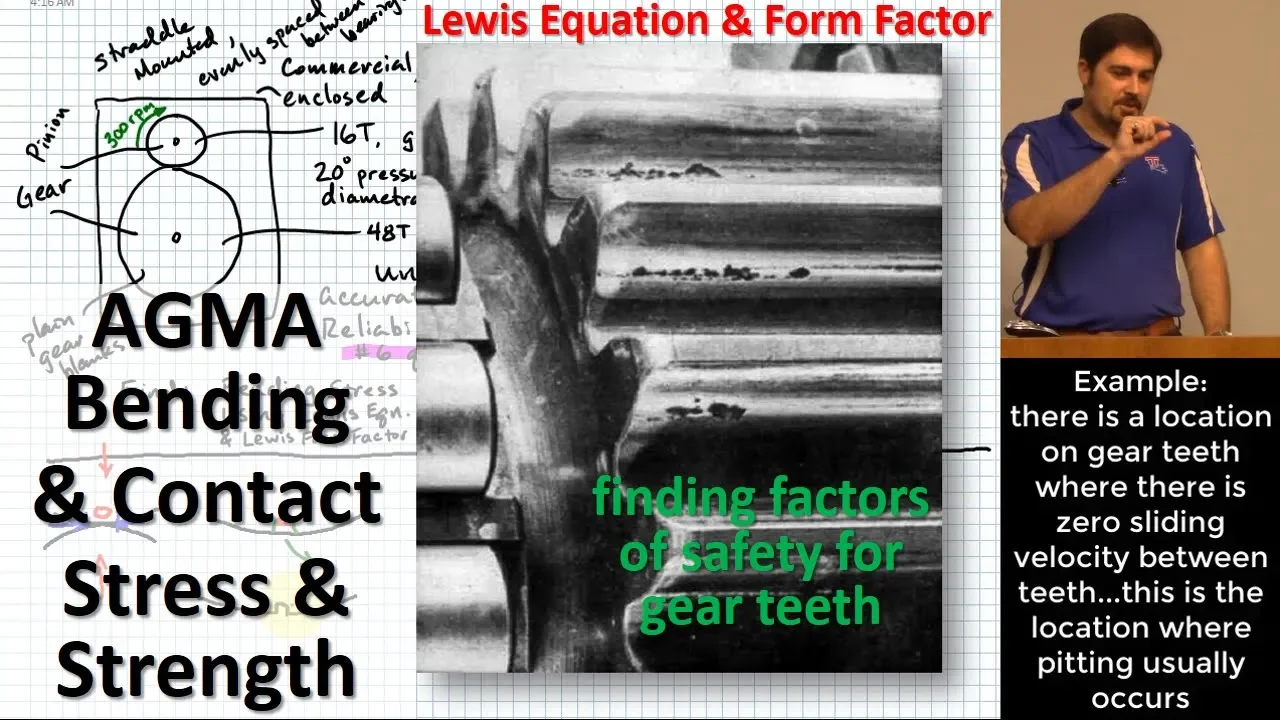
of course we can do the same with three and with four passes and so here we get 1 to 10 and here we get one to seven point five reduction um you usually can't make more than four passes or four starts of of your warm because the the different passes come too close to each other and you don't have enough flesh to really make a strong tooth and have the teeth in in between so even four passes is not too common the efficiency becomes better the higher you go because you you have a steeper angle so here you have very flat angle and it becomes steeper and steeper the more starts you have on your screw it's not exactly visible on my drawing but it's it's understandable because if you have to pass by the two order starts with this you have to have a you have to go steeper and that reduces your losses so it becomes more efficient which also has one inconvenient if you want something that automatically stops if you stop your motor if you have a one pass wound gear you stop the motor you will not be able to to put to turn your um your warm wheel your output side it will block itself and that can be a safety feature can be very useful for what you are doing but that shows you the inefficiency of the gearbox that's that's the friction you generate and the that generates losses for pass you can turn it backwards so you can turn on the output side and usually you will turn the motor in a faster way depending on the materials you have and how much cogging you have on your motor of course and and how big is the the reduction that the reduction factor which means how many keys you have on your warm wheel for the planetary gearbox here I have it again from the front side I think a quite common way to use it as a reduction is that you have the inner one as an input and you have the three outer one 's that that are running around so they will move in this direction like that running around with with the teeth of the hollow gear outside and then you have a kind of cross going over these three concentrating that power into a shaft that comes to the outside and that makes you one stage of course you can concentrate this power onto a shaft which again goes to a sun wheel usually you call this the Sun and this around we call this the planets because they're revolving around so you get the force out of the planets put it into the next sun and it and then you can make a multi-stage planetary gearbox which of course will also add up your backlash but in some cases this is totally acceptable uh if you make Aspergers you have three ways of making the gears themselves which also applies to to the planetary gear I mean the the planetary gear is is just a special case of of a spur gear and so the easiest way to make teeth on on Gears is straight teeth which has the advantages simple to make and you have all the forces straight and perpendicular to the axis so if that's the axis you have to force exactly in this direction if here we have the axis if we go helical the force will be always perpendicular to the tooth right because the tooth only can push into the direction of of his on the normal direction to his surface and so you get a force that that pulls on your shaft uh or pushes on your shaft depending and that force of course you have to catch it with the housing and that's more work and more complex but it has a great Advantage it's way more quiet to have a helical gear than to have a straight gear I'll come back to that to avoid that problem of having one force pulling on on the gears very early the herringbone gear was invented which is basically a left and the right helical gear in one gear the first manufacturer in France building this was c2n so maybe you know the c2n logo which is like that that's the Citroen logo you see on the in front of the cars and that came from that gear design and situan by the way made a gearbox with this design for the Titanic funny historical facts around this but this one is very difficult to manufacture now let's go back to why does it make noise why does a straight if you have a straight gear let me show you with these two pens you come on the gears touch each other over the whole line and have to to go past each other and that at every tooth touching the next one makes you a hit and in all the cars stick shift cars when you had the reverse gear and you draw drove reverse with some speed you hear that kind of singing of the gearbox you don't hear if you go forward it's because the backward gear is straight and the forward gear is helica because if you are helical you your teeth will meet like this and will touch at one point and glide like this which which is way smoother it's way smoother to operate and that's why most most of the gearboxes have helical gear to avoid noise if if you build a race car though if you build a race car you make straight gears because noise you don't care about noise there are great videos on YouTube where you really hear that straight gear singing in inside the car besides the fact that you also have a very loud motor so you don't care and you can make everything lighter and easier so in on a race track you don't care but in most other cases if you have normal cars driving around if you build robots if you build um at least a medium quality household device you will use helical GEOS to avoid the noise now about the manufacturing and why is herringbone so difficult to make usually you cut your gears using this kind of cutter on a CNC mill and if you have a large cutter you have large teeth and you make a large tip and so if you have this disc you can cut your gear like this you rotate your gear one step at a time and you drive through like this and you cut your teeth here even easier you cut your teeth like this if on the herringbone you want to cut like this you will destroy the other half of the herringbone so one option is instead of having your discs turning like this you have a very small cutter that goes like this inside the tooth and cuts the small culture of course has smaller teeth and the smaller teeth make smaller chips and we have less teeth that's the second point I mean on this I just drew four but you can imagine you have way more teeth on this around than here so it's you just get more material out another way to make a herringbone is to to have just one tooth and go back and forth let me check what was the name again the official yeah a blow like a plume so like a plow a snow plow or or whatever blow on the field you just have one tooth move that back and forth and produce the chips so you can move it in to the middle here and then you move it out that you move it in and you just get one shape at a time that's very slow it's very Zen to watch I've seen a machine on on YouTube that makes that they probably take several days to make a big their big gear like this so that's the reason why herringbone is not really a good option unless you're really willing to spend a lot of money to have the best solution now um if you have a closer look at at two teeth of of a gearbox so here we had they have the red gear and the green gear on the top and we have these teeth interacting and you see that the the side of the tooth is slightly round it's an involute gear it's called it's because they both roll on each other and that makes that that you have a better distribution and and it just it runs way more smoothly in theory you say they touch at exactly one point so you have the theoretical the nominal diameter of the gear of the red gear which goes through this point and you have the nominal diameter of the the green gear going through this point and that's the point where these two circles meet each other the size of the teeth is usually standardized with a module so you say that if you have a module of one that's this formula the nominal diameter is to module time the number of teeth so if we have a 30 teeth Gear with a module of one the nominal diameter which is basically the diameter of this circle not the one of this outside the nominal diameter will be 30 millimeters and so I mean you can start with module 0.01 probably if you are in the watch industry in the field we are operating we'll have the smallest one will be zero five I tend more to go into module one for for having something between 1 and 10 newton meters of of output it's a a decent module and if if of course you go into cars I think cars will have two or three as a module and and you can go up to way way bigger if you have a steamship or whatever now the there is also like we have here on on the on the warm here there is a limitation kind of rule for for gear gears is the 30 13 tooth rule it's very difficult to make a gear below 13 teeth because it gets less and less linear and you you have more and more the Distortion of of your gears due to the diameter to the small diameter in comparison in comparison to the size of the tooth and so if if you come close to to 13 you start reducing the module uh make smaller teeth that for the same diameter you get more teeth again but of course you can't just reduce the teeth because the smaller your tooth becomes the small Loop becomes the section you have here and you end up at the point where your tooth breaks off at this point that's one of the failure modes that you usually have in Gears it's just you just completely break them out of the wheel at some point so you want to keep that that foot of your tooth you want to keep that foot as wide as possible and at some point you will have this tooth interacting here depending on on how your your teeth are rolling you you will risk to have interference here with this corner here or you get you get this corner here interfering here with that tooth at the moment it's it's rolling out of that tooth so that's why I said uh the bigger the number of teeth is the more comfortable it is because it is very close to being linear and you have several teeth interacting in the same time because now if you have really small numbers of gears and high High bending of of your gears usually you have just one teeth working or maybe two and if you have a large number of Gears of teeth you have more teeth doing the work in in parallel and you don't get these problems that that you have to cut out the foot of your teeth to get the room free for for the tip of of the corresponding tooth and to adjust this there's something that's called the profile shifting of of the gears that's when you start shifting usually if you have large tooth number usually you have a height of the teeth the height of the tooth is two times the module so if you have module one the height of your tooth will be two millimeters and you try to have this point in the middle of tooth so you are at about one millimeter from outside with module one as I said and if you start running into trouble like having to cut out the base of your tooth then you can start Shifting the profiles into one or the other direction and then instead of having one and one here you will maybe start moving here to have it zero zero eight and one point two on this side that's the really the art of making gears and I'm still diving into the details how exactly do you make that profile shift to completely optimize that that you don't risk having having your your tooth breaking off on both side of that pair because of course both sides have an influence and you always if if you are helping one side you're punishing the other side and you have to find a compromise like it always is in engineering it's always about finding compromises um the usual failure modes you have in Gears one is just having the where so you you just wear off your the surface of your tooth because there is always friction and you just make very very small chips and you have a little metal powder you generate some metal powder and at some point you have each knob your tooth completely to avoid this you start hardening your teeth that of course only works with steel if you have a bronze a bronze gears or if you have plastic ears you can't Harden but if you have steel you can start hardening your steel and then you run into the next problem which is called pitting so um you have the hard surface and you have elastic steel under the surface why do you want to keep the the steel under the surface elastic because if you harden it completely through it will break even faster the harder your material is I mean drop your cup of coffee and you will see the harder the material is the faster your crack is growing through the whole piece and it breaks apart and that's if you have something that's elastic or even a little bit ductile so it can accept plastic deformation it can flow kind of if it can flow it will stop your cracks from moving through the material and make it way more durable so you just hardening the surface now what happens if you press in with some Force here from the top no other color let's take another one your Force comes in from the top you push in the hard surface doesn't barely do anything but underneath your elastic steel is moving and because your surface is very hard at some point at the both ends of your pit it will start breaking that's the the small black straights I made so you start breaking here and here and the more and more you press and press and press you will over the whole surface of the pit have that hard surface and that elastic underneath moving against each other and the cracks will form and grow and grow and at some point you have your hard surface falling off and then you have to pit here you see a nice picture of some pitting on on Gears happens also with ball bearings and all kinds of surfaces where you have a very high surface Force onto something so it can also happen with train wheels and so on so basically that's what I learned over gears I hope you understand it if if I couldn't make you understand don't hesitate to contact me in the comments or other different channels and we'll try to understand together because if I need to explain you I need to understand first that's why I explain you thank you very much and see you next time
Up Next

3D Printed 775 Motor Gearbox: Design & Torque Test (1:15 Ratio)
@LetsPrintYT
82.6K views•2020-04-18

Ultrasonic Transducers: Resonant Frequency Measurement and Horn Design
@imajeenyus42
229.9K views•2017-02-22

Polymer Environmental Degradation: Mechanisms & Stabilization
@iit
1.8K views•2012-07-10

How a Student's Question Saved a NYC Skyscraper from Collapse
@veritasium
22.8M views•2025-04-26
Related Study Plans & Knowledge Roadmaps
Structured learning paths in Engineering