















![Les clés du regard [5] - Jan van Eyck](https://i.ytimg.com/vi/Tkq8LkUyV5o/maxresdefault.jpg)


Jan van Eyck revolutionized Northern European art in the early 15th century by transforming painting from a craft into the supreme art through pioneering oil painting techniques that created unprecedented realism and luminosity, using layered glazes and meticulous attention to detail to make painted surfaces appear as lifelike as mirrors or precious gems, thereby establishing painting as a legitimate rival to sculpture and tapestry and founding the Northern Renaissance that would profoundly influence Western art for centuries.
The Northern Renaissance: Jan van Eyck and the Birth of Modern Art
Added:The transition from Late Gothic art to the Early Renaissance, specifically the shift from stylized religious iconography toward naturalism.
The technical limitations and characteristics of medieval painting mediums, particularly egg tempera and fresco, which predated the widespread use of oil.
The socio-economic landscape of the 15th-century Burgundian Netherlands, including the rise of a wealthy merchant class acting as art patrons.
The geographic distinction between the Southern (Italian) Renaissance and the Northern Renaissance, noting their differing cultural influences.
An in-depth iconographical analysis of Jan van Eyck's key masterpieces, such as the complex symbolic programs of 'The Arnolfini Portrait' and the 'Ghent Altarpiece'.
The subsequent evolution of the Northern Renaissance through the works of later masters like Albrecht Dürer, Hieronymus Bosch, and Pieter Bruegel the Elder.
The artistic exchange and transmission of Flemish oil painting techniques to Italy, and how it influenced Italian Renaissance masters like Leonardo da Vinci and the Venetian school.
The technical development of oil painting conservation science, exploring how modern technology analyzes Van Eyck's complex layering of pigments and glazes.
370.3K views3Klikes59:30Original Release: 2015-11-14
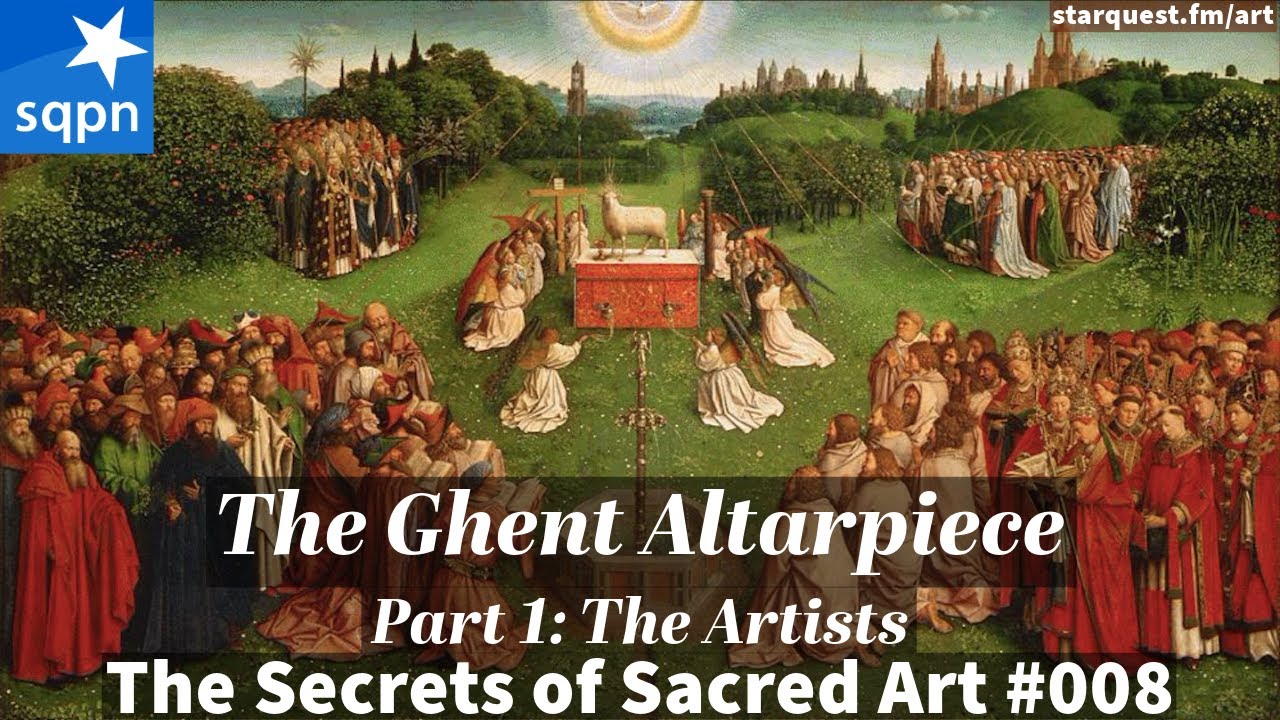
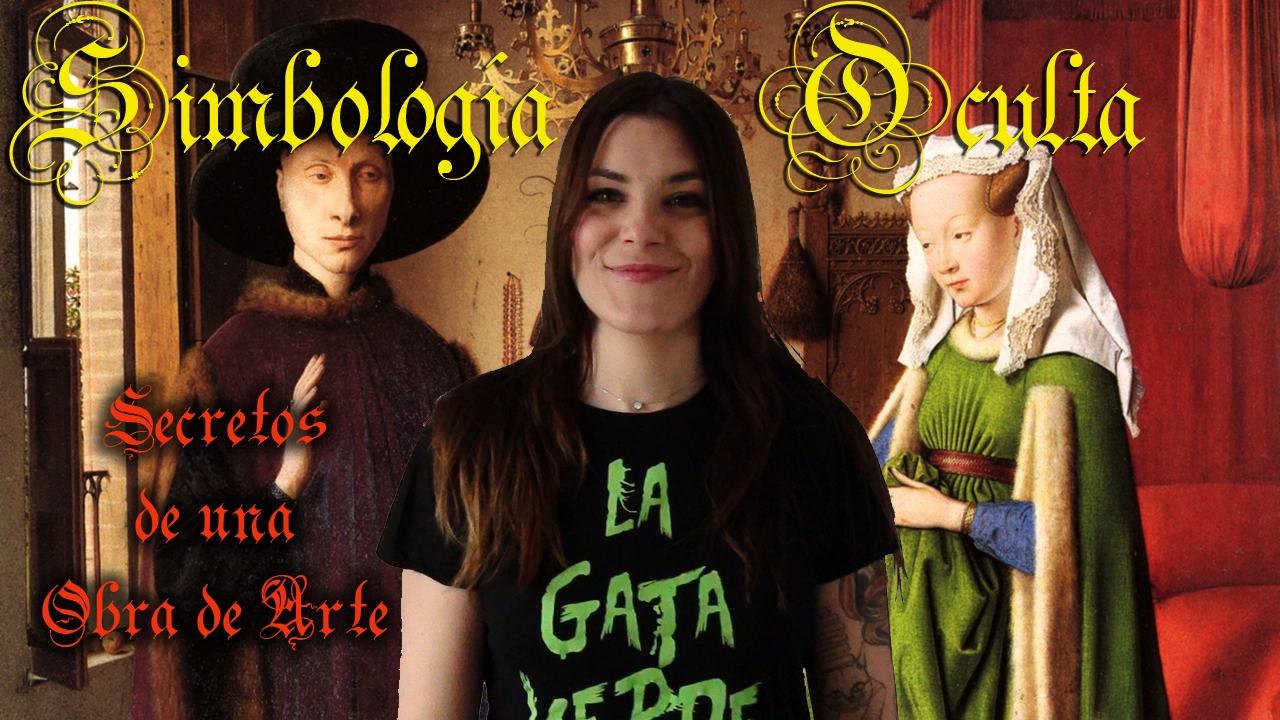
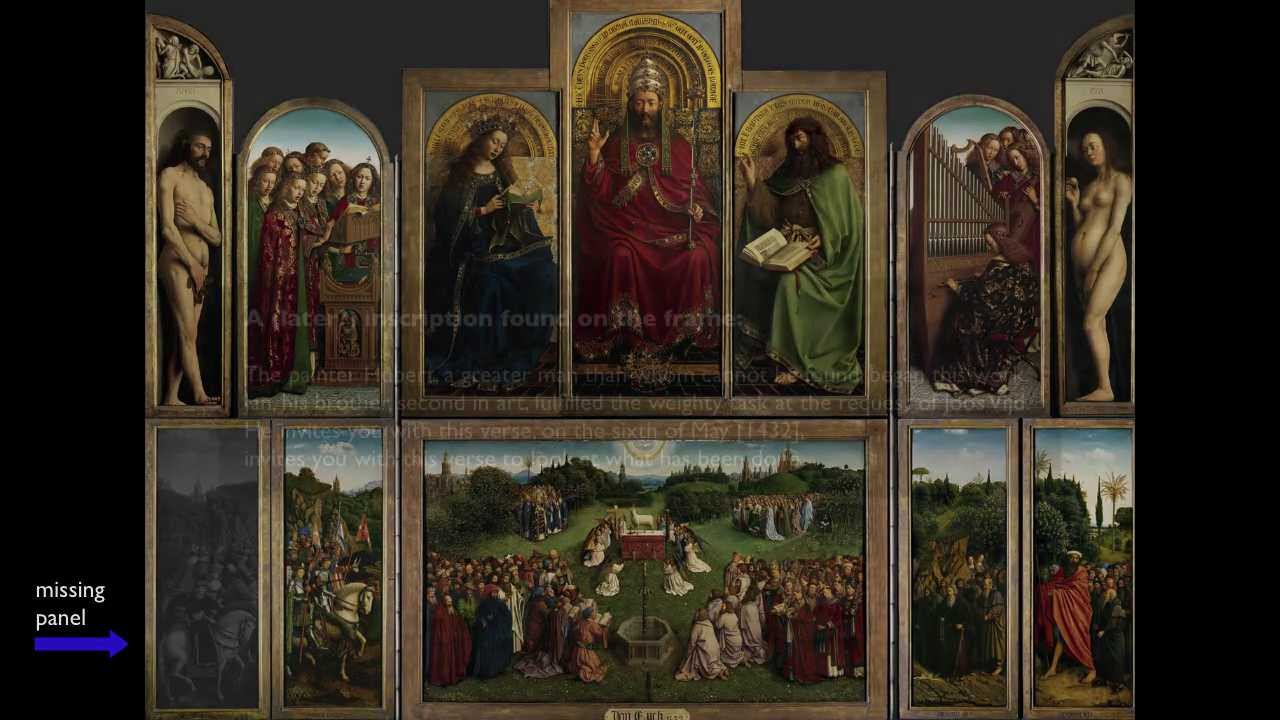
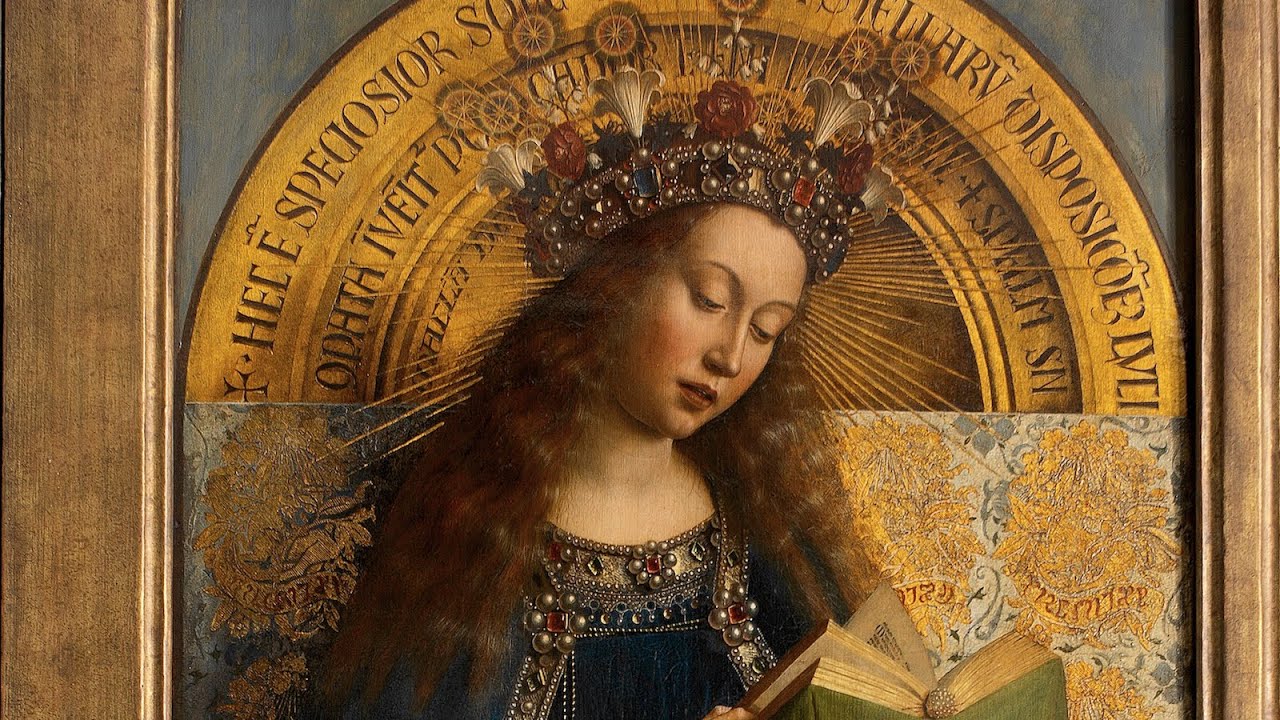
the word Renaissance was originally applied to the flowering of arts and learning that occurred here in Italy underlying the term was the idea that present attainments were a rebirth of a golden age local to Italy namely ancient Rome Italy's real Monopoly on artistic rebirth began in the 16th century with the first modern historians of art most of whom as it happened were Italian filled with local Pride they obscured the nature of the great Century of change for 100 years earlier in the 15th century even Italians looked northward to the art of yan vanike for examples of supreme artistic achievement Yan vanike made paintings that for the first time resembled almost perfectly the real world so much so that he transformed the craft of painting into the Supreme art his work launched an artistic Renaissance in northern Europe that Rivals the achievements of his Italian contemporaries and that remains uncannily relevant to us today I'll be telling telling the story of this other Renaissance this Northern one it's an astonishing movement that founded some of our most deeply held beliefs about art and about artists it begins with a new way of painting but it soon expands to become a True Image Revolution at around 1500 a young German painter harnessed a new technology that transformed everything the printing press made images available to a vastly expanded audience and this painter used it to become the first world famous artist soon the image revolution of the north became a revolt against images instead of making images people passionately broke them and in the wake of that destruction Modern Art was born taken together these breakthroughs created a northern Ren that changed art forever in the year 1420 Europe was a continent in the shadow of an unprecedented catastrophe just 60 years earlier plague had wiped out more than a third of the entire popul population the church stood divided with rival popes in Rome and aeno meanwhile the old political powers of the north England and France were locked in a conflict that would last 100 years but one area above all others was FLIR ising Flanders in present day Belgium and Holland and from there a profound artistic revolution spread out across the continent St bavo's cathedral in Gent still holds the painting a great Altarpiece that started that Revolution the gent alterpiece has overwhelmed viewers since it stood complete in 1432 people of the time pronounced it the most beautiful work in Christendom and its Chief Creator Yan vanike was deemed the prince of painters today it remains arguably the finest single painting in the world and of all its Many Wonders the one most singled out for praise is the figure of Adam to early observers this painted Adam looked like a living being paint captures the minute subtleties of Flesh Blood seems to pulse beneath flesh and the skin of Adam's hands and face is visibly tanned by the sun one detail intensifies this semblance of Animation Adam raises his big toe so that you can see its Underside the toe seems even to stick out of the stone Niche where the figure stands allowing Adam to appear to step into our world remember this is Adam Adam who sinned who therefore died and who as the ongoing consequence of his sin made us all Mortal in the painting Adam lives again resurrected he strides towards the paradise he lost for the first time in the history of art the dead were seen to live again and with this rebirth a new historical Epoch began here in northern Europe this period had a different shape and different Heroes than the more famous Renaissance in Italy yet in a sense the northern Renaissance is the more stunning re birth and the man who launched it here in Gent was according to the people of the time the greatest painter who ever lived and through astonishing paintings like this Yan banik reinvented what his craft at its highest level could do more than any single artist he made painting into the ultimate art during the preceding Century all across Europe the Supreme Arts both in priceon and Status were luxury objects made of a mixture of expensive materials today these are generally consigned to museums of decorative or applied art the market for these objects was International centered on the courts of royalty and nobility and because these artists themselves circulated through these courts all works no matter what their medium or purpose have the same recognizable look and the same Elegant Style Style advertised a person's belonging to a certain lifestyle it exhibited the magnificence that distinguish Nobles from Ordinary People things in the courtly style aimed to look expensive ideally they consisted of the most expensive materials worked in the most timeconsuming ways this explains the dominance of tapestries as an art form the finest tapestries would be woven of silk thread individually entwined in silver and gold they told stories commemorating famous victories or religious scenes but by the beginning of the 15th century the hunger for such ostentatiously luxurious objects such as tapestry began to be replaced by a taste for something new and this change took root in the most lavish culture in Europe of the time the court of the Duke of burgundy to recover that now forgotten world we need to travel south from Flanders the dynasty of The Dukes of burgundy had its traditional seat in the wine growing regions southeast of Paris but through marriage diplomacy and War their territories eventually stretched all the way back to Flanders in this culture magnificence publicized power indeed the Dukes sincerely believed that their own lavish spending trickled down to benefit the entire population of burgundy according to economic theorists of the day courtly expenditure was like the wind that drives the windmills like the rain that fertilizes the fields The Works the Dukes commissioned included hundreds of huge precious tapestries enough to cover their many residences inside and out useless but staggeringly costly objects made of Gold Gems pearls and opaque enamel were displayed briefly only to be melted down to make new Confections indeed like the fabulous foods served at Burgundian Court festivities such Works took long to prepair but were swiftly consumed the first Duke of an expanded burgundy assembled a dazzling team of artists including one momentous innovator the netherlandish sculptor clous slutter and it's in his work in the medium of carved stone that a new realism first appears before Sloter in the great cathedrals of Western Europe Monumental sculpture remains subordinate to architecture inert figures stood contained by the structures they embellished Sloter changed all this imagine you lived in the year 1400 and you were asked to predict which art would reign supreme over the next 600 years I think if you came to the well of Moses here in djon you would place your bet on scul the sculptor of this well Sloter has been able to do things with stone which no one previously had been able to do he is able to give each of these figures of Old Testament prophets a gravity and a presence which makes them look like living beings it's not simply the way he represents them in the round as figures capable of movement but it's also the way he individualizes each of the figures the way the shoes are built the way the clothing hangs such that each of the figures seems both alive and completely individualized while painting was an important art in this period it was not yet the art of Arts indeed it was often little more than an embellishment to sculpture alter pieces of the period show clearly that sculpture was the dominant craft paintings occur in these ensembles on the shutters on the outer part the everyday side they tell stories and prepare the way for the Glorious spectacle that will occur when they open up and that spectacle that climax both ritually as well as aesthetically of the alterpiece occurs in the medium of sculpture not painting the painting on the wings of this alter piece in Dijon was created by the artist melor Bruder Lam just 12 years before the Gent alterpiece it's typical of painting of the time and while the stories it tells are clear the figures in them and especially the spaces between them look awkward to the modern eye courtly patrons did value highly one form of painting however books of ours the illuminators of these private prayer books were The Cutting Edge painters of their day working within the miniature confines of the prayer book illuminators of the period were masters of spatial manipulation for them an inch of Vellum was enough to invoke an entire world and and in the decades around 1400 manuscript illumination raised its Prestige through spectacular artistic achievements first pictorial space is confined to a sort of box like a doll's house that looks as if it projects outward from the surface of the page then in the second half of the 14th century a new standard is set sealed off from the rest of the Page by a frame the illuminated image reads like a view through an opening or window into a coherent World once opened that world could be infinitely expanded encompassing whole landscapes in which sacred scenes as well as the activities of everyday life get played out now instead of a flat surface covered by writing an ornament there could be Windows everywhere each one opening to a burst of three-dimensional space these experiments served a particular aim namely to enhance the viewers experience of sacred persons and stories so illuminators fostered an intimate dialogue between image and Beholder that achieves what we expect of great art to day at the climax of this tradition there emerged a master who could do everything from infinite Landscapes to perfectly realized Interiors in paintings by this exceptional Master the painted image escapes the bounds of the illuminated book art historians have attributed these wildly Innovative Miniatures to the young yan vanike yan vanik self-portrait painted in 1433 brings the painter alive in a way that written historical documents of the time cannot only fragments of his life story have survived but those fragments are more than we know about any other Northern painter of the time in this period painters didn't enjoy a special status among Craftsmen in fact they were ranked rather low on par with Tanners and Undertakers maybe because they got their hands dirty but maybe because they made graven images something frowned on by the Bible what is surprising is how much we do know about benik and we know about him mainly because of the quality of his work sheer Artistry caused people to save and to gather facts about the artist vanik mure helped too The Burgundian Court cultivated new ideas about personal skill and about Fame finally van ik's artworks themselves speak about the artist unlike the anonymous paintings which preceded them his pictures include signatures dates personal mots even self-portraits to a degree never seen before vanik Works celebrate the person who made them already a famous artist by 1425 Yan van ik's achievements Drew him to the attention of the ultimate patron of the day Philip the good Duke of burgundy he undertook secret missions for the Duke traveling around Europe as his Ambassador while traveling he produced portraits of prospective spouses for Phillip none of which survive but we do know that one likeness of Isabella of Portugal pleased the Duke so much that he chose to marry her in 1430 for his artistic and ambassadorial services vanik received lavish payments when a bookkeeper tried lowering his salary the Duke intervened stating that he could find no other painter equal to our taste or as excellent in matters of Art and Science and because the Duke held him in such esteem vanik was free to work for clients who were not based at the courts more than any other single work the alterpiece in the town of gent in Belgium launched the Renaissance in northern Europe it was donated to St bavo's Cathedral by one of Van ik's other clients a merchant and the mayor of gent Yos fight with its shutters closed the alterpiece commemorates the donor's piety vanik shows fight and his wife in niches praying to sculpted Effigies of Saints above them in what seems a cutaway view of an upper room of the actual Church the Virgin receives Christ in her womb fight financed an entire private Chapel within the cathedral and it was there behind the altar that van ik's great work originally stood the name is used V was mayor of the city of gent in the 15th century and a very rich man and on the other side today a full-scale copy lets visitors experience the perfect fit between the chapel and the alterpiece over the centuries reports survive of artists astonished by the work4 in 1521 the world famous painter Alber Durer came to view it and pronounced it a Priceless painting of profound understanding by then less than 100 years after it was painted it was already a tourist attraction visitors paid High fees to see it let during the iconic plasms that swept northern Europe in the 16th century when Protestants smashed the images and churches Van's alterpiece was Spirited to safety under Napoleon the work was taken to Paris and then was divided up scattering individual panels across Europe these were only reunited after the first world war in 1919 two of the panels were stolen and held Ransom in 1934 this one was never recovered a copy still marks its place the Gent alter piece was designed and paint painted for this Chapel every painted object in the Altarpiece is shown reacting to light as if it's a real object here in space and you can see this immediately in the closed form of the altar in which all the statues and the two donors the fights are all lit exactly from that part of the chapel where the sun streams in and would if these were real statues cast shadows and highlights in the way they do in Van ik's picture the closed state is complex the open state is even more complex again everything in the picture reacts to the light and the space exactly as real figures would in such a situation but here because of the nature of the subject and because he's added this stupendous element of color because he's multiplied the detail the level of relations between the world out here and the world of the picture becomes almost infinite every one of the jewels every part of the complex tapestry of this picture is carefully programmed to react to the light that's in this room so for example the figure of Adam who comes from the left has highlights in his eye whereas the figure of Eve who is shaded in this real space has no highlights in her eye there are even certain Jewels ones on the angels on the left which reflect the actual shape and position of the window which lights them today the actual painting has been removed from the setting bik's Masterpiece stands in another part of the church encased in a chamber of bulletproof glass it's a willfully complex Ensemble two-tiered like the closed shutters and dominated by a vision of God throned at the center and looking straight out the deity subordinates everything to himself including the viewer constantly in his gaze below him in the landscape of heavenly Paradise the saved worship eternally on an altar the Lamb of God symbol of Christ's sacrifice for Humanity and from that altar the water of the Fountain of life flows into our space along a small ditch through paradise's flowery lawn this little Gully is one of the most momentous passages in the history of European painting van ik's entire spectacle invites us to soar visually to the distant Horizon Infinity had never been depicted as compellingly as this the Gully carries the water ERS of Salvation from Infinity back to us drawing close we notice amazingly the Earth is filled with jewels this makes sense Paradise will be paved with precious stones it also makes symbolic sense for at this altar mere bread is transformed into the Divine Body of Christ but the Gully is more than just a religious symbol it distills the essence of the painter's craft in its transformation into Jewels paint itself performs the kind of miracle that the scene depicted celebrates through sheer Artistry the base matter of paint has been transformed into precious jewels through van ik's labor Earth itself has become the perfect image of Heaven how did vanik do it how did he make paint mere pigments resemble transparent reflective gemstones his early admirer suspected that he had discovered some secret process they assumed that the process was of a chemical or even alchemical kind the idea that Yan vanik possessed a secret technical skill was Amplified by the first historian of Western Art vasari who claimed that this Northern painter personally invented oil paint vasari was wrong oil was an ingredient in painting long before van Ike as this painting the Westminster reible created 150 years before vanike shows but vasari got right the dazzling new effect vanike achieved in oil and I've come to the Hamilton cerr Institute at Cambridge University to discover how Yan van I transform base materials into beautiful images they conserve and restore paintings here and to do this you have to know how paintings were made well this is ultramarine lapis lazuli it's a mineral that he would have got from what's now Afghanistan it's uh transformed into the pigment ultramarine a very rich blue um by a very complicated procedure of processing yes and it seems like there are some imperfections yes there are there are impurities in the mineral copper mainly which they would have extracted um during the the process to purify the blue to purify the blue so that when they were painting with it is actually very high quality um it would have been very expensive for that reason um and also because of the transportation in those days going all the way um into uh nor northern Europe from across the sea ultramarine yes what materials might he have used for his Reds in the period there were two particular red lakes that were most common M matter is a plant it comes from the root um or coil um which is made from the crushed up shells of beetles ah you can see their little bodies still yes yes and none are moving huh no they're very dry make it even more what Yan van I did more expertly than any other painter of the time was to build up layers of paint one on top of the other to create deeper richer colors then on top of these he would add layers of different oilbased glazes like this one an almost translucent substance made from the plant matter and pine oil then on top of these layers he would add more layers layers of oilbased glaze these were made and applied with Incredible care so that different sections of the painted picture would come to reflect light in a precise and distinctive way similar to the way the surfaces of the represented objects would in reality reflect light this is different from previous painting and it's completely different from how we imagined painting to proceed this isn't about capturing a perception with the brush it's not about painting forms that resemble through outline and color real objects it's about recreating the object Itself by simulating in paint the inner structure of its materials the effect is a remarkable illusion that what we see is real and not painted yet it is all just paint and this is what amazes me most about Yan vanike earlier painting can be Exquisite in its own way with elegant lines and plausible details while parts of these pictures are painted the artists pursue their effects inconsistently the most Vivid example of this is when it comes to the representation of gold and jewels something that much of the painting of the time uses to signify holiness it's notable that vanik didn't use gold leaf to represent gold objects in his pictures instead he painted objects as golden he never introduced foreign elements into his picture he never placed upon the panel that he works for example an actual Jewel that was common in the period before Yan vanik he creates a consistent surface and that consistency allows the picture to achieve a another order of consistency namely that whatever is in the picture appears consistent with the world outside of the picture that is that the whole picture builds up an illusion of a global consistency which we ourselves inhabit so to the viewer the illusion of his paintings the fiction of the painted world as real never breaks and if these pictures look real to us today what might they have looked like when they were first painted it's hard for us to imagine today how van ik's pictures would have been understood by people of the time today we're bombarded by virtual realities which make even photographs look inert remember what pictures looked like before vanik certainly the culture was filled with images yet these looked like man-made artifacts like beautiful things in the world rather than like windows open to the world to what then could Van's pictures be compared only to Natural images which is to say to Reflections such as could be most vividly observed in mirrors this picture of the Canon George vanderp before the virgin and child Shimmers with reflected light it shows the cleric brought in front of the Virgin by his patron saint St George the figure in armor Yan vanik deliberately fills the scene with reflective surfaces inviting viewers to observe the similarity between painting and the mirrors that painting can depict these surfaces multiply the world around the Saints armor even reflect the artist himself working on the painting we Behold a sentence written on the frame adds meaning to these Reflections it compares the Virgin to perfectly reflected light with God as The Illuminating Source van ik's picture then is like the Virgin being itself a mirror of that same light from God today painters get their paint readymade in tubes but the Forgotten Alchemy of pigments that vanik mastered still fascinates part of the reason his Innovations in oils are so important is cuz they haven't been improved on it's it's absurd to think that given all the other Innovations over the centuries oil painting is still the best way of depicting a human being in a two two-dimensional form it's because of the way in which you can use glazes uh to suggest a certain kind of um uh vibrancy of the light and Reflections which make it feel like there's something coming out of the picture towards you but also you can use in the dark colors to suggest space going away behind plus because it stays wet for a little while if someone comes to sit for you a day or two later H and you see something see them in a different way you can put that straight into the picture rather than having to Star the whole another layer over the top even photography uh with all its huge benefits and and exciting Innovations still can't create the same illusions that a painting can when it's there because of the way the oil painting is built up in layers and those layers play play games with the light in a way that nothing else can do it's hard now to just imagine what life was like art terms before that before he was around almost more than any other product paintings are the embodiment of Labor they require not particularly expensive materials they're made just out of oil and pigments some expensive but but uh broadly speaking inexpensive compared to gold and jewels uh and what makes them valuable is the labor that went into making them Yan van ik's labor raised the status of painting almost immediately the Illusions he created were so convincing that in some ways painting could hide that it was painting and since his products didn't look handmade he could claim a higher status than that of mere Craftsman working with his hands but there were also advantages to Consumers instead of paying for Golden Jewels now they could buy painted substitutes at a fraction of the cost so to whom did this new art appeal the Brugge archive holds an amazing collection of Records dating back to the early 15th century when Brugge was the economic Hub of Europe full of wealthy merchants the towns people who lived and worked here noted all the important events in the life of their town and one of these remarkable records takes us back to the birth of a whole new market for painting this is an important piece of the puzzle it's an extraordinary document uh dated 1432 it records a visit made by the city magistrates and the mayor to the Atelier of yan vanik in Brugge it speaks of their wanting to see the work of his assistance which means that by this point vanik is not working alone but that he has already an extensive Workshop it also indicates the interest that the citizenry took already in Van's art the visit of the Brugge magistrates documented here marks the beginning of a long Mutual relationship between a new type of painting and a new Urban Elite and the kind of painting they desired more than any other was a portrait of themselves eles a portrait is and ever was a lasting Memorial to you it's something that grants you posterity it's something your family will keep and value portraits had been only there for Saints and Kings um the new portrait painting allows more modest families to have a replica of Grandpa that can be hung on the living room wall that's a new idea it also allows you to say I have had the great vanik paint my portrait courts of kings and Dukes of burgundy get vanik portraits this tells you how important I am there's a fashion for having yourself painted it's a very secular urge because this isn't on a on a an alterpiece this isn't somewhere where people will say he's very Godly but it is a conspicuous way of showing that you are a match for princes Yan vanik excelled in portraiture and he created Innovative devices such as the three4 view where the sitter turns halfway towards a profile position still today the classic portrait format after vanike portrait painting became a kind of industry its master was the Brugge painter Hans mlink mlink took vanik Innovative format and developed it with backgrounds and more detail his work is remarkable as a document of the people who lived in Bru and Flanders almost 600 years ago but in Van Ike's hands portraiture does more than simply record a person's physical appearance it realizes in the form of a concrete Vision the sitter's deepest spiritual desires as well this is one of yan van ik's most celebrated works it's a painting of the most important man in the administration of The Dukes of burgundy the chancellor of the entire Burgundian realm and a man named Nicholas Rola Rola rose from a humble estate to become one of the most powerful men in Europe one chronicler wrote that it was humanly impossible to imagine how rich Nicholas Rolan was to enter rolan's World we need to go to an extraordinary Place South of Dijon and encounter there the work of another Supreme Flemish painter it's an alter piece painted by the great painter Roger vanderen who emerged slightly later than vanik and who developed under Van's influence commissioned by Nicholas Rola it was painted in Flanders and transported here Nicholas Rola was a Master calculator he was the chief administrator of Europe's wealthiest region and he knew how to turn a Prof profit on every transaction he handled like others of the time Roland believed that heaven had an economy too but a different one than here on Earth this idea of a Divine calculation appears at the center of the great last judgment alterpiece that Roland commissioned for his hospital here in bone like the Gent alterpiece this great Ensemble has been moved out of its original home it once sat just across the courtyard from its current position in the chapel of the Charity Hospital dating from the early 15th century entirely funded by Nicholas rolam the sick would have laid in beds like these and from there they could have seen the Altar and the mass celebrated for them on ordinary days with the altar closed they would have seen a portrait of their benefactor Rola and on feast days when the altar opened up they could have beheld a spectacle of the Fate that awaited them and from that spectacle God himself would look down upon them and Beyond them to the spectacle of Nicholas ronan's own generosity his hospital with its alterpiece would have been a striking public show of generosity the picture he commissioned from Yan vanike is both an emblem of piety and an inventory of Roland staggering wealth it shows Rola praying to the Virgin in Christ who appear beside him but the painting invites us to pass beyond this foreground dialogue to the extraordinary landscape that opens up behind them vanik draws our eye there by placing on the parapet at the exact geometric center of his panel two figures one dressed in a red turban is probably Yan vanike himself he shows His companion the view just as his painting allows us to see it and what he shows is his life world a bustling northern European trade City built upon a river open to the world and behind Rolla we find one amazing detail Vineyards this is the world into which vanik sends us as he launches our eye into that glorious view among his vast possessions Rola own Vineyards in burgundy such as these already then burgundy produced some of Europe's finest wines Vineyards generated the Region's wealth and they contributed to Roland's riches and thus in a way made possible van ik's picture itself by showing Roland's Vineyards vanik takes us back to the artwork's economic Source he shows us that this is as much a part of his painting as are the pigments of which it's made Roland's Vineyards directly funded the running of the hospital and produced The Wine drunk at Mass before the Altar and while the painting documents both the source of Roland's great wealth and his charitable works it also represents something else the painting fulfills one of the deepest desires of Christians of the time physically to see sacred persons in Van ik's day people understood Vision differently than they do today they believed that when one saw an object something of its physical substance entered the eye they believed therefore that sacred things such as religious images could enter the soul through the portal of the eye this belief explains a key aspect of late medieval religion during mass the bread of the host was held to be the body of Christ and because in seeing something one participated in its substance by simply beholding the host one communed with Christ's body within churches there were special places for visual communion this is one such place a private chamber built into the side of a church but it's also part of a domestic space this here is an amazing survival it's a private prayer Gallery in Bru and these windows behind me Overlook the Church of our lady but it's built right right into someone's private home visual experience of the private person is thrusting itself into Sacred Space by looking from this prayer Chapel towards the altar in the church we enter into the mechanics of vision as they were understood in Van ik's day suddenly the painting of Rola and the Madonna takes on a new meaning in their prayers Christians sought above all to visualize the person they worshiped and and so in Van ik's painting Nicholas RAC can see this wish fulfilled the content of his prayer sits there as real and palpable as he paint has made the Virgin as present as material as it were in Roland's experience as the book he holds as The Vineyards he owns the story of how vanik transformed painting into the art of Arts must end somewhere else however this Final Chapter unfolds in a panel that hangs here in London this is Van ik's most haunting painting it's an incredibly modern looking image of a man and a woman from long ago inside a bedroom everything about the picture is is revolutionary the fulllength portraits the profusion of detail the sheer complexity of it all the sequence of its owners attests to its preciousness it passed almost immediately into Royal collections where it stayed until it came to Britain in the early 19th century and it's been in the National Gallery ever since where it remains one of the most popular pictures it's partly the painting's realism that fascinates capturing perfectly the room and its inhabitants the picture is like a time capsule of lived experience once arrived in this room in Brugge at 1434 we become fascinated even unsettled by what's taking place in this bygone Here and Now early documents record only a name Arnold pheni a simple portrait of a man and his wife then but the pictures too unique and the details too intriguing to leave it there historians have proposed theories including a persistent one that Yan vanik with his brush testified to the event of the couple's marriage okay two years ago an art historian published a new theory of Van ik's Masterpiece which put everything in a completely different light as it happens this historian is my wife and her simple solution to the great puzzle was published the day before our marriage the center of much of the debate has been the identity of the couple portrayed since nothing in the picture itself as it now survives tells us who they are for a long time Scholars have known that it was likely to be a member of the arnoldi family who are from Luca in Italy but lived in bru jaavan arnolfini was decided upon as the likely candidate and he had married someone called costan Trenta and everything seemed to be right until it was discovered that she had died at least by 1433 which is the year before the painting is dated there are several possibilities one is that it's a different javanni arnolfini or a different arnal altogether another is that there was another wife that's not documented or you could decide that it is this woman Costanza um and perhaps it's not a wedding or a betral and in fact it's not even a straightforward portrait everything about it is calling out for a kind of explanation so for example Mr anini the way he seems so melancholic and his gesture is so enigmatic what is he doing the difference between the portrayal of his face and her face most people had said well she's idealized because she's a female and that's true I mean she definitely looks you know you you'd be hard pressed to find a person who looks like that in real life she's she looks like a porcelain doll whereas he really looks so convincing as a facial type um so what could that discrepancy be I started to look at the details that for some have been seen as supporting the marriage claim and for others we're seen as just details of of objects the mirror at the back which has a lot of connotations um but one of the details of the mirror are scenes of The Passion of of Christ around the outside all of the scenes of Christ Living are on the side where an standing on the left side and all the scenes of Christ dead and resurrected are on the right side it's a daytime scene but there's a candle burning I mean why would vanik include a lit candle in a daytime scene and why would he bother to show the detail of only two candles one of which is has gone out and one of which is burning the actual juxtoposition I think of a lit candle over Javan and a gutted candle over castan indicates a kind of literal illustration it's like to just write it off as a kind of snapshot of reality really misses the point I think that's being made the point that's being made is that she's dead and he's not that he is basically honoring her um as a as a very important part of his life that's now gone I'm I'm certain that mine won't be the last Theory it's a painting that provides endless opportunity for interpretation it's not for nothing that the mirror is an age-old symbol of death the images in a mirror are fleeting and thus mirrors remind us of the fleeting character of Our Lives which passes quickly vanik mirrors are of a completely different kind they preserve what they display Yan vanik still stands there now in our present moment with his companion he writes above the mirror Yan vanik was here in the past tense and yet the painting remains always in the present tense vanik is here in the inscription in the mirror in the painting and Yan Van ik's painting is like the mirror it depicts it makes people present eternally it brings the living together with the dead it joins together time and keeps in the same present the artist and his Beholder he created beautiful fictional worlds perfectly consistent with the optical reality we inhabit and vanik puts all this Artistry to the highest possible end to defeat death and time and to Glimpse as if from outside of our world Paradise itself van ik's impact on the way other artists painted was immediate and huge in the Netherlands his art was the gold standard of a painting industry that flourished in that region until the 17th century and Beyond his lasting influence is felt whenever ambitious artists of any era stake their claim to Greatness whenever painters propose that painting is the Supreme art and indeed whenever they reflect on painting through painting The Ghost of vanik is somewhere to be seen no vanik didn't invent oil painting but he did introduce something even more more momentous when we stroll today through art museums when we consider from a certain distance what it is that these galleries display as art we observe a certain kind of thing not sculpture not tapestry not fabulous ensembles of gold and jewels rather rows and rows of one kind of thing namely paintings each framed and movable each a little world unto itself without vanike I do not think these peculiar things would have possessed the magic necessary to launch their extraordinary career so this is another of Van ik's legacies our picture of a picture gallery vanik inscribed his self-portrait with the words Al isan it means literally as I can The Motto says in effect this thing this spectacular painting of myself shows not only what I look like but also what I can do what my powers are and so the artist draws us to the puzzle we've been pursuing all along the Enigma of yan vanike of that one self and its amazing capabilities self portraiture is natural to the images vanik makes as he builds up a world with paint as he uses paint to resemble gems and reflective surfaces it is inevitable within the logic of that image that this world and with it vanik the painter will be represented in His image it's this indeliberate accidental form of self-portrait that is more natural to his art in a sense it's a humble gesture it says that the artist isn't the center of his creation he's at the periphery of things he's part of the world as we are part of the world at another level though it's a statement of the greatest ambition for it says that painting this supreme art is capable not only of resembling nature but of being nature the moment painting becomes a mirror it must represent itself as in some sense without an author without an inventor As Natural since no one invents or makes the world except perhaps God next time Alber Durer and the birth of the modern artist how one northern European genius advertised himself as a Godlike creator northern Renaissance continues tomorrow with the birth of the artist slightly later at 1:45 here on BBC 4
Up Next
11:52
Workshop of Campin, Annunciation Triptych (Merode Altarpiece)
@smarthistory-art-history
183K views•2016-02-24

114:18
Christian Iconography: History, Theology, and Meaning | Fr. Panayiotis Papageorgiou
@Trisagionfilms
58.8K views•2020-02-21
7:48
Ukiyo-e Art: History, Woodblock Printing & Influence
@japanathand
6.3K views•2023-06-08

16:34
Earliest Depictions of Jesus in Art: 10 Ancient Images Explained
@UsefulCharts
5.9M views•2022-06-03
Related Study Plans & Knowledge Roadmaps
Structured learning paths in Art History
art-history
Gothic Cathedrals: Engineering, Light & Society
01The Birth of the Gothic: Romanesque to Suger's Vision
02The Structural Triad: Pointed Arches, Ribbed Vaults, and Flying Buttresses
03Theology of Light: Lux Nova and Sacred Geometry
+ 2 more learning modules
14h5 modules
Explore Roadmap
art-history
Pre-Raphaelites: Realism, Symbolism & Critique
01The Victorian Art Establishment and Academic Formula
02The Founding of the PRB and Radical Realism
03Medieval Revivalism and Literary Symbolism
+ 1 more learning modules
8h4 modules
Explore Roadmap
art-history
Street Art: From Subways to Art Market
01Subcultural Origins in Philadelphia and New York (1970s)
02The Subway Era and Style Wars (Late 1970s - 1980s)
03The East Village Scene and Early Gallery Crossover
+ 2 more learning modules
10h5 modules
Explore Roadmap
art-history
Classic Maya Art: Iconography, Glyphs & Ritual
01Foundations of Classic Maya Visual Culture
02Deciphering Maya Hieroglyphs & Text-Image Integration
03Sacred Geography and Cosmological Architecture
+ 2 more learning modules
14h5 modules
Explore Roadmap