







![the luigi gauge - Bits and Banter [01/22/2025]](https://i.ytimg.com/vi/UmoiZMdV49w/maxresdefault.jpg)


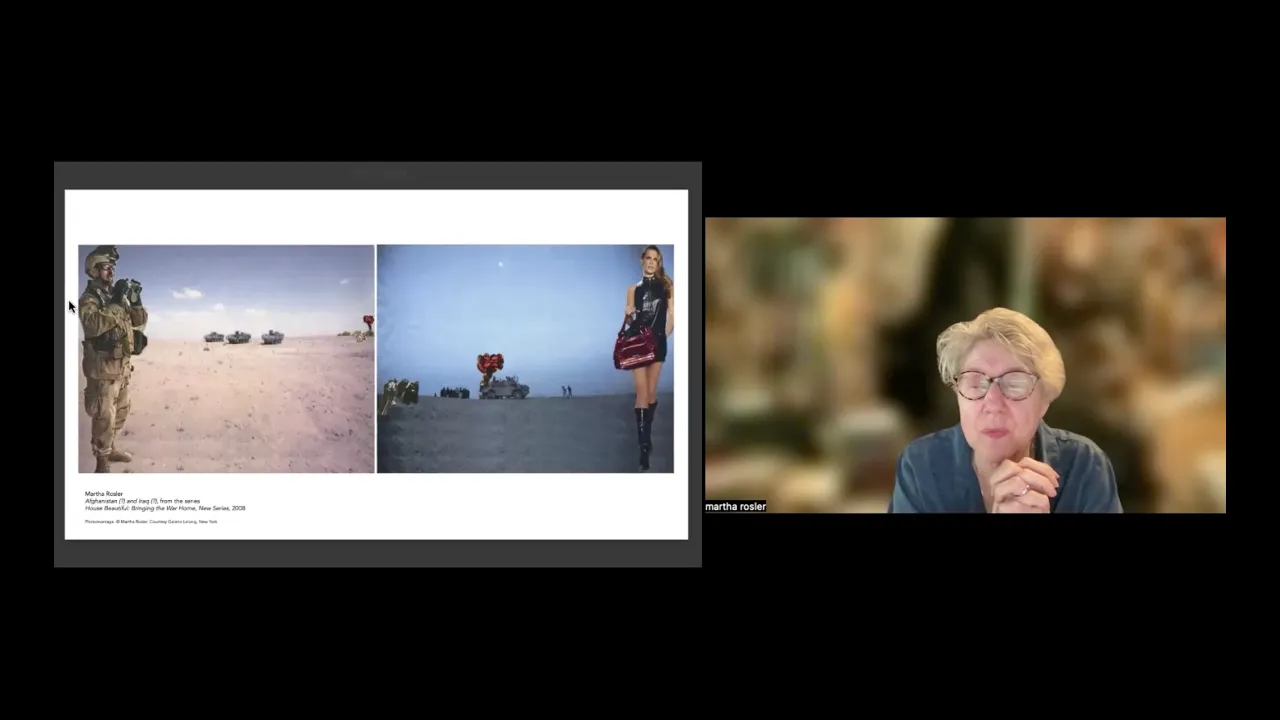








Martha Rosler's 'House Beautiful: Bringing War Home' series demonstrates how photo montage can serve as a powerful political tool by juxtaposing domestic imagery with war footage, creating cognitive dissonance that challenges viewers to confront uncomfortable truths about violence and its relationship to everyday life; the work deliberately avoids explicit slogans to instead provoke viewers into recognizing the anti-war message through visual juxtaposition, positioning them within the image space to experience the tension between identification and rejection.
Martha Rosler on House Beautiful: Bringing the War Home
Added:Historical context of the Vietnam War, particularly its status as the first 'living-room war' heavily mediated by television and print journalism.
The artistic history of photomontage and collage, especially its roots in early 20th-century political Dadaism and the works of artists like John Heartfield.
Second-wave feminist critiques of post-WWII domesticity, consumer culture, and the gendered division of public and private spaces.
Basic concepts of media spectatorship, including how the juxtaposition of advertisements and war photojournalism in mid-century magazines affected public perception.
Martha Rosler's subsequent works, particularly her return to the photomontage format in 'House Beautiful: New Series' (2004–2008) to critique the wars in Iraq and Afghanistan.
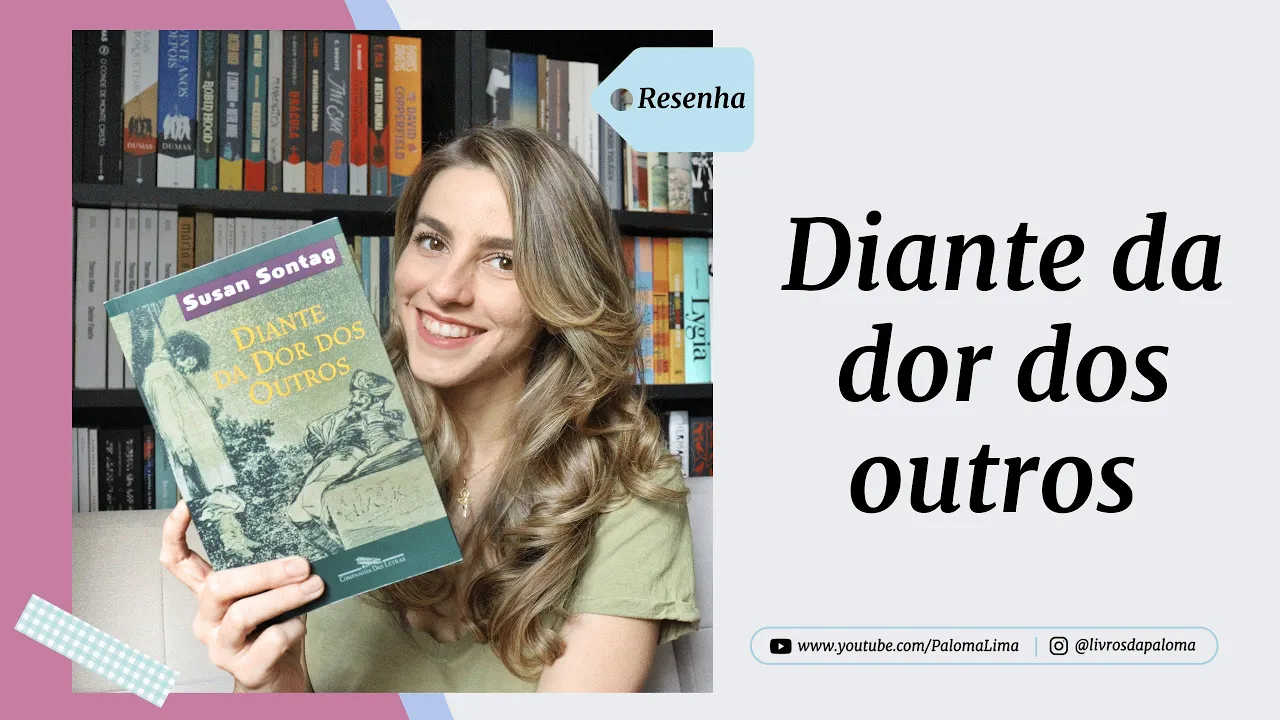
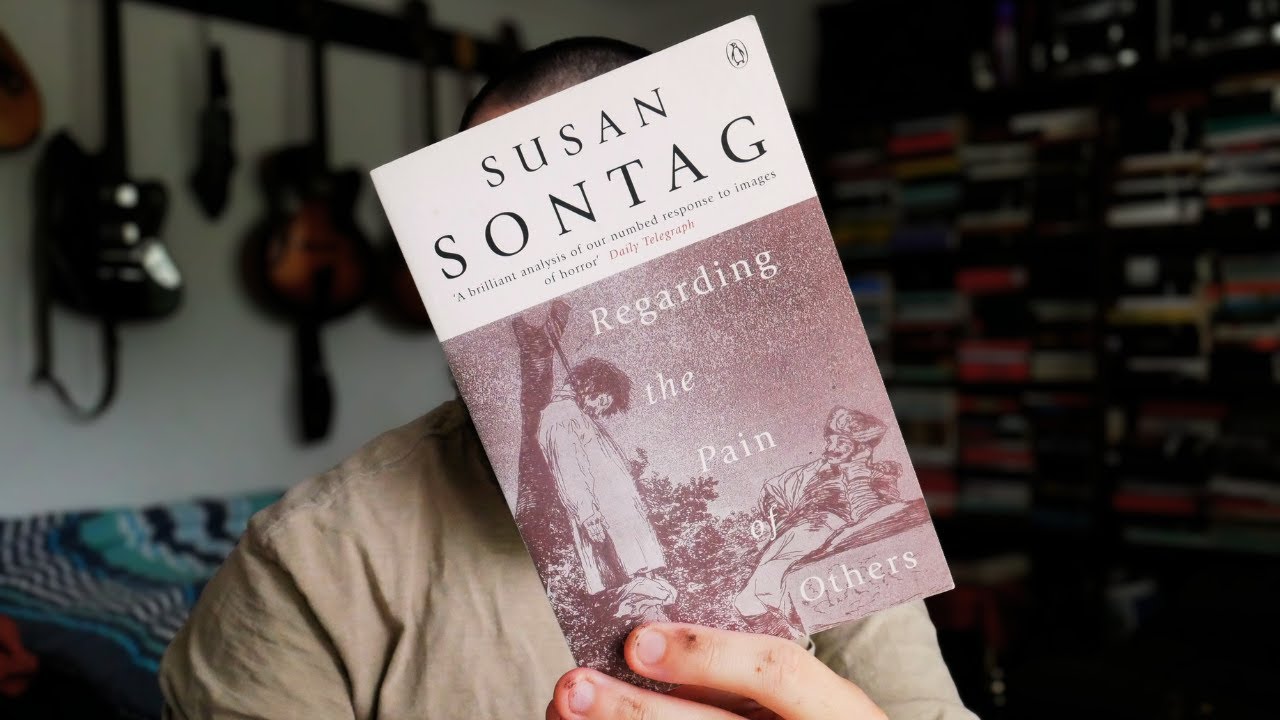
Advanced media theory on the ethics of representing suffering, specifically Susan Sontag’s seminal text 'Regarding the Pain of Others'.
Guy Debord’s theory of the 'Society of the Spectacle' to analyze how modern media commodifies and sanitizes real-world violence.
Institutional critique in contemporary art, exploring how politically subversive art is collected, exhibited, and framed by mainstream museums.
21.1K views341likes7:37Original Release: 2016-10-15
my name is Martha Rosler and we're discussing a body of work called house beautiful bringing the war home when I was a young person in the mid-60s we the United States that is had gotten itself into a war that shocked my whole generation that started from a small action in Vietnam and gradually got bigger and bigger and bigger and it seemed to be Beyond reason but in addition it was the first living room War where we saw timely footage of battles and huts on fire and so on every evening at dinner hour broadcast bya television into our living rooms and I was absolutely traumatized by this thinking how are we supposed to eat our dinner watching a war I had been making some collages photo montages based on the images of women in the media and after a while it occurred to me that I could use that same technique of a kind of Collision in space about the war so I began cutting things out and putting them together I lived in an apartment building in Brooklyn and there was a garbage room in the basement and people would Stack Up magazines for other people in the building and I would go through those magazines mostly life and look and a few others but I also went looking in the bins on 4th Avenue where there were a lot of used book sellers and they also had bins where you could buy prints for a very low price I was interested in architectural photographic representations of modernist homes so the series is called house beautiful and it's called that because it really is centered on the idea of Domesticity safety space and aesthetic rightness but also bringing the war home because I am literally bringing images of the war into spaces having to do with our domestic life if I was using news images I wanted them to have just gone over the curve of immediate memory into something else of being Vaguely Familiar but not ripped from the headlines in one I'm looking at here which is cleaning the drapes you can see its relationship to the Body Beautiful series because it's a woman pretty up toate with a vacuum cleaner that she's wearing which looks like an aache case or a briefcase with a wand attached and she's vacuuming these drapes and outside is a photograph in black and white of a couple of soldiers standing around in what amounts to a trench it's not an image of combat they are Tableau in stasis so that we take the action of war and look at it in a more contemplative way I'm looking at one that I call makeup hands up so here's a rather nicely madeup woman with beautifully manicured nails and matching shiny pastel lipstick in a tight closeup putting on ey Shadow and where her eye should be is a rather brutal cut of an image of a soldier leading off a female Vietnamese captive the eye of the woman who is in color is cut out the eye of the the woman who's being led away the eyes are covered by a bandage she is a woman of color and the soldier is an African-American Soldier so I'm talking about several things at once but what's front and center for us is the image of the captive in war in other words a woman in a very different situation in relation to her ability to see and we were highly attuned particularly in that period to looking at women on the basis of whether they looked up todate and well cared for and judging them on that basis and also judging social status through a woman's appearance so I wanted the viewer to not quite identify with the people in the images and it remains important to me to think about how we either ask for or interrupt identification with the content of the photographic image for me it's really important that we identify immediately even if we are at the same time refusing to identify and saying no that's not me that's the other and I think there's a tension there that's really important and in some cases amounts to a degree of vehement in rejection of identification so that for me was always important in any photographic work I did of where do you stand in relationship to that which is depicted I later realized that the reason the house beautiful montages were often in rooms or in other landscape settings was because I wanted the viewer to have a place to stand and as soon as I formulated that thought I thought yes this is really important important for me that you enter the image and see yourself standing there it's not as though you're on some higher plane or it's a non relatable physical space I saw house beautiful not as art I want it to be agitational I distributed it to the anti-war community as Flyers Xerox copies and this is very much in the context of the' 60s if I were oppressed by people saying that's not art it's propaganda I would have to say Okay the difference for me was that there were no slogans I didn't want to say stop the War I didn't want to say anything just to have the images convey the message which I hoped would provoke enough of a shock and a recognition in people to recognize this as an anti-war offering and my last gesture is a very minimal scene taking place in nowhere land a soldier and a guy with a hat possibly a Vietnamese running away from a car that may be under siege and to their right is the backs of American soldiers running away and that was the last one
Up Next
9:17
Cindy Sherman's Self-Portraits and the Selfie Culture | HENI Talks
@HENITalks
58.9K views•2018-05-16

114:18
Christian Iconography: History, Theology, and Meaning | Fr. Panayiotis Papageorgiou
@Trisagionfilms
58.8K views•2020-02-21
7:48
Ukiyo-e Art: History, Woodblock Printing & Influence
@japanathand
6.3K views•2023-06-08

16:34
Earliest Depictions of Jesus in Art: 10 Ancient Images Explained
@UsefulCharts
5.9M views•2022-06-03
Related Study Plans & Knowledge Roadmaps
Structured learning paths in Art History
art-history
Gothic Cathedrals: Engineering, Light & Society
01The Birth of the Gothic: Romanesque to Suger's Vision
02The Structural Triad: Pointed Arches, Ribbed Vaults, and Flying Buttresses
03Theology of Light: Lux Nova and Sacred Geometry
+ 2 more learning modules
14h5 modules
Explore Roadmap
art-history
Pre-Raphaelites: Realism, Symbolism & Critique
01The Victorian Art Establishment and Academic Formula
02The Founding of the PRB and Radical Realism
03Medieval Revivalism and Literary Symbolism
+ 1 more learning modules
8h4 modules
Explore Roadmap
art-history
Street Art: From Subways to Art Market
01Subcultural Origins in Philadelphia and New York (1970s)
02The Subway Era and Style Wars (Late 1970s - 1980s)
03The East Village Scene and Early Gallery Crossover
+ 2 more learning modules
10h5 modules
Explore Roadmap
art-history
Classic Maya Art: Iconography, Glyphs & Ritual
01Foundations of Classic Maya Visual Culture
02Deciphering Maya Hieroglyphs & Text-Image Integration
03Sacred Geography and Cosmological Architecture
+ 2 more learning modules
14h5 modules
Explore Roadmap