












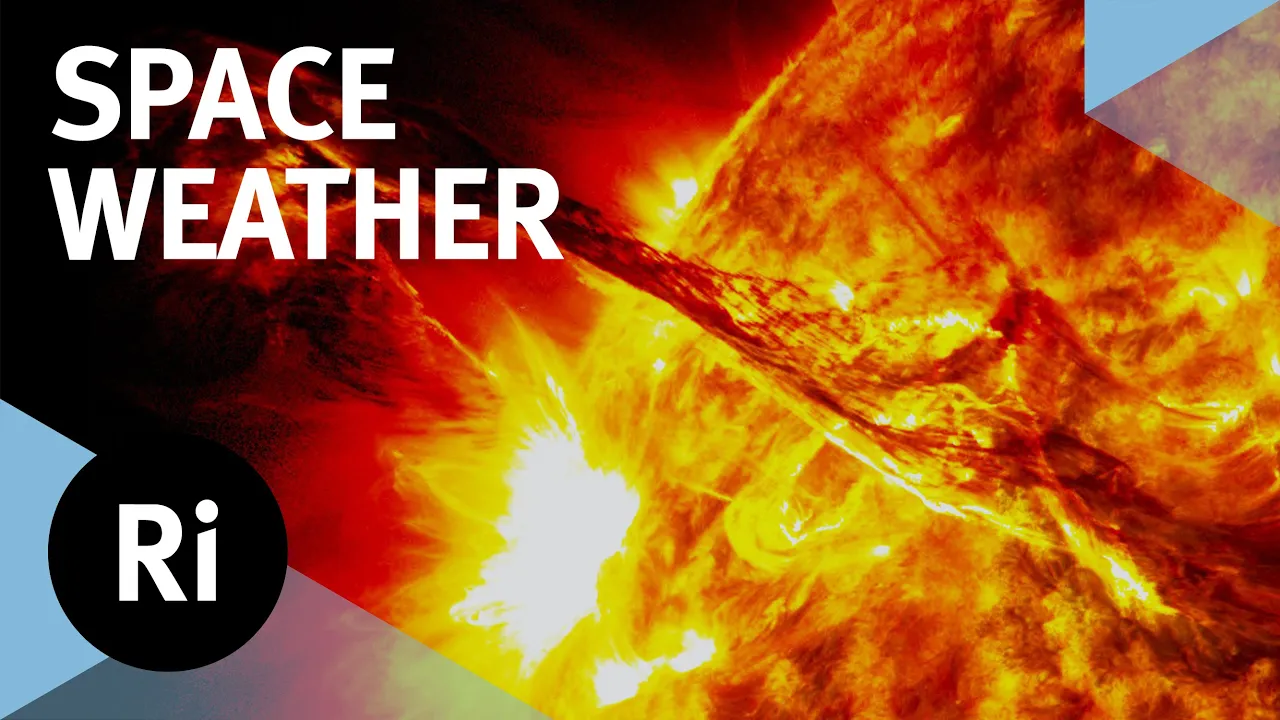











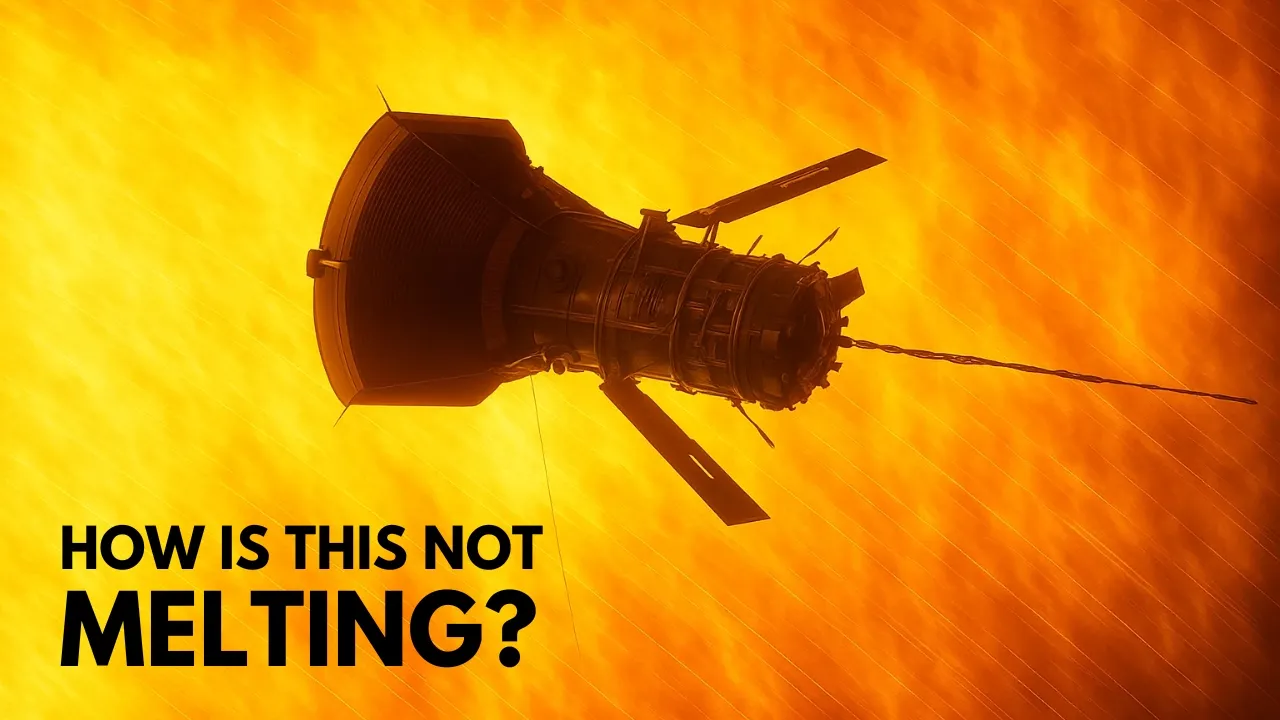


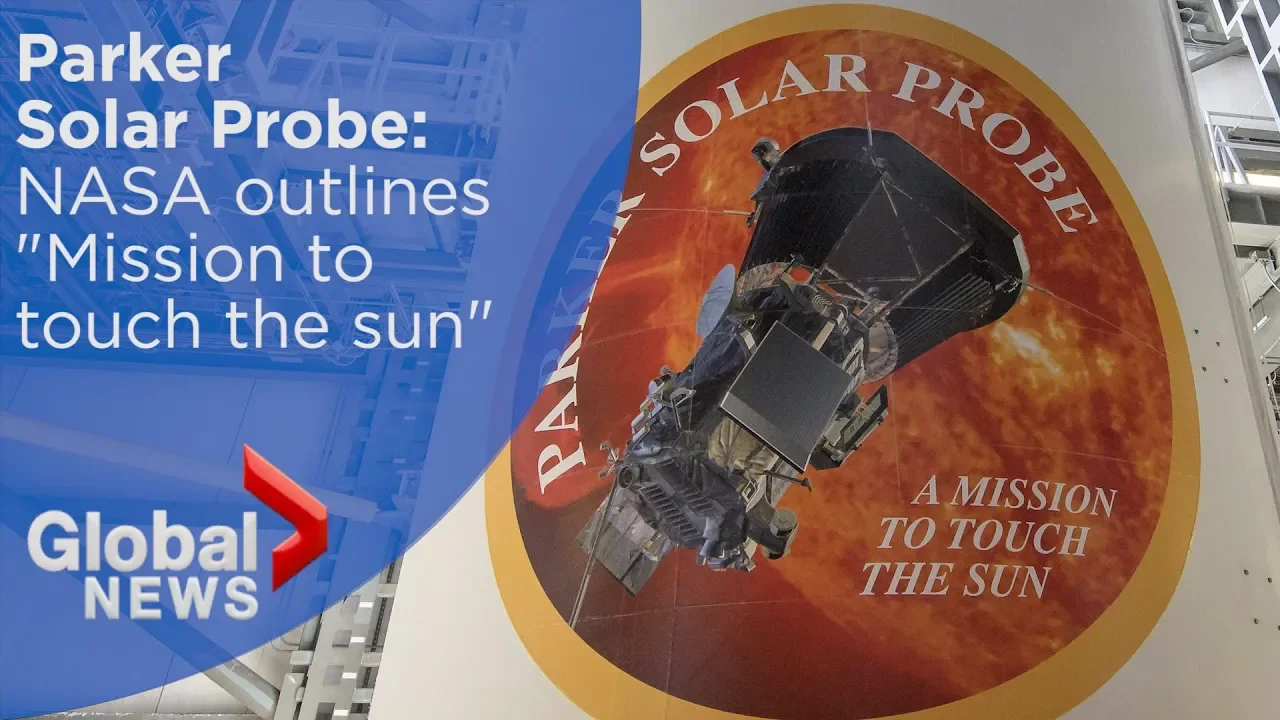
Solar weather phenomena, including coronal mass ejections and solar flares, originate from the Sun's dynamic atmosphere where temperatures paradoxically increase from 6,000K at the surface to over 1 million Kelvin in the corona, a mystery that the Parker Solar Probe aims to solve by traveling within 6 million kilometers of the Sun's surface; simultaneously, astronomers achieved a historic milestone by capturing the first image of a black hole in April 2019 using the Event Horizon Telescope, a global network of radio telescopes that combined observations to reveal the silhouette of the supermassive black hole at the center of galaxy M87, confirming predictions of general relativity about spacetime behavior near event horizons.
Solar Physics & The Search for Exoplanets | Space Documentary
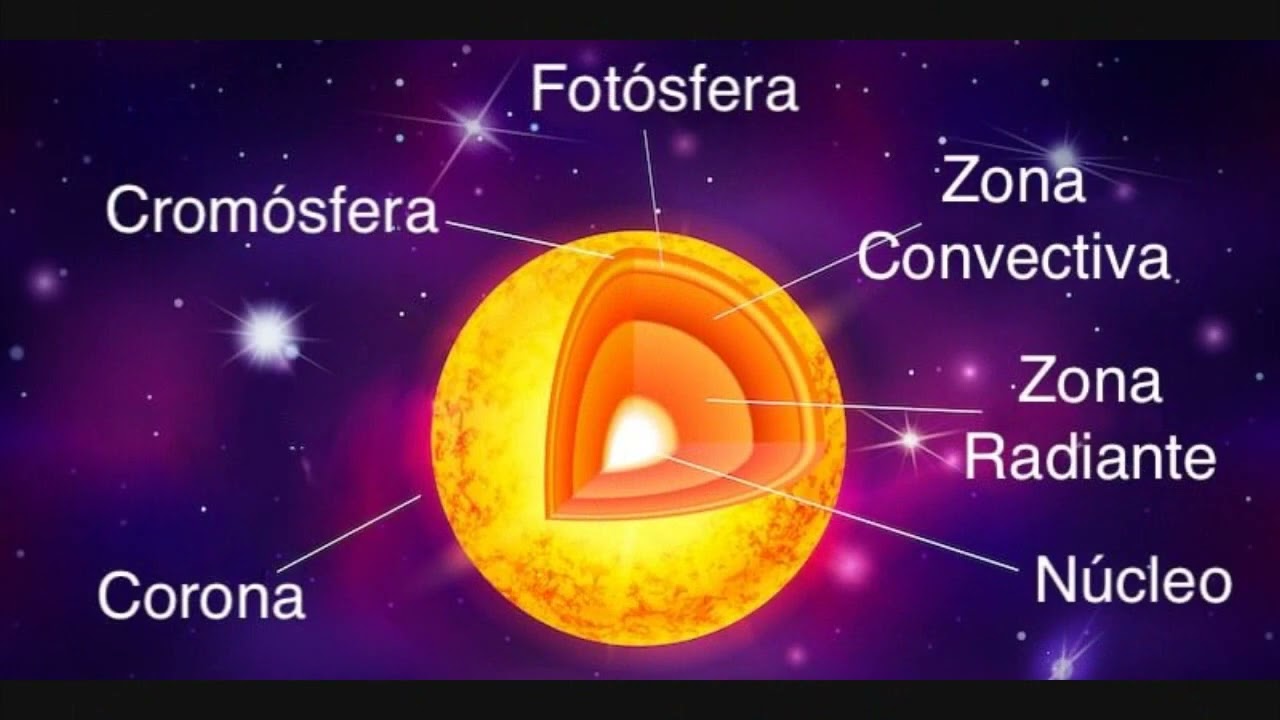
Added:Basic stellar anatomy, including the structure of the Sun (core, corona, and solar wind).
Fundamental concepts of electromagnetism, specifically how magnetic fields behave in plasma.
The basic definition of an exoplanet and the concept of the 'habitable zone' (Goldilocks zone).
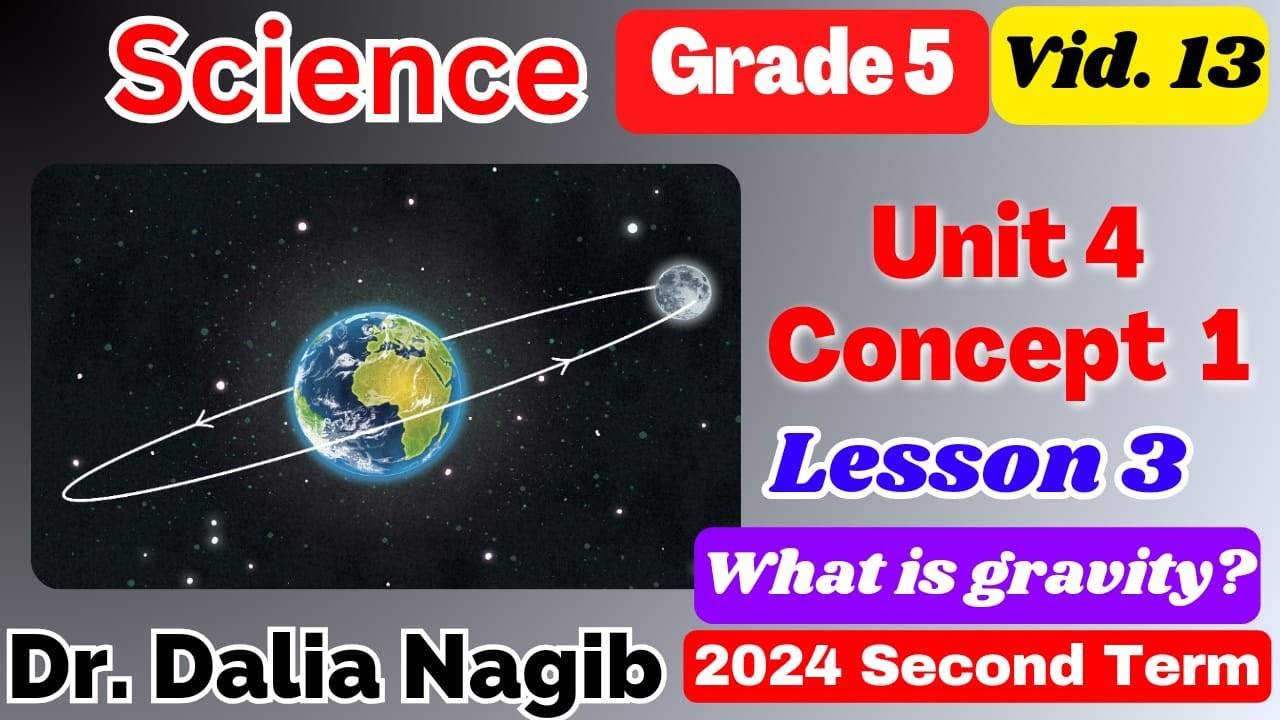
An introductory understanding of gravity, orbital mechanics, and how celestial bodies exert gravitational pull on one another.
The science of space weather forecasting and how solar activity impacts Earth's magnetosphere, power grids, and satellite communications.
Transit spectroscopy and the methods used by modern telescopes (like JWST) to analyze the atmospheric composition of exoplanets for biosignatures.
Deep dive into general relativity, gravitational lensing, and the physics of black hole event horizons and singularity theory.
The engineering challenges and materials science behind thermal protection systems used in extreme-environment space probes.
615.8K views3.8Klikes49:54Original Release: 2022-06-10
[Music] our son is a star like billions of others throughout the universe it's a giant nuclear furnace at the center of our planetary system and although life on earth is completely reliant upon the sun we also need our planet's magnetic field and atmosphere to protect us from extremes of solar radiation regularly the sun ejects huge blasts of solar plasma and on earth a direct hit by a coronal mass ejection will play havoc with power grids communications and satellites [Music] 1859 was a year of extreme solar activity during september of that year astronomer richard carrington was sketching sunspots when he observed an intensely bright event [Music] less than 18 hours later auroras were seen around the world they extended to low latitudes where the phenomenon is rarely seen telegraph operators across europe and north america reported malfunctions including electric shocks and sparking wires this was the first time that solar storms had been linked with auroras and electrical and magnetic disturbances here on earth and it became known as the carrington effect since the 1700s a periodic fluctuation had been observed in the number of sunspots but a deeper insight into the sun's behavior would not emerge until 1958.
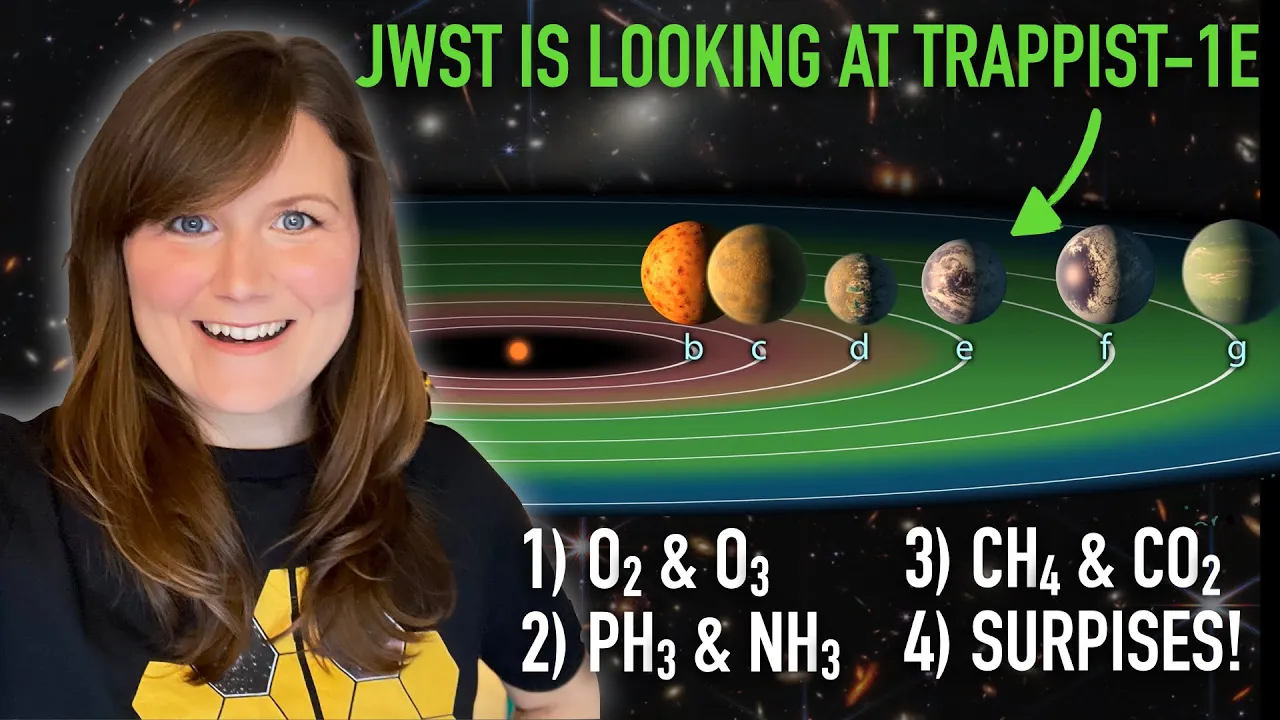
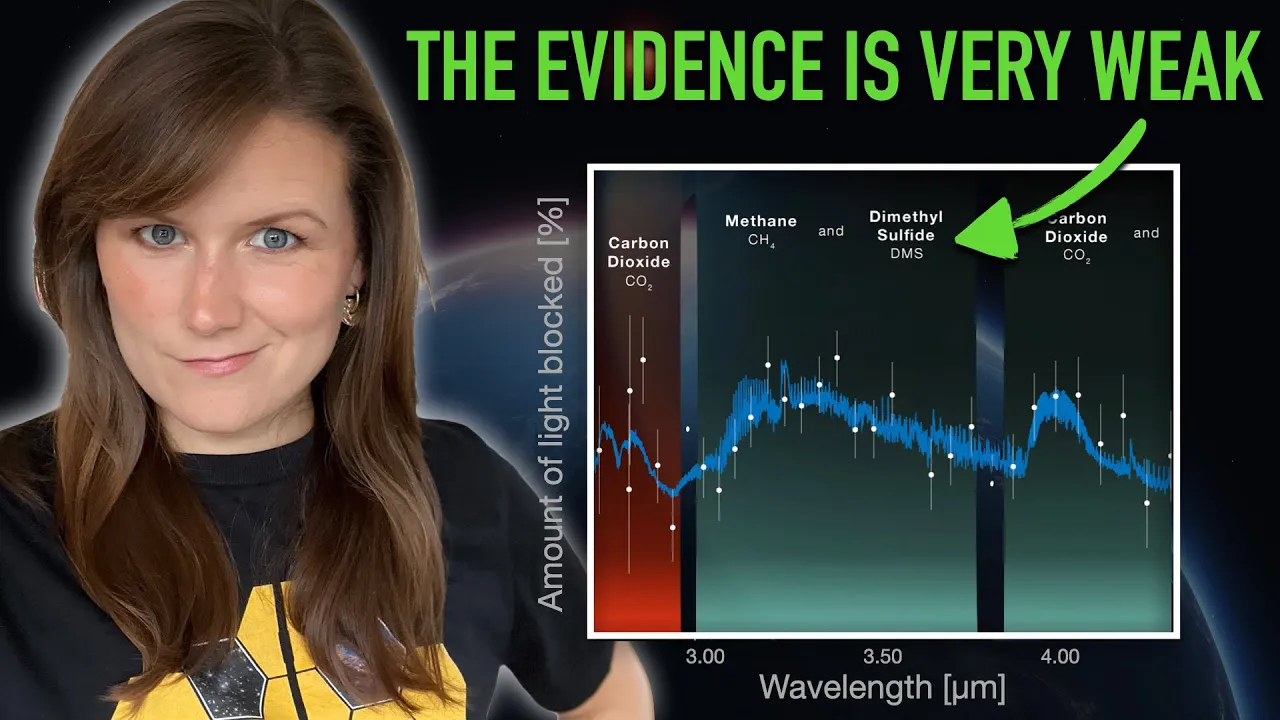
james van allen was the chief scientist for america's first satellite explorer one it was equipped with a cosmic ray detector the launch was successful but the orbit achieved was highly elliptical with an apogee far greater than expected as its altitude changed variation in the detectors readings suggested that charged particles were trapped in bands around the earth these became known as the van allen belts it was a discovery with far reaching implications the energetic charged particles that make up the van allen belts emanate from the sun and are trapped by the earth's magnetic field they fluctuate with solar activity and they present a risk to spacecraft that have to pass through them the previous year physicist eugene parker working at the university of chicago had predicted that a constant stream of charged particles would flow from the sun he called it the solar wind the astronomical community was reluctant to accept this idea soon his theory was vindicated as early russian and american spacecraft began detecting a constant stream of charged particles solar wind explained why a comet's tail always points away from the sun parker's supersonic solar wind theory predicted a variable stream of plasma charged particles permeating the solar system the earth's magnetic field deflects most of the solar wind preserving the earth's atmosphere in 1995 the solar and heliospheric observatory was launched soho monitors the sun from a point where the gravity from earth and from the sun exert equal force keeping the probe in a stable orbit soho gives us a clear picture of the solar wind its lasko instrument obscures the central disk of the sun revealing the corona the sun's atmosphere the planets are also clearly visible the horizontal lines flanking them are due to their brightness overwhelming the camera sensor soho's extreme ultraviolet imaging telescope was able to see waves traveling out from solar flares causing snow like interference in the image sensor solar radiation in the extreme ultraviolet varies from minute to minute and over the sun's 11-year solar cycle solar activity generates tides in the earth's atmosphere which increase with altitude this in turn adds to the drag felt by low orbiting satellites communication systems can also be affected in particular gps services constantly monitoring the sun's behavior is important and in 2010 nasa launched the solar dynamics observatory it orbits the earth geosynchronously at an inclination of 28 degrees which gives it a constant view of the sun the sdo observes in a number of different wavelengths that correspond to different temperatures each one revealing varying activities from the surface to the corona and to the flaring regions the sun is not solid rather than rotating it swirls at the equator it spins once every 25 days at the poles it takes 38 days it's in a plasma state extremely hot matter made up of loose electrons and ions plasmas are excellent conductors of electricity and the movement of the sun generates a tangle of magnetic field lines the surface of the sun known as the photosphere has a temperature of around 6000 degrees kelvin and is best viewed in the visible part of the spectrum here sunspots appear as dark regions where magnetic flux impedes convection these are about the size of the earth beyond the visible spectrum magnetic loops at the same areas become visible the lower levels of the sun's atmosphere the chromosphere see gravity yielding to the dynamic thermal and magnetic forces with temperatures increasing to 8000 degrees kelvin ascending further through the solar atmosphere a narrow band called the transition region sees temperatures rise to more than 500 000 degrees kelvin in the corona seen here during an eclipse it rises to a million degrees kelvin why this happens is not understood the atmosphere is where the solar weather is generated solar flares appear as bright flashes bursts of electromagnetic radiation from radio waves to gamma rays solar flares from some other stars are much larger than those from our sun and sometimes smaller stars known as red dwarfs display extreme solar flares [Music] the swift gamma ray observatory is designed for rapidly locating brief bursts of gamma rays and x-rays in april 2014 swift saw a solar flare emanating from dgcvn its initial blast was ten thousand times stronger than any flare from the sun it was the first of seven flares that continued for two weeks dgcvn is a red dwarf about one-third the size of the sun and it rotates twice as fast as the sun this enables it to generate a much stronger magnetic field it's thought that the strength of the star's magnetic field is related to the intensity of the flares it emits coronal mass ejections are different they are vast clouds of plasma blasted from the sun's outer layers they travel with the solar wind while they are often linked with solar flares researchers have not been able to establish a direct relationship observing the sun in different wavelengths yields very accurate temperature readings and the dramatic rise in temperatures moving away from the surface had scientists completely baffled four three in 1990 a new spacecraft was launched and liftoff of discovery and the ulysses spacecraft bound for the polar regions of the sun the ulysses probe was bound for the sun but had to go the long way solar researchers wanted to have a different view of our star the solar system coalesced from a vast cloud of gas and dust as it collapsed it began to spin forming a disk all the planets orbit along the plane of this disk called the ecliptic ulysses would look at the poles the parts of the sun that could not be seen from our terrestrial viewpoint ulysses traveled via jupiter using the giant planet's strong gravitation to change its course it approached on a path that took it over the planet's north pole this bent the probe's trajectory beneath the ecliptic so that it could see the sun from a polar orbit from ulysses we learned that the sun's magnetic field reverses every 11 years and that the solar wind from the more dynamic south pole was faster than from equatorial regions yet the south pole had no clear location the only thing clear about the sun was that it keeps changing now heliophysicists wanted to be able to see the face of the sun that was not seen from earth off of the delta ii rocket with stereo giving us a three-dimensional look at the physics of our sun the twin stereo probes were launched in 2006 they were in slightly different orbits one leading the earth and moving slightly faster the other trailing the earth and moving slower each year the two craft separated by 44 degrees giving each an increasingly different view of the sun because the sun rotates sunspots can develop out of sight as sunspots are key indicators of solar weather it's important to know just what is about to spin into view the stereo probes now observe the sun in 360 degrees this makes it much easier to plot the direction of coronal mass ejections though these happen with reasonable frequency most will miss the earth if they hit they create havoc in electrical systems and trigger sub-storms in the planet's magnetosphere information provided by the stereo satellites is being used for the protection of power grids and satellites through regular space weather bulletins since the 1960s observers had been aware that auroras would sometimes brighten suddenly with movement within the auroral curtains increasing these were short-term phenomena quite distinct from solar storms that result in auroral activity lasting days as communication satellites in geosynchronous orbits became more sophisticated they registered sudden localized falls in the earth's magnetic field that seemed to coincide with what were now being called substorms three two one we have ignition and liftoff of a delta ii rocket carrying themis nasa's revolutionary journey to study the northern lights the themis constellation of satellites was designed to monitor the behavior of the earth's magnetosphere [Music] the aim was to measure fluctuations within the earth's magnetic field and relate any variations to changes detected in the auroras from ground stations in the north american arctic [Music] each satellite was equipped with an array of booms to measure the strength and direction of electrical and magnetic fields after several months they maneuvered into elliptical orbits of varying eccentricity with each reaching a high point above the night side of the earth the earth's magnetic field deflects most of the plasma from the sun at times of high solar activity some of the charged particles will spiral into the poles on earth's day side on the night side the field lines are stretched to breaking point called magnetic reconnection when the plasma suddenly rebounds along the field lines into the polar regions in february 2008 two of the probes detected a reconnection event and 96 seconds later the ground stations registered a sudden brightening of the aurora the giant loops bursting from the sun's surface are known as flux ropes they are one of the most basic configurations in plasma the glowing plasma follows helical magnetic field lines twisting around the central core the thermis satellites discovered that flux ropes can extend all the way from the sun to the earth's upper atmosphere carrying currents as high as 650 000 amps heliophysicists remained baffled by the behavior of the sun's atmosphere so a new probe was constructed known as iris it was small and simple it consisted of a telescope an imaging spectrograph and ancillary support equipment it was cheap to build and cheap to launch iris was placed in a polar orbit of the earth that gave it an uninterrupted view of the sun it was able to look at the edge of the chromosphere where the plasma began its steep increase in temperature its images were far more detailed than had been delivered by any other probe and it could discern rapid changes the waving jets of plasma called spicules were revealed in great clarity there are roughly 10 million specules across the sun's surface at any given moment they can grow to 10 000 kilometers yet they collapse in five or ten minutes researchers have made computer models of the spicules that behave in the same way as the images from iris it is thought that they form through the interaction of charged and neutral particles with the tangled magnetic fields it seems magnetism must play an important role in the heating of the solar corona and in the high speed ejection of plasma but the mechanism is still not understood there are at least 20 different satellites currently monitoring the sun's behavior most are in orbit around the earth while it is important to get beyond the earth's atmosphere to analyze the solar wind it has not been possible to get really close to the sun [Music] heliophysicists know the particles of the solar wind change not long after they leave the corona if these particles could be sampled close to the sun it would reveal what part of the solar atmosphere was responsible for their extreme heat and their ultra high speed until recently it was not possible to build a craft capable of withstanding the temperatures in regions that scientists wish to explore the team behind the messenger probe to mercury solved some of these problems with a woven ceramic sun shield which had to face the sun at all times around 2010 work began on solar probe plus designed to pass the sun just six million kilometers above its surface a number of different systems have to work in concert to enable the probe to gather data inside the sun's atmosphere a carbon composite solar shield surfaced with highly reflective alumina will shade the rest of the craft from temperature extremes as the sun is a wide band radio source the probe is out of contact during its close approaches and must function autonomously in 2017 the probe was renamed the parker solar probe after eugene parker the physicist who had first identified the solar wind it was the first spacecraft to be named after a living person on a mission like this in the new territory you're going to be in for some surprises maybe not big ones maybe only little ones but you're going to find that your point of view will have to change to conform with the data why is the solar corona the outer atmosphere of the sun at a million or two degrees when the sun itself is only fifty six hundred it isn't because of sunshine that's for sure again we don't know until we make the flight and have a year or two to think about the data the parker probe's launch weight is less than 700 kilograms which is quite modest yet its launch vehicle the delta iv heavy is one of the most powerful boosters available in the pre-dawn hours of august 12 2018 the final countdown was proceeding eugene parker was at cape canaveral to watch the launch [Music] the probe was headed for 26 highly elliptical solar orbits over seven years during its mission it will make seven close passes of venus slowing each time to sweep closer and closer to the sun after separation from its upper stage the probe first deployed its solar panels these fold back near the sun with a cooling system enabling them to survive the magnetometer boom unfolded at the rear of the craft and then the field antennae to measure electric and magnetic fields and waves snapped into place though the parker probe leaves earth at high speed it uses venus's gravity to slow down allowing it to approach the sun at the appropriate angle however as it falls toward the sun it will accelerate to 720 000 kilometers per hour on its outward loops it will lose speed but as the mission progresses the parker probe will make closer passes at higher speeds [Music] it made its first close approach of venus after just 52 days one month later parker approached the sun for 11 days it was out of contact with mission control quietly recording data while carefully keeping its sun shield pointed directly at the sun though the heat in this region is extreme the particle density is not the sunshield will reach around 1500 degrees kelvin and the protected electronics of the spacecraft will be at room temperature as the probe loops away from the sun it's able to re-establish radio contact and play back the stored data this is the first image from inside the sun's corona taken during parker's first pass it shows a coronal streamer the bright spot is the planet mercury the dark spots are image correction artifacts the parker probe second and third passes were at much the same distance and speed as the first but subsequent passes will be both lower and faster as it continues to use venus to modify its orbit in 2024 the parker solar probe will visit venus for the last time and its final five passes of the sun will come down to 6.2 million kilometers from the surface by this time we should have a clearer understanding of the processes that heat the solar wind and expel it at such high speeds but whatever we learn about our sun it will raise new questions a clearer understanding of the sun has led to design changes in satellites and revised management practices of power grids and communication systems but with new proposals to send humans back to the moon or on planetary expeditions we will need to understand more about the potentially hostile solar weather that flows from the star we call our sun [Music] there are 100 billion stars in our galaxy the milky way or maybe there are 200 billion or maybe 400 billion no one really knows in the universe there are 100 billion galaxies and as technology improves that number could increase to 200 billion galaxies no one is certain at the start of the 20th century there was only one galaxy our own [Music] clearly over the past hundred years our knowledge of the universe has expanded but there's still a long way to go [Music] after more than 40 years voyager 1 has left the influence of the solar wind and is heading for interstellar space most of its instruments have been switched off and its nuclear battery is running low it will be many thousands of years before it reaches anything other than interstellar debris by then the craft will be long dead cosmic distances are so vast that sending a probe to investigate anything beyond our solar system is not practical the only realistic way we have of exploring the universe beyond our neighborhood is by examining the light that reaches us [Music] the telescope is the main tool we have for this investigation and for centuries astronomers have been building ever larger instruments to see deeper into the cosmos in the 20th century conventional telescope design reached its limit past eight meters in diameter the curved primary mirror becomes so heavy that it will sag as it is aimed at different targets its precise curve is distorted by the effects of gravity in addition any extra resolution gained by the larger mirror is not delivered because of atmospheric distortion [Music] one way to solve both these problems is to put a telescope in space the hubble space telescope is the best known example while the absence of atmospheric distortion was a breakthrough producing very sharp images both operational and maintenance costs are considerable and there are launch constraints on the size of a telescope that can be delivered to orbit [Music] [Applause] but engineers have developed a new generation of earth-based telescopes with segmented mirrors that overcome the limits to size and can nullify much of the distortion caused by the atmosphere the twin keck telescopes on mauna kea in hawaii were early adopters of this technique both have 10 meter mirrors each in 36 hexagonal segments sensors monitor the mirror's shape and actuators behind each segment continually correct for any distortions to the curve the system is called active optics a similar system that works at a more rapid rate monitors the stability of a bright guide star or an artificial guide star generated by a laser the adaptive optic system reads wave front changes in the atmosphere then adjusts the mirror's shape to minimize any distortion this image of jupiter using adaptive optics rivals those captured by an orbiting telescope observatories are located at high altitude where the air is dry and there is no light pollution from nearby cities the european southern observatory has clusters of telescopes at several sites high in chile's atacama desert at paranal four identical large telescopes each have 8.2 meter mirrors they can combine their light using interferometry in addition four auxiliary 1.8 meter telescopes can link into the cluster collectively they are the very large telescope interferometer or vlti visible light is just a small part of the electromagnetic spectrum eso has another facility northeast of paranal on the chaknantor plateau here an array of 66 radio dishes observe in millimeter and sub millimeter wavelengths they are linked and also function as an interferometer observing in the microwave part of the spectrum is particularly useful as these frequencies penetrate gas and dust clouds that remain opaque to higher energy signals the more widely the telescopes are separated the better the angular resolution they can deliver this property led radio astronomers around the globe on a unique collaboration if radio telescopes around the world could link up perhaps they could see the unseeable general relativity predicted bodies so massive with such strong gravitation that not even light could escape from them they were called black holes and at first they were regarded as a mathematical anomaly but evidence mounted suggesting that black holes were more than just a theoretical curiosity at the center of some galaxies light far more intense than could be expected from stars has been detected massive bodies such as young stars attract diffuse matter which begins swirling and flattens into what's called an accretion disk just as planets orbit stars it's now accepted that galaxies orbit supermassive black holes the very bright light comes from the accretion disk surrounding the black hole mata in the accretion disk is accelerated to incredible speeds generating intense heat along the axis of rotation jets of ionized material are ejected at close to the speed of light [Music] computer modelling indicated that the vast energy generated by a black hole's interaction with material in the accretion disk could be detected the silhouette is the event horizon the boundary beyond which light cannot escape if you want to make a test of the fundamental theories of the universe you want to go to the most extreme laboratories in the universe and a black hole is that astrophysicists knew that by linking widely separated radio telescopes the resolving power of the combined instruments would increase dramatically the first attempt at imaging the black hole at the center of our own galaxy was made in 2006 using instruments in arizona and hawaii it was not successful but researchers learned a lot realizing more telescopes were required by 2009 an international collaboration between eight different telescopes had coalesced they aimed to capture an image of the supermassive black hole at the center of messier 87 so for this experiment it was clear that we need expertise from completely different areas and so we needed someone with imaging capabilities we needed someone with numeric relativity capabilities and in my case we needed someone who can try to find this additional information via pulsars and so just being part of this team means you work completely differently the project was named the event horizon telescope instruments in north and south america europe hawaii and even in antarctica would unite to form a telescope with a virtual diameter equal to the earth none of these facilities was designed to work as part of such a large array and the technical difficulties facing the team were immense signals from all the sites would have to be processed at a central location yet the distances that separated them were so great that the direct line linking them was impractical data transfer would take place via computer hard drives that were moved from the place of acquisition to two locations the max planck institute in bonn and the mit haystack observatory in massachusetts the event horizon telescope collaboration is a collaboration of more than 200 scientists with different backgrounds they all come from different parts of the world they have different experiences different set of skills these are engineers observers theoreticians and they all work together not only to image the event horizon of a black hole but also to understand what we're seeing theoreticians already understood that while a black hole could only ever appear as a silhouette its influence upon light emanating from surrounding matter would be dramatic by using mathematical simulation nasa came up with a moving image of what they thought the eht project would reveal viewed from above the swirling accretion disk appears without distortion the smooth inner circle is the photon ring light in orbit just outside the event horizon when viewed from the side the black hole's gravitation bends light from the accretion disk so it can be seen from several angles at the same time but no one really knew what they would see for decades evidence had accumulated that a black hole at the center of galaxy m87 was consuming huge amounts of material unusually high emissions across the electromagnetic spectrum were detected in this region and images from the hubble space telescope revealed a huge jet of matter extending out light years in april 2017 the eht was scheduled to make a series of coordinated observations of the heart of the m87 galaxy each observatory had been equipped with its own atomic clock as all data had to be meticulously time-stamped good weather had to happen simultaneously at each site and a go-no-go decision was made several hours before each observation april the 5th 6th and 7th had good conditions with data being collected observations were suspended on the 8th and 9th due to strong winds at the sites in mexico and arizona with the final night's observations made on the 10th and 11th of april we have this terrible period of waiting where we don't know if it's all worked we send all of our data together and only when it's truly combined do we know if it's work and then the even harder part begins of analyzing that data and being very very careful doing all the checks and balances to know that we got it right during the observation period five petabytes that's five thousand terabytes of data was recorded the hard drives upon which it was stored weighed half a ton they were transported to correlators in westford massachusetts and to bonn in germany while this was relatively simple from most sites limited access to the south pole telescope delayed its data for several months interpreting radio data as a picture relies upon the black hole's gravitation bending passing electromagnetic waves the eht will only be able to see the individual points from rays that are bent toward the earth it is the correlation of all these points that builds them into a recognizable image seeing a black hole actually allows us to not only know they exist and not only know and event horizon exists it also allows us to test some of the very basic predictions of the theory of general relativity of albert einstein which really describes space and time uh in its completeness and that has never been tested before in april 2019 the event horizon telescope team released their image of the active center of the m87 galaxy at its heart was the silhouette of one of the largest black holes we know it's roughly 38 billion kilometers across the diameter of our solar system its mass is 6.6 billion times greater than our sun after predictions flowing from the general theory of relativity more than 100 years ago the world finally has proof that black holes do exist but this is not the end for the eht team expanding the number of telescopes in the network will enhance resolution and there are plans to investigate the black hole at the center of our own galaxy the future of this project is amazing right we have done something extraordinary we've made the first picture of a black hole but now we want to do even more now we want to make the first movie now we want to understand how space time rotates around the black hole we'll do that by putting more telescopes around the world to make our virtual lens even better investigation into black holes is not restricted to radio astronomy the new technology telescope at la silla in chile the first instrument equipped with active optics began long-term observation of the stars at the center of our own galaxy in 1992 the ntt observed in the infrared part of the spectrum because only that light was able to penetrate the heavy clouds of gas and dust shrouding the central regions of the milky way a team from the max planck institute plotted the positions of the stars building up an image of the way they moved they began using the larger telescopes of the european southern observatory at paranal when they came online over 16 years they mapped the paths of 28 stars well you see the milky way center is one of the most important laboratories we have to study in very great detail what's happening in centers of galaxies in much more detail than we can ever hope to do in in all other galaxies yet here we are we can study whether there's a central black hole what happens around and so forth all very general issues which you would like to explore in which you cannot really study that much in detail in other galactic nuclei results show that the stars are orbiting an invisible point which must be our own galaxy's black hole analysis of their highly eccentric paths suggest the milky way's black hole is slightly greater than four million times the mass of our sun [Music] of particular interest is the star s2 which is in a 16-year orbit of the black hole its elliptical path was due to take it to its closest pass and its highest speed in april 2018 we want to use it as a tool to test whether general relativity the theory of einstein is actually wrong or right general relativity predicts that the black hole's influence would distort s2's light toward the infrared as it reached three percent of the speed of light which happened yet another vindication for einstein this test is important to researchers because general relativity predicts that time stops inside a black hole's event horizon and they want to know if the laws of physics break down approaching these extremes since copernicus proposed that the planets orbited the sun astronomers have speculated about planets orbiting other stars advances in telescope technology allowed researchers to see dips in the brightness of stars that could only be caused by a transiting planet these fluctuations in intensity gave astronomers clues about the planet's size and its orbit a different method monitored the spectral shifts in a star's light caused by a consistent change in its position again only explicable by an orbiting planet [Laughter] using these systems telescopes around the world began cataloging exoplanets but the methods used were biased toward finding large planets similar in size to jupiter that had an easily detectable influence on their star and of all the planetary systems out there researchers could only use these methods for planetary systems that were edge-on to the earth even so the number of exoplanets we knew about continued to grow there were surprises in 2012 a french team discovered an orphan planet wandering across our galaxy it had no star it was detected by its emissions in the infrared it's difficult to predict the orphan planet's size but it's certainly still at the very least several times the mass of jupiter naturally researchers were keen to see earth-sized planets planets that could possibly nurture life when a new and highly accurate spectrometer called harps was installed at eso's la silla three and a half meter telescope this became possible among its discoveries are two planets orbiting glieser 667c about 20 light-years from earth the star is a red dwarf about one-third the mass of our sun of particular interest is gliese 667cc a planet about five times the mass of the earth and at a distance from its star that puts it in the habitable zone statements about conditions on gliese 667cc have such a large margin of error that much more work needs to be done before it could be declared a possible venue for life as we know it another star 40 light years away has a greater range of possibilities trappist-1 is an ultra-cool red dwarf star orbited by seven planets all of them close to earth in size to date this is the largest number of exoplanets detected orbiting an individual star at least three of the planets are considered in the habitable zone many different observatories have been gathering data about the trappist-1 system but we still know so little about what kind of environments the different planets might have however the coming generation of telescopes should be able to analyze the atmospheres of the trappists planets so they will remain a region of close study into the future [Laughter] [Music] at the moment around 3800 exoplanets have been catalogued and that number continues to grow in 2018 the satellite test was launched to search for more exoplanets to have a clear view of both the northern and southern skies tess was placed in a 14-day orbit around the earth at a 40-degree angle to the plane of the moon's orbit it will systematically map 26 segments of the sky recording fluctuations in the brightness of nearby stars that reveal exoplanets during its close passes of the earth the planet hunter downlinks its data to sites across the united states ground-based observatories will then follow up leads in a more detailed way this type of collaboration between orbiting and terrestrial telescopes is becoming common an interesting discovery came from the young star beta pictoris fluctuations in its light did not bear the rhythmic signature of an orbiting planet further investigation by the european southern observatory revealed three comets orbiting the young star beta pictoris is only around 20 million years old and still displays a proto-planetary ring of dust in tess's first year of operations at least 29 new exoplanets were confirmed with a further 1 000 objects of interest listed in publicly accessible databases during its two-year life tests will image two hundred thousand celestial bodies including a thousand of the closest red dwarf stars and there will soon be a new planet hunter in orbit the wide field infrared survey telescope wfirst will use a different technique known as gravitational microlensing to detect much smaller exoplanets as one star passes in front of another its gravitation distorts the distant star's light by monitoring the light over time a spike in what should be a regular curve reveals an exoplanet orbiting the lensing star but that's not wfirst's only objective there's a gap in knowledge that some cosmologists find embarrassing when quantifying the speed at which galaxies rotate and the amount of mass they contain there's a baffling mismatch our laws of physics say that spinning galaxies do not contain enough matter and therefore enough gravitation to prevent them from flying apart and yet they don't astrophysicists came up with the dark matter hypothesis this is not just matter that doesn't glow it is matter that interacts with nothing else the only influence it has is via gravitation halos of dark matter surrounding galaxies is the current method to explain why they move the way they do estimates say there is five times more dark matter than mata yet no one can explain it [Music] another fascinating anomaly is that early galaxies galaxies whose light has taken more than 10 billion years to reach us rotate at a slower rate the influence of dark matter is not as pronounced new generations of telescope are being built to help researchers answer some fundamental questions about the laws governing the universe but it seems that cosmology has reached a stage where it is just discovering how little we know about what lies beyond the solar system [Music] you
Up Next

6:03
Mantle Convection and Plate Tectonics | Earth Science
@khanacademy
281.7K views•2011-02-03
61:17
First Billion Years of the Universe with the Square Kilometre Array
@iaaudc
121 views•2022-05-26
51:28
Life in Space: Astronaut Challenges and Daily Routines
@FreeDocumentary
1.5M views•2019-11-02
6:10
Gamma-Ray Bursts: Cosmic Snipers Explained | Astronomy
@kurzgesagt
15M views•2016-07-31
Related Study Plans & Knowledge Roadmaps
Structured learning paths in Astronomy
astronomy
Reionization: Pop III Stars, IGM & 21cm Line
01Foundations of Cosmology & the Early Universe
02Population III Stars & Cosmic Dawn
03Physical Mechanisms of Reionization
+ 2 more learning modules
17h5 modules
Explore Roadmap
astronomy
Planetary Rings: Dynamics, Roche & Resonances
01Foundations of Gravity and Orbital Mechanics
02Tidal Forces and the Roche Limit
03Structure, Composition, and Collisions
+ 2 more learning modules
10h5 modules
Explore Roadmap
astronomy
Asteroseismology: Stellar Waves, Ages & Cores
01Foundations of Stellar Astrophysics & Wave Mechanics
02Stellar Oscillation Modes: P-modes and G-modes
03Mathematical Framework of Asteroseismology
+ 2 more learning modules
35h5 modules
Explore Roadmap
astronomy
Adaptive Optics: Physics, Engineering & Control
01Foundations of Wave Optics and Wavefronts
02Atmospheric Turbulence & Optical Distortion
03Wavefront Sensing Technologies
+ 3 more learning modules
35h6 modules
Explore Roadmap