
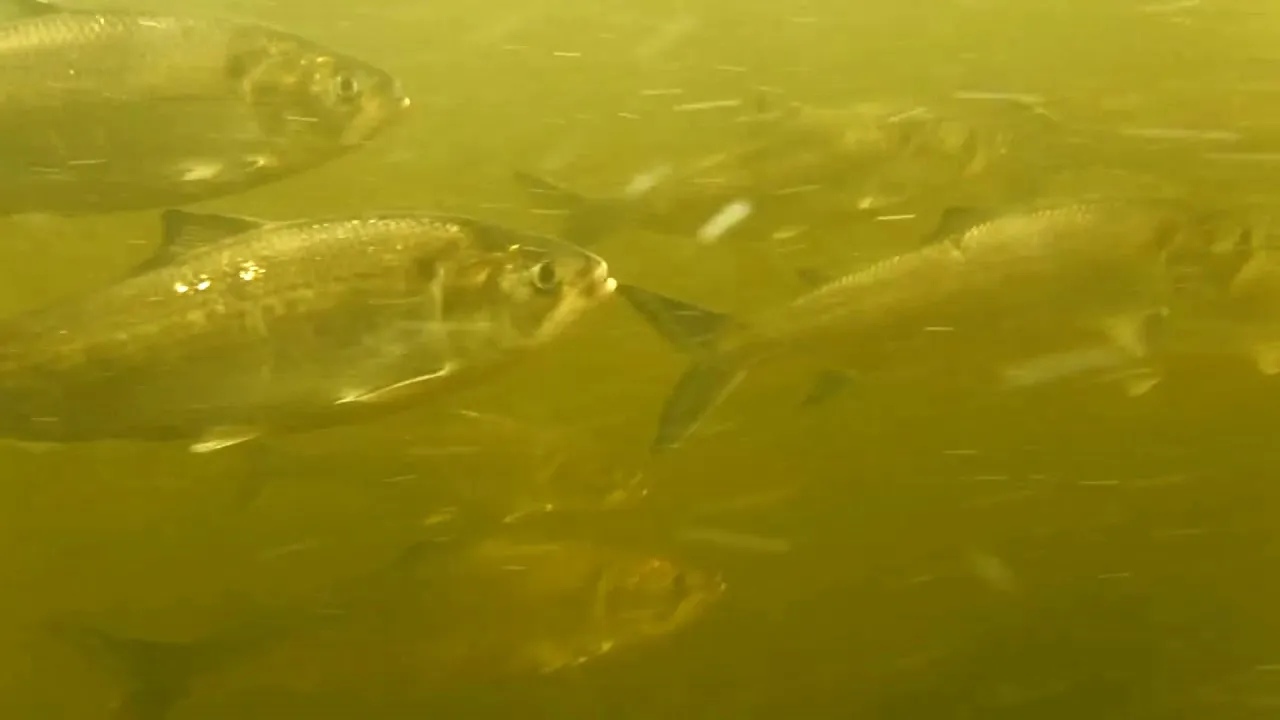






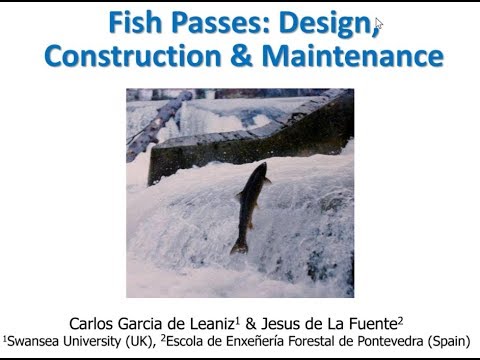








A fish ladder (or fishway) is a structure designed to help migratory fish like river herring and shad bypass dams and other barriers by using a gently sloped trough lined with symmetrical wooden baffles that create resting pools and controlled water velocities, allowing fish to swim upstream to their spawning grounds; these structures typically achieve over 80% passage efficiency when properly designed, considering factors like water velocity, resting pools, flow attraction, and the specific swimming abilities and behavioral requirements of different fish species.
A Fish Ladder Design Explained by NOAA Ecologist
Added:Understanding the life cycle of anadromous fish species like herring and shad, including their migratory need to travel from the ocean to freshwater upstream to spawn.
The ecological impact of anthropogenic barriers, such as dams and reservoirs, on river connectivity and aquatic population dynamics.
Basic principles of fluid dynamics, specifically how water velocity, slope, gravity, and turbulence interact in open-channel flows.
The concept of fish swimming biometrics, including the distinction between sustained swimming speed and burst swimming speed relative to water currents.
A comparative analysis of alternative fishway designs, such as vertical slot ladders, pool-and-weir systems, nature-like rock ramps, and fish elevators.
Methods for monitoring and evaluating the success rate of fish passages, including PIT tagging, acoustic telemetry, and computerized monitoring systems.
The environmental policy, engineering, and economic trade-offs of dam removal projects versus installing fish passage technologies.
Advanced design challenges in multi-species fishways, particularly how to accommodate species with differing swimming mechanics, such as American eels or benthic organisms.
3.9K views40likes19:20Original Release: 2022-05-21
hi i'm david gregg with the rhode island natural history survey this video is about migratory fish because this is world migratory fish day i know when i say migratory fish a lot of you are probably thinking about pacific salmon leaping up waterfalls here on the east coast our fish are either more lacidasical or more cleverly adapted take your pick herring like we have in the saugatucket need continuous swimming they don't jump so if you're a herring what do you do when you come to an obstacle like like this fish ladders the rhode island natural history survey presents videos to showcase the animals plants geology and natural systems that surround us and the people and organizations working to understand and conserve them this is the grand mac daddy of fish ladders at least here in the northeast so what makes a fish ladder a good fish ladder or a bad fish ladder well to answer that question we've gone to our local fish ladder expert jim turek restoration ecologist with the noaa fisheries restoration center he's going to give us a technical tour of the horseshoe falls fish ladder in shanick rhode island so the uh these fish which include uh l wife and blue back herring on the kwakatuk river they come up in the springtime the adults return from the ocean after spending three to five plus years in the ocean and they come up each spring and it's all dependent upon the water temperature and so when the water's too cold the fish don't arrive as early and they spend more time down in an estuary whereas once water warms we start getting up into the 50s and 60 degree fahrenheit temperatures then the fish start moving and uh there's a certain sweet spot that they're going to be moving up river to find their spawning grounds so we're standing here what's what's called the exit way the fishway right now so that's the upstream end where the fish are exiting the fishway now if you're a fishery biologist you always think about talking about a river from the downstream looking up in contrast engineers typically look at the river downstream so uh they're they're standing at the at the far end looking down river and so they often talk about okay we're going to fill the fishway on river left and so today we're on river left and charlestown on the pawcatuck river in the village of chatting this is the what's the horseshoe falls dam was first constructed we think somewhere in the 1830s now we don't have great information on when the actual first mill was built along with the dam but it's somewhere uh in the order of the 1830s 1840s there was never a fish way uh associated with them this dam so effectively this dam and a series of other downstream dams on the falcon duck river eliminated the passage of uh river herring american shad atlantic salmon and american enlarging american eel as well and so it wasn't until 2012 when we built this fishway that it allowed fish to pass up river from downstream and and so it was a long long time coming to get uh fish passage restoration on the block so we uh constructed this technical fish fight back in 2012 uh with uh economic stimulus funds from 2009 and uh this is this fish weighs over a million dollars at uh when it was constructed uh and um it passes fish uh we we have done studies on it the the river herring the pass through this fishway it is somewhere over 80 passage efficiency so we feel pretty good about how it was designed and built is inside this uh throw-off that we're standing on is a series of baffles they're wooden baffles uh i believe there's a total of 31 in this fishway they're spaced every two feet and they sit at a 40 degree angles each baffle it causes the the water comes down and basically is kicked back on itself so it actually drops the velocity uh to a slower rate than when it comes the water comes into the baffle and so the water is coming down and forms miniature eddies above and upstream of each baffle and so the when you think about the fishway the highest velocities you would you would think would be at the bottom of the fishway right but in fact the highest velocities are at the top of the fishway and as the water passes down through each baffle it's slowed and so the slowest velocity is at the bottom until you get right at the entranceway where there's what we we narrow down the entranceway to what we get is an attraction jet flow so we actually speed up the velocity for a very short distance when it dumps into the uh entrance pool or tail race our tail walks our tail water and that's where the fish are attracted into that flow so we need a a good attraction flow and then once we get them into the door into the fishway then the velocities are slower so right now we're at the uh we're at one of the resting pools uh and and and so what this is it's it becomes a flat slope with no baffles in it and it allows the fish a time to rest after they've gone up a section of the fishway and so it's it's called either a turn pull a resting pool but the main goal is to uh to allow the fish to take a break because of the fact that they've been using burst speed to go through those sets of baffles and there's a whole dimension of how even turn pools are designed they have to be the right length because we want to slow the turbulence and velocity right or minimize turbulence you increase the width so that the the velocity slows or the cross section when you increase the cross section no we didn't change the cross section it's the length we don't change you can't change the cross-section you can only change the length of it shad often stack up on the inside of those turns they create eddies and uh uh american are very um uh behaviorally challenged they're they they they have they have some very strange requirements and uh they are finickies in some aspects and uh and so that's the kind of thing that we're always dealing with fish behavior as well so you have fish swimming capabilities and behavioral aspects uh american don't like air bubbles they do not like air turbulence entrainment so they're all different they're all different fish yeah different size different shape different times a year too right yup the shad come up later so the shad run typically starts although there are shad in them in the lower connecticut river right now the shad that come into the pocket tech usually show up in early may so we've got about another um two weeks or so before the shad really start taking up up the pocket tuck whereas the aloe life already showed up you know back in late march so they're they're ahead by over a month and blue back hearing the peak of blue back hearing runs typically in a river dreamer river about three weeks after the elowife peak is and so they're all staggered i'm sure it has to do through evolution anyways why they were staggered in time because you can only fit so many fists through a stream so we're down at the entranceway right now so we're at the downstream end of the fishway what's called the entranceway and so uh we're the we really want to have a what's called a float jet coming out of the fishway that attracts the uh the adult river hearing and shad and the other fish that are passing to come into the fishway so we have its design today we've got a lot of water here but in a normal condition during the spring uh we have a nice flow jet that comes out into this pool at the entrance where the fish are typically stacked up and they're all waiting to go into the fishway to take their turn and um and that's how they get in here uh and so the flow jet which typically is about a six to nine inch drop uh you know from the entrance to the fishway into the into the entrance pool is that float attraction that gets fish into the fishweights the fish are following the currents yeah and otherwise they would just end up in the they just end up over there some of them don't find the entrance and they'll end up in the in the falls of uh the dam or the spillway of the dam so when the juvenile hearing are coming back down we shut down the fishway so all the water goes through here and it dumps them out so they don't have to go through all those baffles because if you think about when that when the juveniles are these they're very uh fragile yeah and so they're you know two to maybe two and a half three inches long and um we want to minimize injury of the juvenile hearing going out and so what we had and that's if they hit if they were to hit the baffles in particular and they lose scales and they can they can uh there could be mortality from that so we have this we developed this uh uh bypass out migration uh route and so essentially the fish only have to pass through us a much shorter distance of baffles and then they get shot out into the river and they drop down in the river even with lower flows and so we always develop an out migration design to make sure there's enough water depth that uh from the fall of the fish because they're not they're essentially going to fall into the water and we want to make sure they're going to fall in a safe place and not on a bunch of rocks so the eels go so this is completely a completely parallel separate setup so american eor is a catagous species so they spend most of their life in fresh water the adults spawn somewhere mysteriously in the sargasso sea down in the caribbean within the bermuda triangle area and then they die afterwards and then so the the larvae that come off of a spawn in the sargasso sea are carried by the currents the atlantic currents and come off in gyres uh see water gyres in the ocean and wherever they land they end up going up some estuary or small stream or river that attracts them when they become what's called glass eels and so get up past the berry they either have to climb a wet uh face of of a wall or gr grass during a wet grass a rainy night to get over upstream of a barrier but the way these eel passes are designed we actually have two different substrates inside that we keep wet so we trickle water flow very small trickle flow through different two different size substrates one is called bristle substrate and so if you think about a strip that's six inches wide and extends in this fish eel pass for about 50 or 60 feet that's what it looks like is a strip of bristles that are stand up uh maybe a couple inches above the the substrate itself and those are set up for the smaller eels like elvers because of their body size and then on the other uh right next to that we have another six inch strip of these larger size cones and so the cones are for set up for what's called larger uh yellow yellow phase deals and so these are juveniles that may have already been in the river a year or two and they are just decide for whatever reason to go upstream and of course they're bigger and they're and they have a a a movement pattern very similar to a snake and so they need some kind of structure to uh to mechanically make their way up through the set of cones across this going actually yeah we had a we had to design this over the fishway and then think about this it has to go up there then so you don't see it but it's in there it was a it was quite a feat this was probably the most expensive eel pass perhaps on the east coast anyway wow yeah yeah and it was we tested it we had a prototype that was tested up at the conti uh fish uh uh conte anatomist fish lab in turner's falls massachusetts so one of the questions i had was do all so herring they go up to spawn and then they go back they're not like salmon that die they go once and that they they die right yeah so uh the the river hearing is a multiple spawner it does not die after it spawns it goes if it survives the long journey to get up river uh and can go back down and still be alive it can go back to the ocean for another year and then return once again and so there are repeat spawners that we have for for river hearing it's known that some fish have returned four or five times but in more recent times we have many fewer repeat spawners uh because of all the predators on the ocean and on the way back to the ocean and so there's a lot fewer lower percentage of river herring that we typically have is repeat spawners mostly less than 20 percent of the fish that return may be uh repeat spawners so the other question i had was when you see all these fish below the below the dams just sitting in the current do some of them just give up and go home or i mean go back to the ocean or do they all end up going through uh so when you find uh a bunch of uh uh river hearings stacked up downstream of a a barrier uh they'll they'll spend quite a bit of time trying to get past that barrier uh no fish way is is perfectly uh it works perfectly some fishways have a high passage efficiency but a lot of them do not they'll be lower and maybe 70 80 percent of the fish pass uh a pretty good uh fishway that is uh designed so a good a good passage would be in the 70s or 80s yeah good passage what's called passage efficiency probably about 85 percent uh and higher would be considered a good fish way good functioning fish way and we've learned a lot over the years uh in how these are built and are designed and built and the fish that gets stacked up downstream of a barrier or a fishway they're waiting to find that entrance they're waiting to try to pass that journey uh over that barrier and um they uh they typically uh will do that until they get exhausted and so some fish die that don't uh that are unable to pass and um there are some that will hypothetically give up and or they may spawn uh downstream of the barrier if it's possible uh but some do i think in fact give up and and go back to the ocean or die from exhaustion right or just sit there long enough to get eaten by a gull yeah that's another issue is uh the longer that the fish have to wait to pass the greater likelihood is they're going to get eaten by a a cormorant a goat an osprey uh heron uh mink that are along the edge there are so many animals that feed on herring they're they're a foundation fish and they they basically support both uh saltwater marine uh and freshwater ecosystems with an incredible number of uh predators that seek to eat them so for fishways it really takes a blending of multiple disciplines to figure out how to design uh and construct these fish ways so you really need to understand the fish biology the biology of the the species that you're trying to pass so in this case mostly river herring and perhaps american shad uh up here at uh in shannon we also need to have uh engineers and they're typically both civil engineers and structural engineers because with a technical fishway a lot of uh knowledge is needing needed in both civil land and structural engineering and lastly you really need somebody with expertise and uh hydrology so a hydrologist understands the flow of water and the amount of water and the rate of flow that it determines how much water is going to pass through the fishway to accommodate the fish that have a certain uh swimming capability and uh and so we put that all together and that's how we get a fishway design you
Up Next

7:18
San Clemente Dam Decommissioning: River Restoration & Engineering Design
@kleinfelder
203.7K views•2014-05-27

12:54
Triumph of Orthodoxy Icon: Byzantine Art & History Explained
@BenCallan
2.1K views•2024-08-06

9:49
FastAPI vs Flask vs Django: Choosing the Right Python Web Framework
@TechWithTim
302.5K views•2024-05-26

1:42
Game of Thrones Opening Credits: A Cinematic Analysis
@gameofthrones
46.3M views•2011-04-18
Related Study Plans & Knowledge Roadmaps
Structured learning paths in General & Interdisciplinary Studies
general-studies
Elevator Engineering: History, Physics & Cities
01From Hoists to Safety Brakes: The Dawn of Vertical Lift
02Hydraulic vs. Traction: The Engineering Physics of Elevators
03Modern Speed, Safety, and Algorithms
+ 2 more learning modules
12h5 modules
Explore Roadmap
general-studies
Rubber: Material Science, History & Geopolitics
01Origins of Natural Rubber & Mesoamerican History
02The Chemistry of Natural Rubber & Vulcanization
03The Geopolitics of the Rubber Boom & Colonization
+ 2 more learning modules
12h5 modules
Explore Roadmap
general-studies
Containerization: Evolution, Logistics & Trade
01Ancient Trade & Bulk Cargo: Amphorae to Barrels
02The Industrial Revolution & Cardboard Packaging
03The Containerization Revolution: Malcom McLean
+ 2 more learning modules
12h5 modules
Explore Roadmap
general-studies
Textile Tech: Evolution, Labor & Global Impact
01Pre-Industrial Textiles: Handloom & Cottage Industry
02Mechanization: The Spinning Jenny to the Power Loom
03The Factory System & Global Labor Transformation
+ 2 more learning modules
10h5 modules
Explore Roadmap