















Fish passes are essential for restoring river connectivity disrupted by barriers, but their effectiveness depends on matching design to specific barrier characteristics and target fish species. The key principles include: (1) No single fish pass design works universally due to the vast diversity of barriers (290+ types in Europe) and fish species (500+ in Europe); (2) Fish swimming endurance decreases nonlinearly with increasing water velocity, meaning critical velocity thresholds must be respected in design; (3) Fish passes should be viewed as stopgap solutions rather than permanent fixes, as they often fail to fully restore ecosystem connectivity and may impose artificial selection pressures on fish populations; (4) Effective fish pass design requires comprehensive site assessment including topographic surveys, flow measurements, species-specific swimming capacity data, and consideration of attraction flow and maintenance requirements.
Fish Pass Design: Key Criteria for River Restoration Webinar
Added:hello welcome everybody we're going to kick off this webinar session I'd like to welcome all participants who have arrived and also our speakers for today my name is a silver from wetlands international European Association and this is a webinar in a series of talks on restoring River continuity and actually it's our final session of this series I'm pleased to see many of you have arrived today and I'm also pleased to see our speakers here please let me start with some practicalities if this session is recorded and we will publish the video online afterwards it will be accessible through our website europe dot wetlands dot org and so also find it later there this session will be a presentation by our two speakers of more or less an hour maybe a bit more and afterwards all participants will be able to ask questions please if you have any questions and use the chat box in the panel on your rights at the end so that I will collect these questions and then I will read them out loud and give our the opportunity to answer your questions first of all let me introduce our speakers for today we have professor Carlos Garcia de Leon EES here who is the principal investigator and coordinator of the amber project he is a professor of aquatic Biosciences and director of the Center for sustainable aquatic research at Swansea University his background is a marine biology from the University of Victoria and he has a PhD in zoology at the University of Aberdeen followed by a postdoctoral research at the University of Glasgow and SATA sell London professor Carlos he has over 30 years of experience in the fields of Salamone behavior conservation and ecology and he's been awarded the 2014 also a prize for his contribution to the conservation of Atlantic Selman in Spain and where he pioneered in the early 90s on the removal of old unused barriers to increase stream connectivity a lot of experience and glad to have you here today Carlos our second speaker who will also contribute to this presentation is he Sue's de la Fuente Isis has a background in forest engineering at the higher Polytechnic school of imagery for four years he has been working on designing and building fish passes in Ponte Vedra in Spain besides assessing environmental impacts of infrastructures in rivers after several positions as a civil servant he Sue's working on forest management issues started teaching in a vocational and professional training high school on the topics of ography botany and forest management welcomed crisis and will now move to the presentation please Carlos the floor is yours and start okay so thank you very much Eve and I'm very grateful for giving us the opportunity to present this work today ok so this is what we are going to do this is the points that we would like to cover first we are going to ask ourselves why do we need fist passes then we are going to explore the different fist passes which are available and we will see that one size does not fit all then we will look at some principles of design and construction that will be led by biases by my colleague issues and then finally we will look at what is required in order to assess whether the fist passes are working or not in terms of monitoring and finally I will wrap up with some lessons that I think have been learned over the last few decades so first question first why do we need these passes well it has been said and I think for the reason that everything that impacts on of fish in freshwater and ecosystems in freshwater start with an age the first age is of respiration is harvest the second age has been habitat loss the third page has been hatcheries and perhaps more specifically aquatic invasive species and the fourth age which is the subject of this talk has been obstacles barriers in more often than not caused by hydroelectric development so this is the fourth page that we are going to be dealing with today now why is River connectivity important well I can think of many reasons I'm sure you can think of other reasons as well but perhaps the single most important reason is the following is that healthy rivers are flowing rivers okay so it's unnecessary it's not sufficient but it is a necessary condition for a healthy river is that it should flow and this is not new of course the systems from the concept of the river continuum concept that was developed in the early 80s and basically it says that you don't find abrupt or sudden discontinuities in river ecosystem so from headwaters to the mouth you find the predictable and a gradual change in production and respiration in a stream order in the depth in the water quality and also in the flux of nutrients okay so that River continuum concept underpins what is regarded as the structural and functional integrity of rivers so that's a very powerful reason I think why we need to maintain connectivity but it's not the only one the second reason and this is more specifically related to the topic of our talk today has to do with fish is that fish have a limited ability to change the environment they live in and their main weapon the main response to adversities to move okay so I think is useful to regard movement fish movement as a reaction to adversity and that underpins determines individual fitness it underpins the so called portfolio effect to what extent metapopulations can be leaked and it also underpins the resilience of these fish populations that we are going to be dealing with in this talk and in fact assessing the fact of connectivity of as water systems has been one of the top priorities according to the European platform for biodiversity for such a strategy and this is very much an ongoing topic of discussion and of research perhaps misconception is that only magnet or fish need to move and there is nothing farthest from the truth all fish species in freshwater moved to some degree and whether we call the magnet or not is just a matter of degree and this is an idealized diagram of how fish actually need to undertake seasonal movements throughout their lives so we start with the spawning grounds and very few species spawning the same places where they grow they choose the spawning grounds for a reason and often it's because it's a place where there is as much competition from all the year classes and as follows that were thieves are born is not necessarily a good habitat for growth from there they disperse in what can be regarded as the nursery habitat and then perhaps they may undertake feeding migrations to a feeding habitat as they grow in size and get older they may go back to the spawning ground and repeat this cycle again or they may in some cases spend the winter or in some cases the summer in a different part of the river those are seasonal movements and from that overwintering habitat or overwintering ground they may then go back to the spawning ground so yes it is true that some freshwater species spend a lot of that time in very localized and limited in space and home areas but it is also true that they need to disperse during a critical stage you see that life cycle so what happens if they don't well I think that months in evidence is accumulating in the last few years to suggest that even the species not regarded as resident I can't can suffer a lot if they are prevented from moving so it has been determined that the importer for seasonal migrations a seasonal activity has been grossly underestimated and that even amongst resident populations or the resident component of a population there is a substantial degree of entry specific heterogeneity in movement and that this mobile component is critically important for maintaining the fitness and the resilience of populations okay so it's very very important to remember as I said that it is not just migratory fish that need to move in freshwater more generally I think we can classify the impacts of barriers or the loss of connectivity very broadly into two types direct impacts which more often denote will be the result of blocking disruption or delay movements that is going to reduce the carrying capacity of the system in extreme cases it may lead to circle alley effects that is where the reproductive success of populations diminishes rapidly a very low population abundance it will also can generate as we are discovered in recent years substantial artificial selection this blocking or disruption of movements doesn't affect all individuals the same it affects some individuals more than others and that imposes a certain degree of artificial selection it can also of course increase mortality directly in hydro turbines in streams it can't compromise the fitness of populations by exacerbating the effects of crowding or the tracks of overexploitation particularly for migratory fish and it can also increase the impact and the prevalence of infectious disease because it is a source of estrus indirect impacts are also perhaps very important as well and that of course will include the impoundment and the loss of habitat which occurs both upstream and downstream of large dams dams are built for a reason and the reason is because they draw water so in most cases you are going to find that a stretch of river is not to be the void of the natural flow regime and very often these stretches are going to be sediment starved which is going to lead mainly to substantial extent of erosion the water quality is going to be affected in the case of large dams temperature is a case in point and also the movement of nutrients is going to be disrupted the hydrological cycle is also going to be affected in large cases and we go from a situation where there are some natural changes in flow regime to one where low flows tend to be higher than they would normally be and peak flows tend to be lower in extreme cases which is a different situation we may have problems with hydro picking which some people have equated these two so called ecological traps and it's an ecological trap because it forces or it encourages fish to undertake migrations think in the very sensational peaking flow at the times when it is outside a spawning season and when the flow ceases you find situations like these versus betta stranded in parts of the stream which now don't have anymore flow so what can we do well is a big big problem and it's a particularly insidious problem for European rivers because there is a very long tradition perhaps more than in North America I mean the new world of building barriers or building dams and this is what the project that we have we are engaging is trying to address which is called adaptive management of barriers and European rivers which tries to apply adaptive management to the process of restoring connectivity and of course what solution there is going to be the building of fish passes this project is horizon 2020 project it involves 20 partners from 11 countries and our motto here is let it flow and it includes academic institutions eight economic institutions for large in some cases investor partners which are hydroelectric companies for NGOs and also for government organizations and I encourage you to visit our website when you have at the end of the talk of you if you have time okay so perhaps the first thing that Amber is trying to address is we need better decision and prioritization tools it's never going to be possible to be a face process or to overcome the problems posed by barriers and thirdly so there is a real need to try to understand which barriers are in most need of mitigation which bodies are not and also what options do we have is it just a fish pass that we can do or are there any other options so that's going to be the term mean the impact of these projects is going to be determined by their number but also perhaps more important by their location and by so called possibility how easy is for somne for fish and other aquatic fauna to overcome this party and of course the mitigation options are going to be determined by the cost very often by opportunities sometimes this is more important than cost and also by definite benefits which is perhaps one of the big announced that is really becoming quite challenging to estimate and the options and before we go into fish bus program we like to stress this is the first option we should be done the body will be removed turn the body be breach and if that kind of be learned then is the time when we should be considering other options including a fish pass but let me summarize very quickly what are the advantages of not building a fish pass and I think they should not be underestimated so the advantages of breaching the barriers removing it completely are several are very important first of all it solves both upstream and downstream passage something that very few passage facilities are able to do second typically not always but typically it's a cheaper option than building a fish bars third is Jeeves an integral restoration of the ecosystem as a whole is not just you know a patch is something that that basically overcomes the problem is get rid of the problem forth it addresses other problems which are important in the case of all barriers or dams like for example structural safety and finally and this is very very important it does not hinder future options very often we have found situations where this path has been built and great expense has only been found it was not working properly but nothing is being done simply because so much money was spent on it okay so this is very important to remember if we spend the money is going to be very difficult if it doesn't work do anything about it and of course there are also shortcomings breaching barriers or removing barriers is not always possible there are some shortcomings and the third promise is that there is not always practical or sizeable they may be a short-term mobilisation of sediments sometimes this can be toxic there isn't as much experience in Europe as for example there is in North America and we have much more experience building fist passes than removing dams there are issues related to culture and related to the historical value of some of these barriers some of these wheels or dams which need to be taking into consideration sometimes they have a value of their own so we cannot they cannot be removed and finally they have mean the paper world and the bureaucracy that is involved sometimes can be quite daunting so it may take a long time but I think it's important that before we embark on building a fist as we'll remember that that should not be your first option okay so that's the thing we have decided we have opted for a fist pass which one are we going to use well let me tell you from the start one size does not fit all and I'm sure you know this but perhaps sometimes we forget why it is so it is the case because Barley's differ there isn't a single type of barriers all barriers but not all but they are very different as we'll see in a moment second fish species differ remember fish and most abundant type of birthplace there is more fish species than all the other vertical together there's a huge degree of variation so that means that no single fish Pass is going to be best under all conditions so this is the results preliminary data collected by our colleagues in Italy based on the inventory of bodies in European rivers and one of the things that was shocking for us was to discover that there are 290 different types of barriers of course sometimes is the same barrier which is being called with different names but more often than not they represent genuine differences in body morphology body topology so it's a huge variety of different bodies that we need to take into account they differ in size the differing location they differ in the use the different in the area which is impounded upstream they differ in the extent that they obstruct more risk water they differ in the materials they were used to build them they differ a lot in when they were built and they differed also on the state of conservation and all these things are going to impact fish differently so I'm just going to flip through quickly of course most of you are will be familiar with the large dams but most most aces these are used for hydroelectric generation but increasingly we're encountering smaller harder developments Weir's which are not which are not as high as the typical dam from were built in the 50s and 60s but much smaller in the headwaters of some of our streams we also have old wheels that were used for water mills and irrigation and that papered most of our streams of throughout Europe and some of them are in a very very sad state of repair they serve no useful purpose but they are there and they are still causing some damage increasingly and this should not be forgotten but yours are also the result sometimes of Defense's there is no physical barrier here in terms of a structure but these is going to create velocity so high that is going to be almost impossible for many things at low flow to overcome these sort of stretches in the rivers I'll just give you some extreme example of these sadly this is happening in national parts in Europe this is this is in this painting because the dropper will the flood defense approach of heart engineer has gone to this extreme where they have actually cemented even the bottom of the stream of course it's impossible for fish regardless of flow to overcome this sort of structure we also have increasingly converse which is seen by engineers as a cheap substitute for low bridges and they are everywhere and their number is increasing exponentially and the problem with this is that we have very limited information of where they are or how many there are because they are not normally surveyed in barrel inventories and finally it is increasingly a problem particularly for South from the south and part of the Europe there is no worst barrier than no water and this is happening increasingly more and more this is a Salmon River this is in the median Peninsula this is one of the most famous among rivers of Europe in terms of how old these populations are and for several months during the year it has no water simply because it doesn't rain as much as it used to but also because there is much more people many more people drawing water from these rivers than ever before okay obviously that's about here that's the greatest part ok thankfully the data we have been collecting suggest that most part is actually quite small ok so it is it follows this decay curve where the probability of the abundance of badness is almost inversely proportional to its height so we have the vast majority of these barriers are between less than two three metres okay so in a way that's good news because of course they approach to improve fish passage in this part this is going to be much easier than for large structures okay so bodies are not the same as we have seen but also fish are not the same and unfortunately we know quite a lot about a few fish about the swimming system in other similar abilities but as it happens the feasible which we know the most happened to be the strongest swimmers these are the so-called sport fish but we're solids and there is a long tradition of designing feast passes for some ones unless it happens not only they are the strongest swimmers they're also some of the fish that had the largest size so fish passes which are designed with harmonious in mind are unlikely to be any good to most of the fish and just remind you that in Europe alone we probably have in the order of 500 different species of fish of which cermony suggests a handful so information on swimming ability and swimming stamina for most other fish let alone in vertebrates is a very very bad she in the best of cases and information we have refers almost exclusively to upstream passage there is very limited information on the stream passage of other species other than Somalis this is something that needs to be tackled rather urgently because also it has a bearing on the spread of aquatic invasive species we also need to know to what extent these structures that we are now starting to design will make the problem of aquatic invasive species worse and information on the critical swimming speeds or some of these species is becoming rather urgent fish as I said are the most extreme and heterogeneous type of birth rates and they differ a lot in life history trace and they also differ a lot on swimming stamina and just - this is a rough approach if we just look at the variation in so called aspect ratio of the colder thing which is defined as the ratio between the height raised to the to the square divided by the surface area and we can basically very roughly classify the fish into two types those that have so-called lunate tails which are designed for efficient high speed they move less water by using these units tails and this is typical of cruisers this is typical this is a million example but in applies also to freshwater this is typically the situation for fish that can go faster for longer on the other extreme will have so-called rounded tails there's a species which have a low aspect ratio they can swim for very long but they because they move more water and this is the sort of tail that you want to have if you're a birder if you are required to swim in short bursts okay you are not be you're not expected to swim fast for long periods of time well as it happens and this is just a sample of fish if we look at what is the distribution of this aspect ratio in some of the European species were dealing with we find that yes some of them have a high expectoration like ceremony some days and these are species which are going to have good swimming performance but many of them are species which have a very low aspect ratios and they're almost as abundant as the others okay and as I said information in the swimming ability of these species is very very limited indeed so we have concentrated our knowledge on this species I will have forgotten suddenly those ones of course one of to make matter as much as I mentioned one of the critical determinants of the critical density that species fish species can exceed is how big they can they can be and of course some of these so-called negative species can be quite large but some of the others that have even the aspect ratio are going to be much smaller so it's almost remember important to remember that it is the face that we do not see because they are small the fish that are of no interest for the fishery because they don't provide you know good sports the ones that I also need to move and also be need to be taken into consideration when we design these passes so swimming endurance and this is a comparison at the Feast of the same size so their own feast of 15 centimeter they was all this measurement would all take in a 10 degrees and basically what we found here is the relationship between the water velocity that they subjected this species to and endurance time how long did it take before the phase not exhausted and as you can see first thing to notice is that swimming endurance is not a linear function of what the velocity I love what the velocities regularise of the species they can go on and on no problem but then if which is a critical velocity where all of a sudden there is a drop a sudden drop in performance and the face basically just stops and where they stop obviously differs depending on the species so that will differ with this size and also with water temperature this is a relatively recent data collected by churches in Spain where they use open channels basically in this case they look at two species this is I think an interesting piece of research where they have where they see like in this case is a barbell where the distance they can travel before the slope is they have modeled this as a function of what the velocity in the channel so as you can see at 1 m/s the channel was only 40 meters long so basically every single phase was able to travel that distance more than 80 percent 90 percent of the fish if you go to 1.5 then you find that 50 percent of the fish will stop at about 13 meters and so on and so forth when you get to 3.5 meters per second what you find is that 50 percent of the fish when enable to travel farther than 3 meters so that this is the phase time stream diminishes very rapidly in a nonlinear fashion at high velocities and this is one of the key criteria that needs to be taking into account as we will see in a moment when we design fish passes so let's turn our attention to the fist pass this rupal so called fist pass language well so this is not new it's interesting to notice that the first mention of his passes prolly date more than 500 years ago there is evidence that in 1500 the in the Ming Dynasty in China they was explicit reference to the need for a fist passage but perhaps the fist passes the first fish pass that was properly documented it's credited to France where they use in 1650 they use bundles of branches to create the steps in order to bypass water mill later in 1678 and I'm very fond of this map you can see where legislation was passed by royal decree that made it illegal to block the passage of magnetic fish and in this beautiful map you can see the so called Salman escapades which prevent the fish passage and the Dean had to intervene to make sure that the magnetic phase which sustain this important fishery were they able to go all the way upstream so rules and decree was passed regulating how these systems should be built in 1700 in the city of for month there was a litigation against the owner of Adam and of his way was required in 1790 the state of Massachusetts passed legislation requiring fish passage in 18 as you can see there 37 a fish way patent was filed by Richard MacFarlane of New Brunswick in Canada to bypass a lumber mill and it's only recently that perhaps the more advanced fish passes were actually designed and I think it's important to remember that the Buffalo system that was in a moment was invented by mr. Denis who was a civil engineer in Belgium and that was developed in the 1910s and with Atlantic salmon in mind that was later modified in 1983 by Lara near and colleagues which they modified the button the original Daniel fish pass with low-floor bottles and clean walls as we'll see in a moment okay so these fish passes the ideal fish pass should have some characteristics which are important to remember the first one is that it should not hinder volitional movement and by volitional we mean that it should not impede the free movement of fish whenever they please second it should work well for all species another all flows third you should work both upstream and downstream of course it should be cheap to build and easy to maintain and I'm sure you have the safest path doesn't exist so the six basic types of fish passes there are many variations but I think they can be conveniently classified into those which made use of pools and Weir's or vertical slot is a variation of those those that are modifications of chutes or ramps with baffles structures that will slow down the flow freeze lifts and lobster will simply take the fish from downstream of the dam upstream of the dam through water lift nature like nature type of nature light fish waves which are becoming much more the subject of much more research in recent years and finally a relatively recent development called the fish - which we will show you in a moment generally speaking I think this phase all these fish passes can be classified according to four criteria the first criteria is whether they're hard engineer or whether they are nature like the second criteria may be whether we're dealing with upstream or downstream fish passage because suddenly different structures are required type of these very different problems the third way of classifying the fish passage could be by looking at whether we are dealing with volitional movements of whether we are dealing with assistive passage finally we need to deal with either flow which is plunging or flow which is streaming and it may be said that the risk of being sarcastic that fish passes can also be classified has been said between those that sell the word and those networks sometimes okay so according to the definition I have to have produced this little classification topology where the heart engineer fish passes which are the ones we are going to be dealing with which are the most common ones are over here this can be classified into upstream or downstream the upstream ones can be classified between volitional movement or assisted movement and the volitional ones can be further classified into chute or pool type the chutes would include those that have baffled structures or those who have substrate as elfis passes and the suggest modifications of the original de nil design of the 1910 the poolside fish passes can be concluded for typical fish passes the pool and we're the vertical slot the ice harbor design or serpentine approaches and the system was will include locks and leaves Archimedes screw through open hole or not office pass a proper but this is a very popular and in some cases efficient way of moving fish around and three ciphers of various types and finally in terms of dancing fish passage I think we will be dealing with guidance structures exclusion devices ways of bypassing the dam and also the application of truck trouble hole approaches in terms of nature like approaches to these passes I think they can be conveniently divided into bypasses which are represented by side channels and ramps of various types which can be further classified into roughened substrates or step tool approaches so I'm just going to flick you flick through relatively quickly just so that you have an image of what fish passes were reading about before he Sue's goes into the specifically design criteria this is a typical bull type pool a weird phase pass which is perhaps the most common and most numerous type of fish pass you're likely to encounter at least in Europe this is a modification sociable type but instead of having pool where you have this structure which is a vertical slot which produces achieve superior flows in terms of hydro dynamic performance this is a so-called ice hard world type of fish pass which is as design in America and basically instead of just having it has two orifices there and passage is achieved at the two sides of the of the vessel of the two sides of the pool in terms of shoots this is the original the middle fish pass where you find that you have a button at the bottom and also on the size and this is inclined 45 degrees upstream here you have two such diminished passes for relatively small River this is at the modification that Vladimir and colleagues developed based on the original design does the so-called super active buffer which dispenses with the need for lateral muscles so it concentrates all the buffers in the bottom this is a modification called Alaska tides sometimes you may see this being called a chevron type this is again some of this chevron type or super active lada near muffled system and one of the advantages of this type of systems is that it can be made in modular sections so relatively easy to install and it allows free passage not just of sediments but also of canoeist and another phone perhaps a specialized type of a suit is fish passes that have been designed specifically with the need of eels in some cases garage seats in the southern hemisphere which are faced have done spent some time outside the water and what they need is simply a wood surface where they can basically wheel their way through and overcome these barriers that in other cases be loss of fitness in terms of a sister fish weighs fish so-called fist lift the board office leaf is perhaps one of the best-known this game was fist pass of choice large dams as it was the case here in the river channel in Ireland because it was impractical impossible to build other types of his passes and this was seen as a good compromised unfortunately issue in relatively recently that people have discovered that most of this fish are actually not using the fish box one modification of the lock approach is basically to simply attract the fish towards a lock and then use that to load a lorry to load the truck and that truck is simply takes the face upstream and the face are basically to these upstream of the dam that is done in many cases in places where it has been shown that the original fish lift it wasn't working this is a relatively recent development this is some of our collections of hunting will study in this particular site which is the use of an Archimedes screw which basically takes face from the bottom and then just transport them upstream that gently because this is a slow rotating Archimedes / relatively small distances and finally there is an increasing interest in so-called cyclones of various types one was recently installed in the UK by the Environment Agency I believe last year there is a company in Holland that manufactures days and apparently they have met with a lot of interest and they have been they appeared to be very successful in some cases - one particular type of siphon which i think is extreme extreme interesting and it's a pity I can show you the video because it's too slow the but I have added the link to the video so you can look at your perusal after you finish after motion stay talk is the so-called air vacuum that has been developed manufactured by woosh technologies in America that's basically a system that uses an air vacuum to basically propeller the fish over a hose or they call it a glide over great distances as we will see in a moment so this is the hose or the glide you can see a fish inside this is full of water and what they do is that they create a pressure differential in this machine that basically expels the face at the considerable velocity over the dam and as I said you can see the video over there there are a couple of videos and this is a very very interesting new development basically the way it works is an air blower actually a differential pressure in one end to the other and then positive pressure is created there basically that impels or expels the fish in these in this house this is the inside the house it has pressure of about 6800 Pascal's the manufacturer claims has shown that there is no no loss of his lime or scales and doesn't appear to interfere or impair reproductive performance of the Salmoneus they have tried they manufacture different tube sizes that she caters should accommodate faced from anywhere from 500 grams to over 15 kilos and I am told that they are in the process of manufacturing a new hose that will also cater for even a smaller space than this this is how it works does the entrance so far the species that this company has been able to move successfully exploit impressive include you know magnetics and Moniz but also matches model and delicate a species like for example American shot with success this is know if you can see there this is in Washington State the holes in this case is 530 meters in length the height difference that they need to overcome is 50 meters high and it takes roughly 60 seconds for the face to be transported from the bottom from the tail race all the way upstream to the dam okay and then by adjusting the angle and the pressure I believe that they can cater for various height dams of various heights and this is what you will see in the video does the fish coming into the holes does the holes being laid over the dam and this is the exit point where the face actually just exits the house and enters the water upstream of the dam okay now let me turn our attention briefly to so-called nature like these ways this is I said is relatively recent I mean the concept is not new but there has been a lot of interest perhaps generated by the realization that traditional fish passes were not working as well as they should so people have started to turn to natural solutions so to speak I think that nature like these ways can be roughly divided into roughly and ramps step pools and side channels I'm just going to show you some pictures this is step pools and some roughing ramps where that height is basically broken down with the addition of boulders which simply creates dissipate energy and create conditions which in college phase to swim and also make it possible by dissipating or by slowing down the flow over the ramp side channels is can be seen as another way of overcoming barriers in a more natural way which is basically rather than building a fish pass at the entrance or at the bottom of the of the diamond for the weir what you can do is build a side River so you basically build a side channel which can also be used for spooning can also be used for very nursery habitats and basically what you do is that you break down that hard difference through a series of members and you basically recreate a river and that in theory could work both upstream and downstream as we will see in a moment okay so basically you don't try to overcome the barrier of the barrier location you simply build a side River which as I said can also double as an additional habitat for the spawning nursery or both this is the appearance of one of these side channels it looks exactly like a river this is in France and this particular one was built to overcome 5.5 hi Dom as you can see it's just after some years just additional habitat has been created and this is a very very simple in terms of engineering design approach you basically create a river that that overcomes the bar here this is perhaps more elaborate but again as I explained before this is just a sickness a series of meanders which basically take the fish from the bottom and overcome enable the fish to overcome the barrier and they exit the side channel at the point which I am marking now okay of course these areas I said can be used as a spawning channel and also as valuable nursery habitat again this is the appearance of one side channel after vegetation has grown and after the system has settled down and it looks fantastic okay and now I'm going to past they talk to my colleague Zeus who is going to take you through some of the more technical details of how these fish passes are should be built sorry I'm trying to - sir the presentation I know a problem I have yeah I think it's going now I think you all consider the presentation before I would like to apologize because this is a challenge for my bad english my experience from a building if his passes from some years ago and also I have another handicap with time because I should be fast 15 or 20 minutes I suppose then the general steps of his path design a Tokarev survey is passing to do a good design a flow measurement a whole this flow a effect a water level had water level until water level considering the the the warrior the Dom what our data yet species the water they Rowley consideration through the past how to choose the best option how to face the building fast because phase because he is very difficult to build in a in a river because water will prevent us to do a easy and attend monitoring monitoring the safest way to know if it really works as Carol said a fish passes a usually it's so some problems and it they just they don't work properly a when we have this decided to will to be a fist pass and we we need to determine a minimum size and cost of it what a will pass the expected maximum retail is possible to life the engineer a will a tight will spend less money as possible in this difficulty we will make difficult to size a well the the face worry delay is a can occur in two major areas in this way and trans and durian passes is very important to decide the best location to avoid the lies looking for the entrance a when we are assured that we have made the best decision about location so then we we can focus on passes I'm talking about this a we need too much hydraulic condition with swimming capacity for target species and we know a guru said there are variety we we should consider speed turbulences in relation with a swimming capacity we need to calculate a poor boolean to accommodate ram takes to avoid turbulence throw the odor from the past [Music] I start is necessary to make a good topography server because if not we don't get output design for our face but we need to study the flows and water levels because they will affect a proper way to work for our in this path we should know very well what are the target species what is their behavior to choose the best location for the path we should also consider issue of access from both costumes constitutional maintenance is not just to consider the reservation for office but we need to consider also how to build a whole to maintain the pass how this will depend on flow requirements as decompose our area taxi on discharge or 13 de pass against River debris is monitoring needs could be a gate stopping device etc when we talk about the building process we need to know the legal permit Alice has we will need because he otherwise we we have we will get even travels inside to design the different access to get to the different work areas a one of the most difficulties is working without water inside the river because we need to manage water inside the work areas and we need to pump the water out we need to do it which suit to we so do it using a the canteen and canteen or filtering pools before letting the water go to the polls to the river hey we will have in the building process a lot of challenges we need to be prepared we need to spend a lot of time we are in charge of the building process in the work areas to enumerate why do we need a topographic survey we need to know the characteristic of the river and the barrier in order to the lotta plan a we have to consider that maybe maybe we need more than one fish pass we need to determine the deep south in the river bed to know for simple for instance the main curat at the different flows because it will be determinant to know what's the way in the face go up the face both upstream and I will need to plan a route of access for heavy machinery into the building side talking about where the dam is perpendicular to the flow the we can choose both side to build our fish pass we can see the image this part of technical constitution on your left don't you all right close to natural Constitution fish fish pass when the when the dam is not a perpendicular the upper part of the of the dam is the place we we choose to put our our this way if we have to to ranch in the river one where is the the powerhouse and another way I can fine image the way we need to to bill to fix pass otherwise we will have a problem with the face that choose to go by the wrong anyway a different shape of his way I can choose a called a smile on our face boy unfolded if I choose because the distance to welcome the the folder fish boy I need to design a proper way to pull the resting poles because as we can see later a risk why a simple distance a Daniel is why don't we can't use a paint say the fish pass interest manage a fault potato we said before when it a maybe maybe we need a reduction flow because only a small part of flow over the of the river flow will pass for our way this way then a is possible the we need for attraction flow to a a ball to increase the attraction of the phase pass it's important to consider that someone is another common fish swim always abstain continuing with our designing we need information flows and water level the point where phase happened to leap arrest in areas I and this is a time spent observing I we we should know if there are any predators taken advantage around the obstacle because the lies will help them to it our face and we need to place know where are the turbulent are asked going on the different fish passes I will talk about we have Fulham we're about ethical is not until Christmas we will take some notes about the designing process to help to assist us to choose the the best type for our River we need to know that we can use a table as you can see two screens taking into account species slope there was resilience and health rights in grey you can see when the type of fish pass can be chosen on in red when will miss this kind we have many tables many authors wrote down about considering when do we use the different type of ways in this table we have a some advise to use full pass a muscle purpose depending on the target spaces we will have a different speeds head drops the head drop face must manage to to go to about Buffalo pass Daniel type we we need to know the mean speed on the length of every episode for fixed voting throughout our free space in our work in our humble experience we produced this table about different species considering small the flow varies on the height of the barrier on the with rather using the three in the three most you use a fist passes in Spain along where buffers shoot vertical as load on a I I would like a do to focus in the last especially supporting animals for this case the best option will be always open the barrier or make holes we have some experience in this type of stream fish pass and it's very interesting a Carlos told a lot about this possibility if we talk about pros and cons about pool on world types we can say that it rocks they are relative a low water equipments between 50 liters per second to 500 liters per second for normal orifice dimension they are were sweet to live in peace that Somalis they are relatively easy to build and they are a tried and tested a lot of because they are the oldest types of a face pass about goals we can say that they are very sensitive to worsening had water levels they don't they they don't work well for not leaping species they need regular maintenance reported a cooling can really affect a performance it needs more special than sheet type 5 his wife asked an e-type sorry I can pass my my slide no was the problem how about the dimension for purpose we can use as many tables using a species the type of the full passes we will we will get in column we have the full dimensions in case of Poland well the second one is about cemented orifice one long way in the third column with notches and we can select our length in the garage the the table provides us if we design our face boy for sipping is another week's winners we can consider this example this is an example of a feast pass of orifice and the first pass in calculation I won't be able to describe all them but a similar in the three types of path we will we will study now the first also is the same is it to calculate the difference between hello water and the second one we will will be to check with the tables about a dimensions the third a we will study the jump normal normally we will consider a 20-centimeter years to 15 centimeters and no in the jump I can use I can calculate a number of jumps and the number of holes as we know the we know each leap for fees we can calculate the flow speed using the question you have in the 0.42 screens we can get the orifice dimensions from the tables we can go through all the calculation process as you can see in the address field sorry what I can't pass the slide to know what's the problem now to improve the vision of the this kind of poll passes we can see the dimension of the orifice with Carole eyes that the button is provided with a borders that are fixed to the concrete bottom before he sets the walls can be made of wood or concrete and mating the bottom we is making the bottom with this kind of a boulder we reach some advantages that we will review later what are the pros of vertical is not his passes they are well suited to our range of species including a small face and weak simmer is his passes the best to will in our barrier general they can accommodate buying help at water levels they I result and affected by by until water level they can cope with buying the chest turn just over a 100 liters per second per second to several a cubic meters per second and about cost they need more space to overcome the same height time to type these ways they generally are more expensive to build an older type they need but the ISKCON is a cost and you revise the other type of this way they need development initial they need regular maintenance a they need an optimal design of a slot because otherwise we will emphasize turbulence about we have to use tables like this about the experience of many authors we have already mentioned we have to take into account to design the first pass a vertical is low design when we use only one slot because there are two types and two double vertical slot or a simple vertical is of the case we have in our is very very important to know it's a minute that are diverted to the center of the of the pool the pool the aim is to avoid eye state flow from one pool to the to the next is the reason why we have an angle from 20 degrees to 45 degrees in in the same asu's can you speed up a little the presentation I'm sorry we're running out of time yes so how long how much time I will have if five minutes or three minutes okay okay okay I will run thank you thank you sorry and focusing on the importance of a rich some roundness a at the bottom we can see that in the blue line that are out boat on a provides abated distribution of speed on that way is load institution for vertical velocity profile but the bottoms of trucks will it be the same as natural suicide will facilitate same for benthic fauna on and I was as I was explaining reduce flow velocities I can't explain in detail and the design but we need to calculate a speed flower discharge depending on the coefficient disturb we can some indication from charts we can finally to get high slope we need always to consider a muscle mass from over the city allow it that is inclusion of the power of water and the volume of the of the other pools the going throw bottle three spaces in our case it Daniel the pros are that steep slopes are possible and low space is record a they can be prefabricated they are not an aid they are largely unaffected by very simple water level and they have a good attraction about cons they result much affected by various on it great water they are a silly clock by degrees they need regular maintenance in racket other types and hide escape a hell difference compared to other a passage I can't stop in the design but easy we need to follow the same steps and it's very important that the column of water is at least 55 centimeters order the vertex of the triangle of eight each bottle we we we don't have time only to finish a explain that there are many charts to select the speed the width of the channel because the most important thing in the design is the width of the of the channel on the other the other than the other dimension of the bottles will will be taken from from the sea with sorry for the delay if it's okay thank you I want to invite also participants to look at the presentation we will be it will make it downloadable from our website later so people can also look at the details more late and perhaps if they have any questions they can always send an email okay not Carlos you can give us a final takeaway message because I want to allow a bit of time for the participants to ask some questions before we have to finalize this session so maybe you can give us one conclusion or one final takeaway message okay can you see my screen yeah please you can share it now okay so I just want you to do insisting the message we said before is that it's only recently with the development of new technologies for monitoring sales particularly telemetry that the problems have become apparent and these are recent news in the press you can say there was a dumb problem did not pass the fail promise of his letters etc etc that's basically to sum up the evidence suggests that downstream fish passage efficiency is in the best of cases roughly about 70 70 60 70 % upstream efficiency in different studies is on average about 42 percent but that not surprisingly Salmoneus were the most successful non ceremonies were not very successful and most traditional fish sponsors simply don't work and don't fully mitigate for a stream fragmentation so I think that what is important and this is I think an interesting way of looking at why perhaps our approach to this past design has been wrong is to understand that passage efficiency is not simply looking at how fish go through the fish passage itself which is what most studies have concentrated on but also to take into account the probability that the fish will approach the probability of the fish will enter the fish pass and it is this combined probability which is made up of three steps approach entry and passage with determines to what extent the face pass is mitigating for the body or not and I think this is an interesting way of actually looking at a note problem from from a different angle of course the problem is that we don't have controls it's very difficult to know what would be the control here what could we use as the baseline to understand to what extent the barrier is impairing approach or impairing entry and that's learned resolve reaching so let me finish by saying that also in cases where the fist passes do work interesting evidence suggests that those face the past are not a random sample of the face that enter the fist pass but as this study very convincingly demonstrates the face level court at the upper part of the fist pass appeared to be larger heavier had a higher density of muscle fibers had a higher glucose level had a different concentration of red blood cells and these impulses can impose a huge degree of artificial selection on even fist passes that work because as I said and as these studies start to demonstrate the face that make use of them are not a random sample of population so let me finish by saying that I think it has been said that there is more data has been collected in the last two years the last three years than in the history of mankind that has led us to believe that the knowledge has paralleled the acquisition of data in an exponential form and this has been pointed out has led us to believe on the so-called techno arrogance and people have realized that this is what we thought we knew simply based on the amount of data we are producing the number of histories of we're conducting but in fact what we do know is far from that but we know and this applies of course or suit of his process doesn't follow that curve it jumps in leaps and bounds and that dub is simply getting increasingly larger and this frustration with the failure of this process is perhaps a reflection of this blind belief in this acquisition of data so to redress that I will finish by saying that adaptive that is learning what works and doesn't work is key these positions as soon as pointed out must be routinely checked and kept in good order or standard operating manuals are absolutely essential and we should view fist passes as a BBS best of a bad situation these are simply stopgap solutions barriers remain they don't go away by building of his path and even if we have a perfect solution for this passage we are not addressing ecosystem connectivity and the larger the barrier the more true this of course is going to be and we have some information some links which encourage you to follow and we are going to add also some references and some videos that we couldn't show which explain these things thank you so much we'll take any questions if there are any Thank You Carlos and thank you guys for this a very comprehensive information and presentation and please also add your email addresses to the slide so when people download it they can perhaps complex you with more questions if they have great I would like to ask the participants if they want to ask a question now life please type your question in the chat function and we will be able to respond it right away so thank you and also considering your conclusions Carlos I was wondering we have more data and more knowledge now which we can use to improve the design and the technologies of the fist passes but will a technological solution ever be sufficient how optimistic are you about this I'm not very optimistic because I don't think more data necessarily equate with more knowledge to translate data and technologies it's a different thing I think that what our goal is is starting to discover is that there is a huge degree of Intel individual variation in in swimming and at the end of the day swimming is a reflection of a behavioral trait and it's not just that one size the selfie is that not all the fees are the same so I'm really sure we will ever be able to produce to build and design fee spaces that cater for every type of not just of different species but every type of personality and and I think that is perhaps an unexpected challenge some fish are shy shellfish are ball shellfish are much more willing to move than others and are we prepared to accept that fish passes may only work for that component of population which is more willing to move than the others and if that is the case what evolutionary consequences that is going to have in our populations yes and do we have already indications for the evolutionary consequences or is that to say well yes I mean it has been pointed out and this is not new that by preventing the natural dispersion of particularly magnitude fish we are somehow monk realizing them we are forcing fish that would normally spawn in the headwaters to mate with phase that is spawn in other parts of the river and that's not what they necessarily want to do and we are losing this unique genetic variants that may only be present in some parts of the catchment yeah I have a question from participants if presented with the opportunity to spend money either on River enhancements both upstream and downstream of a barrier or for a fish pass which which you do perhaps Carlos you can answer this question I would go for habitat improvement because the passage problem is something which perhaps can be tackled later on by making the habitat better upstream perhaps there will be a stronger justification for coming up with more permanent solutions to the barrier but I am extremely concerned and I think we have all even in your lifetime we have seen solutions that were fine 20 years ago and then we discovered they didn't work and those fish purses are still there and people are very reluctant do anything about them because it has cost a lot of money and so definitely I would go for improving the habitat okay that's very clear answer also another question you showed that there's two different fish past apologies the engineered heart engineered solutions and nature-like solutions given all the variety of the fish different fish species and the hydraulic conditions etc is it safe to say that there's not a better solution one typology is not better than the other so hard engineered or nature like Lucia yeah I think you're right I think that nature life solutions are very limited by the need for space and work very well for weak swimmers for example but maybe there will be cases confronted with huge hydroelectric dams where a nature type solution is going to be almost impossible if you don't have the space or they will to build a side channel around it so yeah I mean yes I would tend to agree with with this person that is difficult to be able to say one approach one topology is better than the other and there are circumstances and hi Susan your experience of working in in designing the fish passes have you seen a lot of developments and or innovations happening I know Carlos showed us one perhaps you can say a few words about your experience in how fast these designs do this because I I finished yes of course I I think a so in some 15 or 20 yes there are engineering fish passes half so an improvement over all in trying to use the bottom of the fish passage to help Ben think Pensacola and another space is different from Fisk to overcome the words that I think is a and this kind of fleece passes in connection with vertical as lot that I think is this past who what hustle the creator of the greatest a problem okay thank you I'm checking if there's any more questions coming in okay let's see there's one more question sediment regimes are highly impacted by barriers clearly barrier removal is key to improve but our fish past designs starting to incorporate wider benefits to River functionality maybe is there something wrong with an answer well not that I know of and that's that's that's always the issue that you know we we are dealing with fish we are lucky we may be dealing with excel other than fish but how do we deal with the transport of sediments of the transport of nutrients and that person you know perhaps aside channel offers the best possibility of tackling that problem it enables some some flux of material and some flux of of nutrients and suppose but of course normal fish processor and it deal with that problem I think I do not associate us yes I think it's a testing question about sediments because we are affecting one of the impact we drop all the sediments up the way up there DOM is a sub problem because down the the way the the bed of the river change a lot because the ETL have lost a lot of sediments it will be interesting to create ways to transport sediments I mean boulders cobbles from up the dam to down the down I I know simples here in Ponte Vedra in areas where is a victim a bill to provide water to Ric City CBO they track big sediments from up Adam to down so perhaps there are some room for innovation here hmm important question indeed is but not using not using a fish passage it's not I think it's not possible okay I think this is a challenge for the innovators under I have another question from from participants he's asking if can we build one fish bass that could match hydraulic conditions with swimming capacities of more than one hundred and thirty forty different target species for the minnow is specifically asking about the Macomb mainstream and if we cannot then why does the government often build only one fish pass for their Nigel dams projects so I think I don't think so I don't think so because a hundred forty a species I suppose a scar on his plane scoffs explain they will have different stamina different swimming capacity capacities are maybe using vertical as load we can provide a good way to to to cover all these different spaces but I'm not sure and why do you think government only built one fish pass if it's not if it's not sufficient to allow different species to migrate I don't know how they have chosen the species if they choose the target species because is the the weaker student maybe a good solution but I I think is he insufficient perhaps I think it's where the other actor can help in the decision support tool they said right Carlos yes that's right and that decision support tool that we are developing is very important for two reasons first of all because hopefully we'll be able to estimate better than we have been able to do until now the impacts the ecosystem services which are lost from loss of connectivity and likewise and perhaps even more important we should be able we would like to be able to estimate calculate the benefits that this breakdown of fragmentation can accrue and that has been very challenging that hasn't until now this is not possible we just don't know how to put the rest of connectivity into monetary terms or to the restoration of connectivity to try to see what benefits this can bring about I think it's fair to say that these passes represent a very good example of the so called tech-noir Bergin's and the techn Americans paradigm shift basically says that no matter what the scale of the environmental problem is provided we can throw enough money and resources everything is possible and increasingly we are saying that's not true that's not true it doesn't work like that I agree I have a one more question coming in going back to the sediment flow with which we were just talking about the question is will the sediment flow issue affect the attraction of species to fish passes and cause effectiveness to diminish in the long term that's a very very interesting question I don't know whether he may wish to say something about it but I would add that some of these fish migrate based on our factory use we have a very incomplete knowledge of what exactly this fish are queuing on but there is suggestion that they may be properties of the water or the sediment or even specifics pheromones which may be harboring the sediment and a stream that doesn't allow the sediment to move about may have foreseen consequences on the homing ability of some of the species we just don't know that's very interesting question do you have an informational death Christmas yes you know the concept I can point about the changes in the morphology of the river because down the well the changes are enormous and if we we had our river with a gravel bed probably we will change the shape of the river totally to a boulder a boulder a bed and I think I don't know I don't know but I think a face won't recognize the river because the morphology is quite different and also the upstream movement a more difficult because the absence of a this kind of sediment gravels on another type of particles lucky okay thank you um one last question coming in a very detailed one have you any preference in like for like scenarios between buffle passes versus the hashing our brush pass I think this question - hi Suze yes but III couldn't understand the other type of these passes versus the hashing our brush pass has Larry I can't understand this type of a fish pass okay so perhaps we can send look at this question and then sent the quite the answer to this at a late well at a later moment by email I've noted a yes so the the the person who asked so thank you we will come back to this question at later by email okay you can find a clear answer for you yes story sorry for that that's okay okay thanks a lot and this was the last question that we have received I want to thank our both speakers for the presentation once again thank you and all their go bands who joined us today and gave us such interesting questions I hope you've enjoyed it this is the this was the last webinar in our series on restoring River continuity we will upload the presentation and the video on Europe thought wetlands dot org so please find find the links for download there thank you and we'll hope to see you again in the future thank you okay thank you bye thank you bye thanks a lot
Up Next
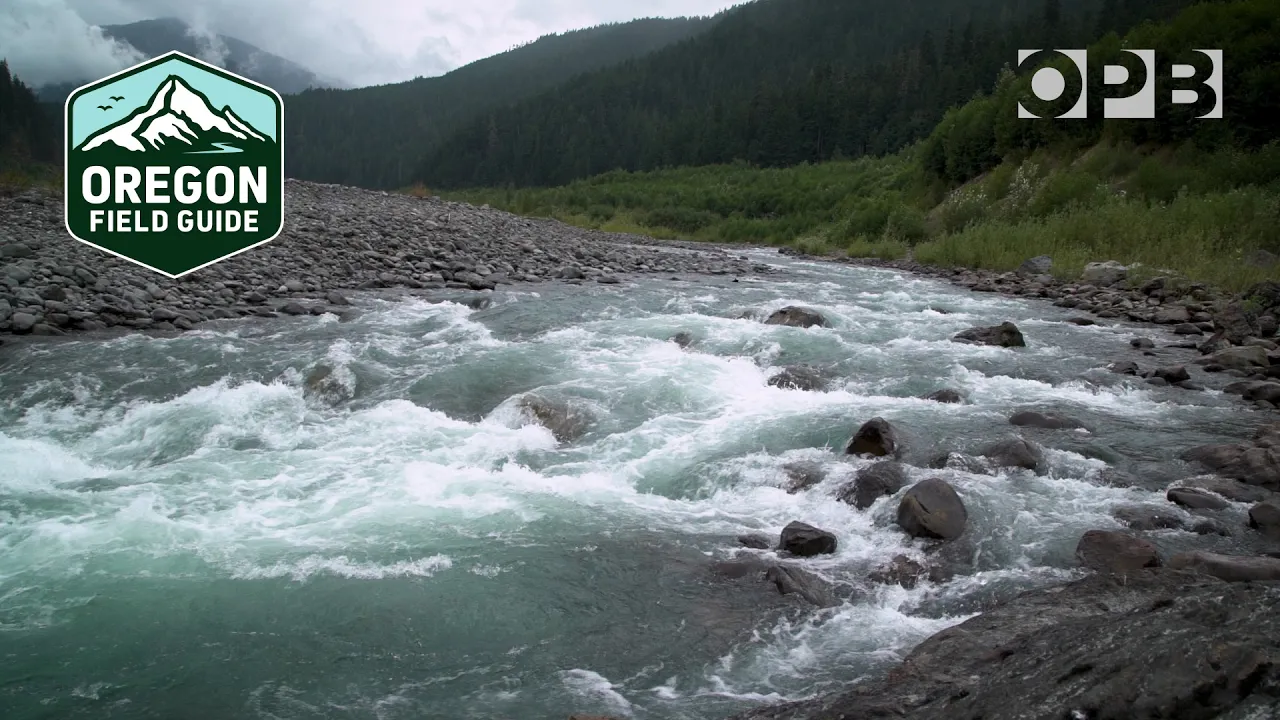
Elwha River Rewilding: 12 Years Post-Dam Removal
@OPB
223K views•2024-11-28

Life in Biosphere 2: Sustainable Ecosystems & Human Survival
@TED
334.9K views•2009-06-16
Microplastics Everywhere: How Plastic Impacts Our Lives
@TEDx
100.9K views•2018-05-08
Ice Stupa Artificial Glaciers: Solving Ladakh's Water Crisis
@SonamWangchuk66
3.2M views•2015-05-03
Related Study Plans & Knowledge Roadmaps
Structured learning paths in Environmental Science