









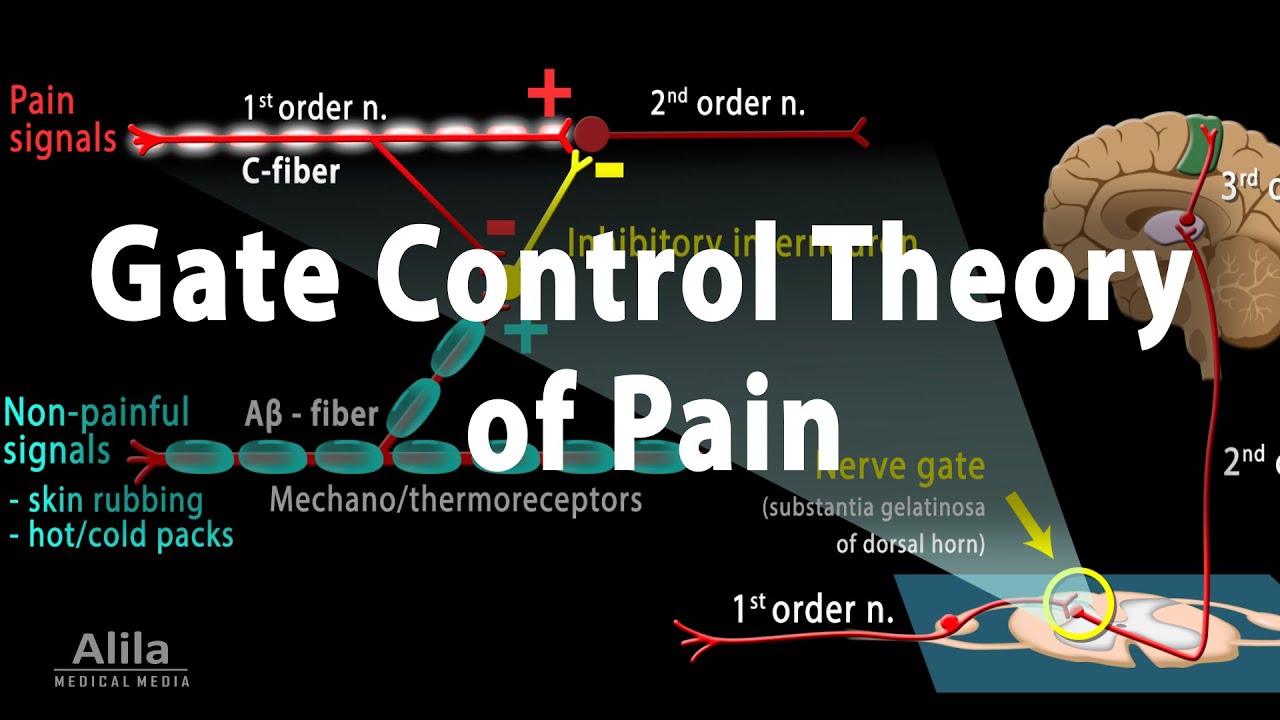
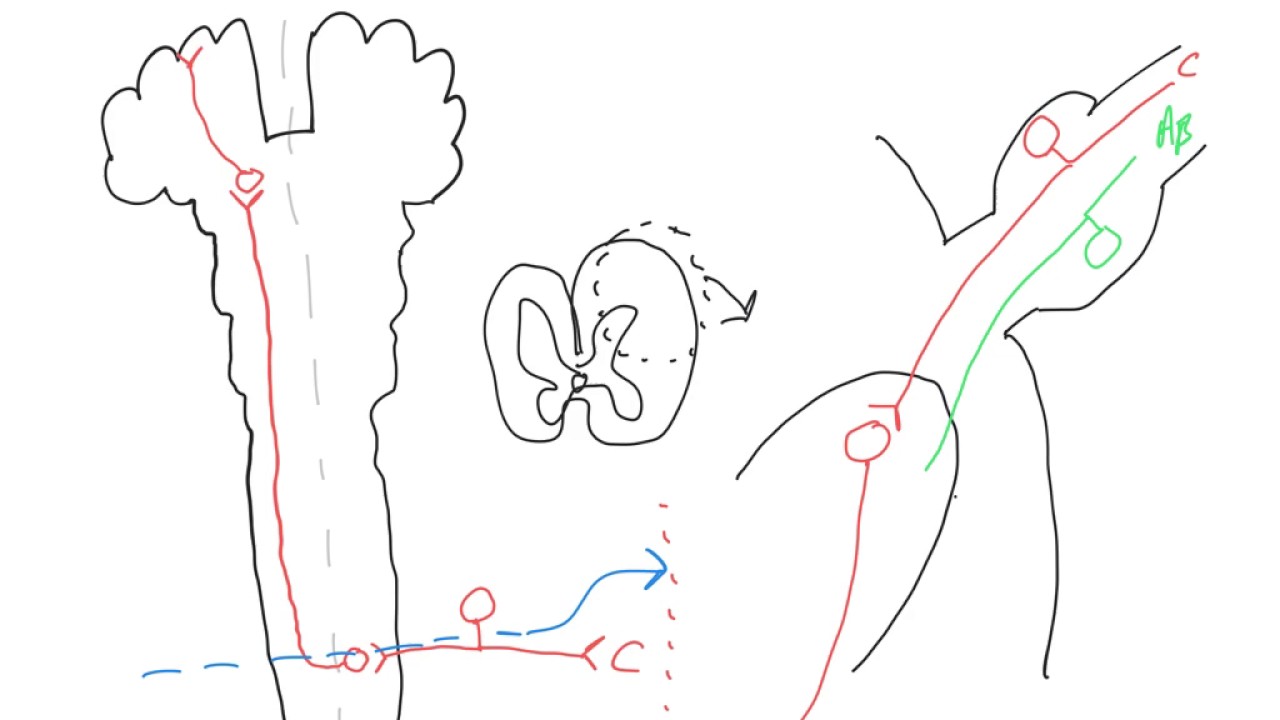



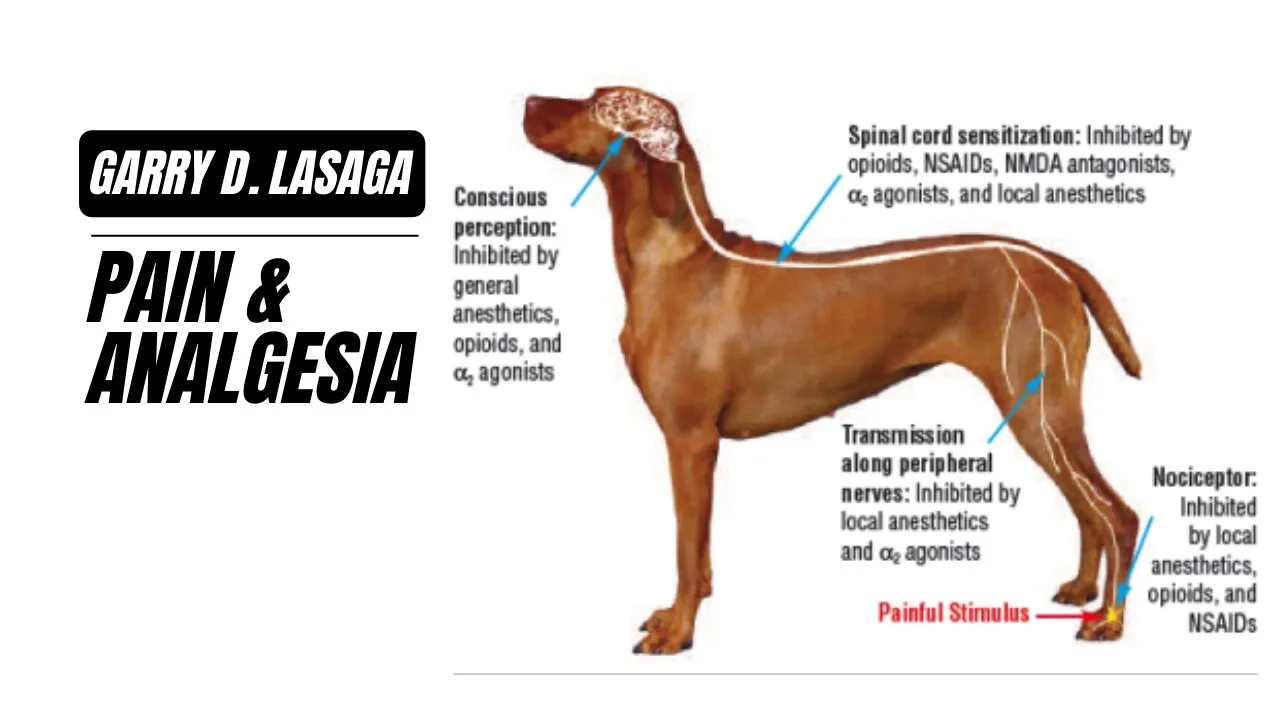




Pain is a complex subjective experience involving three main categories (nociceptive, inflammatory, and neuropathic) that follows a common pathway: transduction (where nociceptors with TRP channels, ASICs, and P2X receptors convert noxious stimuli into electrical signals), transmission (action potentials travel through primary afferent neurons to the dorsal horn, then via second-order neurons across the spinothalamic tract to the thalamus, and finally to the sensory cortex), and perception (where the brain interprets these signals as pain). The pathway involves both A-delta fibers (myelinated, fast, sharp pain) and C fibers (unmyelinated, slow, dull pain), with central synapses using glutamate and NMDA receptors for signal transmission.
Pain Pathway Part 1: Nociception, Transduction & Transmission | ACP Lecture
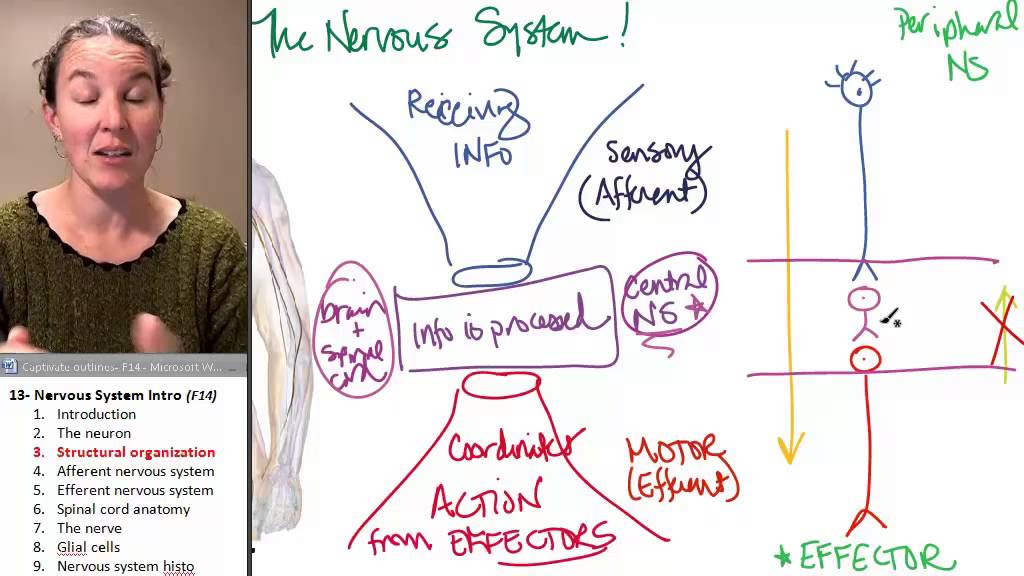
Added:Basic neuroanatomy, specifically the division between the peripheral nervous system (PNS) and the central nervous system (CNS).
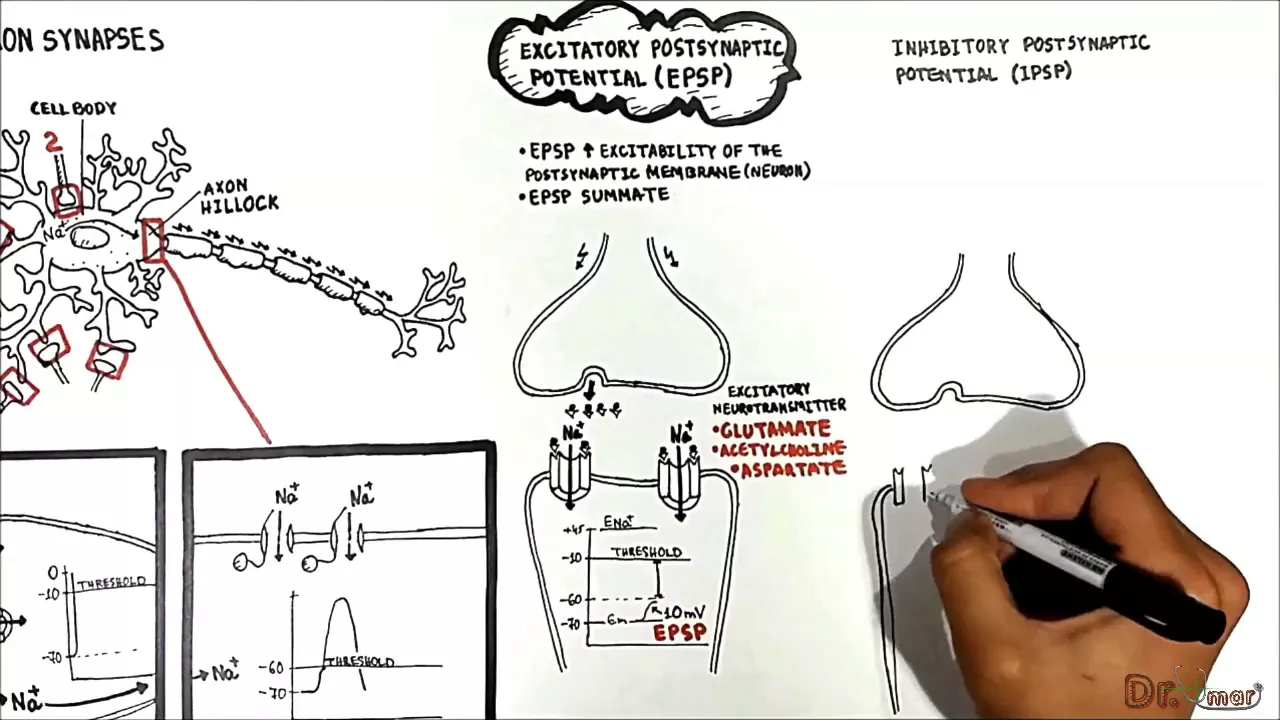
The cellular mechanism of an action potential, including depolarization, threshold potentials, and neurotransmitter release at synapses.
The general structure of sensory neurons, particularly the role of myelination (myelinated vs. unmyelinated fibers) in signal conduction speed.
The concept of sensory transduction—how environmental stimuli (mechanical, thermal, chemical) are converted into electrical signals by receptors.
Pain modulation mechanisms, including the Gate Control Theory of pain and descending inhibitory pathways.
The final stage of the pain pathway: perception, focusing on the roles of the thalamus, somatosensory cortex, and limbic system.
Pharmacological interventions for pain management, mapping how drugs like NSAIDs, local anesthetics, and opioids target transduction and transmission.
Clinical pathologies of pain, such as the mechanisms behind chronic pain, hyperalgesia, allodynia, and neuropathic pain.
880 views3likes50:18Original Release: 2024-08-23
[Music] welcome to this lecture on the pain pathway it will be in two parts and the reason we're doing it is because pain is such common symptom in so many different conditions that really it warrants at the topic in its own right so we're going to look at it in general terms when we look at different conditions different anatomical systems then we'll look at specific aspects of pain related to that system but underlying it all the pain pathway is common to everything so this is a two part II lecture it's designed really to under formal things that we're going to go over when we get into the actual talk component of the module so in terms of the election what we're going to do is we're going to try to find pain we're going to talk about the factors that contribute to it but we're also going to look at three categories of pain so that's an OC septic pain which involves the detail painting pathway we'll link that into nociceptive pain eventually we'll talk about inflammatory pain as well in positive in part two part two is really gonna be vow alterations to the pain halls life so we're gonna talk about the third pain modulation of pain or inhibition pain and on the on the flip side really we've been talking about sensitization and long-term potentiation of pain and this really links back into inflammatory and unpleasant sensory and emotional experience the implication here is that they are very strong links between the physical stimulation of pain and the higher centers of the brain fatigue even in their system emotional responses to no effective previous experiences or our beliefs about what a specific pain may need no the next they're associated with actual or potential tissue damage this tells us that nociceptors pain receptors can be stimulated in the absence of actual physical damage I'm pulling out or described in terms of such damage what does this tell us it doesn't matter whether the pain is there not if someone says they are in pain they are the pain scales we use if want it is no pain Dada Dada are all about the patient's subjective experience in other words pain is a complex mix of factors that are interdependent on each other acute pain is protective okay so let's think about acute pain you put your hand on a hot plate or treadles on the jar you immediately activate the withdrawal reflex which being really floats and one holding and holding the cortex is pretty quick and this limits the amount of engine in terms of internal pain and all the organs muscles joints you made any change your behavior to prevent it happening again and rest be effective allowed to heal chronic pain on the other hand involves the physical sensitization of nociceptors and so lapses combined with long-term psychological or behavioral changes it can present as a disease answer three main categories of pain and not necessarily standalone there can be a combination of nociceptive pain remember nociceptors free nerve endings covered in receptors that can detect noxious can come mechanical or thermal stimuli then he then transmitted by an action potential along afferent neurons to the sensory cortex your Apothic pain is where the neurons themselves of the source of the pain due to injury or disease inflammatory pain is related to the sensitization of peripheral nociceptors or central synapses and we're going to discuss this more in part so nociceptive pain is about the stimulation of nociceptors by something noxious or harmful the noxious stimulus for the thermal mechanical or chemical it's detected by receptors that open I urge members creating excitatory graded potentials remember epsps most of these channels are categorized as transient receptor potential or TRP channels in other words they cause transient or graded potentials let's look at an overview of pain pathway we have looked at it before in physiology but we're going to look at it again perhaps when is slightly bit more detail so this is where a Nikki gets her magic pens out so as we always start it's always good to think about it in terms of where the pain starts and remember this is an afferent pathway so we're going into the brain so we start at the nociceptors themselves so you remember we had nociceptors as those free nerve endings then we have a trigger zone the trigger zone of course is full of voltage-gated sodium channels because it's just like the axon hillock of course in afferent neurons sensory neurons we don't is there be no point in having the trigger zone up on soma because the solar is miles away so you remember weather so memories so we have our primary afferent goes all the way up the soma is up in the dorsal root ganglion from the dorsal root ganglion we go into the dorsal Horn so here's our dorsal Horn Nicky's rubbish equivalent of the dorsal Horn yes and the dorsal Horn our primary afferent then assign APS's and we'll go beyond that in a minute so our soma if you remember is in the dorsal root ganglion this area here we're talking about something called transduction the is where the pain stimulus is so on our little pre nerve endings what we have is we have all these little receptors called transient receptor potential receptors and and we have their adjacent channels those channels could be sodium they could be calcium but we get an influx of cations so we have little channels that can open and of course when they open we get an influx of calcium or sodium if we get an influx of calcium or sodium here you remember what we get yeah we get an epsp and you remember what our axon hillock did when we talked about it before it's some mates those EPS piece and it generates an action potential if threshold is reached here we generate an action potential in the primary afferent the action potential is going to go along along along along the long arm up into the soma back out again and ultimately into the dorsal horn okay at the dorsal horn what we're going to get we're going to get another EP epsp and we're going to get a synapse so chemical transmission across that synapse to the second order afferent the second order afferent if you remember crosses to the other side remember that great word dica Saints crosses to the contralateral side and it then goes up the spinothalamic tract if you remember the tracks are a bit like nerves in the central nervous system at pathways so our neuron our second-order afferent neuron it's going to ascend through that and where's it get to it gets to the thalamus the thalamus if you remember is like a pre cortical relay point so that the thalamus we have another sign ups so this is a toff alamos the thalamus is embedded within the limbic system and and this will become important later we'll talk about this later from the thalamus and this synapse we go on to the sensory cortex yes at the sensory cortex remember that slice we have the motor cortex and then we'll have the sensory cortex two slices down the brain this goes on to the sensory cortex [Music] now you remember we talked about this is transduction so down here is transduction this passage of our action potential through the primary afferent across the synapse through the second order up the spinothalamic tract and animus another sign-ups up the tertiary or third order afferent to the sensory cortex is transmission so we have transduction transmission and at the sensory cortex we have perception this is where we perceive that action potential as pain [Music] nociceptors of free nerve endings and have found in skin muscle connective tissue blood vessels and the organs basically just about everywhere these free nerve endings are covered in receptors that open platinum channels creating local areas of deep ionization ie ie PSPs the receptors all respond to different stimuli such as noxious heat or cold noxious mechanical events or chemicals such as inflammatory mediators or protons okay so here are some TRPs you don't need to remember them all but you do need to be aware that different ers are stimulated by different things right at the top trpv1 was the first of the identified and it's still often used in research because it binds and responds to the capsaicin capsaicin as a component of cheese and it's the reason you get that burning sensation whenever in chopped chilies and then you have your eye or you rub anywhere else in addition to TRP channels there's a couple of others ATP and adenosine maybe release themselves under certain conditions they can then bind to pure energy receptors to transduce of course pain the receptors are either g-protein coupled and Taba trophic receptors or their ionotropic receptors on cation channels as it's sensing channels Asics find protons generally in acidosis they allow an influx of sodium and calcium to cause pain or transduce hope we'll come back to these when we talk about a school near Jeremy module basically though whatever the channel stimulus and influx of cations creates an epsp this is then summated of the trigger zone the trigger zone is exactly like the axon hillock who talks about the fall if there are enough epsps it will generate an action potential okay so let's talk about transduction in a little bit more detail so so far yeah we've got these nerve endings nice spidery fingers but we're gonna look at them more in terms of what the channels are so okay you're a man but transduction basically ends with our trigger zone our axon hillock equivalent that's full of what's it for love it's full of voltage-gated sodium channels so we need some voltage sensors there's our voltage sensors if you remember just like the axon hillock they have a threshold they reach the threshold where and there is a predominance of EPs peas either through temporal or spatial summation when they open what we get is a flood don'twe of sodium into the axon of the neuron when we get the flood of the sodium into the axon of the neuron what happens is that sodium opens of jacinth voltage-gated sodium channels and then it closes them and then it opens the potassium channels and then it closes them and we get depolarization repolarization hyper-polarization return to resting membrane potential yeah but all of that is dependent upon the summation at the trigger zone in this case and the generation of this action potential so the sensory neurons on the other side of this trigger zone what we've got is all these free nerve endings so we're gonna make a bit fatter this time and this is really really if the equivalent when we drew the cinnamon before but this is free nerve endings remember it's afferent this is where it all starts now we've talked a bit about teeth ah-hey channels there are lots of TRP channels some of them allow an influx of sodium some allow an influx of calcium but the upshot is going to be the same you're going to get an epsp because they're both cations TRP channels there are hundreds and we're still finding more and more and more and what they do is they respond to different things so this is remember we talked about pulley mode or these very nerve endings can be poly model they can respond to chemicals and can respond to mechanical events or even thermal events so TRP channels can be chemo sensitive mechanosensitive or thermo sensitive a thermo includes hot and cold so we've got TRP channels so let's put some of those in so here's a little sodium channel and we're going to put a little receptor on it because it's chemically sensitive here's another CLP channel and it has a little voltage sensor because it's thermo sensitive all we have them if you remember do you remember the Meccano sensitive channels basically really simple structure and if you sit on it or you stretch it you open the channel so we can have some Meccano sensitive so we can just pull apart and they can be sodium channels or they could be our own channels when they're stimulated what we get because they're specific to one particular cation we get an influx in this case of sodium so we'll have an influx in this one I've sodium I won't have an influx in this one of calcium what we're going to get is multiple epsps so here's calcium generated epsp here's a sodium generated epsp alum and if you remember just like the soma all of this is going to start to diffuse down towards those voltage sensors we activate enough of them the voltage sensors reach threshold and those channels open and we get our flood of sodium into the axon and that is basically transduction as always other channels are available so there's two others that I want to introduce to you that we'll come back to particularly in terms of ischemia one is a pure energy receptor off the receptor pure energic receptors they respond they bind they're chemically gated if you like and they bind either ADP or ATP or even pure and simple basic identity any of those so pure energy receptors basically bind adenosine and its progression to ATP and when we talk about particular conditions will talk about why there's ATP available to bind other channels that we need to talk about our food Asics this fans will acid sensing ion channels and these basically bind protons remember old H+ the protons the protons bind opens the channel so these are are really our three main types of channels involved in transduction but just remember trps can be chemically sensitive mechanically sensitive or thermo sensitive so any of those could cause an epsp which will cause an action potential in the primary afferent knew as we run through in the video before this action potential once it's generated its transmitted by the primary influence the dorsal off here it's sign up since for the second order accurate the second order afferent neuron and ascends on the other side by alla Spina he'll attract all is fine no reticular tract different parallel track up to the thermos of the thalamus did synapses from the third order or tertiary aberrant nearing to ascend to the sensory cortex different areas of the cortex receive action potentials from different areas of the body do you remember the homunculus so more sensitive highly innovated areas of the body such as the legs or hands require more for somatosensory cortex than others hence the homunculus via the spinal reticular and the spinothalamic tract branches to the pons medulla thalamus and limbic system also receive action potentials as part of the main pathway this then causes an emotional response and activates the sympathetic nervous system the sympathetic nervous system of course raises heart rate increases stroke on the unwinding piece and contractility and causes vasoconstriction hence with pain there is an increase in heart rate and blood pressure a delta fiber is a myelinated remember soaked heat URI conduction because the action potential skips from no around the end to load all of you the transmission is much faster the perceived pain is therefore sharp or Stanley C fibers on the other hand are not myelinated so transmission is slow the action potential has to progress along the main rival channel to journal threshold opening each sodium channel closure at depolarizes opening of potassium channels it's okay it's much slow so the pain is perceived as done or AP C fibers awesome cause neurogenic information and stimulate their own sensitization to worsen or prolong but we'll talk about this more in part so the dorsal horn including any little interneurons and at the farmers the main excitatory neurotransmitter is glutamate because they're within the central nervous system there are two types of ion the chain peeps and most of the messengers involve receptors and then have their associated cation channels although a delta fibers they only have the past important see fibers have grandpas and mundos and really don't ask what is that or don't you know just be reassured that the R stands for the center and holes are associated with straightforward chemically gated sodium channels although they can be adapted more to more that was in part to known does known that wasn't actually voltage and chemically gated so they need a combination of strong local depolarization from one pass and then glycines bind in addition to glutamate before then one selective cation channel on glycine by the way is an amino acid it's found just floating around in synaptic cleft to open the channels magnesium has to be removed from the channel because normally blocks it keeps it close numbed out channels when they're open and without the influx of both calcium and sodium they also stay open longer than part channels so let's talk about those central nervous system synapses just bear in mind of course all the synapses we're talking about because the dorsal horn is inspiring it's in the central nervous system are within the central nervous system so we're talking about sign apses at the dorsal Horn we're talking about sign-ups and thalamus and we're talking about then that progressing on but if you remember we've also talked about branches so we have branches off the second-order and third-order and they have sign ups is two so all of those sign ups --is as we've said neurotransmitter they excitatory neurotransmitter in these cases is glutamate and glutamate has on postsynaptic membranes it has multiple places where it can bind we're talking primarily at this point anyway about the ionotropic receptors you remember ion attribute metabotropic ionotropic is about where in urine transmitter binds and it simply opens a channel metabotropic is about second messenger so we'll talk a little bit about those later not too much don't worry but I only show that we have two in C fibers only we have two ion atrophic channels or receptors associated with channels in a delta we only have one and that's the simplest one and I now have always said you channels are either voltage gated or chemically gated in this case I'm afraid we're going to come across one that is both voltage gated and chemically gated so okay so we have basically our post synaptic membrane I'm gonna have to leave a massive synaptic gap here I'm afraid because we need to put a lot into it okay so here we have a post synaptic you're on and we here we have our pre-synaptic you know ok so as we said glutamate is on your transmitter so glutamate in the usual way an action potential comes along the most voltage-gated calcium channels exocytosis in this case of glutamate so let's have some physical there's all these of course and of course there's our exocytosis and we'll have some molecules of glutamate diffusing out into our synaptic cleft this is our synaptic cleft ok on the postsynaptic membrane in a delta and see fibers we have an tars so we have channels with a receptor for glutamate and this is our receptor as I said before the a.m. PA you don't want to know really this is quite an acceptable abbreviation we're going to stick with this one so this is our antigen and this is the channel that is mainly responsible for creating epsps in our post synaptic neuron and transmitting that action potential so and power channels when glutamate binds its glutamate binding diffused across the synaptic cleft and power channel opens and we get an influx as you'd expect absurdly which gives us local depolarization in other words an epsp in C fibers though we have another one that amperes they open very quickly they don't stay open very long but they do create epsps and really they just like our sodium channels before that we talked about with the acetone coating binding all the rest of it at this point but on a postsynaptic membrane in c fibers not in a doubter we also have another ionotropic channel and receptors ISO receptors because we actually need two things to bind and these are our little space in there you'll see why in a minute these are no stars again alpha receptor the rest of it you really don't want to know none are is fine okay now these channels they take a bit more to open not only do they have binding sites for two different chemicals so they're chemically gated they also have a voltage sensor on the inside so not only are they chemically gated they're also voltage gated now what they actually need so glutamate we'll start with glutamate glutamate comes along glutamate boeing's in the same way as it does to the end part but what it also needs is two other things it needs that depolarization from the empire's to hit the voltage sensor so the voltage sensor which threshold and it's got quite a high threshold so it needs strong depolarization from the Empire's before it will do anything yes so strong depolarization glutamate binding and one other thing it needs something called glycine to bind to so here's like that's a rubbish pen isn't it good me and my papers I have a different range live singing glycine it's just an amine acid it's an amino acid it floats around synaptic cleft it's got nothing better to do so when all of these things happen it also binds so we've got glutamate binding glycine binding de polarization within the postsynaptic neuron when that happens the non-dollars open and they're really cool we've always talked about channels yeah they just changed open they own non-dollars when they're closed they're blocked by magnesium uh-huh so we have magnesium blocking the channel usually mg plus plus magnesium is double cation a bit like calcium or I thought that when we get both glutamate binding bloody seam binding depolarization via the unpassed magnesium comes out off the channel and opens the channel once it's opened the channel so let's get rid of magnesium if it goes into the distance once it opens the channel the numbers they also influx sodium so have some sodium going in but not only sodium they also allow the influx off blue pen it's got to be calcium calcium so you can imagine course we've got sodium going in this is adding to the strength of transmission across this synapse but we've also got calcium going in which is a double Cataline so even more positive as well so in minimal stimulation and ampere will open we'll get an EPS B because we've got an influx of sodium in stronger depolarization stronger stimulation will get these nan dowas opening in C fibers that allows an influx of sodium and calcium and it's strengthens that epsp so there is more likely to be an action potential in that post synaptic neuron and later we'll also talk about the other effects of calcium in terms of signaling and synaptic plasticity branches from the thalamus to the limbic system have been heavily implicated in pain perception in particular the anterior cingulate cortex of the limbic system or the ACC resulting in emotional responses to pain however most of the models are pretty theoretical regarding the relevant inputs and also in terms of feelings actions or physical impact that diagram the central vulnera matrix includes sensory input yes ie this is from nociceptors cognitive aspects related to beliefs and prior experience the sea and also affected the egg and this is input related to emotions the cognitive prefrontal cortex is also implicated illness outputs relate to pain section it relates to behavior and also to stress regulation another model focused on our mount experiences in deciding the danger associated with pain in this model there's also an intimation of paint and effectors immunologically and hormonal e please see the VLE or the link for a pair of a comprehensive discussion of Lorimer mosley so okay in summary we've looked at the pain pathway so we looked at if you remember transduction which was about those free nerve endings generation potential off we go again so remember we've got TRP channels various kinds he most sensitive mechanosensitive thermo sensitive if it's a poly modal nosy sensor we've also got our Asics that bind protons and we've also got our pure energic receptors that bind adenosine or ATP those create a epsps rather than summated at the trigger zone and this may then generate an action potential that goes up by the so where in the dorsal root ganglion and into our dorsal ball so here's our dorsal so it goes into our dorsal horn signup series with a second-order afferent neuron which crosses over goes up the spinothalamic tract to the thalamus there's a third of us third-order goes on to our somatosensory cortex now remember we also have branches so we have little branches here but potentially go to our old friend the medulla also our old friend the hypothalamus and the rest of the limbic system remember the house Aramis lives within the limbic system so we've got multiple branches going of him up here we've got our sensory cortex so here's our fun of us this is our pre cortical relay point here's our sensory cortex and you'll notice I've done slightly different colors because basically what we're talking about in terms of the green is transduction the next berries in our lovely turquoise is transmission and up here that I'm going to serve them in pretty pink it's perception so not only do we get perception up in the sensory cortex that tells us we've got pain if you remember these branches going to the limbic system we also get the influence of previous experience and the memories of this pain start to get stored so they're also involved in perception of course in terms of them the dollar as well we're also talking about sympathetic nervous system activation forget letting never system activation there we go your hand sympathetic nervous system dance ever increases heart rate increases respiration increases cardiac output makes us sweat so lots of different physical signs of pain if it's activated so this is a basically I'll pain pathway within that pain pathway we also talked about the fibers didn't we so we've talked about two main fibers RC fibers and if you remember our C fibers these are our unmyelinated fibers they're for or poor or action potential has to go from channel to channel to channel to channel to channel therefore they're slow because they're slow C fibers when activated give us that diffuse dull achy pain so we didn't think our other fibers that we talked about a delta don't expect me to draw the symbol for delta these cause are myelinated and you'll see in text that they're thinly myelinated but they're still myelinated which makes them faster much faster conduction speed saltatory conduction remember skip from node of ranvier to node around VN much faster so that faster in comparison and these give us the stabbing type of pain stabbing on burning pain so if you like to face these you get stabbing pain so we talked about fibers when you also talked about the central nervous system sign up says and we talked about two types of channels so we talked about i'm part now amp as if you remember they are now an influx of sodium they open rapidly the closes rapidly and we get a sodium influx and they are our main cause of transmission of our action potential across those central nervous system silences but we also talked about in c fibers only and if you remember these were our ones that need three different things to open so they need to polarization from the end pass because they have voltage sensors but they also need you to mate and glycine to bind and as a result of that not only do we get sodium influx so here we've got sodium influx we get sodium influx and we get calcium influx through the numbers so they strengthened the action potential they strength from the epsps but they need quite strong depolarization from the empire's to open and when they do we get an influx of both sodium and calcium but remember a delta fibers don't have numbed us or not that we found so far okay so we also talked about a season up here we talked a bit about perception and I've pointed out here I've got one nice simple little branch going up but actually recent research that's come out and has sort of given a different picture and and it was a picture as well it's quite interesting so we've got that's absolutely going to be a rubbish brain but there's our brain we've got our brain we've got an action potential coming in up to the thalamus da dee da dee da little branches off to the Madonna and limbic system we've also got the frontal cortex but we know it goes to and actually the picture is really more a case of that all that input of pain is now thought to have massive different branches remembering two neurons pyramidal neurons multiple multiple millions and millions of silences who is everywhere so it has a much greater impact leaders we can simply draw with one branch you
Up Next

8:41
Opioid Pain Signaling and Neuronal Pathways | PDB-101 Molecular Mechanisms
@RCSBProteinDataBank
34.1K views•2021-06-22
50:12
Bacterial Communication: Quorum Sensing and Biofilm Formation Explained
@JHUAAP
12.6K views•2011-06-28

5:35
Enteric Nervous System Explained: The Gut's Brain | Neurobiology Lecture
@alumniu6029
438 views•2018-09-12
7:08
Bacteriophages: Earth's Deadliest Killers and Future Antibiotics
@kurzgesagt
34.6M views•2018-05-13
Related Study Plans & Knowledge Roadmaps
Structured learning paths in Biology
biology
RNAi: Biogenesis, RISC & Gene Silencing
01Molecular Biology Foundations: DNA to Protein
02Introduction to RNA Interference (RNAi)
03Molecular Biogenesis of miRNA and siRNA
+ 2 more learning modules
10h5 modules
Explore Roadmap
biology
Mycorrhizae: Signaling, Biophysics & Ecology
01Foundations of Mycorrhizal Symbiosis
02Molecular Signaling and Root Colonization
03Biophysics and Bioenergetics of Nutrient Exchange
+ 1 more learning modules
11h4 modules
Explore Roadmap
biology
Circadian Clocks: TTFL, SCN & Periphery
01Foundations of Molecular Biology & Gene Expression
02Introduction to Chronobiology and Actograms
03The Core TTFL: Molecular Architecture of the Clock
+ 3 more learning modules
14h6 modules
Explore Roadmap
biology
Population Genetics: Math, Drift & Selection
01Genetic & Probability Foundations
02The Hardy-Weinberg Principle and Baseline Models
03Mathematical Modeling of Natural Selection
+ 3 more learning modules
18h6 modules
Explore Roadmap