








![[하비스탕스 x HRT시스템 웨비나] DfAM과 3D프린팅을 활용한 산업용 어플리케이션](https://i.ytimg.com/vi/d7sEKeBzoSw/maxresdefault.jpg)









FLUI'DEVICE enables rapid design of herringbone mixers through an intuitive drag-and-drop interface, where users can configure parameters such as bone count, loop distribution, and spacing to optimize chaotic advection for enhanced fluid mixing in microfluidic devices.
Designing a Herringbone Mixer with FLUI'DEVICE: A Microfluidics Tutorial
Added:Fundamentals of microfluidics and laminar flow physics, particularly fluid behavior at low Reynolds numbers where viscous forces dominate over inertial forces.
The concept of chaotic advection and why passive mixing structures, like the Staggered Herringbone Mixer (SHM), are necessary to overcome diffusion-limited mixing in microchannels.
Basic familiarity with microfluidic prototyping workflows and standard digital design file formats (such as STL for 3D printing, and DXF/SVG for laser cutting or photolithography photomasks).
Understanding key dimensionless parameters in microscale transport phenomena, specifically the Péclet number, which describes the ratio of advective to diffusive transport.
Hands-on microfluidic fabrication techniques, including PDMS soft lithography, high-resolution 3D printing (SLA/DLP), or micromachining to turn the exported designs into physical devices.
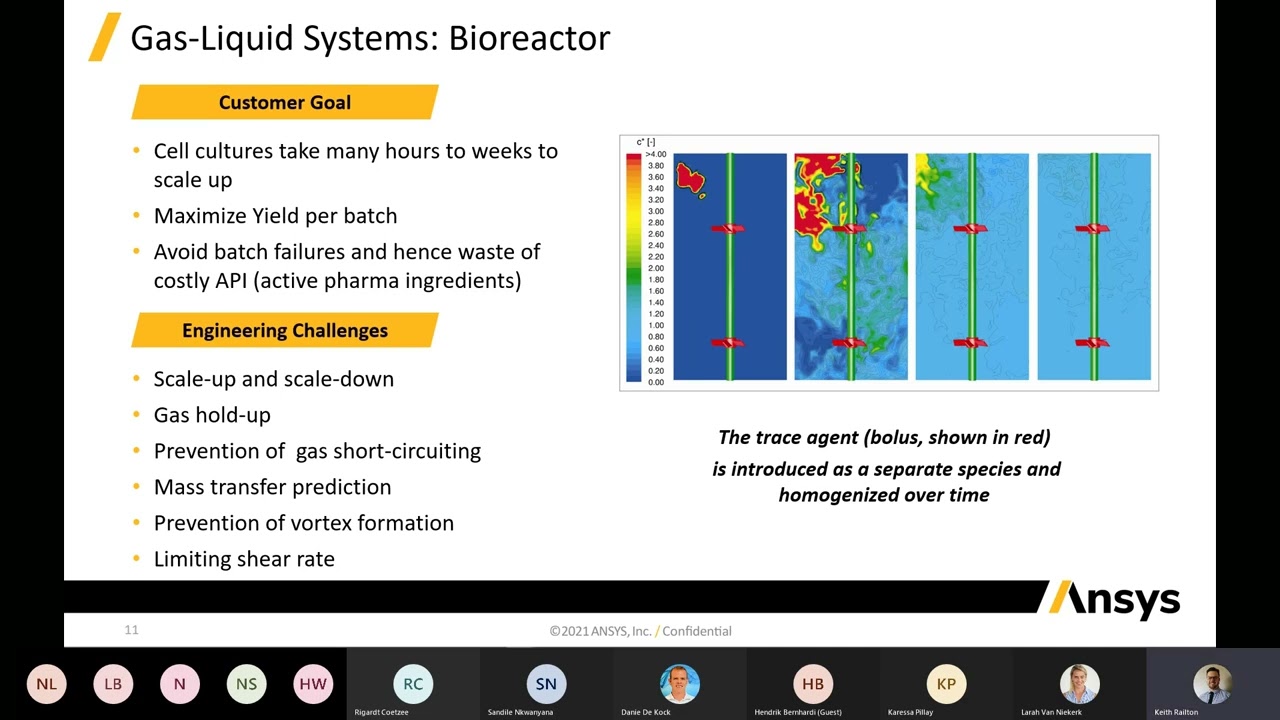
Computational Fluid Dynamics (CFD) simulation using software like COMSOL Multiphysics or ANSYS Fluent to numerically model and optimize the mixing efficiency of the designed herringbone structures.
Experimental characterization and validation methods to evaluate mixing performance, such as optical microscopy using colored dyes, fluorescence-based mixing assays, or reaction kinetics.
Application of microfluidic mixers in advanced biological and chemical fields, such as the high-throughput synthesis of lipid nanoparticles (LNPs) for drug delivery or organ-on-a-chip platform integration.
258 views7likes3:44Original Release: 2025-05-20
Hi and welcome to this tutorial. Today I'm going to show you how to design a micrfluidic device quickly and effortlessly using fluid device. Before we jump in, let me tell you a bit about Eden Material, a division of Eden Tech.
We specialize in providing complete micrfluidic solutions to support you at every stage from design to mass production. Here's how our tools can supercharge your workflow. Fluid device for fast and easy microffluic designs.
Fluid mold. Create molds with complex depths and sections for diverse applications. Epoxim kit. Transform fragile SU8 molds into durable, heatresistant epoxy molds. Flexdim, our innovative PDMS alternative, ideal for fast prototyping and scalable production. Sublime machine, a two-in-one system for micr fabrication and bonding. Now that you know about our tools, let's get started with the design. In this video, we'll be designing a herring bone mix, passive mixing structure often used in chemical analysis, biological assays, and lab on a chip systems. First, a quick overview.
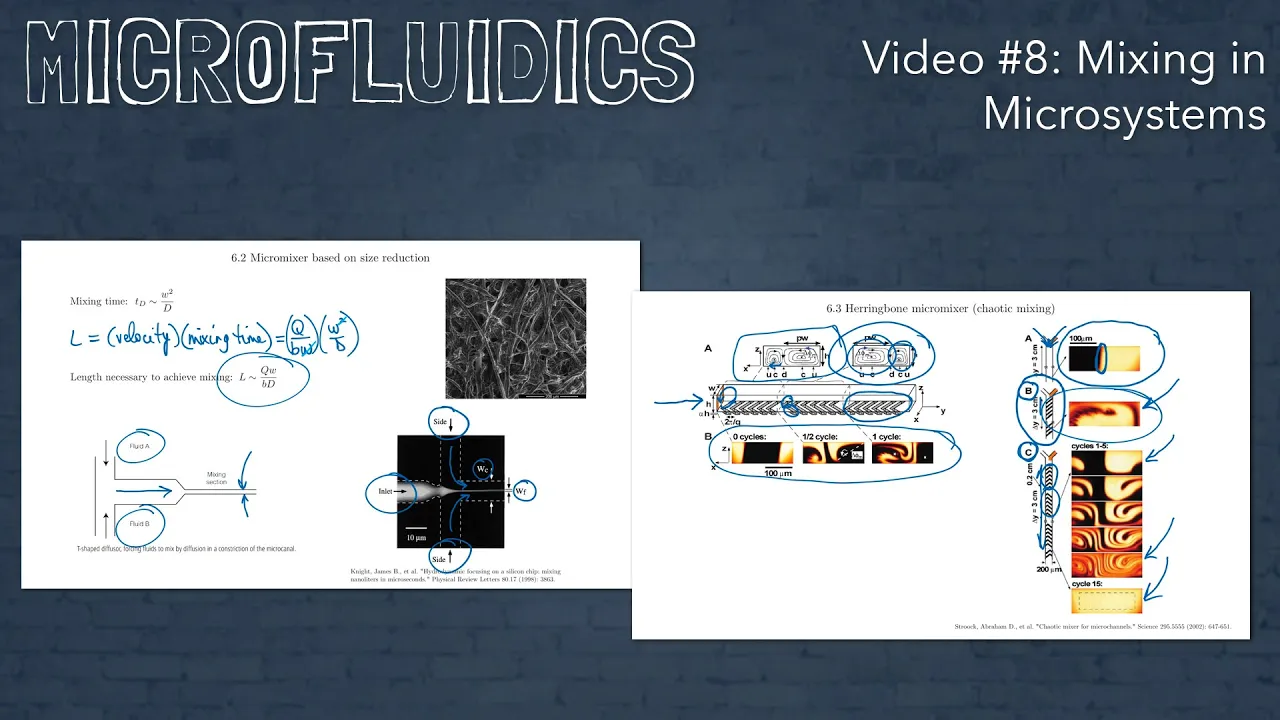
The herring bone mixer enhances fluid mixing in microchs by introducing chaotic invection. It's made of a repeating grooves pattern diagonally in the flow path, causing transverse flows that increase the contact surface between fluids. With fluid device, creating a micrfluidic mixer is straightforward. Let me walk you through the process. Projects in fluid device are organized for efficiency. To create a new design, click the plus button to start a new project. Give it a name and if desired, a brief description. When you begin, Fluid Device automatically generates a new sketch called sketch one. You can rename it by right-clicking the sketch name or using the top menu.
To create a fresh sketch, click the plus button or use the top menu. For this tutorial, we'll set the dimensions of the sketch to 500 micrometers in height and 500 micrometers in width. This will give us a larger design to work with.
The herring bone mixer is an advanced module. You can set different parameters that affect your mixing conditions. The bones create transverse and secondary flows, disrupting laminer streamlines.
Adding more bones will provide more complex flow paths. The distribution of your bones affects the mixing. Staggered bones promote chaotic adection by breaking time reversal symmetry, while aligned bones lead to more regular flow.
For example, each loop refers to a single unit cell consisting of one complete staggered herring bone pattern.
More loops lead to more chaotic adection cycles and stronger mixing. The depth of the bones affects the secondary flows and leads to a stronger mixing s. The spacing affects flow reattachment and interaction between ridges. For this design, we will start by using a Y channel and two inlets. We add our herring bone mixer. We want a strong mixing. So, we will increase the number of bones and loops and we will go for a symmetrical distribution.
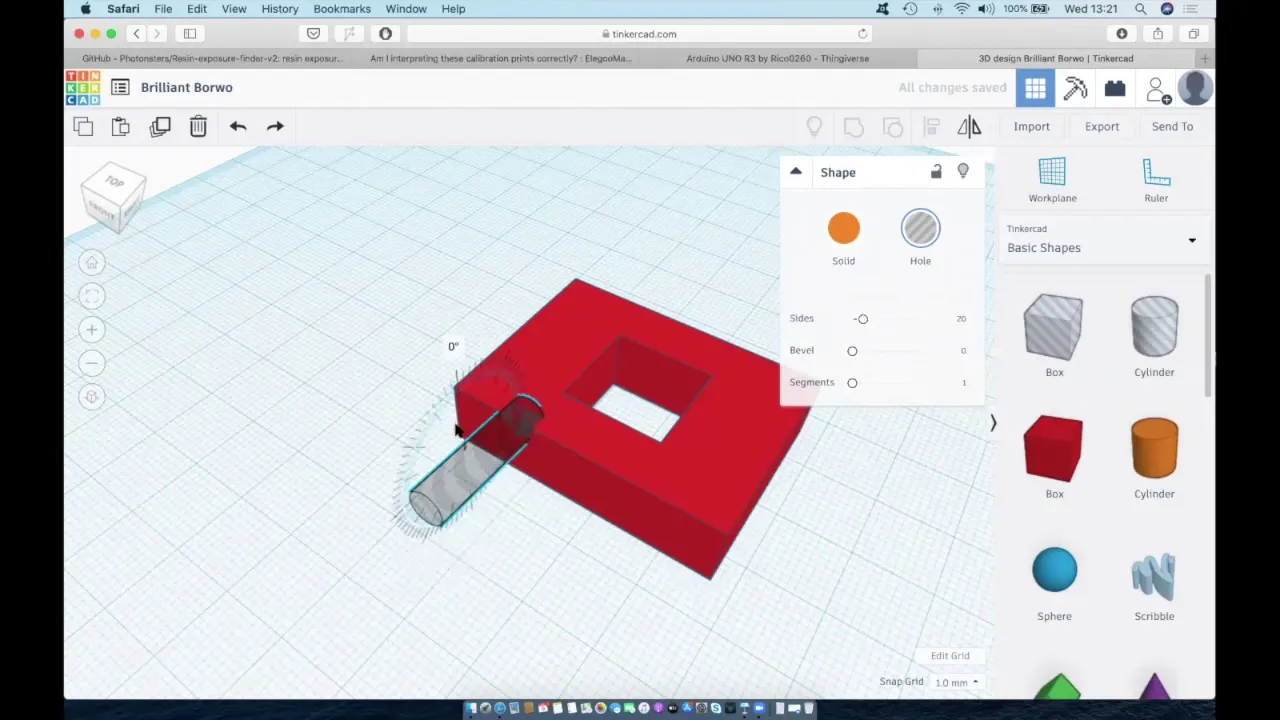
Add the outlet. We close the design with an outlet. Once you're satisfied with the design, click on assembly. Here, choose whether you want to create a mold or a 3D device. For this tutorial, we'll focus on creating a mold. Drag the device into the layout and adjust the wall and the punch guidance if needed.
To visualize the design, click the 3D button at any time. You can rotate, zoom, or move the view using your mouse to examine the mixer from different angles. When you're ready to move forward, export your design in STL format, compatible with most 3D printing software. In the assembly tab, you can also choose to export the substrate along with the design. And there you have it. You've just designed a micrfluidic mixer using fluid device.
Fast, easy, and efficient. If you enjoyed this tutorial, make sure to follow us on LinkedIn orx for more updates. For further details about Edenex products, visit eden-micrfluidics.com.
Thanks for watching and happy designing.
Up Next
6:27
Optimizing LNP Feasibility Batches with Tangential Flow Filtration
@phosphorex2005
1K views•2024-08-20

12:54
Triumph of Orthodoxy Icon: Byzantine Art & History Explained
@BenCallan
2.1K views•2024-08-06

9:49
FastAPI vs Flask vs Django: Choosing the Right Python Web Framework
@TechWithTim
302.5K views•2024-05-26

1:42
Game of Thrones Opening Credits: A Cinematic Analysis
@gameofthrones
46.3M views•2011-04-18
Related Study Plans & Knowledge Roadmaps
Structured learning paths in General & Interdisciplinary Studies
general-studies
Elevator Engineering: History, Physics & Cities
01From Hoists to Safety Brakes: The Dawn of Vertical Lift
02Hydraulic vs. Traction: The Engineering Physics of Elevators
03Modern Speed, Safety, and Algorithms
+ 2 more learning modules
12h5 modules
Explore Roadmap
general-studies
Rubber: Material Science, History & Geopolitics
01Origins of Natural Rubber & Mesoamerican History
02The Chemistry of Natural Rubber & Vulcanization
03The Geopolitics of the Rubber Boom & Colonization
+ 2 more learning modules
12h5 modules
Explore Roadmap
general-studies
Containerization: Evolution, Logistics & Trade
01Ancient Trade & Bulk Cargo: Amphorae to Barrels
02The Industrial Revolution & Cardboard Packaging
03The Containerization Revolution: Malcom McLean
+ 2 more learning modules
12h5 modules
Explore Roadmap
general-studies
Textile Tech: Evolution, Labor & Global Impact
01Pre-Industrial Textiles: Handloom & Cottage Industry
02Mechanization: The Spinning Jenny to the Power Loom
03The Factory System & Global Labor Transformation
+ 2 more learning modules
10h5 modules
Explore Roadmap