![[달리 보이는 인문학 시즌2] 사무엘 베케트 - 고도를 기다리며](https://i.ytimg.com/vi/aKIuIv1Gwrs/maxresdefault.jpg)










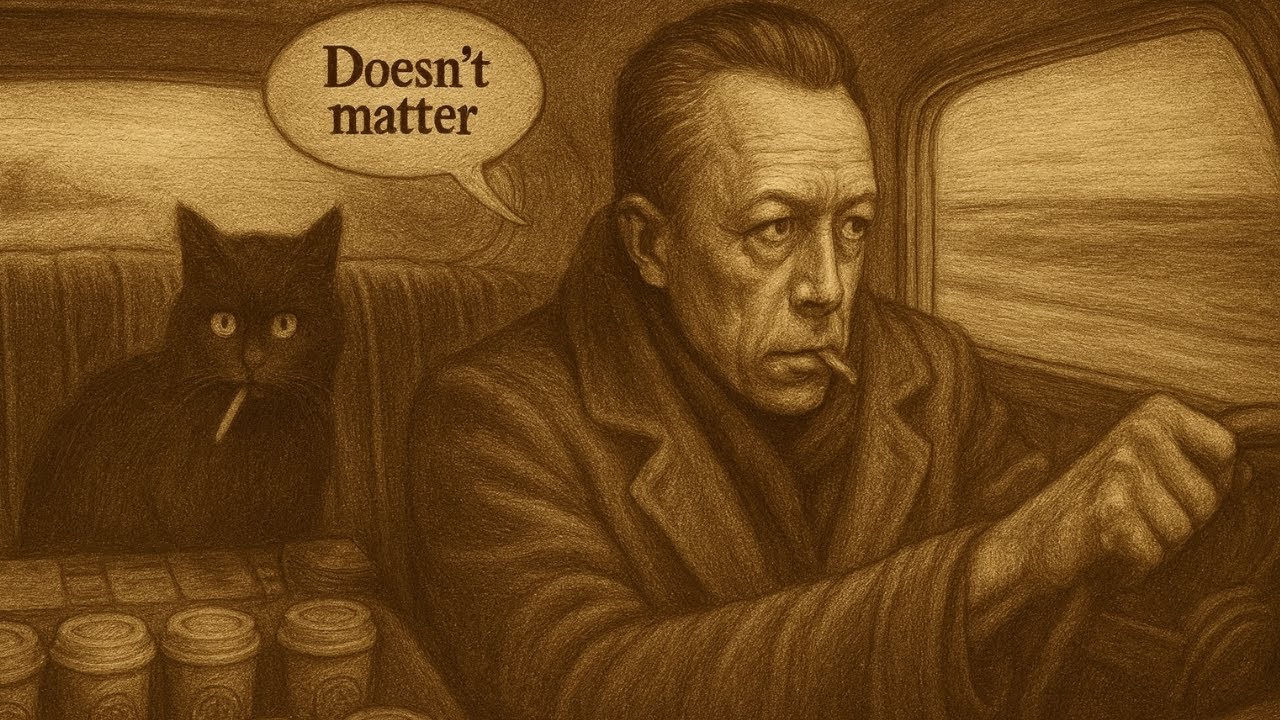

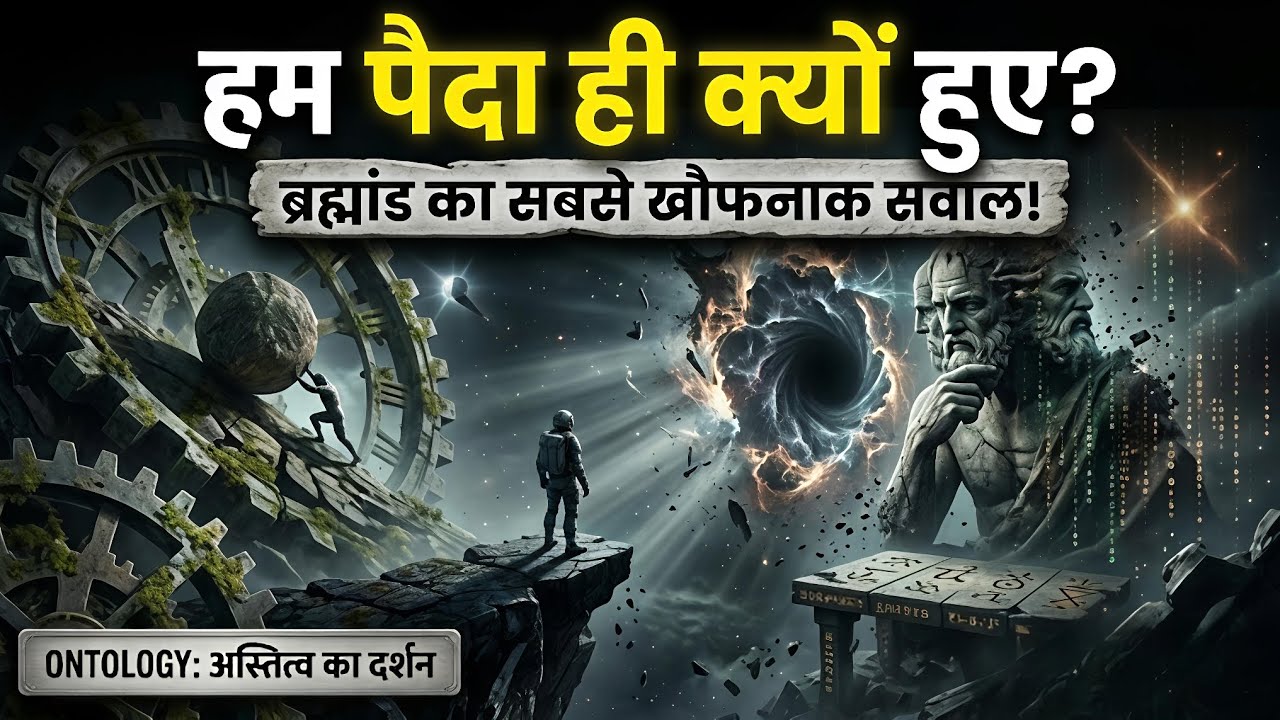

Albert Camus' concept of 'The Absurd'—the fundamental contradiction between humanity's desire to find meaning in a meaningless universe—forms the philosophical foundation of Samuel Beckett's play 'Waiting for Godot,' where two characters Vladimir and Estragon endlessly wait for someone named Godot who never arrives, illustrating Camus' seven responses to absurdity and ultimately demonstrating that acceptance of life's inherent pointlessness, rather than denial or distraction, represents the most authentic form of human resistance against the indifferent universe.
Waiting for Godot and Absurdism: A Philosophical Analysis
Added:Basic familiarity with the plot, characters (Vladimir, Estragon, Pozzo, Lucky), and repetitive structure of Samuel Beckett's play 'Waiting for Godot'.
Albert Camus' philosophical definition of 'the Absurd' as the friction between the human search for inherent meaning and the silent, cold universe.
The fundamental concepts of Existentialism, particularly the belief that there is no inherent purpose or grand design to human existence.
An understanding of the 'Theatre of the Absurd' movement and its rejection of traditional, realistic theatrical conventions and logical narrative progression.
Comparative analysis of Beckett's works with other absurdist and existentialist playwrights, such as Eugène Ionesco ('The Bald Soprano') and Harold Pinter.
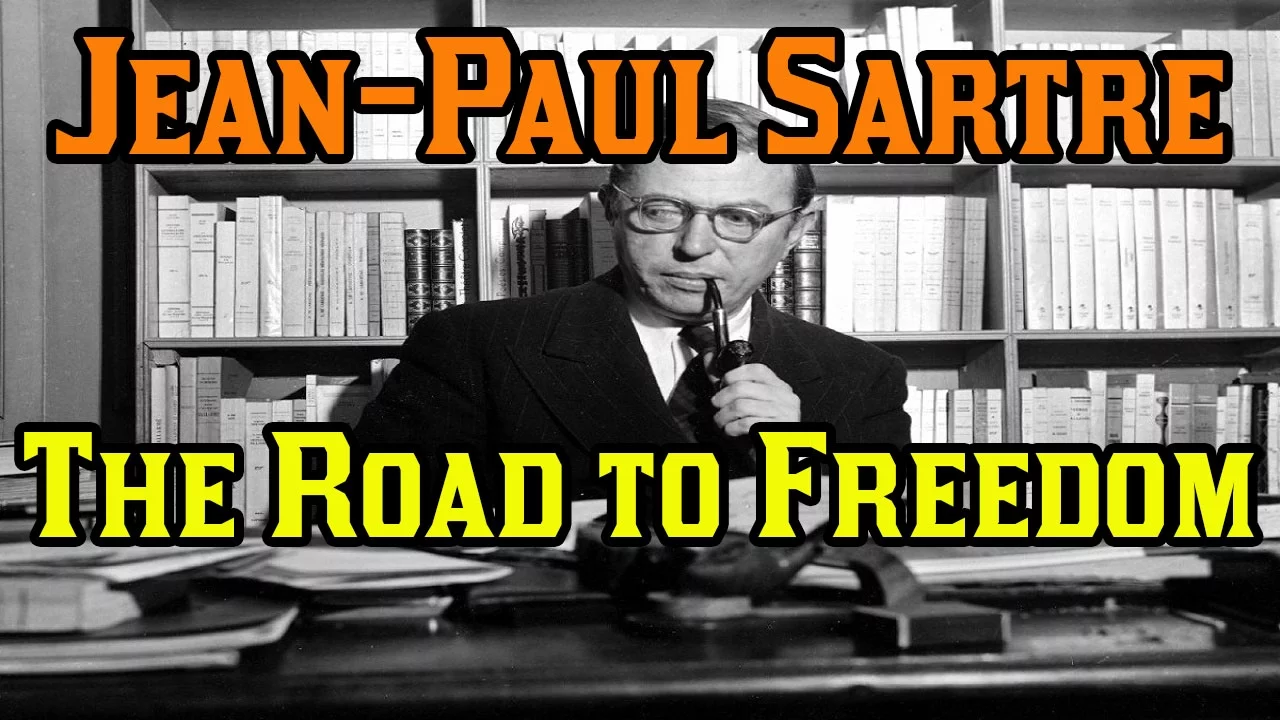
An exploration of Jean-Paul Sartre's literature and plays (e.g., 'No Exit') to contrast his view of radical freedom and action with Beckett's portrayal of paralysis.
A deeper study of post-WWII historical and cultural disillusionment and how the trauma of the Holocaust and the atomic bomb influenced modernist literature.
Investigation into the ethical implications of Absurdism, specifically how Camus' concept of 'metaphysical rebellion' encourages creating personal meaning despite the void.
359.5K views13Klikes8:37Original Release: 2016-11-25
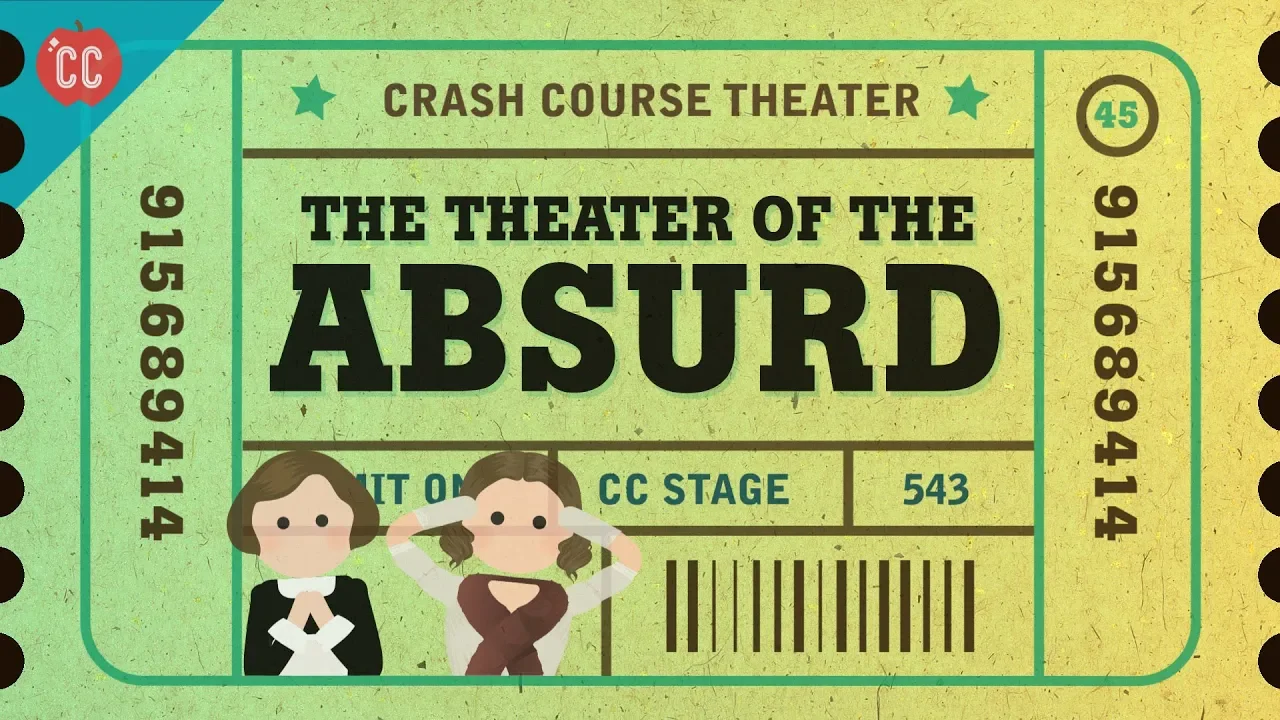
Waiting for Godot is one of the most famous plays of the 20th Century. In it, two characters named Vladimir and Estragon pass the time on a country road as they wait for a man named Godot to arrive. The play is famously weird and mysterious and open-ended - prompting the question - What is this story about?
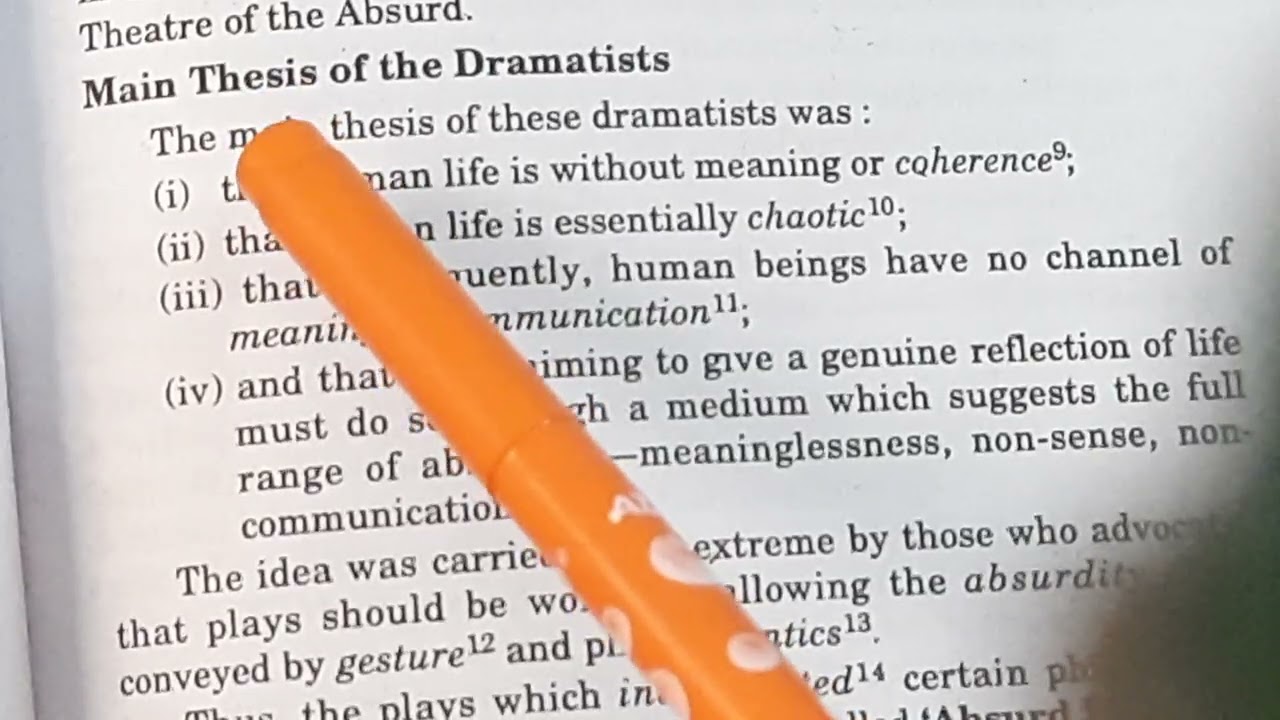
The play massively interests me as an actor, because it's brilliant and really, really fun to perform, but it also interests me as a man with a background in philosophy, because it is part of the Theatre of the Absurd. Absurdism is a philosophical movement that wound up influencing a lot of 20th Century art, through a rather interesting story: Alors, bienvenue à Paris dans l'entre-deux-guerres. C'est un temps de culture et de pensée florissante.
Oh! Voilà le célèbre philosophe Jean Paul Satre! Et Simone de Beauvoir! Et l'artiste Salvador Dali! Vous avez l'air en bonne forme, Sal! Et aussi, en Paris en ce moment le dramaturge Samuel Beckett et le philosophe Albert Camus.
Samuel Beckett was an Irishman who moved to Paris in 1928 and sank into this cultural milieu that was going on. At the time it was very fashionable for 'philosopher' and 'creative artist' to be fused in one person: philosophers wrote literature and writers wrote philosophy. And then, something very bad happened. Something called WWII. France is invaded by the Nazis. And so 'philosopher,' 'creative artist,' and 'resistance fighter' become fused into single persons, as both Samuel Beckett and Albert Camus join the underground resistance.
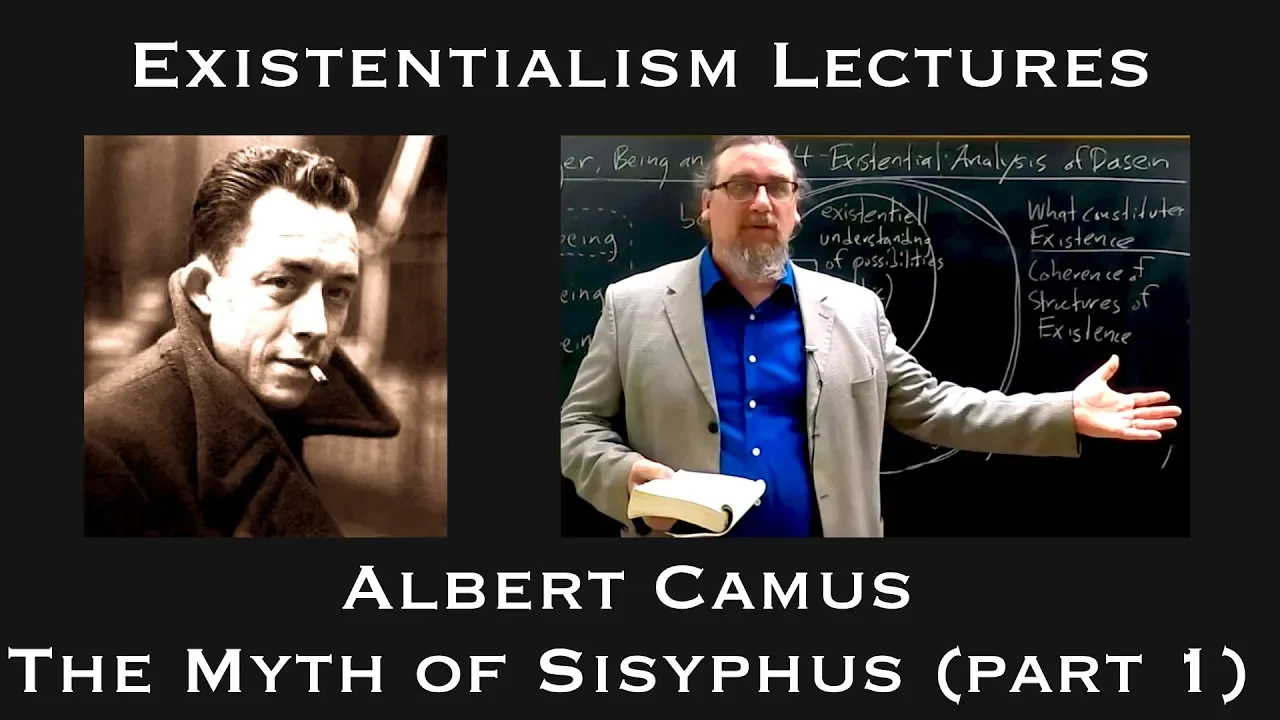
And this is the context in which Camus writes his most famous work - 'The Myth of Sisyphus' - in 1942. The book asks 'How Should We Confront the Absurd?' The Absurd, with a Capital A, is a technical term in Camus' writing: it refers to the contradiction between humanity's desire to find meaning in the Universe and the Universe itself, which is completely meaningless.
And once you realise that life is pointless but you are compelled to find a point to it anyway, Camus says there are seven possible responses. anyway. Number one, you could kill yourself.
Number two, you could try to ignore it by filling your life with pleasure of food, drink, and uh, company. Number three, you could just deny it: for insatnce you could be religious and say that no, there is meaning in life because the meaning comes from God. Or you could be an existentialist, and say that maybe you don't go in for organised religion so much but in some sense you create your own meaning in life. Camus saw both of those as forms of denial, he says you're still not really looking life in the face because ultimately the universe is meaningless. Which is why he didn't like to be called an existentialist, although his work does have some themes in common with that.
The fourth way of confronting the Absurd is to become an actor, and try to live lives that pretend to have meaning within the context of stories. Fifth is to become another kind of artist, like a painter, somebody who creates works of art that have meanings as a substitute for living a life with one.
And the sixth is to become a political person, like a conqueror. Somebody for whom power and government and the right way to use those things, fills up their time and gives them meaning.
All of these methods Camus considers and ultimately rejects. But the seventh and final method of confronting the Absurd, the one that he actually recommends, is acceptance. Accepting that life is pointless but that you are compelled to find a point to it anyway. But this acceptance isn't a kind of sad, passive, depressing acceptance: Camus thought it was an act of resistance against the Universe itself. You look life square in the face; you don't deny it, you don't distract yourself and you don't give in, and you live life anyway in full knowledge of its pointlessness.
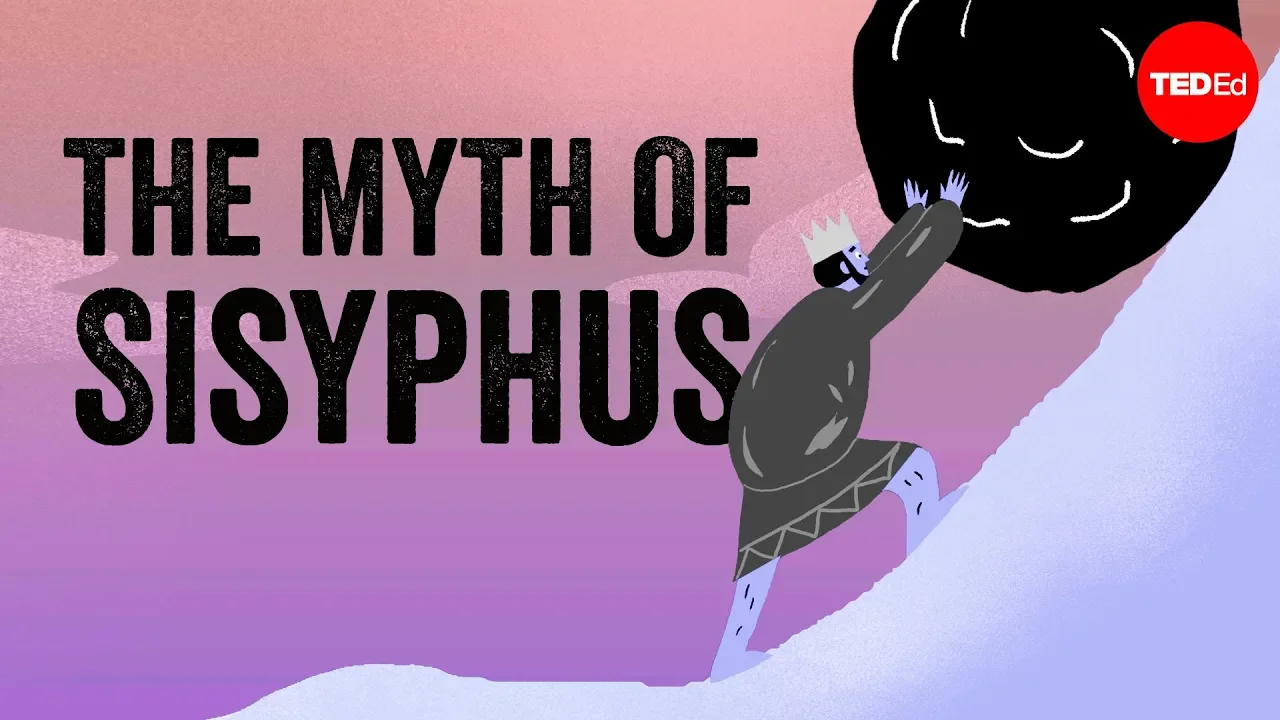
In Greek mythology, Sisyphus was doomed to roll a boulder up a mountain every day and then watch it roll back down again every night. Forever. And Camus says that's the only way Sisyphus can really be happy is he accepts the pointlessness of that task. And he decides to own it and go down the mountain every night smiling. You can see how living in Nazi-occupied France informed a lot of these ideas: this feeling of fighting what looked like an unwinnable battle against uncaring forces indulging in pointless inhuman destruction, was a feeling Camus was very familiar with day to day. The final line of the book is "One must imagine Sisyphus happy."
And then we come to 1953, and the premiere performance of Waiting for Godot. À l'époque, c'était en Français: 'En attendant Godot'; The English translation came two years later.
In it, Vladimir and Estragon are engaged in what seems to be a neverending, pointless, and often repetetive task - waiting for Godot. Waiting for Godot is the whole reason they are there and yet he never turns up. So their situation is rather like someone else's we've just met!
The play is about what people do when confronted with the Absurd: with the compulsion to find meaning where no meaning exists. And throughout the play, the characters try every method of confronting the Absurd that Camus suggests. They talk about killing themselves, but they don't.
They talk about attempting some sexual pleasure, or becoming more physically comfortable with food or with their shoes. Vladimir considers some religious ideas at various points but it doesn't seem to satisfy him.
All of the characters are of course, metatextually, played by actors, and so they are examining that way of confronting it too. Vladimir tries singing at one point, and various popular interpretations of the characters present the two as being rather like a music hall double act generally. One of the other characters, Pozzo, who has a slave called Lucky. Having that power over him seems to give his life a lot of meaning, or at least structure, but by Act II it doesn't seem to have made him better off.
By the end of the play, Didi and Gogo seem doomed to wait for Godot forever. They don't seem to be able to accept that, if he exists at all, he's not coming. Interestingly, there is one character in the play who I think maybe does accept the Absurd. They are charged with carrying a heavy burden, but when offered comfort and distraction willingly go back to that burden and pick it up again.
It's Lucky - the so-called slave. I think - at this particular stage of my artistic career and I reserve the right to change my mind later - but I think you could read Lucky as Camus' model of the Absurdist Hero. Somebody who knows that their life is a pointless, horrible chore but who gets on with it anyway. And when Lucky finally speaks to Vladimir, Estragon, and Pozzo, they, and the audience, are incapable of understanding a word he's saying.
You see what I mean? 'Waiting for Godot' is just the staged version of 'The Myth of Sisyphus.'
It's a work of philosophy in dramatic form. Of course if you're an actor, none of this tells you how you should play the roles. There's a big difference between delivering a lecture on symbolism in Beckett and actually getting up and making somebody feel something, but if you're going to see 'Waiting for Godot' as an audience member, which you should, then I hope that this helps you understand it a little better.
Patreon.com/PhilosophyTube is where you can resist the Absurd by helping me afford rent and food. I could really use some assistance with that, so anything you can give is gratefully appreciated. And don't forget to subscribe!
Up Next

138:01
Samuel Beckett Directs: Waiting for Godot (1988 Production)
@TextundBuehne
257.5K views•2021-06-01

164:01
John of Damascus on Holy Images: A Theological Defense
@BannedBooks
139 views•2026-04-25
36:39
Queer Theory Explained: History, Language, and Identity in Philosophy
@PhilosophyTube
1.6M views•2019-10-28
4:57
The Myth of Sisyphus: A Greek Legend of Eternal Punishment
@TEDEd
8.6M views•2018-11-13
Related Study Plans & Knowledge Roadmaps
Structured learning paths in Philosophy
philosophy
Frankfurt School: Critical Theory & Culture
01Foundations of the Frankfurt School and Critical Theory
02Horkheimer & Adorno: The Critique of Instrumental Reason
03The Culture Industry and Mass Deception
+ 2 more learning modules
12h5 modules
Explore Roadmap
philosophy
Philosophy of Language: From Frege to Austin
01The Linguistic Turn: An Introduction to Language in Philosophy
02Gottlob Frege: Sense and Reference
03Early Wittgenstein: The Picture Theory of Meaning
+ 3 more learning modules
15h6 modules
Explore Roadmap
philosophy
Feminist Epistemology: Standpoint & Injustice
01Introduction to Epistemology and Feminist Critiques
02Sandra Harding and Standpoint Theory
03Donna Haraway and Situated Knowledges
+ 2 more learning modules
12h5 modules
Explore Roadmap
philosophy
Environmental Philosophy: Ethics & Deep Ecology
01Foundations of Environmental Ethics & Anthropocentrism
02Biocentric Individualism and Animal Liberation
03Ecocentric Holism and Deep Ecology
+ 1 more learning modules
10h4 modules
Explore Roadmap