Egyptian blue, created by ancient Egyptians, is recognized as the first synthetic pigment ever made, with a chemical composition of approximately 60-70% silica, 7-15% calcium oxide, and 10-20% copper oxide; when ground down, its color intensifies significantly, and it produces unique color mixing results when combined with other pigments like vermilion, transitioning from red to purple to brown.
Egyptian Blue: The First Synthetic Pigment in History
Added:Deep Dive
Basic concepts of chemical synthesis and the difference between natural substances and synthetic compounds.

الدرس 01 مفهوم النوع الكيميائي السنة الأولى ثانوي علمي
40.4K
Chemical compounds are classified into two main categories based on their origin. Natural chemical compounds are substances extracted directly from nature, such as sugar (sucrose, C12H22O11) from beets or sugarcane, and glass from silica or alumina. Synthetic chemical compounds are artificially manufactured in laboratories to replicate natural compounds at lower cost, such as synthetic vanillin produced from geraniol instead of extracting it from vanilla beans. This classification helps understand how human intervention transforms natural substances into industrial products.
Click to watch →

Synthèse d'espèces chimiques
8.5K
Chemical synthesis is the process of obtaining compounds through chemical transformations, following protocols and safety rules. There are two main types: synthesizing natural substances (like flavors and colorants) which are identical to natural versions but cheaper and more sustainable, and creating artificial substances (like medications and plastics) with new properties not found in nature. Key examples include nylon (a polymer invented in 1935, used in stockings, parachutes, and textiles) and soap (synthesized through saponification, invented in ancient Sumer). Polymers are long molecular chains repeating monomer units, while macromolecules like nylon are formed through polymerization reactions.
Click to watch →

Seconde C7 Transformations chimiques
145
Chemical species are classified as natural (existing in nature) or synthetic (manufactured by humans). Synthetic chemistry allows reproducing natural species at lower cost without depleting resources and creates new species not found in nature. Synthetic molecules reproducing natural ones are chemically identical with the same formula and properties. The four steps of synthesis are: (1) Pre-weighing reactants with safety precautions, (2) Chemical transformation following precise protocols, (3) Isolation of the product from the reaction mixture, (4) Analysis for identification and purity control.
Click to watch →

Synthèse des espèces chimiques
582
Chemical synthesis is the preparation of chemical species from other species, producing either natural or non-natural compounds. Synthesis is necessary because some substances don't exist in nature (like ammonia and nylon), others exist in insufficient quantities, and synthesis often yields better, more performant, and cheaper products than natural extraction. Chemistry is classified into heavy chemistry (producing large quantities of simple substances from abundant raw materials with few steps, like plastics and aluminum) and fine chemistry (producing complex molecules through lengthy, costly processes requiring many transformations, used in pharmaceuticals and cosmetics). A synthesis protocol specifies reactants, safety measures, apparatus, and operational sequence.
Click to watch →

Seconde générale - Chapitre 10 Transformation chimique - Partie 2
103
This section explores the distinction between natural and synthetic chemical compounds. Natural compounds occur in nature (caffeine from coffee, vanillin from vanilla pods), while synthetic compounds are manufactured by humans (synthetic vanillin, vitamin C tablets). The four-step synthesis process is detailed: (1) preparing reactants by measuring and weighing, (2) performing the chemical transformation, (3) isolating the crude product by separating it from unreacted materials and solvents, and (4) analyzing the product to verify identity and purity. The section emphasizes that synthesis allows creation of compounds not found in nature and helps preserve natural resources.
Click to watch →
Deep Dive
The fundamental distinction between pigments (insoluble colorants) and dyes (soluble colorants) in historical art.

Unexpected Lessons in Color: A Pigment Founder’s Unique Perspective with Dr. Georg Kremer
964
The fundamental difference between pigments and dyes lies in solubility: pigments are insoluble (like sand), while dyes are soluble (like sugar). Dyes are highly transparent and have extreme tinting strength because they exist as single molecules. However, dyes are generally not light-fast because energy dissipation within single molecules is too slow, causing breakdown under sunlight. Pigments, in contrast, have excellent light fastness because they exist as crystalline structures composed of many atoms that can dissipate energy effectively, allowing them to withstand temperatures up to 80-100°C without damage.
Click to watch →

A Guide To Pigments | Jackson's Art
54.5K
The key distinction between dyes and pigments is solubility: dyes are soluble, while pigments are insoluble solids. When combined with paint binders, pigments form suspensions rather than solutions. Under microscopic examination, paint reveals individual pigment particles coated with binder. Pigment particle sizes are measured in microns, with synthetic ultramarine blue averaging just under three microns and quinacridone violet around 0.1 microns.
Click to watch →

PIGMENT AND DYE
7.4K
The fundamental difference between pigments and dyes lies in their solubility and binding properties: dyes are soluble substances that penetrate and bind to the substrate (like textiles), while pigments are insoluble particles that sit on the surface and rely on binders (oils, resins, polymers) for adhesion; this distinction affects their light fastness, chemical resistance, cost, and application methods.
Click to watch →

The Science of Art | Dyes; What Sets Them Apart From Pigments?
2.4K
Dyes and pigments are both colorants but differ fundamentally in solubility, light fastness, and molecular structure. Dyes are water-soluble and form solutions, while pigments are insoluble and remain as solid particles. Dyes are less light-fast due to their flat molecular structure exposing all molecules to UV radiation, whereas pigment particles protect internal molecules. Despite this drawback, dyes produce more vibrant colors because all molecules are visible simultaneously. These differences enable unique applications: fluorescent paints require modified dyes embedded in plastic/resin, and alcohol markers leverage alcohol's low surface tension for smooth gradients. The trade-off is that dye-based products sacrifice light stability for unmatched vibrancy and solubility advantages.
Click to watch →

🔵 Pigment Meaning - Pigmentation Examples - Pigment Defined - Pigment vs Dye
598
The fundamental difference between pigments and dyes lies in their solubility properties. Dyes are normally soluble in water, while pigments are not normally water-soluble. This means pigments do not dissolve away over time, making them more permanent. Historically, pigments were often inorganic compounds such as lapis lazuli, ochre, and charcoal, whereas dyes are typically organic compounds.
Click to watch →
Deep Dive
An introduction to transition metal chemistry, specifically how copper ions generate blue coloration in compounds.

9701/42/M/J/22 - Chemistry Discussion Video 3 - Aurelia Theno
155
Transition elements form colored compounds due to incomplete d-orbitals splitting into energy levels; electrons absorb specific wavelengths, and observed color is complementary. Copper(II) ions are pale blue [Cu(H2O)6]²⁺; with excess ammonia form deep blue [Cu(NH3)4(H2O)2]²⁺; with H2S form black CuS precipitate. Le Chatelier's principle explains precipitation: increased OH⁻ shifts equilibrium toward solid product.
Click to watch →

Children's Science Kits Are An Absolute Nightmare - This Is Why
570.9K
The color of transition metal complexes like copper sulfate arises from ligand field theory. When water molecules act as ligands around copper ions, they create an uneven electrostatic environment that splits the energy levels of copper's electron orbitals. Electrons can absorb light energy to jump between these split levels. Copper sulfate absorbs light in the yellow-red region of the spectrum, so we perceive its color as blue (the complementary color). Without ligands (when all water is removed), the electron orbitals are no longer split, and the compound appears white because it reflects all visible light.
Click to watch →

Analytical Chemistry in One Shot (Full Chapter) ICSE 10 Chemistry Chap 4 | Board 2022 | Vedantu ICSE
81.4K
Copper is a transition metal that produces characteristic blue-colored compounds. When copper salts like copper sulfate are dissolved in water, they produce blue solutions. This coloration is a key identifying feature used in analytical chemistry to detect the presence of copper ions in unknown samples.
Click to watch →

Tips and Tricks to Remember Color of Compounds 🧐| Class 10 Chemistry | Anubha Ma'am | Vedantu 9 & 10
43.1K
Copper ions show different colors based on their charge. Copper(II) (Cu2+) gives blue color (e.g., copper sulfate, copper nitrate). Copper(I) (Cu+) is generally colorless because after losing one electron, it has a completely filled orbital shell, which does not produce color.
Click to watch →

CHEMISTRY CLASSES BY MR RAKESH YADAV,CHEMISTRY ACADEMIC AND COMPETITIVE CLASSES
262
Copper ion (Cu²⁺) has a blue color. This is why copper sulfate solution appears blue. The color of metal ions is a characteristic property that can be used to identify them.
Click to watch →
Deep Dive
A general understanding of the timeline of ancient Egyptian history and their early technological developments in glassmaking and metallurgy.

Documental Misterios de Egipto La tecnologia imposible,EGIPTO HISTORIA,EGIPTO ANTIGUO,
9.3K
Archaeological evidence shows that the Pharaonic civilization progressed slowly and without brilliance along the path of technology until it began importing Greek advances. The first representations of meridians appear in the Temple of Dendera during the Ptolemaic period, along with instructions for string operations and meridian determination by stars. The Papyrus of the 13th dynasty corresponds to a second-grade elementary school level. Glass appears in the 14th dynasty, and the first iron knives in the 26th dynasty. Only in the Ptolemaic period, 200 years before Christ, do mathematical and astronomical knowledge of a certain level appear in Egypt.
Click to watch →

3 Hours Of Archaeology Facts To Fall Asleep To
251.8K
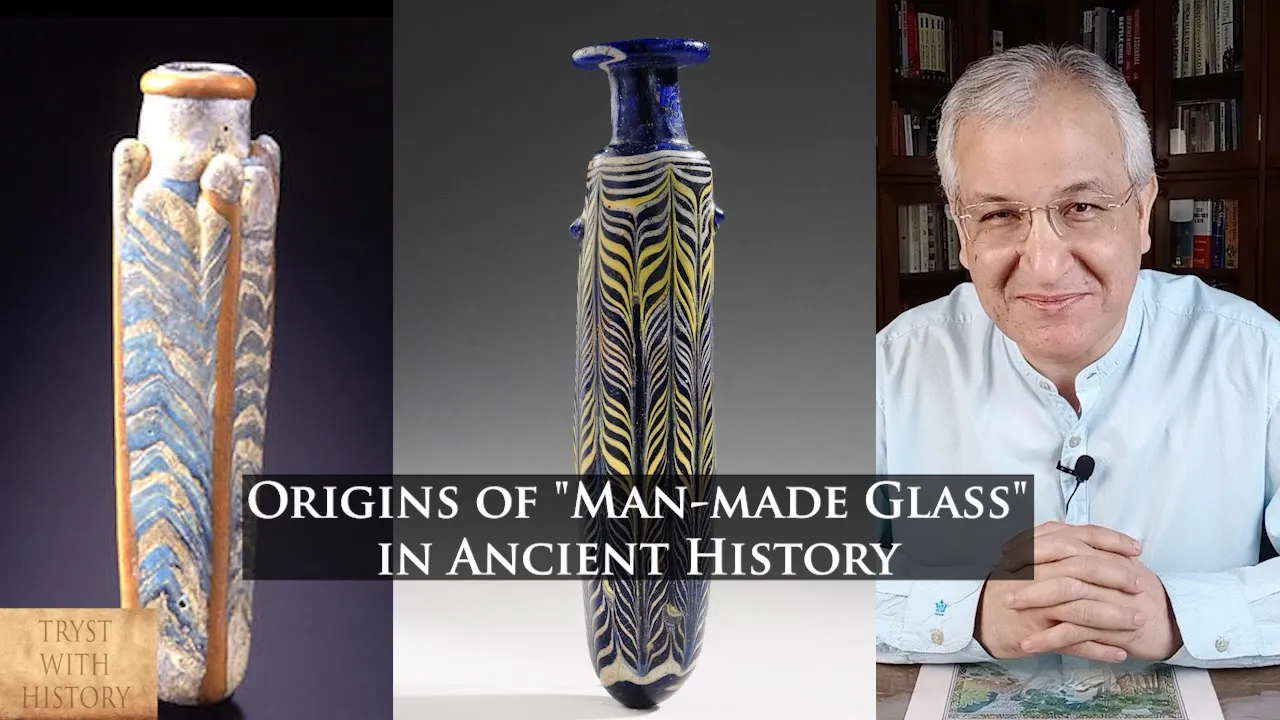
Glass making is the most mysterious and fascinating craft of ancient history. The story of how humans first learned to make glass is still uncertain, but it's believed that the Egyptians were some of the first to master this art around 2,500 BCE. The people of Mesopotamia started making glass beads and amulets, and fast forward a thousand years and the Egyptians followed suit, creating stunning glass jewelry and decorative pieces. At first, glass wasn't precisely the everyday material we know today - it was made from a mixture of sand, lime, and soda, and in the beginning, it was primarily used for amulets, beads, and small figures. The first glass vessels appeared during the reign of Thutmose III, the first in the New Kingdom, around 1500 BCE. Egypt's expanding influence likely influenced this in the Middle East, where glass making had already begun to evolve. By the time the 18th Dynasty arrived, glass making in Egypt was in full swing.
Click to watch →
Origins of "Man-made Glass" in Ancient History | Flexible Glass
28.9K
Glassmaking developed gradually over thousands of years. Around 5000 BCE in Egypt, potters accidentally discovered glass when silica layers on their pots melted during firing. By approximately 4000 BCE, Egyptians began deliberately making small glass beads. By 2500 BCE, glass production had spread throughout the ancient world, with evidence found in multiple regions including Siberia. This timeline shows the slow diffusion of glass technology from its Egyptian origins to other civilizations.
Click to watch →

شرح الدرس الثاني | الحياة الاقتصادية | تاريخ اولي ثانوي - دفعه 2025
44.3K
Ancient Egyptians were among the first peoples to develop glass manufacturing. They discovered that heating sand could produce glass, a material that could be shaped into various objects. This innovation represented a significant technological achievement, as glass was a new and valuable material that could be used for decorative and practical purposes.
Click to watch →

حل من صفحة 77 إلى 81 سلاح التلميذ/ دراسات/ الصف الرابع/ الترم الثاني2026
14.3K
Glass manufacturing in Egypt began during the Coptic period, not during ancient Egyptian times. This craft developed later in Egyptian history and became particularly important during the Coptic era, representing an evolution of Egyptian craftsmanship.
Click to watch →
Prerequisite Knowledge
- Concept 01Basic concepts of chemical synthesis and the difference between natural substances and synthetic compounds.
- Concept 02The fundamental distinction between pigments (insoluble colorants) and dyes (soluble colorants) in historical art.
- Concept 03An introduction to transition metal chemistry, specifically how copper ions generate blue coloration in compounds.
- Concept 04A general understanding of the timeline of ancient Egyptian history and their early technological developments in glassmaking and metallurgy.
Subsequent Learning
- Step 01The crystalline structure of Egyptian blue (cuprorivait) and its unique near-infrared luminescence properties used in modern security ink and biomedical imaging.
- Step 02The comparative chemistry and history of other ancient synthetic pigments, such as Han Blue and Han Purple from ancient China.
- Step 03Analytical techniques in conservation science, including X-ray fluorescence (XRF) and Raman spectroscopy, used to non-destructively detect pigments on artifacts.
- Step 04The chemistry of paint formulation, specifically how binding mediums (like tempera, wax, or oil) interact with pigments to create stable paint.
Egyptian Blue
Paint Testing
Mixing Result
Egyptian Blue
0:00Playing Section
- 1
First synthetic pigment, composed of calcium copper silicate.
- 2
Chemical formula and composition details clarified its glassy nature.
- 3
Grinding intensifies its blue color, linked to Roman cerulean.
Heat-Treated Ochre as the Earliest Synthetic Pigment
While Egyptian Blue is widely celebrated as the first complex, multi-component synthetic pigment, many archaeologists and material scientists argue that the title of the first synthetic pigment belongs to heat-treated (calcined) ochre. Dating back over 100,000 years—long before the Bronze Age development of Egyptian Blue—early humans deliberately subjected yellow ochre (goethite) to controlled heat to chemically transform it into red ochre (hematite). This process represents the earliest intentional chemical alteration of a natural substance to produce a pigment. Proponents of this view argue that restricting the definition of 'synthetic' to exclude thermal transformation overlooks this sophisticated, prehistoric chemical engineering, making heat-treated ochre the true pioneer of synthetic color.
Deep Dive
The crystalline structure of Egyptian blue (cuprorivait) and its unique near-infrared luminescence properties used in modern security ink and biomedical imaging.

They Knew Too Much… And It Terrifies Scientists | Science for Sleep
2.7K
We are not just studying Egyptian blue. We are starting to use it. That intense infrared glow turns out to be genuinely valuable. Researchers are looking at Egyptian blue for biomedical imaging because near infrared light passes through human tissue far better than other wavelengths. So a material that glows brightly in the infrared could help see inside the body. It is being explored for security inks, for telecommunications, for components that work with infrared signals like the ones in your television remote. It is even being studied for use in materials that help cool buildings and in devices that concentrate sunlight for solar power. And only in the last couple of years, teams of scientists have carefully recreated the ancient recipe from scratch, working out exactly how the Egyptians must have made it, so that we can produce this 5,000-year-old material at the quality modern technology needs. A color invented by Egyptian craftsmen 5,000 years ago whose deepest property they could never have known about is being developed right now for medical scanners and solar panels and secure inks.
Click to watch →

【灘校生が魂の授業‼︎】灘校生が教える古代から続く”青色”の化学‼︎
2.2K
Egyptian blue has a specific crystal structure based on SiO2 (silica). In pure SiO2, each silicon atom is bonded to four oxygen atoms, forming a tetrahedral structure. In Egyptian blue, copper atoms (Cu) are incorporated into this silica framework, replacing some of the silicon atoms. The copper atoms are positioned within the crystal lattice, and it is these copper atoms that are responsible for the characteristic blue color of Egyptian blue. The crystal structure consists of interconnected tetrahedral units with copper atoms embedded within the framework.
Click to watch →

Egyptian Blue: Ancient Pigment's Modern Applications in Forensics and Medicine
284.8K
Egyptian blue, invented around 2600 BCE as humanity's first artificial pigment, was created by heating a mixture of sand, copper-containing minerals, and natron to approximately 900-1000°C, producing calcium copper tetrasilicate; this ancient pigment has found modern applications including medical imaging, anti-counterfeiting security inks, and fingerprint detection due to its unique property of emitting infrared radiation when exposed to visible light.
Click to watch →
10 Ancient Substances That Vanished From History and Nobody Knows Why
119
In 2006, a team of physicists from University College London exposed fragments of 3,500-year-old Egyptian blue pigment to near infrared light. The pigment fluoresces—under infrared illumination, particles invisible to the naked eye lit across surfaces that appeared undecorated under ordinary light. The compound is cuprorivaite, copper calcium silicate (CuCaSiO4), the world's first synthetic pigment manufactured for at least 4,000 years across Egypt, Mesopotamia, and eventually the Roman Mediterranean. The synthesis requires silica, calcium carbonate, and a copper compound heated together at roughly 900°C for 12-24 hours. Fragments from Thutmosis's tomb retain color intensity matching the day of application. The UCL fluorescent study revealed Egyptian blue residues in medieval European artifacts in quantities too small to be intentional—someone had it but no one had recorded making it. When modern chemists attempted to recreate Egyptian blue following Vitruvius's instructions, they found the description was underspecified in ways that produce inconsistent results.
Click to watch →

10 Найденных Древних Артефактов, которые были СЛИШКОМ Современными для Своей Эпохи
1.7K
Ancient civilizations developed remarkable materials science knowledge that modern science only recently understood. Egyptian blue, created around 5000 years ago by fusing sand and lime at high temperatures, was the first artificial pigment. Modern physics discovered it exhibits luminescence in the near-infrared spectrum, now used in biomedical imaging and document security. Maya blue, used for centuries, retains its color in tropical climates due to indigo dye molecules trapped within microscopic pores of palygorskite clay—a nanoscale structure protecting against acids and time. These discoveries reveal that ancient chemists created sophisticated nanomaterials without understanding atomic structure.
Click to watch →
Deep Dive
The comparative chemistry and history of other ancient synthetic pigments, such as Han Blue and Han Purple from ancient China.

4 Skills Humans Have Lost Over Time
1.9M
Han purple was a bright lavender pigment used on Chinese terracotta soldiers from around 800 BCE to 220 CE. Unlike natural pigments, Han purple had to be synthesized through a complex chemical process. Scientists determined it contains barium, copper, silicon, and oxygen bound together. To replicate it, they needed to cook barium minerals (such as witherite or barite) with quartz, copper minerals, and lead salts at scalding temperatures of approximately 1000 degrees Celsius for extended periods. This demonstrates sophisticated ancient chemistry that predates many known synthetic processes.
Click to watch →
Tutorial: Colourful Connections; Pigments Provenance Research in Archaeometry (YRA 5)
127
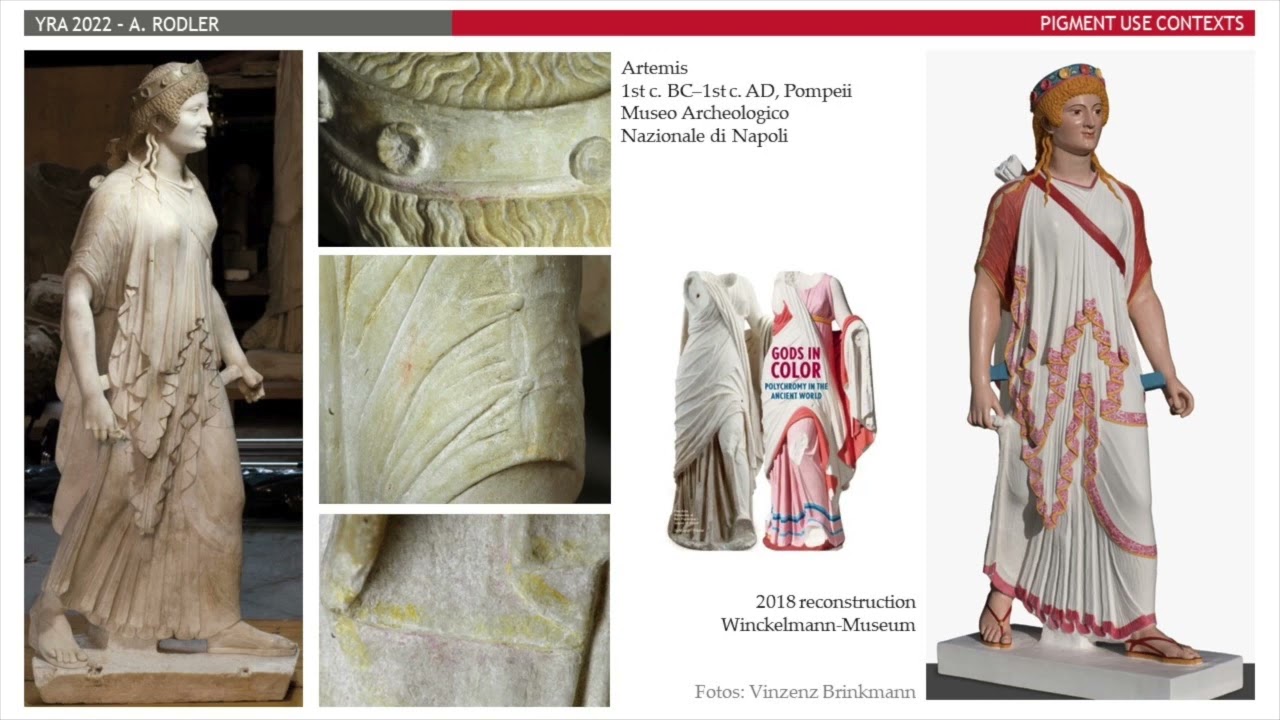
Synthetic mineral pigments were created by humans to overcome the scarcity of naturally occurring minerals. Egyptian blue (copper compound) was first synthesized around 3000 BCE in Egypt and later spread across the Mediterranean. Han blue and Han purple emerged approximately in the third century BCE. These pigments were produced by mixing copper compounds with sand/quartz, adding limestone separately, and then introducing flux before heating to roughly 950-1000°C to fuse the components together. This technology connected metalworking, glassworking, and the pigment industry across ancient civilizations.
Click to watch →

Piramidy Chin: 4 Razy Większe Niż Giza. Dlaczego NIKT o Nich Nie Wie?
379
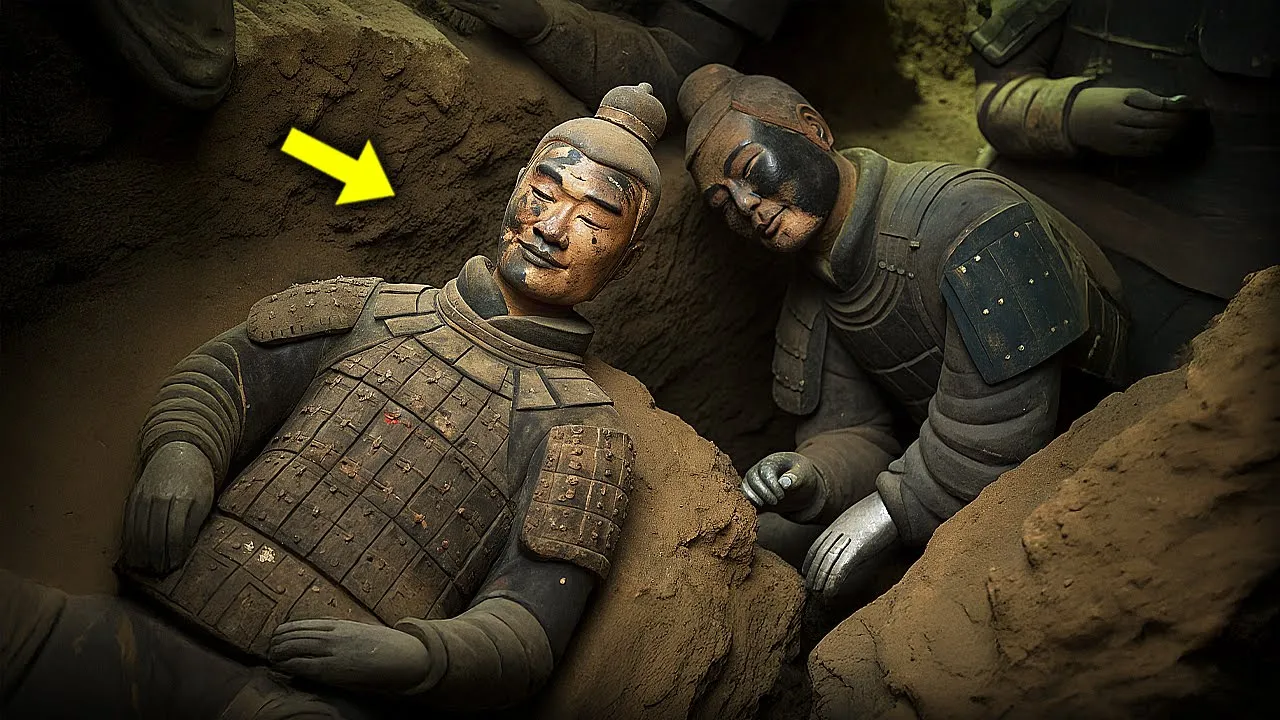
Han Purple is a pigment whose recipe was only deciphered by modern chemistry in the 20th century. It is a synthetic compound of barium, copper, and silicon, produced at temperatures above 1,000 degrees Celsius. No natural mineral with this composition exists in nature, and no ancient textbook describes its production. Yet craftsmen of Emperor Qin used it to paint the warriors' figures over 200 years before BCE, alongside cinnabar, malachite, azurite, and at least six other pigments. The Terracotta Army was not gray but colorful as a market.
Click to watch →
Вот что было скрыто под Терракотовой армией, в это сложно поверить…
38.6K
Analysis of pigments revealed the presence of 'Chinese purple' (BaCuSi2O6)—a synthetic compound that does not exist in nature. To create this pigment, ancient Chinese alchemists had to heat a mixture of barium-containing minerals, copper, malachite, and quartz to temperatures between 900-1100°C with remarkable precision. If the temperature dropped below 900°C, the result was blue pigment; if it exceeded 1100°C, the mixture melted into useless black slag. This represents advanced chemistry and materials engineering from the 3rd century BC, predating European industrial chemistry by millennia.
Click to watch →

Purple was Invented by Accident (Just like you 💜✨)
82.8K
Han purple was a vibrant, light-fast pigment made from manganese and barium, invented in China over 2,000 years ago. Unlike Tyrian purple, it was a synthetic mineral-based pigment rather than an organic dye. However, Han purple faded into obscurity after only about 300 years, disappearing from historical records around 771 BCE. The pigment was extremely complex to manufacture and was never documented in writing, as paper had not yet been invented in China at that time.
Click to watch →
Deep Dive
Analytical techniques in conservation science, including X-ray fluorescence (XRF) and Raman spectroscopy, used to non-destructively detect pigments on artifacts.

Analisi XRF e Pigmenti | italiano | WEBINAR CTS Conservation PITTORICO | 20
2.7K
X-ray fluorescence (XRF) is a non-invasive diagnostic technique that identifies pigments in artworks by detecting characteristic X-rays emitted when high-energy X-rays excite electrons in atomic orbitals, allowing identification of elements from calcium onward; however, it cannot distinguish between pigments with similar elemental compositions (like cobalt blue vs. cerulean) or identify organic binders, and while useful for dating through modern pigment detection (titanium, zinc), it provides only qualitative results and may detect underlying preparation layers due to X-ray penetration.
Click to watch →
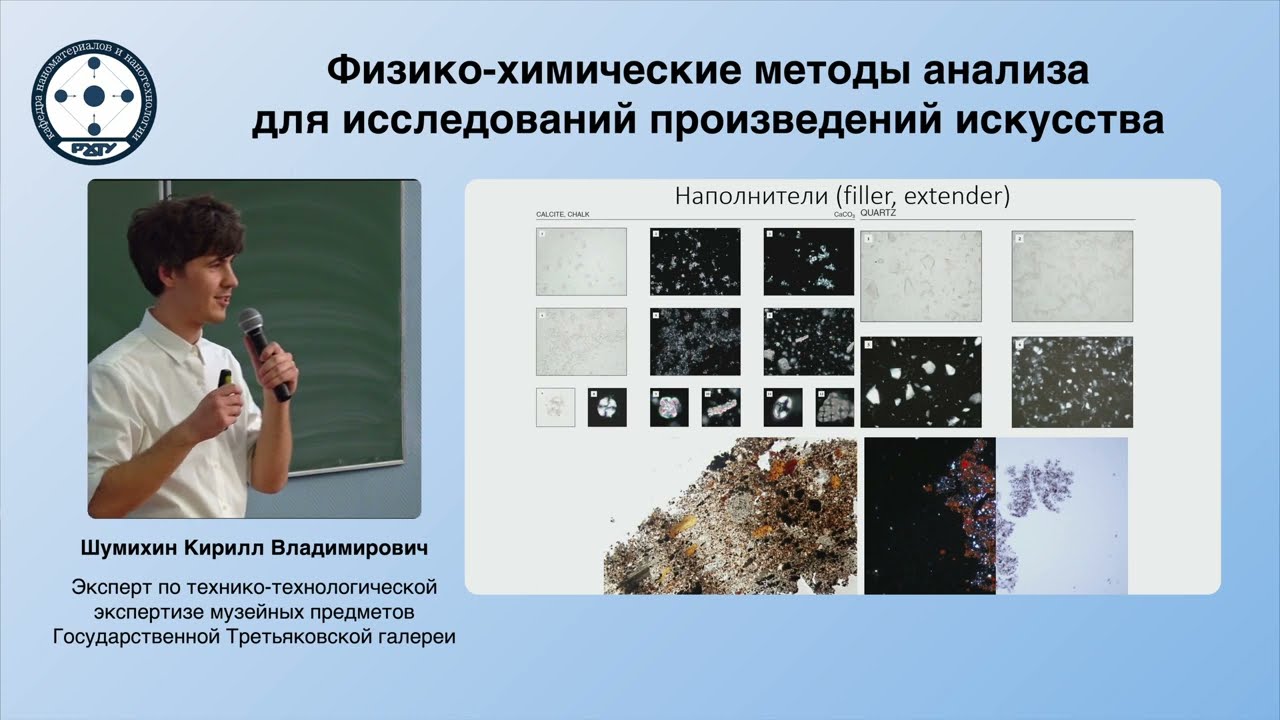
ФИЗИКО-ХИМИЧЕСКИЕ МЕТОДЫ АНАЛИЗА ДЛЯ ИССЛЕДОВАНИЙ ПРОИЗВЕДЕНИЙ ИСКУССТВА
317
X-ray fluorescence (XRF) spectroscopy is a non-invasive technique using X-ray radiation to excite atoms, causing them to emit characteristic secondary X-rays that identify elements present. This is particularly useful for identifying metals in pigments like mercury in vermilion or lead in white lead. The technique can be performed using portable devices allowing analysis directly on artwork surfaces without sampling. Raman spectroscopy uses laser light to excite molecular vibrations, producing characteristic spectra identifying molecular composition. It is particularly valuable for identifying organic components in pigments and binders, as well as inorganic compounds like carbonates and sulfates. Different laser wavelengths provide different information, allowing researchers to optimize analysis for specific material types. These non-invasive techniques provide rapid, non-destructive information about artwork composition.
Click to watch →
Adam Savage Falls Down the Rabbit Hole of NPS Badges
48.5K
X-ray fluorescence spectrometry (XRF) is a non-destructive analytical technique used to determine the elemental composition of materials by exposing them to X-rays and measuring the characteristic fluorescent emissions produced. In museum conservation, XRF allows researchers to analyze artifact materials without causing damage, making it invaluable for studying historic objects. The technique works by detecting how different elements emit unique X-ray signatures when excited, enabling identification of metals and alloys present in artifacts like badges.
Click to watch →

Técnicas analíticas no destructivas 1a sesión
293
Non-destructive analytical techniques for cultural heritage conservation use electromagnetic radiation at different energy levels to interact with matter at specific atomic and molecular levels: X-ray fluorescence (XRF) excites inner-shell electrons to identify elemental composition through characteristic X-ray emissions; Raman and infrared spectroscopy probe vibrational energy levels to reveal molecular bonding and functional groups; X-ray diffraction analyzes crystal structures through atomic arrangement patterns. These techniques progress from global imaging (non-invasive) to specific molecular analysis (potentially more invasive), with portable equipment enabling field analysis of cultural objects without damaging them.
Click to watch →

CNA-FLUORESCENCIA BELLAS ARTES.flv
978
X-ray fluorescence (XRF) is a non-destructive analytical technique that identifies chemical elements in artwork pigments by bombarding a small sample area (approximately 2mm diameter) with X-rays, which causes atoms to emit characteristic X-rays that reveal the elemental composition of pigments like azurite (copper-based blue) or other inorganic compounds, enabling researchers to study artistic techniques, materials, and deterioration without physically touching the artwork.
Click to watch →
Deep Dive
The chemistry of paint formulation, specifically how binding mediums (like tempera, wax, or oil) interact with pigments to create stable paint.

Quand les chimistes dévoilent l'art - Webinaire
100
Paints are formulated from three essential components: pigments (for color), binders (organic materials like egg yolk, wax, or oil that provide cohesion and adhesion), and additives (extenders or mediums that modify properties); the evolution of painting techniques throughout history—from prehistoric times to the present—fundamentally reflects the development and mastery of different binder systems, with major artistic revolutions occurring when new binders were developed, such as the transition from egg tempera to oil painting in the Renaissance, which enabled unprecedented effects of depth and volume.
Click to watch →

Pigments and Paints I Colorfest I Exploratorium
133.4K
Paint is fundamentally composed of two essential components: pigment (which provides color) and binder (which acts as the adhesive that holds the pigment together and enables it to adhere to surfaces); different paint types use different binders—oil paint uses linseed oil, acrylic paint uses acrylic emulsion, and traditional egg tempera uses egg yolk—as demonstrated by mixing Mayan Blue pigment with egg yolk binder to create functional paint that sticks to surfaces rather than simply washing away.
Click to watch →

Unit 03: Basic science chemistry-Paint
125
Paint is a mixture of pigments (solid colorants like chromium oxide for red, carbon black for black, and ferric oxide for brown), binding medium (drying oils like soybean or castor oil that form a protective film through oxidation and polymerization reactions), solvent (liquid carriers like kerosene or diesel that dissolve ingredients and enable application), thinner (to adjust viscosity), and plasticizer (to provide flexibility and prevent cracking). The binding medium provides durability and water resistance, while the pigment provides color and opacity. Paint protects surfaces from environmental conditions like sunlight, rain, and temperature changes.
Click to watch →

Лекция по истории искусств «Пигменты сквозь века»
10.7K
Throughout history, artists have produced their own paints rather than purchasing them from stores. Paint consists of two main components: pigment (the coloring agent) and a binding medium. For oil paints, the binding medium is oil (such as linseed or walnut oil). For gouache paints, the binding medium is a water-based mixture containing gum arabic and chalk. For tempera paints, the binding medium is egg yolk. The oldest known paint was discovered in a cave in South Africa, dating back 75,000 years, and was made from red ochre mixed with animal fat extracted from bone marrow.
Click to watch →

Cheap Joe's 2 Minute Art Tips - Dry Pigment Plus Binder...how does that work?
21K
Paint is created by combining dry pigment (which provides color) with a binder (which acts as a vehicle to adhere the pigment to a surface); the type of binder determines the specific painting medium—acrylic uses acrylic polymer, oil uses linseed oil, watercolor uses gum arabic, and pastels use minimal binder with concentrated pigment—making the binder the defining characteristic of each paint type.
Click to watch →
Egyptian Blue
Paint Testing
Mixing Result
Egyptian Blue
0:00- 1
First synthetic pigment, composed of calcium copper silicate.
- 2
Chemical formula and composition details clarified its glassy nature.
- 3
Grinding intensifies its blue color, linked to Roman cerulean.
Heat-Treated Ochre as the Earliest Synthetic Pigment
While Egyptian Blue is widely celebrated as the first complex, multi-component synthetic pigment, many archaeologists and material scientists argue that the title of the first synthetic pigment belongs to heat-treated (calcined) ochre. Dating back over 100,000 years—long before the Bronze Age development of Egyptian Blue—early humans deliberately subjected yellow ochre (goethite) to controlled heat to chemically transform it into red ochre (hematite). This process represents the earliest intentional chemical alteration of a natural substance to produce a pigment. Proponents of this view argue that restricting the definition of 'synthetic' to exclude thermal transformation overlooks this sophisticated, prehistoric chemical engineering, making heat-treated ochre the true pioneer of synthetic color.
Basic concepts of chemical synthesis and the difference between natural substances and synthetic compounds.
The fundamental distinction between pigments (insoluble colorants) and dyes (soluble colorants) in historical art.
An introduction to transition metal chemistry, specifically how copper ions generate blue coloration in compounds.
A general understanding of the timeline of ancient Egyptian history and their early technological developments in glassmaking and metallurgy.
The crystalline structure of Egyptian blue (cuprorivait) and its unique near-infrared luminescence properties used in modern security ink and biomedical imaging.
The comparative chemistry and history of other ancient synthetic pigments, such as Han Blue and Han Purple from ancient China.
Analytical techniques in conservation science, including X-ray fluorescence (XRF) and Raman spectroscopy, used to non-destructively detect pigments on artifacts.
The chemistry of paint formulation, specifically how binding mediums (like tempera, wax, or oil) interact with pigments to create stable paint.
211 views27likes5:04@MrPigmentsOriginal Release: 2025-09-12
Reading nodes. This is Egyptian blue.
This is considered to be the first synthetic pigment ever created.
By the ancient Egyptians, nonetheless, the color comes from calcium copper tetrailicate. Its chemical composition is going to roughly be around 60 to 70% silica, 7 to 15% calcium oxide, and 10 to 20% copper 2 oxide.
This is a type of glass and it's very similar to certain naturally produced uh things called it copperite whatever uh either way let's turn this into paint because that's what we're here for. I'm not smart.
When you grind it down, it's going to get much bluer. Which, by the way, the Romans would call this cerulean. This is where ceruan comes from.
Now, this version contains a lead, which is not ideal, but whatever.
contains trace amounts of lead.
Unfortunately, You can see how much deeper the color has gotten after we ground it down.
Let's swatch it out.
Now, this is a swatch sheet I am making for somebody, so got to be a little bit more careful with it than we normally do.
Let's grab a horrible brush here.
This is mostly used for enameling, not so much for painting.
as far as my research could tell me.
But this is very similar to what our cobalt ceruan is now.
It is a wonderful color.
And because I've never seen this before, let's see how it it mixes with the original primary red Vidian or Vermilion.
Vermilion is also another very toxic pigment, but we don't lick our brushes here.
So, it's not a big deal.
becomes a very interesting darker red.
It does its ruddy purple then kind of turns into a brown.
Yeah, it turns into a brown. Really interesting.
There you go. That's all.
Up Next
97:42
The Chemistry of Luxury Colors: From $460 Paint to Corte
@BusinessInsider
2.7M views•2025-09-20

12:54
Triumph of Orthodoxy Icon: Byzantine Art & History Explained
@BenCallan
2.1K views•2024-08-06

9:49
FastAPI vs Flask vs Django: Choosing the Right Python Web Framework
@TechWithTim
302.5K views•2024-05-26

1:42
Game of Thrones Opening Credits: A Cinematic Analysis
@gameofthrones
46.3M views•2011-04-18
Related Study Plans & Knowledge Roadmaps
Structured learning paths in General & Interdisciplinary Studies
general-studies
Elevator Engineering: History, Physics & Cities
01From Hoists to Safety Brakes: The Dawn of Vertical Lift
02Hydraulic vs. Traction: The Engineering Physics of Elevators
03Modern Speed, Safety, and Algorithms
+ 2 more learning modules
12h5 modules
Explore Roadmap
general-studies
Rubber: Material Science, History & Geopolitics
01Origins of Natural Rubber & Mesoamerican History
02The Chemistry of Natural Rubber & Vulcanization
03The Geopolitics of the Rubber Boom & Colonization
+ 2 more learning modules
12h5 modules
Explore Roadmap
general-studies
Containerization: Evolution, Logistics & Trade
01Ancient Trade & Bulk Cargo: Amphorae to Barrels
02The Industrial Revolution & Cardboard Packaging
03The Containerization Revolution: Malcom McLean
+ 2 more learning modules
12h5 modules
Explore Roadmap
general-studies
Textile Tech: Evolution, Labor & Global Impact
01Pre-Industrial Textiles: Handloom & Cottage Industry
02Mechanization: The Spinning Jenny to the Power Loom
03The Factory System & Global Labor Transformation
+ 2 more learning modules
10h5 modules
Explore Roadmap