Agricultural subsidies are causing significant environmental harm by incentivizing landowners and producers to make choices that lead to land degradation, biodiversity loss, and water scarcity; these subsidies distort production decisions and trade patterns, with the problem being solvable through awareness campaigns and evidence-based policy reforms focused on the handful of countries and commodities responsible for most of the damage.
How Do Agricultural Subsidies Impact Environmental Health?
Added:Deep Dive
Basic Economic Principles of Subsidies: Understanding what government subsidies are, why they are implemented (such as food security and market stabilization), and how they influence supply and demand.
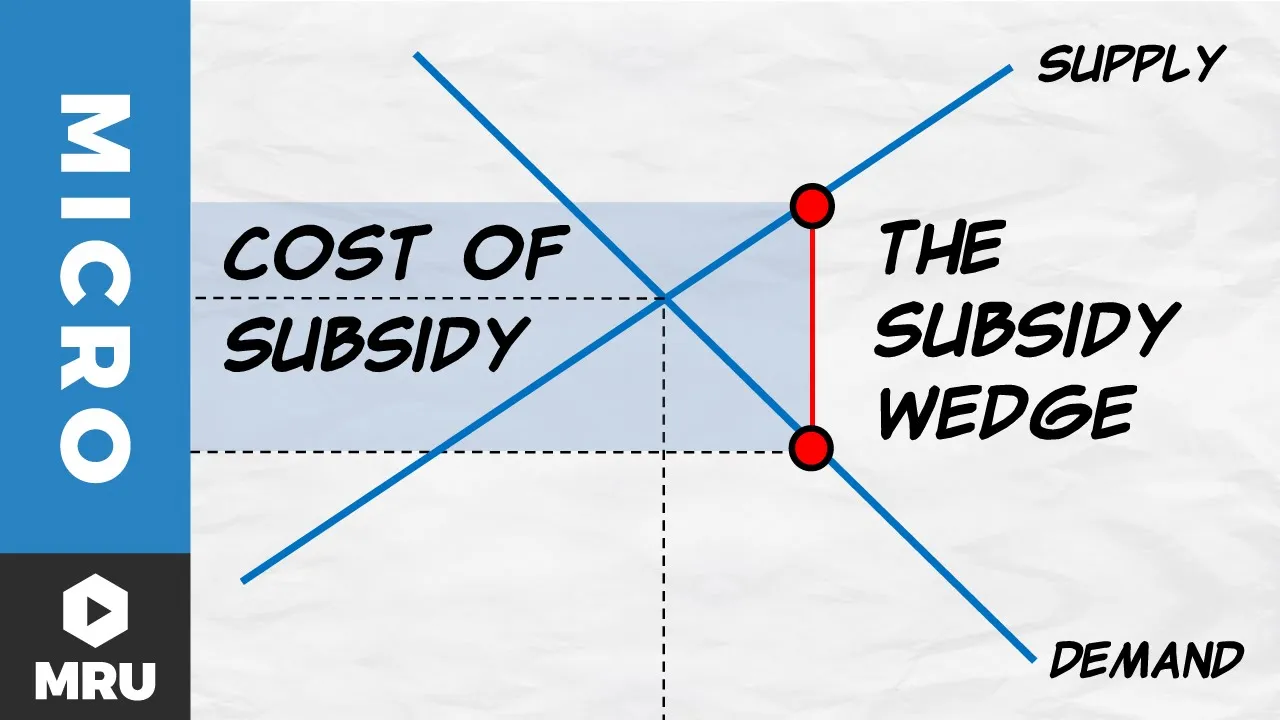
Subsidies Explained: Incidence, Elasticity & Deadweight Loss
325.4K
A subsidy is a negative or reverse tax where the government provides money to consumers or producers. Three key principles govern subsidies: (1) Legal incidence (who receives the check) differs from economic incidence (who benefits); (2) Benefit distribution depends on relative elasticities of supply and demand; (3) Subsidies create government costs and deadweight loss. The subsidy wedge analysis shows how subsidies drive a price wedge between what sellers receive and buyers pay. Whether suppliers or buyers legally receive payments doesn't matter—the market determines final distributions. The total subsidy cost equals the per-unit amount times the subsidized quantity. This foundational framework enables analysis of how subsidies redistribute wealth and affect market efficiency.
Click to watch →

【やらなきゃ損!】2022年、絶対やるべき補助金・給付金ベスト5
68.9K
Government subsidies operate on three fundamental principles: (1) Approval is not guaranteed - subsidies are awarded through competitive review processes, with only about half of applications being approved; (2) Subsidies typically cover only a portion of eligible expenses, not the full amount, so applicants must verify the specific subsidy rate and eligible cost categories; (3) Subsidies require upfront payment from the applicant, meaning businesses must have sufficient cash reserves or secure financing to cover initial costs before receiving reimbursement.
Click to watch →
Hướng Dẫn Ôn Tập Lý Thuyết Môn Kinh Tế Vi Mô (Phần 1)
78.1K
A subsidy is a government payment to producers that lowers their costs and increases supply. Like taxes, the distribution of subsidy benefits depends on elasticities. If demand is more elastic than supply, producers receive most of the subsidy benefit. If supply is more elastic than demand, consumers receive most of the benefit. When demand is perfectly elastic or supply is perfectly inelastic, one party receives all the subsidy benefits.
Click to watch →

Subsidies | Economics Complete Book Series | Chapter 19 | Indian Economy for UPSC | OnlyIAS
3.6K
Subsidies are government financial assistance to promote goods/services or reduce prices for essential items. They differ fundamentally from discounts: subsidies are government obligations while discounts are voluntary seller reductions. Subsidies are budgeted expenditures, not profit-sharing. Public goods (non-rival, non-excludable like roads, police) don't receive subsidies because government responsibility already covers them. Subsidies are provided for essential goods like food, fuel, and electricity. Types include price subsidies, direct benefit transfers, income support, fuel subsidies, and fertilizer subsidies. The government provides subsidies across health, education, housing, nutrition, and agriculture sectors.
Click to watch →

6d - the economics of a subsidy
7.2K
A subsidy is essentially a negative tax where buyers pay less than sellers receive, with the difference equaling the subsidy amount. Using a gym membership example, if sellers charge $1,000 and the subsidy is $100, buyers pay $900 while the government covers the $100 gap. Crucially, the distribution of subsidy benefits between buyers and sellers depends on market forces, not legal assignment—whether the government pays buyers directly or sellers directly, the economic outcome remains the same. This foundational understanding prepares students to analyze how subsidies affect market behavior and resource allocation.
Click to watch →
Deep Dive
Foundations of Environmental Science: Familiarity with ecological concepts such as biodiversity, watershed health, soil erosion, and ecosystem services.

Unit 1 Part 1 Intro To Environmental Science APES 2017
660
Environmental science is built upon three worldviews: planetary (Earth exists for human use), stewardship (humans must manage Earth), and environmental wisdom (humans are totally dependent on Earth). Environmental science studies how Earth works and how living and nonliving things interact, extending beyond biology to include nonliving components. The field emerged because people recognized environmental problems needed systematic study. It applies all sciences (physics, chemistry, biology) to solve environmental problems, focusing on understanding Earth's systems to develop solutions.
Click to watch →

Topic 1 Introduction to Environmental Science
58.4K
Environmental science is an interdisciplinary field combining scientific and social aspects of human impact on the world. It studies interactions between Earth's systems (atmosphere, hydrosphere, lithosphere, biosphere) and human systems. The subject integrates chemistry, physics, biology, economics, politics, and ethics to address environmental problems. Science is a process using the scientific method to build knowledge for solving environmental challenges.
Click to watch →
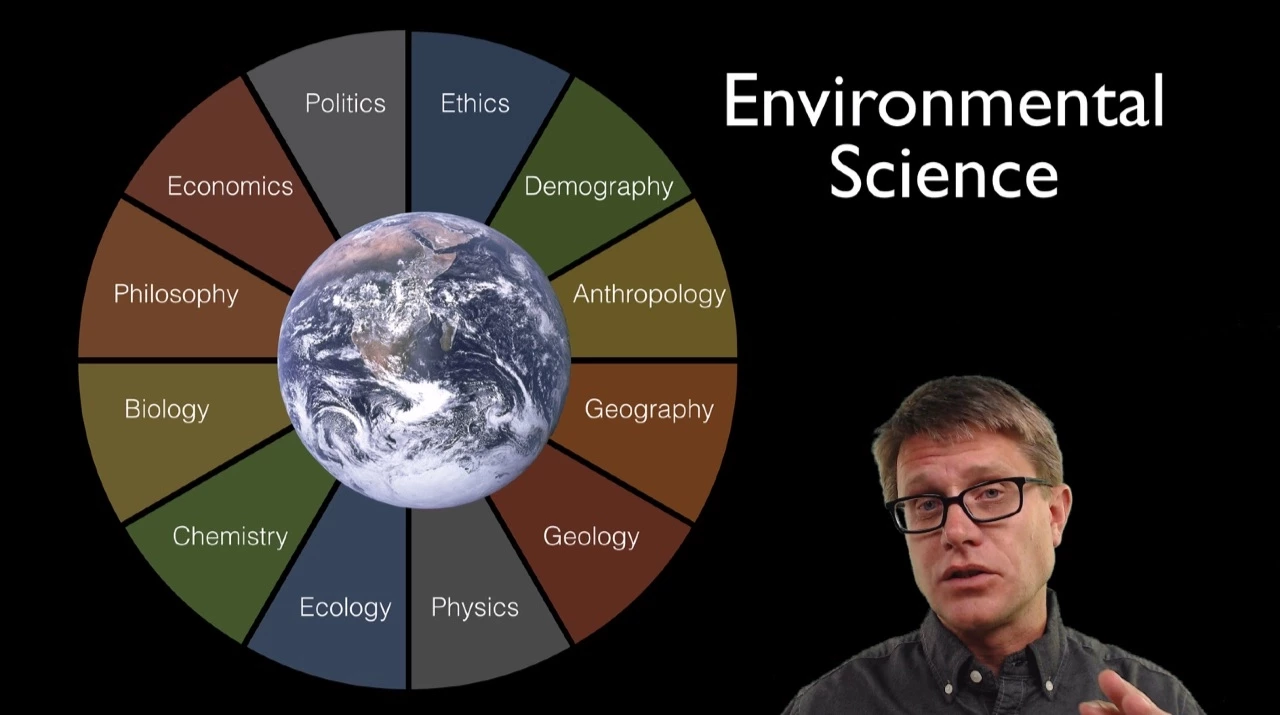
Environmental Science
930.8K
Environmental science studies interactions between Earth's natural systems and human systems, progressing from Earth systems through living systems to human populations. The course covers land/water use, energy, pollution, and climate change. Rachel Carson pioneered modern environmental science through her study of DDT and 'Silent Spring,' establishing the discipline's focus on understanding human-environment interactions. Unlike environmentalism (a belief system advocating for protective laws), environmental science follows evidence-based research, even when findings challenge assumptions. This foundational understanding prepares students to analyze complex environmental challenges systematically.
Click to watch →

100 Most Important Questions | LDC-LGS | DEGREE PRELIMS | PC | SI | LP-UP | CPO #keralapsc
1.3K
This section covers the foundational concepts and key figures in environmental science. The term 'ecology' derives from the Greek word 'oikos' meaning home. Alexander von Humboldt is recognized as the Father of Environmental Science for his pioneering work on nature's interconnectedness. Eugene Odum established the scientific framework for ecosystem ecology. Rachel Carson's 'Silent Spring' exposed pesticide dangers and sparked the modern environmental movement, leading to the 1972 DDT ban. Wangari Maathai founded Kenya's Green Belt Movement, earning the Nobel Peace Prize. The section also covers environmental organizations like WWF (symbolized by the panda), UNEP (United Nations Environment Programme), and IUCN (International Union for Conservation of Nature), along with the concept of environmental commandos (Greenpeace).
Click to watch →

Environmental science
155
Environmental science is a multi-disciplinary field integrating physical, biological, and information sciences to study environmental systems and solve environmental problems. It emerged as a substantive field in the 1960s-1970s, driven by events like Rachel Carson's 'Silent Spring' and the 1969 Santa Barbara oil spill. The National Center for Education Statistics defines it as applying biological, chemical, and physical principles to study the physical environment and solve problems including pollution control and natural resource management. Key areas include understanding Earth processes, alternative energy systems, pollution control, and climate change effects. Environmental science differs from ecology, which focuses only on organism-environment interactions.
Click to watch →
Deep Dive
Industrial vs. Sustainable Agriculture: Distinguishing between intensive farming methods (monoculture, high synthetic chemical use) and conservation-oriented farming practices.

Sustentabilidad con la Composta
4.3K
Industrial agriculture treats farms as factories focused on maximizing grain production through specialization, mechanization, and efficiency at scale. It relies on synthetic inputs like fertilizers and herbicides to overcome physical and biological limitations. Sustainable agriculture is holistic, considering interrelationships between people, biological elements, and the environment. Its strategy involves education, diversification, integration, and synthesis. Industrial agriculture focuses only on the grain, while sustainable agriculture considers the entire system including organic matter, health benefits, and community benefits.
Click to watch →
Art of Manliness Podcast #47: Saving the Family Farm | The Art of Manliness
503
Industrial agriculture typically involves chemical usage, confinement feedlot practices, grain-fed animals, antibiotic use, and long-distance food transportation. In contrast, sustainable farming uses no commercial fertilizers, no antibiotics, no hormones, and markets locally to customers who value transparency and humane treatment. The key difference lies in the economic model—sustainable farmers receive significantly higher prices for their products when selling directly to consumers who understand and value their methods, unlike conventional farmers who often receive minimal payments for their harvests.
Click to watch →

Environmental impact Assessment
6K
Industrial agriculture operates at large scales (500+ hectares) with corporate management, relying heavily on fertilizers, pesticides, and mechanization. It causes water pollution, soil degradation, and rural depopulation with associated social problems including school closures and housing market collapse. Sustainable agriculture contrasts with smaller, family/community-based operations using natural/ecological inputs, promoting crop diversity (grains, fruits, vegetables, legumes) that maintain soil nutritional balance. It supports decentralized economic growth, stabilizes rural communities, preserves cultural values, and maintains regional identity while preventing environmental degradation.
Click to watch →

33. Agriculture
146
Industrial agriculture relies heavily on synthetic inputs, groundwater, and fossil fuels. Sustainable agriculture maintains/improves soil through organic fertilizers, crop rotation, and rotational grazing. Permaculture models natural ecosystems with multi-species planting and zoning by proximity to habitation. Consumer choices matter: voting with dollars supports either industrial or sustainable systems. Reducing meat consumption by half cuts personal environmental impact by ~50%; vegetarian diets reduce it by ~70%. Wild animal populations cannot sustain current human numbers. The path forward requires systemic change from grassroots consumer action and policy reform.
Click to watch →

Was Welt und Klima wirklich hilft: Wie die Agrarindustrie die Erde verwüstet! Dr. Anita Idel | #112
556
Industrial agriculture relies on intensive practices including synthetic fertilizers and high-energy inputs, while sustainable farming aims to work with natural systems using minimal energy. The transition from industrial to sustainable agriculture is necessary to address environmental degradation and climate change.
Click to watch →
Deep Dive
The Concept of Negative Externalities: Understanding how the societal and environmental costs of production (like pollution) are often not reflected in the market price of goods.

Y1/IB 22) Negative Externalities in Production and Consumption
263.7K
Negative externalities are detrimental third-party effects that result from the actions of economic agents (consumers or producers) who engage in economic transactions. These effects harm parties not directly involved in the transaction, creating an impact on societal welfare.
Click to watch →

Externalities in Economics
18.4K
An externality is an economic concept where an individual or firm engages in an activity that affects the well-being of another person or company without compensating or being compensated for that effect; negative externalities occur when one party imposes costs on another (such as pollution causing illness), while positive externalities occur when one party confers benefits on another without receiving compensation (such as getting a flu shot benefiting coworkers), and these externalities lead to market inefficiencies where goods with positive externalities are undersupplied and goods with negative externalities are oversupplied relative to socially optimal levels.
Click to watch →
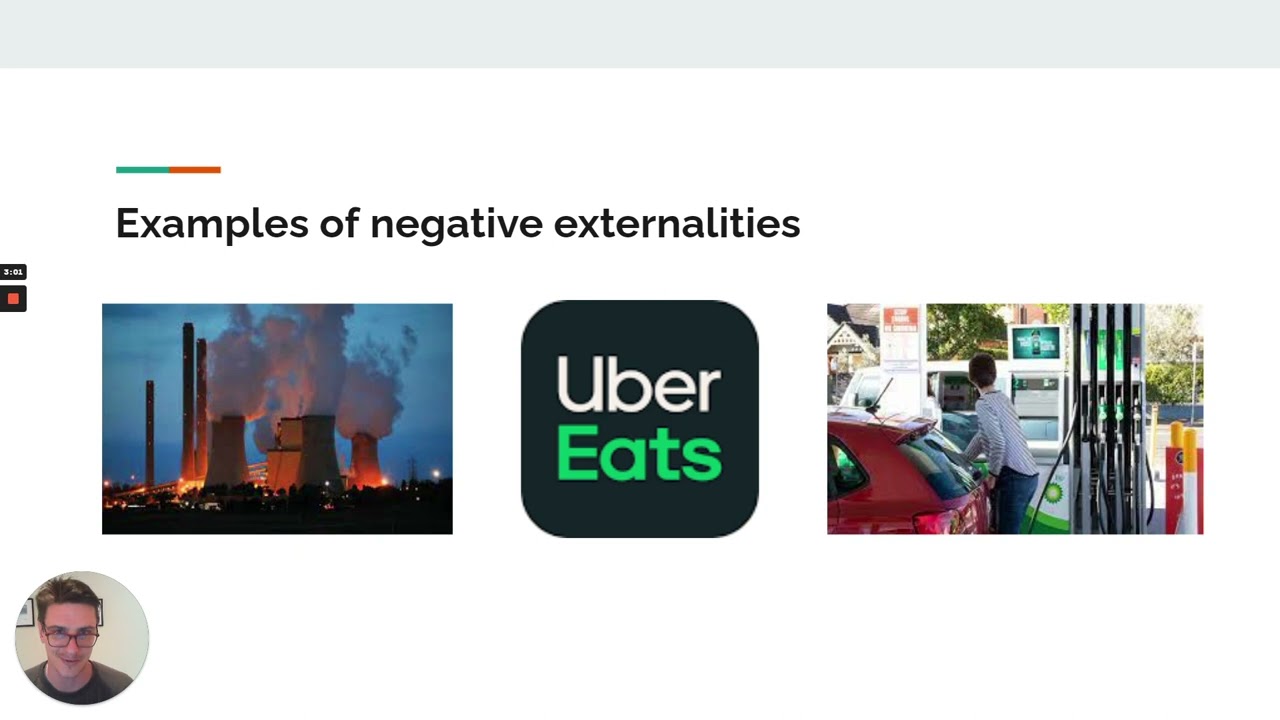
VCE Economics Unit 3 AOS 1- Negative externalities
2.1K
Negative externalities occur when economic activities impose costs on third parties not involved in the transaction, causing social costs to exceed private costs and leading to market over-allocation of resources; this market failure can be addressed through government interventions such as taxes that internalize the external costs.
Click to watch →
Negative Externalities | A-level Economics | OCR, AQA, Edexcel
4.9K
A negative externality is a cost suffered by a third party who is external to an economic exchange, meaning the cost is not borne by the producer or consumer but by society at large. Negative externalities can arise from production (e.g., coal-fired power plants causing pollution, oil spills, pesticide use) or consumption (e.g., obesity-related health costs from unhealthy eating, alcohol-related crime, secondhand smoke). These external costs represent market failures where the true social cost of a good exceeds its private cost, as the exchange does not account for all consequences.
Click to watch →
CH 9 | EXTERNALITIES AND PUBLIC GOODS | PART 1 | 9.1-9.3 | EXTERNALITIES | PRIVATE & GOVT SOLUTIONS
8.4K
A negative externality occurs when one party's actions impose costs on a third party who didn't consent to bear those costs. Example: Power plants producing electricity emit pollutants causing health problems in nearby residents. The electricity industry only considers its private production costs, not the external social costs of pollution. This causes market failure because the market equilibrium produces too much output—more than the socially optimal quantity where marginal social benefit equals marginal social cost. The deadweight loss represents the reduction in total social welfare from this inefficiency.
Click to watch →
Prerequisite Knowledge
- Concept 01Basic Economic Principles of Subsidies: Understanding what government subsidies are, why they are implemented (such as food security and market stabilization), and how they influence supply and demand.
- Concept 02Foundations of Environmental Science: Familiarity with ecological concepts such as biodiversity, watershed health, soil erosion, and ecosystem services.
- Concept 03Industrial vs. Sustainable Agriculture: Distinguishing between intensive farming methods (monoculture, high synthetic chemical use) and conservation-oriented farming practices.
- Concept 04The Concept of Negative Externalities: Understanding how the societal and environmental costs of production (like pollution) are often not reflected in the market price of goods.
Subsequent Learning
- Step 01Policy Reform and 'Green' Subsidies: Studying alternative agricultural frameworks, such as 'payment for ecosystem services' (PES) and agri-environmental schemes.
- Step 02Agroecology and Regenerative Farming: Exploring advanced agricultural methodologies designed to restore soil health, enhance biodiversity, and sequester carbon.
- Step 03International Trade and WTO Regulations: Investigating how domestic agricultural subsidies distort global market prices, affect food security, and impact farmers in developing nations.
- Step 04Lifecycle Assessment (LCA) in Food Systems: Learning how to scientifically measure the comprehensive environmental footprint of agricultural products from farm to table.
Subsidy Harm
Subsidy Harm
0:02Playing Section
- 1
Agricultural subsidies damage land, water, and biodiversity.
- 2
Market choices and trade are distorted by these incentives.
- 3
Problem is concentrated and solvable with urgent action.
Agri-Environmental Schemes and Conservation Subsidies
While traditional agricultural subsidies can incentivize intensive farming, an alternative perspective argues that subsidies can be powerful tools for environmental stewardship. Through 'Green Box' subsidies and Agri-Environmental Schemes (AES), governments redirect financial support to reward farmers for adopting eco-friendly practices. These include establishing wildlife habitats, reducing chemical runoff, restoring wetlands, and practicing carbon sequestration. Proponents of this view argue that without these targeted subsidies, many farmers would lack the financial viability to transition to sustainable methods, potentially leading to land abandonment or more destructive intensive farming driven purely by market pressures. Therefore, rather than being inherently harmful, subsidies can be re-engineered as essential mechanisms for funding public ecological goods.
Deep Dive
Policy Reform and 'Green' Subsidies: Studying alternative agricultural frameworks, such as 'payment for ecosystem services' (PES) and agri-environmental schemes.
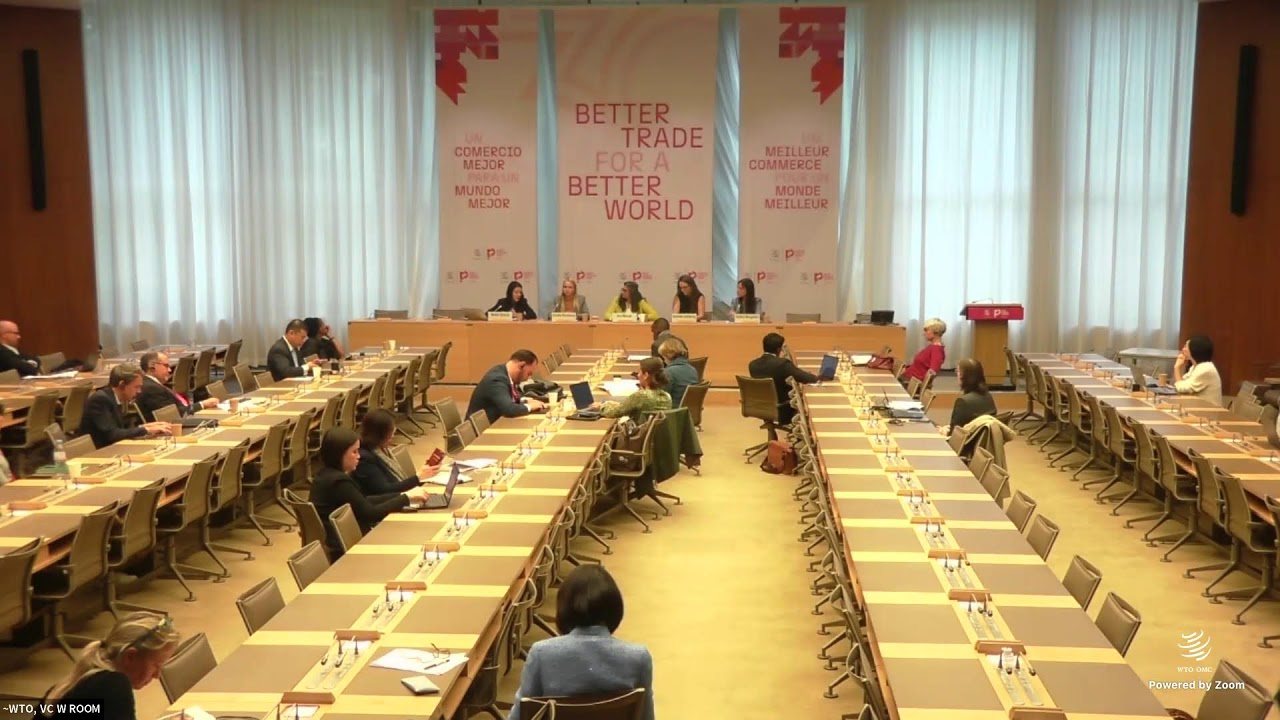
WS106 - Building Responsible Consensus for a Green Trade Agenda
500
Green industrial policies involve national governments using public funds to scale up economies for environmental goals, particularly through green subsidies. However, these subsidies create tensions with international subsidy rules under the SCM Agreement. The Canada Renewable Energy case established that the SCM Agreement architecture is inadequate for green initiatives. Three key reform areas are needed: (1) adding a compatibility clause allowing countries to pursue climate mitigation goals through subsidies; (2) improving transparency on subsidy notifications; and (3) making subsidy remedies more effective, as current remedies are prospective and limited to members with domestic industries making comparable goods.
Click to watch →

TEEB@YALE: The Policy Challenge of Ecological Scarcity - Edward Barbier
529
Environmental policy reform faces significant political costs that often override theoretical economic benefits. Removing environmental subsidies creates producer losses (area a plus b) while generating societal gains (area c plus d); if sufficiently large entities lose from removal, they will fight against reform despite overall benefits. Similarly, environmental taxes face political resistance: while they can internalize externalities and reduce environmental damages, they create efficiency losses and producer losses that generate political opposition. Global environmental subsidies across water, energy, agriculture, and transport markets amount to approximately $1 trillion annually (3-5% of global GDP), with fossil fuel subsidies alone reaching $657 billion in 2008. These subsidies are worsening rather than lessening, with vested interests demanding more support despite evidence that phasing them out by 2020 could reduce global energy demand by 5.8% and greenhouse gas emissions by 7%.
Click to watch →
Il Catalogo sussidi ambientali | Sostenibilità in Lombardia
306
Environmental subsidy reform can pursue multiple approaches: eliminating harmful subsidies, replacing them with direct support mechanisms, or modifying existing measures. Green fiscal reform involves shifting tax burdens from labor and capital toward pollution and resource consumption, following the 'polluter pays' principle. This reform can be pursued autonomously or integrated into broader fiscal reforms, potentially enhancing public acceptance by reducing distortionary taxes.
Click to watch →

당장 재활용도 못하는데
4.4K
The current battery subsidy policy requires fundamental reform to align with environmental goals and fair trade principles. Key recommendations include: (1) LFP batteries should not receive green subsidies since they cannot be recycled economically and cause environmental problems through improper disposal, (2) Chinese battery companies should not receive double subsidies from both China and Korea, (3) domestic battery companies should receive fair support to compete with foreign manufacturers, and (4) the policy should distinguish between battery types based on actual environmental impact rather than providing uniform subsidies. The policy should also address the economic viability of battery recycling and ensure that subsidies support genuinely sustainable technologies rather than environmentally problematic alternatives.
Click to watch →

Sarah-Lee Heinrich (Vorsitzende Grüne Jugend) - Jung & Naiv: Folge 539
143.6K
Climate policy requires eliminating subsidies that support environmentally damaging activities. Germany spends over 60 billion euros annually on climate-damaging subsidies, funds that could be redirected toward sustainable investments. Effective climate policy involves reviewing and phasing out these subsidies while simultaneously investing in renewable energy infrastructure and public transportation. The challenge is balancing immediate economic concerns with long-term environmental sustainability, requiring honest assessment of costs and benefits while maintaining public support for necessary transitions.
Click to watch →
Deep Dive
Agroecology and Regenerative Farming: Exploring advanced agricultural methodologies designed to restore soil health, enhance biodiversity, and sequester carbon.
A perspective on Agroecology, Regen Ag & Paradigm Transitions - Groundswell 2025
424
Agroecology and regenerative agriculture share core principles of ecological farming but differ significantly in scope and approach: agroecology is a mature, comprehensive paradigm encompassing science, practices, and social movements addressing food systems, land access, and governance, while regenerative agriculture is a newer, more field-focused movement emphasizing soil health restoration and practical farm-level strategies; both converge on ecological principles and soil restoration but diverge in that agroecology addresses broader social and political dimensions while regenerative remains predominantly focused on field-level implementation, with agroecology providing a more holistic framework for systemic food system transformation.
Click to watch →

Agroecology: From Annual to Perennial Crop Farming | Tim Crews, PhD | The Lands Institute
1.8K
Agroecology applies ecological principles to agriculture, seeking to increase yields while reducing environmental impacts. It recognizes humans as part of planetary biogeochemical cycles rather than existing outside natural constraints. The fossil fuel era allowed agriculture to relax these constraints through pesticides, fertilizers, and irrigation, leading to monoculture systems. Agroecology contrasts with industrial agriculture by utilizing insights from natural and traditional polyculture systems that regulate pests and suppress weeds without chemical inputs. The field encompasses both scientific approaches and social justice movements supporting small-scale farmers. Regenerative agriculture, while sharing goals, lacks specific definitions and includes debates about practices like herbicide use. Two certification approaches exist: improving upon organic standards versus building incremental pathways for conventional growers.
Click to watch →

Agricultura AGROECOLÓGICA y REGENERATIVA | Mikel Rubiralta | La Barraqueta Agroecològica | Tarragona
1.9K
Regenerative agriculture and agroecology are holistic farming approaches that prioritize soil health, biodiversity, and sustainable food production by working with natural ecosystems rather than against them. Key principles include: (1) Soil regeneration through organic matter application (compost, manure, green manures) to improve soil structure and fertility; (2) Crop rotation and diverse planting (60-70 different crops annually) to prevent soil depletion and pest buildup; (3) Biological pest control using beneficial organisms instead of synthetic chemicals; (4) Water conservation through efficient irrigation systems and rainwater harvesting; (5) Direct farmer-to-consumer sales to build community relationships and ensure fair compensation; (6) Integration of livestock (such as mobile chicken tractors) to naturally fertilize and till the soil; (7) Use of natural mulches and cover crops to suppress weeds and retain moisture; (8) Preservation of heirloom and local crop varieties to maintain agricultural biodiversity. These practices create resilient agricultural systems that regenerate soil, support biodiversity, and produce nutritious food while reducing environmental impact.
Click to watch →

Agroécologie vs Agriculture régénératrice : Quel modèle va s'imposer ?
154
Regenerative agriculture is emerging as a more practical alternative to agroecology because it focuses on concrete, actionable elements like soil health, crop rotations, and cover crops, positioning fertility and productivity at the center rather than restriction and decline, which makes it more appealing to farmers seeking sustainable practices.
Click to watch →
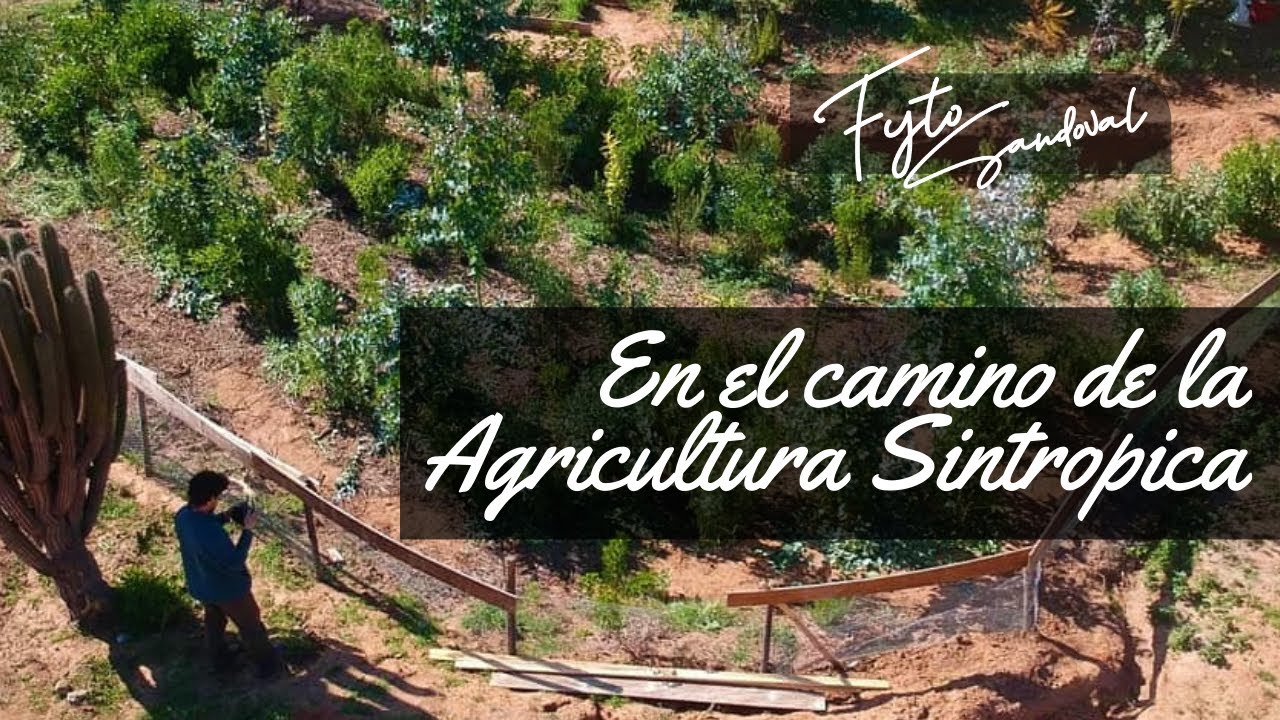
Caminando en la Agroecologia y la Agricultura Sintrópica
16.8K
This comprehensive section presents agroecology as a regenerative approach to food production that heals the climate while generating food surpluses. The speaker traces their journey from permaculture and Fukuoka methods to agroecology, emphasizing food sovereignty and community engagement. The context is set in Chile, where nearly 2,000 kilometers of central and northern regions face desertification due to deforestation, monoculture agriculture, and extractive activities. Core principles include using biomass plants to enhance soil microbiology and fertility, plant stratification for efficient resource use, and pruning to redirect energy to objective plants. The speaker distinguishes process-based agriculture (using natural ecological processes) from input-based agriculture (relying on external inputs). Chile's three distinct geographic and climatic zones present different challenges: a northern desert zone, a central semi-arid Mediterranean zone undergoing desertification, and a southern zone with Mediterranean climate transitioning to temperate. Phased implementation strategies involve planting biomass plants first, then adding objective fruit trees in subsequent years to reduce risk and build understanding. Water retention systems using infiltration trenches can produce 5,000 liters of water per week in areas with only 30-50mm of annual rainfall. The speaker describes scaling agroforestry implementation, planting approximately 2,000-3,000 trees in one season and projecting to plant over 10,000 trees in the following season. Community involvement in design creates ownership and investment. Advanced agroforestry integrates multiple ecological factors including plants, fungi, microbiology, and water management. The dual objectives are agricultural productivity (wood, foliage, food) and ecosystem services (climate regulation, water cycle restoration, social benefits).
Click to watch →
Deep Dive
International Trade and WTO Regulations: Investigating how domestic agricultural subsidies distort global market prices, affect food security, and impact farmers in developing nations.

Zoology and Economy | WBCS | Miscellaneous | RNH Education
276
The World Trade Organization (WTO) regulates international trade. Key concepts include tariffs (import taxes), non-tariff barriers (quotas, licensing), and trade agreements. The Dispute Settlement Body resolves trade conflicts. Most Favored Nation (MFN) principle ensures equal treatment.
Click to watch →

CLASS 10th Economics Chapter 4 वैश्वीकरण और भारतीय अर्थव्यवस्था by kumar siken
216.6K
The WTO regulates international trade by establishing and enforcing rules that govern how countries conduct trade with each other. It monitors whether member countries are following the agreed-upon trade rules and regulations, ensuring that international trade operates fairly and according to established principles.
Click to watch →

Lect. 20 #international #trade #12thclass #ba3rdyear
342
The WTO (World Trade Organization), established in 1995, regulates international trade through agreed tariff limits. Member countries must follow these rules when trading with each other. Non-members face trade restrictions. The WTO headquarters is in Geneva, Switzerland, with 164 member countries including India as a founding member. Countries can impose restrictions only for legitimate reasons like cultural protection, not for economic protectionism.
Click to watch →

E-commerce Is Dead In Pakistan ! | Here's Why | Imtinan Ahmad
120.6K
The World Trade Organization (WTO) is an international organization that regulates trade between member countries. When one country exports goods to another, the importing country has the authority to impose customs duties, advance taxes, and sales taxes on those goods. The WTO establishes rules that govern how these tariffs are applied across different types of trade transactions.
Click to watch →

CUET PG Commerce 2026 🔥 | Most Expected Questions for Exam | Important Topics
6.6K
International trade is regulated by the World Trade Organization (WTO). The WTO is an international organization that facilitates international trade by establishing rules, resolving disputes, and promoting trade liberalization among member countries.
Click to watch →
Deep Dive
Lifecycle Assessment (LCA) in Food Systems: Learning how to scientifically measure the comprehensive environmental footprint of agricultural products from farm to table.

Kuminda2012.ferraresi-bortolozzo.mp4
152
Life cycle assessment (LCA) is a methodology for evaluating the environmental impacts of products throughout their entire life cycle, from raw material extraction to end-of-life disposal. In food systems, LCA helps identify environmental hotspots and opportunities for improvement across the entire food chain.
Click to watch →

De l'étable à la table dans le secteur laitier québécois
296
Life cycle assessment is a methodology that considers the entire journey of food products, from agricultural production through transformation, packaging, transportation, and consumption. This comprehensive approach helps identify environmental impacts at each stage, including fertilizer use, greenhouse gas emissions from livestock, and food waste throughout the supply chain.
Click to watch →

LCA FOOD 2024 - Summary of the day's events in Barcelona
624
Life Cycle Assessment is defined as the key concept that enables examination of inputs and outputs while also allowing analysis of circularity and complexity across all effects. This framework provides a comprehensive approach to understanding the full environmental impact of food systems, enabling stakeholders to make conscious decisions about sustainable practices.
Click to watch →
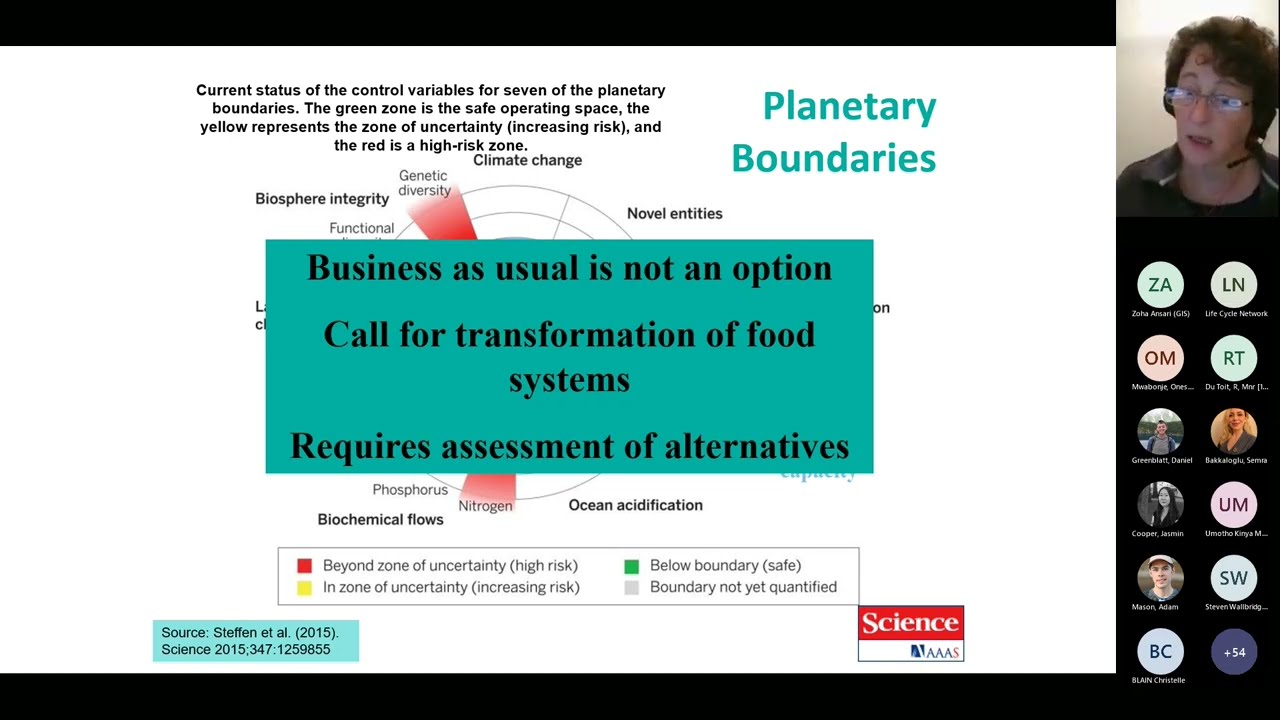
Prof Sarah McLaren - Nutritional Life Cycle Assessment: Setting a New Research Agenda
209
Life Cycle Assessment can support transformative change in food systems rather than merely incremental efficiency improvements. This requires LCA practitioners to focus more heavily on the goal and scope definition and interpretation phases of studies. Effective transformative LCA must consider context, ensure stakeholder relevance and buy-in, and use systems-based approaches including 'what-if' scenarios to explore fundamental changes to food system structures and practices.
Click to watch →
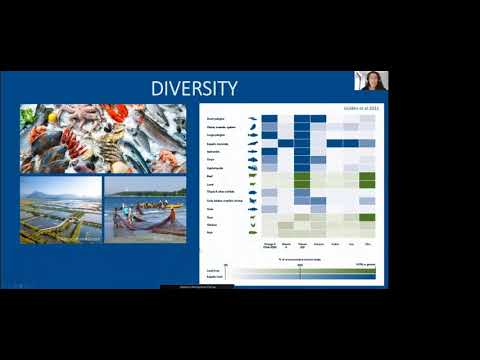
The Big Fish Series - Blue Food: A Food Systems Solution?
212
Life cycle assessment (LCA) provides essential methodology for comparing food systems, requiring consistent system boundaries that account for complete life cycles from farm to fork. Critical considerations include accounting for edible fractions and raw-to-cooked transformations, as losses can double environmental impacts. Comparisons must incorporate nutritional properties rather than equal weights of different food types, focusing on diet-level analysis that incorporates human nutritional requirements. The Eat-Lancet study demonstrates how these principles reveal that aquaculture can multiply significantly in future diets when accounting for losses and nutritional density, while terrestrial meat consumption may decrease. However, LCA of emerging technologies like cultured meat faces substantially higher uncertainties because they attempt to model non-existent systems at scale, with results varying significantly based on assumptions about energy inputs, facility locations, and production parameters.
Click to watch →
Subsidy Harm
Subsidy Harm
0:02- 1
Agricultural subsidies damage land, water, and biodiversity.
- 2
Market choices and trade are distorted by these incentives.
- 3
Problem is concentrated and solvable with urgent action.
Agri-Environmental Schemes and Conservation Subsidies
While traditional agricultural subsidies can incentivize intensive farming, an alternative perspective argues that subsidies can be powerful tools for environmental stewardship. Through 'Green Box' subsidies and Agri-Environmental Schemes (AES), governments redirect financial support to reward farmers for adopting eco-friendly practices. These include establishing wildlife habitats, reducing chemical runoff, restoring wetlands, and practicing carbon sequestration. Proponents of this view argue that without these targeted subsidies, many farmers would lack the financial viability to transition to sustainable methods, potentially leading to land abandonment or more destructive intensive farming driven purely by market pressures. Therefore, rather than being inherently harmful, subsidies can be re-engineered as essential mechanisms for funding public ecological goods.
Basic Economic Principles of Subsidies: Understanding what government subsidies are, why they are implemented (such as food security and market stabilization), and how they influence supply and demand.
Foundations of Environmental Science: Familiarity with ecological concepts such as biodiversity, watershed health, soil erosion, and ecosystem services.
Industrial vs. Sustainable Agriculture: Distinguishing between intensive farming methods (monoculture, high synthetic chemical use) and conservation-oriented farming practices.
The Concept of Negative Externalities: Understanding how the societal and environmental costs of production (like pollution) are often not reflected in the market price of goods.
Policy Reform and 'Green' Subsidies: Studying alternative agricultural frameworks, such as 'payment for ecosystem services' (PES) and agri-environmental schemes.
Agroecology and Regenerative Farming: Exploring advanced agricultural methodologies designed to restore soil health, enhance biodiversity, and sequester carbon.
International Trade and WTO Regulations: Investigating how domestic agricultural subsidies distort global market prices, affect food security, and impact farmers in developing nations.
Lifecycle Assessment (LCA) in Food Systems: Learning how to scientifically measure the comprehensive environmental footprint of agricultural products from farm to table.
358 views8likes2:18@universityofadelaideOriginal Release: 2022-10-20
[Music] foreign [Music] organization member countries have long questioned whether providing agriculture subsidies could be inadvertently causing harm to our environment now we know that in the majority of cases the answer is unequivocally yes [Music] they're effectively incentivizing choices and behaviors among landowners and producers that are leading to multiple interconnected problems things like land degradation biodiversity loss and water scarcity study also found that these subsidies frequently distort producers choices about what and how much they grow and how much countries trade on world markets and unfortunately the Situation's getting worse even more concerning is the fact that there are currently no constraints to prevent this happening but on the positive side this is a solvable problem the analysis shows that these environmentally harmful subsidies are concentrated in just a handful of countries and they're centered on the production of relatively few commodities foreign would need to raise awareness of the issues Ghana widespread public support and drive evidence-based discussion at the highest levels around agricultural policies that will support environmental health and sustainability and it needs to start moving now
Up Next

78:27
George Monbiot on Regenesis: Feeding the World Without Devouring the Planet
@GuardianLive
15.9K views•2023-12-04

15:54
Life in Biosphere 2: Sustainable Ecosystems & Human Survival
@TED
334.9K views•2009-06-16
14:30
Microplastics Everywhere: How Plastic Impacts Our Lives
@TEDx
100.9K views•2018-05-08
10:28
Ice Stupa Artificial Glaciers: Solving Ladakh's Water Crisis
@SonamWangchuk66
3.2M views•2015-05-03
Related Study Plans & Knowledge Roadmaps
Structured learning paths in Environmental Science
environmental-science
Ocean Noise: Cetacean Impacts & Mitigation
01Fundamentals of Underwater Acoustics
02Marine Mammal Bioacoustics
03Anthropogenic Noise: Shipping & Seismic Surveying
+ 2 more learning modules
16h5 modules
Explore Roadmap
environmental-science
Road Ecology: Corridors, Overpasses & Fencing
01Foundations of Habitat Fragmentation and Carnivore Ecology
02The Road Barrier: Ecological Impacts of Transport Infrastructure
03Principles of Ecological Corridors and Connectivity Mapping
+ 3 more learning modules
14h6 modules
Explore Roadmap
environmental-science
Ocean Acidification: Kelp Buffering & Shellfish
01Fundamentals of Ocean Chemistry & pH
02Chemical Pathways of Coastal Acidification
03Bivalve Physiology & Calcification Under Stress
+ 2 more learning modules
18h5 modules
Explore Roadmap
environmental-science
Ice Stupas: Glacial Retreat & Water Security
01Foundations of Glaciology & Mountain Hydrology
02Climate Change and Glacial Retreat Dynamics
03The Science of Ice Stupas & Artificial Glaciers
+ 2 more learning modules
14h5 modules
Explore Roadmap