



![CHEMICAL BONDING [ LECTURE -22 ]](https://i.ytimg.com/vi/isUCnimrbKY/sddefault.jpg)





![[ QUIMICA FREE ] - TEORIA DE ENLACE COVALENTE II - Traslape de orbitales sigma y pi](https://i.ytimg.com/vi/EkoL8TkrSI0/hqdefault.jpg)






![[1] Thermodynamic & Kinetic Aspect of Metal Complexes | Inorganic chemistry | BSc 3rd year](https://i.ytimg.com/vi/JYqT6Bx7wkg/hqdefault.jpg?v=607d6f37)



Ligand field theory combines crystal field theory with molecular orbital theory to explain metal-ligand bonding, where sigma bonding splits d-orbitals into t2g and eg sets, and pi bonding (donor or acceptor) further modifies the splitting energy (Δ_oct), determining whether a complex is high-spin or low-spin based on the balance between ligand field stabilization energy and electron pairing energy; the spectrochemical series ranks ligands by their ability to cause Δ_oct splitting, with pi donor ligands causing smaller splittings (favoring high-spin) and pi acceptor ligands causing larger splittings (favoring low-spin).
Ligand Field Theory & Spectrochemical Series Explained
Added:Fundamentals of Crystal Field Theory (CFT), including d-orbital splitting ($t_{2g}$ and $e_g$) in octahedral coordination complexes.
Basic Molecular Orbital (MO) Theory, specifically the concepts of linear combination of atomic orbitals (LCAO), bonding, antibonding, and non-bonding orbitals.
The spatial orientations and shapes of the five d-orbitals ($d_{xy}$, $d_{yz}$, $d_{xz}$, $d_{x^2-y^2}$, $d_{z^2}$).
General principles of covalent bonding, focusing on the distinction between sigma ($\sigma$) and pi ($\pi$) orbital overlaps.
Analysis of electronic spectra of coordination compounds, including the use of Orgel and Tanabe-Sugano diagrams to determine optical transitions.
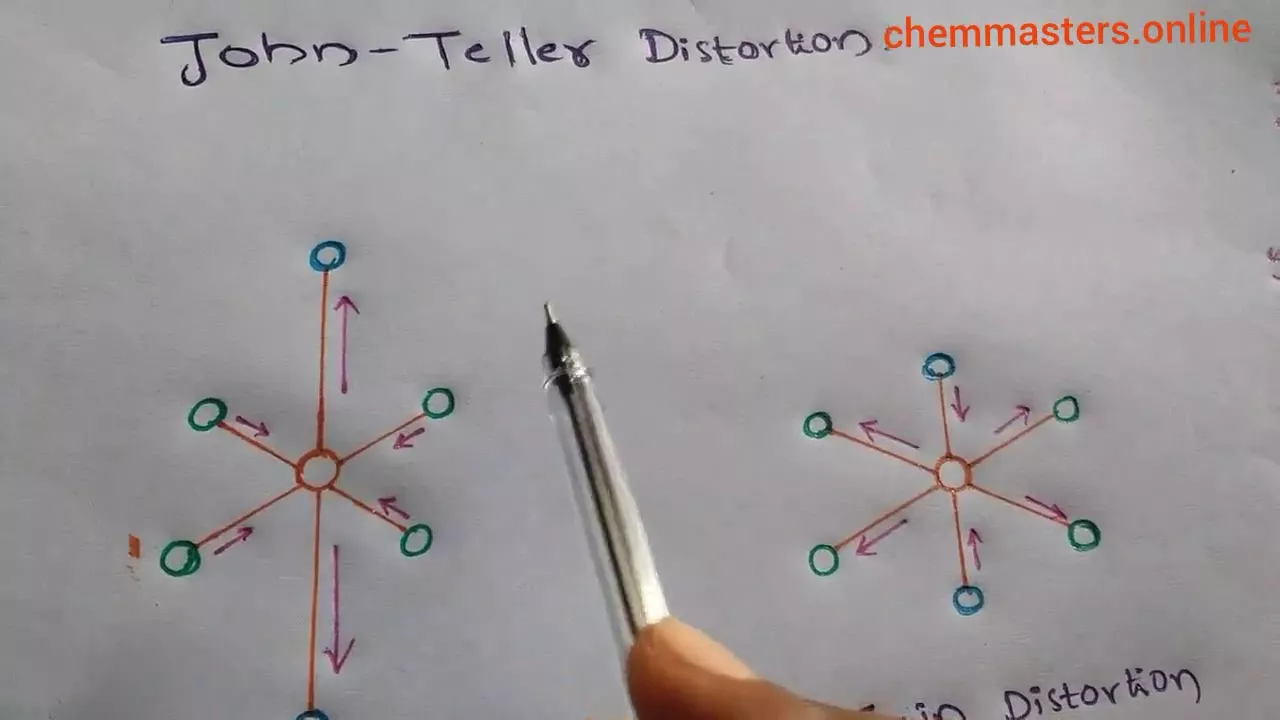
The Jahn-Teller theorem and its application to geometric distortions in transition metal complexes.
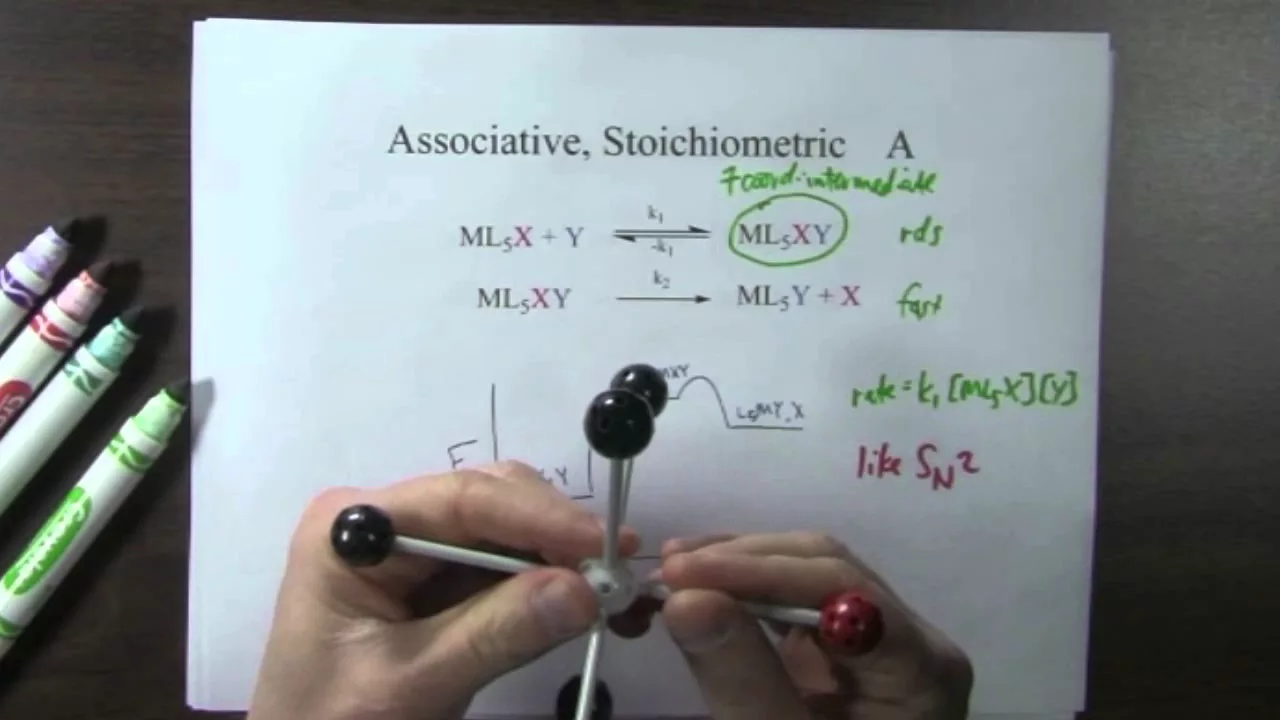
Kinetic and thermodynamic stability of coordination complexes, including ligand substitution reaction mechanisms (associative, dissociative, and interchange pathways).
Organometallic chemistry principles, such as metal-carbonyl backbonding ($\pi$-backdonation) and the 18-electron rule.
36.4K views637likes15:53Original Release: 2022-01-02
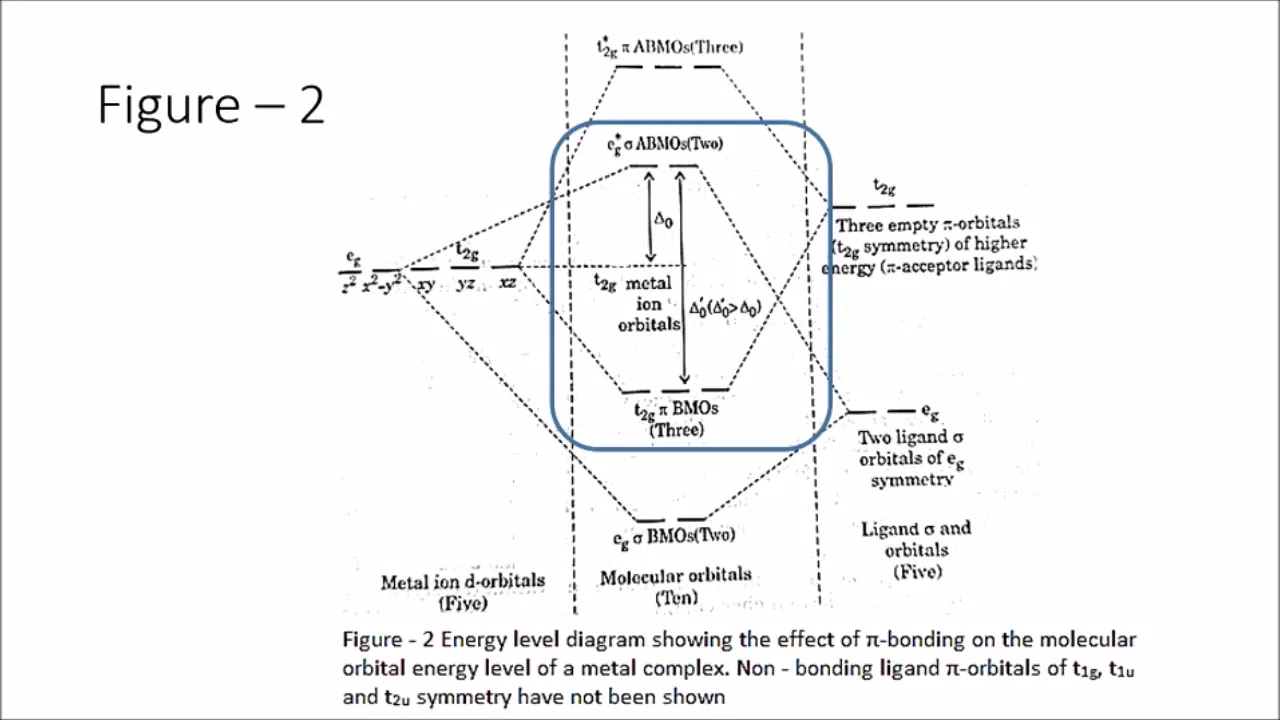
hi it's professor adam let's talk about ligand field theory [Music] crystal field theory was introduced last time as a good starting point for a metal complex but it suffers from some limitations such as it treats ligands as simple point charges which means that only the electrostatics matter this is okay for simple metal compounds such as titanium oxide or sodium chloride where the interactions are predominantly electrostatic but this theory struggles when organometallic complexes with metal carbon bonds and covalent interactions are encountered ligand field theory is a combination of crystal field theory with molecular orbital theory so that electrostatic interactions from crystal field theory can be combined with covalency that is described well by molecular orbital theory this means it becomes important to understand what the frontier or valence orbitals of the transition metals are and so for the first row of the transition metals we have the 3d 4s and 4p orbitals initially only sigma bonding will be considered and so the lewis basic ligand structure will look like this with a lone pair of electrons pointing at the metal center as a sigma bond symmetry is very useful to understanding metal ligand complexes and can save us from a lot of linear algebra with an octahedral metal complex there are nd orbitals the n plus 1 s orbital and the n plus 1 p orbital then using the character table it can be seen that the orbital symmetries can be assigned there is eg t2g the totally symmetric a1g and the t1u for the metal valence orbitals assuming that all of the sigma ligands are totally equivalent the reducible representation is the movement of each ligand under the various symmetry operations of the octahedral point group which gives the irreducible representations a1g eg t1u representing the six orbitals of the sigma interactions here is the molecular orbital diagram that was previously derived for an octahedral complex on the left is the metal with the s and p orbitals being higher in energy than the d orbitals the d orbitals have two types of symmetry the e g set of dz squared and d x squared minus y squared and the t to g set representing the d x y d x z and d y z orbitals on the right hand side are the six pairs of lewis basic electron pairs with symmetries eg t1u and a1g metal and ligand orbitals have the same symmetry and can thus interact with each other to form molecular orbitals and this is exactly how the sigma bonds will be formed remember that the strength of an interaction is approximately inversely proportional to the energy separation of the two fragments the six lowest energy molecular orbitals become our metal ligand sigma bonding orbitals and conversely the top six orbitals with the same symmetry become the anti-bonding sigma star molecular orbitals the t2g set are non-bonding in this example and so just come across at the same energy looking at the shapes of the orbitals can make them a lot easier to understand starting at the bottom is the eg molecular orbital set and its corresponding eg star anti-bonding set the bonding and anti-bonding orbitals have the same shapes but different contributions which can be calculated using the projection operator method in the case of the bonding the ligands are in phase with the metal and for the antibonding they are out of phase for the a1g sigma the contributions are symmetric and in phase with the bonding orbital localized on the ligands and for the anti-bonding they are out of phase and the anti-bonding orbital is located on the metal the same process can be done for the sigma and sigma star t1 you set and finally the t2g set has no sigma pair and is non-bonding in this case in summary then for the sigma bonding octahedral system bonding and anti-bonding orbitals have the same shape but their contributions are different bonding orbitals are in phase with the metal and anti-bonding orbitals are out of phase the contributions of the ligands can be determined using the full projection operator method or if there is an asymmetry to the energy levels of the metal and ligands as there is here an approximation can be made that the bonding and anti-bonding molecular orbitals will be localized on the fragments which are closest in energy the central orbitals the t2g and eg star orbitals are essentially pure d orbitals the t2g set here are non-bonding and have no influence from the ligands and the eg star set being an anti-bonding orbital has limited contributions from the ligands and has a predominantly d orbital character the separation between the d orbitals with t2g and eg is qualitatively similar to that of crystal field theory but contains some other considerations as mentioned before octahedral complexes can have high spin and low spin states which are dictated by the number of d electrons they contribute and their bound ligands metals which have fewer than four or more than seven electrons can only be high spin whereas those with four to seven electrons can have two different configurations high or low spin ligands cause significant changes in delta octahedral with weak field ligands causing small splittings and strong field ligands causing large splittings for high spin complexes the octahedral splitting energy is smaller than the total pairing energy but for low spin complexes the pairing energy is smaller than the octahedral splitting energy it should be emphasized that this only applies to 3d metals 4d and 5d complexes are usually low spin due to the f orbitals the total electron pairing energy important in determining if the d4 to d7 complexes are high or low spin has two components pi c is the coulombic term that arises from the repulsion of two negatively charged electrons in the same orbital pi e is a stabilizing effect that comes from the exchange energy in quantum mechanics which results from degenerate electrons with the same spin quantum number being identical for the d4 high spin the total pairing energy will include 3 exchange terms and 0 coulombic components as there is no pairing energy the ligand field stabilization energy can also be calculated in the same way as the crystal field stabilization energy with three electrons in the t2g orbitals and one in the eg to determine if something is high or low spin the pairing energy and ligand field stabilization energies need to be compared the same thing can be done for low spin d4 but this time there is a columbic repulsion term from the pairing of electrons in the t2g orbital and the ligand field stabilization energy becomes more negative high spin d4 has just been discussed for d8 there is a lot going on three doubly occupied d orbitals so three columbic repulsion contributions there are seven exchange components one in the eg and three each from the spin up and spin down electrons in the t2g set and the ligand field stabilization energy is negative as most of the electrons are in the t2g set for d6 low spin all the electrons go in t2g which gives six exchange terms and three coulombic terms and the ligand field stabilization energy is negative as all the electrons are in the t2g set how do we use ligand field splitting energies and electron pairing energy let's determine if this hexa aqua iron complex is low spin or high spin for the low spin case the ligand field stabilization energy will be six electrons in the t2g set which gives a ligand field stabilization energy of negative 22 440 wave numbers the total energy for the low spin case will be three times the average pairing energy plus the ligand field stabilization energy which gives the energy of the low spin state as 30 360 wave numbers the same thing for the high spin system then gives an energy for the high spin state of 13 860 wave numbers which is lower than the low spin case lower energy species are more stable and so here hexa aqua iron is going to be high spin because this minimizes the overall energy due to the reduced pairing energy not because of the reduced ligand field stabilization energy so far only sigma type interactions have been considered which has made the t2g set non-bonding ligands such as ammonia which are only sigma bonding cause the t2g set to be non-bonding however many ligands have the ability to bond through p orbitals and form pi bonds with the central metal pi bonding of metals and ligands can be understood through group theory each ligand has individual xyz coordinates which will follow previous convention and have the y-axis pointing towards the metal ligand bond the reducible representations for these ligands can be determined in the usual way which can be solved to give the component irreducible representations which include the t2g set this t2g set represents the ligand p orbitals and allows the metal to form pi bonds to the ligands the other sets cannot be used these interactions can be visualized for the dx said dyzd and dxy orbitals as shown with the bonding interactions having the p and d orbitals in phase with each other pi bonding in transition metal complexes can be pretty special ligands such as chloride and bromide act as pi donor ligands because they have lone pairs of electrons in orbitals of pi symmetry with respect to the metal ligand bond thus they can donate one pair as a sigma bond and the other as a pi bond pi donor bonding is more effective for metals with few d electrons some examples include the helides and many others including alkoxides generally including heteroatoms and negative charges with extra lone pairs another class of pi bonding ligands are the pi acceptor ligands these accept electrons from a filled d orbital of the metal and so must have an empty pi star orbital as the lumo localized on the ligand pi acceptor bonding is more effective for metals with many d electrons or a low oxidation state some examples include carbon monoxide nitric oxide and cyanide pi ligand metal acceptor bonding is commonly called pi back bonding and strengthens the ligand metal bonds because it reduces electron density on the metal it also causes a weakening of any ligand multiple bonds such as the co triple bond in carbon monoxide this change can be monitored in the ir electrons from the metal t2g orbitals are donated back to the ligand pi star anti-bonding orbital for the pi regime the metal is lewis basic and the ligand is lewis acidic the ligand is still sigma basic this is a synergistic relationship remember that to have pi bonding usually there must always be sigma bonding from the ligand to the metal first for octahedral complexes that only include sigma bonds the molecular orbital diagram looks like this with the ligands acting as donors towards the metal here only the symmetry adapted linear combination with the matched pair on the metal will be drawn out explicitly the others are non-bonding and are omitted for clarity the pi acceptor ligands have t2g symmetry and are high in energy as they are often the pi star orbitals the bonding t2g set are from the metal which means that the higher d electron counts will result in more metal ligand pi bonding the other orbitals are assumed to be unchanged by the metal ligand pi interactions for the pi donor systems all of the t2g set are assumed to be filled the ligand set becomes the pi bonding and the metal set is destabilized and becomes the pi star anti-bonding more metal d-electrons causes a destabilization because they are anti-bonding and destroy the metal ligand pi bond pi bonding can affect the magnitude of delta o with acceptor ligands generally increasing it and donor ligands generally decreasing because pi bonding can affect the magnitude of delta o it means that ligands can influence if a complex will be high or low spin the trend in ligand effects is called the spectrochemical series ligands with lone pairs of electrons such as helite anions cause smaller delta o splittings as they increase the energy of t2g these ligands usually create 3d complexes with high spin then at the opposite end are the pi acceptor ligands which stabilize t2g because they have empty pi star orbitals that can accept electron density from the metal d orbitals increasing delta o these ligands usually create 3d complexes with low spin then in the middle are sigma only ligands such as water and ammonia these ligands can create 3d complexes with high or low spin depending on both the metal and the ligand 4d and 5d metals are usually low spin because they make stronger metal ligand sigma bonds and because the d orbitals are bigger which means a smaller pairing energy as the electron repulsion is decreased resulting in a smaller pairing energy let's check comprehension you
Up Next
40:04
Effect of Pi Bonding on Delta O Splitting Energy
@devangchem
440 views•2023-10-27

83:56
Biocatalysis and Catalysis in Islatravir Synthesis | Merck Webinar
@SCIwheresciencemeetsbusiness
675 views•2020-10-08
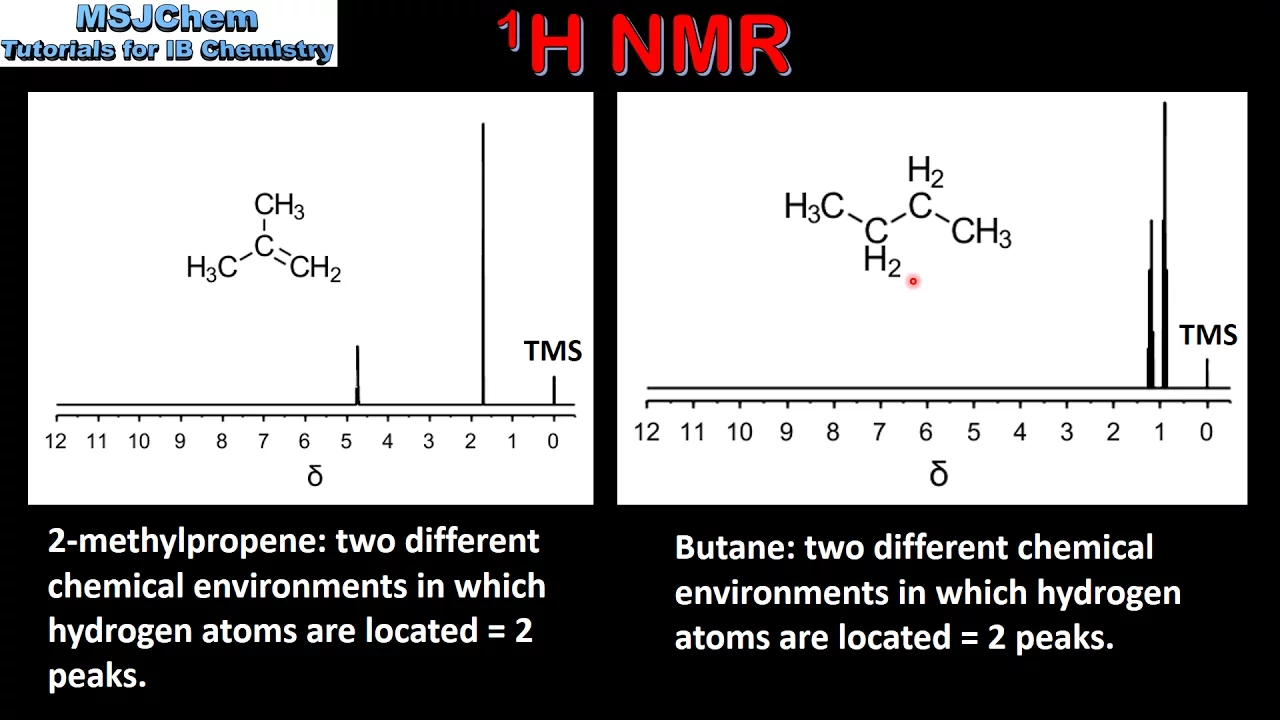
10:06
1H NMR: Determining Number of Peaks from Structure
@MSJChem
59.2K views•2017-04-06

17:31
Edible Water Bottles: A DIY Guide to Sodium Alginate Spherification
@ryan
10.5M views•2019-06-21
Related Study Plans & Knowledge Roadmaps
Structured learning paths in Chemistry
chemistry
Nuclear Chemistry: Decay, Meds & Fuel Cycle
01Introduction to Nuclear Structure and Radioactivity
02Decay Dynamics and Kinetics
03Radiation Interaction and Detection
+ 2 more learning modules
24h5 modules
Explore Roadmap
chemistry
Supramolecular Chemistry: Forces & Machines
01Foundations of Chemical Bonding and Intermolecular Forces
02Introduction to Host-Guest Chemistry
03Thermodynamics and Dynamics of Self-Assembly
+ 2 more learning modules
16h5 modules
Explore Roadmap
chemistry
Photochemistry: Excited States & Reactions
01Foundations of Light-Matter Interactions
02Molecular Orbitals and Electronic States
03Photophysical Processes and Jablonski Diagrams
+ 2 more learning modules
18h5 modules
Explore Roadmap
chemistry
Coordination Chemistry: Bonding & Properties
01Introduction to Transition Metals and Ligands
02Crystal Field Theory (CFT) and Geometry
03Magnetic Behavior and Spin States
+ 2 more learning modules
14h5 modules
Explore Roadmap