





















![The Strange New Science of Chaos [1989]](https://i.ytimg.com/vi/lTx4gqSTlmE/sddefault.jpg)







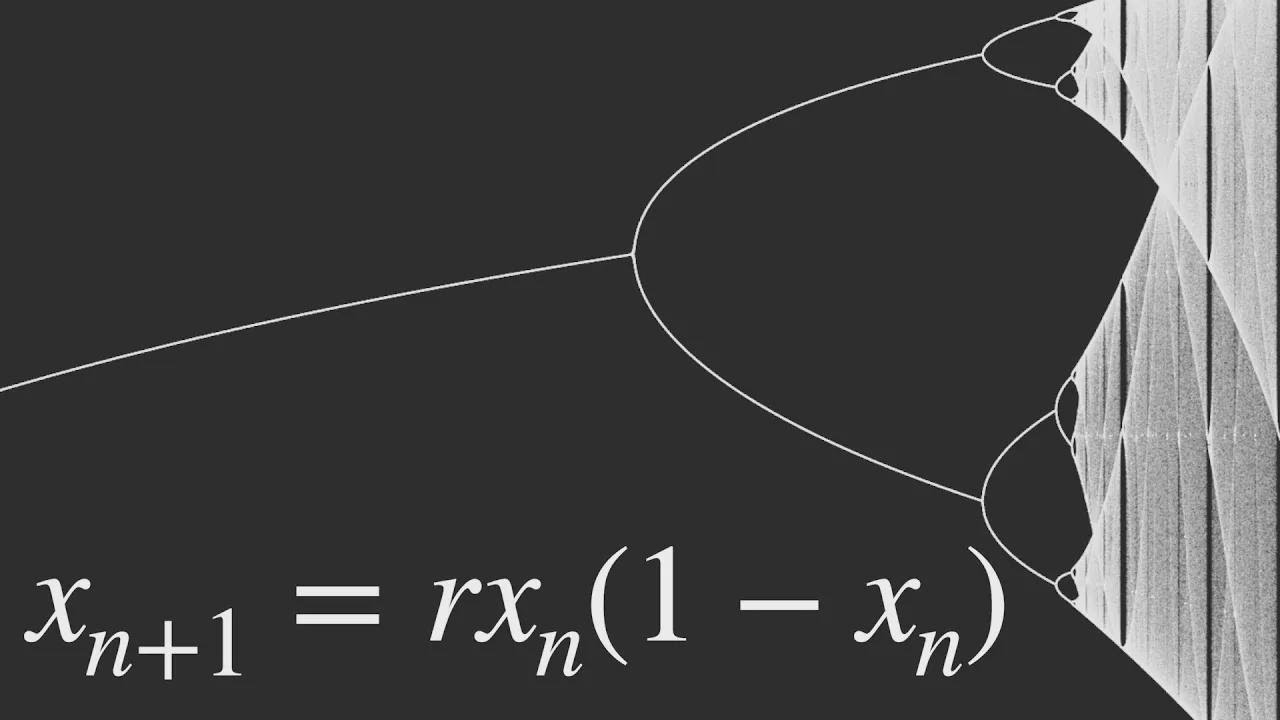
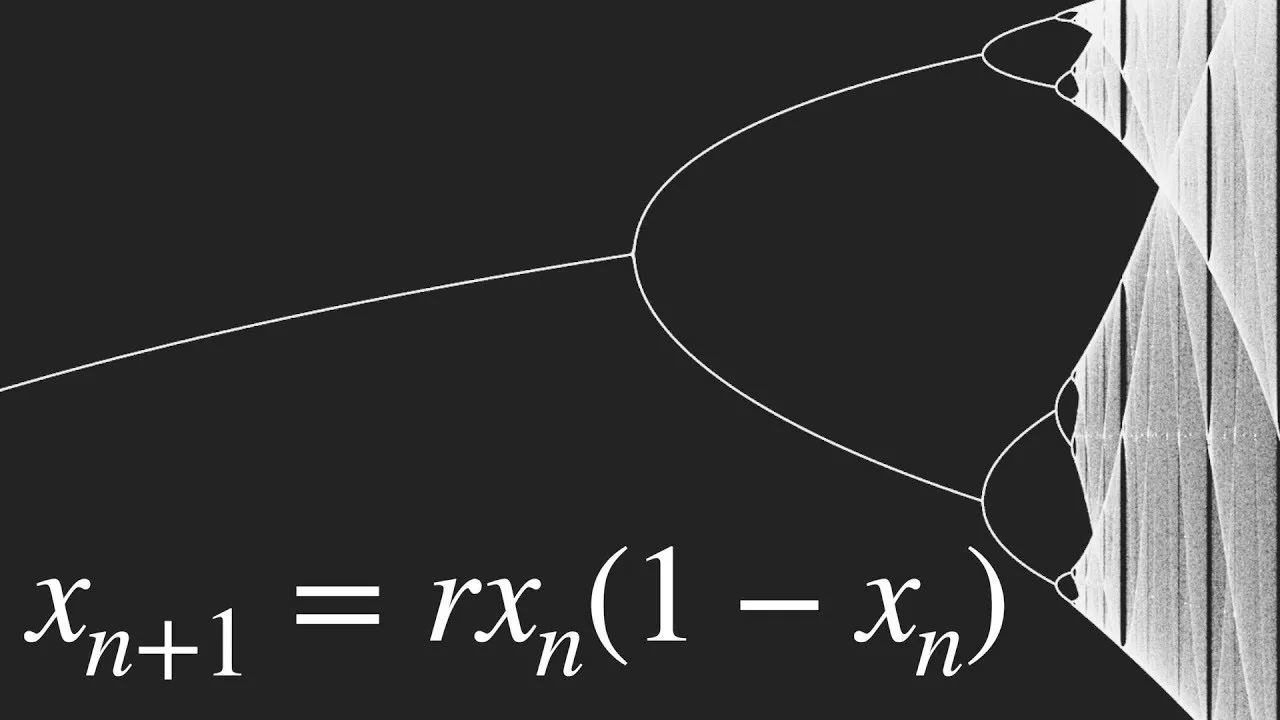
The logistic map equation xn+1 = r × xn × (1 - xn) demonstrates how simple mathematical rules can produce extraordinarily complex behaviors, including stable equilibria, periodic cycles, and chaos, and this universal equation applies to diverse phenomena from population dynamics to fluid convection, neuron firing, and dripping faucets, revealing fundamental constants like the Feigenbaum constant that govern all such systems.
The Logistic Map: Unlocking the Universal Chaos in Nature and Mathematics
Added:Fundamental concept of iterative functions and feedback loops, where the output of an equation becomes the input for the next step.
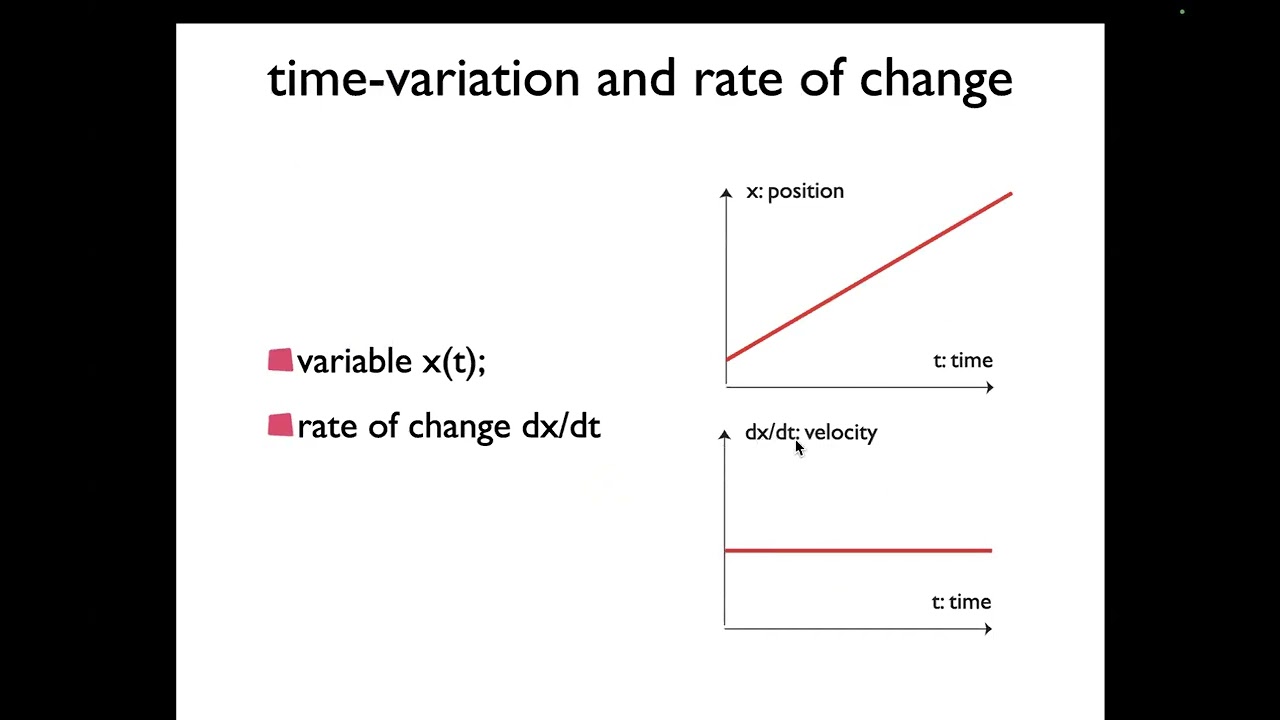
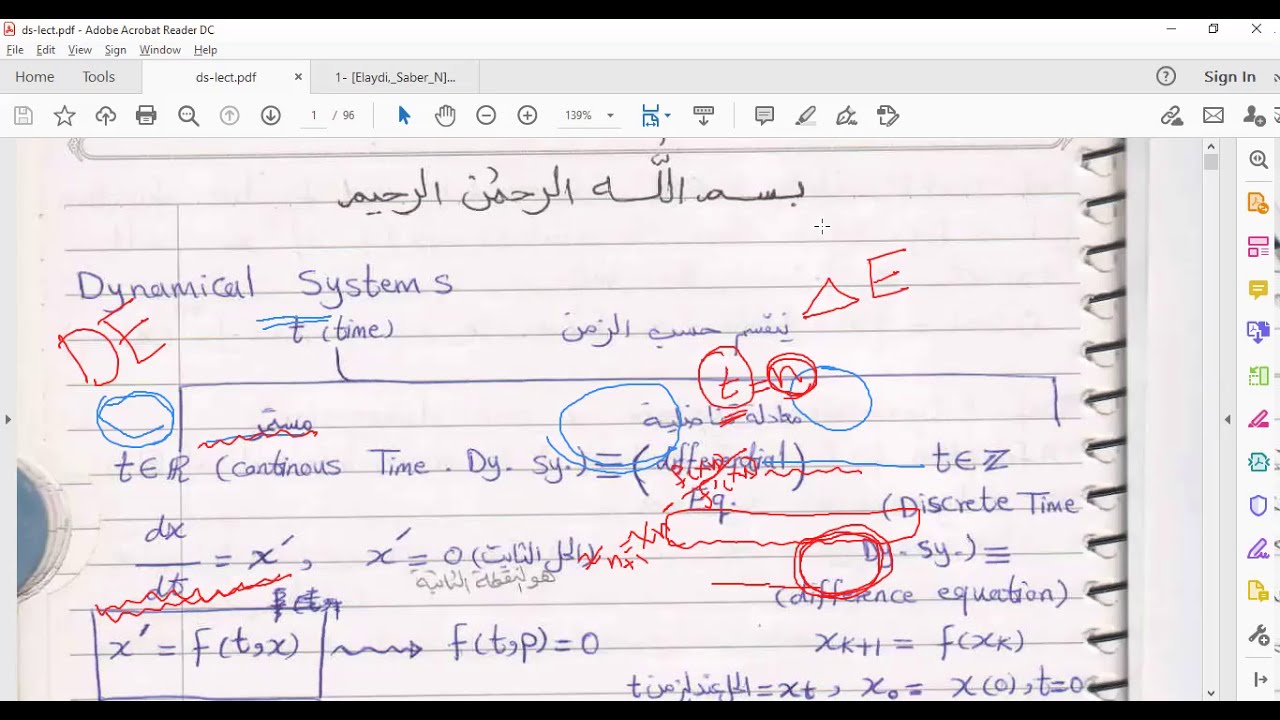
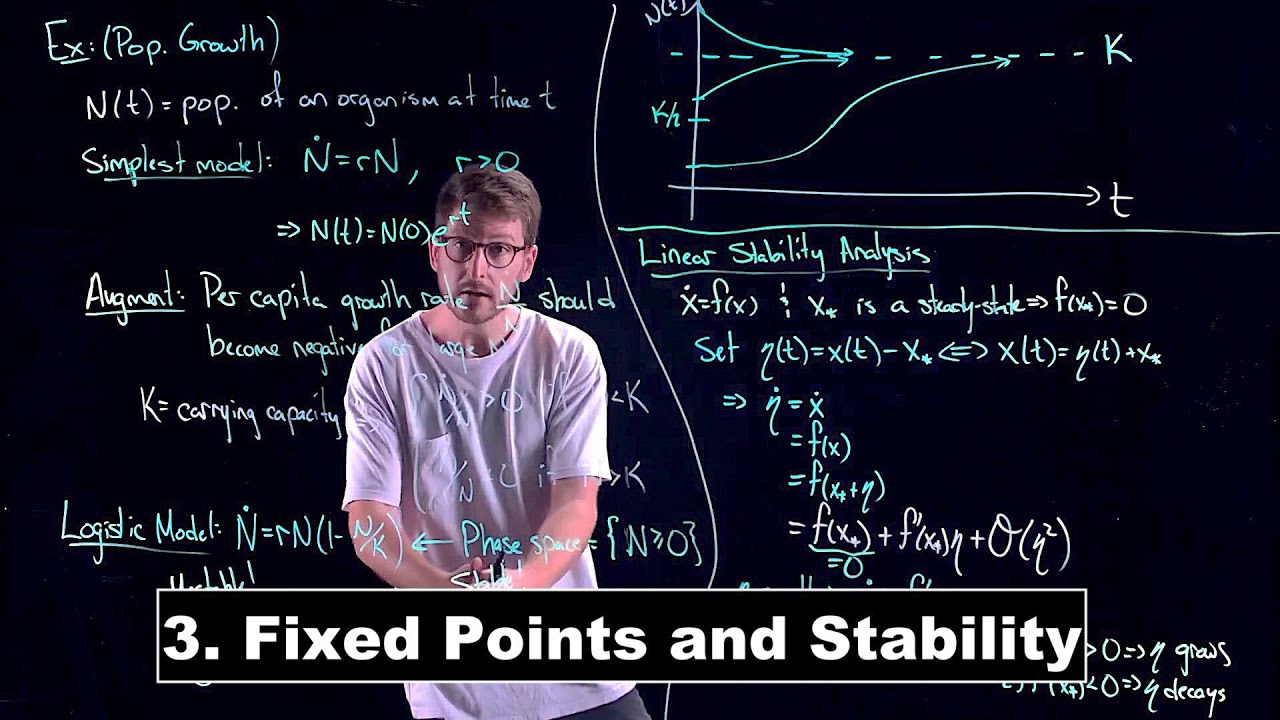
Basic understanding of dynamical systems, including concepts like steady states, stable/unstable fixed points, and attractors.
Elementary population growth models, specifically the transition from exponential growth to density-dependent logistic growth.
An introduction to complex numbers and basic plane coordinates, which is essential for understanding the transition to the Mandelbrot set.
The Feigenbaum constants and universality, exploring how the same numerical scaling limits appear in completely different chaotic physical systems.
Advanced fractal geometry, mapping the exact mathematical relationship between the 1D logistic map bifurcation diagram and the 2D Mandelbrot set.
Applications of chaos theory in biophysics, specifically modeling cardiac arrhythmia (fibrillation) and neural firing patterns.
Methods of 'controlling chaos' (such as the OGY method) to stabilize chaotic systems into predictable periodic states.
The study of turbulence in fluid dynamics, analyzing how fluid convection transitions to chaos via period-doubling routes.
16.8M views604.9Klikes18:39Original Release: 2020-01-29
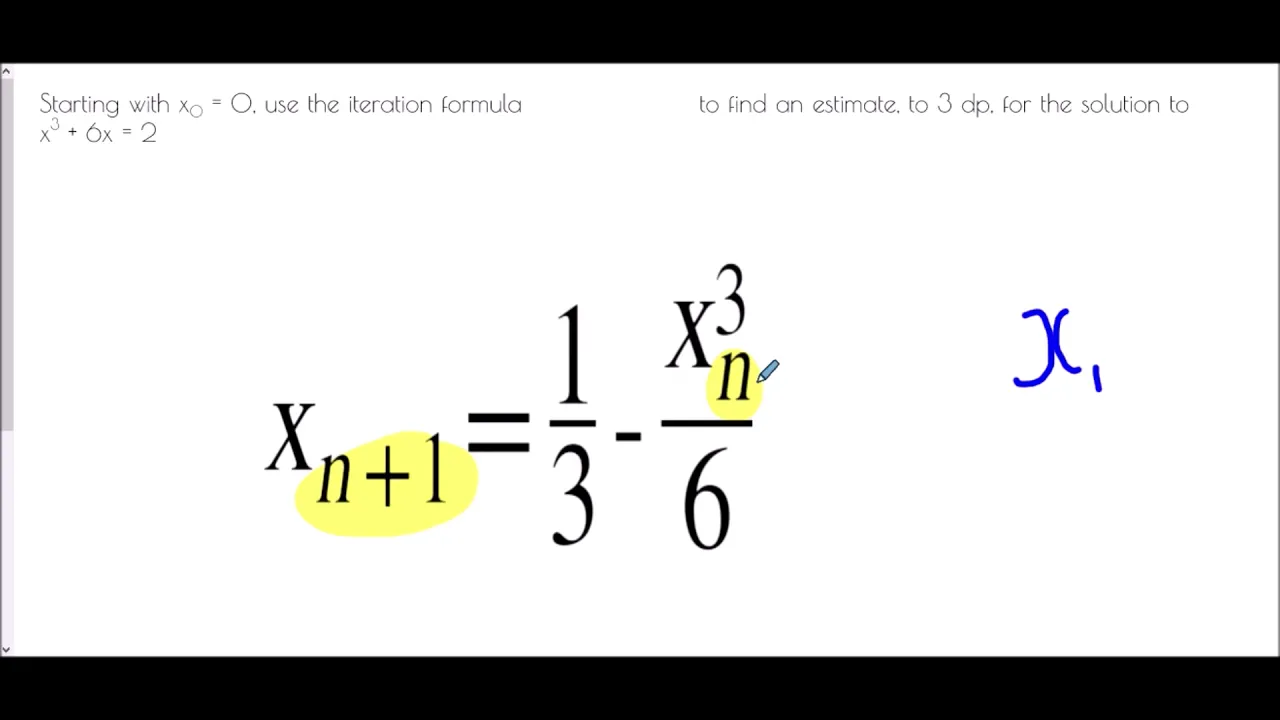
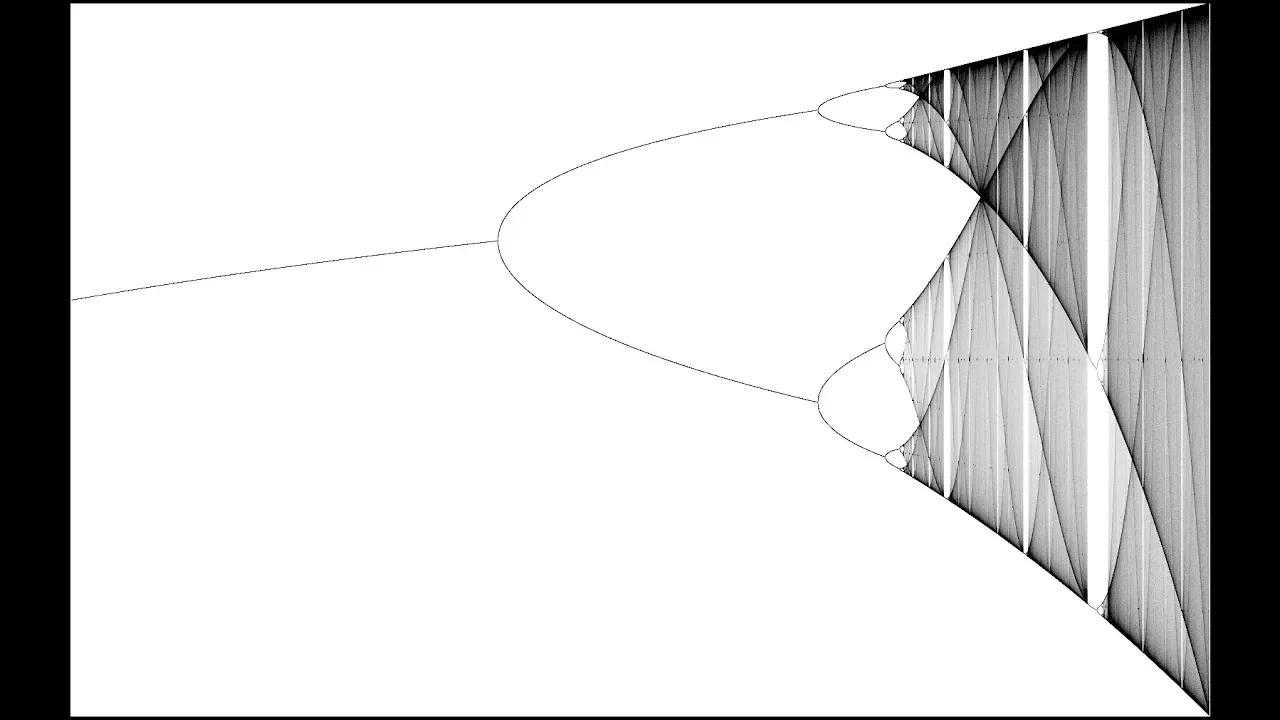
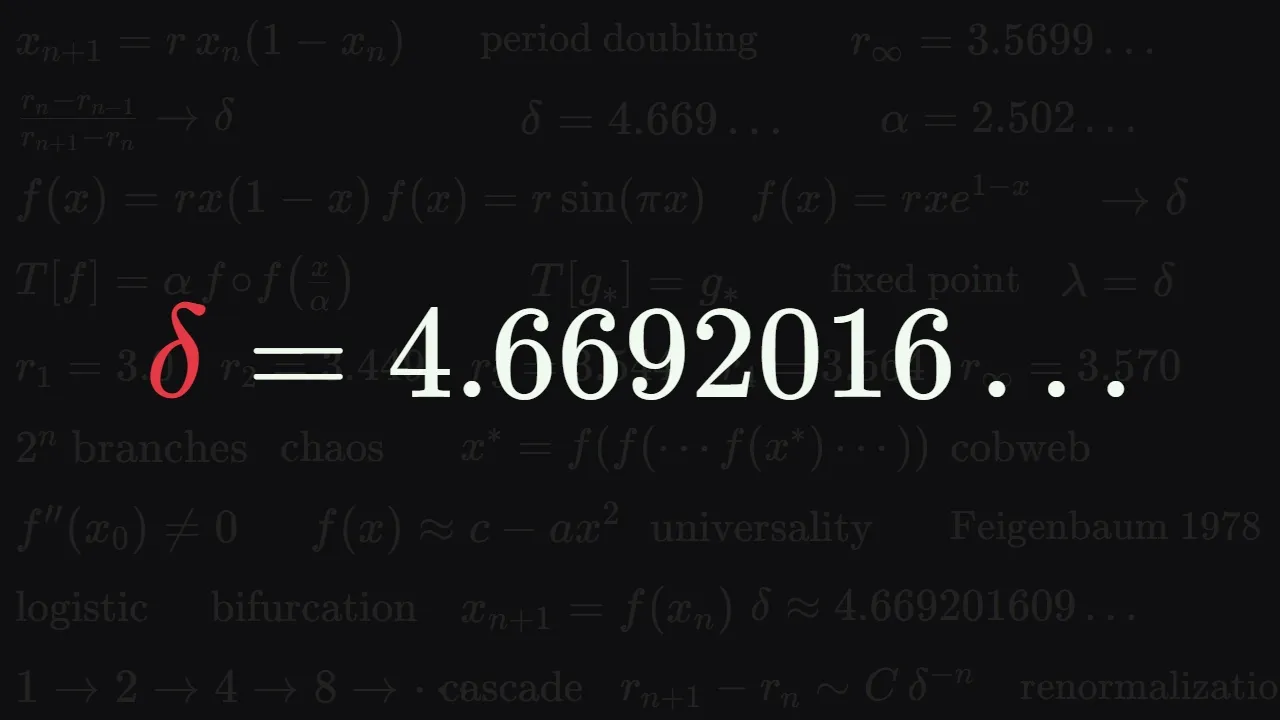
what's the connection between a dripping faucet the Mandelbrot set a population of rabbits thermal convection in a fluid and the firing of neurons in your brain it's this one simple equation this video is sponsored by fast hosts who are offering UK viewers the chance to win a trip to South by Southwest if they can answer my question at the end of this video so stay tuned for that let's say you want to model a population of rabbits if you have X rabbits this year how many rabbits will you have next year well the simplest model I can imagine is where we just multiplied by some number the growth rate R which could be say 2 and this would mean the population would double every year and the problem with that is it means the number of rabbits would grow exponentially forever so I can add the term 1 minus X to represent the constraints of the environment and here I'm imagining the population X is a percentage of the theoretical maximum so it goes from 0 to 1 and as it approaches that maximum then this term goes to 0 and that constrains the population so this is the logistic map xn plus 1 is the population next year and xn is the population this year and if you graph the population next year versus the population this year you see it is just an inverted parabola it's the simplest equation you can make that has a negative feedback loop the bigger the population gets over here the smaller it'll be the following year so let's try an example let's say we're dealing with a particularly active group of rabbits so R equals two point six and then let's pick a starting population of 40% of the maximum so point four and then times 1 minus 0.4 and we get 0.62 four okay so the population increased in the first year but what we're really interested in is the long term behavior of this population so we can put this population back into the equation and to speed things up you can actually type two point six times answer times one - answer get point six one so the population dropped a little hit it again point six one nine point six one three point six one seven point six one five point six one six point six one five and if I keep hitting Enter here you see that the population doesn't really change it has stabilized which matches what we see in the wild populations often remain the same as long as births and deaths are balanced now I want to make a graph of this iteration you can see here that it's reached an equilibrium value of point six one five now what would happen if I change the initial population I'm just going to move this slider here and what you see is the first few years change but the equilibrium population remains the same so we can basically ignore the initial population so what I'm really interested in is how does this equilibrium population vary depending on are the growth rate so as you can see if I lower the growth rate the equilibrium population decreases that makes sense and in fact if R goes below one well then the population drops and eventually goes extinct so what I want to do is make another graph where on the x axis I have R the growth rate and on the y axis I'm plotting the equilibrium population the population you get after many many many generations okay for low values of R we see the populations always go extinct so the equilibrium value is zero but once our hits 1 the population stabilizes on to a constant value and the higher R is the higher the equilibrium population so far so good but now comes the weird part once our passes three the graph splits in two why what's happening well no matter how many times you iterate the equation it never settles on to a single constant value instead it oscillates back and forth between two values one year the population is higher the next year lower and then the cycle repeats the cyclic nature of populations is observed in nature too one year there might be more rabbits and then fewer the next year and more again the year after as our continues to increase the fork spreads apart and then each one splits again now instead of oscillating back and forth between two values populations go through a four year cycle before repeating since the length of the cycle or period has doubled these are known as period doubling bifurcation z' and as R increases further there are more period doubling bifurcation z' they come faster and faster leading to cycles of 8 16 32 64 and then at R equals three point five seven chaos the population never settles down at all it bounces around as if at random in fact this equation provided one of the first methods of generating random numbers on computers it was a way to get something unpredictable from a deterministic machine there is no pattern here no repeating of course if you did know the exact initial conditions you could calculate the values exactly so they are considered only pseudo-random numbers now you might expect the equation to be chaotic from here on out but as R increases order returns there are these windows of stable periodic behavior amid the chaos for example at R equals 3 point 8 3 there is a stable cycle with a period of 3 years and as R continues to increase it splits into 6 12 24 and so on before returning to chaos in fact this one equation contains periods of every length 3750 1052 whatever you like if you just have the right value are looking at this bifurcation diagram you may notice that it looks like a fractal the large-scale features look to be repeated on smaller and smaller scales and sure enough if you zoom in you see that it is in fact a fractal arguably the most famous fractal is the Mandelbrot set the plot twist here is that the bifurcation diagram is actually part of the Mandelbrot set how does that work well quick recap on the Mandelbrot set it is based on this iterated equation so the way it works is you pick a number C any number in the complex plane and then start with Z equals 0 and then iterate this equation over and over again if it blows up to infinity well then the number C is not part of the set but if this number remains finite after unlimited iterations well then it is part of the Mandelbrot set so let's try for example C equals 1 so we've got 0 squared plus 1 equals 1 then 1 squared plus 1 equals 2 2 squared plus 1 equals 5 5 squared plus 1 equals 26 so pretty quickly you can see that with C equals 1 this equation is going to blow up so the number 1 is not part of the Mandelbrot set what if we try C equals negative 1 well then we've got 0 squared minus 1 equals negative 1 negative 1 squared minus 1 equals 0 and so we're back to 0 squared minus 1 equals negative 1 so we see that this function is going to keep oscillating back and forth between negative 1 and 0 and so it'll remain finite and so C equals negative 1 is part of the Mandelbrot set now normally when you see pictures of the Mandelbrot set it just shows you the boundary between the numbers that cause this iterated equation to remain finite and those that cause it to blow up but it doesn't really show you how these numbers stay finite so what we've done here is actually iterated that equation thousands of times and then plotted on the z axis the value that that iteration actually takes so if we look from the side what you'll actually see is the bifurcation diagram it is part of this Mandelbrot set so what's really going on here well what this is showing us is that all of the numbers in the main cardioid they end up stabilizing on to a single constant value but the numbers in this main bulb will they end up oscillating back and forth between two values and in this bulb they end up oscillating between four values they've got a period of four and then eight and then 16 32 and so on and then you hit the chaotic part the chaotic part of the bifurcation diagram happens out here on what's called the needle of the Mandelbrot set where the Mandelbrot set gets really thin and you can see this medallion here that looks like a smaller version of the entire Mandelbrot set well that corresponds to the window of stability in the bifurcation plot with a period of three now the bifurcation diagram only exists on the real line because we only put real numbers into our equation but all of these bulbs off of the main cardioid well they also have periodic cycles of for example 3 or 4 or 5 and so you see these repeated ghostly images if we look in the z axis effectively they're oscillating between these values as well personally I find this extraordinarily beautiful but if you're more practically minded you may be asking but does this equation actually model populations of animals and the answer is yes particularly in the controlled environment scientists have set up in labs what I find even more amazing is how this one simple equation applies to a huge range of totally unrelated areas of science the first major experimental confirmation came from a fluid dynamicists named Lib Taber he created a small rectangular box with mercury inside and he used a small temperature gradient to induce convection just two counter-rotating cylinders of fluid inside his box that's all the box was large enough for and of course he couldn't look in and see what the fluid was doing so he measured the temperature using a probe in the top and what he saw was a regular spike a periodic spike in the temperature that's like when the logistic equation converges on a single value but as he increased the temperature gradient a wobble developed on those rolling cylinders at half the original frequency the spikes in temperature were no longer the same height instead they went back and forth between two different heights he had achieved period two and as he continued to increase the temperature he saw period doubling again now he had four different temperatures before the cycle repeated and then eight this was a pretty spectacular confirmation of the theory in a beautifully crafted experiment but this was only the beginning scientists have studied the response of our eyes and salamander eyes to flickering lights and what they find is a period doubling that once the light reaches a certain rate of flickering our eyes only respond to every other flicker it's amazing in these papers to see the bifurcation diagram emerge albeit a bit fuzzy because it comes from real-world data in another study scientists gave rabbits a drug that sent their hearts into fibrillation I guess they felt there were too many rabbits out there I mean if you don't know what fibrillation is it's where your heart beats in an incredibly irregular way and doesn't really pump any blood so if you don't fix it you die but what they found was on the path to fibrillation they found the period doubling route to chaos the rabbits started out with a periodic beat and then it went into a two cycle two beats close together and then a four cycle four different beats before it repeated again and eventually a periodic behavior now it was really cool about this study was they monitored the heart in real time and used chaos theory to determine when to apply electrical shocks to the heart to return it to periodicity and they were able to do that successfully so they used chaos to control a heart and figure out a smarter way to deliver electric shocks to set it beating normally again that's pretty amazing and then there is the issue of the dripping faucet most of us of course think of dripping faucets as very regular periodic objects but a lot of research has gone into finding that once the flow rate increases a little bit you get period doubling so now the drips come two at a time to tip to tip and eventually from a dripping faucet you can get chaotic behavior just by adjusting the flow rate and you think like what really is a faucet well there's constant pressure water and a constant size aperture and yet what you're getting is chaotic dripping so this is a really easy chaotic system you can experiment with at home go open a tap just a little bit and see if you can get a periodic dripping in your house the bifurcation diagram pops up in so many different places that it starts to feel spooky and I want to tell you something that'll make it seem even spookier there was this physicist Mitchell Feigenbaum who was looking at when the bifurcations occur he divided the width of each bifurcation section by the next one and he found that ratio closed in on this number four point six six nine which is now called the Feigenbaum constant the bifurcations come faster and faster but in a ratio that approaches this fixed value and no one knows where this constant comes from it doesn't seem to relate to any other known physical constant so it is itself a fundamental constant of nature what's even crazier is that it doesn't have to be the particular form of the equation I showed you earlier any equation that has a single hump if you iterate it the way that we have so you could use xn plus 1 equals sine X for example if you iterate that one again and again and again you will also see bifurcations not only that but the ratio of when those bifurcations occur will have the same scaling for point six six nine any single hump function iterated will give you that fundamental constant so why is this well it's referred to as universality because there seems to be something fundamental and very Universal about this process this type of equation and that constant value in 1976 the biologist Robert May wrote a paper in nature about this very equation it's sparked a revolution and people looking into this stuff I mean that papers been cited thousands of times and in the paper he makes this plea that we should teach students about this simple equation because it gives you a new intuition for ways in which simple things simple equations can create very complex behaviors and I still think that today we don't really teach this way I mean we teach simple equations and simple outcomes because those are the easy things to do and those are the things that make sense we're not gonna throw chaos at students but maybe we should maybe we should throw at least a little bit which is why I've been so excited about chaos and I am so excited about this equation because you know how did I get to be 37 years old without hearing of the Feigenbaum constant ever since I read James Gleeks book chaos I have wanted to make videos on this topic and now I'm finally getting around to it and hopefully I'm doing this topic justice because I find it incredibly fascinating and I hope you do too hey this video is supported by viewers like you on patreon and by fast hosts fast toasts is a uk-based web hosting company whose goal is to support UK businesses and entrepreneurs at all levels providing effective and affordable hosting packages to suit any need for example they provide easy registration for a huge selection of domains with powerful management features included plus they offer hosting with unlimited bandwidth and smart SSD storage they ensure reliability and security using clustered architecture and data centers in the UK now if you are also in the UK you can win two tickets to South by Southwest including flights and accommodation if you can answer my text question which is which research organisation created the first website if you can answer that question then enter the competition by clicking the link in the description and you could be going to South by Southwest courtesy of fast hosts their data centers are based alongside their offices in the UK so whether you go for a lightweight web hosting package or a fully fledged dedicated box you can talk to their expert support teams 24/7 so I want to thank fast hosts for supporting veritasium and I want to thank you for watching
Up Next

46:54
Bifurcations in 2D Systems: Fixed Points & Hopf | MAE5790-12
@cornellmae1636
55.4K views•2014-05-27

4:43
Elliptic Curve Cryptography Explained: ECC, ECDSA, ECDH
@PracticalNetworking
28.5K views•2024-10-21

31:10
The Parallel Postulate: How Euclid's Fifth Axiom Revealed Hidden Universes
@veritasium
16.9M views•2023-10-21

6:00
The Mathematical Impossibility of Accurate World Maps
@Vox
23.3M views•2016-12-02
Related Study Plans & Knowledge Roadmaps
Structured learning paths in Mathematics
mathematics
Tensor Calculus: Vectors to Riemann Curvature
01Mathematical Foundations: Linear Algebra & Calculus
02Covectors, Dual Spaces, and Tensor Basics
03The Metric Tensor and Index Gymnastics
+ 2 more learning modules
40h5 modules
Explore Roadmap
mathematics
Gödel's Incompleteness: Logic, Proofs & Limits
01Introduction to Formal Systems & Hilbert's Dream
02Set Theory, Cardinality, and Cantor's Diagonal Argument
03Arithmetization and Gödel Numbering
+ 2 more learning modules
14h5 modules
Explore Roadmap
mathematics
Galois Theory: Fields, Groups & Solvability
01Foundations of Abstract Algebra: Groups & Fields
02Polynomials & Field Extensions
03Splitting Fields & Symmetries
+ 2 more learning modules
24h5 modules
Explore Roadmap
mathematics
Non-Euclidean Geometry: Models & Geodesics
01Euclid's Fifth Postulate and the Birth of New Geometries
02Hyperbolic Space and the Poincaré Disk Model
03Geodesics: Defining Straight Lines in Curved Spaces
+ 2 more learning modules
15h5 modules
Explore Roadmap