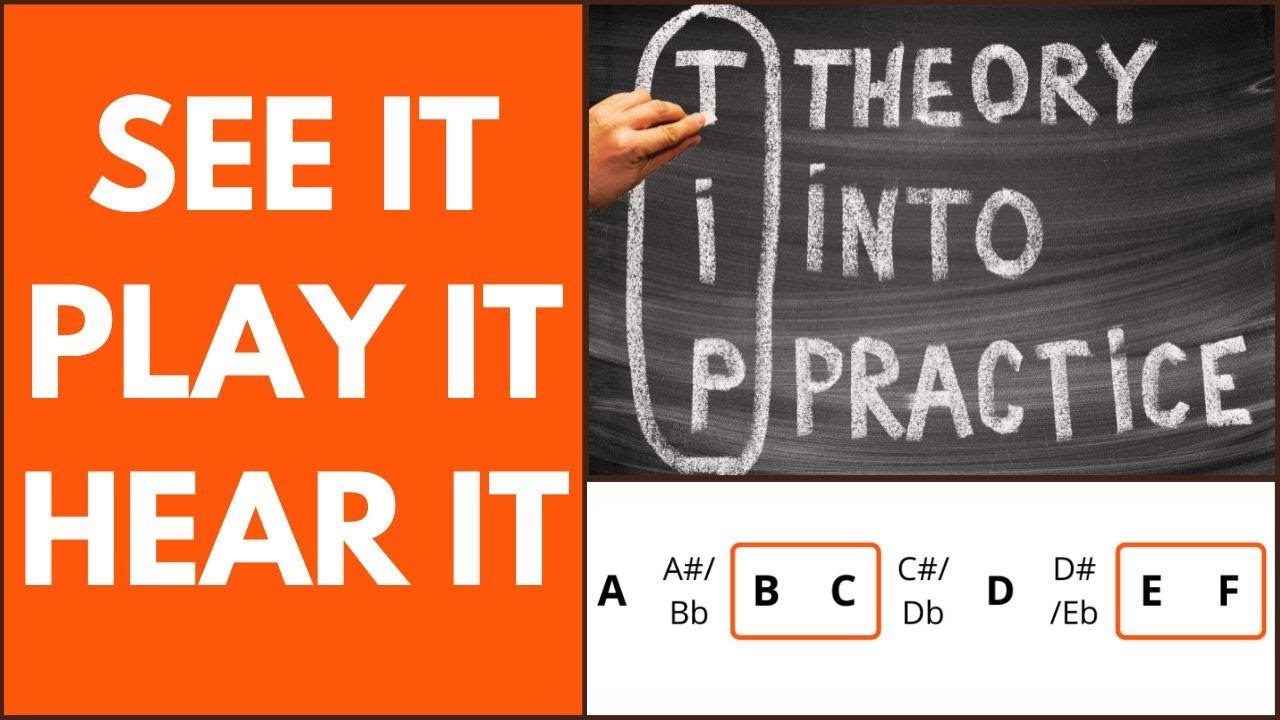



![[Hướng dẫn Guitar]- Lý thuyết Cung và Nửa Cung-CÁCH NHỚ HẾT NỐT TRÊN CÂY ĐÀN-[Nhật Tiến]](https://i.ytimg.com/vi/C3XC24-CcYo/maxresdefault.jpg)

















Intervals are the pitch distances between any two notes and are considered the most fundamental concept in music theory, as they determine the structure and character of musical patterns rather than the specific notes themselves. Simple intervals (one octave or smaller) include 13 conventional types: perfect unison (0 half steps), minor second (1 half step), major second (2 half steps), minor third (3 half steps), major third (4 half steps), perfect fourth (5 half steps), tritone/augmented fourth (6 half steps), perfect fifth (7 half steps), augmented fifth/minor sixth (8 half steps), major sixth (9 half steps), minor seventh (10 half steps), major seventh (11 half steps), and perfect octave (12 half steps). Intervals are classified as major (landing on notes in the major scale), minor (landing on notes not in the major scale), or perfect (the most fundamental intervals: unison, fourth, fifth, and octave). They can be played melodically (in sequence) or harmonically (simultaneously), and compound intervals are simple intervals expanded by one or more octaves.
Intervals in Music Theory: Essential Guide for Guitarists
Added:hi folks hope you're enjoying and benefiting from our guitar lesson series remember it's essential that you watch these lesson videos in order each lesson leads into the next and you won't get the big picture if you skip any of the steps many of you have been searching for these answers for years you might be tempted to jump ahead and look at lesson 24 because you're into the blues but if you don't know your intervals and modes from Lesson 12 and 17 you just ain't gonna get it consider purchasing the 150 page official course handbook for 19.95 from our website at www.absolutely understandguitar.com you'll find that link multiple places here on our YouTube channel each of the 32 video lessons has a corresponding printable page that you can view to help with review and memorization all of the charts and graphs I create in the videos are reprinted there the package also includes our remain using chord scale in arpeggio encyclopedia containing most every useful finger pattern known to man reserve your copy today if you like what you're learning here tell all your friends and like And subscribe to our channel so enjoy this lesson and continue on and you will absolutely understand guitar hi welcome back to absolutely understand guitar I'm Scotty West well today we're in the thick of it we're going to be talking about the huge subject of intervals and we'll be discussing them for the next two hours this is Lesson 12 so make sure your book is open to page 12. keep reviewing your past material remember if you want to satisfy yourself you've got to know what you're doing inside out ready here we go [Music] hi welcome back boy we're going to be talking about a big subject today in fact this may be the the largest subject in all of Music Theory the subject of intervals but quickly let's review the past stuff we were talking about last time remember you are in part two of my program at this point right now you've learned all the basic stuff about how the language of Music Works in part one all the stuff about how the Guitar Works in the number system and all that stuff but you're in part two where we're actually trying to knock off these 50 pitch patterns that we keep talking about and we're doing it in order of complexity in six different increments and this is what I call the six levels of pitch Theory now we got through the first two last week because they're pretty simple in fact remember the first level of complexity in music is so simple that there isn't anything there yet at all and that's the whole subject of Silence remember where would music be without silence then after that we graduated to the next level level number two of my sixth levels of pitch Theory which is the single note we reminded ourselves of what musical pitch is about we also learned the huge concept that in any kind of conventional music there's a lot of different notes in the song but there is always one note that's acting as the nucleus note and we know that concept by a bunch of different terms that we use in different contexts and different styles remember a piece of music is very much like a solar system you've got the the note in the center of the song like in let's say that's C so that means that you're playing in the key of C so the word key is a word that we really want to learn to associate when somebody says what key are we in and you say well we're in the key of A then you've alerted them that a is functioning as that nucleus note now some of the other words we learned to associate that were the root we already knew about that all chords and scales have Roots so therefore do and note number one these are all different ways of describing that root note the tonic is in perhaps a new one to you but that is one of the more official academic textbook type terms for that nucleus note and also words like the fundamental and resolution are also important Concepts that you're going to want to associate with that now after that after there was silence after there was one note the next most complex patterns that we're going to talk about are patterns that involve two notes and the relationship between them and that is the subject that we're on today the huge concept of intervals it might be the most important word in all of music theory in the end everything is made up of intervals a funny thing about music is now we don't really need a too terribly tight shot on this but remember our musical slide rule right here the funny thing about music is it isn't so much what notes You're Gonna Play because that's going to change depending on what key you're actually playing in but if we remove this Center piece from the slide rule all together and look at this just for itself right here we see that really cut what constitutes these patterns is more the spacing of the notes between them look at that big space between those two notes right there and here's a couple that are pretty close together over here this is what intervals are it's not the notes you play It's the distances between them and what a huge subject this is in music and we've got a lot to talk about we're going to be on this for the next couple of hours now put this up here oh no before we do that uh remember another thing that we just introduced last time was the notion that uh now that we're into these more complex patterns there are actually six things that you have to do in order to claim that you've mastered each one of these levels let's find out what those things are first of all you need to whoops wrong pen first of all you need to be able to name it you should know the official musical terms for these different concepts second thing you need to be able to do is you need to be able to Define it you have to know what these different things mean we'll be working our way through all of these things the third thing that you have to do is you have to give what I call examples and formulas for these different pitch patterns fourth you have to be able to read it you should know something about these different patterns when you see them in as represented as little graphic symbols on a piece of paper fifth you have to be able to play it which means you know the finger patterns for these different things on your instrument and finally and perhaps most importantly number six you have to be able to hear it you have to know what these different pitch patterns sound like this of course is the huge subject of ear training now in a way these six things that you have to do might sound kind of familiar because this Harkens back to what we learned a long time ago about how each pitch pattern you have to learn you have to learn it four different ways remember that you got to be able to think it you got to be able to read it you got to be able to speak it and you've got to recognize it when you hear it all we've done here is we've kind of broken down the music theory conceptual thing into three subheadings I suppose it's fair to say that if you can name it Define it and give examples and formulas that means you know it as a concept then if you read it you know it as notation if you can play it then you know how to make your instruments speak for you and finally you need to be able to hear it and we're going to be taking sort of a look at all six of these different things on the subject of intervals as we go through this next hour so how about number one well we've named it right it's called intervals now we need to Define it remember intervals are the pitch distance between any two notes and as we've said in many ways this is what constitutes the actual structure of these various patterns so an interval is the pitch distance between any two notes so we've named it and we've defined it now it's time to move on to examples and formulas pull this other sheet up here this I want to remind you is this is you know where we start to get into some rather technical stuff about music and a lot a lot of you I know are going to be going do I really need to know this stuff and the answer is you absolutely do you can either believe me now or you can believe me later if you want to satisfy yourself you need to know this stuff remember this is a stripped down popular music program this is not about fancy stuff about fancy music this is the basic stuff about understanding how your instrument works you may not completely see see where all this stuff is going for right now but you need to trust me you need to do a little bit of school work type stuff and actually try to memorize this there's not an awful lot to it but this is the part that's a little bit like school and you got to put apply a little bit of discipline to it the rewards will be there for you later if you do that Okay so we've named it it's called intervals we've defined it it's the pitch distance between any two notes now we have to give what I call examples and formulas now the pitch distance between any two notes [Music] any two notes must be an awful lot of different intervals right well in fact there are but we're not going to be looking at all of them at this point in this column over here in fact we're also going to be looking at some distinctions between different types of intervals and perhaps the first distinction we should make is there are two overall types of intervals there are intervals that are called Simple intervals and then there are other intervals that are called compound intervals now simple intervals are smaller intervals some of those intervals that I just played on the piano were rather large weren't they simple intervals are the smaller ones simple intervals are all the intervals that would fit inside of one octave so so simple intervals are one octave and smaller whereas compound intervals which are the larger bits of distance here's an octave right here you know I'm just going from one C here up to the next C that's a that's an octave of an interval the larger intervals that are larger than an octave are called compound intervals they are larger than an octave and interestingly enough you're going to find out these are thought of as expanded simple intervals now what do I mean by that let's take a look up here at the keyboard here's C and here's e and might want to just pan just a little bit on that oops yep now these two notes as you can see are three white keys apart on the piano I know you're here to take guitar lessons but remember a lot of this stuff uh Theory stuff is easier to see on the keyboards and we'll be translating this to the guitar in a moment here's c and e these are an interval of a third apart that now that you can see that they're actually involved three white keys that's not necessarily the actual definition of a third but let's go with that for now these are a third apart now take a look at this larger interval might want to zoom out just a little now see these are definitely not a third apart anymore are they they're much further than a third apart but notice this note up here is still e just like the E that I played down here this interval is actually called a tenth it actually if you'll notice it involves ten white keys on the piano so this is a compound interval here's the octave right here so this interval is larger than an octave but in the end harmonically speaking you're going to find that it's essentially still thought of as a third harmonically it pretty much works the same way it's just thought of as a third that's been expanded by an octave and then of course I could go even further up here and play the third up in the next octave I don't know what number this is what would that be that would be a 17th I believe but again it's really this is just the same note c and e it's just a thought of as a third that's been expanded by one two octaves and then we have our third on top of that now it is really beyond the scope of this program to really look at much at compound intervals over the course of your career you'll be soaking up more and more of that stuff anyway but for now it's going to take all we can do really just to get us in touch with the simple intervals now and that's what we're going to be listing in this chart over here how many simple intervals are there well it depends on how you look at it we're going to be talking about some very interesting subjects today too one way of looking at it is there are 13 different simple intervals but in another way what you're going to find out is actually there are an infinite number of simple intervals and we'll get to that distinction in a moment but now we're going to start to fill in if you notice up here this is our chart here remember we said we had to name it Define it give examples and to also give formulas and in this particular case on the subject of intervals what we mean by formulas is how large actually are these intervals and we're going to measure them in half steps and whole steps and we'll be talking about that in a moment and then in this column over here we'll be looking at the fingerings for them on the neck of your guitar and interestingly enough this is very simple uh if if you know your musical number system and you and you understand your major scale you'll notice that these intervals get their names from how they relate to the musical number system which is based on the major scale so to figure out how to finger these intervals all you really have to do is look at your major scale fingerings now you might want to go back to that lesson I have charts that I'll show you when we get there but you might want to go back to that lesson and make sure that you also are looking at your major scale fingerings because they will become important when we start looking at their fingerings for these different intervals over here okay there are conventionally speaking 13 different simple intervals and that we're going to look at and and we're going to start with the smallest one and the smallest one a lot of people go is it a half step you might remember us talking about that when we were talking about the musical number system and the major scale and knowing that a scale is a particular sequence of intervals what types of intervals half steps and whole steps remember what those were when you go from one note to the note right next to it that's a half step when you skip a note that's a whole step and those of course are are small simple intervals that we're going to be talking about but interestingly enough there is one interval one conventional interval that's actually smaller than a half step what is it well it's a distance up up between two notes of zero just like in math zero is considered a number a distance between two pitches that have no distance between them at all is actually considered an interval but its distance and we'll write this down at the bottom of the page here is zero for example if I pick up my guitar here you don't need a close-up of this but if I play this note on my guitar and then I play this note on the piano they're the same pitch aren't they they are the same note there is no distance between those two notes but that is still considered an interval and you've heard of the name of of this interval in other contexts this is what's called a unison you might have heard people saying uh stuff like oh see those people over there they're singing in unison as opposed to see those people over there they're singing In Harmony people that are singing In Harmony are singing notes uh different notes the people the different people are singing different notes that sound good together that's what Harmony is people who are singing in unison are all singing the same note um this is also a very special interval it's singled out and and we'll learn the meaning of this word in a little while it's actually known as a perfect unison that is the smallest simple interval that you're going to want to know about and it has a distance of zero if you measure it either in half steps or in whole steps of course it's uh size is zero now just for a moment let's skip up to the top part of the chart here because let's take a look at what is the largest simple interval and what it actually is is an octave remember we said that all simple intervals are either an octave or smaller so the largest simple interval is the octave and interestingly enough this is another one of those intervals that's separated out singled out as what's known as a perfect interval it's what's known as a perfect octave now what is the next interval larger than oops I'm sorry let's go back up to the octave here again um remember we also need to know how large these intervals are that's the formula for these intervals we know that it's called a perfect octave how large is an octave well you know that there are 13 notes per octave in a chromatic scale and they are all separated by half steps which means that there are 12 half steps in an octave so if we measure an octave in terms of half steps it's actually 12 half steps which means it's also six whole steps because remember a whole step is two half steps okay now the smallest interval was this one down here called a perfect Unison what is the next simple interval larger than a Unison well conventionally speaking we're going to put this up here in the two up from here conventionally speaking the next interval larger than a perfect Unison is this interval that we've up till now been calling a half step what you're going to find out in a moment is that this interval as many of the intervals have more than one name but we'll get back to that in a minute first of all we're going to talk about a rather interesting little subject here for a moment remember I said before there's two ways of looking at simple intervals there's either 13 of them or there's an infinite number of simple intervals well remember back when we were talking about the caveman thing we learned that there are actually an infinite number of musical pitches all infinitely close together what that means is that there are an infinite number of musical pitch distances between notes this interval up here that we call a half step [Music] could be divided if you wanted to up into a million smaller intervals or a billion or or two or three and collectively all of these intervals that of these infinite intervals that don't quite fit within our 12 note pitch system are all collectively known as micro tones and there are an infinite number of microtones if you understand that there are an infinite number of musical pitches now the most notorious micro tone is an interval of a quarter step but remember there's an infinite number of microtones but the most the One You're going to hear about the most is a quarter step which of course would be the pitch that would be halfway in between the notes in a half step and remember a half step is the very next note on the piano so how do you play quarter steps on a piano well the answer is you can't the the smallest interval that you can play on a piano is a half step so how do you play Corner steps well you can't play them on on a piano at all so how significant are quarter steps to Western popular music well I think that's Up For Debate a little bit first of all none of the piano music you've ever heard has quarter steps in it how do you play quarter steps on a guitar if your Frets divide the neck all up into half steps well the answer is conventionally speaking you can't play a quarter step on the guitar either however you can play quarter steps by bending the note a little I'm sure you all know a little bit about bent notes on a guitar you can take a note in [Music] and bend its pitch like that by stretching the string [Music] um so that's the only way to play quarter steps on a guitar too so how significant are quarter steps in western music my thought is not very much um you are going to hear people talking about quarter steps uh in in ethnic music around the planet um every now and then you're gonna hear somebody mention that there are quarter steps in blues music I think that uh that that's probably true there there certainly are little bent notes in blues guitar that don't really qualify as half steps but um sometimes I think that's overstated sometimes I think people uh believe that there are a lot of quarter steps in the Blues because they see blues guitar players bending notes a lot I think some people have it in their heads that any time that you bend a note on the guitar that that's actually a quarter step but that's not true at all overwhelmingly when you bend a note on the guitar you are either bending it a half step or a whole step conventionally speaking bent notes on the guitar are just a different way of approaching a note if I play this note here I could play the note that's a half step above that simply by going to the next fret and playing that note but another way I could do it would be to take this string and bend it doesn't that sound pretty much the same as that's a half step Bend I could also do a whole step Bend here's what a whole step Bend sounds like see I'm skipping a fret when I finger it that's what a whole step sounds like I can also Bend this note a whole step whoops so I think that the the only reason that people think that there's a lot of quarter steps in blues music is there thinking that every time you bend a note that that's a quarter step but that's not true uh but but I I will grant that there are probably uh core steps in Blues playing well at least things that they're certainly micro tones whether or not they're exactly a quarter step I don't I don't I can't really say my ears aren't actually even trained most western players don't know what quarter steps actually sound like some of you have played horns know that there are some intonation uh issues when you play a brass instrument particularly uh that might involve uh microtones um but but I don't think they really qualify as uh quarter steps another interesting step or subject that you might actually want to know about is actually there is an entire School of Music called microtonal music where people experiment with composing music that uses intervals other than these conventional intervals that we know about they are called microtonalists you've got to figure that that once the 12 note system was established it was only a matter of time before somebody stood up and said hey look how come we think that all this music has to be composed with a pitch system where we divide the octave equally up into 12 units I'm going to experiment with mathematically dividing the octave up into 17 units I mean that would be since we know there's an infinite number of ways to divide up an octave that would be possible we could take our conventional intervals and Shrink them all a little bit we could have something that's like a half step but it's actually only 1 17 of an octave instead of 1 12 of an octave and you have probably never heard any microtonal music in your life you don't hear it on the radio on any given day if you listen to National Public Radio or music education programming you you might have bumped into this concept once or twice before but they actually take themselves very seriously micro tonalists if you ever get an opportunity to listen to some microtonal music it's it's rather interesting to listen to but it it it's you get a funny experience I've been known to say I've listened to some microtonal music and uh it's interesting that if you really concentrate on listening to microtonal music you'll have an interesting kind of audio experience the funny thing is if you let your mind wander at all while you're you're listening to microtonal music a little voice in the back of your head starts going gee I wish somebody would tune those instruments because it's so funny we are so used to listening to 12 note per octave music that that anything else registers in our minds kind of like uh just music that's Out Of Tune interestingly enough some of the uh people that uh get involved in microtonal music uh they actually have to kind of train themselves to forget what conventional music sounds like all together anyway that's just in case you bump into some microtonal music one of these days you could even do a little research on it and you might find it a very interesting subject but remember we're here to talk about conventional popular music and so let's take a look more at some of our more conventional simple intervals we know that the smallest one is a perfect Unison now the next conventional simple interval above that is a half step and we're also about to find out that this interval has a couple of different names as well first of all sometimes you may hear a half step referred to as a semitone now there's that word tone again which remember I'm suggesting that maybe we're better off associating with the concept of Timbre here we're talking about Pitch so I don't tend to use the word semitone very much I will use the word half step but also you're about to also find out that there is another very significant perhaps more official term for a half step which relates it to the musical number system and if we can look over here you'll see remember our good old friend the musical number system the really official names of these intervals relate them to how they relate to the musical number system and a half step if we could zoom in on the musical number system over here for a moment a half step of course in the musical number system would be the distance between note number one and for this purposes now let's call it flat two so a half step would be from note number one to Flat two so this interval the more official name for this interval is it's referred to as a minor second and we'll be uh in a moment we'll be talking about the the meanings of the word major and minor too but you just trust me for now a half step it's really more official name as it's known as a minor second now of course the next interval larger than a half step is our good old friend the whole step by the way a half step if we measure it of course remember where that's what the formula for these intervals are we know that a perfect Unison is a distance of zero a half step of course is either one half step or it's a half of a whole step now this next larger interval up here we call a whole step it also has a couple of other names sometimes a whole step is referred to as a tone now again I don't tend to use that term too much but also if we look over at our musical number system over here you'll see that a whole step is actually the distance between note number one and note number two note number two being a note that's actually in a major scale this interval is referred to as a major second see these are the interval names that that relate them to how the musical number system actually works so a now if we measure a whole step we know that it is of course one whole step but it is also two half steps remember a whole step is two half steps you skip a note let's take a look at how we play though these intervals on the guitar I think we've already covered this plenty of times but just remember whenever you go from one note to the next on the neck of your guitar the very next fret that's an interval of a half step no matter where you are no matter what alphabet letters these represent this is always that interval that we call a half step when you go from one note to the next now the next interval larger than that of course is a whole step and that's when you play a note and then you skip a fret and go to the next note above that no matter where you are that's a whole step [Music] whereas a half step is when you play a note and then you skip a and then you go to the half step is when you go to the Fret right next to it whereas a whole step is when you skip a fret there are fingerings of course for all these other intervals too and we'll be covering those so our simple intervals that we want to know about so far are a perfect unison a half Step better known as a minor second and a whole Step better known as a major second now what is the next simple interval larger than that a there is a interval that of course is three half steps or one and a half whole steps this would take us from note number one up to Sharp two or flat three in the musical number system right here that would be three half steps one two three this name this interval has a couple of different names too because it is the distance from note number one to Flat three it is sometimes referred to as a minor third but when it's thought of as being the distance from note number one to Sharp to it is known as an augmented second so an augmented second this interval has two different names and this has to do with the function of the different intervals a minor third or an augmented second are are the same interval they are three half steps or one and a half whole steps now of course the next interval larger than that would be four half steps or two whole steps and that would be the distance from note number one to note number three in our musical number system so this interval is referred to as a major third now there are a certain number of times when this might be also referred to as a diminished fourth you can kind of see how this is going all has to do with the musical number system the interval that is four four half steps or two whole steps is the distance from note number one to note number three sometimes mostly referred to as a major third sometimes referred to as a diminished fourth now the next interval larger than that of course would be five half steps or two and a half whole steps this would be the distance from note number one in our musical number system all the way up to note number four notice one two three four five that's five half steps from note number one to note number four that is what is known this is another one of these intervals that's singled out as a perfect interval this is what's known as a perfect fourth remember all of these intervals get their names from how they relate to the musical number system so just to quickly check in on that why is this interval called a perfect fourth is it because it's four half steps no is it because it's four whole steps no as we know it's actually five half steps or two and a half whole steps well then why do we call it a perfect fourth well that's because it is the distance between note number one and note number four in in the musical number system in a major scale depending on how you want to think of it that is actually five half steps so even though it's five half steps it's called a perfect fourth because it's the distance between note number one and note number four now let's skip this next interval for a moment which of course would be six half steps or three whole steps and let's go up to the next one above that just for a moment that is seven half steps or three and a half whole steps this is another hugely important interval in in um music uh it would be the distance between note number one and note number five in our musical number system that would be seven half steps but it however being the distance between note number one and note number five this is another one of those special intervals that's singled out as a perfect interval this is what's known as a perfect Fifth and like I said in in this other column over here in a few minutes we're going to be actually defining what the words major minor perfect augmented and diminished these are all different types of intervals uh very easy to understand and we'll be looking at them in a moment now we skipped this interval here that was six half steps um because there's just some interesting things about this the first thing to realize is this interval is the actual mathematical middle of the octave notice how it is six half steps or three whole steps this is actually the middle of the octave remember the three most important notes in music when we talked about the caveman stuff it was one five eight some people get it in their heads then that five note number five is actually in the middle of the octave and it turns out it actually isn't if you look at it um the fifth is actually one half step high of the middle of the octave if you know that an octave is 12 half steps or six whole steps then the perfect fifth which is seven half steps couldn't possibly be the middle of the octave it's actually one half step high eye of the middle of the octave in a way that's what makes our whole pitch system work it is that very fact that the fifth is a half step above the middle of the octave that kind of alerted us to what a half step was in the first place if you think about it now this interval which is the actual mathematical middle of the octave has a couple of different names sometimes it's more convenient to think of it as the very next interval larger than a perfect fourth so it is often referred to as an augmented fourth but in an equal number of contexts it's more significant to think of it as the next interval smaller than a perfect fifth so it's actually also known as a diminished fifth these distinctions become important really later on when you're learning about the function of these different intervals within particular pieces of music but for now it's just important to know that these intervals have multiple names and it would be a good idea to memorize them interestingly enough another name for this interval right here since it is three whole steps and since a whole step is also sometimes referred to as a tone this interval that is three whole steps is often known as a tritone being three whole steps that's actually what a tritone is now a couple of things just uh that we'll mention now about these intervals that we call perfect intervals we've seen all of them now there are four of them there is a perfect Unison a perfect fourth a perfect fifth and a perfect octave now um what does the word perfect mean well interestingly enough I'm not actually a hundred percent sure that I know every last thing about this but one thing you can certainly say about these four intervals is they certainly are some of the most Central intervals in music and one thing that we know about or we could say about that is remember we said when we were talking about the caveman thing that one five eight are the three most important notes in all of music so wouldn't the intervals that separate those notes be the most important intervals in music and you might recall that the distance between note number one and note number eight is an octave so that's why that's referred to as a perfect octave the distance from note number one to note number five as we know now is called a fifth so that's why that's referred to as a perfect fifth and of course you might also recall that the distance between note number five and note number eight is a perfect fourth it's a fourth um why is the distance to remind ourselves why is the distance between note number five and note number eight referred to as a perfect fourth well that's because of the distance from note number five to note number eight is the same as the distance from note number one to note number four if we look down here we can see that here's note number five how far is it to note number eight it is one two three four five half steps how far is it from note number one to note number four it's one two three four five half steps so that's why the distance from note number five to note number eight is called a fourth and it being another one of those all time most important intervals that's why it's referred to as a perfect fourth the Unison I suppose you could say which is the fourth uh perfect interval would be then the distance from say note number one to note number one you know what I mean so all of the perfect intervals can be extrapolated right from one five eight so that's another place where those three notes become so important because they kind of gave us these most important of intervals okay we ended off here with the perfect fifth which was seven half steps or three and a half whole steps what's the next interval larger than that well it would be eight half steps or four whole steps this interval has a couple of different names too sometimes it's best thought of as the next interval larger than a perfect fifth so it is often referred to as an augmented fifth which and of course that would be the distance from note number one to Sharp five flat six so that's why we can see that that would be called an augmented fifth with a sharp five right there but in an equal number of contexts we might think of that note more as being flat six so the distance from one to Flat six is known as a minor sixth so an augmented Fifth and a minor sixth are that same interval which is eight half steps or four whole steps now the next interval larger than that of course would be nine half steps or four and a half whole steps that would take us all the way up here to note number six from note number one to note number six this interval is usually known as a major sixth but sometimes this will also be known as a diminished seven you can always see that these intervals have two different names kind of like uh the number that you actually are on and then the next one larger or smaller than that major sixth diminished seventh is the interval that is nine half steps or four and a half whole steps we've only got a couple more to go here don't we until we get up to the octave remember like I said you got to learn this stuff but it's really not all that big a deal is it there's only 13 of them if you just put a little work into it you'd have them all nailed in within a week or two you know what I mean the next interval larger than a major sixth of course would be ten half steps or five whole steps this interval is known as sometimes known as an augmented sixth again because it's just a little bit larger than a major sixth more commonly though you'll find this interval being referred to as of course you know augmented six because now we're going to note number Sharp six up here but also we know that same note as flat seven so the distance from note number one to Flat seven is referred to as a minor seventh only got one more to go this is the interval that is 11 half steps or five and a half whole steps this interval is uh sometimes known as a diminished octave or a diminished eighth but more commonly known as a major seventh and there you go those are your 13 different simple intervals obviously no big Challenge on this now we showed you how to finger half steps and whole steps on the guitar you could probably see that you just if you just continue to expand the distance between the notes that you played then um you could play all these larger intervals too we're also in a in a few minutes or actually maybe the next hour where we really get into this um seriously um uh we're gonna be looking at how to finger all of these intervals on the guitar too it's really very simple to do particularly as I mentioned before if you remember that they all relate to the musical number system which relates to the major scale so all you're really going to have to do is look at your major scale fingering we'll probably just start to look at that today and we'll go mostly into the fingering next time but before we do that we should probably sort out uh what these different words mean major minor augmented diminished perfect uh because these are different categories of intervals these are different distinctions between different types of intervals we've already made a couple of distinctions between intervals over here in this column over here we made the distinction between simple intervals and compound intervals and remember simple intervals are the intervals that are one octave and smaller all of the intervals that will fit inside one octave and those are the only ones that we've actually looked at so far simple intervals compound intervals are larger than one octave and generally thought of as simple intervals that are expanded by an octave another distinction that we should make right now although we haven't mentioned this before is the distinction between melodic intervals and harmonic intervals and this is a good time if if you're not if we haven't talked about these two terms enough to really get them to stick in your mind this would be not a bad time for us to talk about Melody and Harmony because obviously this is going to have to do with with why we call these intervals what they are um what is Melody what is harmony well Melody and we're going to be talking about this later so I'm not going to go heavily into this right now but Melody what is The Melody of a song the The Melody for example in a pop tune or a rock tune is generally that part that you remember that sticks in your head It's usually the part that the singer sings it involves a sequence of individual notes Here For example is the melody to Twinkle Twinkle Little Star you're all familiar with that Melody there that was a sequence of individual notes now humans when they sing can't an individual human can't sing more than one note at a time can't they so when a singer is singing he is singing a sequence of individual notes remember if we haven't mentioned this before too here's a question for you do singers sing different notes than guitar players play and the answer is no for all intents and purposes the the human voice is simply another musical instrument in the western world and is generally working off that 12 note pitch system that we all know about so uh I could play those exact same notes on the piano that I just played the melody the Twinkle Twinkle Little Star I can play that on piano I of course could sing that Melody I could play it on a saxophone I could play it on a guitar so that's what Melody is Melody is a sequence of individual notes what is harmony we're talking here about we're going to be talking about harmonic intervals versus melodic intervals Melody is a sequence of individual notes Harmony is the concept that you're going to be playing multiple notes at the same time so Melody is more closely related to scales it has more to do with individual notes in a sequence where Harmony has more to do with like Chords it's where you're playing more than one note simultaneously at least two notes simultaneously so that's the the the the the the distinction between Melody and Harmony Melody is strings of individual notes Harmony is multiple notes played at the same time stacked on top of each other so what does this tell us about these two different types of intervals melodic intervals and harmonic intervals well a any one of these simple intervals or indeed any interval can be played as a melodic interval or as a harmonic interval simply put a melodic interval is two notes played in sequence whereas a harmonic interval would be two notes played together so for example let's take this interval of a major third which is four half steps or two whole steps I could play of course a major third on the guitar I mean on the piano and of course we're going to be looking at like I say don't get nervous about the fact that you're taking guitar lessons and I'm showing you all the stuff on the piano when we get into the next hour we're going to show you all the fingerings of this on guitar remember it's just the notion that you know the guitar is really a much more confusing instrument than the keyboards are the keyboards are nice and linear you get all your musical Concepts down by looking at how they relate to the keyboard instruments and then it requires a little bit of extra knowledge to understand how to translate this stuff over to the guitar neck because of the overlapping nature of the strings remember we talked all about that uh we talked about how the guitar strings are tuned four notes apart because you have four fingers it just makes the fingerings a little more confusing uh to understand so we often look at these things over here so um a major third would be the distance between note number one and note number three so for example that would involve these two white keys on a piano right here you'll notice they're four half steps apart one two three four or two whole steps a major third now I could play this major third interval as either a melodic major third or as a harmonic major third the only distinction would be do I play these notes as two notes in in a sequence like that where you're not hearing both of the notes at the same time or am I playing these two notes simultaneously that would be a harmonic major third so A melodic major third is when I go from one note to the note to to the uh to the major third in sequence whereas a harmonic major third would be when I play the two notes together I mean I can do the same thing with any interval here's a here's a melodic uh perfect fifth [Music] see I played the two notes in a sequence wasn't playing them at the same time here's a harmonic perfect fifth I'm playing the two notes at the same time so we've looked at the distinction between simple and compound intervals we've looked at the difference between melodic and harmonic intervals now how about some of these other terms that we ran into over here major intervals versus minor intervals versus augmented and diminished in perfect intervals well first let's take a look at what a major interval is we know we have major thirds and major sixths and major sevenths what distinguishes a major interval say from a minor interval first of all well it's this if I start on Note number one and I go up four half steps one two three four I wind up on Note number three don't I now if you remember your stuff about your major scale in the musical number system you will remember that note number three is in a major diatonic scale isn't it so what a major interval is is when you start at note number one and go up a major interval you land on a note that's actually in a major scale which of course note number three is so the definition of a major interval is like this go up a major interval from note number one and you land on a note that is in a major scale so if your interval in question takes you to a note that's in a major scale the dis that distance would be called a major interval so if we start on Note number one and we're contemplating the interval that goes up to note number six note number six is in a major scale so that's nine half steps as as you might recall or that you're soon going to want to memorize it's nine half steps from note number one to note number six that drops you off on Note number six note number six is in a major scale so the distance between note number one and note number six is a major sixth now let's contrast that with the distance from note number one to Flat six flat six as you might recall is not a note that's in a major scale is it remember the notes that are in the major scale are one two three four five six seven eight flat six is in between the notes in a major scale flat six is not in a major scale so the distance from note number one to Flat six is not a major interval it's actually a minor interval that's what minor intervals are if you go up a minor interval go up a minor interval from note number one and you land on a note that's not in a major scale land on a note that is not in a major scale so the notes that you would land on that would get you major intervals would be two three six and seven so the distance from note number one to note number three is a major third but the distance from note number one to Flat three is a minor third now you might go why didn't he mention notes number four and five they're in a major scale aren't there aren't their major fourths and major fifths well remember those are those intervals that are separated out that are singled out as the perfect intervals so there really isn't a major fourth or a major fifth even though they are notes that are in a major scale remember those are the those are the intervals that are considered perfect intervals so they're a little bit different what by the way does the word perfect mean as I mentioned before I wondered for a while whether I know every last little thing about this and you're when we talk about when we talked before and when we talk in the future about things like a cycle of fifths and a cycle of fourths I I think you'll find that there are other Concepts involved with this but certainly one thing that we can say about perfect intervals is these are the intervals that come directly from they come from those three most important notes in all the music one five eight the the distance between note number one and note number five is a fifth so therefore it's a perfect fifth the distance from note number five to note number eight as we mentioned before is a fourth so it's called a perfect fourth the distance from note number one to note number eight is an octave so it's called a perfect octave and the distance from note number one to note number one is a Unison perfect unison okay so that's about all the time we have for today we still have a lot more to talk about intervals we need to fill in some of these other distinctions over here between different sorts of intervals we need to talk about what are called inverted intervals and of course most importantly for you as guitar players we need to go back and look at how to finger all of these intervals on the neck of your guitar you're going to find out it's absolute and that's we're going to fill in oops sorry we're gonna that's what we're going to fill in in this column over here all the different fingerings for these intervals they're very easy to understand particularly if you remember that all this stuff and all these interval names relates to the musical number system um we uh are also going to be reviewing some of the other Concepts that you need to remember about intervals and um things like that so quickly to wrap this up remember intervals possibly the largest subject in music theory remember ear training is the largest Concept in all of music if you ask me uh getting your ears trained is the most important thing oh and by the way I should mention that the uh the other thing that you need to know about all these intervals of course is eventually you need to get to the point where you know what they all sound like and I'll be demonstrating to you next week that I know what all these intervals sound like and um I can play any note on the piano you could request any one of these intervals in within a half a second I could be singing remember ear training is all about singing I can be singing the interval that you requested above the note I'm playing so that's enough for today uh I'm your host Scotty West make sure you're looking back over all your your uh review material and everything like that as you're seeing all of this stuff is interconnected and um we'll be back to finish up the subject of intervals next time so we'll see you then okay enjoy [Music] foreign
Up Next
Jacob Collier Interview: Advanced Music Theory & Harmony Explained
@JuneLee
2M views•2017-04-14

Mozart's Musical Dice Game Explained: History, Rules, & Fun
@webpianoacademy
5K views•2023-03-13

Understanding Diatonic 7th Chords in Major Keys | Music Theory Tutorial
@GracieTerzian
54.7K views•2022-03-02
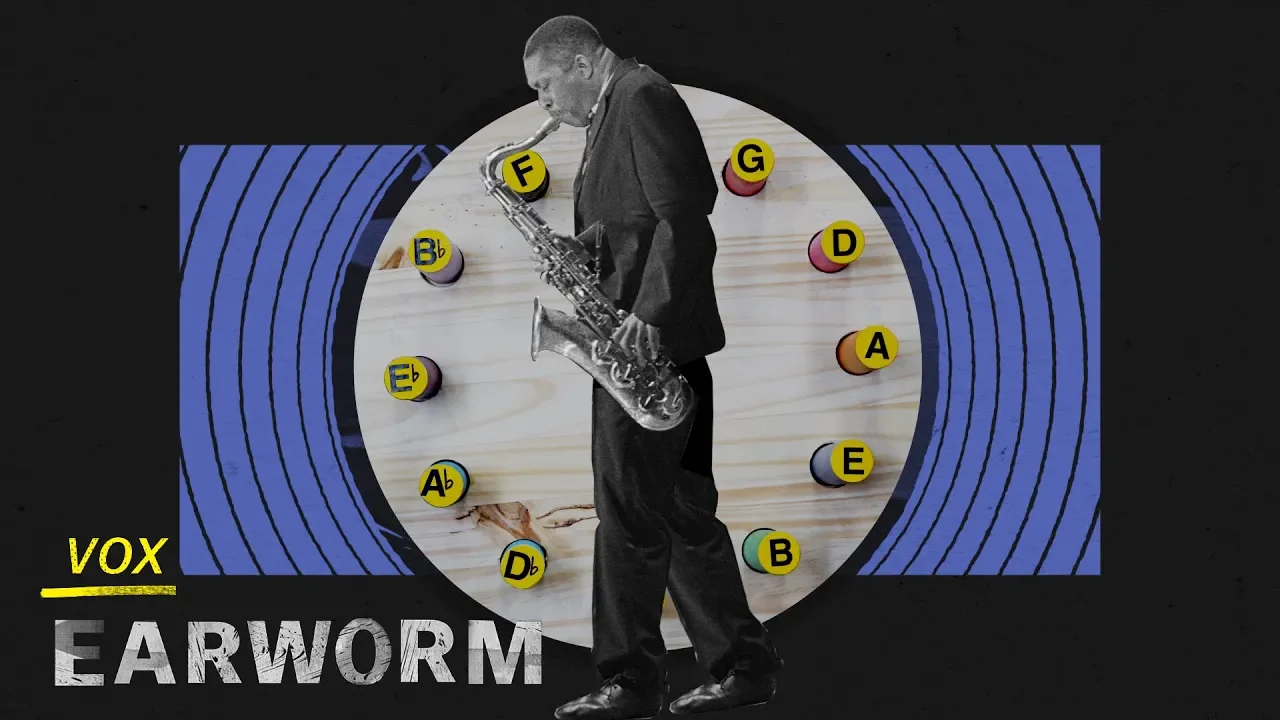
Understanding John Coltrane's Giant Steps: A Music Theory Analysis
@Vox
10.4M views•2018-11-12
Related Study Plans & Knowledge Roadmaps
Structured learning paths in Music Theory