









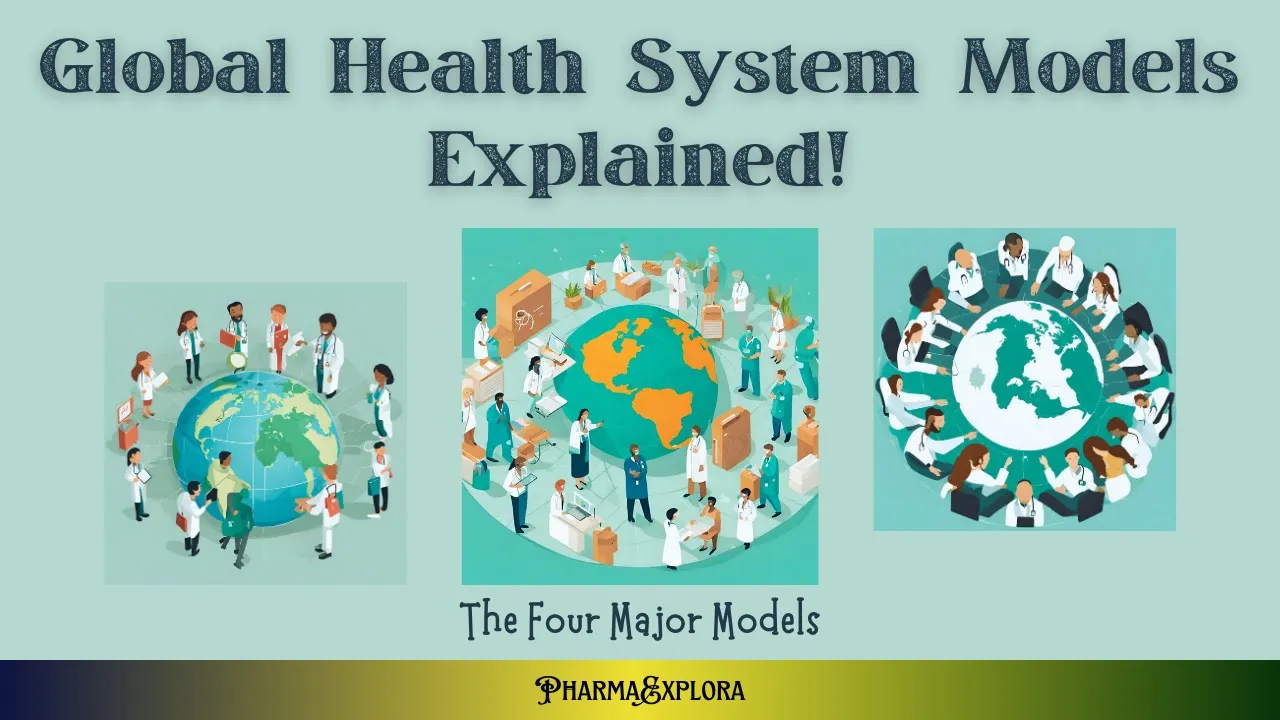












Healthcare systems globally range from out-of-pocket models in developing countries to government-run universal systems like the UK's NHS and hybrid multi-payer models like France's; each approach balances cost, access, and quality differently, with France's system achieving top WHO rankings by combining automatic tax-funded insurance with private supplementary coverage, demonstrating that universal coverage doesn't necessarily require single-payer systems.
Universal Health Care Explained: Models and Global Comparisons
Added:Basic terminology of health insurance, including premiums, deductibles, co-pays, and risk pools.
The fundamental concept of healthcare viewed as a public good versus a private market commodity.
An understanding of how governments raise and allocate revenue through taxation and social security contributions.
The core definition of Universal Health Coverage (UHC) as defined by international organizations like the World Health Organization (WHO).
In-depth analysis of specific national healthcare systems, such as the Beveridge Model (UK), the Bismarck Model (Germany), and National Health Insurance (Canada).
Methods for evaluating healthcare quality and efficiency using metrics like life expectancy, wait times, and healthcare expenditure as a percentage of GDP.
The challenges of healthcare sustainability, including aging demographics, rising medical technology costs, and rationing of care.
The political and economic debates surrounding healthcare reform and transition paths in countries with dominant private models, such as the United States.
56.4K views768likes5:14Original Release: 2017-10-26
Whether it's the never-ending debate on funding for the U.K.’s National Health Service... Save our NHS!
...or repeated attempts to repeal Obamacare.
Our lives are on the line!
Health care remains the most divisive issue in politics.
Every country across the globe has a different system to access health care.
For many developing countries, they operate the out of pocket model, where health care is paid for at point of use with no centralized funding system.
At the opposite end of the scale is government-run universal health care, used by the U.K.’s National Health Service since 1948.
This leaflet is coming through your letterbox one day soon.
Financed through taxes and compulsory national insurance contributions, it’s guided by the principle that health care is free to all at the point of delivery.
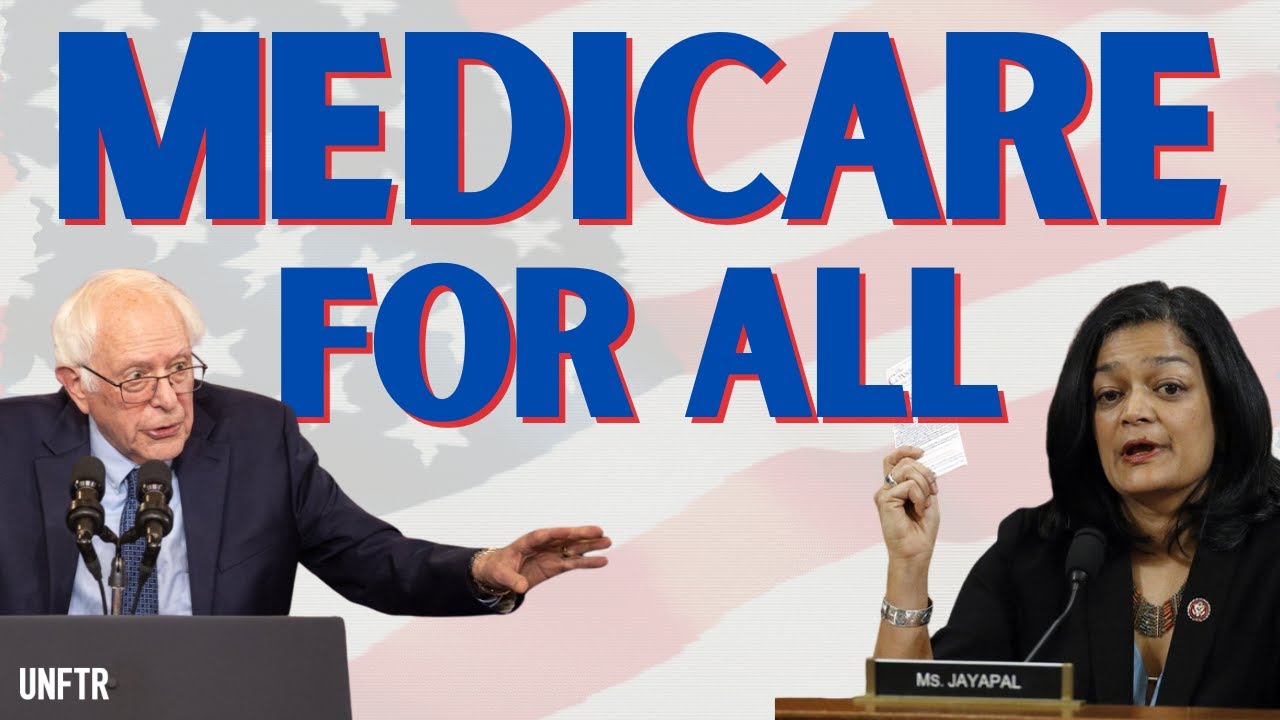
It’s this single-payer health care system, which is the fundamental idea of Senator Bernie Sanders’ new bill ‘Medicare for All.’ The function of a rational health care system is to provide quality care to all in a cost effective way.
A tax-funded health insurance plan but with privately-operated hospitals, providing coverage to 323 million Americans.
How the tax funding would work is still not clear however.
Support for the bill is growing amongst Democrats but with the recent failure of Vermont’s ambitious single-payer health care plan and the threat of two million administrative job losses, Sanders’ plan is unlikely to pass in Congress.
According to Sanders, the bill’s opposition is the pharmaceutical industry, the insurance companies, Wall Street and the Republican party.
The current profit-driven health care system fits in with conservative ideals of small government and has resulted in the country becoming the leader in new treatments and technologies for conditions such as cancer.
But the many obstacles and high costs of these treatments means that roughly 30 million uninsured Americans won't be able to access them.
And the U.S. is still spending more on health care than any other country in the world.
But is universal health care the answer?
President Truman thought so.
He said that, "Every American should have the right to adequate medical care and to adequate protection from the economic threat of sickness."
He is against federal action in the field of health.
A single-payer system such as the U.K.’s NHS does just that, while also costing less than half of what health care costs in the U.S.
So, if it’s cheaper and everyone gets coverage, why do many conservatives argue against it?
Because the NHS is under serious strain.
A recent report by the OECD found that the current quality of care within the NHS is uneven and continues to struggle to keep pace with many other countries.
Many analysts believe it needs more funding, a policy that will involve raising taxes, something most governments would like to avoid.
So is there a way of ensuring universal coverage without compromising on quality of care at an affordable price?
The answer may be a hybrid, multi-payer, health care system used by a number of countries including France, which the World Health Organization ranked as the number one health care system in the world in 2000.
More recent research among OECD countries found that France has the fewest number of deaths that could have been avoided by better health care.
The country uses a private, non-profit social insurance model.
Sounds complicated. Here’s how it works.
The entire French population has their health insurance automatically deducted from their pay.
For people on low or no income, their health care is subsidized through taxes, meaning everyone is covered.
But there’s a catch.
Unless you have a long-term condition, the system only covers 70% of your medical costs.
This means you pay a small fee when you have a consultation but much of the country has additional private insurance to cover this amount.
Many analysts argue this small fee results in high standards of care.
It reduces waiting times and means patients have the freedom to choose where they receive their health care services.
It also costs 11% of the country’s GDP and has more beds and doctors per 1,000 people as well as longer life expectancies than both the U.S. and the U.K.
The system does have its critics.
Some French employers believe the funding of health care is a tax on jobs.
So why aren’t the U.S. and the U.K. adopting similar models?
One reason may be that satisfaction levels in the U.S. and U.K.’s health care systems still remain above 60% and therefore any attempt to change them would be a political gamble.
But those levels are down from 2014 and may continue to decline with many American citizens still uninsured and NHS waiting times the worst for a decade.
Public opinion may force changes but finding the best way to deliver high quality health care for everyone won’t be easy or pain-free.
Hi everyone, Tom here.
Thanks very much for watching.
If you like what you saw, check out more of our videos.
And don't forget to subscribe.
Up Next

61:48
American Healthcare vs. Global Systems: A Comparative Analysis
@hdwnkt
128 views•2020-11-13

12:54
Triumph of Orthodoxy Icon: Byzantine Art & History Explained
@BenCallan
2.1K views•2024-08-06

9:49
FastAPI vs Flask vs Django: Choosing the Right Python Web Framework
@TechWithTim
302.5K views•2024-05-26

1:42
Game of Thrones Opening Credits: A Cinematic Analysis
@gameofthrones
46.3M views•2011-04-18
Related Study Plans & Knowledge Roadmaps
Structured learning paths in General & Interdisciplinary Studies
general-studies
Elevator Engineering: History, Physics & Cities
01From Hoists to Safety Brakes: The Dawn of Vertical Lift
02Hydraulic vs. Traction: The Engineering Physics of Elevators
03Modern Speed, Safety, and Algorithms
+ 2 more learning modules
12h5 modules
Explore Roadmap
general-studies
Rubber: Material Science, History & Geopolitics
01Origins of Natural Rubber & Mesoamerican History
02The Chemistry of Natural Rubber & Vulcanization
03The Geopolitics of the Rubber Boom & Colonization
+ 2 more learning modules
12h5 modules
Explore Roadmap
general-studies
Containerization: Evolution, Logistics & Trade
01Ancient Trade & Bulk Cargo: Amphorae to Barrels
02The Industrial Revolution & Cardboard Packaging
03The Containerization Revolution: Malcom McLean
+ 2 more learning modules
12h5 modules
Explore Roadmap
general-studies
Textile Tech: Evolution, Labor & Global Impact
01Pre-Industrial Textiles: Handloom & Cottage Industry
02Mechanization: The Spinning Jenny to the Power Loom
03The Factory System & Global Labor Transformation
+ 2 more learning modules
10h5 modules
Explore Roadmap